
How to produce video for tech and SaaS
shootsta.
How to produce video for tech and SaaS
By Shootsta · Published April 17, 2026 · Updated October 2026
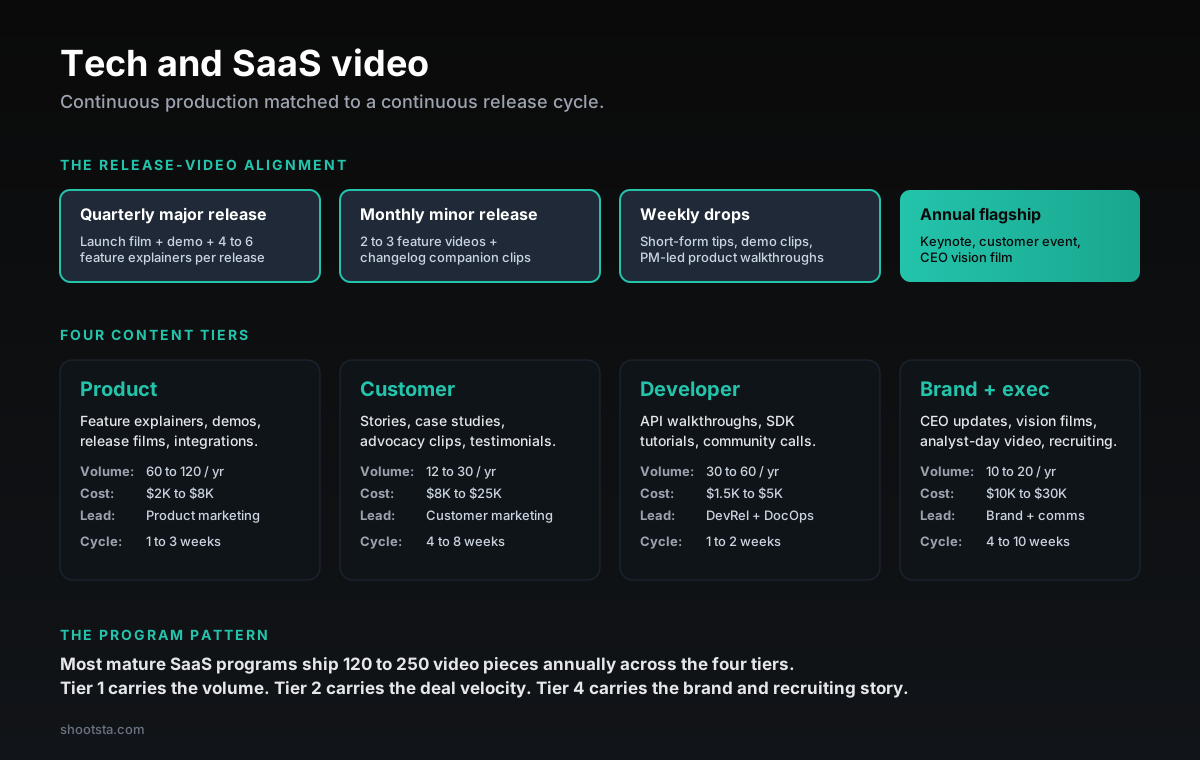
SaaS companies ship product continuously. A traditional campaign-led video program cannot keep pace. The shift: a continuous production model matched to the release cycle. Quarterly major release content, monthly minor release content, weekly product drops and an annual flagship. Four content tiers (product, customer, developer, brand + exec) and the unit economics that scale to 120 to 250 video pieces per year.
Why SaaS video programs need a continuous production model
A SaaS company ships product all the time. There are major releases each quarter, minor releases each month, product drops each week and fixes every day. A traditional campaign-led video program (one big shoot every six months, a few hero films per year) cannot keep pace with the rate the product is changing. By the time the campaign video ships, three product releases have happened and the video is already partly out of date.
The fix is a continuous production model matched to the release cycle. You make video for each quarterly major release, each monthly minor release and each weekly product drop, plus an annual flagship for the keynote. Customer, developer and brand + exec tiers sit on top of that. A mature SaaS video program ships 120 to 250 video pieces per year across the four tiers because the product gives the team that much to talk about and the buyer expects to see it.
The four content tiers
Tier 1: Product video
This tier covers feature explainers, demos, release films and integration walkthroughs. It has the highest volume because every release brings new material. An active program makes 60 to 120 pieces a year, led by product marketing, at 1 to 3 weeks each. This tier carries the volume that fills the buyer journey from awareness through evaluation.
Tier 2: Customer video
This tier holds customer stories, case studies, advocacy clips and testimonials. Each asset costs more because the crew travels to the customer or rebuilds their setting in a studio. Expect 12 to 30 pieces a year, led by customer marketing, at 4 to 8 weeks each. This tier carries the deal velocity for late-stage opportunities.
Tier 3: Developer video
This tier is API walkthroughs, SDK tutorials, community calls and dev rel content. SaaS companies with a developer audience tend to underfund it. Plan on 30 to 60 pieces a year, led by developer relations and the docs team, at 1 to 2 weeks each. This tier carries the technical buyer who evaluates SaaS by reading docs and watching API videos.
Tier 4: Brand + exec video
This tier includes CEO updates, vision films, analyst-day video and recruiting video. Production value is higher because these pieces shape how people see the brand. Expect 10 to 20 pieces a year, led by brand and comms, at 4 to 10 weeks each. This tier carries the strategic narrative the rest of the program ladders up to.
The release-video alignment
Each kind of release gets its own set of product-tier assets.
Quarterly major release
A major release needs a launch film (90 to 120 seconds, hero treatment) and a product demo (3 to 5 minutes). Add 4 to 6 feature explainers of 60 to 90 seconds each, plus a CEO or PM video that frames the release theme. That comes to about 8 pieces per major release. You publish at launch, then re-cut for social, email and sales enablement. Production starts 6 to 8 weeks before release.
Monthly minor release
Each minor release gets 2 to 3 feature explainers plus a short clip that goes with the changelog. Most use a PM talking to camera with screen capture, and work starts 2 to 3 weeks out. The minor-release tier is where the bulk of product-tier volume sits.
Weekly product drops
Weekly drops are short tips, demo clips and product walkthroughs led by a PM. They run 30 to 90 seconds and are cut in native social formats. Each one takes 3 to 7 days from idea to publish. The weekly tier is what keeps the social presence active between major releases.
Annual flagship
The flagship is the keynote film, the customer event video and a CEO vision piece tied to the company's big moment of the year (a user conference, partner summit or anniversary). Plan on 4 to 10 weeks of lead time. The annual flagship carries the highest production value of the program.
Tech and SaaS cadence planner
Match your video program to your release cycle
Set your major and minor release cadence plus how much video each ships with. The planner adds the other three tiers and returns total assets and indicative spend.
Major releases per year: 4
Videos per major release: 8
Minor releases per year: 8
Videos per minor release: 3
Stories, case studies, advocacy clips
Mid-point cost $15K / asset.
API walkthroughs, SDK tutorials, community calls
Mid-point cost $3K / asset.
CEO updates, vision films, recruiting
Mid-point cost $18K / asset.
Product-tier assets
56
56 release-linked + 0 other
Total annual assets
122
Indicative spend
$846K
Cost ranges are sector medians for established SaaS programs; per-asset cost drops 25 to 40 percent under batched production and shared templates.
The customer video model that scales
Customer programs tend to underdeliver when each story is treated as a bespoke production. The model below reuses one setup across many customers.
Batched customer recording days
Quarterly customer-event tie-in (Dreamforce, Reinvent, your own user conference) becomes the recording day for 8 to 15 customer interviews. Using the same setup and questions with each customer cuts the cost per asset. We covered the broader pattern in how to produce customer story video at scale.
Modular customer story format
Each customer gets a 3 to 5 minute hero story, 30 to 60 second social cutdowns, a 60 second sales enablement version and a written case study. One recording session gives you 5 to 10 outputs. A standard format can ship within 4 weeks of recording.
Vertical-specific customer libraries
Group customer stories by industry (financial services, healthcare, retail, public sector) so the sales team can pull the right story for each prospect. In B2B SaaS sales enablement, this library often gets the most use.
The developer content tier
If you have a developer audience and you are not producing developer video, you are losing the technical evaluation. Four formats cover the ground.
API walkthroughs
These are 2 to 4 minute videos that show a specific API call or workflow, using screen capture and voice-over. DevRel and docs often make them together, and technical buyers search YouTube for them.
SDK tutorials
These are 5 to 15 minute tutorials that walk through one use case from start to finish. They often get the most watch time in the developer library, because the viewer is learning a task and stays to the end.
Community calls and live coding
These are monthly or quarterly sessions where engineers and DevRel meet customers live. They often get the most engagement of any format, because the audience takes part as it happens.
Dev conference recap
Footage from your own DevCon, a partner conference or a sector event gets cut into a recap for developers who did not attend. A good recap shows the event and covers what was announced.
The brand + exec tier that lifts the program
This tier gets cut first when budgets tighten, and it should be protected.
CEO updates
Monthly or quarterly CEO video update following the pattern in how to produce a CEO video update series. These updates carry the company story to employees, customers and prospects.
Vision films
These pieces, made once or twice a year, explain where the company is going. The same film runs in board presentations, analyst briefings, investor pitches and recruiting interviews.
Analyst-day video
Public companies and pre-IPO firms use this video alongside the analyst-day deck. It is often made as a follow-up film after the live event.
Recruiting video
Careers-page video shows engineering culture, leaders, the office and employee stories. It often wins over a technical hire who is choosing between several offers.
The unit economics that hold at scale
Mature SaaS video programs bring the cost per asset down in three ways.
Batched studio days
Shoot 8 to 12 PM-led product videos in one monthly studio day, which costs far less per asset than a crew for each video.
Modular templates
Build one brand template with product layers that can be swapped. The editor changes the product UI, the script and the on-screen text while the brand wrapper stays the same. Editing time falls because nobody rebuilds the design.
Multi-output mastering
Master once, deliver to YouTube long-form, LinkedIn 90-second, Instagram 60-second vertical, sales enablement 30-second, email GIF. One master gives you 5 to 8 outputs, and that is how the program's reach grows without more shoots.
What changes for the production team working on SaaS content
Three things change for producers and editors once video follows the release cycle.
Shift 1: Product fluency
Producers and editors need to keep up with the release schedule and understand how a feature differs from the last version. They also need to turn engineering language into terms a customer cares about. We covered the broader sector fluency model in how a partner gets up to speed on your industry.
Shift 2: Speed over polish on product-tier video
Product-tier video rarely needs cinematic production. A PM talking to camera, clean screen capture and a consistent brand template can ship in days. Save the polish for tier 4 (brand + exec), and judge tier 1 on speed and accuracy.
Shift 3: Distribution-aware editing
Editors cut for the channel from the start. A YouTube version needs different pacing, captions and length from a LinkedIn version, and LinkedIn differs again from Instagram. Tier-1 product video succeeds or fails on how well it fits the channel.
Practical questions enterprise SaaS teams ask
How many videos should a SaaS company produce per year?
An active mid-market or enterprise SaaS program makes 120 to 250 pieces per year across the four tiers. The number is lower if the product cadence is slower or the buyer journey is shorter. It is higher if the company has a developer audience and an active community.
Who owns the program?
Product marketing usually owns tier 1 and customer marketing owns tier 2, while DevRel owns tier 3 and brand owns tier 4. A central video lead (production producer or video PM) co-ordinates across the four tiers. The model breaks when video sits inside one tier and the others have to negotiate for capacity.
What is the right ratio of in-house to partner production?
In-house works well for weekly product drops and the developer tier, where volume is high, production value is lower and deep product knowledge matters. Partner production works well for batched product days, customer stories and the brand + exec tier, where it costs less at volume and brings a wider creative range. We covered the model in how a video partner extends your in-house team.
How do we keep up with the release cycle?
Lock the video production calendar to the engineering release calendar, and have PMs draft a video brief at the same time as the release notes. Production starts 4 to 6 weeks before a major release and 2 to 3 weeks before a minor one. Planning after the release ships is where teams struggle.
What about AI-generated product video?
AI is useful inside the workflow for script drafting, screen-capture notes, voice-over on non-launch content and picking social cutdowns. It is a poor fit as the main production method for tier 2 and tier 4. The framing in how AI fits inside enterprise video workflows applies broadly.
Where to go next
For the customer story format that anchors tier 2, read how to produce customer story video at scale. For the product-launch playbook for major releases, read how to produce video for a product launch. For the broader CMO-level view of how the four tiers ladder into the marketing program, read how a CMO should think about enterprise video.
To scope a SaaS video program matched to your release cycle, book a free consultation.
Take this article with you
Read the latest at shootsta.com/blog/how-to-produce-video-for-tech-and-saas
You might also like
How to Brief an Animation Project
How to Brief an Animation Project
An animation brief is the document you send to your production partner before work starts. Get it right and you cut revision cycles in half. Get it wrong and you discover mid-production that everyone disagrees on what the video is for. This is what a complete brief looks like.
Animation for change management comms
Animation for change management comms
Animation handles change management communications better than live video for three reasons: no on-camera executives required during sensitive periods, scene-level updates when plans shift, and a single production that works across global teams with voiceover-only language swaps.
How sales leaders should use video at scale
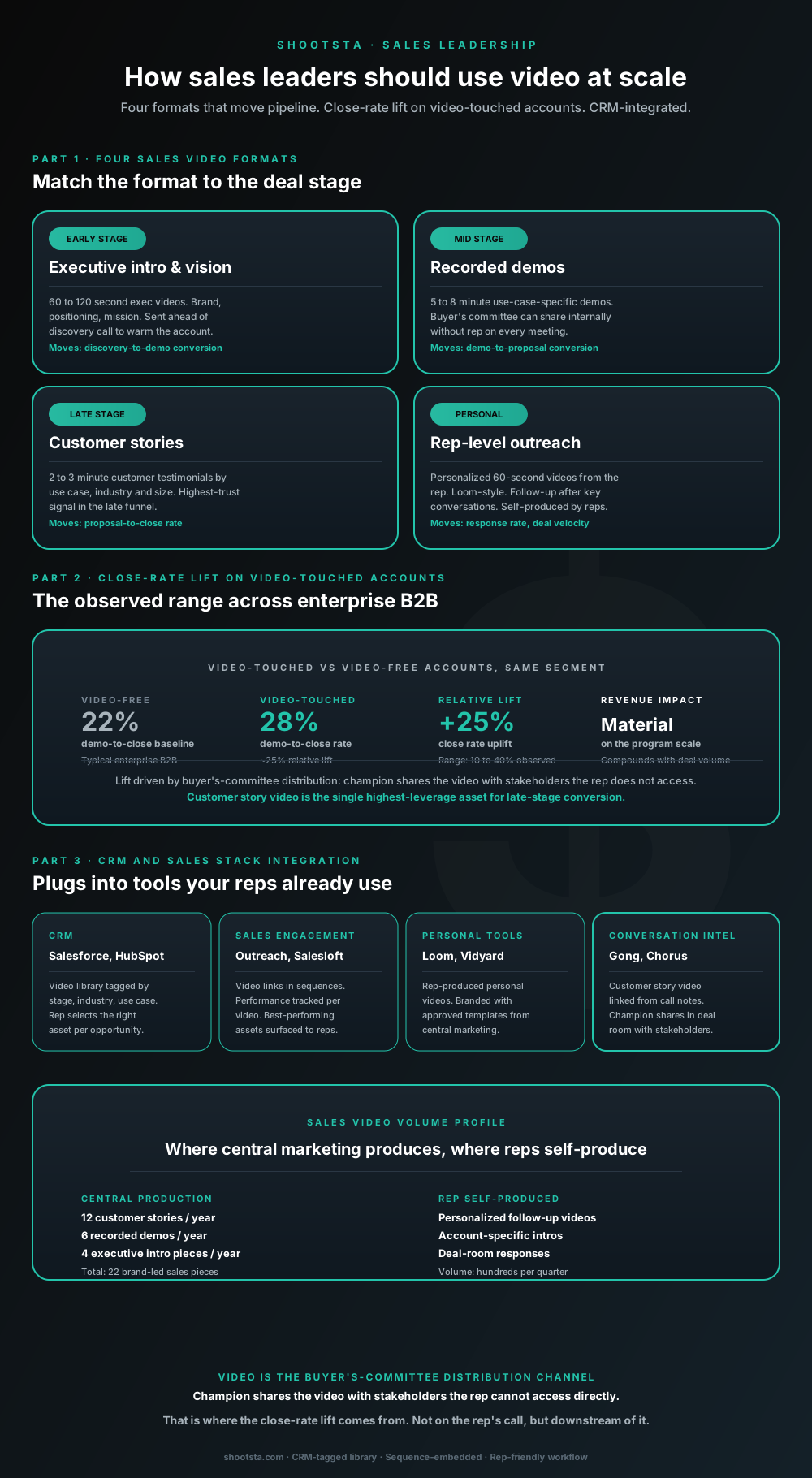
Sales leaders mostly think about video as personalized rep outreach (Loom, Vidyard) or as marketing-produced customer stories. Both are useful. The bigger opportunity is the buyer's-committee distribution layer: assets the champion shares internally with stakeholders the rep does not access directly. That is where the close-rate lift compounds.
How L&D leaders replace classroom with video
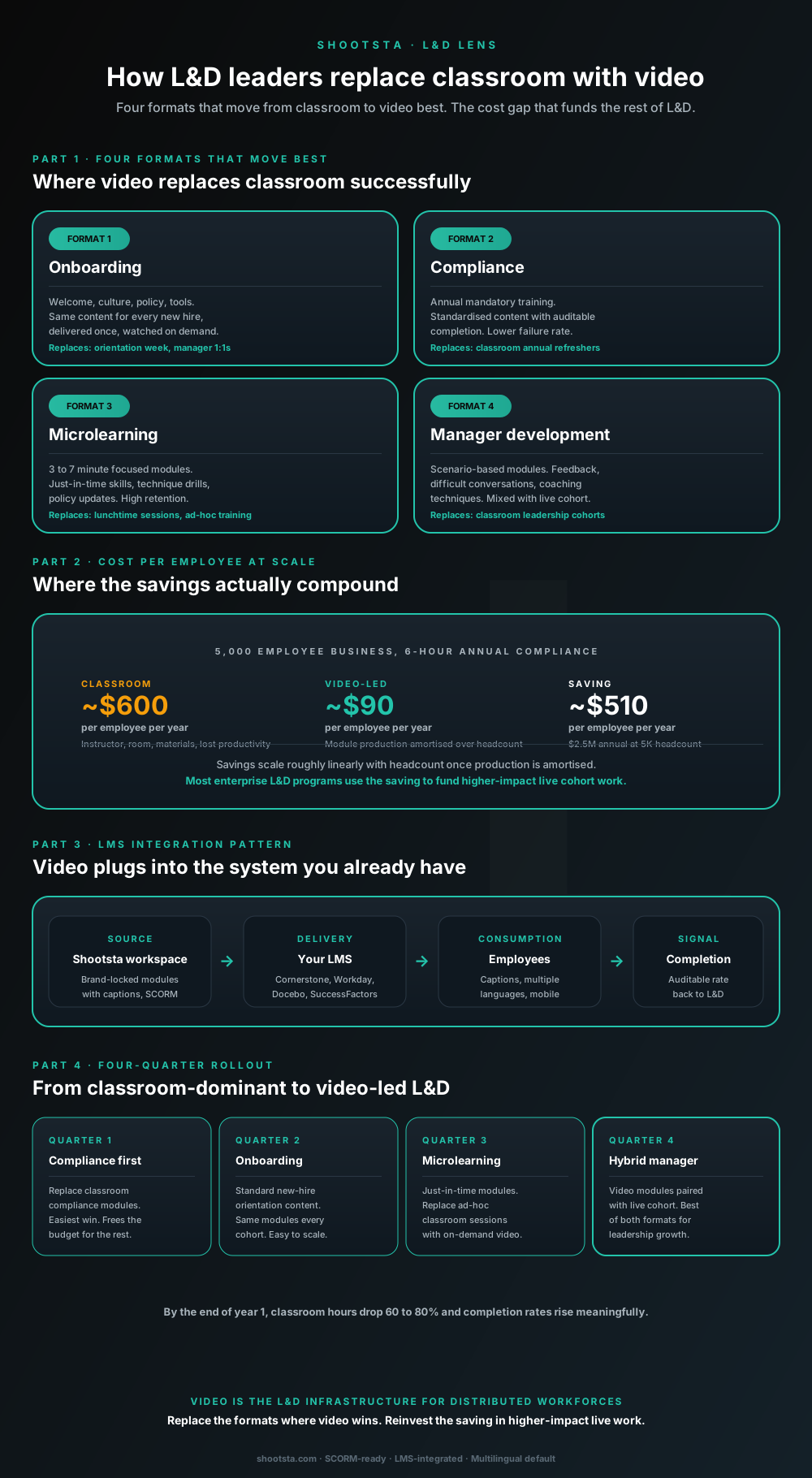
L&D leaders running classroom-heavy training programs typically have the largest single opportunity in the business to free budget through format change. Four training formats move from classroom to video cleanly; the savings fund higher-impact live work. Here is the rollout that compounds learner adoption over four quarters.
How customer success leaders should use video
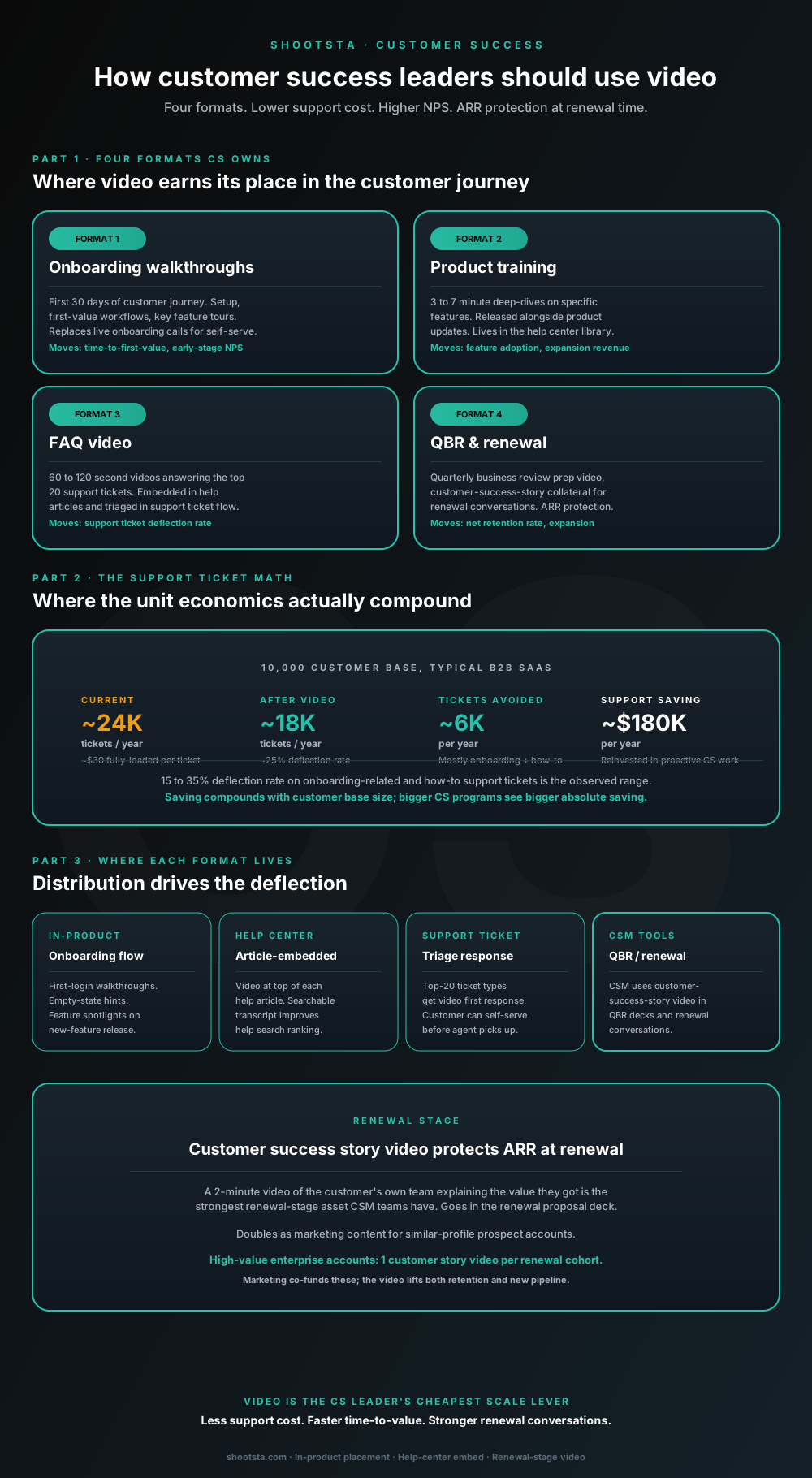
Customer success leaders are usually under-resourced for both reactive support volume and proactive retention work. Video is the cheapest lever to fix both - 15 to 35% deflection on onboarding and how-to tickets, faster time-to-value, and renewal-stage customer story video that lifts net retention. Here is the four-format model and where each piece earns its place.
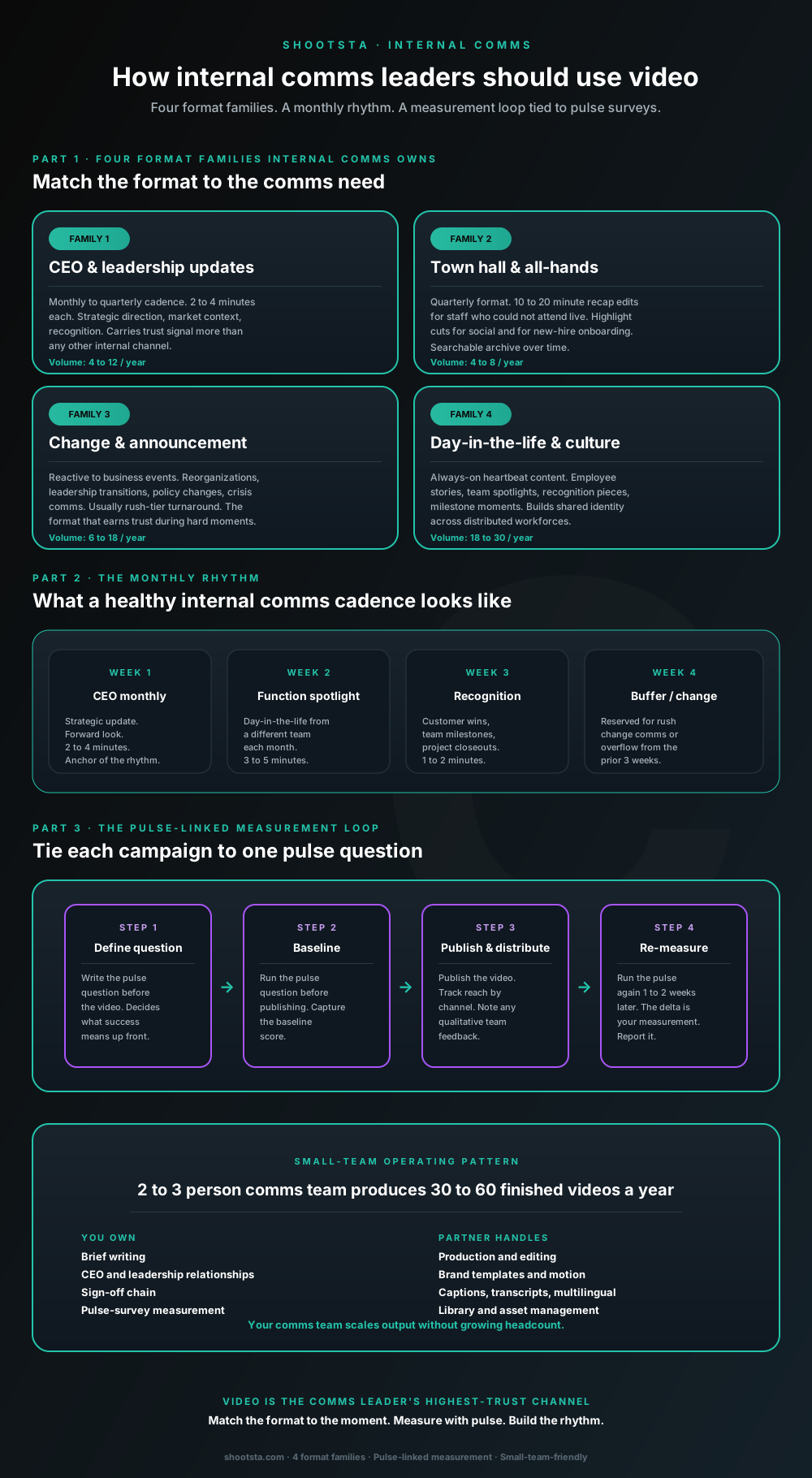
How internal comms leaders should use video
Internal comms leaders are usually under-resourced for the volume of video the business wants. The fix is not more headcount; it is structuring the program around four format families, a monthly rhythm, and a pulse-survey-linked measurement loop. Here is the operating pattern that lets a small comms team produce 30 to 60 finished videos a year.