
How to produce customer story video at scale
shootsta.
How to produce customer story video at scale
By Shootsta · Published May 20, 2026 · Updated October 2026
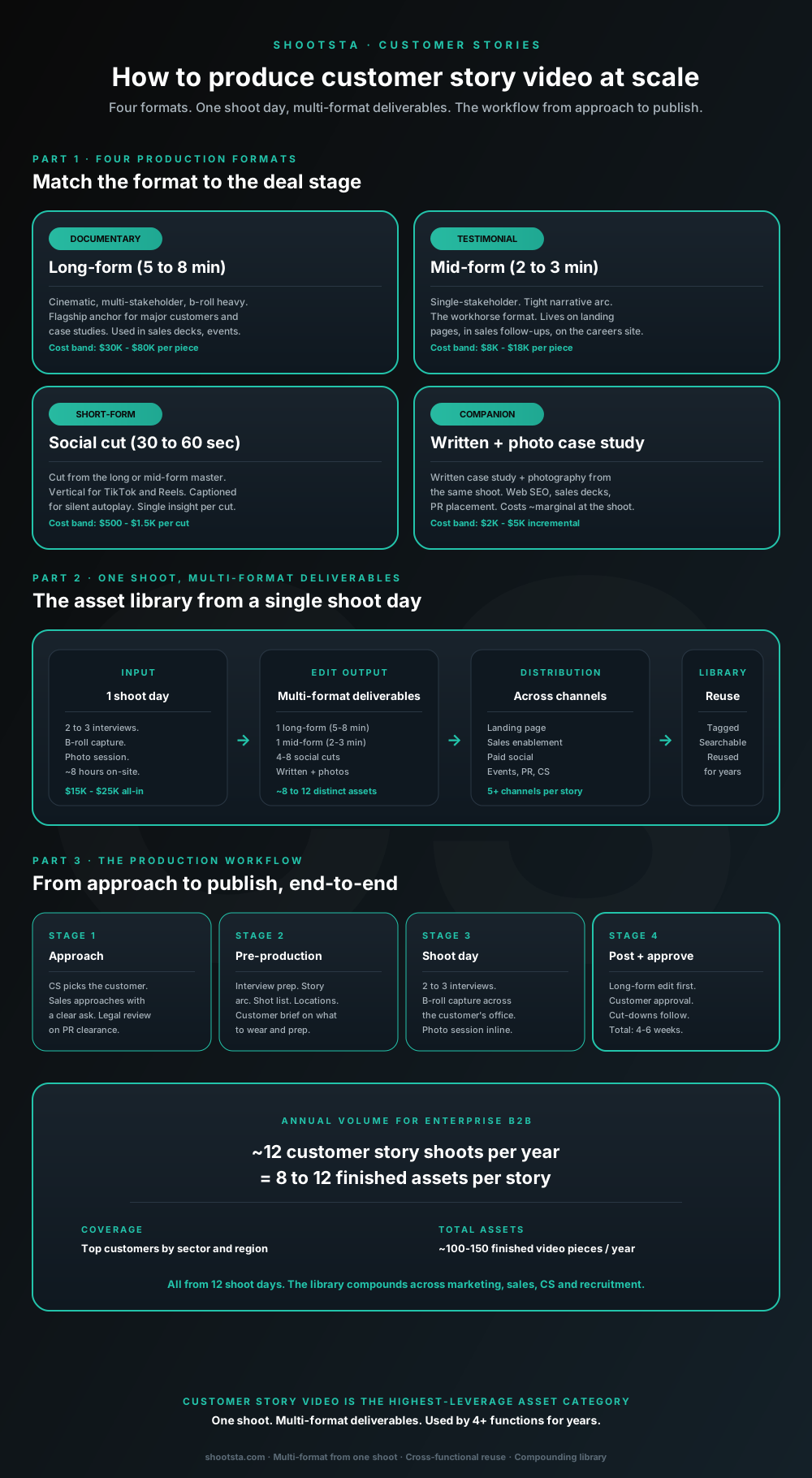
One customer story shoot day can produce many distinct deliverables that several teams use for years. Plan the shoot for multi-format assets from the start. Here is the workflow for customer story video at scale.
Why customer story video has the best unit economics in enterprise video
Customer story video gives enterprise marketers more uses per dollar than any other type of asset. Marketing runs it on landing pages and in paid campaigns, while sales sends it in deal-room follow-ups and proposal decks. Customer success brings it into QBR conversations and renewal proposals. Recruitment and PR use cuts of it too. One shoot serves all of them, and the footage stays useful for years.
The common mistake is to make a single hero film per customer and stop there. If you plan the same shoot day for it, you can get 8 to 12 distinct deliverables that serve every downstream use case. Effective cost per asset drops sharply when the deliverable model is multi-format from day one rather than retrofit later.
The four customer story production formats
Long-form documentary (5 to 8 minutes)
The long-form documentary is cinematic and uses several voices, typically the CEO or sponsor, the practitioner and sometimes a customer of the customer. It leans heavily on b-roll and is the flagship piece for major customers. It lives on case study pages, in sales decks, at events and on YouTube and LinkedIn. It costs the most of the four formats, mostly driven by scope and travel.
The long-form is what the customer's PR team will share internally and externally. It is the asset that builds brand value from the relationship for both sides. It is worth spending on production quality because this is the piece people see first.
Mid-form testimonial (2 to 3 minutes)
The mid-form testimonial follows one stakeholder through a single story arc, and it is the format you will use most. It lives on landing pages, in sales follow-ups and on the careers site under "what customers say". It does most of the heavy lifting in the funnel because it is short enough to watch in a meeting and specific enough to persuade. Made on its own it needs a full shoot, but cut from the long-form footage it adds little to the cost.
Short-form social cuts (30 to 60 seconds)
Social cuts come from the long-form or mid-form master. They are vertical for TikTok and LinkedIn vertical, square for Instagram, and captioned everywhere for silent autoplay. Each cut carries a single insight. Each cut works as a separate piece across the year and costs far less than the master it comes from.
Written and photo companion case study
Written long-form case study plus professional photography from the same shoot. Web SEO drives discovery, because the page hosts the video and ranks for searches on the customer's name. Sales decks use the photos, and PR uses both the photos and the written quotes. If you scope it at the same time as the shoot day, it adds only a small amount to the budget.
The one-shoot, multi-format deliverable model
Every cost in a customer story shoot (crew travel, customer time, location prep, post-production setup) is spread across however many deliverables the shoot day produces. If you design the day for one deliverable, you pay for all of that and use only a small part of it.
A well-designed customer story shoot day produces:
It gives you 1 long-form documentary cut (5 to 8 minutes) and 1 mid-form testimonial (2 to 3 minutes) aimed at the most likely buyer audience. You also get 4 to 8 short-form social cuts (30 to 60 seconds each), each covering a distinct insight from the interview, and 1 written case study with photography for the web. The raw asset library (transcripts, b-roll, photo selects) gets reused over the following 12 to 18 months.
That adds up to 8 to 12 distinct pieces per shoot, plus the written and photo assets. At 12 customer shoots per year, you build a library of 100 to 150 finished video assets that compound across functions for years.
Interactive program planner
What does a customer story video program produce per year?
Set annual shoot days and the deliverables per shoot. The planner returns the total asset library produced, annual program cost, and effective cost per finished asset.
Annual asset library
96
12 long + 12 mid + 72 social
Annual program cost
$259K
$22K per shoot day
Effective cost / asset
$2,700
averaged across formats
How the math works
One customer shoot day produces 8 to 12 distinct deliverables when the long-form, mid-form, and social cuts are all sourced from the same captured footage. The effective cost per asset drops sharply because the expensive part (getting the customer on camera with crew on site) is amortised across every cut. Most mature programs run ~12 shoots per year, producing a library of 100-150 finished video pieces that compound across marketing, sales, CS and recruitment.
Scope a customer story programAssumptions: shoot day all-in cost includes crew, travel, basic edit pass for the long-form deliverable. Additional formats cost incrementally per piece. Cross-functional reuse (sales, CS, recruitment) further reduces effective cost per use. Numbers are guides.
The four-stage production workflow
Stage 1: Approach
Customer success picks the right customer: a high-value reference with a strong story who is willing to be on camera. Sales then approaches them with a specific ask, such as a single shoot day, named deliverables and brand exposure for the customer. Legal clears PR with the customer's marketing team. Expect 2 to 4 weeks from first approach to a confirmed date.
Stage 2: Pre-production
You prep the interview with the customer's spokesperson, covering the story arc, talking points and what the audience needs to take away. The crew writes a b-roll shot list and scouts the customer's office, and the customer gets a brief on what to wear. Pre-production takes 1 to 2 weeks, mostly editorial conversation rather than logistics.
Stage 3: Shoot day
Plan for 2 to 3 interviews on the day, with b-roll captured across the customer's office and any relevant operational sites. The photo session for the written case study runs at the same time. The crew is on site for about 8 hours. The customer's executive sponsor is on camera for roughly 90 minutes in total including breaks, the practitioner for roughly 2 hours, and b-roll capture fits around them.
Stage 4: Post-production and approval
The long-form edit comes first because every other deliverable is drawn from it. The customer approves the long-form before the cuts go ahead, and the mid-form, social cuts and written case study follow that approval. The full post-production cycle runs 4 to 6 weeks from shoot day to final approved deliverables. Customer approval drives the timeline, so getting it right at the long-form stage saves time on every cut.
What to ask the customer to approve and when
Customer story production usually stalls when approvals run one after another instead of in parallel. This pattern keeps them moving.
Pre-production: the customer approves the topics, the spokespeople, the date and the rough story arc, and does it once.
Long-form rough cut: the customer's marketing/PR team gives it a full review, and this is the stage for substantial changes. The customer signs off on the long-form before mid-form and cuts proceed.
Final deliverables: the customer gives the cuts a light review for accuracy. The cuts come straight from approved long-form content, so there is little new to check.
Public launch: agree when the assets go live and what the customer wants to do with them on their side (re-share, link internally, use in their own marketing). Treat the customer's launch as a co-marketing moment.
How customer story video earns its place in each function
Marketing
Marketing uses the customer story as a landing page anchor, as paid social creative, in account-based marketing campaigns and in awards submissions. On a B2B landing page it is often the single asset that does the most to move a visitor toward a demo request.
Sales
Sales sends it after key conversations and attaches it to RFP responses. Your champion can also share it with stakeholders the rep cannot reach. We covered the sales mechanics in how sales leaders should use video at scale.
Customer success
In a QBR, it shows a peer customer getting value from features the renewing customer has not adopted. It helps with objections at renewal and gives an expansion conversation something concrete to start from. We covered this in how customer success leaders should use video.
Recruitment
Recruitment uses the cuts where the customer's team talks about working with your team, which supports the employer brand for both sides. We covered the TA layer in how heads of TA should use video for hiring.
PR and analyst relations
PR uses the story for press placements for both companies, and analyst relations uses it in report submissions for sector recognition. It also gives you material for award entries.
The right annual volume for an enterprise program
For an enterprise B2B program, around 12 customer story shoot days per year is a good target. That covers your top customers by sector and region. It is varied enough to feed every function and small enough to keep the editorial quality high. Each shoot produces 8 to 12 deliverables; total library lands at 100 to 150 finished video pieces per year.
Lower volume (4 to 8 shoots a year) works for smaller enterprise programs but means each shoot has to carry more weight; the deliverable mix needs to skew higher (more cuts per shoot) to keep the asset library populated. Higher volume (24 plus) is uncommon outside of high-volume B2B SaaS companies that produce customer stories as a primary acquisition channel.
Frequently asked questions
How do we convince customers to be on camera?
Start with the brand exposure for the customer, since their company gets featured in your marketing across several channels. Keep the time commitment small and clear: one shoot day and 90 minutes of executive time, with the rest given by the practitioner and b-roll. Then give them full approval rights, including the option to pull the asset later. Customers say yes far more often to an ask set up this way.
What if the customer's legal team blocks the asset?
Legal review usually happens at the long-form approval stage. If legal blocks the asset entirely (rare but happens with regulated industries), you can make an anonymous customer story where the customer's identity is implied but never named. It carries less weight with buyers, but the asset is still usable.
How do we handle customers in regulated industries?
Financial services, pharma, healthcare and government customers usually require additional legal review and may need approval from the customer's compliance function in addition to marketing. Build 2 to 4 extra weeks into the timeline. The asset still works, and the approval cycle simply takes longer.
Should we travel for shoots or use local crew?
Use local crew from the regional Shootsta hub closest to the customer's office. You avoid flights, cut the carbon footprint and can schedule the shoot sooner. We covered the multi-region model in how to scale video across global offices and the sustainability angle in how a distributed video model cuts travel.
What is the typical shelf life of a customer story?
An enterprise B2B story usually stays useful for 18 to 36 months. Refresh the long-form when the customer changes in a big way, such as an acquisition, a major product change or an expansion. Cuts and social pieces can run longer because they point to specific moments rather than current-state facts. Plan to refresh part of the library every year.
How do we measure customer story video impact?
Compare the conversion rate on landing pages with the video against pages without it. In your CRM, track the pipeline-influenced revenue on deals where the customer story was viewed. For paid social, watch the cost per qualified lead when the customer story is the creative. In customer success, look at renewal rates on accounts that saw the video in CSM-led conversations. We covered the broader measurement framework in how to measure enterprise video success.
Where to go next
For the broader CMO-level view of how customer story video fits into a marketing-led program, read how a CMO should think about enterprise video. For the sales-side mechanics of customer story distribution, read how sales leaders should use video at scale. For the working pattern alongside an existing in-house team, read how a video partner extends your in-house team.
To scope a customer story video program for your top customer accounts, book a free consultation.
Take this article with you
Read the latest at shootsta.com/blog/how-to-produce-customer-story-video-at-scale
You might also like
How to Brief an Animation Project
How to Brief an Animation Project
An animation brief is the document you send to your production partner before work starts. Get it right and you cut revision cycles in half. Get it wrong and you discover mid-production that everyone disagrees on what the video is for. This is what a complete brief looks like.
Animation for change management comms
Animation for change management comms
Animation handles change management communications better than live video for three reasons: no on-camera executives required during sensitive periods, scene-level updates when plans shift, and a single production that works across global teams with voiceover-only language swaps.
How sales leaders should use video at scale
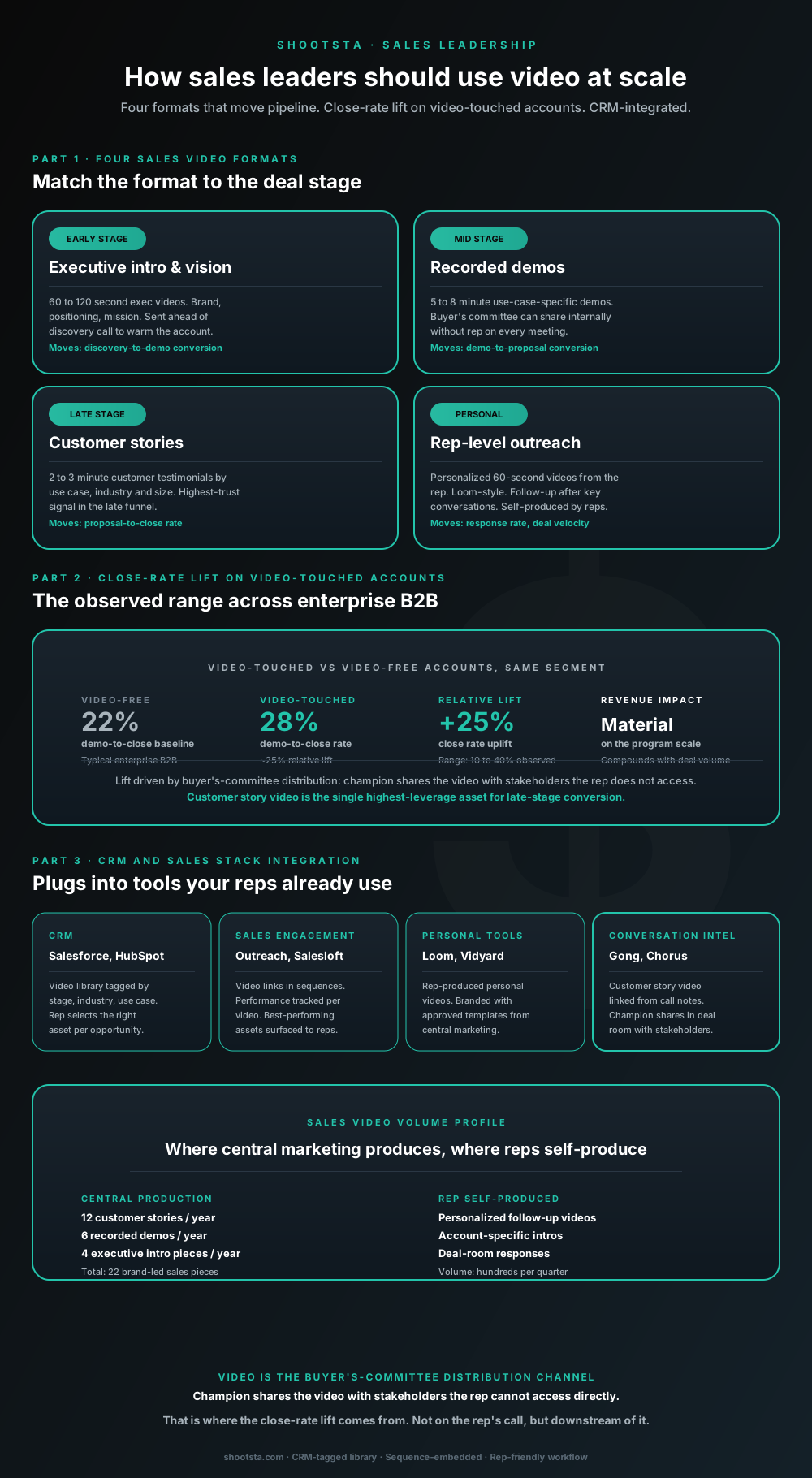
Sales leaders mostly think about video as personalized rep outreach (Loom, Vidyard) or as marketing-produced customer stories. Both are useful. The bigger opportunity is the buyer's-committee distribution layer: assets the champion shares internally with stakeholders the rep does not access directly. That is where the close-rate lift compounds.
How L&D leaders replace classroom with video
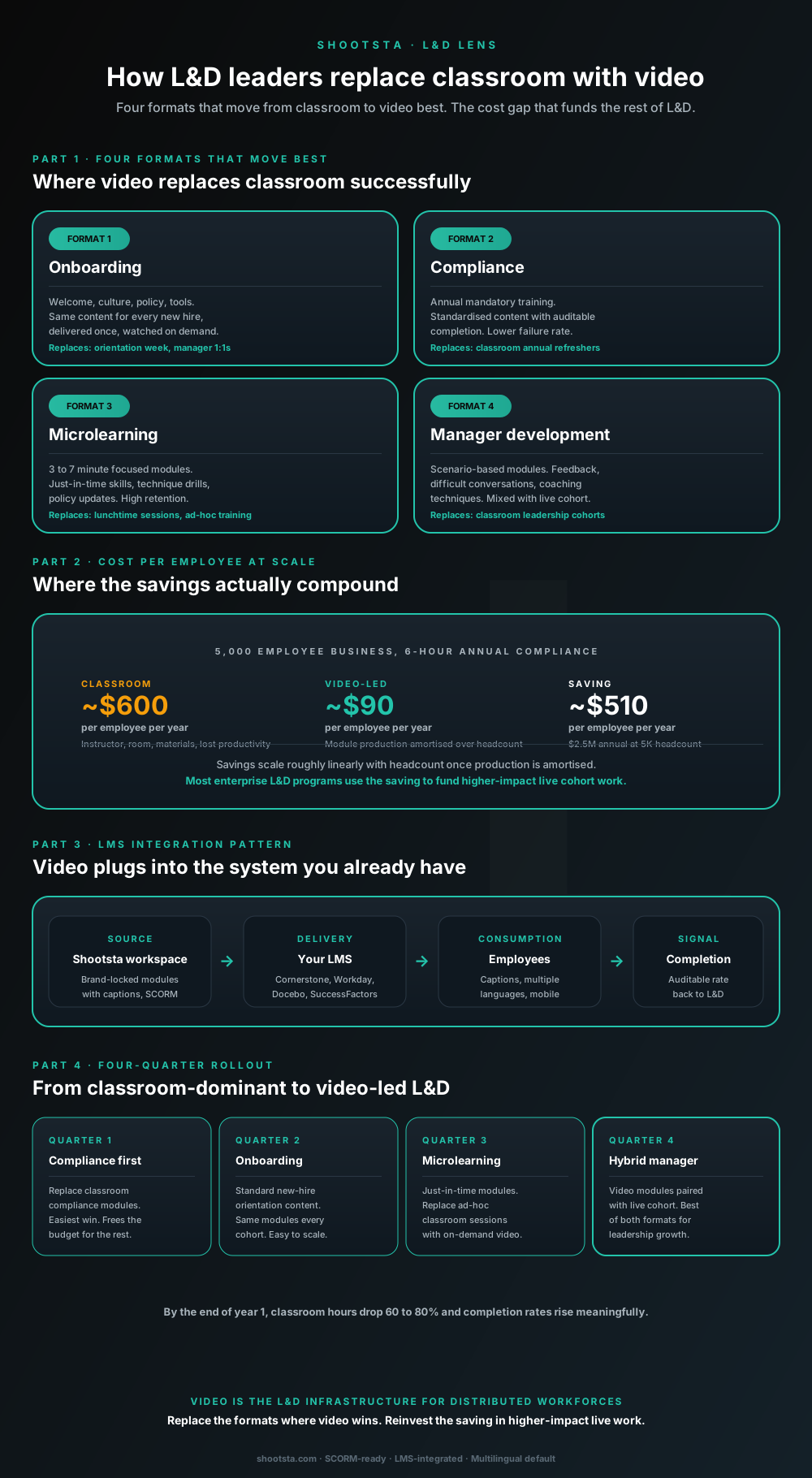
L&D leaders running classroom-heavy training programs typically have the largest single opportunity in the business to free budget through format change. Four training formats move from classroom to video cleanly; the savings fund higher-impact live work. Here is the rollout that compounds learner adoption over four quarters.
How customer success leaders should use video
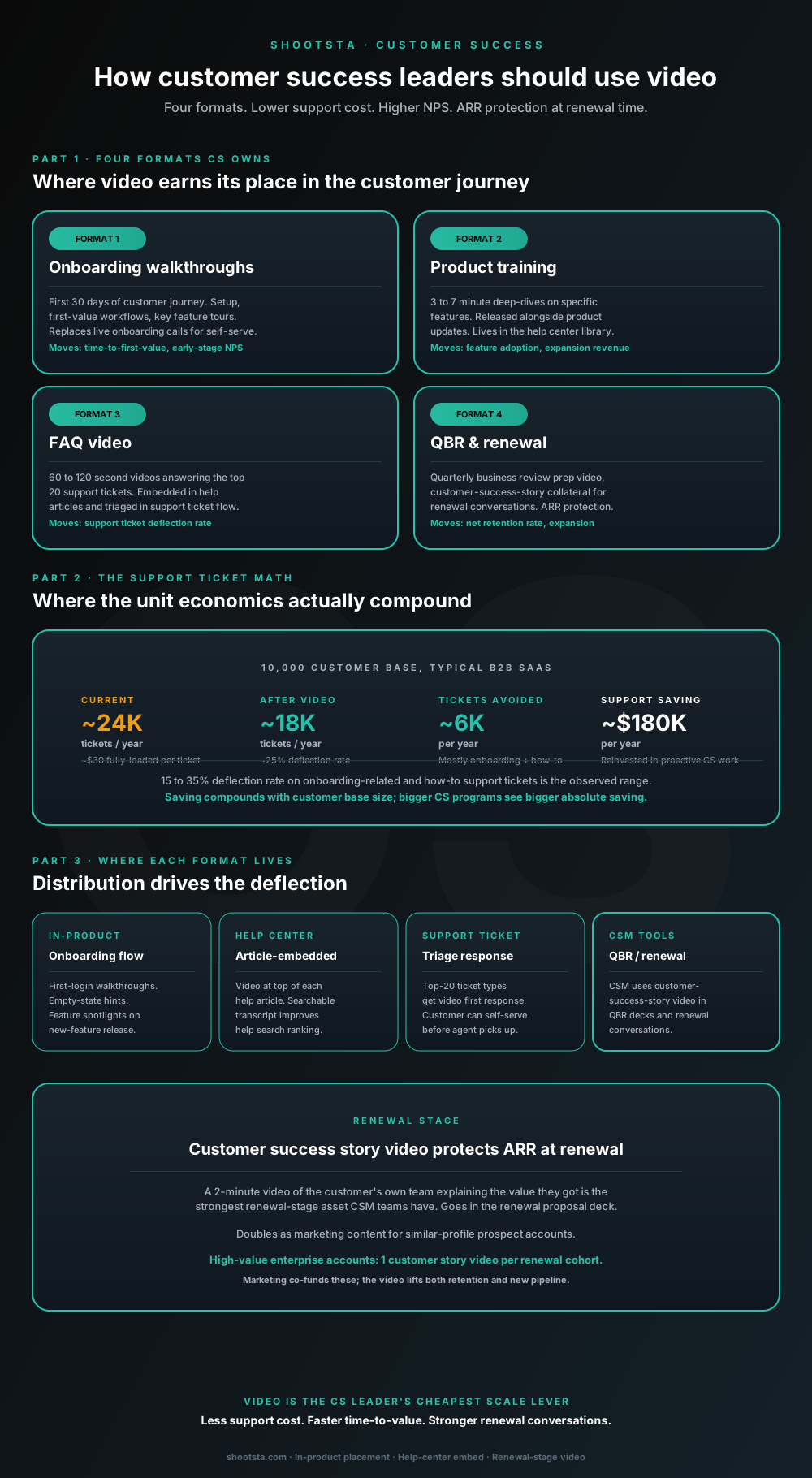
Customer success leaders are usually under-resourced for both reactive support volume and proactive retention work. Video is the cheapest lever to fix both - 15 to 35% deflection on onboarding and how-to tickets, faster time-to-value, and renewal-stage customer story video that lifts net retention. Here is the four-format model and where each piece earns its place.
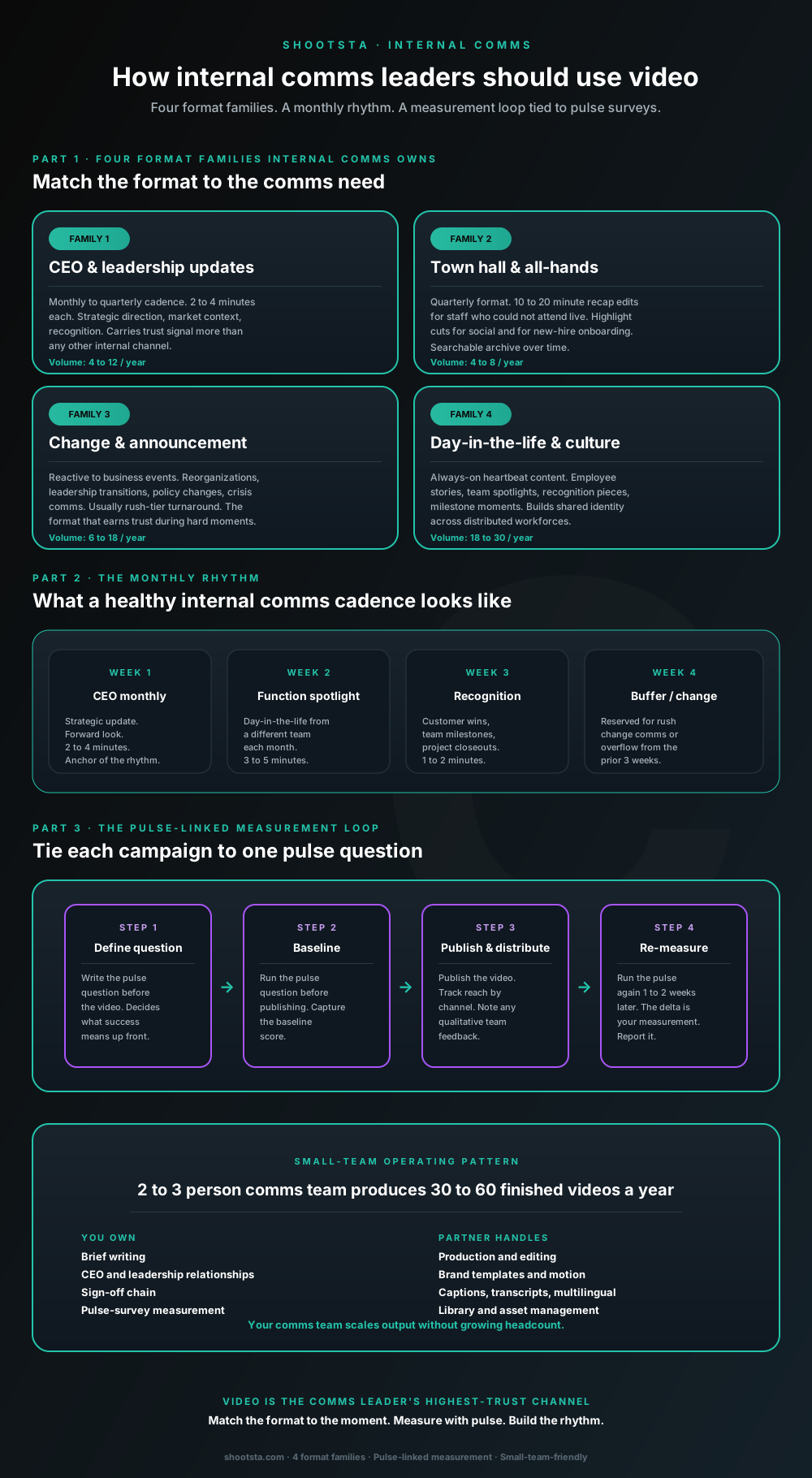
How internal comms leaders should use video
Internal comms leaders are usually under-resourced for the volume of video the business wants. The fix is not more headcount; it is structuring the program around four format families, a monthly rhythm, and a pulse-survey-linked measurement loop. Here is the operating pattern that lets a small comms team produce 30 to 60 finished videos a year.