
How AI fits inside enterprise video workflows
shootsta.
How AI fits inside enterprise video workflows
By Shootsta · Published May 10, 2026 · Updated October 2026
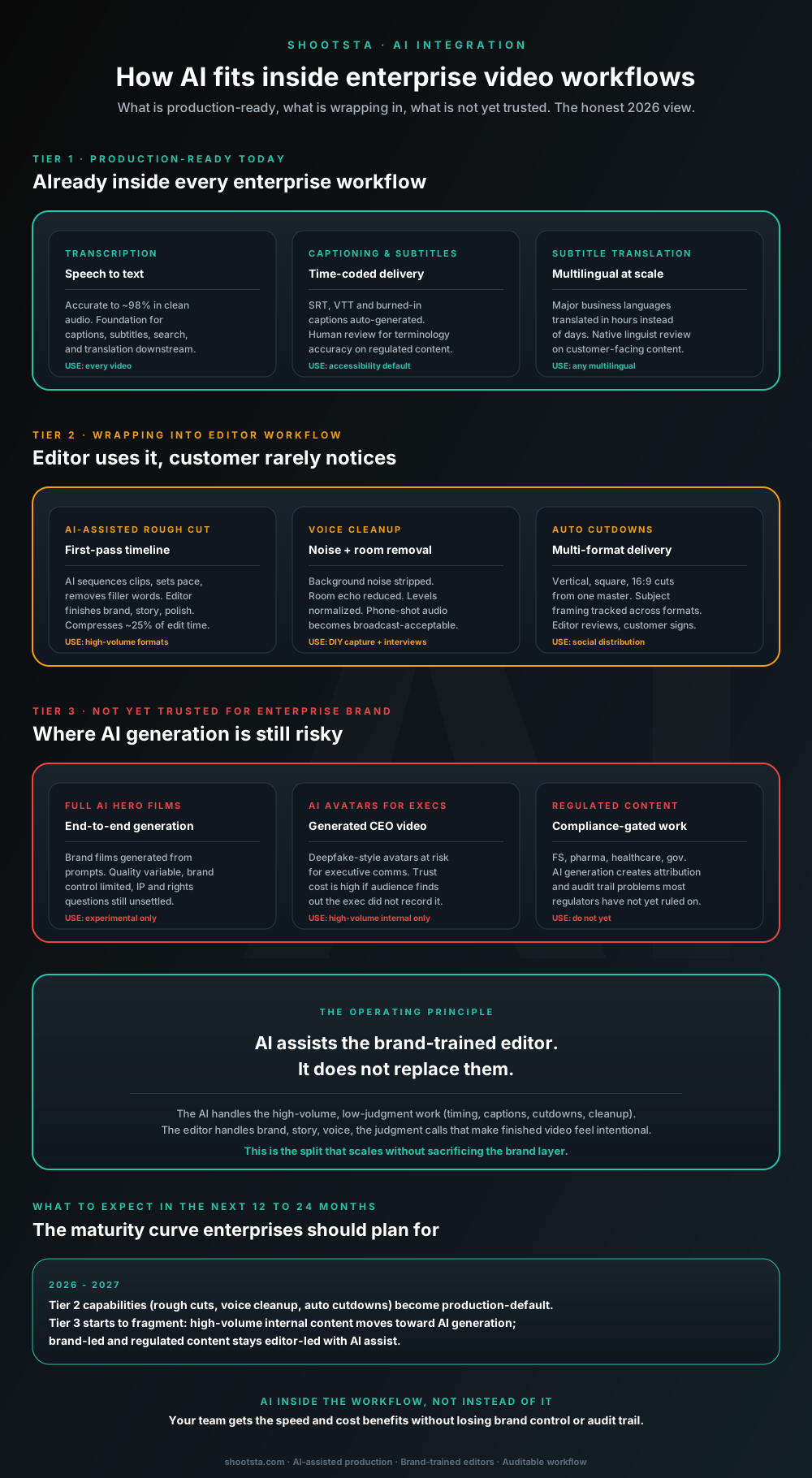
AI is already inside every credible enterprise video workflow. The honest 2026 view: three reliability tiers. Tier 1 is production-default (transcription, captions, translation). Tier 2 wraps into the editor workflow (rough cuts, voice cleanup, cutdowns). Tier 3 is not yet enterprise-trusted (full generation, AI avatars, regulated content).
The honest 2026 view of AI in enterprise video
If you lead comms or marketing in an enterprise, AI is already inside your video production in 2026. The useful question now is which AI capabilities are production-ready for brand-led enterprise content, which are wrapping into the editor workflow without changing the deliverable, and which are still risky enough to wait on.
Treat it as a three-tier model. The framing keeps decisions clean and lets the program use the parts that work without inheriting the risk of the parts that do not.
Tier 1: production-ready today
Three categories are already inside every credible enterprise workflow. They should be the default for every video that ships.
AI transcription
Speech-to-text is now highly accurate on clean audio, and its handling of industry terms is usable for most sectors. Transcription is the foundation that powers captions, subtitles, search inside the asset library, and downstream translation. There is no enterprise case in 2026 for paying for manual transcription on standard corporate audio.
Auto-generated captions and subtitles
SRT, VTT and burned-in caption tracks are generated automatically from the transcription layer. Captions should be on by default for any video going to the public web, for accessibility. A person still needs to check terms on regulated content, such as financial product names, pharma drug names and government program titles. That review now takes minutes per video rather than hours.
AI subtitle translation
Subtitles in the major business languages (Mandarin, Bahasa, Vietnamese, Thai, Japanese, Korean, French, German, Spanish, Portuguese, Italian, Arabic) are translated in hours instead of days. Native-linguist review still applies for customer-facing content, but the linguist is reviewing AI-translated drafts rather than translating from scratch. That cuts the cost of multilingual delivery to a fraction of what it used to be.
If your current video program is not using all three of these as defaults, you are paying for human work that AI now does reliably. Free that budget up for the parts that still need human judgment.
Interactive scorecard
Which AI capabilities is your program ready to lean on?
Toggle the capabilities you are considering. The scorecard sorts them into reliability tiers and tells you which formats each one is safe to apply to in 2026.
Capabilities you want to consider
Toggle one or more capabilities to see tier breakdown and where they are safe to apply.
The operating principle
AI assists the brand-trained editor. It does not replace them. The AI handles high-volume, low-judgment work (timing, captions, cutdowns, cleanup). The editor handles brand, story, voice and the judgment calls. This is the split that scales without sacrificing the brand layer.
Talk through AI fit for your programTier ratings reflect 2026 production maturity for enterprise brand content. Capabilities move between tiers as the technology and enterprise risk frameworks evolve. Plan for Tier 2 to become default in 2026-2027; Tier 3 will likely fragment by use case.
Tier 2: wrapping into the editor workflow
This is the most interesting tier. Here, AI works inside the editor's process without lowering the quality bar of the finished video. You often will not notice it, because the gains show up as more videos and faster turnaround.
AI-assisted rough cuts
The editor briefs the AI on the desired output (length, pace, key moments to preserve), and the AI produces a first-pass timeline that orders clips, sets the rhythm and removes filler words. The editor then finishes the brand, story, voice and polish. This saves real edit time on high-volume Pulse and Presence videos. It is less useful on Peak hero work where the creative decisions sit upstream of the timeline.
AI voice cleanup
Voice cleanup strips background noise, reduces room echo and evens out audio levels. For DIY footage and interview-based videos, it is the most useful AI tool there is. A 4K phone video with okay audio becomes broadcast-acceptable after voice cleanup. Without it, the same footage often fails the brand custodian's audio bar.
Auto multi-format cutdowns
Vertical, square and 16:9 versions are generated automatically from one master, with subject framing tracked across formats so the speaker stays in frame. The editor reviews the cuts before delivery. This replaces the editor time that used to go into re-framing each piece for every social channel. Reach grows because a cut for each channel becomes affordable on every video, including the everyday ones.
Tier 3: not yet enterprise-trusted for brand
In these categories the technology can produce convincing demos, but the enterprise risk is not yet acceptable.
Fully AI-generated hero or brand films
These are brand films generated end-to-end from prompts, and their quality varies. Brand control is limited (the AI's "style" overrides yours in subtle ways that compound across an asset library). IP and rights questions are unsettled, especially in jurisdictions where AI training data sources are still in litigation. In 2026, full AI hero work belongs in experiments rather than in production.
AI avatars or generated executive video
Some teams use deepfake-style avatars of senior leaders for high-volume internal videos, such as compliance updates, training intros and repeated announcements. The technology works. The trouble is trust: if the audience finds out the CEO did not record the video, the damage is high enough that many enterprise comms leaders will not approve it for external or even cross-functional internal use. For now it is safe only for repeated, same-context uses where the audience expects a generated message.
AI generation for regulated content
This covers financial services compliance pieces, pharma adverts and government communications. AI generation creates attribution and audit-trail problems that regulators have mostly not ruled on yet. Until the rules are settled, regulated content should be human-authored with AI assist limited to Tier 1 and Tier 2 capabilities.
The operating principle that keeps it simple
The split that holds up is simple: AI assists the brand-trained editor and does not replace them. AI handles the high-volume, low-judgment work such as timing, captions, cutdowns and cleanup. The editor handles brand, story and voice, which are the judgment calls that make a finished video feel intentional.
This is the model Shootsta uses across financial services, pharma, technology, aviation, professional services and other enterprise sectors. The editor is brand-trained on your account, uses AI inside their workflow where it is reliable, and ships work that meets the brand custodian's quality bar. The customer does not need to know which steps were AI-assisted; the editor signs off the final cut.
What this means for in-house teams
Two things change for an in-house video team in 2026. The first is that the in-house team does not need to keep up with every new AI tool. Most useful AI capabilities will be inside the production partner's workflow by the time they are stable enough for enterprise use. The in-house team focuses on brand, strategy and the work only they can credibly do; the partner absorbs the AI integration overhead.
The second is that AI changes the volume math. The same in-house team can oversee a much larger program when the production partner uses AI inside the workflow. Output goes up without the in-house team growing, which makes headcount conversations easier. We covered the working pattern in how a video partner extends your in-house team.
What to expect in 2026 to 2027
There are two shifts to plan for over the next year or so.
Tier 2 becomes production-default
AI-assisted rough cuts, voice cleanup and auto cutdowns are likely to move from "wrapping in" to "expected" during 2027. Production partners that have not integrated them by then will be slower and more expensive than partners that have. You will probably not need to make any decision about this, because the partners you already work with will absorb the change.
Tier 3 fragments by use case
High-volume internal content (FAQ videos, repeated training messages, low-stakes announcements) moves toward AI generation, because the trust threshold is lower inside the business. Brand-led, regulated and customer-facing content stays editor-led with AI assist, because the trust cost of getting it wrong is high. Plan for a two-track model: AI-generated for the internal high-volume layer, editor-led for everything else.
How to evaluate an AI capability before adopting it
Ask three honest questions before you adopt anything new. Each one tests a different kind of risk to your brand.
What happens when it gets it wrong?
If a captioning AI mis-transcribes a financial term, the editor catches it in review and fixes it. If a fully-generated hero film mis-represents brand voice, the brand custodian rejects it and the program loses time rebuilding from scratch. The downside on Tier 1 and Tier 2 AI is small; the downside on Tier 3 is large. Match the AI's reliability to the brand stakes.
Is the IP path clean?
Check the IP path for the training data, the model weights and the generated output. Tier 1 and Tier 2 capabilities mostly use proprietary models on proprietary data; the IP path is straightforward. Tier 3 generative AI for brand content still has training-data lawsuits running in multiple jurisdictions. Until those settle, keep IP exposure low.
Does the audit trail still hold?
For regulated content this matters most. Tier 1 and Tier 2 leave a clean audit trail because they augment human work that the editor signs off. Tier 3 generation breaks the audit trail because nobody can credibly say who authored which decision in the output. Until the audit standards mature, treat Tier 3 as off-limits for regulated work.
Frequently asked questions
Should we wait for AI to mature before investing in a video program?
No. A video program produces business outcomes today, and AI is the production layer underneath it rather than the strategy. The right strategy and operating model produce results in 2026. The AI inside the workflow keeps getting more efficient, and you benefit from the upgrades without changing your program.
Will AI make our in-house video team redundant?
AI will not take over the strategic, creative or judgment work. It compresses production time on high-volume, low-judgment work. The in-house team's role (brand, strategy, stakeholder relationships, story decisions) becomes more important, not less, because there is more output to brief and approve. The headcount conversation usually shifts toward keeping the small senior team and using AI plus a partner for scale, rather than growing the team.
Can AI replace customer story videos?
Not credibly in 2026. The trust signal in a customer story is the real customer on camera saying real things in their own words. AI-generated customer testimonials read as fake almost immediately and undermine the rest of the marketing they sit alongside. AI assists the production of customer story video (transcription, captioning, cutdowns); it does not replace the customer.
What about AI for tailored sales videos?
Sales follow-up videos tailored to each recipient are a strong AI use case at the high-volume end. The risk is the same as AI avatars for executives: if the buyer finds out the rep did not record the video, the trust cost outweighs the volume benefit. The current best practice is AI used inside the sales rep's own workflow (transcript editing, automatic cutdowns, follow-up scheduling) rather than fully generated rep videos.
How fast do AI capabilities move from Tier 3 to Tier 2 or Tier 1?
They often move faster than an enterprise procurement cycle. A capability that is risky in Q1 2026 may be reliable by Q4 2026. The implication is to design the operating model so AI can be added as it matures rather than locking in a specific stack. The Shootsta workflow is designed to absorb new AI capabilities without changing the customer-facing deliverable.
Do we need an AI policy for our video program?
Yes, if your business has any AI governance work in flight. Enterprise legal and ESG teams now often ask vendors to disclose how they use AI. Ask each vendor which AI tools touch your projects, how your content is handled, and who signs off the output. Under Shootsta's terms, the AI tools are Beta Services, and you review any AI output before it is used. That review step keeps a person accountable for every piece that goes out.
Where to go next
For the working pattern that uses AI inside the editor workflow alongside an in-house team, read how a video partner extends your in-house team. For the brand-control discipline that holds even as AI capabilities expand, read brand control with a video production partner. For the strategy framework that should sit above the AI tactics, read how to build a video strategy from scratch.
To talk through how Shootsta's AI tools fit your governance framework, book a free consultation.
Take this article with you
Read the latest at shootsta.com/blog/how-ai-fits-inside-enterprise-video-workflows
You might also like
How to Brief an Animation Project
How to Brief an Animation Project
An animation brief is the document you send to your production partner before work starts. Get it right and you cut revision cycles in half. Get it wrong and you discover mid-production that everyone disagrees on what the video is for. This is what a complete brief looks like.
Animation for change management comms
Animation for change management comms
Animation handles change management communications better than live video for three reasons: no on-camera executives required during sensitive periods, scene-level updates when plans shift, and a single production that works across global teams with voiceover-only language swaps.
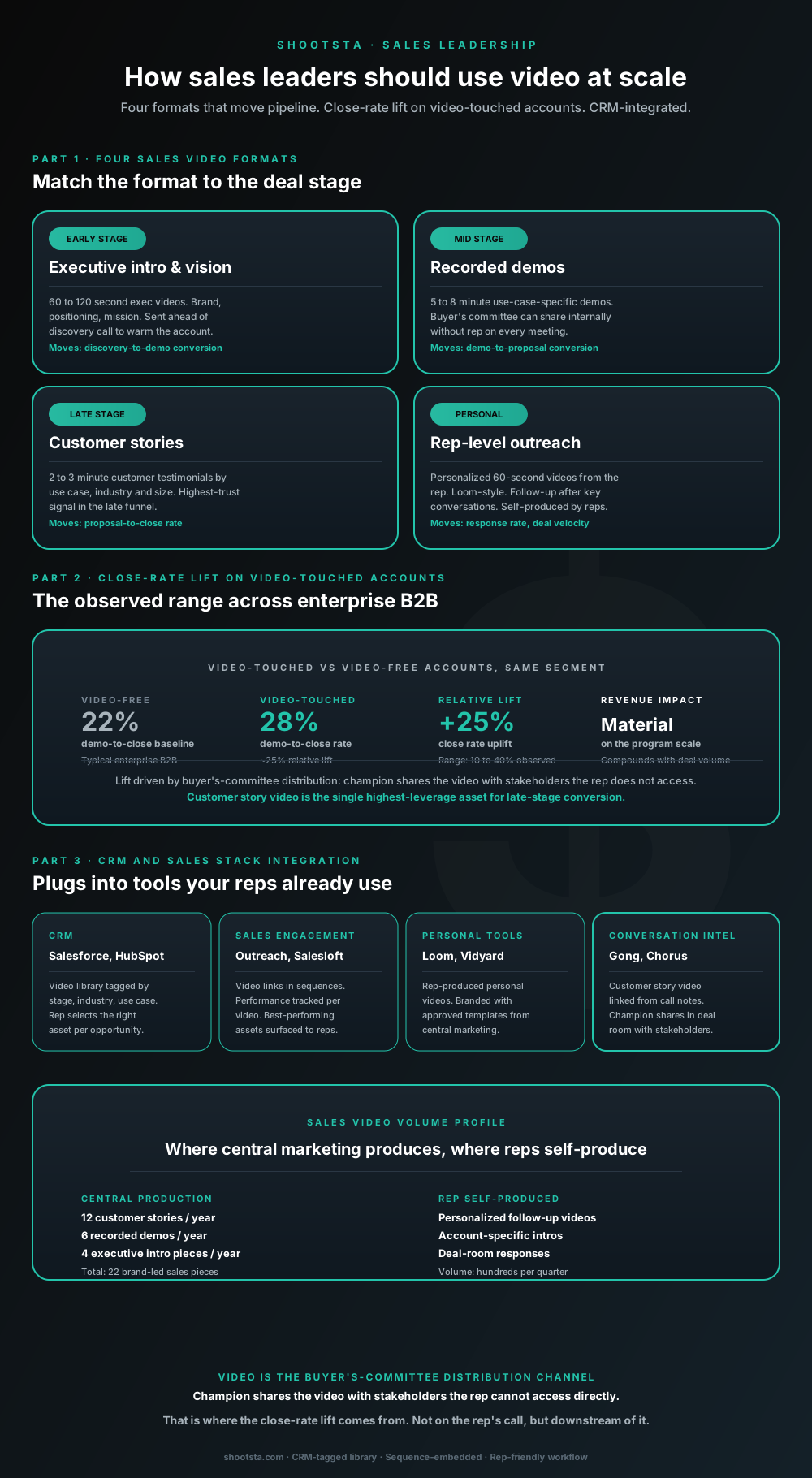
How sales leaders should use video at scale
Sales leaders mostly think about video as personalized rep outreach (Loom, Vidyard) or as marketing-produced customer stories. Both are useful. The bigger opportunity is the buyer's-committee distribution layer: assets the champion shares internally with stakeholders the rep does not access directly. That is where the close-rate lift compounds.
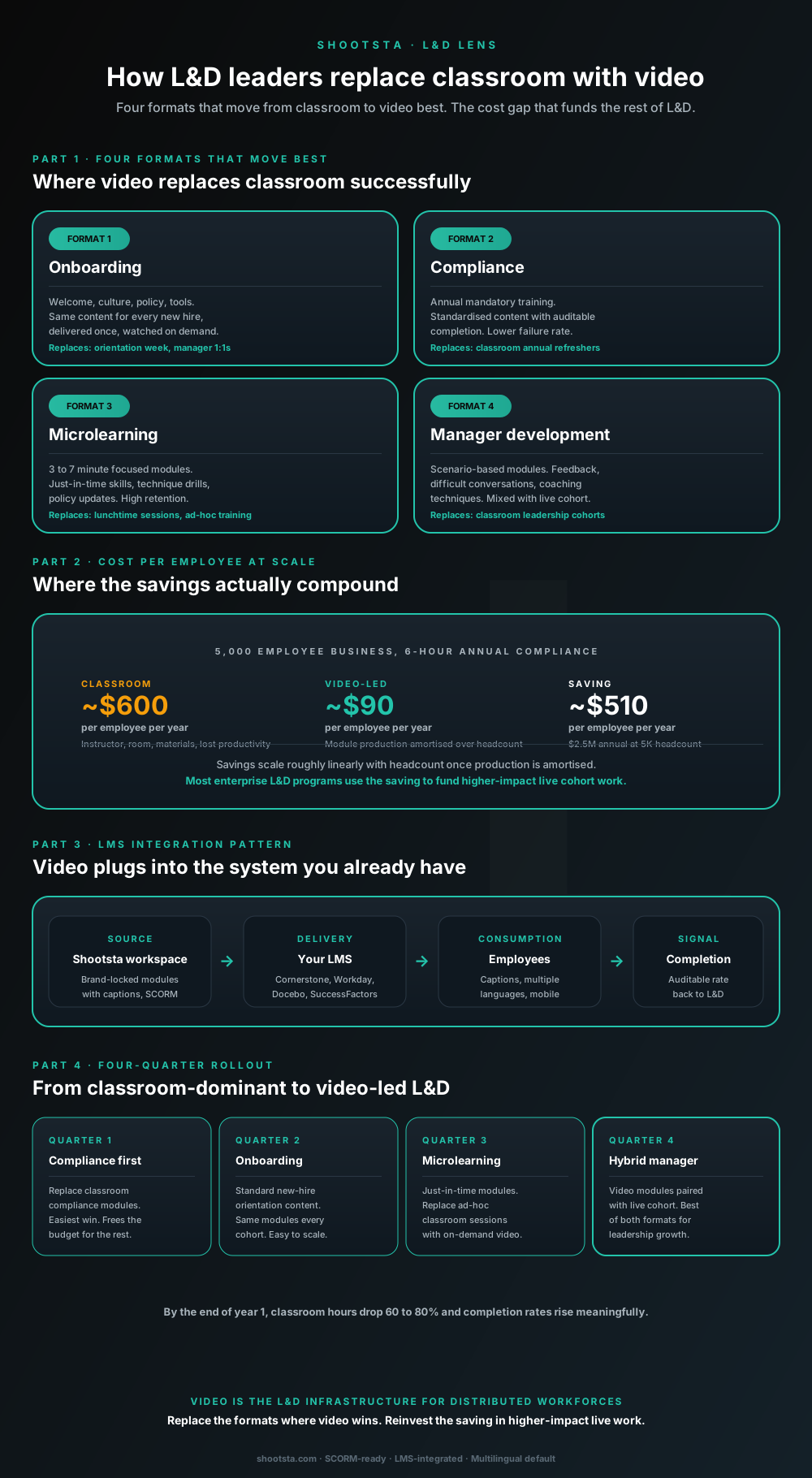
How L&D leaders replace classroom with video
L&D leaders running classroom-heavy training programs typically have the largest single opportunity in the business to free budget through format change. Four training formats move from classroom to video cleanly; the savings fund higher-impact live work. Here is the rollout that compounds learner adoption over four quarters.
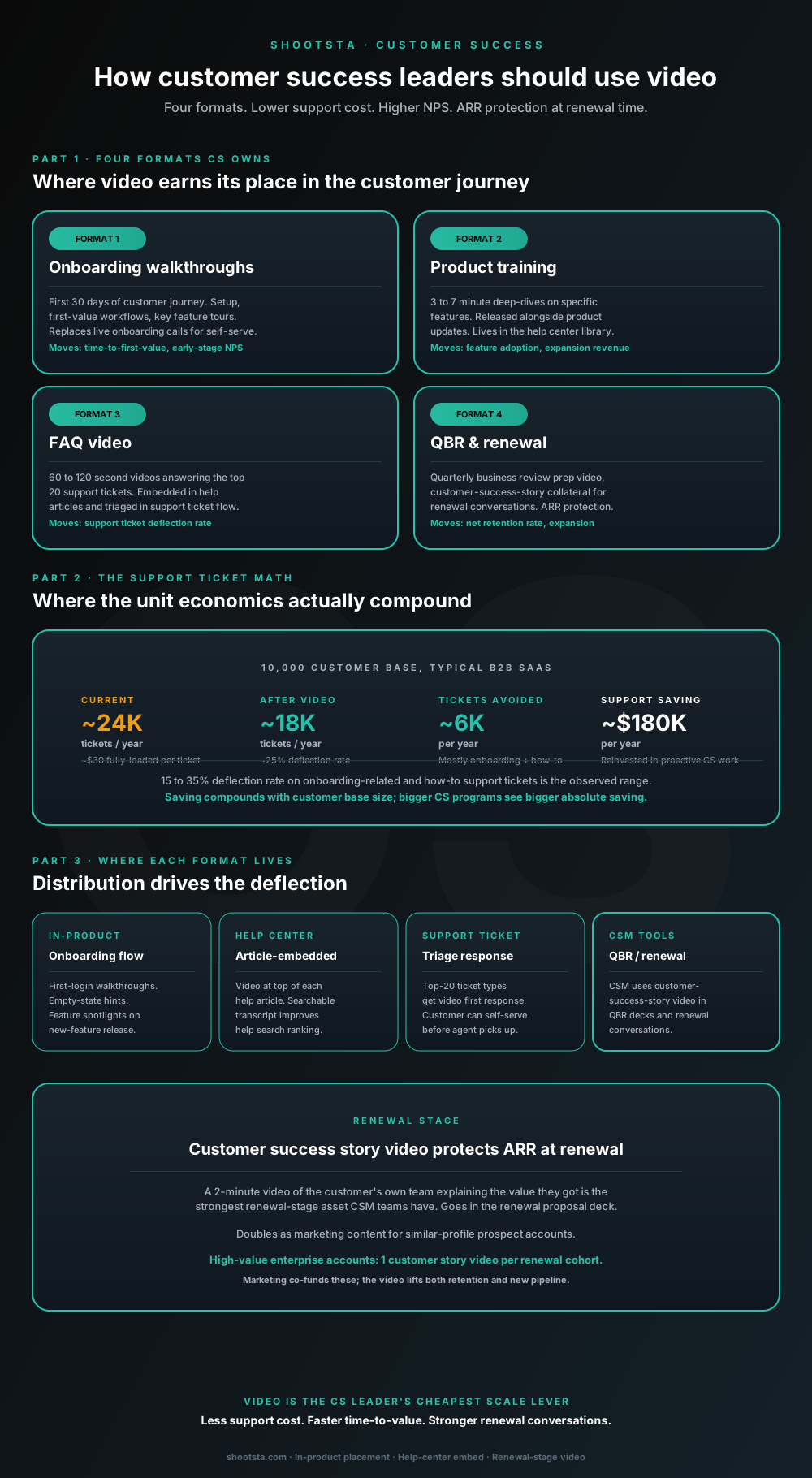
How customer success leaders should use video
Customer success leaders are usually under-resourced for both reactive support volume and proactive retention work. Video is the cheapest lever to fix both - 15 to 35% deflection on onboarding and how-to tickets, faster time-to-value, and renewal-stage customer story video that lifts net retention. Here is the four-format model and where each piece earns its place.
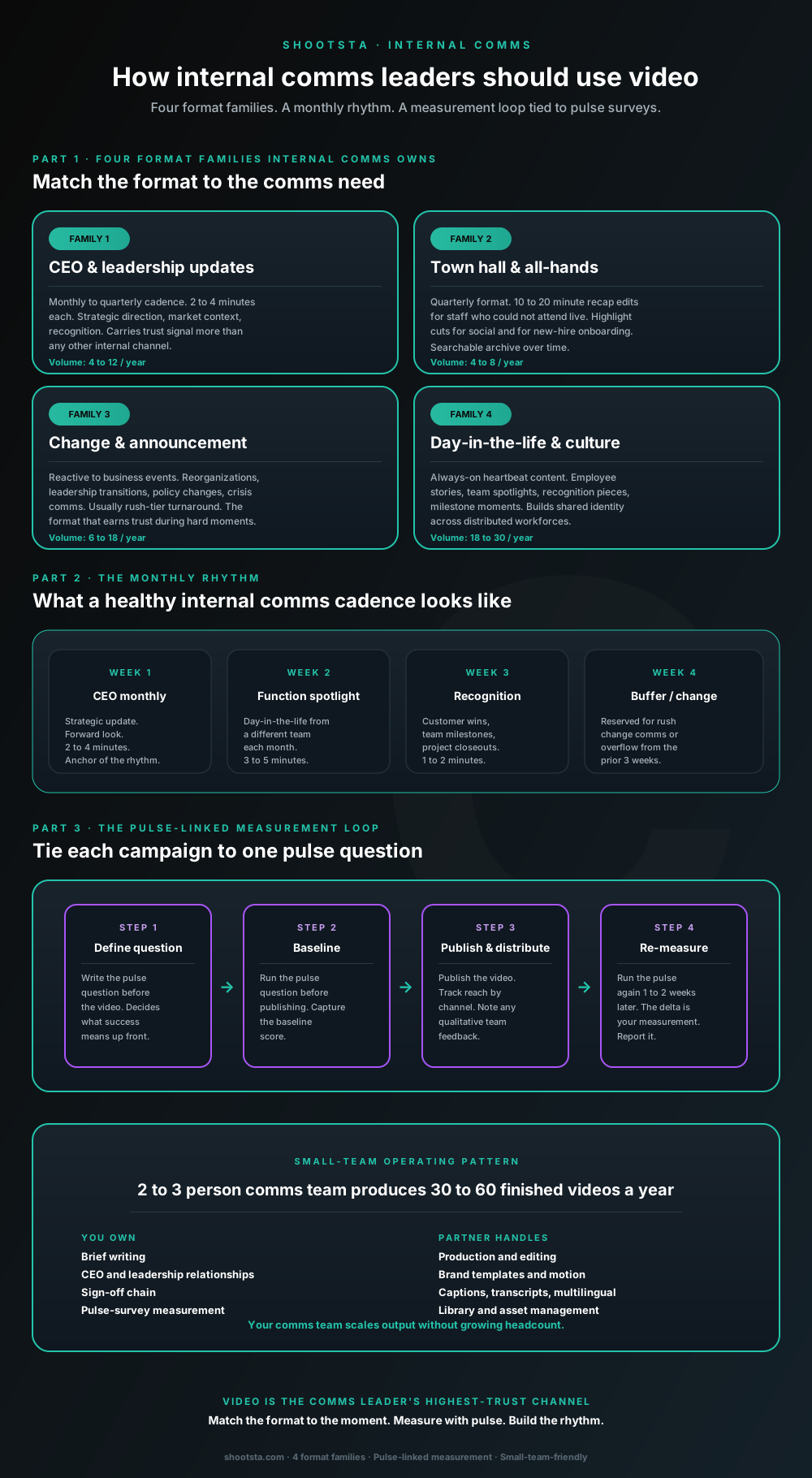
How internal comms leaders should use video
Internal comms leaders are usually under-resourced for the volume of video the business wants. The fix is not more headcount; it is structuring the program around four format families, a monthly rhythm, and a pulse-survey-linked measurement loop. Here is the operating pattern that lets a small comms team produce 30 to 60 finished videos a year.