
How to produce video for a product launch
shootsta.
How to produce video for a product launch
By Shootsta · Published April 23, 2026 · Updated October 2026
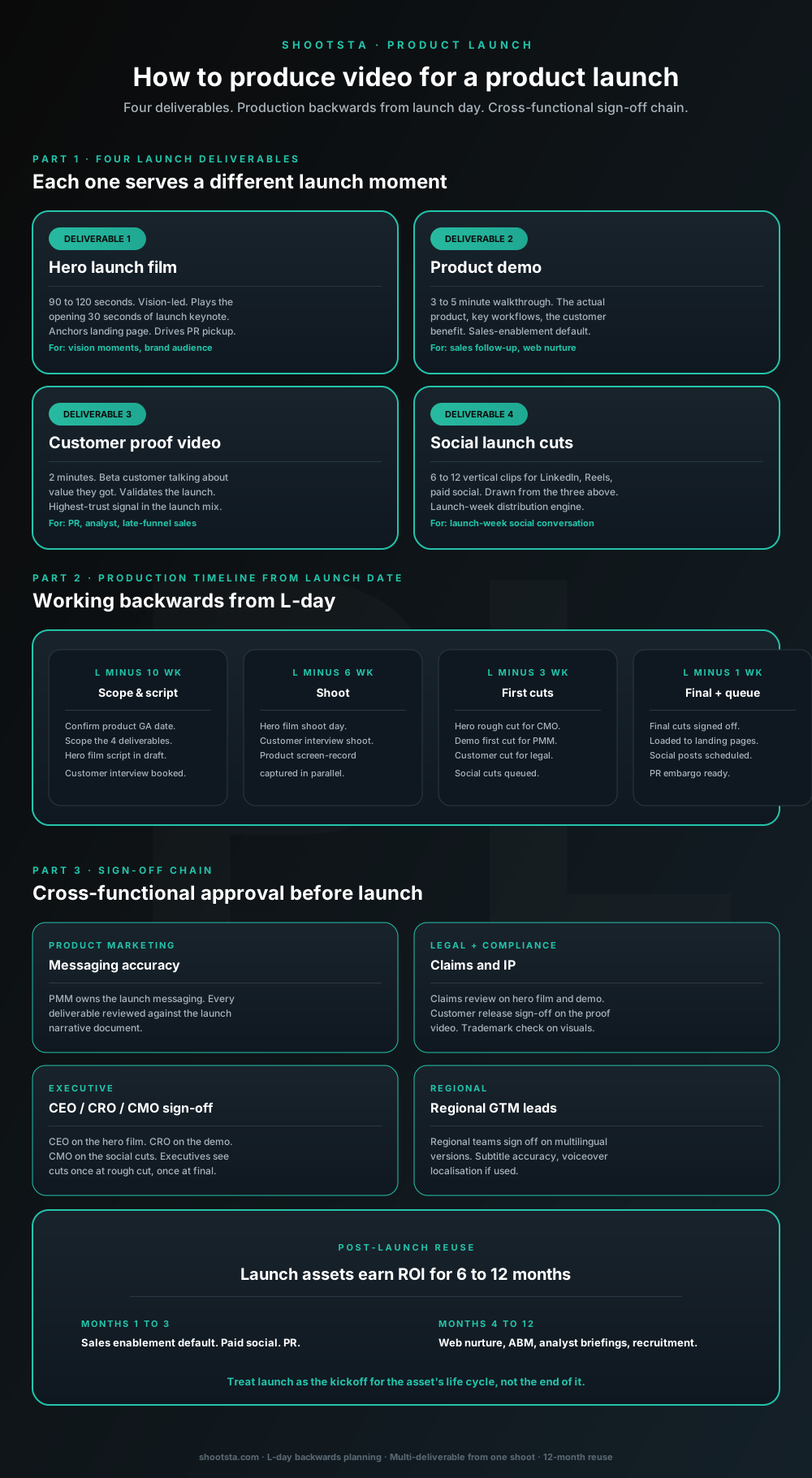
Product launch video is the highest-stakes asset most enterprise marketing teams produce in any given quarter. Four deliverables, a 10-week timeline working backwards from launch day, and a cross-functional sign-off chain that adds 1 to 2 weeks of review. The structural shift is treating launch as the kickoff of the asset's 12-month life cycle rather than as a single-day event.
Why most enterprise product launch video underperforms
In a typical enterprise product launch, marketing scopes a hero film 6 weeks before launch, and the agency delivers a polished 90-second piece 5 days before launch day. The team posts it once, watches the first week of views come in, and then never uses the asset again. The ROI conversation gets awkward, because the video was scoped as a launch-day deliverable rather than as an asset with a 12-month life.
A better approach is to produce four deliverables from one launch shoot. You plan the production timeline 10 weeks back from launch day and get cross-functional sign-off before launch. Then you put the assets to work across 12 months of marketing, sales, PR and recruitment. The same production budget now yields a set of distinct video assets that keep earning well past launch week.
Interactive checker
Does your launch timeline fit a 4-deliverable video program?
Set weeks until launch and the scope you want to land. The checker returns whether the timeline fits, what compresses, and what to consider dropping or shipping post-launch.
Requires ~10 weeks minimum
Timeline fits the full 4-deliverable program
10+ weeks is enough to scope, shoot, edit and approve all four deliverables (hero film, demo, customer proof, social cuts). Standard cross-functional sign-off chain works. No compression needed.
Scope your launch video programMinimums assume standard cross-functional sign-off (PMM, legal, executive, regional). Rush production can compress timelines by 1-2 weeks but increases per-piece cost and burns internal review capacity. Numbers are guides.
The four launch video deliverables
Deliverable 1: Hero launch film
The hero film runs 90 to 120 seconds and leads with the vision rather than the features. It opens the launch keynote and anchors the launch landing page. It also drives PR pickup and runs in social ads. It needs cinematic production quality because it carries the brand for the launch moment, so the cost depends on the scope of location work, talent and animation. It is the most visible asset of the launch, and the one executives most link with launch success.
Deliverable 2: Product demo
The demo is a 3 to 5 minute walkthrough of the real product. It covers the key workflows, the customer benefit and what changes from the previous state. For the 6 months after launch it is the default sales-enablement asset, used on the product page, in sales decks and in deal-room follow-ups. It is the workhorse of the launch asset library, because it is what the buying committee watches when they evaluate the product.
Deliverable 3: Customer proof video
The customer proof video runs about 2 minutes. A beta customer talks about the value they got from the pre-launch version of the product, which backs the launch with an outside voice. It is the highest-trust signal in the launch mix and the asset PR and analyst briefings need most. You need a confirmed beta customer 8 weeks ahead of launch. Late customer confirmation is the most common reason this deliverable drops out of scope.
Deliverable 4: Social launch cuts
Social launch cuts are 6 to 12 vertical clips for LinkedIn, Instagram Reels, TikTok and paid social. They are cut from the hero film, demo and customer proof rather than produced on their own, so they add little cost on top of the other three deliverables. These clips drive the launch-week social conversation and then feed the long tail of paid social campaigns in the months after launch.
The 10-week production timeline working backwards from launch day
L minus 10 weeks: scope and script
Confirm the product GA date with engineering and product. Scope the 4 deliverables and agree positioning with product marketing. The hero film script should reach its first version, and the beta customer interview should be booked. That booking is the long-lead item, and if it slips, the customer proof video drops out. Brief your production partner now.
L minus 6 weeks: shoot
The hero film shoot is usually a 1 to 2 day production, and the customer interview is filmed at the customer's office. In parallel, the production team works with product or product marketing to capture the product screen recordings. All raw capture should be complete by L minus 6 weeks, so the weeks after that are post-production.
L minus 3 weeks: first cuts
The CMO sees the hero film rough cut, while the PMM (product marketing manager) and product team see the demo first cut. The customer proof rough cut goes to legal review. Social cuts are queued from the hero and demo masters. These first cuts open the cross-functional review window.
L minus 1 week: final cuts and distribution prep
Final cuts are signed off and the assets are loaded to landing pages and the asset library. Social posts are scheduled and PR embargo materials are prepared. Sales gets enablement training on how to use the assets in the field. The last 7 days are operational.
L day: launch and distribute
The keynote opens with the hero film. The landing page goes live with the hero film, demo, customer proof and a social embed. When the PR embargo lifts, press coverage carries the hero film and customer proof. Social posts go out and sales follow-up sequences start using the launch assets.
The cross-functional sign-off chain
Launch video crosses more internal functions than almost any other enterprise video category. This is the sign-off chain we see work.
Product marketing: messaging accuracy
PMM owns the launch messaging document, and every deliverable is reviewed against it. PMM has full authority to send a cut back for messaging changes. This is where most launch video revisions happen, because messaging keeps shifting through launch week. Build 2 to 3 review rounds with PMM into the timeline.
Legal and compliance: claims and IP
Legal reviews the hero film and demo to confirm that performance claims, comparative claims and trademark use are defensible. The proof video needs a customer release, which goes through the customer's own marketing and legal sign-off chain as well as yours. If competitor products appear in the demo, legal also checks the visuals for trademark issues. Build 1 to 2 weeks of review buffer.
Executive: CEO, CRO, CMO sign-off
CEO signs off on the hero film (it appears at the keynote opening). CRO signs off on the demo and customer proof (they go into sales enablement). The CMO signs off across the program. Executives see cuts once at rough cut and once at final; more rounds than that breaks the timeline. Pre-brief the executives on what they will see and what their decision is.
Regional GTM leads: localization
Regional teams sign off on multilingual versions. They check subtitle accuracy, any voiceover language versions and the cultural fit of visual choices for major regions. Build regional review into the L minus 2 weeks window if multilingual versions are part of the launch.
What to descope when the timeline is tight
If the launch date moves up or the production start slips, cut scope in the order below.
The customer proof video drops first. Booking the customer interview and getting legal sign-off need 8+ weeks in practice. With less than 8 weeks, this asset becomes a post-launch follow-up rather than a launch-day deliverable.
The second change is to replace the hero film with a "vision animation" or motion-graphics piece. It costs less, takes less time to produce and is still the anchor visual for the launch. It builds less brand equity than full live-action hero work, but it does the job.
Third, swap the extended demo for a concise 2-minute demo. It needs less pre-production and a faster edit cycle, so it fits in 4 to 6 weeks.
Social launch cuts are the last thing to drop. Even with very little lead time, they can be cut from any video source in 1 week of post-production, and a launch is rarely worth doing without them.
How launch assets earn ROI through 12 months
Months 1 to 3: launch saturation
In the first quarter, the assets are the sales enablement default for every active opportunity. Paid social uses hero cuts and demo cuts as its main creative, and PR placements carry the hero film. Recruitment uses the hero film on the careers site as proof of company momentum. Launch ROI conversations tend to focus on this window, which is also where measurement is cleanest.
Months 4 to 12: long-tail distribution
Web nurture campaigns use the demo and customer proof. ABM motions use customer proof for similar-profile target accounts. Analyst briefings include the customer proof and hero film. Sales follow-up assets continue to include the demo. The long tail is where launch ROI compounds, and a program that treats launch as a single-week event misses most of the asset value.
How to measure product launch video success
Launch-week metrics (months 1)
In launch week, track the hero film's view count, completion rate and share rate on social. Count the press pickup that mentions the launch with a hero film embed or screenshot. Watch the landing page conversion rate as well.
Quarter 1 metrics (months 1-3)
Over the first quarter, track demo views in sales-influenced opportunities in your CRM. Compare the conversion rate on the launch landing page with video against the pre-launch baseline. Then measure pipeline-influenced revenue from accounts that engaged with launch assets.
12-month metrics
At 12 months, work out asset-level ROI. Divide the cost of producing the four deliverables by the total downstream value, which covers pipeline influenced, retention impact for existing customers and recruitment lift. Measured over a full year, launch assets show far more value than launch-week views suggest. We covered the broader measurement framework in how to measure enterprise video success.
Frequently asked questions
What if our product is not yet ready 6 weeks before launch?
This is a common challenge. The hero film does not need the finished product, because it is vision-led and uses representational visuals. The demo needs a near-finished product, but it can use feature mockups for the few features still in development. Customer proof requires a customer using the actual product, which is the constraint that most often forces a beta customer late in the cycle.
How do we handle simultaneous regional launches?
Deliver multilingual subtitles for the hero film and demo across your regional launch markets. Replace the voiceover on the demo in markets where reading subtitles would weaken the format, which is usually your largest few markets. Regional GTM leads sign off on their own version. We covered the multilingual production layer in how to scale video across global offices.
What about analyst briefings and the analyst track at launch?
Analysts see the hero film and customer proof under embargo 1 to 2 weeks before public launch. Demo is shown live at the briefing rather than pre-recorded because analysts ask product questions on the fly. Build the analyst-track materials separately from the public-launch materials; the messaging is similar but the format and depth differ.
Should we shoot the launch keynote itself for video reuse?
Yes. The keynote becomes recap content for the months after launch (similar pattern to event recap). Multi-camera capture of the keynote itself produces a long-form video for YouTube, social cuts for ongoing distribution, and speaker excerpts for sales decks. We covered the event recap model in how to produce event recap video at scale.
How do we manage the cross-functional sign-off chain efficiently?
Use one platform where all reviewers see the same cut at the same time, instead of running separate email threads. Ask for time-coded comments rather than written paragraphs. Set sign-off SLAs, typically 3 business days at rough cut and 2 business days at final. When a launch misses its timeline, the usual cause is review cycles running longer than planned rather than production missing deadlines.
Can the hero film be reused for the next launch?
You can reuse parts of it. The vision-level footage usually has a 12 to 24 month shelf life, while the specific product mentions age out faster. With a new voiceover and motion graphics overlays, a good share of hero film footage can carry into the next launch, which cuts the production cost of that launch.
Where to go next
For the customer story production model that the customer proof video uses, read how to produce customer story video at scale. For the CMO-level view of how launch video fits into the broader marketing program, read how a CMO should think about enterprise video. For the event recap layer that captures the launch keynote itself, read how to produce event recap video at scale.
To scope launch video for your next product release, book a free consultation.
Take this article with you
Read the latest at shootsta.com/blog/how-to-produce-video-for-a-product-launch
You might also like
How to Brief an Animation Project
How to Brief an Animation Project
An animation brief is the document you send to your production partner before work starts. Get it right and you cut revision cycles in half. Get it wrong and you discover mid-production that everyone disagrees on what the video is for. This is what a complete brief looks like.
Animation for change management comms
Animation for change management comms
Animation handles change management communications better than live video for three reasons: no on-camera executives required during sensitive periods, scene-level updates when plans shift, and a single production that works across global teams with voiceover-only language swaps.
How sales leaders should use video at scale
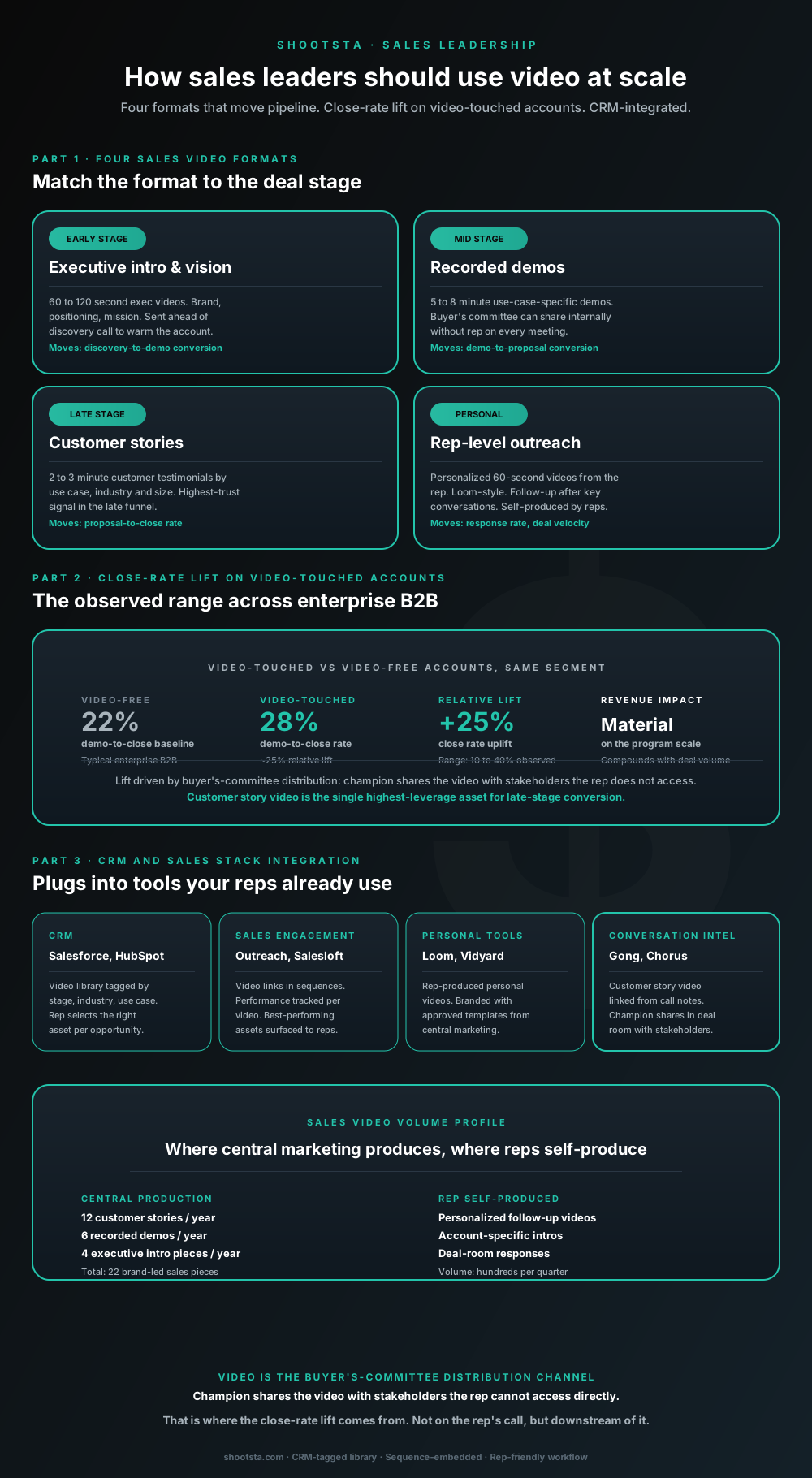
Sales leaders mostly think about video as personalized rep outreach (Loom, Vidyard) or as marketing-produced customer stories. Both are useful. The bigger opportunity is the buyer's-committee distribution layer: assets the champion shares internally with stakeholders the rep does not access directly. That is where the close-rate lift compounds.
How L&D leaders replace classroom with video
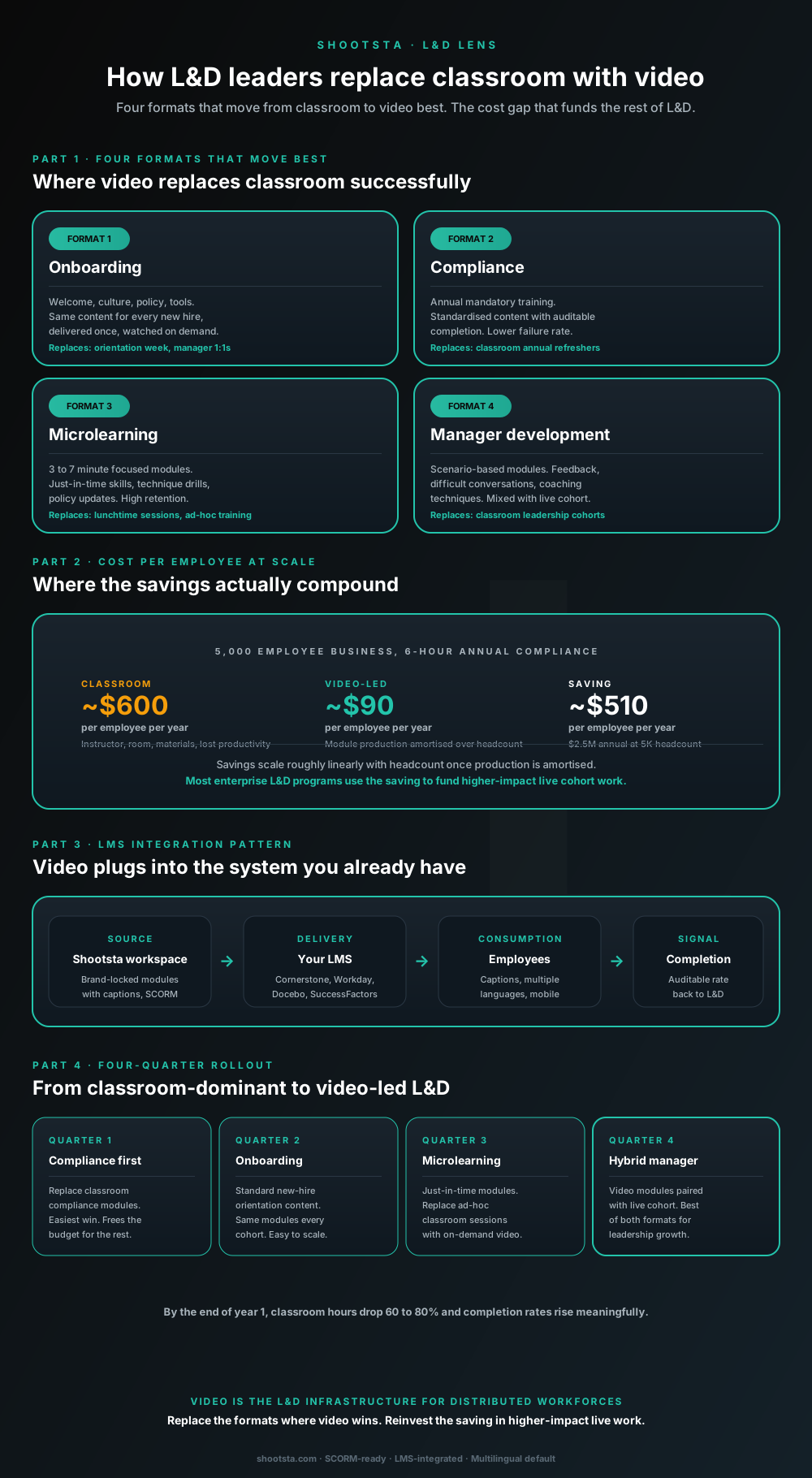
L&D leaders running classroom-heavy training programs typically have the largest single opportunity in the business to free budget through format change. Four training formats move from classroom to video cleanly; the savings fund higher-impact live work. Here is the rollout that compounds learner adoption over four quarters.
How customer success leaders should use video
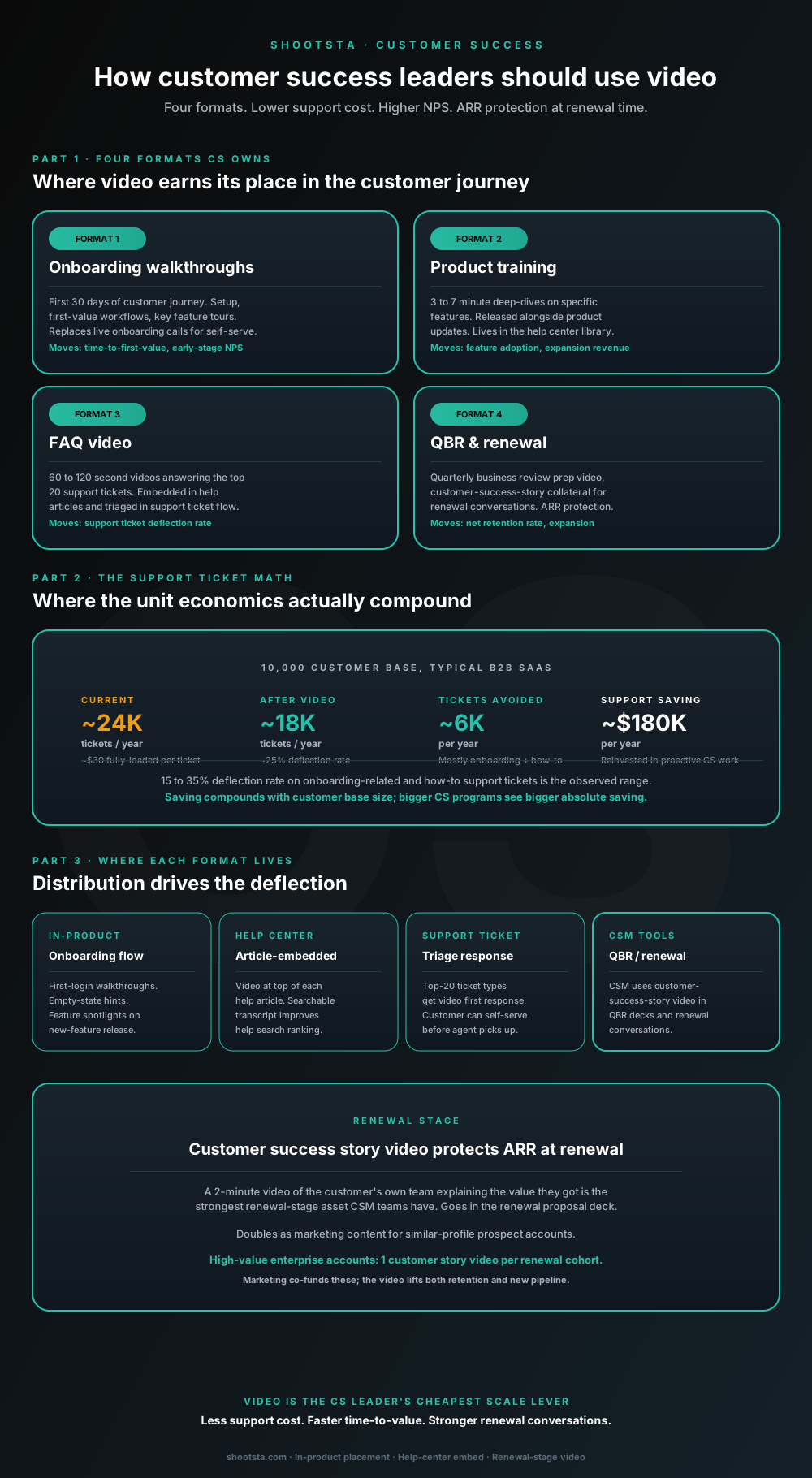
Customer success leaders are usually under-resourced for both reactive support volume and proactive retention work. Video is the cheapest lever to fix both - 15 to 35% deflection on onboarding and how-to tickets, faster time-to-value, and renewal-stage customer story video that lifts net retention. Here is the four-format model and where each piece earns its place.
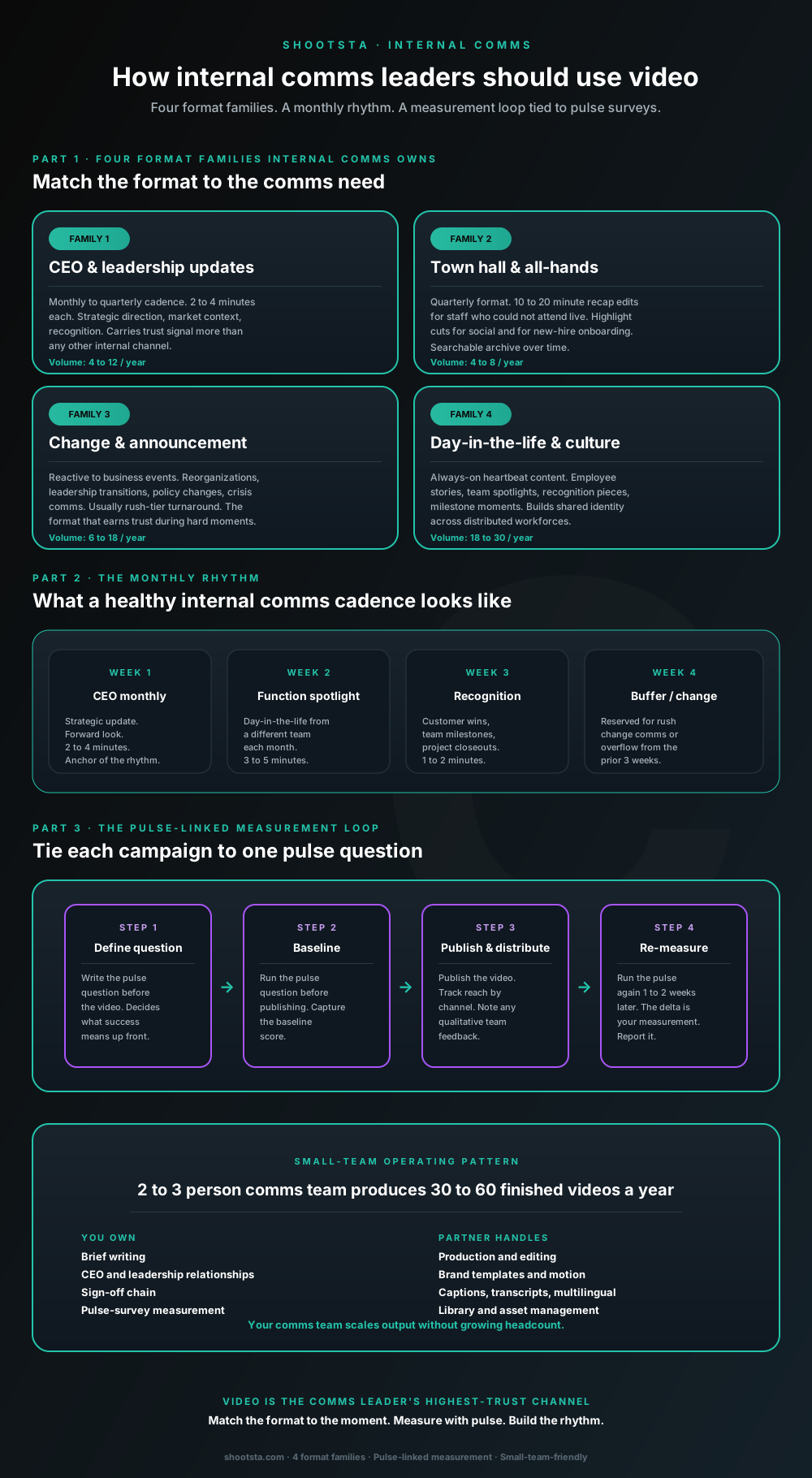
How internal comms leaders should use video
Internal comms leaders are usually under-resourced for the volume of video the business wants. The fix is not more headcount; it is structuring the program around four format families, a monthly rhythm, and a pulse-survey-linked measurement loop. Here is the operating pattern that lets a small comms team produce 30 to 60 finished videos a year.