
How a partner gets up to speed on your industry
shootsta.
How a partner gets up to speed on your industry
By Shootsta · Published May 23, 2026 · Updated May 2026
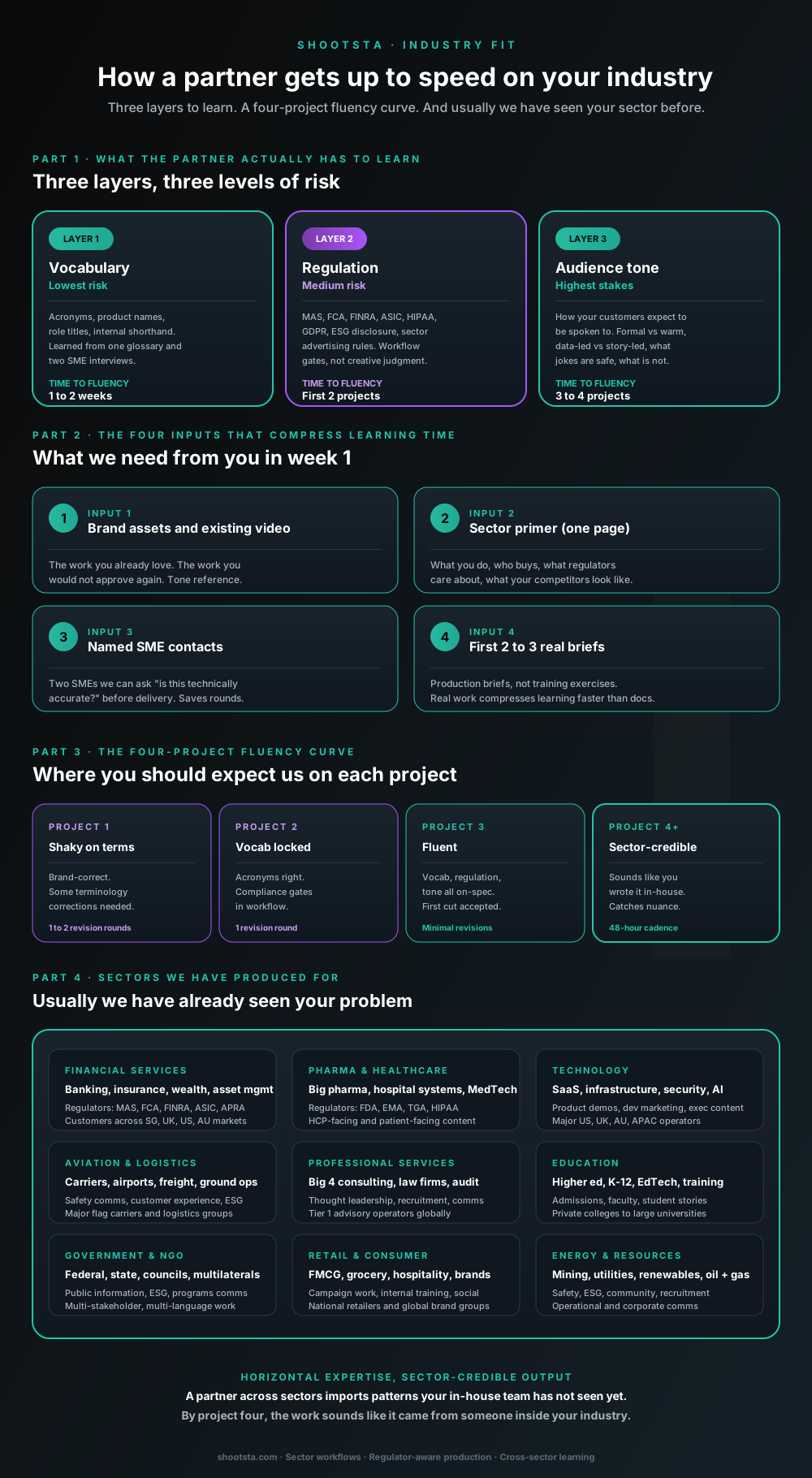
Most enterprise buyers worry that a horizontal video partner will sound clueless about their sector. Fair concern. The reality: three layers to learn, a four-project fluency curve, and we have usually produced for adjacent customers already. Here is what onboarding actually looks like.
The honest version of the industry-fit question
"Do you understand our industry?" is the question almost every enterprise buyer asks. It is a reasonable question. A video partner that does not know the difference between MAS in Singapore and FCA in the UK will produce financial services content that has to be reworked. A partner that does not know the difference between HCP-facing and patient-facing pharma content will produce work that compliance rejects. A partner that does not know your buyer's vocabulary will produce sales videos that feel slightly off without anyone being able to say exactly why.
The honest answer is: a horizontal video partner will not be sector-credible on project one. They will be sector-credible by project four. The work in between is structured to get there fast, and the partner brings cross-sector patterns your in-house team has not seen yet.
The three layers a partner has to learn
Industry fit breaks into three layers. Each one has a different risk profile and a different time to fluency.
Layer 1: Vocabulary (low risk, 1 to 2 weeks)
Acronyms, product names, role titles, internal shorthand. Easy to learn, fast to correct. A glossary plus two SME interviews cover most of it. The first project usually surfaces 10 to 20 vocabulary fixes; by project two the vocabulary is locked. This layer rarely causes a project to fail; it just adds revision rounds early.
Layer 2: Regulation (medium risk, first 2 projects)
MAS, FCA, FINRA, ASIC, APRA, HIPAA, GDPR, ESG disclosure rules, sector advertising codes. This is workflow-shaped, not creative-shaped. The right answer is to gate the production workflow on the right reviews (legal, compliance, risk) and let the regulator-aware processes run inside the platform. Once the gates are wired up, the workflow handles regulation; the editor team is not making compliance judgment calls.
Layer 3: Audience tone (highest stakes, 3 to 4 projects)
How your customers expect to be spoken to. Formal vs warm. Data-led vs story-led. What jokes are safe in your sector vs which ones will cost the brand. This is the hardest layer because it is mostly tacit knowledge - the in-house team can tell when it is wrong but cannot always articulate why. Fluency here comes from production volume, brand custodian feedback, and the brand-trained editors stabilising around your voice.
The four inputs that compress the curve
The single biggest variable in how fast a partner becomes sector-credible is what the customer can supply in week one. Four inputs compress the curve from 6 or 7 projects to 3 or 4.
1. Brand assets and 3 to 5 examples of existing video
The work you already love. The work you would not approve again. Two reference points are enough to triangulate tone, pace, framing and what the brand custodian rejects. Without these, the partner is guessing.
2. One-page sector primer
What you do. Who buys. What regulators care about. Who your competitors are. One page is enough. The partner does not need a 40-slide market overview; they need the orientation a new hire would get on their first day.
3. Two named SME contacts
People we can ask "is this technically accurate?" before delivery. Two SMEs willing to take a 5-minute Slack message saves an entire revision round per project. Without named contacts, the partner has to flag every technical claim for review, which slows everything down.
4. The first 2 to 3 real briefs
Real production briefs, not training exercises. The partner learns more from making one customer story video than from a week of sector orientation. Real work compresses learning faster than documentation, especially for the tone layer.
Most enterprise customers can supply all four in week one. Customers that supply all four are usually fluent by project three. Customers that supply none can take six to eight projects to reach the same point.
Interactive estimator
How fast will a partner be sector-credible on your work?
Pick your sector, set the regulatory environment, and toggle the onboarding inputs you can supply. The estimator returns an expected number of projects to fluency and what shifts the curve.
Shootsta familiarity: 5 / 5
Higher regulation extends fluency curve
Onboarding inputs you can supply in week 1
Projects to fluency
3.5
to sector-credible output
Calendar time
~11 weeks
at typical 2-3 projects per month
Inputs supplied
2 / 4
2 input(s) to add
What shifts the curve
Sector familiarity does most of the work: a horizontal partner who has produced for financial services multiple times before brings pattern memory your in-house team did not have to teach. High-regulation environments add review cycles but the workflow handles them once the gates are wired up. Missing onboarding inputs are the most-controllable lever - supplying all four compresses the curve by roughly one project.
Talk through your sector specificsEstimates based on observed onboarding curves across financial services, pharma, technology, aviation, professional services, education, government, retail and energy customers. Niche or first-of-sector engagements naturally take longer; broader sectors where Shootsta has prior portfolio compress faster.
The four-project fluency curve
Here is what to expect on each of the first four projects, assuming the four onboarding inputs are supplied.
Project 1: Shaky on terms, brand-correct
Brand templates are locked. Lower thirds, fonts, colour palettes, motion graphics all on-spec. Some terminology corrections needed (an acronym used wrong, a product name in the wrong form, a job title misnamed). Usually one to two revision rounds. The output is publishable but the SME notices small things.
Project 2: Vocabulary locked, compliance gates in workflow
Terminology corrections from project 1 are reflected in the brand templates. The compliance review steps are wired into the workflow. First cut quality is higher; revision rounds drop to one. Sector vocabulary is right.
Project 3: Fluent
Vocabulary, regulation and tone are all on-spec on the first cut. Most projects approve with light revisions or no revisions at all. The work feels like it was made by someone who knows your sector. The 48-hour turnaround starts holding consistently.
Project 4 and beyond: Sector-credible
The work sounds like it was written in-house. The brand-trained editor team catches nuance the in-house team did not have to flag. New format requests (a different style of customer story, a new compliance-aware product video, a recruitment piece for a specialist role) build on the foundation instead of starting fresh.
The horizontal partner advantage
The argument against a horizontal partner is that they will be slower to learn your sector than a sector-specialist agency. That is true for the first two projects. By project four, the comparison flips, and here is why.
A horizontal partner has produced for adjacent sectors. The pharma partner who has only ever produced for pharma has seen pharma patterns. The horizontal partner has seen pharma, financial services, professional services and tech patterns - and the patterns that hold across sectors are often more useful than the patterns inside one sector. Customer story structures transfer. Executive video formats transfer. Multi-stakeholder approval workflows transfer.
The horizontal partner imports things sector-specialists miss. How tech companies handle product launches translates to how pharma companies handle product launches. How professional services firms run thought leadership translates to how financial services firms run thought leadership. The cross-sector pattern library is part of what you are buying.
Sectors Shootsta has produced for
Nine sectors with deep production history. Customers in each sector have produced consistent volume over multiple years, so the patterns are well-tested.
Financial services
Banking, insurance, wealth management, asset management, fintech. Regulators across MAS (Singapore), FCA (UK), FINRA and SEC (US), ASIC (Australia), APRA (Australia). Customer-facing, advisor-facing and internal comms work. We covered the FS-specific workflow on our Singapore financial services video production page.
Pharma and healthcare
Big pharma, hospital systems, MedTech, biotech. Regulators including FDA, EMA, TGA, HIPAA. Both HCP-facing and patient-facing content, with the appropriate compliance gates in the workflow.
Technology and SaaS
Infrastructure, security, AI, vertical SaaS, dev tools. Product demos, developer marketing, customer stories, executive content. Customers across US, UK, AU and APAC. The fastest-iterating sector category we work in.
Aviation and logistics
Carriers, airports, freight, ground operations. Safety comms, customer experience pieces, ESG and sustainability content. Major flag carriers and global logistics operators are long-standing customers.
Professional services
Big 4 consulting, law firms, audit firms, specialist advisory. Thought leadership, recruitment, internal comms, partner-led content. The sector with the most multi-stakeholder approval chains we handle.
Education
Higher education, K-12, EdTech, corporate training. Admissions, faculty, student stories, brand campaigns. From small US private colleges through to large state universities.
Government and NGO
Federal, state, councils, multilateral organizations. Public information, ESG programs, multi-language community comms. Often multi-stakeholder, multi-language, accessibility-required content.
Retail and consumer brands
FMCG, grocery, hospitality, consumer goods. Campaign work, internal training, social content. National retailers and global consumer brand groups.
Energy and resources
Mining, utilities, renewables, oil and gas. Safety, ESG, community engagement, recruitment. Both operational and corporate communications work.
What happens if you are in a niche sector we have not seen?
It happens occasionally - aquaculture, specialty chemicals, semiconductor fabrication, micro-vertical SaaS. The fluency curve extends to 5 or 6 projects instead of 3 or 4. The onboarding inputs become more critical (especially the SME contacts and the first real briefs). We are transparent about the longer ramp in scoping; what we do not do is pretend to be sector-experts on day one.
The cross-sector pattern library still imports value even for niche sectors. The structural patterns of customer story, executive video, training module and recruitment piece hold regardless of sector. Only the surface (vocabulary, tone, sector-specific compliance) has to be learned. That is what gets compressed by the four-project curve.
Frequently asked questions
How do you handle highly regulated content in the first project?
The compliance review gate runs inside the workflow from project one, before the partner has full fluency. The editor team produces a first cut, the legal or compliance team reviews it inside the platform, the editor revises. The compliance team is doing what they would have done anyway; the workflow just makes it auditable. By project two or three, the editor team has internalised the common compliance fixes and the review cycles get shorter.
What if our SMEs do not have time to support onboarding?
This is the most-common reason fluency curves extend. The fix is usually one 30-minute SME interview per project for the first three projects, not ongoing SME involvement. Most SMEs can spare 30 minutes for a specific high-quality output; what they cannot spare is open-ended general onboarding. We design the SME asks to be small and specific.
What about sector-specific creative direction?
Creative direction stays with the in-house team. The partner produces against the brief; they do not write the brief. Sector-specific creative judgment (what a pharma launch should feel like vs a financial services launch) belongs with the customer and their agency partners if they have any. Shootsta is the production layer that executes the creative direction consistently and at brand-locked quality.
Do you have sector-specific case studies?
Yes, with named customers in most of the nine sectors above. Specific case studies are shared during the sales process under NDA where the customer prefers privacy, and openly where the customer has agreed to be public. Procurement teams comparing partners can ask for sector-relevant references and we will provide them.
How does sector familiarity change pricing?
It does not. Subscription pricing is volume-based, not sector-based. What sector familiarity affects is the speed of the first 3 to 4 projects (more familiar sectors get to the 48-hour cadence faster). The pricing structure does not change because of sector.
What happens when our sector regulations change?
The compliance gates in the workflow get updated. Most regulatory changes (a new disclosure requirement, a new ad code, an updated review threshold) take 2 to 4 weeks to reflect in the workflow once the customer flags them. The advantage of a partner who has multiple customers in the same sector is they often see the regulatory change coming from another customer before it hits yours.
Where to go next
For the working pattern alongside an existing in-house team that owns sector strategy, read how a video partner extends your in-house team. For the brand-control mechanics that hold sector quality consistent, read brand control with a video production partner. For the onboarding structure that the four-project curve fits inside, read how to pilot a video production partner.
To talk through your specific sector, regulators and SME availability, book a free consultation.
Take this article with you
Read the latest at shootsta.com/blog/how-a-partner-gets-up-to-speed-on-your-industry
You might also like
How to Brief an Animation Project
How to Brief an Animation Project
An animation brief is the document you send to your production partner before work starts. Get it right and you cut revision cycles in half. Get it wrong and you discover mid-production that everyone disagrees on what the video is actually for. This is what a complete brief looks like.
Animation for change management comms
Animation for change management comms
Animation handles change management communications better than live video for three reasons: no on-camera executives required during sensitive periods, scene-level updates when plans shift, and a single production that works across global teams with voiceover-only language swaps.
How sales leaders should use video at scale
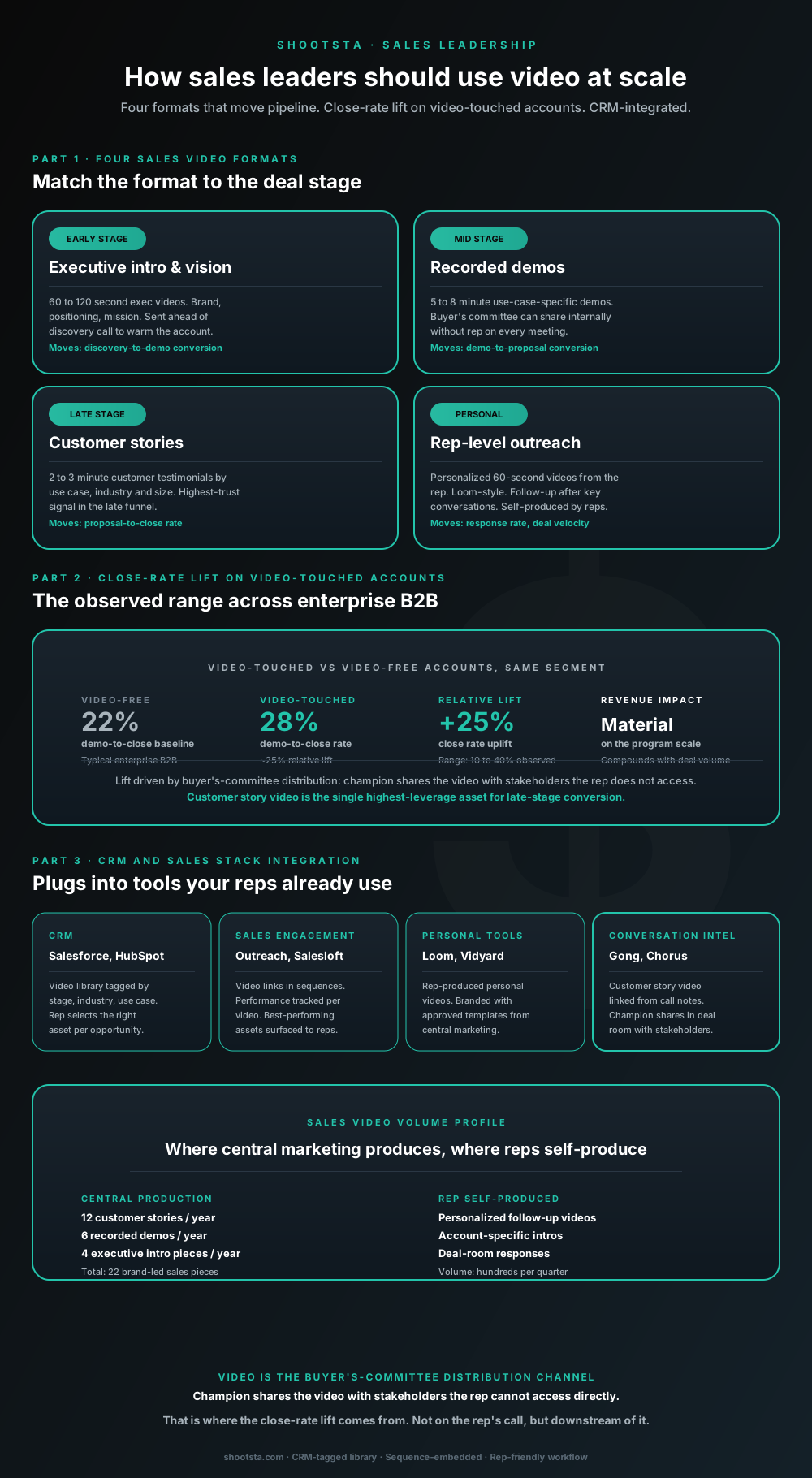
Sales leaders mostly think about video as personalized rep outreach (Loom, Vidyard) or as marketing-produced customer stories. Both are useful. The bigger opportunity is the buyer's-committee distribution layer: assets the champion shares internally with stakeholders the rep does not access directly. That is where the close-rate lift compounds.
How L&D leaders replace classroom with video
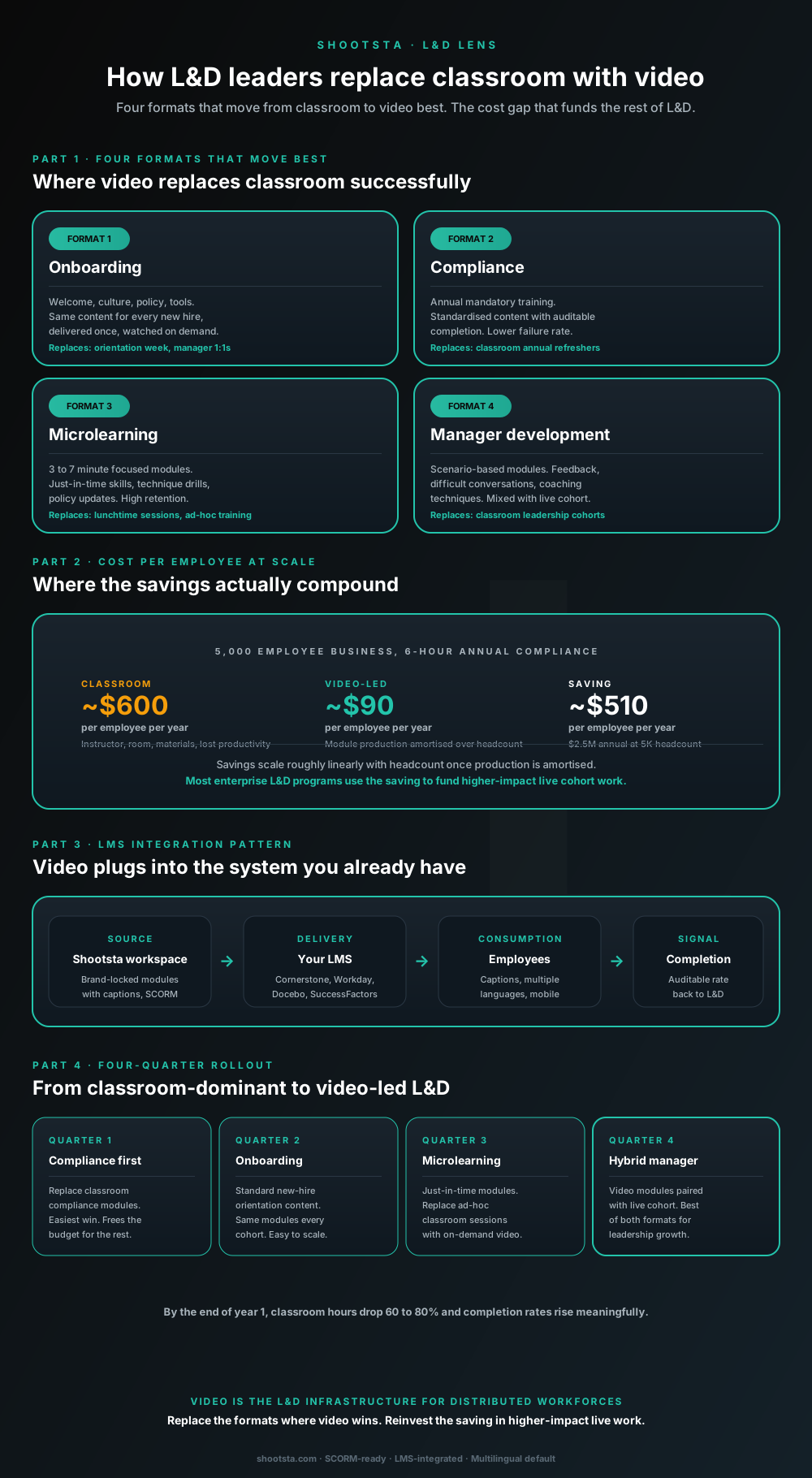
L&D leaders running classroom-heavy training programs typically have the largest single opportunity in the business to free budget through format change. Four training formats move from classroom to video cleanly; the savings fund higher-impact live work. Here is the rollout that compounds learner adoption over four quarters.
How customer success leaders should use video
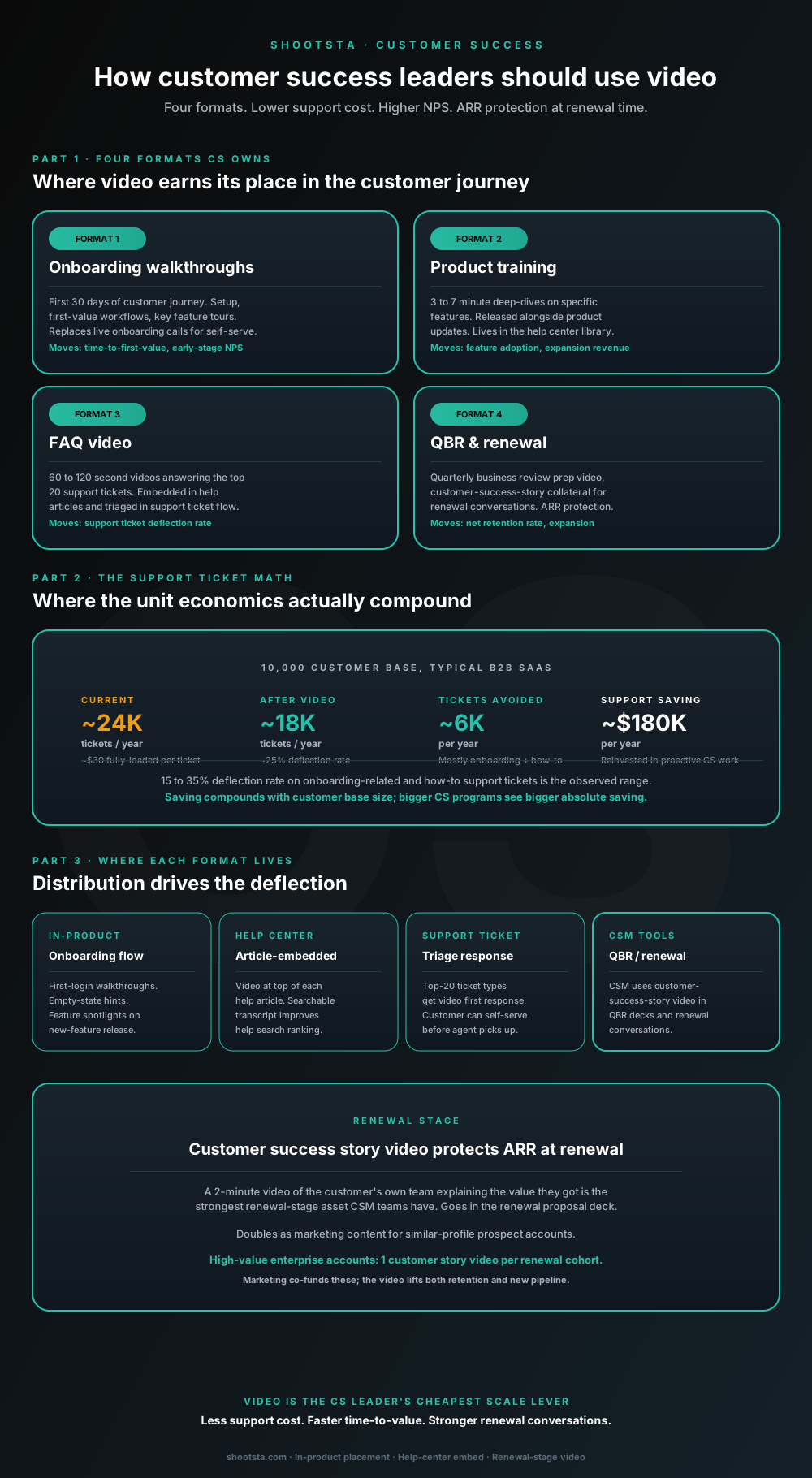
Customer success leaders are usually under-resourced for both reactive support volume and proactive retention work. Video is the cheapest lever to fix both - 15 to 35% deflection on onboarding and how-to tickets, faster time-to-value, and renewal-stage customer story video that lifts net retention. Here is the four-format model and where each piece earns its place.
How internal comms leaders should use video
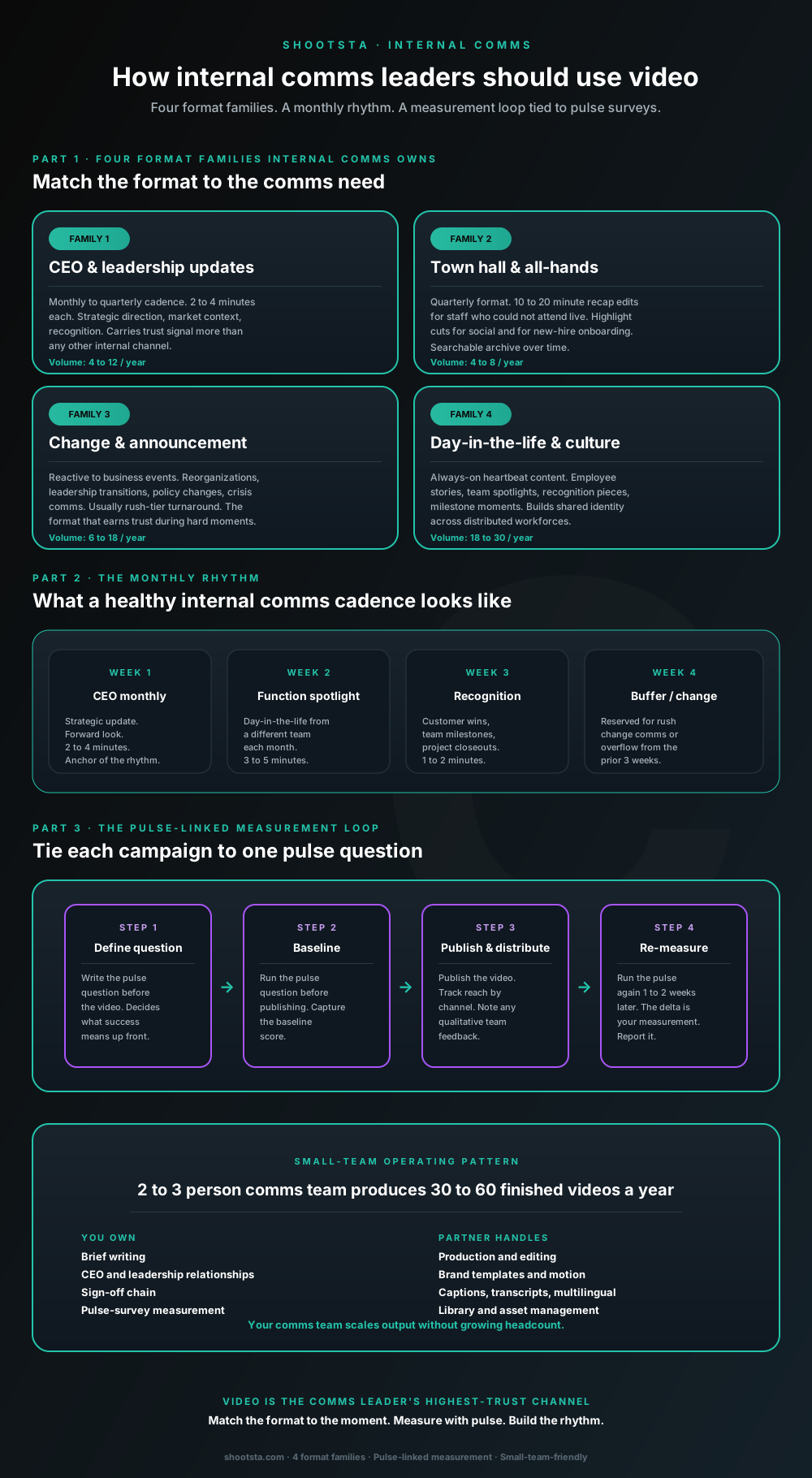
Internal comms leaders are usually under-resourced for the volume of video the business actually wants. The fix is not more headcount; it is structuring the program around four format families, a monthly rhythm, and a pulse-survey-linked measurement loop. Here is the operating pattern that lets a small comms team produce 30 to 60 finished videos a year.