
How to produce a CEO video update series
shootsta.
How to produce a CEO video update series
By Shootsta · Published April 29, 2026 · Updated October 2026
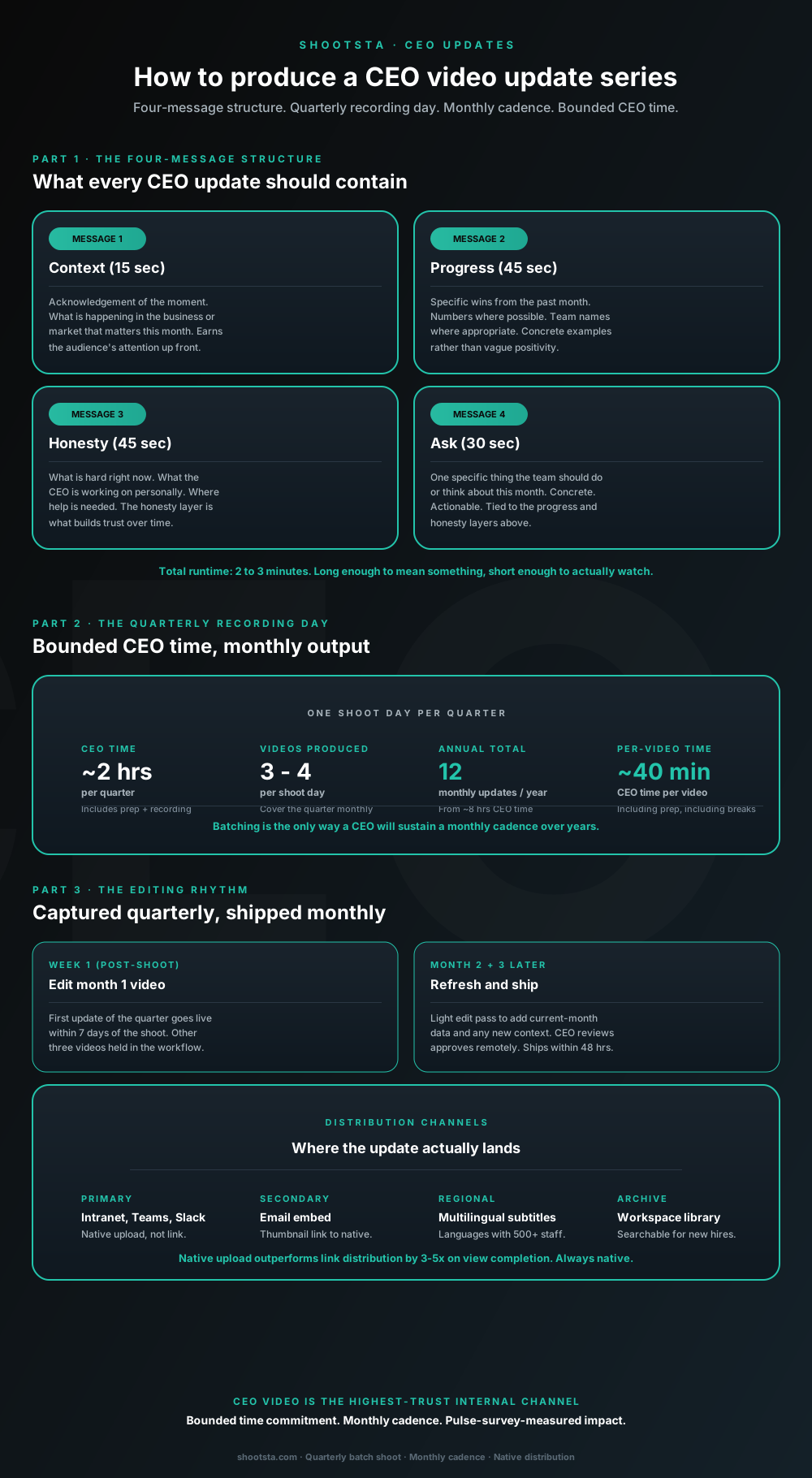
Monthly CEO video updates are the highest-trust internal channel an enterprise has and the format CEOs most often resist because they fear unbounded time commitment. The fix is structural: four-message format, quarterly batch shoot days, monthly editing rhythm, native distribution. Roughly 8 hours of CEO time produces 12 monthly updates a year.
Why CEO video updates work and why most programs never start
A CEO video update is one of the most trusted internal channels an enterprise has. Employees tend to say they feel better informed about company direction when leadership speaks to them on video instead of through an email or a slide at the town hall. A short update from the person running the company also holds attention longer than most other internal video formats.
Most CEO video programs never start because the CEO fears a time commitment with no end. The unstated worry is "I have to be on camera every week forever." You fix that with structure rather than persuasion. Once the CEO sees that a monthly series needs roughly 8 hours of their time a year, batched into four recording days, the answer is usually yes.
The four-message structure that holds an audience
An effective CEO update carries four messages and runs two to three minutes in total. That is long enough to say something real and short enough that people watch to the end.
Message 1: Context (15 seconds)
The CEO opens by naming what is happening in the business or the market this month. It might be a new customer, a market shift, a sector event or a milestone the company just hit. This layer earns attention up front because it shows the CEO is watching the same things the employee is.
Message 2: Progress (45 seconds)
This part covers specific wins from the past month, with numbers where you have them. Name teams where it fits, because public recognition from the CEO is one of the strongest moves a leader has. Use concrete examples instead of vague positivity, since this is the message employees forward to their teams.
Message 3: Honesty (45 seconds)
Here the CEO says what is hard right now, what they are working on personally and where they need help. Over time, this honesty layer is what builds trust. Many CEO updates skip it because it feels uncomfortable, and in our experience the updates that include it land better with employees than the ones that leave it out.
Message 4: Ask (30 seconds)
The update closes with one specific thing the team should do or think about this month. Keep it concrete and something people can act on, and tie it to the progress and honesty layers above. The ask turns the update from information into something useful. Without it, the video reads as a broadcast; with it, the video feels like a leader talking with the team.
The quarterly recording day model
The single biggest practical decision in producing a sustainable CEO update series is the recording cadence. Daily, weekly or even monthly recording sessions burn CEO time and break down within 6 months. The model that holds is batching: one recording day per quarter, three to four videos recorded back-to-back.
Per recording day, the CEO commits roughly 2 hours of total time including prep, recording 3 to 4 videos, and a buffer. That produces three monthly updates plus a fourth held in the workflow as either a buffer for a slipped month or a bonus piece for a major announcement. Four recording days per year produces 12 monthly updates plus 4 reserve pieces.
That puts the CEO's total time at about 8 hours a year. It is roughly one workday, spread across four recording sessions. CEOs tend to say yes once they can see the limit written down.
Interactive calculator
How much CEO time does a video update series actually need?
Set the desired cadence and the typical video length. The calculator returns total annual CEO time, the recommended number of shoot days, and the time per shoot day.
Monthly is the sweet spot for most enterprise programs
Total annual CEO time
7.6 hrs
12 videos / year
Recommended shoot days
3 / year
record 4 videos per day
Per shoot day
~2.5 hrs
CEO time per recording session
How most CEOs respond to this commitment
Roughly 7.6 hours per year is well within the time commitment most CEOs will agree to once the bound is explicit. The trick is batching into 3 recording days so the commitment is concentrated rather than continuous. Most CEOs say yes to this profile once they see the recording day is bounded and pre-scheduled.
Talk through your CEO update planAssumptions: per-video CEO time includes prep, recording multiple takes for the 4-message structure, and a small buffer. Batching 4 videos per shoot day is the recommended pattern; less is inefficient for crew and CEO time, more loses CEO focus on the later videos. Numbers are guides.
The editing rhythm that ships monthly content from quarterly recording
Recording happens once a quarter, while editing happens every month. The first update from each shoot day goes live within 7 days of recording. The remaining two or three updates from the shoot hold in the workflow and get a light edit pass each month before publishing.
The light edit pass typically adds current-month data (numbers that refresh between recording and publish), removes any references that have aged out, and may add an updated context introduction. The CEO reviews the edited version remotely and approves; total review time per month is 10 to 15 minutes, not a recording session.
This rhythm is what makes the model sustainable. The CEO does not feel they are constantly on camera because they are not constantly recording; they are reviewing already-recorded content with current updates applied. The monthly cadence holds because the production workflow shoulders the recurring work.
What to capture in the recording day beyond the videos
A well-planned CEO recording day produces more than the four monthly updates. With the crew and the CEO already in the room, the extra footage below costs nothing more on the day.
Start with B-roll of the CEO around the office, in meetings, at their desk and in casual moments. Your editors can cut it into the monthly updates so the videos show more than a talking head.
Next, record a long-form interview. Thirty minutes of conversation can be edited into thought-leadership pieces, podcast video and recruitment videos. Because the CEO is already on camera, that half hour feeds months of extra video.
Finally, capture recognition cameos. The CEO records short, tailored thank-you messages for individual employees or team milestones, and you release them through the year. These are often the internal videos people watch and share the most.
A realistic output for one CEO recording day is four monthly updates plus 6 to 12 extra pieces in the editorial pipeline.
The distribution channels that earn employee attention
Where the video lives matters more than people assume, and three rules cover most of it.
Native upload, not link
Upload the video natively to the main internal channel, whether that is the intranet, Teams or Slack. A native upload is watched to the end far more often than a link to a hosted player. Employees click play more readily when the video sits in the feed, and every extra click drops engagement, so upload natively every time.
Email embed as backup, not primary
Email works as a second nudge toward the main channel rather than as the channel itself. An email with a thumbnail link gets the right people to click through to the native upload. If you send the video by email alone, it gets buried in the inbox.
Multilingual subtitles for languages with significant employee population
As a minimum, add subtitles in every language spoken by 500 or more employees. For flagship pieces, consider a voiceover in languages with 2,000 or more employees, if the CEO is comfortable being voiced over (some are not). For a global enterprise with a distributed workforce, multilingual delivery does more for reach than any other single change.
Measuring the impact of a CEO update series
View count is the wrong measure for CEO video. The right one is movement on the pulse survey question "I feel informed about company direction", plus how employee NPS shifts over the year on related questions. Few other internal channels move both numbers as reliably as a regular CEO update.
Capture a baseline before the program starts, then run the pulse question every month. Compare the 3-month moving average against that baseline. Give the series 6 to 9 months before you judge it, because trust in a monthly channel builds slowly. We covered the broader measurement framework in how to measure enterprise video success.
What to do when major news lands between recording days
When big news lands between recording days, you use rush production. The CEO records the video on a phone or in a same-day shoot at the office, and the production partner edits and publishes it fast. The quarterly recording day carries on as planned, and the rush video sits on top of it.
Enterprise programs we run usually add a few rush CEO videos a year to the 12 monthly updates. They cover crisis comms, M&A announcements, leadership changes and major customer wins. Rush work runs on the same subscription credits, with turnaround inside 48 hours quoted when you brief it. We covered the rush model in how rush video production actually works.
Frequently asked questions
What if the CEO is uncomfortable on camera?
There are three practical things you can do. First, invest in lighting, sound and setting so the CEO looks and sounds their best, because most camera nerves come from worry about looking bad. Second, keep sessions short and well paced: 4 videos in 2 hours is comfortable, while 8 in one sitting is too many. Third, provide a teleprompter for the first 2 to 3 months while the CEO finds their voice, and remove it once they are at ease.
Should the CEO read from a script?
For the first 2 to 3 updates, a script often helps. After that, CEOs usually prefer talking points because the delivery sounds more natural. The four-message structure gives enough of a frame that talking points are enough, and the CEO does not need to memorize exact wording.
What about CEO video for distributed leadership (not just one CEO)?
The same pattern works for any senior leader the audience expects to hear from. Regional MDs can record regional updates, and function VPs can record updates for their own function. The four-message structure and the quarterly batch model carry over directly. Total leadership time across several people adds up, but each person's commitment stays bounded.
How do we handle CEO transitions?
A new CEO should record their first update within their first 60 days. Their first 3 to 6 updates usually run longer, at 4 to 5 minutes instead of 2 to 3, because the audience needs more context on the new leader. The rhythm settles by month 6. We have brought new CEOs into existing update programs at several enterprise customers, and that handover is smoother than starting from scratch.
What if the recording day has to slip?
One recording day slipping in a quarter is fine, because the workflow holds a reserve video to ship. Two slips in a row break the rhythm. Programs we run treat the recording day as a quarterly commitment for the whole leadership team rather than for the CEO alone, since it usually lines up with a leadership offsite or quarterly planning anyway.
Can AI avatars replace the CEO for low-stakes monthly updates?
In 2026 an avatar is not credible for external audiences, or even for broad internal ones. The trust in a CEO video comes from seeing the real CEO, and an AI avatar undercuts the trust the format earns. We covered the AI framing in how AI fits inside enterprise video workflows. AI is useful inside the editing workflow (auto-captioning, voice cleanup) but not as a CEO replacement.
Where to go next
For the broader internal comms cadence that the CEO update series anchors, read how internal comms leaders should use video. For the rush capacity that handles between-recording urgent videos, read how rush video production actually works. For the measurement framework that ties pulse surveys to video campaigns, read how to measure enterprise video success.
To structure a CEO video update series for your leadership team, book a free consultation.
Take this article with you
Read the latest at shootsta.com/blog/how-to-produce-a-ceo-video-update-series
You might also like
How to Brief an Animation Project
How to Brief an Animation Project
An animation brief is the document you send to your production partner before work starts. Get it right and you cut revision cycles in half. Get it wrong and you discover mid-production that everyone disagrees on what the video is for. This is what a complete brief looks like.
Animation for change management comms
Animation for change management comms
Animation handles change management communications better than live video for three reasons: no on-camera executives required during sensitive periods, scene-level updates when plans shift, and a single production that works across global teams with voiceover-only language swaps.
How sales leaders should use video at scale
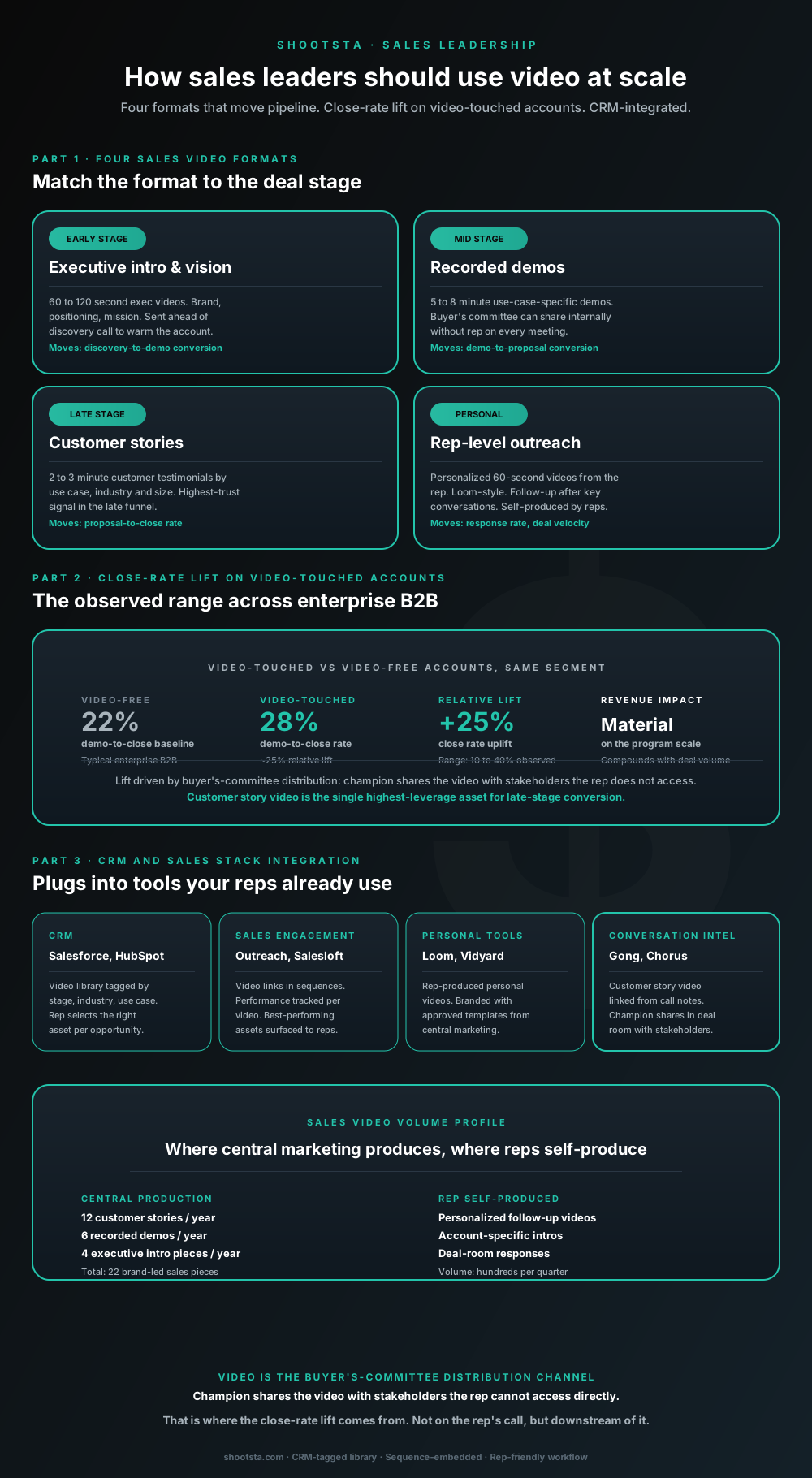
Sales leaders mostly think about video as personalized rep outreach (Loom, Vidyard) or as marketing-produced customer stories. Both are useful. The bigger opportunity is the buyer's-committee distribution layer: assets the champion shares internally with stakeholders the rep does not access directly. That is where the close-rate lift compounds.
How L&D leaders replace classroom with video
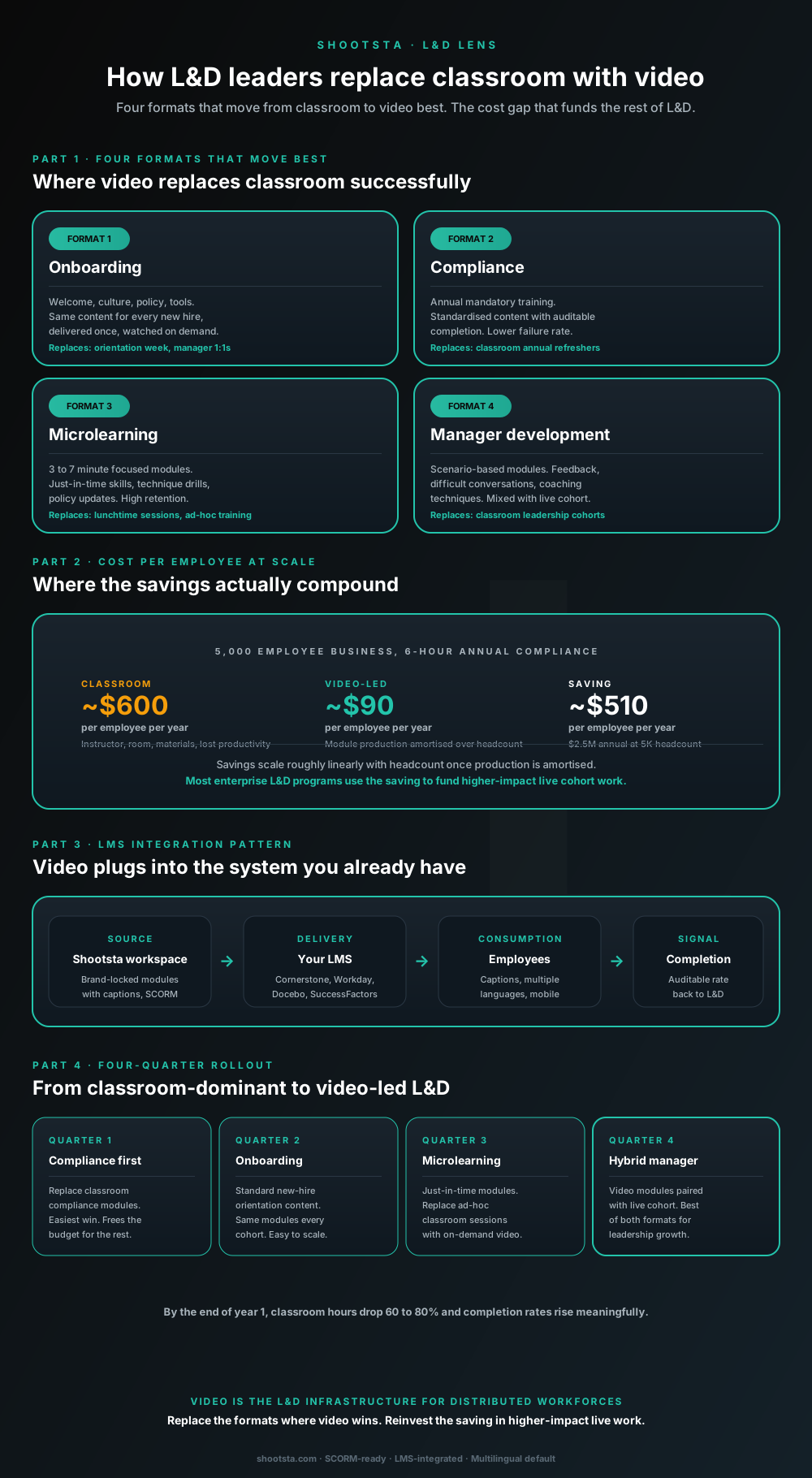
L&D leaders running classroom-heavy training programs typically have the largest single opportunity in the business to free budget through format change. Four training formats move from classroom to video cleanly; the savings fund higher-impact live work. Here is the rollout that compounds learner adoption over four quarters.
How customer success leaders should use video
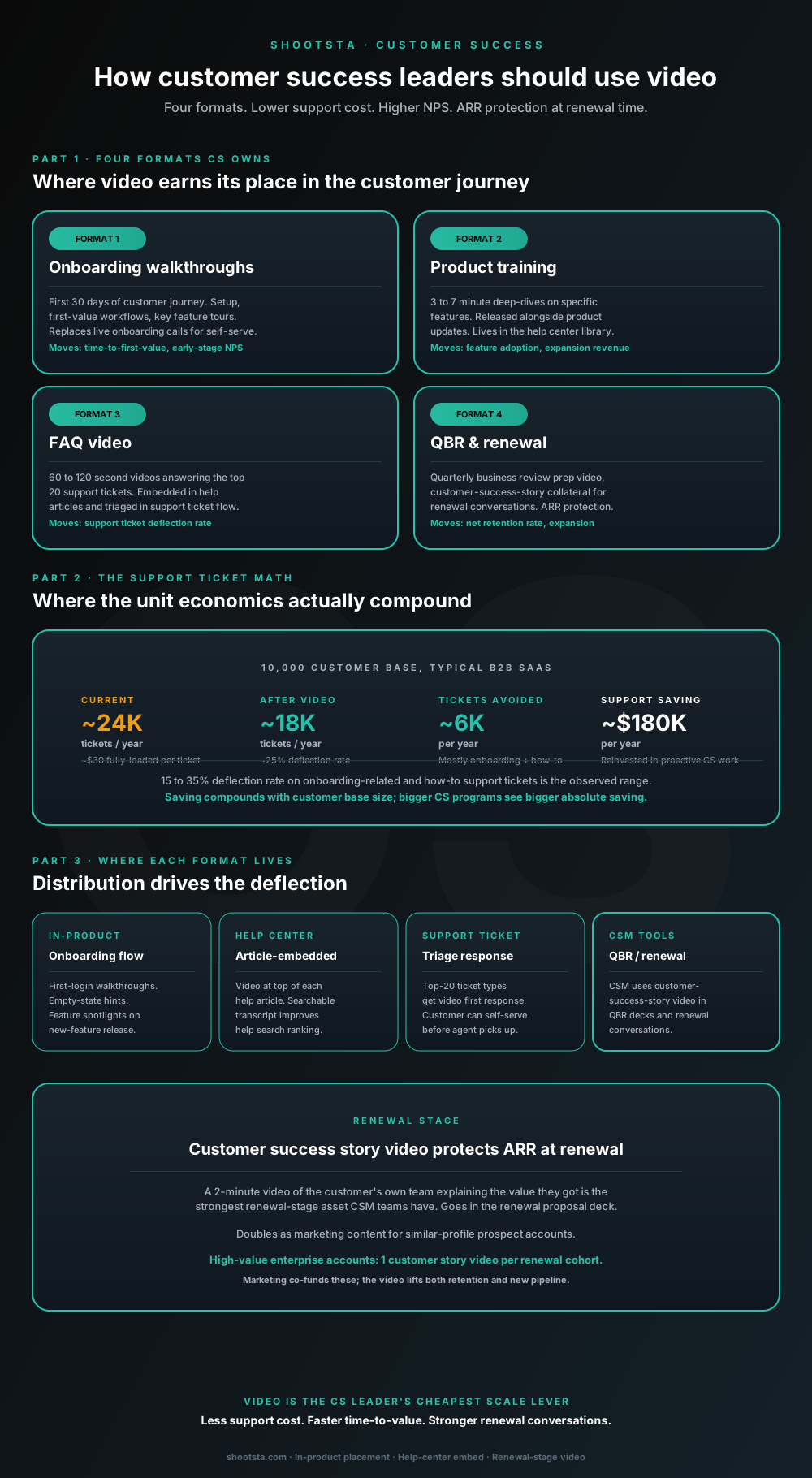
Customer success leaders are usually under-resourced for both reactive support volume and proactive retention work. Video is the cheapest lever to fix both - 15 to 35% deflection on onboarding and how-to tickets, faster time-to-value, and renewal-stage customer story video that lifts net retention. Here is the four-format model and where each piece earns its place.
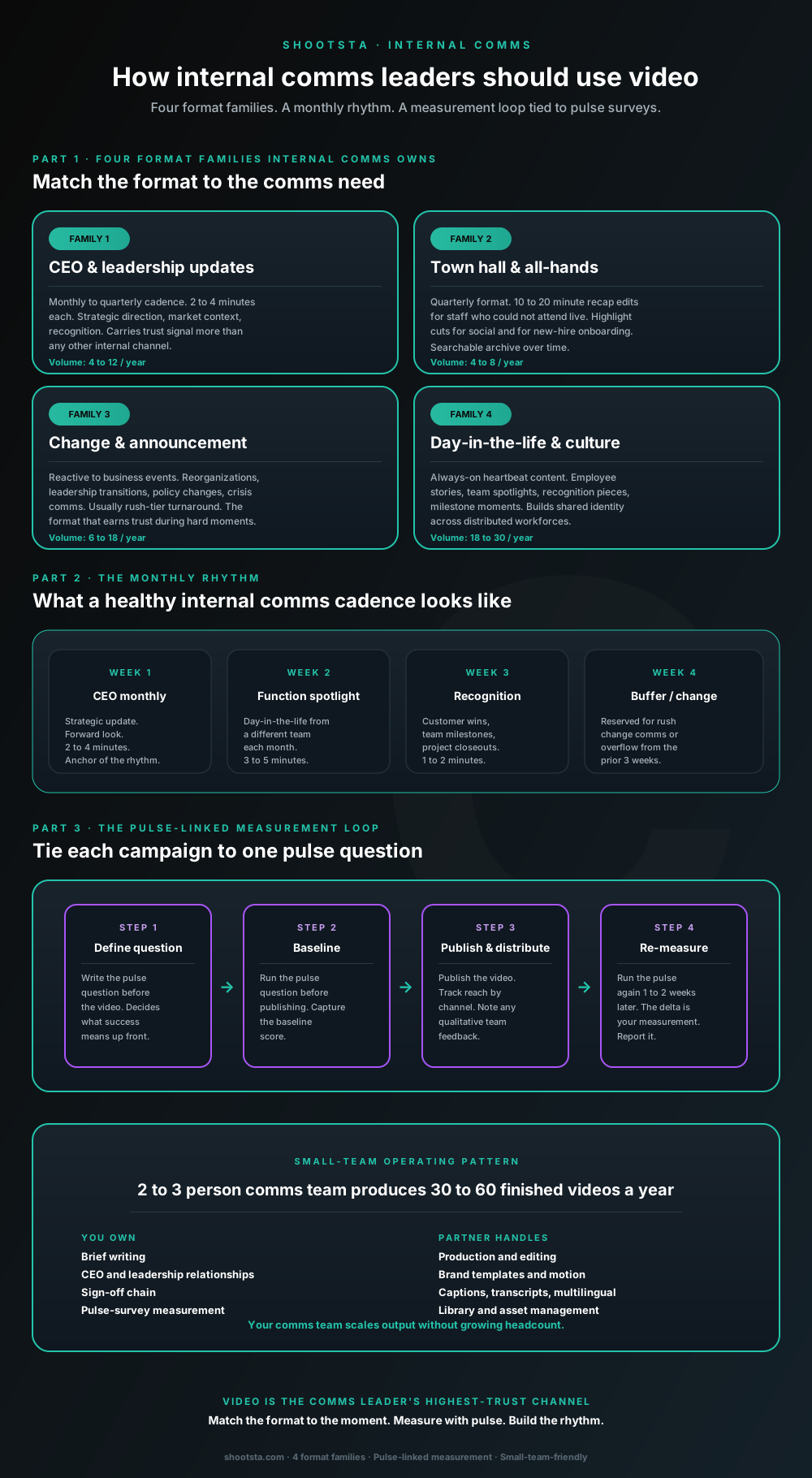
How internal comms leaders should use video
Internal comms leaders are usually under-resourced for the volume of video the business wants. The fix is not more headcount; it is structuring the program around four format families, a monthly rhythm, and a pulse-survey-linked measurement loop. Here is the operating pattern that lets a small comms team produce 30 to 60 finished videos a year.