
How to Build an In-House Video Team
shootsta.
How to Build an In-House Video Team
By Shootsta · Published June 26, 2026 · Updated October 2026
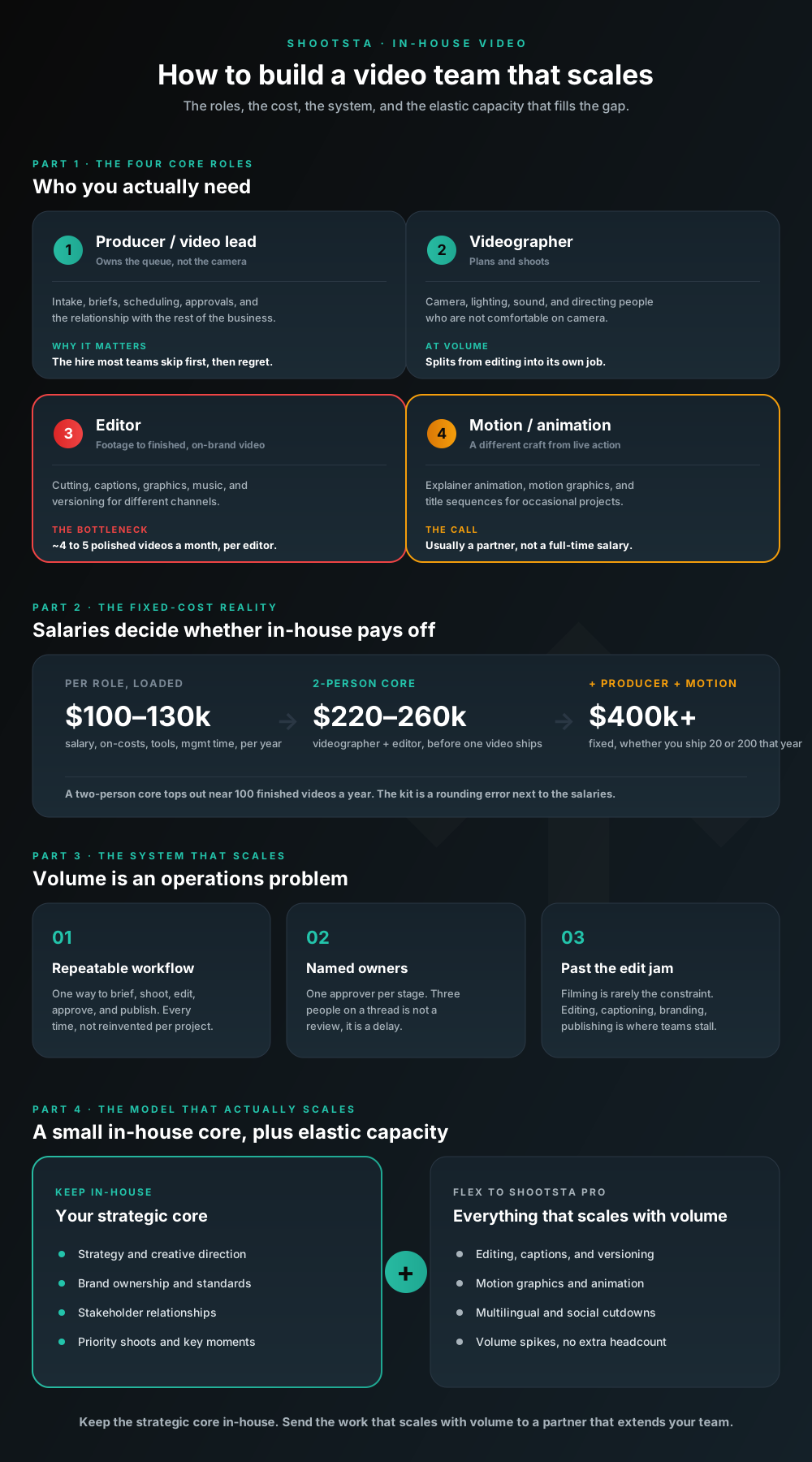
Building an in-house video team is an operations problem, not a hiring spree. Here are the roles you need, what it costs to run, the workflow behind high output, and when a partner beats building.
What does an in-house video team look like when it scales?
A team that scales makes its hundredth video as well as its first, on brand and on time, without anyone pulling late nights to save it. That consistency comes from a system that the whole team follows. Hiring more talent will not get you there on its own.
Volume exposes what a one-off project hides, such as inconsistent branding, slow approvals and a bottleneck at the edit. Scaling video is mostly an operations problem dressed up as a creative one.
What roles do you need on an in-house video team?
A team that ships video at volume usually runs on four roles, though one person often wears two hats early on.
A producer or video lead
This person owns the queue: intake, briefs, scheduling, approvals and the relationship with the rest of the business. Without this role the team becomes a reactive order-taker, and the backlog starts setting the agenda. Companies often skip this hire at first and feel the gap within a few months.
A videographer
This person plans and shoots, which covers camera, lighting, sound and directing people who are not comfortable on camera. At low volume this can be a generalist who also edits. As volume rises, shooting and editing pull apart into separate jobs.
An editor
The editor turns footage into finished, on-brand video, handling cutting, captions, graphics, music and versions for different channels. Editing is where in-house teams tend to jam, because one editor can only finish a handful of polished videos a month once revisions are counted.
A motion or animation specialist
This is the role an in-house team often cannot justify full time. Explainer animation, motion graphics and title sequences are a different craft from live-action editing. Many teams keep this work with a partner rather than carry a specialist salary for occasional projects, which we get into in animation use cases for enterprise teams.
What does an in-house video team cost to run?
Plan around the loaded cost of each role, because base salary understates it. Each person carries salary plus on-costs, benefits, tools and management time. A two-person team of a videographer and an editor is a large fixed cost before a single video is made. Add a producer and a motion specialist and that fixed cost roughly doubles, and you pay it whether the quarter is busy or quiet. The full breakdown sits in in-house vs outsourced video production costs.
What equipment and tools does an in-house team need?
The kit is smaller than you might expect, and it is not where the money goes. A working setup is a camera body with a couple of lenses, a basic lighting kit, decent audio with a lav and a shotgun mic, and a tripod or gimbal. The bigger line is the edit side: a machine that can handle the footage, fast storage to hold years of files, and per-seat subscriptions for editing, captioning, motion and asset management. Budget for a refresh every few years rather than treating gear as a one-off.
What does the system need?
A repeatable workflow
Your team needs one way to brief, shoot, edit, approve and publish, and it should use that way every time. When every project reinvents the process, the process is the bottleneck. We map this in enterprise video production at scale.
Named owners, not committees
Give each stage one named approver. When three people share an approval thread, the review turns into a delay, and at volume those delays compound into a backlog.
A way past the editing bottleneck
Filming is rarely the constraint. The slow part is editing, captioning, branding and publishing, and solving that is what separates teams that scale from teams that stall, which we cover in why enterprise video editing is hard to scale.
What breaks first?
Brand consistency usually breaks first. As volume climbs, videos drift from the brand because there is no shared kit and no single production standard. After that, approvals jam and the backlog grows, and quality slides as the team rushes to clear it. A style kit and one workflow prevent the whole chain. For distributed teams, see how to scale video across global offices.
When should you build in-house or use a partner?
Build in-house when you have high, steady volume of predictable formats in one place, enough to keep the roles above busy every week. That is when the fixed cost spreads thin enough to beat per-project pricing. Lean on a partner, or run a hybrid, when volume is lumpy, the work spans regions and languages, or you need specialist production like animation without carrying it as headcount. Large organizations often settle on a small in-house core with flexible capacity around it. We work through that decision in detail in should you bring video production in-house.
Frequently asked questions
How many people do you need on an in-house video team?
A two-person team of one videographer and one editor is the realistic minimum to produce video consistently, and its output hits a ceiling once editing and revisions fill the week. Add a producer once intake and approvals start eating the team's time, and a motion specialist only when animation volume justifies a full salary. Below that, a single generalist plus a partner for overflow is usually a better use of budget.
What does it cost to start an in-house video team?
Expect two full loaded salaries a year for a two-person team, plus equipment and per-seat software on top. Gear for a working setup runs from a few thousand to low tens of thousands depending on quality, with a refresh every few years. The salaries, not the kit, are the number that decides whether in-house pays off.
How does Shootsta Pro extend your in-house team?
Scaling rarely means choosing between fully in-house and fully outsourced. A common pattern is to keep a small in-house core for strategy, brand, and stakeholder relationships, then add elastic capacity around it for the work that grows with volume. Shootsta Pro is built for that second part.
Your team owns the brief, the brand, and the key shoots. Shootsta Pro absorbs the editing bottleneck and the specialist work around it: cutting and captioning, motion graphics and animation, multilingual versions, and social cutdowns. Your editor's monthly output stops being the ceiling on what your team can ship.
Because it runs as a subscription rather than a headcount, capacity flexes with demand. You hire in-house to your steady baseline and lean on Pro for spikes, regional work, and the formats you cannot justify a full-time salary for. For the working pattern in detail, read how a video partner extends your in-house team.
Where to start
Document how your last good video was made, then make that the default for the next ten. Once the workflow is written down, the team can repeat it and improve it. For the broader approach, read how to scale video production across teams.
Take this article with you
Read the latest at shootsta.com/blog/how-to-build-a-video-team-that-scales
You might also like

How to Plan Video Team Capacity Around Leave
Your only editor just booked two weeks off, and you already know which projects will slip. Chad Lakin explains how to plan video team capacity so the work keeps moving when someone is away.
Corporate Video Editing Standards: Full Guide
A two-page editing standard does more for consistency than a forty-page brand book. Here is what it should cover, who owns each part, and how to enforce it with an in-house editor or an outside partner.
Quality Control in Outsourced Video Editing
When editing leaves the building, quality has to be checked by a system rather than by whoever happens to look. Here is the system: acceptance criteria, two QA gates, counted revision rounds and a quarterly audit.
Video Production Cost on the Gold Coast 2026
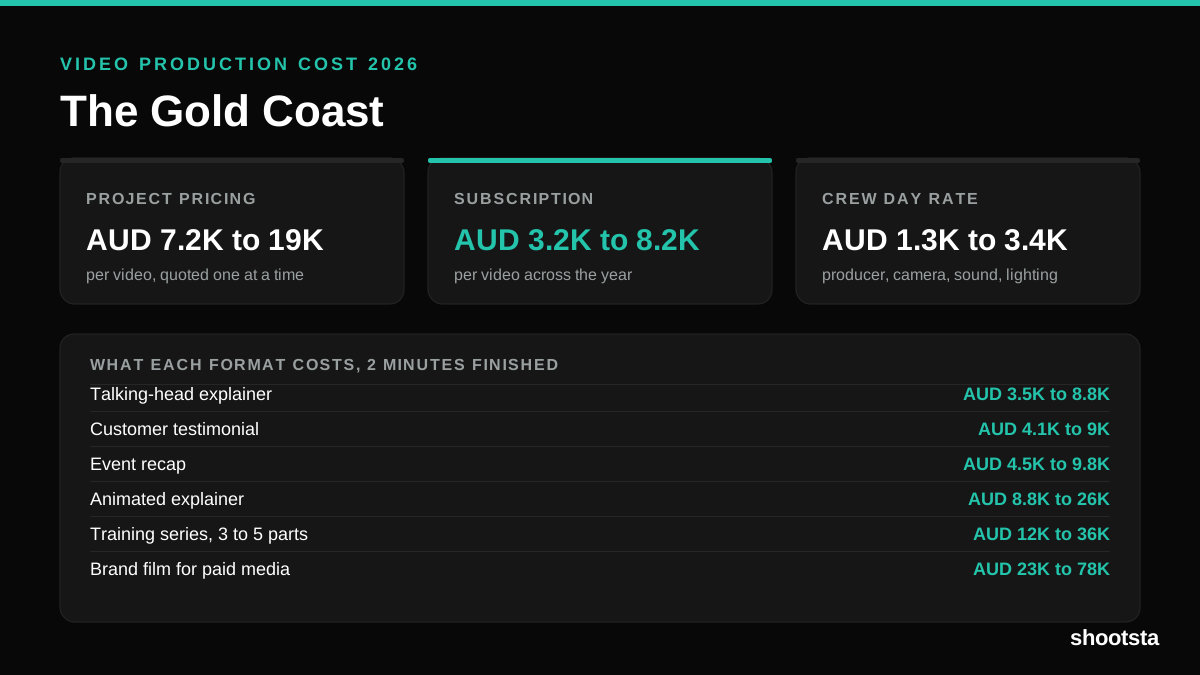
Video production in the Gold Coast costs AUD 3,200 to AUD 8,200 per finished video on a subscription model, and AUD 7,200 to AUD 18,500 for one-off project work. Here is what you are paying for, and how the three pricing models compare.
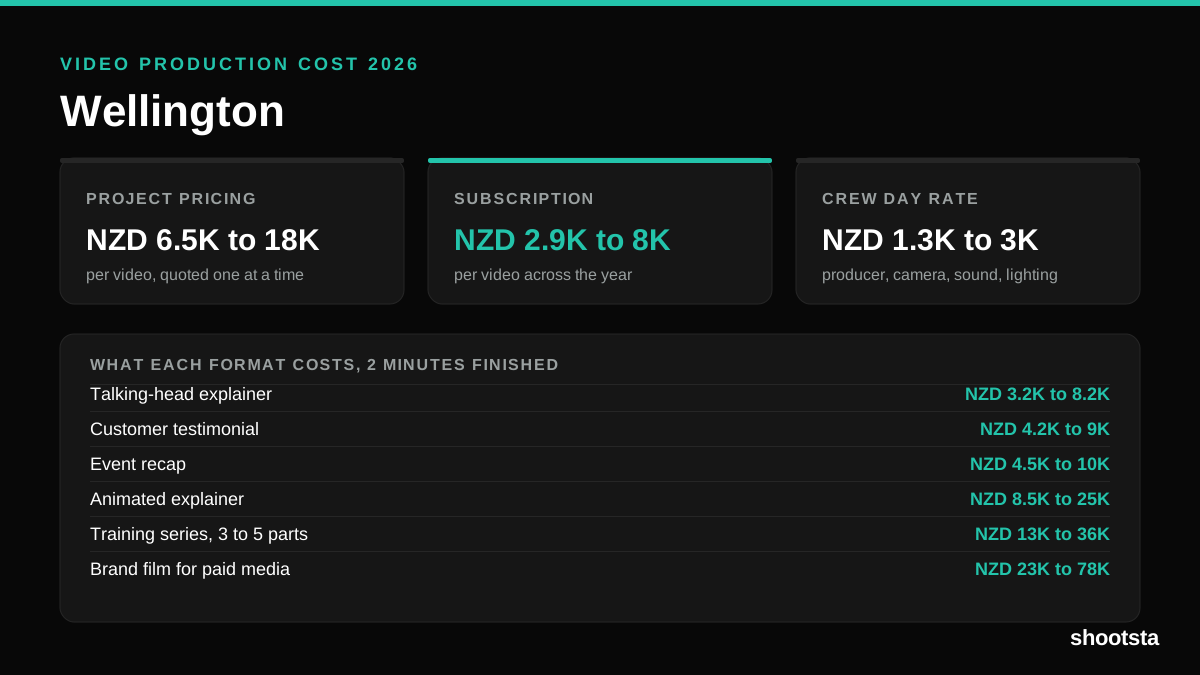
Video Production Cost in Wellington (2026)
Video production in Wellington costs NZD 2,900 to NZD 8,000 per finished video on a subscription model, and NZD 6,500 to NZD 18,000 for one-off project work. Here is what you are paying for, and how the three pricing models compare.
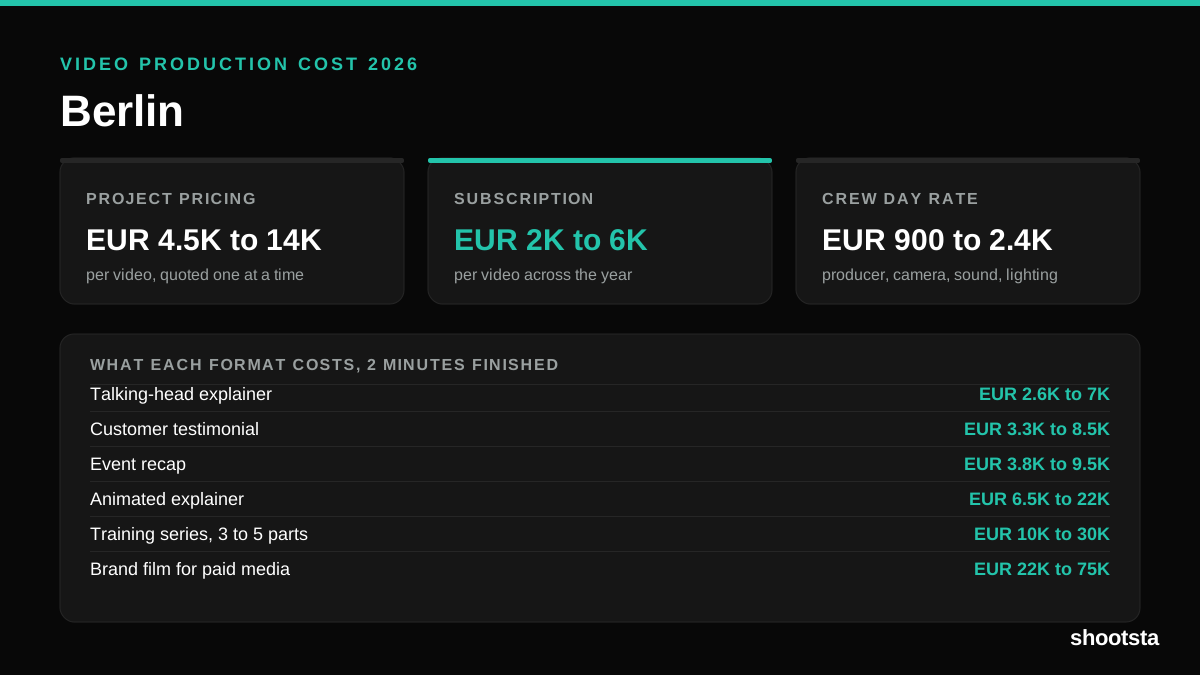
Video Production Cost in Berlin (2026)
Video production in Berlin costs EUR 2,000 to EUR 6,000 per finished video on a subscription model, and EUR 4,500 to EUR 13,500 for one-off project work. Here is what you are paying for, and how the three pricing models compare.