
9 Animation Use Cases for Enterprise Teams
shootsta.
9 Animation Use Cases for Enterprise Teams
By Shootsta · Published June 10, 2026 · Updated October 2026
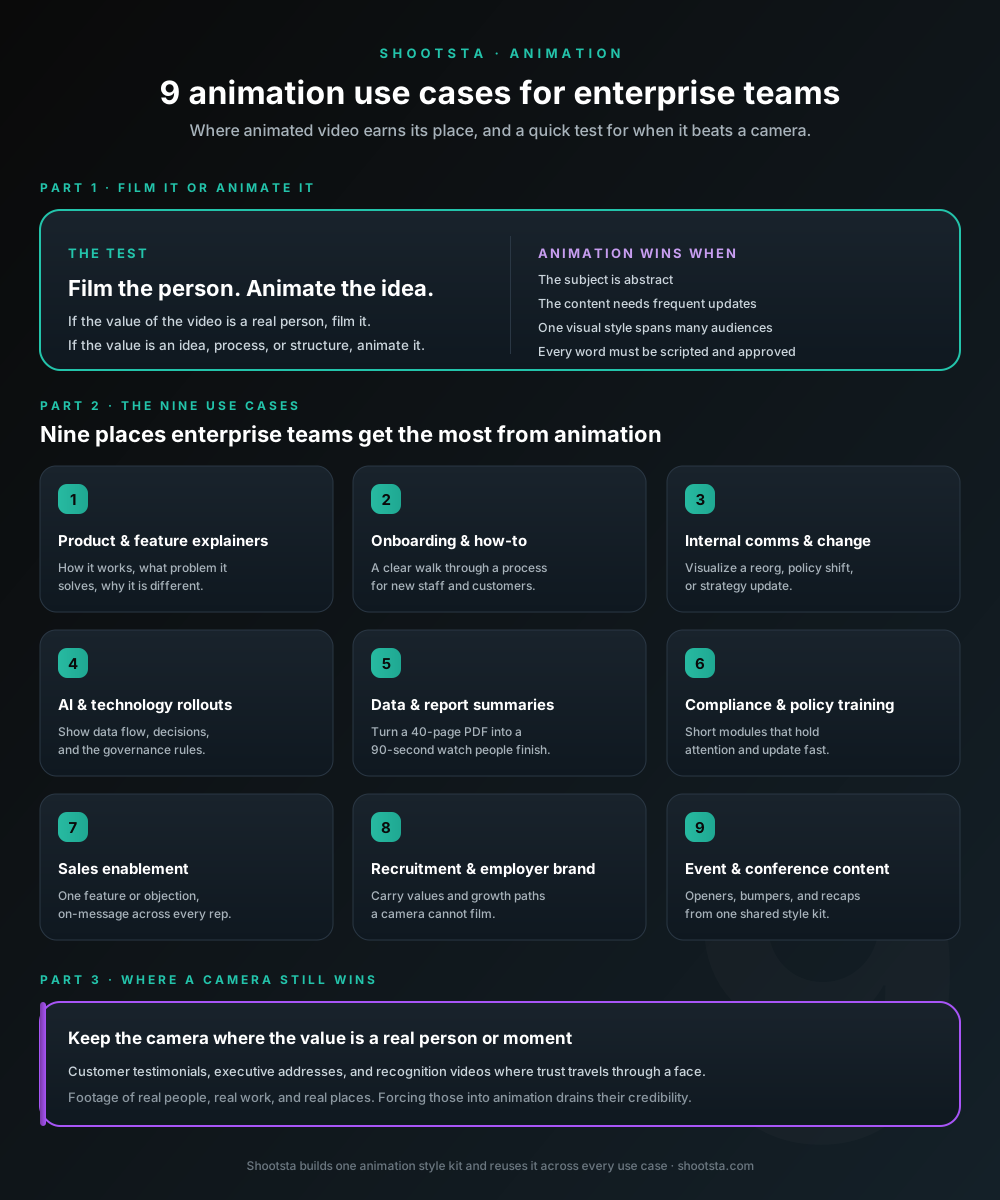
Animation earns its place well beyond hero brand films. These are the nine places enterprise teams get the most value from animated video, and how to tell when animation beats a camera.
When is animation the right call for enterprise video?
There is a simple test. If the value of the video is a person, film a person. If the value is an idea, a process, or a structure, animate it. A large share of enterprise content is the second kind, which is why animation earns its place in far more situations than the occasional brand film.
Animation wins when the subject is abstract, when the content needs frequent updates, when one visual style has to carry across many audiences, and when every word needs to be scripted and approved before it ships. Below are nine use cases where those conditions show up most often.
1. Product and feature explainers
This is the animation that pays back fastest in an enterprise library: a 60 to 90 second explainer for each product, embedded on the product page, in sales decks, and in onboarding. Animation handles the parts a camera cannot show: how the product works, what problem it solves, why it is different. For the format basics, see explainer videos: when to use them and how to produce them.
2. Onboarding and how-to content
New customers and new employees both need the same thing: a clear walk through a process. Animated step-by-step videos, sometimes mixed with screen recordings, beat a wall of documentation. They are also cheaper to keep current than re-filming a presenter every time the workflow changes.
3. Internal comms and change announcements
Strategy updates, policy changes and reorganizations are conceptual and structural content, which is exactly where talking-head videos lose people. Animation visualizes the change. We compared the two formats directly in animation vs live action for internal comms.
4. AI and technology rollouts
An AI tool is an abstraction, and adoption fails when employees do not understand what it does or what the rules are. Animation shows data flow, decision boundaries, and governance in a way a screen recording cannot. There is a full playbook in our piece on an animation-first approach to AI rollout comms.
5. Data, research, and report summaries
Enterprises sit on research, benchmarks, and annual reports that almost nobody reads in full. A 90-second animated summary turns a 40-page PDF into something people finish and share. Charts in motion explain a trend faster than a static figure buried on page 12.
6. Compliance and policy training
Mandatory training is the most-watched and least-loved content in any enterprise. Short animated modules, under five minutes, hold attention better than recorded slides and are easier to update when the rule changes. The scripted nature of animation also makes the legal review cleaner.
7. Sales enablement and objection handling
Short animated videos that explain one feature, one use case, or one common objection give sales teams consistent material to send. Because they are scripted and animated, the messaging stays on-brand and on-message across every rep, instead of drifting from one improvised demo to the next.
8. Recruitment and employer brand
Animation can carry the parts of the employer story that are hard to film: values, growth paths, how teams work day to day. It pairs well with live action employee stories, where the animated sections hold the structure and the filmed moments carry the human proof.
9. Event and conference content
Animated openers, session bumpers, sponsor messages, and recap graphics give an event a coherent visual identity without a film crew for every segment. The same style kit produces dozens of short pieces across a multi-day program.
How many of these should one team run at once?
The answer is usually more than the team expects. Once you stop treating animation as a rare hero project and use it for explainers, onboarding, internal comms and training, the natural volume is dozens of videos a year rather than a handful. That volume is what makes a style kit and a repeatable production model worth setting up, since every animation after the first one reuses the same foundation. For the range of styles available, see the different kinds of animation for business, or download The Business Animation Playbook for the full operating model.
What does animation not do well?
Animation does badly at anything where the value is a real person or a real moment. Customer testimonials, executive addresses where trust travels through the face, recognition videos, and footage of physical work or real environments all belong in live action. Forcing those into animation drains the credibility that made them worth producing.
Where to start
Pick the one use case above where you currently rely on a document nobody reads or a talking head nobody finishes. Brief a single animated version, measure completion and follow-up against the old format, and use the result to fund the next. To scope a program across several of these use cases, explore our animation production services or learn more about how Shootsta produces animation at scale.
Take this article with you
Read the latest at shootsta.com/blog/animation-use-cases-enterprise-teams
You might also like

How to Plan Video Team Capacity Around Leave
Your only editor just booked two weeks off, and you already know which projects will slip. Chad Lakin explains how to plan video team capacity so the work keeps moving when someone is away.
Corporate Video Editing Standards: Full Guide
A two-page editing standard does more for consistency than a forty-page brand book. Here is what it should cover, who owns each part, and how to enforce it with an in-house editor or an outside partner.
Quality Control in Outsourced Video Editing
When editing leaves the building, quality has to be checked by a system rather than by whoever happens to look. Here is the system: acceptance criteria, two QA gates, counted revision rounds and a quarterly audit.
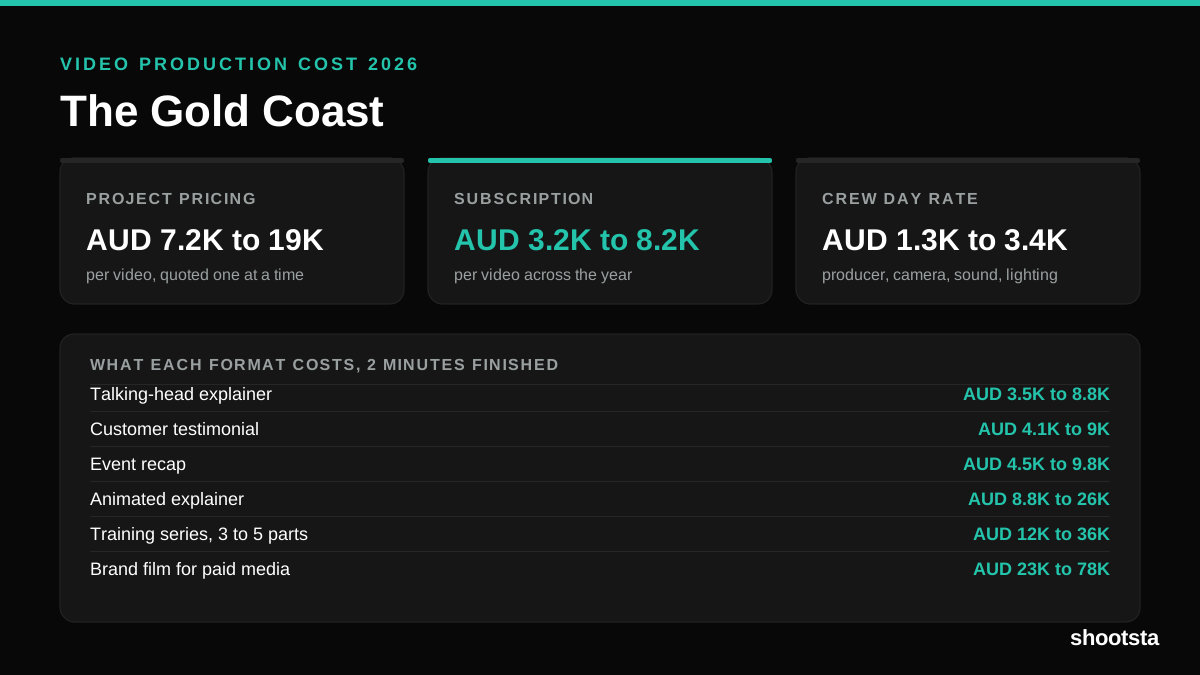
Video Production Cost on the Gold Coast 2026
Video production in the Gold Coast costs AUD 3,200 to AUD 8,200 per finished video on a subscription model, and AUD 7,200 to AUD 18,500 for one-off project work. Here is what you are paying for, and how the three pricing models compare.
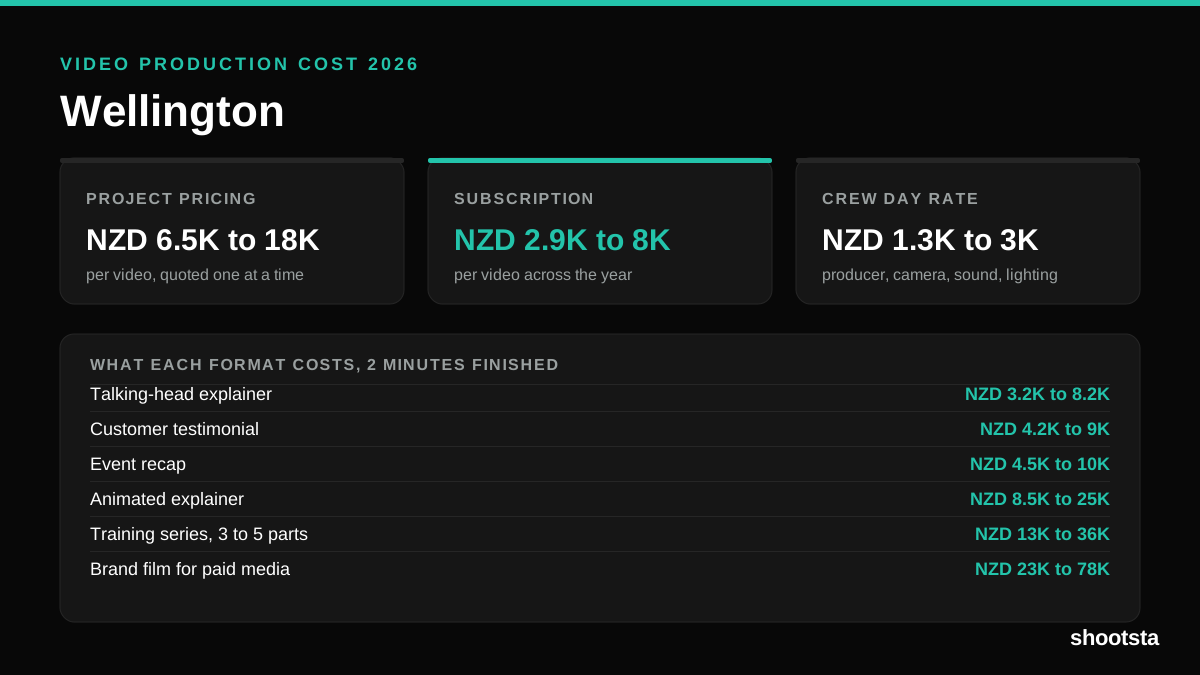
Video Production Cost in Wellington (2026)
Video production in Wellington costs NZD 2,900 to NZD 8,000 per finished video on a subscription model, and NZD 6,500 to NZD 18,000 for one-off project work. Here is what you are paying for, and how the three pricing models compare.
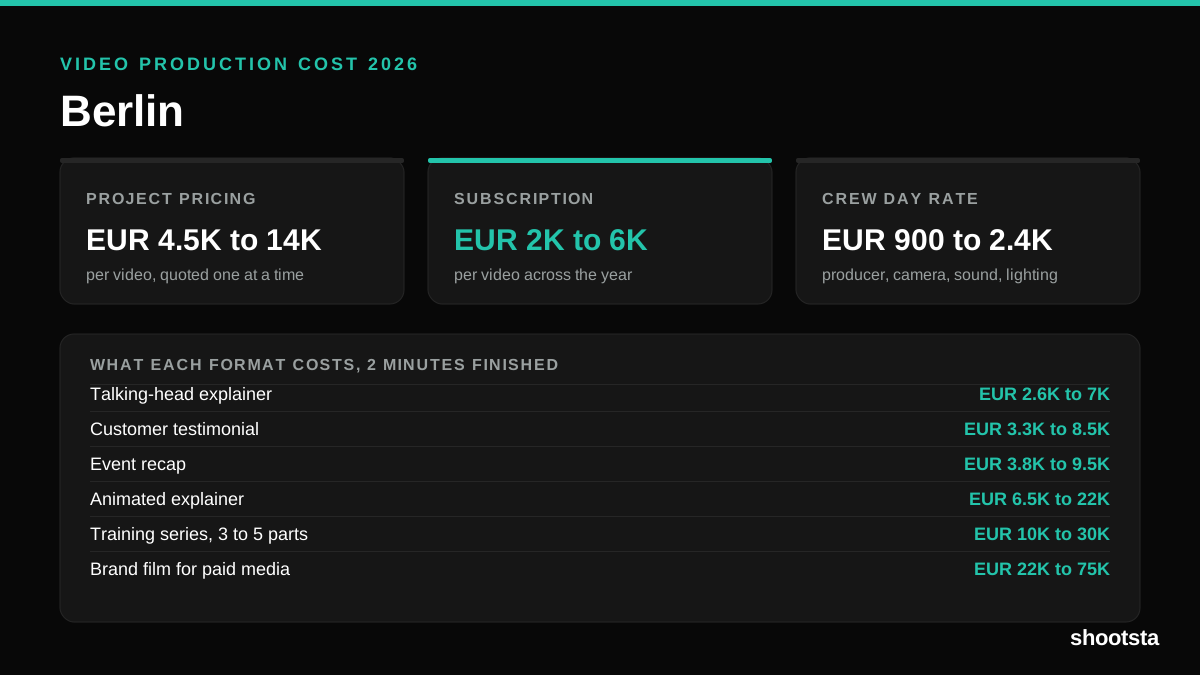
Video Production Cost in Berlin (2026)
Video production in Berlin costs EUR 2,000 to EUR 6,000 per finished video on a subscription model, and EUR 4,500 to EUR 13,500 for one-off project work. Here is what you are paying for, and how the three pricing models compare.