
shootsta.
In-House vs Outsourced Video Production Costs
By Mark Ashworth · Published October 27, 2025 · Updated October 2026
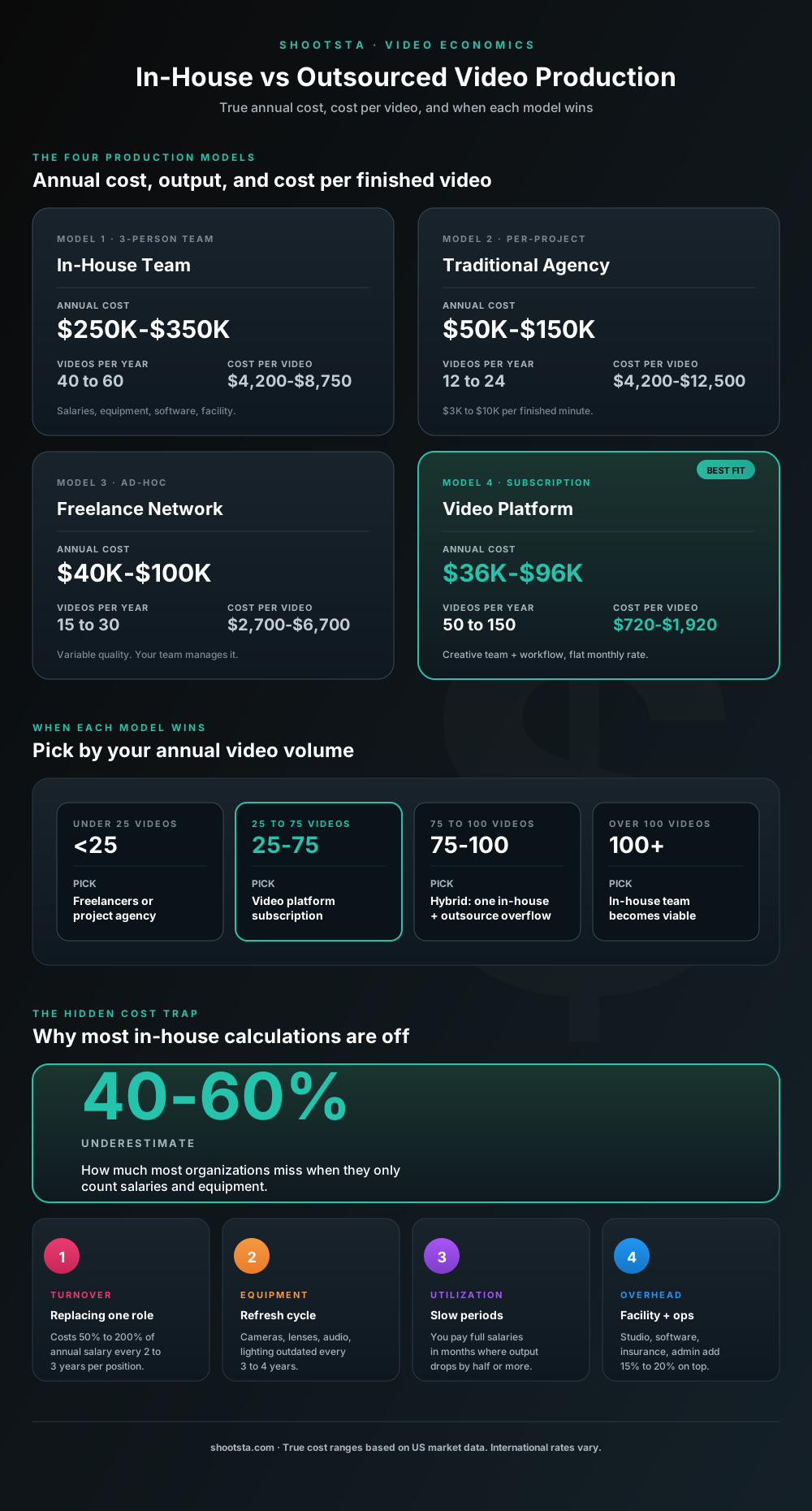
Complete cost comparison of in-house video teams versus outsourcing. Discover hidden expenses, breakeven points, and which model saves money for your video volume.
The Real Cost of In-House Video Production
Building internal video capability takes a large upfront investment, and the running costs are easy to underestimate.Staff Costs
A functional internal video team requires multiple specialized roles. A video producer commands $65,000-$95,000 annually. An experienced video editor earns $55,000-$85,000. A videographer with technical expertise costs $50,000-$75,000. When you add benefits (health insurance, retirement, paid time off), these figures increase by 25-35%. For a three-person team, total annual compensation reaches $200,000-$300,000 before accounting for recruitment costs, training, and turnover expenses.Equipment Investment
Professional video equipment represents significant capital expenditure. High-quality cameras start at $3,000-$8,000 per unit. Professional lighting kits cost $2,000-$5,000. Audio equipment (microphones, recorders, mixers) adds another $2,000-$4,000. Stabilization gear, tripods, and accessories contribute $1,500-$3,000. Initial equipment investment typically ranges from $15,000-$35,000, with replacement cycles every 3-4 years as technology advances.Software and Technology
Professional editing software requires annual subscriptions. Adobe Creative Cloud costs $600-$1,200 per user annually. Asset management systems add $1,000-$3,000 yearly. Stock footage and music licensing contribute $500-$2,000 annually per project volume.Facility and Overhead
Dedicated production space requires proper acoustics, lighting control, and equipment storage. Office space costs $500-$1,500 monthly per team member depending on location. A small studio setup adds $1,000-$3,000 monthly. Utilities, insurance, maintenance, and administrative overhead contribute another 15-20% to operational costs.The True Cost of Outsourcing Video Production
Outsourcing video production offers predictable pricing without the overhead of maintaining internal staff and equipment.Traditional Agency Pricing
Traditional video production agencies typically charge $3,000-$10,000 per finished minute of video. A standard 2-3 minute corporate video costs $8,000-$25,000. This includes pre-production planning, filming, editing, and revisions. For organizations needing monthly video content, agency costs can range from $50,000-$150,000 annually depending on volume and complexity.Freelance Production
Independent videographers charge $500-$2,500 per day for shooting, with editing billed separately at $50-$150 per hour. Simple videos cost $2,000-$5,000, while complex productions reach $8,000-$15,000. Quality and reliability vary significantly with freelancers, and project management falls entirely on your team.Modern Video Platform Solutions
Subscription-based video platforms offer predictable monthly costs with unlimited or high-volume production. Plans typically range from $2,000-$8,000 monthly depending on features and volume, translating to $24,000-$96,000 annually. These platforms pair professional creative teams with set workflows. You get consistent quality without the overhead of internal staff or a traditional agency.Video Production Cost Comparison: Breaking Down the Numbers
Annual Cost Comparison
| Production Model | Annual Cost | Videos per Year | Cost per Video |
|---|---|---|---|
| In-House Team (3 people) | $250,000-$350,000 | 40-60 | $4,200-$8,750 |
| Traditional Agency | $50,000-$150,000 | 12-24 | $4,200-$12,500 |
| Freelance Network | $40,000-$100,000 | 15-30 | $2,700-$6,700 |
| Video Platform (Subscription) | $36,000-$96,000 | 50-150 | $720-$1,920 |
Hidden Costs of In-House Video Production
Internal video team costs extend beyond visible salary and equipment expenses. Recruitment and training: Hiring specialized talent takes 3-6 months per position, costing $5,000-$15,000 in recruitment fees. Onboarding and training add another 2-3 months before reaching full productivity. Turnover and knowledge loss: Creative professionals change jobs every 2-3 years on average. Each departure requires recruiting, training replacements, and managing knowledge transfer, which costs 50-200% of annual salary per position. Technology obsolescence: Video production technology evolves rapidly. Equipment purchased today becomes outdated within 3-4 years, requiring continuous reinvestment to maintain competitive quality. Underutilization: Internal teams experience workload fluctuations. During slow periods, you pay full salaries for reduced output. During peak demands, the team becomes a bottleneck. Opportunity cost: Management time spent on hiring, training, equipment procurement, and team coordination diverts attention from core business activities.When In-House Video Production Makes Sense
Despite higher costs, internal teams provide advantages in specific situations.If you are weighing this move right now, our guide on whether to bring video production in-house works through the hidden costs and the volume break-even in detail.
Building in-house capability works when you produce 100+ videos annually with consistent requirements. High-volume production amortizes fixed costs across many projects, improving per-video economics. Extremely specialized industries with unique compliance requirements or proprietary subject matter may require internal expertise that external partners cannot easily replicate. Organizations with established creative departments already covering overhead costs can add video capability more efficiently than starting from scratch. Companies with daily or real-time video needs for social media, live events, or rapid response content benefit from immediate internal availability.When Outsourcing Video Production Makes Sense
Outsourcing has clear advantages in a wider range of situations. Variable video needs benefit from scalable outsourcing. You pay only for production you need, avoiding fixed costs during slow periods while easily scaling up for campaigns. Diverse content requirements across styles, formats, and channels exceed the capabilities of small internal teams. External partners provide access to broader expertise without expanding headcount. Organizations producing fewer than 50 videos annually typically find outsourcing more cost-effective than maintaining full-time staff. If you would rather keep your managers on the core business, outsourcing removes the work of running a production department. Access to specialized expertise for motion graphics, animation, advanced post-production, or specific industry knowledge comes more affordably through outsourcing than hiring narrow specialists.Hybrid Approach: Best of Both Worlds
Cost Optimization Strategies
Regardless of your model, these strategies reduce video production expenses.For In-House Teams
Batch filming sessions to maximize equipment utilization and minimize setup time. Recording several videos in one day lowers the cost of each one. Template-based production standardizes common video types, reducing creative time and accelerating output. Cross-training team members creates flexibility and reduces workflow bottlenecks.For Outsourced Production
Subscription or retainer models usually cost less per video than per-project pricing because the volume is agreed up front. Clear creative briefs minimize revision cycles that extend timelines and increase costs. Maintaining organized asset libraries (logos, footage, brand elements) accelerates production and reduces billable hours. Strategic planning through content calendars enables batching and more efficient scheduling.Decision Framework: Choosing Your Model
Use these criteria to determine the right approach for your organization. Annual video volume: - Under 25 videos: Outsource to agencies or freelancers - 25-75 videos: Consider video platform subscriptions - 75-100 videos: Evaluate hybrid approaches - Over 100 videos: Internal teams become viable Budget available: - Under $50,000: Freelancers or limited agency work - $50,000-$100,000: Video platforms or hybrid approach - $100,000-$250,000: Full outsourcing or hybrid model - Over $250,000: In-house team becomes possible Content complexity: - Simple talking-head and social content: Internal or platform - Mixed complexity: Hybrid approach - Highly specialized or technical: Specialized agencies - Diverse requirements: Platform or agency network Speed requirements: - Days: Internal team or dedicated platform - 1-2 weeks: Platform or efficient agency - 3+ weeks: Traditional agency acceptableMaking the Strategic Choice
The in house video production vs outsourcing decision needs an honest look at what you need, what it will cost and what matters most to your business. It is common to overestimate video volume and underestimate the total cost of an internal team. Starting with outsourced production allows you to establish consistent volume before committing to internal infrastructure. As your video needs mature and volume increases, you can transition to hybrid models or full internal capability with better understanding of requirements and realistic cost expectations. Modern video platforms that pair human editors with AI assistance sit in the middle ground. They deliver professional quality at scale without the overhead of an internal team or the per-project costs of a traditional agency. With Shootsta, a first cut comes back in about 48 hours and stays on brand across all your video content.Frequently Asked Questions
Is an in-house team or a video production agency cheaper?
Below roughly 60 to 80 videos a year, a video production agency or subscription partner is usually cheaper per video, because you avoid the fixed cost of salaries, equipment and software that runs whether the team is busy or not. Above that volume, with steady demand, an in-house team can come out cheaper per video. Many enterprises land on a hybrid: a small in-house team for quick turns plus an agency or partner for overflow and specialist work.
Is in-house video production cheaper than outsourcing?
In-house video production is not automatically cheaper than outsourcing. A three-person internal team costs $250,000-$350,000 annually including salaries, benefits, equipment, software, and overhead. This becomes cost-effective only when producing 75-100+ videos yearly. For lower volumes, outsourcing through agencies ($4,000-$12,000 per video), freelancers ($2,000-$6,000 per video), or video platforms ($700-$2,000 per video) provides better economics without fixed overhead costs.What are the total costs of building an internal video team?
Total internal video team costs include staff compensation ($200,000-$300,000 annually for a three-person team with benefits), equipment ($15,000-$35,000 initial investment, replaced every 3-4 years), software subscriptions ($2,000-$5,000 annually), facility costs ($1,500-$4,500 monthly), plus hidden expenses like recruitment, training, turnover, and management overhead. First-year costs typically reach $250,000-$400,000, settling to $220,000-$320,000 annually thereafter.At what volume does in-house video production become cost-effective?
In-house video production becomes cost-competitive at 75-100+ videos annually with consistent production requirements. Below this threshold, per-video costs exceed outsourcing options. At 50 videos yearly, internal teams cost $5,000-$7,000 per video versus $700-$4,000 through outsourcing. The breakeven calculation depends on video complexity, and outsourcing usually stays more economical until you reach sustained high-volume production.What hidden costs exist with in-house video teams?
Hidden internal video team costs include recruitment expenses ($5,000-$15,000 per hire), 2-3 month training periods before productivity, turnover costs (50-200% of salary when team members leave every 2-3 years), technology obsolescence requiring equipment replacement every 3-4 years, underutilization during slow periods, and management overhead for supervision and coordination. These hidden costs add 40-60% beyond base salary and equipment expenses.Should I use a hybrid video production model?
A hybrid video production model works well for organizations producing 25-75 videos annually with mixed complexity. Maintain one internal video coordinator ($80,000-$120,000 annually) who manages projects and handles simple content, while outsourcing complex productions and volume overflow. This approach costs $100,000-$180,000 yearly, providing internal brand knowledge and coordination without full department overhead. It offers flexibility, scalability, and access to specialized expertise when needed.Take Action: Evaluate Your Video Production Strategy
Making the right choice between in house video production vs outsourcing requires analyzing your specific situation. Calculate your true requirements: Document the number and types of videos each department needs in a year. Estimates made before anyone counts tend to run high, so base the plan on real requests. Project realistic costs: Use the figures above to work out the total cost of each model at your real volume. Include the hidden costs as well as salaries and equipment. Assess your risk tolerance: In-house teams require multi-year commitments and upfront investment. Outsourcing provides flexibility to adjust as needs change. Start with outsourcing: For organizations without existing video capability, begin with outsourced production to establish baseline volume and requirements before committing to internal infrastructure. Review annually: The best model for you may change as video volume grows or business priorities shift, so check your approach again each year.Ready to Optimize Your Video Production Costs?
Modern video platforms deliver professional, branded videos at scale for less than an in-house team costs. Get a first cut in about 48 hours without the overhead of internal teams or the expense of traditional agencies.
See how scalable video production can lift your output while lowering your costs.
Contact UsKeep reading
- Corporate Video Cost UK: 2026 Pricing Guide
- Video Marketing Budget Planning
- Video Production ROI Calculator
For the bigger picture beyond this market, read the full breakdown of what video production costs.
Once the numbers point to outsourcing, the next question is who to use. Work through the ten checks for corporate video editing services before you sign anything.
Take this article with you
Read the latest at shootsta.com/blog/in-house-vs-outsourced-video-production-cost
You might also like

How to Plan Video Team Capacity Around Leave
Your only editor just booked two weeks off, and you already know which projects will slip. Chad Lakin explains how to plan video team capacity so the work keeps moving when someone is away.
Corporate Video Editing Standards: Full Guide
A two-page editing standard does more for consistency than a forty-page brand book. Here is what it should cover, who owns each part, and how to enforce it with an in-house editor or an outside partner.
Quality Control in Outsourced Video Editing
When editing leaves the building, quality has to be checked by a system rather than by whoever happens to look. Here is the system: acceptance criteria, two QA gates, counted revision rounds and a quarterly audit.
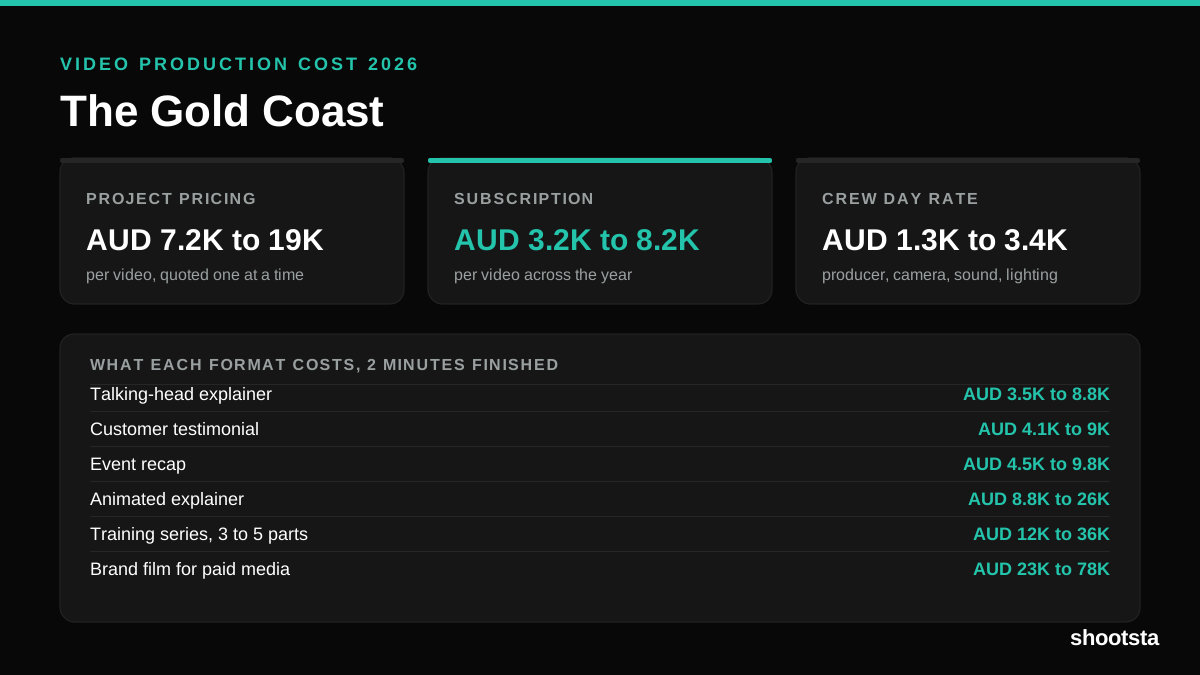
Video Production Cost on the Gold Coast 2026
Video production in the Gold Coast costs AUD 3,200 to AUD 8,200 per finished video on a subscription model, and AUD 7,200 to AUD 18,500 for one-off project work. Here is what you are paying for, and how the three pricing models compare.
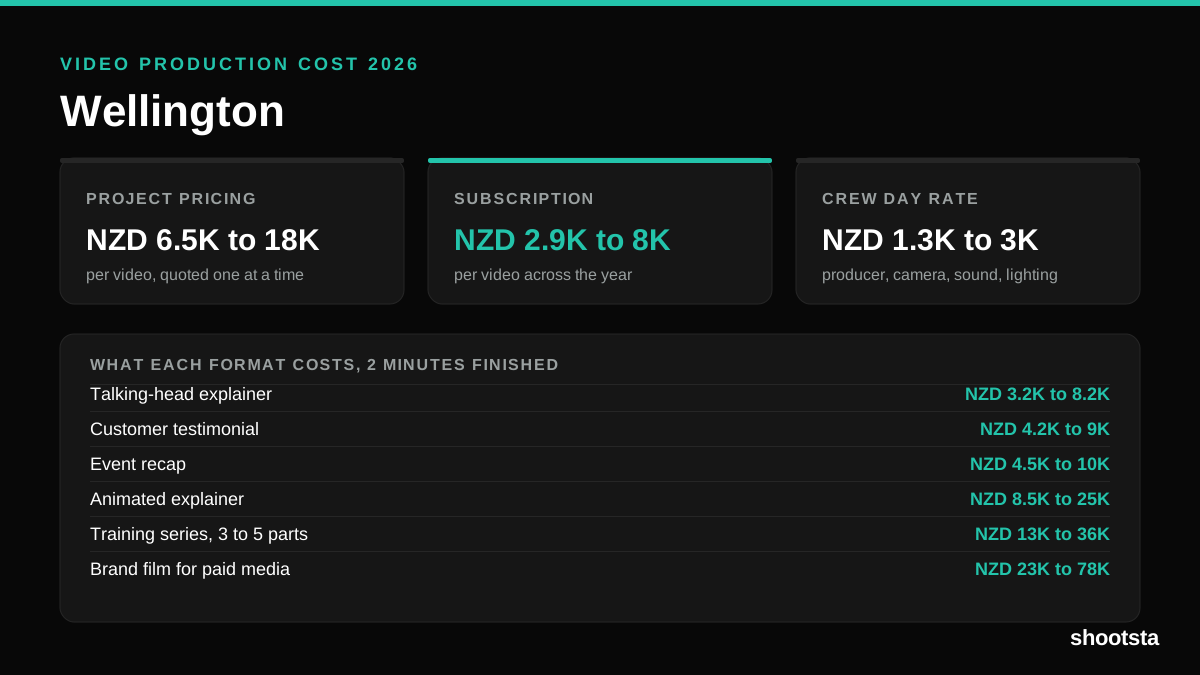
Video Production Cost in Wellington (2026)
Video production in Wellington costs NZD 2,900 to NZD 8,000 per finished video on a subscription model, and NZD 6,500 to NZD 18,000 for one-off project work. Here is what you are paying for, and how the three pricing models compare.
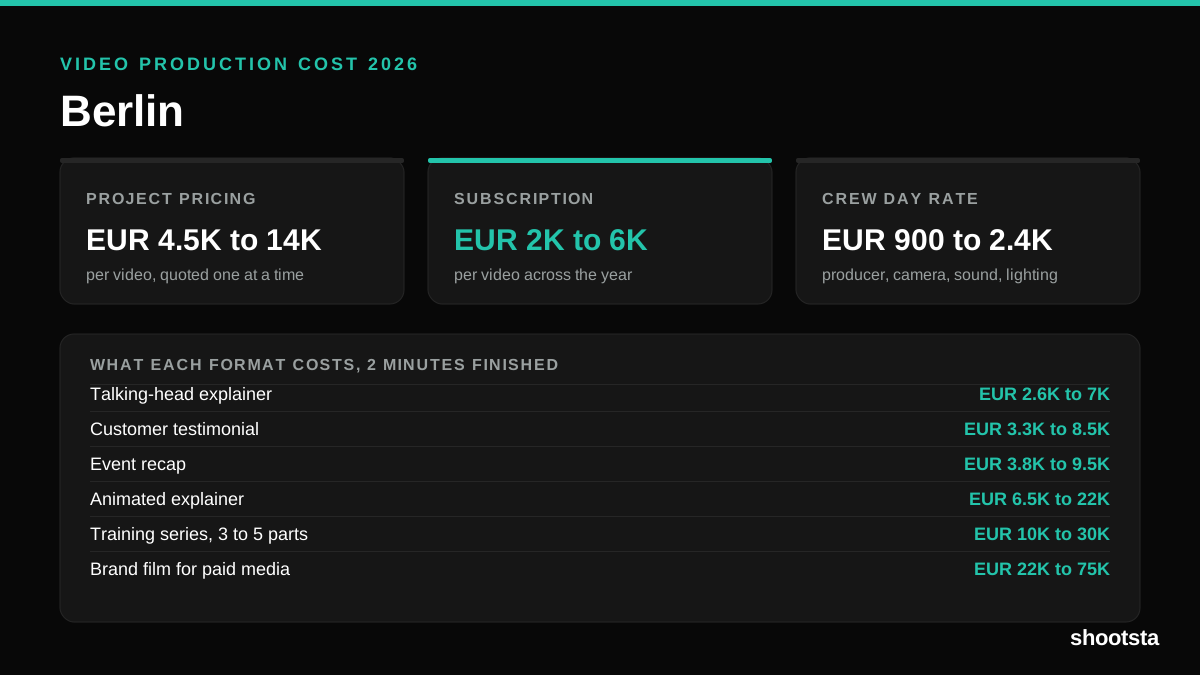
Video Production Cost in Berlin (2026)
Video production in Berlin costs EUR 2,000 to EUR 6,000 per finished video on a subscription model, and EUR 4,500 to EUR 13,500 for one-off project work. Here is what you are paying for, and how the three pricing models compare.