
Should You Bring Video Production In-House?
shootsta.
Should You Bring Video Production In-House?
By Shootsta · Published June 30, 2026 · Updated October 2026
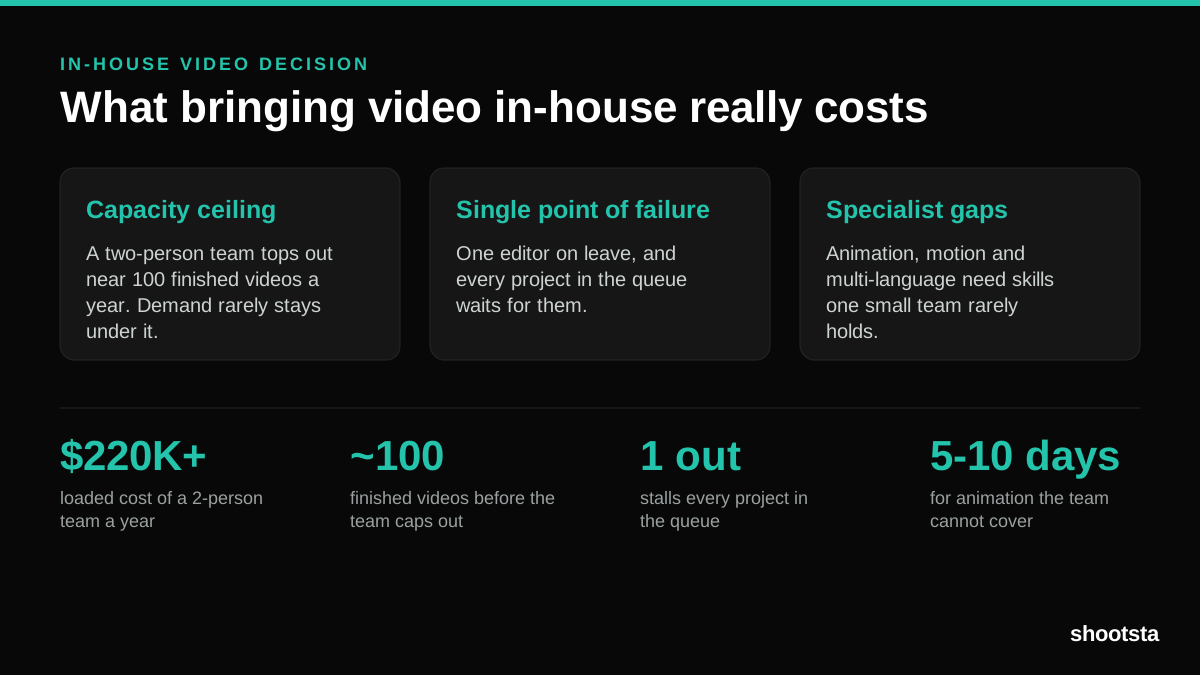
Bringing video in-house looks cheaper on paper: no agency invoices, full control, a team that knows the brand. Then the real costs show up. Here is the honest math on when an in-house video team pays off, where it quietly breaks, and how to get the savings without the risk.
Why teams bring video production in-house
The pitch for going in-house is easy to make. No agency invoices, full control of the brand, and a team that already knows the product and can turn a request around without a statement of work. When budgets tighten, pulling video in-house looks like the obvious saving: trade a subscription or a retainer for one or two salaries and keep the work under your own roof.
The decision usually starts with a trigger. Maybe a subscription looked underused at renewal, or a round of budget cuts put every external line item under review. Sometimes a freelancer was around so often that hiring them seemed cheaper, or a new leader wants production capability inside the team. Each one is a fair place to start. What matters is whether the math still holds once a full year of requests lands on the team.
What are the pros and cons of bringing video production in-house?
Here is the short version, and the sections below give the detail on each point.
Pros of an in-house video team:
- Faster quick turns once a request lands, with no statement of work or external scheduling.
- A team that knows the brand, the product and the people on camera.
- Lower cost per video at high, steady volume, once the fixed cost spreads across enough output.
- Tighter control over footage, raw files and sensitive or confidential content.
Cons of an in-house video team:
- High fixed cost that runs whether the team is busy or idle.
- A hard capacity ceiling that a launch or results season blows straight through.
- One person on leave or out the door stalls the whole queue.
- Specialist work like animation and multi-language versioning still goes out to an agency or partner.
A video production agency or subscription partner flips most of those: variable cost that flexes with demand, no fixed ceiling, no single point of failure, and specialist skills on tap, traded against less day-to-day proximity to the business. The rest of this guide puts numbers behind each line.
What does bringing video in-house cost?
The salary is the number everyone budgets for. It is also the smallest part of the real cost.
Salaries are the easy line to underestimate
Price a videographer and an editor on loaded cost, which means salary plus on-costs, benefits, tools and management time. That figure sits well above the advertised salary in every market. A two-person team carries all of it before a single video is made, and adding a motion designer raises the bill again. It is a fixed cost that runs at the same rate in a quiet quarter as in a busy one.
Equipment and software are a recurring bill
Cameras, audio, lighting, a capture and edit machine, and the storage to hold years of footage add up front, then need refreshing every few years. Editing, motion, captioning, asset management and review tooling are annual subscriptions per seat. None of it is dramatic on its own. Together it is a standing line in the budget that is easy to wave through and hard to walk back.
The capacity ceiling nobody puts in the plan
A working editor can only finish a handful of polished videos each month once you count shooting, revisions and the rest of their job. That sets a hard limit on what a small team can ship in a year. Many enterprise programs sit under the limit until a product launch, a results season and a hiring push all hit at once. Then the queue backs up for weeks and the team starts saying no to the business, which is usually the first time anyone sees the ceiling.
Where in-house video quietly breaks
Cost is the part that shows up in a spreadsheet. The failures that cost more rarely do.
One person out stalls everything
A small team is a single point of failure. When your one editor takes leave, gets sick or resigns, every project in the queue waits. There is no overflow to absorb it and no clean way to hand a half-finished edit to someone who already knows the brand. We went deeper on this in why one videographer cannot scale video.
Specialist work sits outside the team's skill set
Most in-house hires are strong generalists who can shoot a clean video and cut it together. Animation, motion graphics, multi-language versioning and complex post are different crafts. The moment a brief calls for a 90-second explainer animation or a campaign in five languages, the team either learns on the job and slows down, or you go back out to market anyway. The animation use cases for enterprise teams piece covers the work that usually falls in this gap.
Deadlines and demand spikes have nowhere to go
Fixed capacity handles variable demand badly. If you hire for the peak, you pay for idle editors most of the year. If you hire for the baseline, you miss the launch, the event recap and the urgent leadership message. A team sized for a steady monthly flow cannot suddenly ship a whole year's worth of work in one quarter.
Brand drift creeps in at volume
One or two people producing everything sounds like a recipe for consistency, and at low volume it is. At high volume, with no system holding templates, intros, captions and sign-off in one place, small drift adds up across a year of output. Quality holds until the pace forces shortcuts.
When does an in-house video team pay off?
In-house is the right call more often than the cynical view admits. It pays off when the conditions match the model.
The numbers work when you have high, steady volume: enough output every month to keep a team busy without the gaps that make salaries feel wasteful. They work when your formats are predictable and repeatable, so a generalist can own them end to end. They work when the work sits in one place and one timezone, and when you rarely need the specialist skills a small team cannot hold. If most of that describes you, building in-house is sound, and the full cost-side comparison sits in in-house vs outsourced video production costs.
It tends not to pay off when volume is lumpy, formats vary widely, the audience spans regions and languages, or the team is one resignation away from a stalled pipeline. Under those conditions an in-house team struggles from the start, and the same pressures often push the work back out to a partner a year later.
Is there a middle path between in-house and outsourced?
Yes, and it is where many large organizations end up once they have tried both ends. You keep a small in-house team for the work that benefits from being close to the business: the quick turns, the sensitive internal messages, the jobs that need someone in the room. Then you add elastic capacity from a video production agency or subscription partner for everything that does not fit a fixed headcount, such as launch overflow, specialist animation, multi-language versions and rush jobs with a same-week deadline.
The in-house team owns the brief and the brand. The partner absorbs volume around them and covers the skills the team does not carry. You get the control of in-house without paying for peak capacity all year. We walk through exactly how that split works in how a video partner extends your in-house team, and what fast turnaround looks like in practice in how a video partner ships in 48 hours.
Frequently asked questions
Is an in-house video team or a video production agency better?
Neither wins outright, because it comes down to volume and mix. An in-house team is better for high, steady output of predictable formats in one location, where proximity and quick turns matter most. A video production agency or subscription partner is better when volume is lumpy, the work spans regions and languages, or you need specialist production without carrying it as headcount. Many large organizations run both: a small in-house core plus an agency or partner for overflow and specialist work.
Is hiring an in-house videographer worth it?
It is worth it when you have enough steady work to keep one person busy every week and your formats stay simple enough for a generalist to own. Once you add on-costs, tools and management time, a single videographer has to produce consistently to beat the per-video cost of outsourcing. Below that, or when the work needs animation, multiple languages or cover for leave, a partner usually returns more for the money.
Is it cheaper to produce video in-house?
It depends on volume. At low or uneven output, the fixed cost of salaries, equipment and software usually makes in-house more expensive per video than a subscription or partner. Above that, with steady demand, in-house cost per video drops and can come out ahead. The break-even moves with your market's salary rates and how much specialist work you have to send out anyway.
How many videos can an in-house video team produce a year?
A two-person team of one videographer and one editor can only finish a limited number of videos a year once shooting, revisions and their other duties are counted. Track your own output for a quarter to find the real figure. It drops fast when projects need animation, multiple languages or heavy post, and it drops to zero on the work in the queue when one person is out.
What does it cost to run an in-house video team?
Plan on the loaded cost of every person on the team, which is salary plus on-costs, benefits, tools and management time. Then add equipment refresh cycles and per-seat software on top. A third hire such as a motion designer raises the total again. These are fixed costs that do not flex down in a quiet quarter.
What work should stay in-house and what should you outsource?
Keep the work that benefits from proximity, such as quick-turn internal comms, sensitive leadership messages and anything that needs someone on site. Send out the work that does not fit a fixed headcount, such as launch overflow, animation and motion graphics, multi-language versioning and rush jobs. The aim is a small team that is always busy, plus capacity you only pay for when you use it.
We already moved video in-house. How do we tell if it is working?
Watch three signals. The first is cost per finished video, measured as total team cost divided by output rather than salary alone. The second is queue depth in your busiest weeks, which is where a fixed team shows its limits. The third is the share of briefs you turn down or send out anyway because they need a skill the team does not hold. If cost per video is climbing, the queue backs up at every peak, or specialist work keeps leaking out, the model is straining and a hybrid setup is worth costing.
How do we add video capacity without hiring more staff?
An elastic partner is the usual answer. Instead of hiring for your busiest week and paying for idle time the rest of the year, you keep your core team and route overflow and specialist work to a partner that scales up and down with demand. How to build a video team that scales covers the workflow side of doing this without losing brand control.
Where to go next
If the cost math is what you need to settle, start with in-house vs outsourced video production costs. If you already have a team and want to see how a partner sits alongside it, read how a video partner extends your in-house team.
Whichever way you go, grade what you have first. The CMO video scorecard scores coverage, brand, turnaround, cost per video and measurement out of 25, which makes the in-house question easier to answer.
To talk through your own volume, formats and where the line should sit, book a free consultation.
Take this article with you
Read the latest at shootsta.com/blog/should-you-bring-video-in-house
You might also like

How to Plan Video Team Capacity Around Leave
Your only editor just booked two weeks off, and you already know which projects will slip. Chad Lakin explains how to plan video team capacity so the work keeps moving when someone is away.
Corporate Video Editing Standards: Full Guide
A two-page editing standard does more for consistency than a forty-page brand book. Here is what it should cover, who owns each part, and how to enforce it with an in-house editor or an outside partner.
Quality Control in Outsourced Video Editing
When editing leaves the building, quality has to be checked by a system rather than by whoever happens to look. Here is the system: acceptance criteria, two QA gates, counted revision rounds and a quarterly audit.
Video Production Cost on the Gold Coast 2026
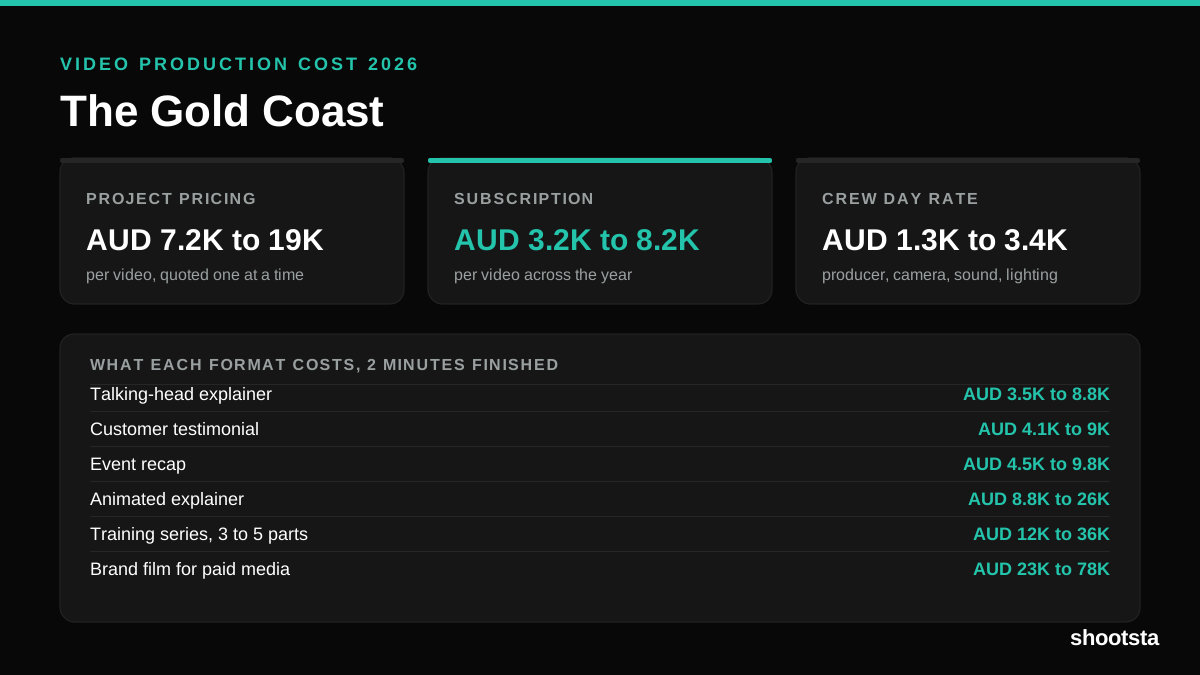
Video production in the Gold Coast costs AUD 3,200 to AUD 8,200 per finished video on a subscription model, and AUD 7,200 to AUD 18,500 for one-off project work. Here is what you are paying for, and how the three pricing models compare.
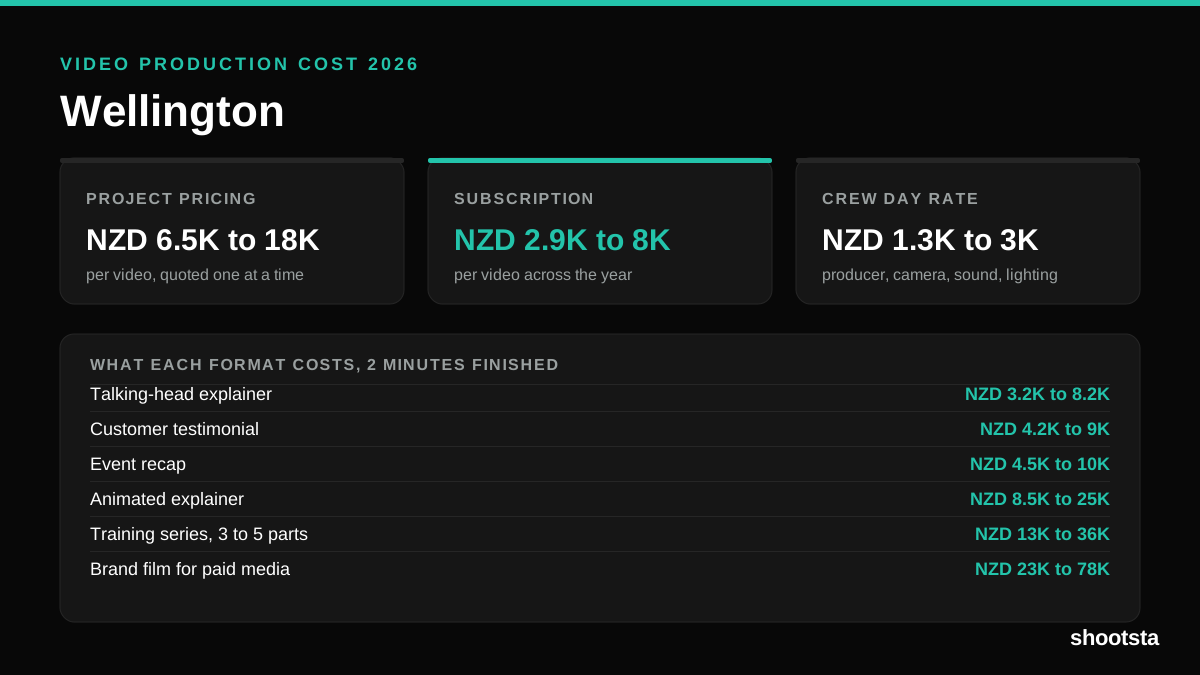
Video Production Cost in Wellington (2026)
Video production in Wellington costs NZD 2,900 to NZD 8,000 per finished video on a subscription model, and NZD 6,500 to NZD 18,000 for one-off project work. Here is what you are paying for, and how the three pricing models compare.
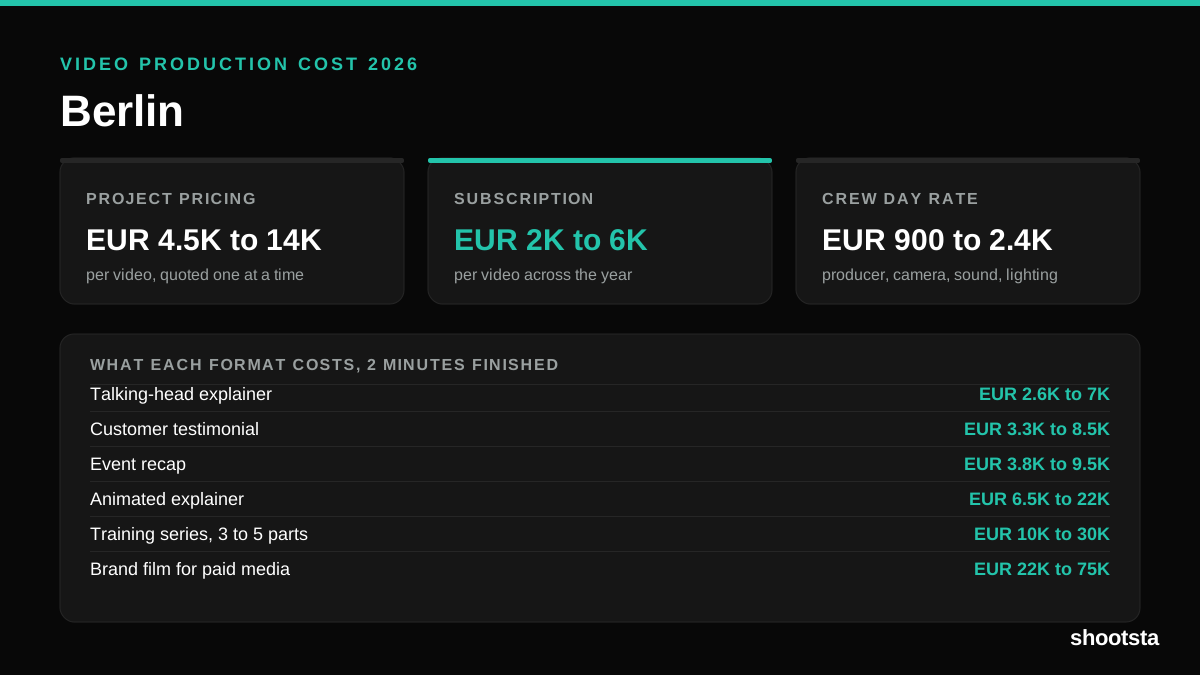
Video Production Cost in Berlin (2026)
Video production in Berlin costs EUR 2,000 to EUR 6,000 per finished video on a subscription model, and EUR 4,500 to EUR 13,500 for one-off project work. Here is what you are paying for, and how the three pricing models compare.