
Why B2B Teams Underinvest in Video
shootsta.
Why B2B Teams Underinvest in Video
By Shootsta · Published June 26, 2026 · Updated October 2026
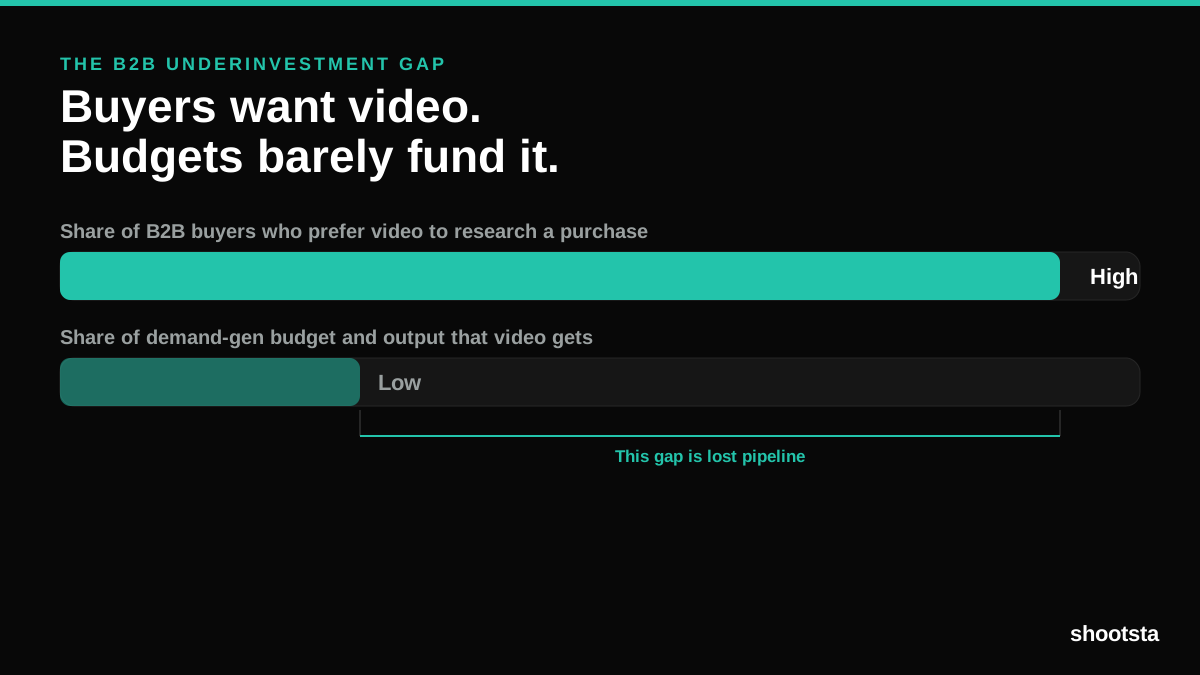
B2B buyers prefer video when they research a purchase, yet many B2B teams put a small share of budget and output behind it. The reason is rarely doubt. Video feels slow, expensive, and hard to attribute, so it loses budget fights to formats that ship faster. Here is what that underinvestment costs in pipeline, and how a capacity-on-demand model closes the gap.
Short answer. B2B buyers prefer video when they research a purchase, yet many B2B teams put a small share of budget and output into it. The reason is rarely a lack of belief. Video feels slow and expensive to produce and hard to attribute, so it loses budget arguments to formats that ship faster. That underinvestment has a direct pipeline cost: fewer assets for demand gen, ABM, sales enablement, product marketing, and thought leadership means less influenced pipeline. The fix is a production model that adds capacity on demand, so the team can produce enough video to feed every stage of the funnel.
Ask a B2B buyer how they want to evaluate a product and the answer keeps landing on video. Research shows buyers reach for short video to size up a vendor and build the case internally, often before they talk to sales. That preference runs deep, and video is where vendors now win buyer attention and trust.
Now look at where the budget goes. In many B2B teams, video gets a thin slice of demand-gen spend and an even thinner slice of real output. The appetite from buyers is high and climbing, while the funding and volume behind video stay small and flat. The distance between what buyers want and what teams produce is the underinvestment gap. It has a cost, which shows up later as pipeline that video never got the chance to influence.
Why do B2B teams underinvest in video when buyers prefer it?
Leaders rarely doubt the format, and the economic buyer usually knows video works. The underinvestment comes from three things that make video look like a bad bet on a spreadsheet, even when it is the format the market rewards.
It feels slow and expensive to produce
Under the traditional model, a single polished video can take weeks and a five-figure invoice, so teams ration it. They save video for the flagship launch and default to blog posts and slides for everything else, because those ship in a day. The result is a trickle of video against a flood of demand, and the gap between preference and funding stays wide. We break down the real economics in the real cost of enterprise video production.
It is hard to attribute to pipeline
Video sits at the top and middle of the funnel, where influence is diffuse and last-touch attribution gives it no credit. A buyer who watched three product videos and then filled in a form gets logged as a form conversion, not a video win. When you cannot draw a clean line from a video to a deal, it loses the budget argument to channels that report a tidy cost per lead. There is a practical way to measure it in the B2B video KPIs that actually matter.
The production model does not flex with demand
Demand for video is spiky and cross-functional. Product marketing, ABM, field, and enablement all want assets, often in the same week. An agency prices per project and moves on its own timeline. In-house hiring adds fixed cost that sits idle between bursts. Neither option lets a team produce at the volume the funnel now needs, so video stays a scarce resource that gets protected rather than deployed.
What does underinvesting in video cost in pipeline?
Every asset the team cannot produce is a demand-gen play it does not run. Fewer product explainers means slower activation on new features. Fewer customer proof videos means longer sales cycles, and fewer thought-leadership pieces means less reach with buyers you have not met. These losses never appear as a line item, which is why they get missed.
The buyer who owns the number should read the gap in pipeline terms. If video is the format buyers prefer and your team ships a fraction of what competitors do, you are ceding attention at the exact moments buyers form a shortlist. That is influenced pipeline leaking out of the funnel, and it compounds every quarter the output stays flat.
Where does video move the B2B funnel?
Video works at every stage of the funnel, so underfunding it costs pipeline in more than one place. Mapping it against the funnel makes the return concrete.
At the top, thought-leadership and social video build reach and put your brand in the consideration set early, which is where much of B2B growth is decided. In the middle, personalized and account-level video lifts reply rates on ABM and keeps nurture sequences from going cold. Late in the cycle, demos, customer stories, and objection-handling clips give sales assets that shorten the deal and lift win rates. We cover the plays that work in what actually works in B2B video marketing, with a longer idea list in these marketing video ideas.
Why does hiring or a new agency not close the gap?
The real constraint is volume at a predictable cost, and neither traditional option gives you that. Hire for the peak and you carry expensive capacity that sits idle between campaigns. Hire for the average and you miss every launch and event, which is when video matters most. Fixed headcount cannot track spiky, cross-functional demand.
Agencies have the reverse problem. They handle a big set piece well, but per-project pricing means cost scales straight up with output, and their timelines rarely fit a team that needs assets every week. Both models are good at part of the job, but neither is built to feed a funnel that runs on always-on video. That trade-off is worked through in the business case for a video production platform.
What does funding video correctly look like?
It looks like adding capacity on demand instead of buying it in fixed blocks, so output can track demand across every function. Teams centralize intake so demand gen, ABM, product marketing, and enablement all request through one route. They build the brand standard into the workflow so volume never means drift. And they use a partner that flexes with the calendar rather than charging per project, which makes the cost per finished video fall as output rises.
DUAL, a specialty insurer, is a clear proof point. Rather than hire a production team or brief a new agency for every asset, they built a repeatable model that ships on-brand B2B video at volume without adding headcount. Output went up, cost per video came down, and the brand stayed consistent across all of it.
That is the shift the economic buyer should push for. A bigger one-off budget for the next hero video will not fix it. What helps is a production model that turns video from a rationed luxury into a reliable input to pipeline. When capacity stops being the ceiling, the funnel finally gets fed at the volume buyers already prefer.
Frequently asked questions
If buyers prefer video, why is it still underfunded in B2B?
On a spreadsheet, video looks slow, expensive and hard to attribute, even when the market rewards it. Teams ration a scarce, costly resource and lean on formats that ship in a day and report a clean cost per lead. The belief in video is usually there. The production model and the attribution model are what hold funding back.
How do you connect video to pipeline and revenue?
Move past last-touch and track video as multi-touch influence: assisted pipeline, engagement by account, and stage progression on deals where video was consumed. Watch reply rates on video-led ABM, conversion on demo and proof content, and sales-cycle length on deals with strong video engagement. A working framework is in the B2B video KPIs that actually matter.
Does more video move the KPIs an economic buyer cares about?
When it is aimed at the funnel, yes. More top-funnel video widens reach and gets you into shortlists earlier, which grows influenced pipeline. More mid and late-funnel video lifts ABM reply rates and shortens sales cycles, which improves conversion and can pull down effective acquisition cost. What moves the numbers is producing enough of it, rather than one perfect piece.
What is the fastest way to raise video output without blowing the budget?
Add capacity on demand instead of fixed headcount or per-project agency spend. Centralize intake, build brand rules into the workflow, and use a partner that flexes with volume so cost per video drops as output climbs. That is what lets a team move from a handful of videos a quarter to a steady flow that feeds the funnel.
Sources and further reading
The patterns above line up with how researchers describe B2B buyer behavior and video's role in demand generation. For wider context:
- Wistia State of Video report on how buyers use video and how much video teams produce.
- The LinkedIn B2B Institute on brand building, reach, and long-term demand creation in B2B.
- Forrester research on the B2B buyer journey and how buyers self-educate before contacting sales.
Where to go next
This post is part of a series for leaders who own the pipeline number. To see the tactics that pay off, read what actually works in B2B video marketing. To measure the return, read the B2B video KPIs that actually matter. To weigh the production options, read the business case for a video production platform.
To see where your own funnel is short on video, book a free consultation.
Take this article with you
Read the latest at shootsta.com/blog/why-b2b-teams-underinvest-in-video
You might also like

How to Plan Video Team Capacity Around Leave
Your only editor just booked two weeks off, and you already know which projects will slip. Chad Lakin explains how to plan video team capacity so the work keeps moving when someone is away.

Corporate Video Editing Standards: Full Guide
A two-page editing standard does more for consistency than a forty-page brand book. Here is what it should cover, who owns each part, and how to enforce it with an in-house editor or an outside partner.
Quality Control in Outsourced Video Editing
When editing leaves the building, quality has to be checked by a system rather than by whoever happens to look. Here is the system: acceptance criteria, two QA gates, counted revision rounds and a quarterly audit.
Video Production Cost on the Gold Coast 2026
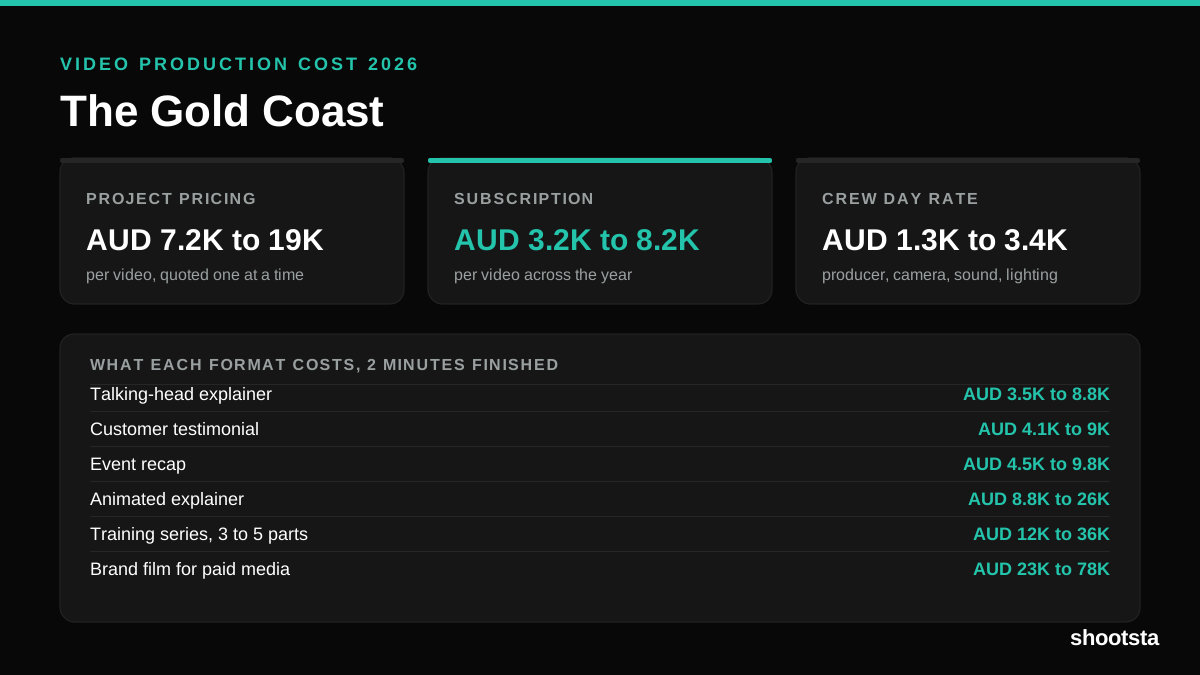
Video production in the Gold Coast costs AUD 3,200 to AUD 8,200 per finished video on a subscription model, and AUD 7,200 to AUD 18,500 for one-off project work. Here is what you are paying for, and how the three pricing models compare.
Video Production Cost in Wellington (2026)
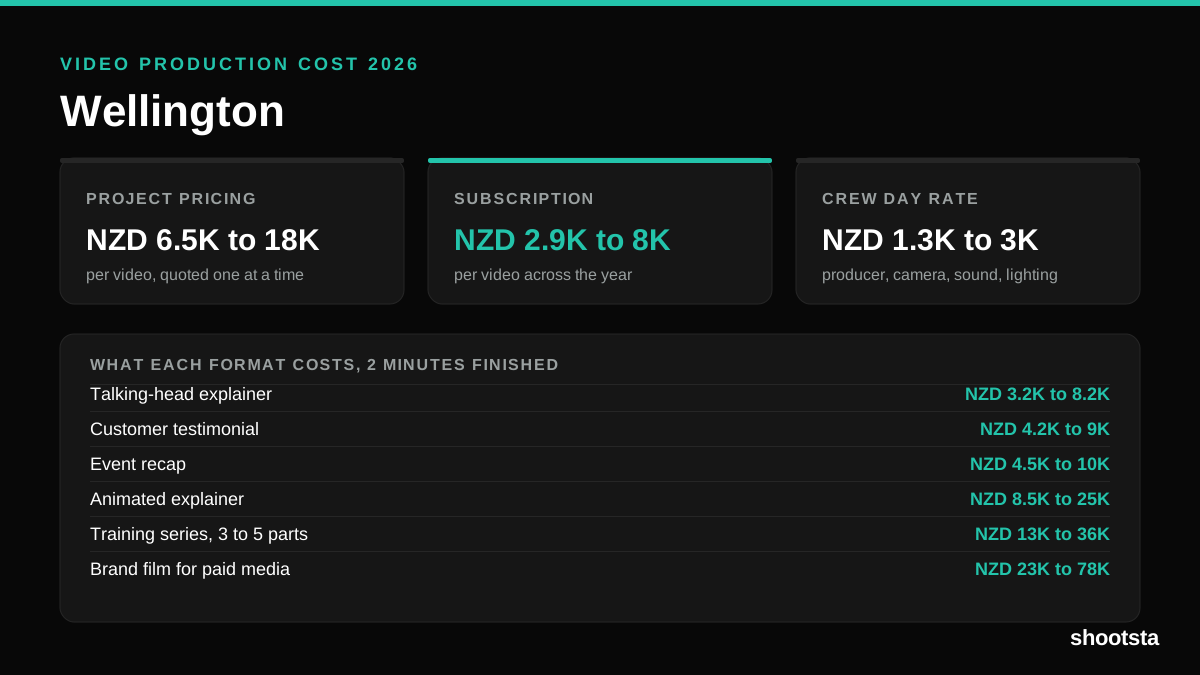
Video production in Wellington costs NZD 2,900 to NZD 8,000 per finished video on a subscription model, and NZD 6,500 to NZD 18,000 for one-off project work. Here is what you are paying for, and how the three pricing models compare.
Video Production Cost in Berlin (2026)
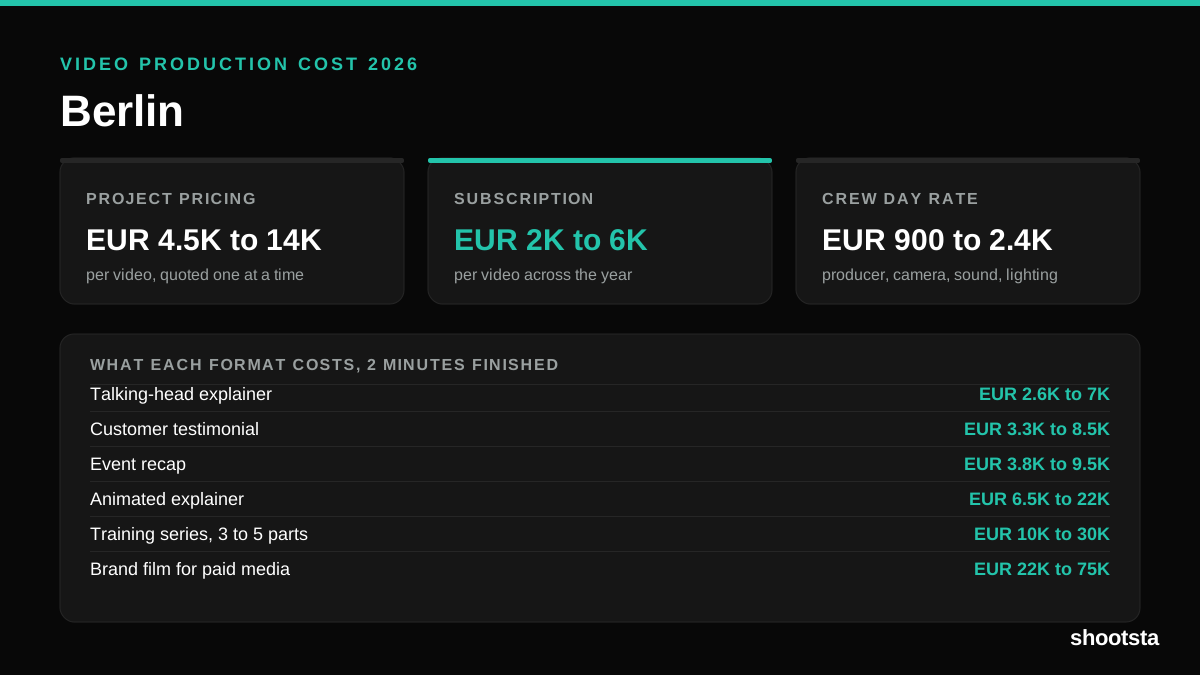
Video production in Berlin costs EUR 2,000 to EUR 6,000 per finished video on a subscription model, and EUR 4,500 to EUR 13,500 for one-off project work. Here is what you are paying for, and how the three pricing models compare.