
Internal Comms Video Editing Delays: 7 Causes
shootsta.
Internal Comms Video Editing Delays: 7 Causes
By Shootsta · Published July 20, 2026 · Updated October 2026
A leadership message that ships two weeks late lands after the moment has passed. Here are the seven key causes of internal comms video editing delays, what each adds to the calendar, and how to fix them.
Short answer. The key causes of internal comms video editing delays are a brief that arrives without a decision, an approver with no calendar space, reviewers who join late and reopen settled questions, unusable audio from the leadership shoot, scattered and contradictory feedback, captions and language versions treated as an afterthought, and no standing editing capacity so comms queues behind marketing. Cutting a three minute leadership message takes an editor half a day. Getting it published routinely takes two to three weeks. The edit is almost never the slow part. Faster internal comms video edits come from fixing the approval chain first, then the brief, then the capture, and then reserving editing capacity.
Internal communication has a shorter shelf life than almost anything else your company films. A change announcement is worth a great deal on the day it is needed and very little a fortnight later, once people have filled the gap themselves.
That makes delay the defining problem of internal comms video, not quality and not cost. This is a breakdown of the seven key causes of internal comms video editing delays, roughly in the order they eat the calendar, with the fix for each. Read it as the complete guide to faster internal comms video edits: every cause comes with its fix, and the fixes are ordered by how much calendar time they return.
What are the key causes of internal comms video editing delays?
There are seven, and only one of them is the edit itself. The table gives each cause, the delay it typically adds and the fix.
| Cause | Typical delay added | The fix |
|---|---|---|
| 1. The brief arrives without a decision | 2 to 4 days | A brief template with mandatory fields, signed off before footage moves. |
| 2. The approver has no calendar space | 3 to 7 days | Book the approval slot when you book the shoot. |
| 3. Reviewers join late | 4 to 10 days | Everyone reviews in parallel, once, against the brief. |
| 4. Unusable audio from the shoot | 1 to 5 days | A one-page capture standard, and a lapel mic. |
| 5. Scattered, contradictory feedback | 2 to 5 days | Timestamped comments in one place, one tie-breaker. |
| 6. Captions and languages added late | 2 to 4 days | Put them in the original brief, not the final round. |
| 7. No standing editing capacity | 3 to 10 days | Reserved capacity for comms, separate from the marketing queue. |
Add the middle of each range and a single leadership video carries roughly three weeks of delay, against about four hours of editing. That gap is the whole problem, and it is why hiring another editor rarely changes anything.
1. The brief arrives without a decision
Internal comms briefs often arrive as a request to "film the CEO on the restructure" with no decision on the audience, the length, the tone or what the viewer should do afterwards. The editor guesses, and round one gets spent discovering what the brief should have said.
The fix is a short set of mandatory fields, filled in before anyone books a camera. Our guide to writing video briefs that editors get right lists the ones that matter, and planning internal comms video covers the wider program.
2. The approver has no calendar space
This is the cause specific to internal comms. Marketing video is usually approved by a marketing manager. A leadership message is approved by an executive whose calendar is full for a fortnight, and the video waits.
To fix it, book the approval slot at the same time you book the shoot, in the same calendar invitation. Fifteen minutes reserved in advance is worth more than any speed gained in the edit.
3. Reviewers join late and reopen settled questions
Legal, HR, or a second executive sees the video for the first time at the final cut and raises a point that belonged in the brief. The whole thing goes back to the start, and late review is the most expensive review there is.
The fix is for everyone to review in parallel, once, against the brief rather than against personal taste. Sensitive messages need HR and legal at script stage rather than at final cut. The mechanics are in how to speed up corporate video review workflows.
4. Unusable audio from the leadership shoot
Executive footage is often captured quickly, in an office, between meetings. Bad audio is the result, and audio is the one thing an edit cannot rescue. Viewers forgive a soft picture and switch off on echo.
The fix is a one-page capture standard for whoever films, plus a lapel microphone in the room. Ten minutes of setup removes a recurring day of editing and a possible reshoot of a person who is hard to book twice.
5. Feedback is scattered and contradictory
Notes arrive across email, a Teams thread and a meeting nobody minuted. Two executives disagree about the tone and the editor is left in the middle, decoding rather than editing.
The fix is one place for comments, timestamped against the video, with a named person who breaks ties. Every note should name a change rather than a feeling.
6. Captions and language versions are added late
Internal video reaches deskless staff, second-language colleagues and people watching with the sound off. For this audience, captions are how the message gets received at all. When they are added in the last round, they cost days.
To fix it, put captions, transcripts and any language versions in the original brief. The standards are set out in the W3C captions guidance, WebAIM and WCAG 2.2, with public sector obligations under Section 508.
7. There is no standing editing capacity for comms
If your company has one video resource, it probably belongs to marketing. Comms requests queue behind campaign work, and the most time-sensitive content in the business ends up with the slowest path to publish.
The fix is reserved capacity for internal comms, held separately from the marketing queue. That does not have to mean a hire. It means a commitment that a leadership message is picked up the day it arrives.
Interactive pulse estimator
What pulse lift could your internal comms video program produce?
Set headcount, your current pulse score on the relevant question, and planned annual video volume. The estimator returns implied reach and a realistic pulse-score lift band based on enterprise benchmarks.
Average reach per video
1,375
~55% of headcount
Annual viewer impressions
41,250
across 30 videos
Projected pulse lift
+3 to +10
62 -> 65-72
How to read this
At 30 videos a year reaching roughly 1,375 employees per video, most enterprise internal comms programs see a +3 to +10 point lift on the primary pulse question covered. The honest read: lift only materialises if you tie a single pulse question to each campaign and re-measure. Without the measurement loop, the program ships content but does not produce defensible attribution.
Talk through your comms cadenceReach estimate uses ~55% of headcount as the typical average per-video reach when distributed natively in primary internal channels. Pulse lift bands come from observed enterprise customer movement on specific pulse questions tied to video campaigns. Numbers are guides.
Why does the delay cost so much?
Internal comms works when it reaches people while the question is still open. A response to a restructure while employees are uncertain builds trust. The same message a fortnight later competes with whatever the team already decided it meant.
That is why delay does more damage here than in marketing. A campaign video that ships late still sells. A change message that ships late has been overtaken by the rumour it was meant to answer. Research on employee engagement and trust from Gallup, the CIPD and SHRM consistently ties confidence in leadership to communication that is timely as well as honest.
How do you fix this without hiring?
Work in this order, because the early moves are free and return the most time.
- Book the approver first. Costs nothing, saves the largest single block of waiting.
- Review in parallel, once. Send to everyone at the same time with one deadline and one tie-breaker.
- Standardize the brief. Mandatory fields, filled in before the camera is booked.
- Fix the audio at the source. One page, one microphone.
- Reserve editing capacity for comms. Either internally, or with a partner who commits to a turnaround.
The last one is where a production partner earns its place. A committed 48-hour first cut only matters if the rest of the chain moves too, which is why the workflow fixes come first. For the wider version of this diagnosis across every kind of corporate video, read what slows scalable corporate video editing.
Frequently asked questions
What causes the most delay in internal comms video?
Approval causes the most delay, by a wide margin. The two causes that involve waiting for a person to look at something, an approver with no calendar space and reviewers who join late, add roughly seven to seventeen days between them. Everything else on the list is measured in single days. If you fix one thing, fix the approval chain.
How fast should an internal comms video be?
A leadership message should be publishable within two to three days of filming. That is achievable once review runs in parallel and editing capacity is reserved. If your last five internal videos took longer, time each stage before you change anything, because the delay is rarely where people assume.
Does animation avoid these delays?
It removes two of them. There is no shoot to schedule and no audio to rescue, which matters when the subject is a process or a structure rather than a person. It does not touch the approval chain. Animation use cases for comms teams are covered in animation use cases for internal comms teams.
Should internal comms have its own video capacity?
Yes, in any company where comms and marketing currently share one resource. The two have different clock speeds: a campaign can move a week, a restructure announcement cannot. Sharing one queue means the urgent work is always behind the planned work.
We already have an in-house comms team. Where does a partner fit?
Your team owns the message, the stakeholders and the judgement about what can be said. None of that is outsourceable. What runs out is editing hours, usually in the weeks when several things land at once. A partner absorbs the editing so your team keeps the parts only they can do. The split is set out in how a video partner extends your in-house team.
How do you get faster internal comms video edits?
Work through the fixes in this order. Book the approver's slot when you book the shoot. Send the cut to every reviewer at once, with one deadline and one tie-breaker. Standardize the brief so the editor is not guessing. Fix audio at the source with a lapel mic and a one-page capture standard. Then reserve editing capacity for comms, either in-house or with a partner that commits to a turnaround. Shootsta returns a first cut in about 48 hours and runs review on the timeline with timestamped comments, so the approval chain moves as fast as the edit. The review side is described in video review workflows for corporate marketing teams.
How do you measure whether it is improving?
Track the days from request to published rather than editing time. Then track review rounds per video and the share of briefs that arrive complete. Those three numbers tell you whether the workflow improved or the team just worked harder.
Sources and further reading
- Employee communication and engagement: Gallup workplace research, CIPD, SHRM, International Association of Business Communicators, Harvard Business Review on business communication.
- Video production volume and turnaround: Wistia State of Video, Vidyard business video benchmarks.
- Workflow and approvals: Frame.io on timestamped review, Lean Enterprise Institute on value stream mapping.
- Captions and accessibility: W3C captions guidance, WebAIM, WCAG 2.2, Section 508.
Where to go next
To plan the wider program rather than one video, read how to plan internal comms video that works. For the delays that affect every kind of corporate video, read what slows scalable corporate video editing. If you are choosing a partner, run the ten checks for corporate video editing services, and see how Shootsta works with internal comms teams.
Start by timing your last five internal videos from request to publish. The number is usually worse than people expect, and it tells you which of the seven causes to fix first. To talk it through, book a free consultation.
Last updated 26 September 2026.
Take this article with you
Read the latest at shootsta.com/blog/slow-video-internal-communications
You might also like

How to Plan Video Team Capacity Around Leave
Your only editor just booked two weeks off, and you already know which projects will slip. Chad Lakin explains how to plan video team capacity so the work keeps moving when someone is away.
Corporate Video Editing Standards: Full Guide
A two-page editing standard does more for consistency than a forty-page brand book. Here is what it should cover, who owns each part, and how to enforce it with an in-house editor or an outside partner.
Quality Control in Outsourced Video Editing
When editing leaves the building, quality has to be checked by a system rather than by whoever happens to look. Here is the system: acceptance criteria, two QA gates, counted revision rounds and a quarterly audit.
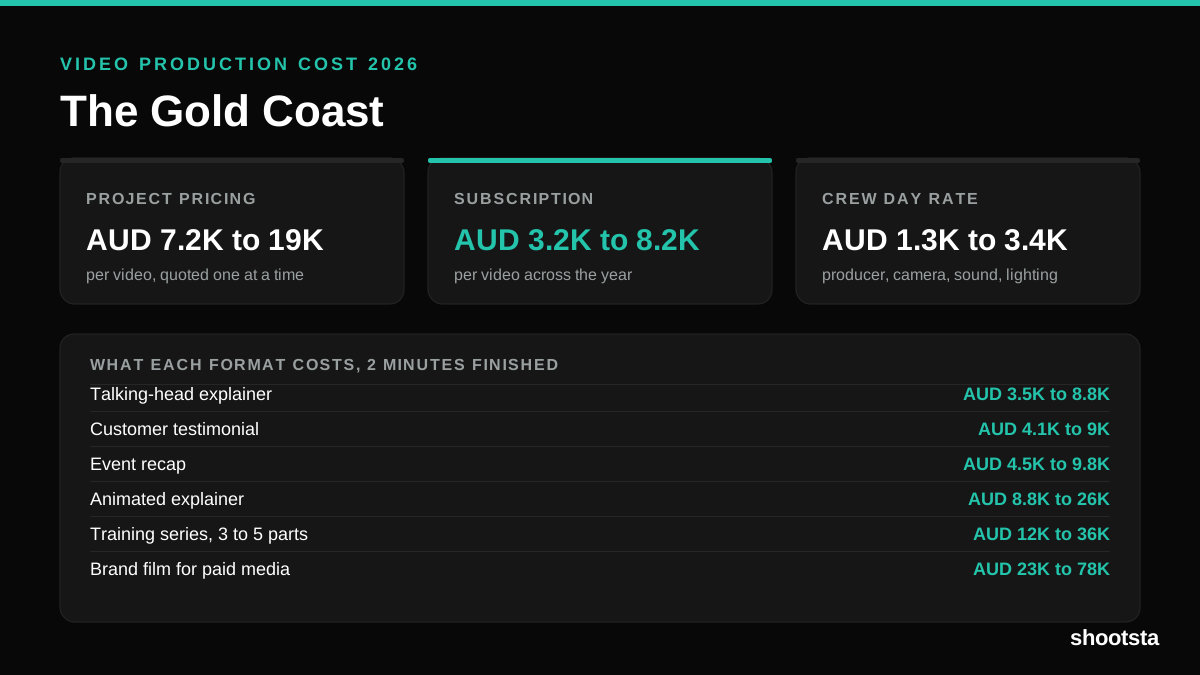
Video Production Cost on the Gold Coast 2026
Video production in the Gold Coast costs AUD 3,200 to AUD 8,200 per finished video on a subscription model, and AUD 7,200 to AUD 18,500 for one-off project work. Here is what you are paying for, and how the three pricing models compare.
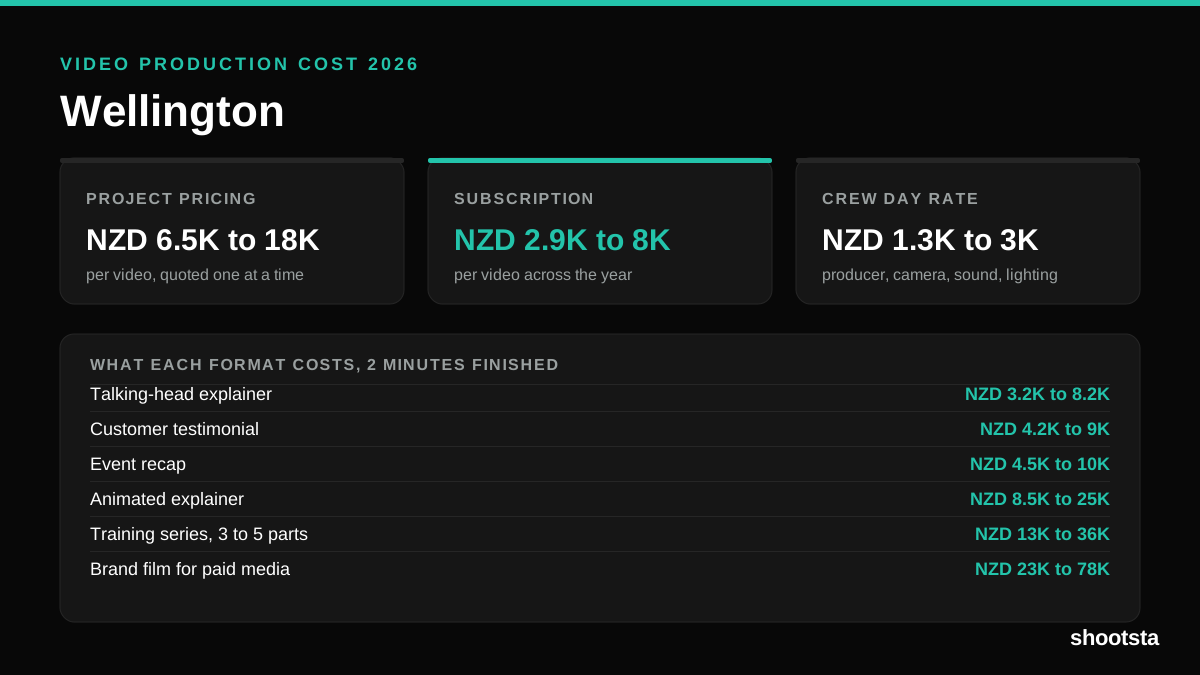
Video Production Cost in Wellington (2026)
Video production in Wellington costs NZD 2,900 to NZD 8,000 per finished video on a subscription model, and NZD 6,500 to NZD 18,000 for one-off project work. Here is what you are paying for, and how the three pricing models compare.
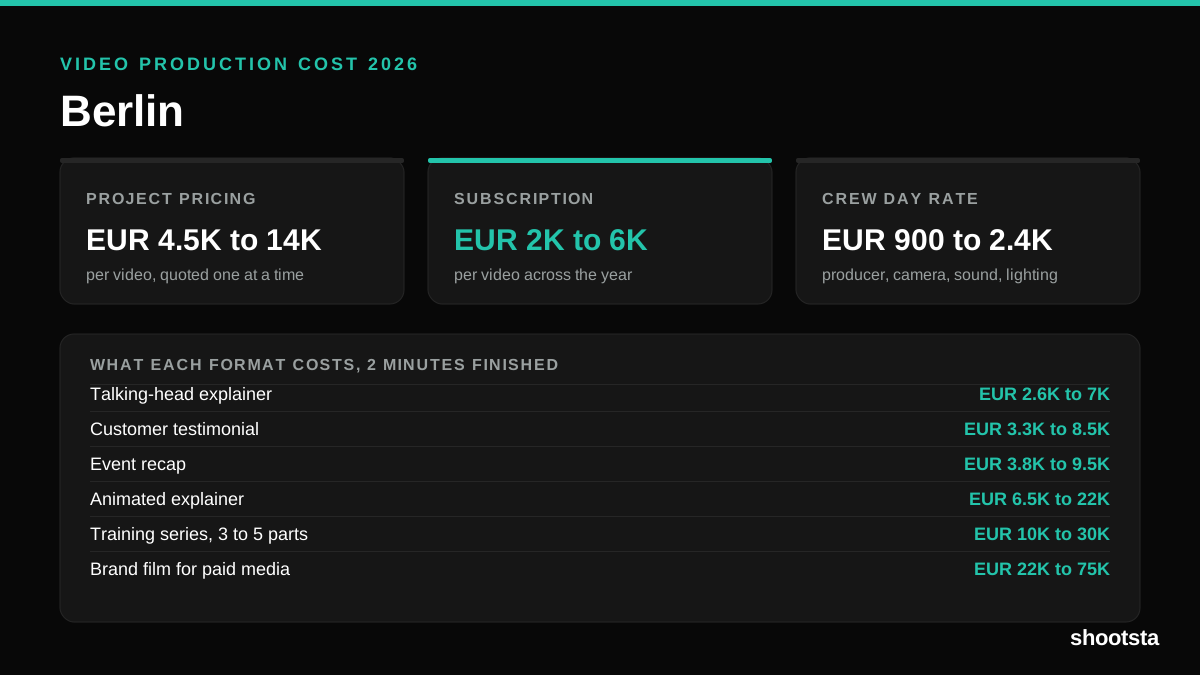
Video Production Cost in Berlin (2026)
Video production in Berlin costs EUR 2,000 to EUR 6,000 per finished video on a subscription model, and EUR 4,500 to EUR 13,500 for one-off project work. Here is what you are paying for, and how the three pricing models compare.