
How to produce video for travel and hospitality
shootsta.
How to produce video for travel and hospitality
By Shootsta · Published April 10, 2026 · Updated October 2026
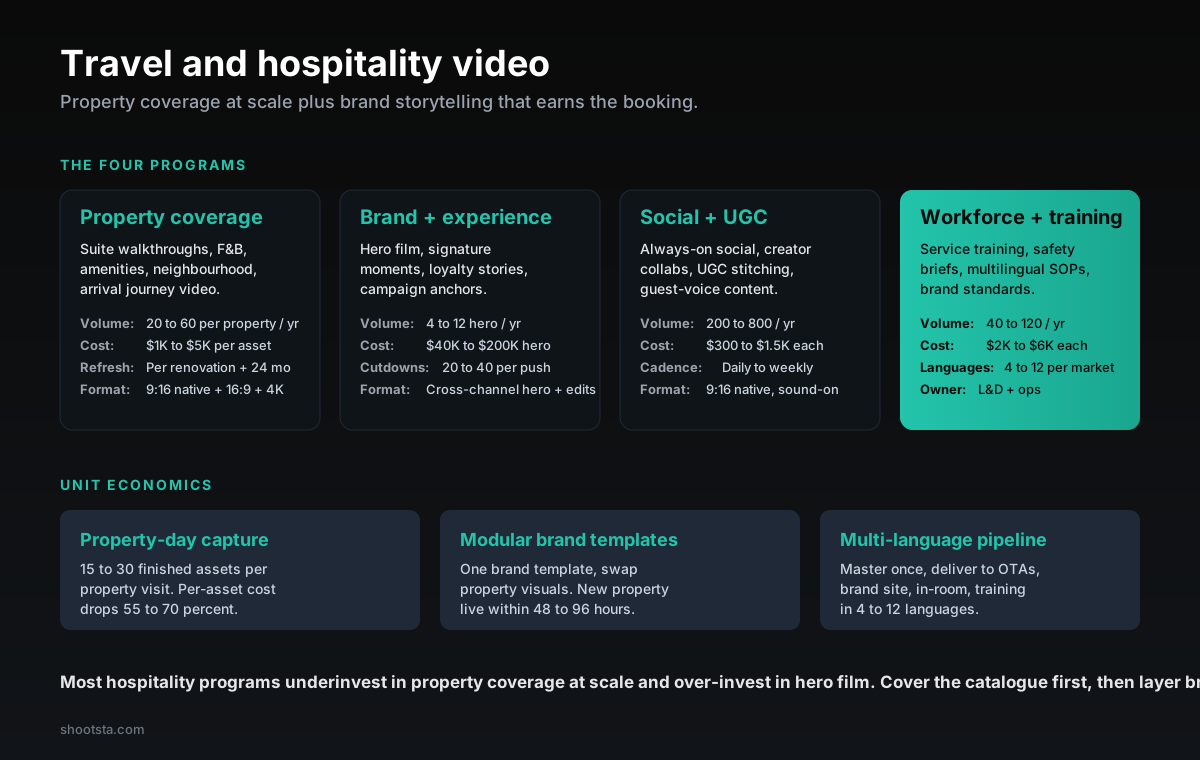
Travel and hospitality video runs against two structural needs: property coverage at scale and brand storytelling that earns the booking. Four content programs (property coverage, brand and experience, social and UGC, workforce and training), property-day capture that produces 15 to 30 assets per visit, and a multi-language pipeline that holds the program together across hotels, resorts, airlines, cruise and destination brands.
Why travel and hospitality video needs catalog and brand together
Travel and hospitality programs have to meet two competing needs. The first is property coverage at scale, because every hotel, resort, airline cabin or cruise ship needs its own video of rooms, amenities, F&B and the arrival experience. The second is brand storytelling: the loyalty narrative, the hero campaign film and the signature moments that win the booking against competitors.
Many programs run these as separate exercises, each with its own budget, creative direction and vendor. Property coverage then stays patchy, and brand work stays polished but cut off from the booking path. Conversion sits below where it should, because the guest needs to see both before they book.
A better model treats property coverage and brand work as one program, with two production methods that share a creative spine. Property-day capture handles high-volume coverage at a low cost per asset. Hero brand films carry the seasonal and campaign anchors, with always-on social and UGC sitting between the two. Workforce and training video runs alongside in multiple languages. This post covers it at hotel-group, airline, cruise and destination scale.
The four programs
Program 1: Property coverage
Property coverage includes suite walkthroughs, F&B and bar video, amenity and wellness video, local area and destination footage, the arrival sequence and cabin or stateroom walk-throughs. It is by far the highest-volume program, at 20 to 60 finished pieces per property per year, produced in batched property days to keep cost per asset low. Plan a refresh after every renovation and an evergreen refresh every 24 months. Deliver 9:16 vertical plus 16:9 and 4K for OTA and brand-site use. This is the program where travel and hospitality brands tend to underinvest.
Program 2: Brand and experience
This program covers the hero brand film, signature moments, loyalty stories, seasonal campaign anchors and sponsorship or partnership video. A typical brand makes 4 to 12 hero films a year, each with 20 to 40 cutdowns tailored to each channel. The format is a cross-channel hero piece plus distribution cuts. This is the program that earns long-term brand consideration.
Program 3: Social and UGC
Social and UGC covers always-on social, creator collabs, UGC stitching, guest-voice video and live or short-form moments. Expect 200 to 800 finished pieces a year, published daily to weekly. Everything is shot or cut 9:16, sound-on, with native captions. This program keeps your audience engaged between hero campaigns.
Program 4: Workforce and training
Workforce video covers service training, safety briefs, brand standards and SOPs across housekeeping, F&B, front desk, concierge, in-flight crew and ship crew. Plan for 40 to 120 finished pieces a year, in 4 to 12 languages per market depending on who your workforce is. L&D and operations own it together. This is the internal program that protects the guest experience.
The property coverage program in detail
What good property coverage looks like
Every property in the portfolio has a complete video set: room walkthroughs by room category, F&B venues, spa and wellness, fitness, pool and outdoor amenities, meetings and event space, local area video and the arrival sequence. The set lives on the brand site and syndicates to OTAs (Booking.com, Expedia, Airbnb, Marriott Bonvoy property pages). It also feeds paid social and supports direct booking. The set is refreshed every 24 months, and straight after any major renovation.
The three production methods
There are three production methods, and each one suits a different portfolio size.
The first is ad-hoc external production for each property, which is the standard production-agency model. It works for small portfolios of under 10 properties. At scale it breaks down, because the cost per property is too high and the refresh cadence slips.
The second is property-day capture, where a crew captures 15 to 30 finished assets in a single property visit. This is the standard model for mid-sized portfolios of 10 to 100 properties, and it brings the cost per asset well below ad-hoc production. Property days go into the operating calendar, often in shoulder season or low-occupancy windows.
The third is a modular template plus property asset-swap. One brand template takes swappable property visuals, so new property video can ship in 48 to 96 hours. This is the standard model for large portfolios of 100+ properties, and it lowers the cost per asset again compared with property-day capture.
Multi-aspect output
You master each piece once and deliver it to every surface: the brand site (16:9 or 1:1), OTA listings (16:9) and retail media and paid social (9:16). The same master also feeds in-room TV (16:9 with overlay), pre-arrival guest email (often a 1:1 GIF) and trade marketing assets (a 16:9 sales kit). That gives 5 to 8 outputs per master, and this multiplication is where the property coverage program reaches its full distribution.
Hospitality property coverage calculator
Map property coverage to production days and spend
Set property count, per-property coverage cadence and the shared surfaces. Pick a production method. The calculator returns annual assets, property days required, indicative spend and per-property cost.
Properties in scope: 40
Coverage pieces per property per year: 28
Production method
Property-day capture (15 to 30 finished assets per visit): $1K per asset, ~22 assets per production day.
Hero brand films per year: 6
Social + UGC pieces per year: 400
Workforce + training modules per year: 60
Annual assets
1,586
1120 property + 6 hero + 400 social + 60 training
Property days / yr
51
Indicative spend
$2.62M
Cost per property
$39K
Property coverage only
Cost ranges are sector medians for hotel groups, resort brands, airlines and cruise. Property-day capture and modular templates compound to drop per-asset cost 55 to 70 percent against ad-hoc property production.
The hero brand film pattern
Seasonal campaign anchor
The 30 to 90 second campaign anchor for each major travel window: northern summer, ski season, the festive period and shoulder season pushes. It has the highest production value in the program and often uses talent, destination location work and custom music. Cost depends on that production scope, and the cycle runs 8 to 16 weeks from brief to delivery.
Cutdown library
Each hero film gets 20 to 40 cutdowns, tailored to each channel and market. The set usually includes a 30 second TV cut, a 15 second pre-roll, 9:16 social, a 1:1 feed version and regional language versions for global brands. The cutdown library is where the hero film's investment gets distributed.
Signature-moment content
Films around signature brand moments: the bedtime ritual at a hotel chain, the welcome cocktail at a resort, the cabin service at an airline, the embarkation at a cruise brand. Brands typically make 4 to 12 of these a year, often produced as a portfolio of related shorts that share creative direction.
Loyalty stories
Loyalty stories feature loyalty program members talking about their travel experiences. They need only mid-level production value and send a strong trust signal. Plan for 12 to 24 a year.
The social and UGC program
Always-on social
Always-on social publishes daily to weekly for each brand or property. The mix includes trend-led posts that respond to travel platform moments and property-led posts that link to specific properties. Brand-led posts carry on the brand narrative. Expect 200 to 500 pieces a year, with 3 to 7 days from idea to publish.
Creator partnerships
Travel creator collabs at varied scale: micro-creators for property-specific content, mid-tier creators for destination content, top-tier travel creators for hero campaigns. An active program runs 12 to 36 creator partnerships a year, with cost driven by creator size.
UGC stitching
Guest-generated content (with permission) re-cut into brand-owned social. It works best for destination brands and resorts, where guests already share travel moments on their own. Programs stitch 50 to 200 pieces a year.
Live and short-form moments
Live shopping where applicable (TikTok Shop integrations, Instagram Live), live property tours, behind-the-scenes video tied to property events. Plan for 20 to 60 a year.
The workforce and training surface
Brand-standard training
Service standards for each team (housekeeping, F&B, front desk, concierge, cabin crew, ship crew) are presented in a standard video format across the brand portfolio. Plan 20 to 40 modules per major service area, refreshed every 18 to 24 months as standards change.
Safety and compliance
This covers workplace safety, food safety, emergency procedures, cabin safety, ship safety and security awareness. It is heavily regulated training that needs audit-ready documentation, and a typical program produces 15 to 30 modules a year.
Property-specific SOPs
New openings, renovations and brand transitions each need property-specific training, built for that property. It is often produced as part of the pre-opening or post-renovation program.
Multilingual delivery
The master is produced in the brand-standard language, then adapted for each market in 4 to 12 languages depending on who your workforce is. APAC and Middle East hospitality programs typically require the broadest language coverage. We covered the broader multi-language pipeline pattern in how to scale video across global offices.
What changes for the production team working on travel and hospitality content
Travel and hospitality work asks three shifts of a production team.
Shift 1: Property-day discipline
You need crews that can capture 15 to 30 finished assets in a single property visit without disrupting the guest experience. That takes tight scheduling, a multi-camera setup, asset tagging at capture and respect for staff and guests on property. A producer who can capture clean footage on a Saturday afternoon without guests noticing is worth more than one who has to clear the property.
Shift 2: Multi-language editorial
Editors and producers need to work across multiple languages and cultural contexts. Service content for an Asian luxury brand uses different pacing, framing and dialogue than content for a Western mid-market brand. The production team has to hold this fluency.
Shift 3: OTA and platform spec literacy
Every distribution platform has its own video spec: Booking.com property video standards, Expedia rich content modules, OTA mobile-first formats, paid social channel specs, brand site player requirements. The editor delivers to spec from the start rather than re-cutting after platform rejection.
Practical questions enterprise travel teams ask
How do we run video across a 100+ property portfolio?
Own the program centrally at brand level, including brand templates, content standards and scheduling. Add regional production capacity that covers the major markets. Use the modular template and asset-swap pipeline for high-volume property coverage, and property-day capture for renovations and refreshes. Produce hero film and signature moment work centrally. We covered the broader multi-site pattern in how to scale video across global offices.
What about guest privacy on property?
Standard hospitality practice is to show no identifiable guests in marketing video without explicit consent. Property-day shoots are scheduled in low-occupancy windows or in rooms blocked off for production. Where guests cannot be avoided, hired talent appears in the room walkthroughs instead. The consent and privacy patterns are non-negotiable for brand trust.
How do we handle the OTA platforms?
The major OTAs (Booking.com, Expedia, Marriott, Hilton brand sites) accept video on property listings with platform-specific specs. The video that performs best on OTAs is property-specific room walkthrough content rather than brand campaign film. The video pipeline should treat OTA delivery as a primary distribution surface from the first brief.
What about destination versus property brand video?
Strong programs run both. Property-specific video drives direct booking and OTA distribution, while destination video builds awareness and demand. Destination video is often produced in partnership with tourism boards and shared across regional properties.
What about AI-generated travel video?
AI is useful for non-launch social posts, multi-language voice-over on training video and distribution scheduling. AI-generated visuals as a substitute for actual property footage erodes trust because guests can detect synthetic content and judge the brand as inauthentic. The framing in how AI fits inside enterprise video workflows applies broadly; hospitality has stricter authenticity requirements than most sectors because trust drives bookings.
Where to go next
For the customer story format that overlaps with loyalty story production, read how to produce customer story video at scale. For the retail product coverage model that overlaps with property coverage, read how to produce video for retail and e-commerce. For the multi-language and multi-site pattern, read how to scale video across global offices.
To scope a travel or hospitality video program with property coverage and brand work both, book a free consultation.
Take this article with you
Read the latest at shootsta.com/blog/how-to-produce-video-for-travel-and-hospitality
You might also like
How to Brief an Animation Project
How to Brief an Animation Project
An animation brief is the document you send to your production partner before work starts. Get it right and you cut revision cycles in half. Get it wrong and you discover mid-production that everyone disagrees on what the video is for. This is what a complete brief looks like.
Animation for change management comms
Animation for change management comms
Animation handles change management communications better than live video for three reasons: no on-camera executives required during sensitive periods, scene-level updates when plans shift, and a single production that works across global teams with voiceover-only language swaps.
How sales leaders should use video at scale
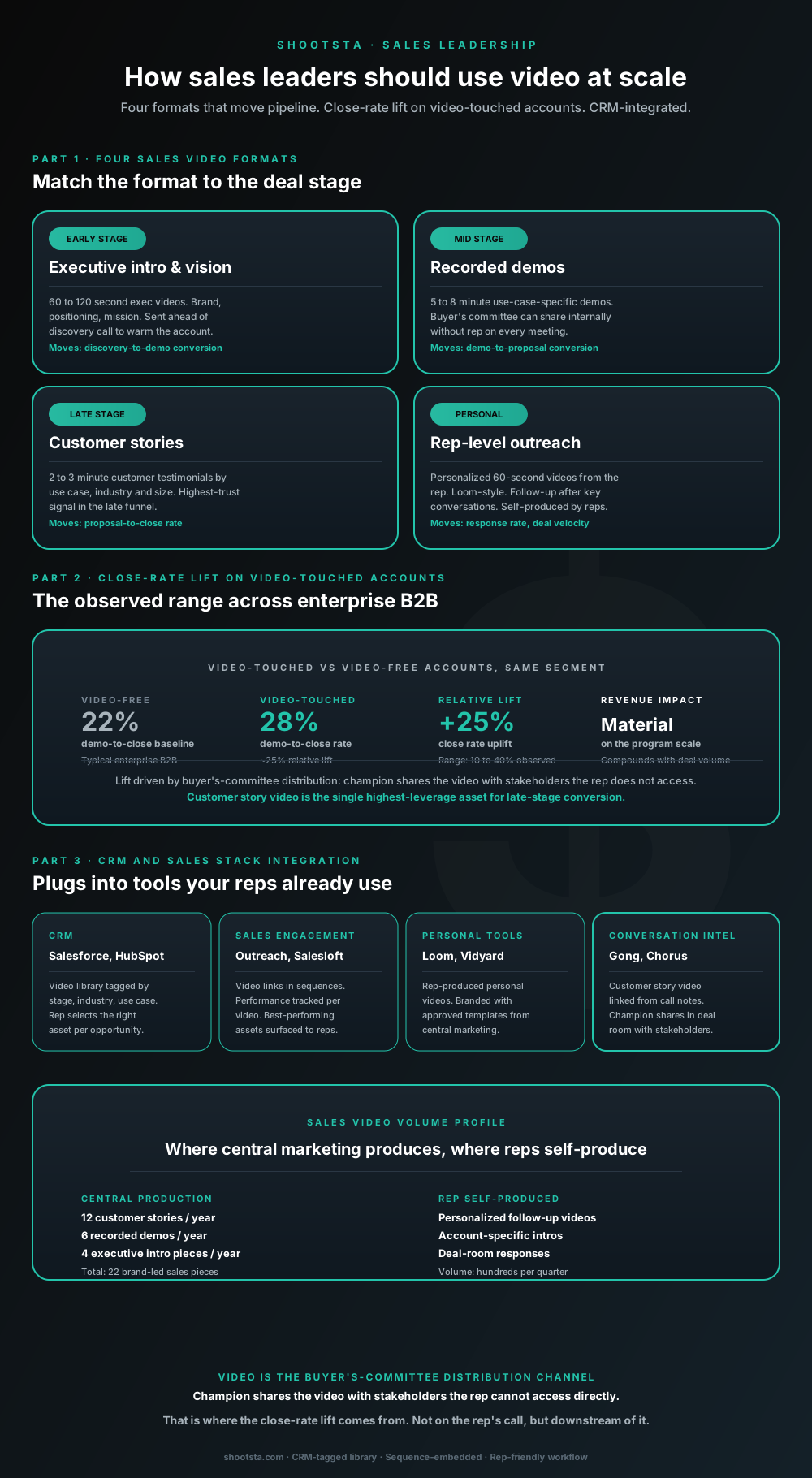
Sales leaders mostly think about video as personalized rep outreach (Loom, Vidyard) or as marketing-produced customer stories. Both are useful. The bigger opportunity is the buyer's-committee distribution layer: assets the champion shares internally with stakeholders the rep does not access directly. That is where the close-rate lift compounds.
How L&D leaders replace classroom with video
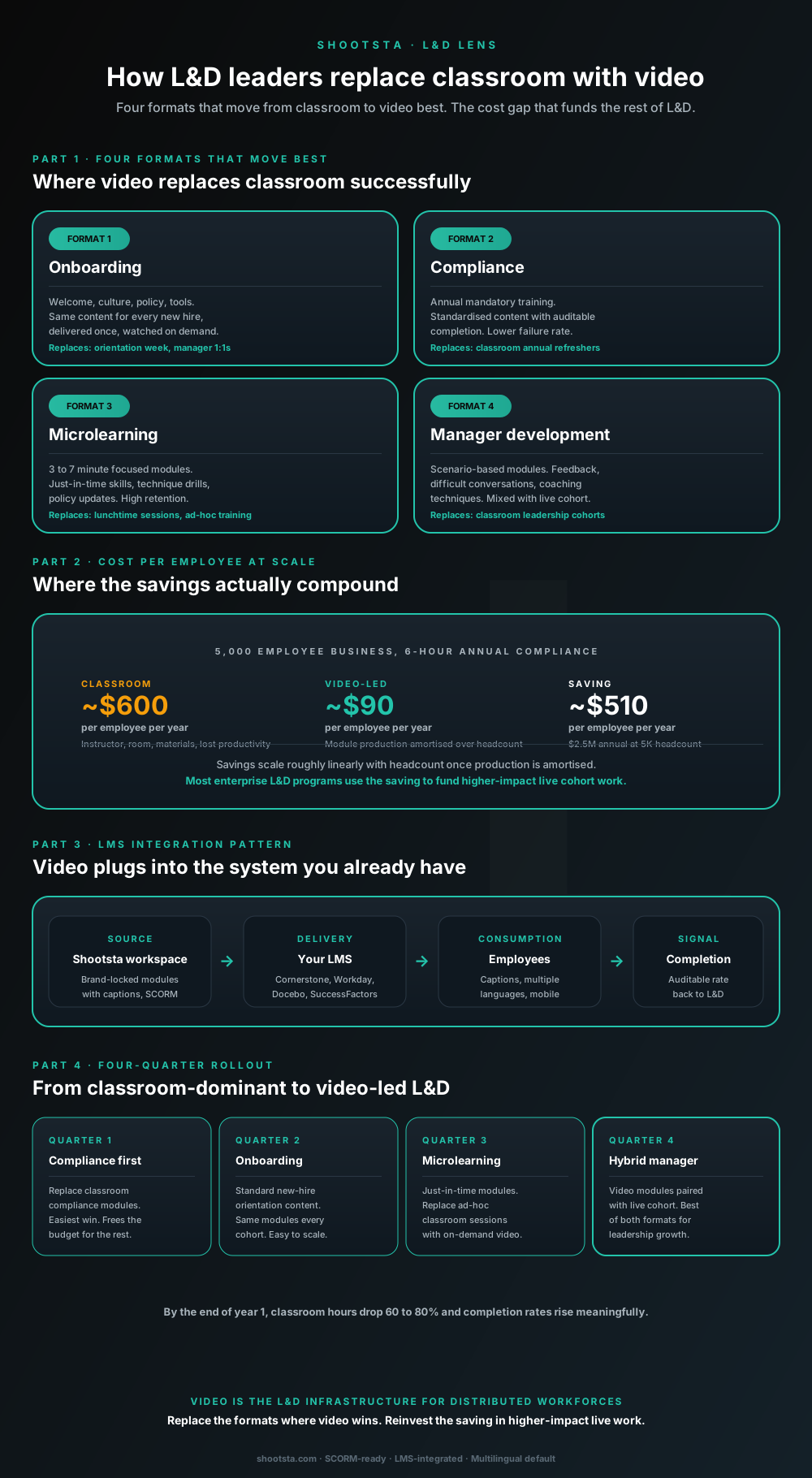
L&D leaders running classroom-heavy training programs typically have the largest single opportunity in the business to free budget through format change. Four training formats move from classroom to video cleanly; the savings fund higher-impact live work. Here is the rollout that compounds learner adoption over four quarters.
How customer success leaders should use video
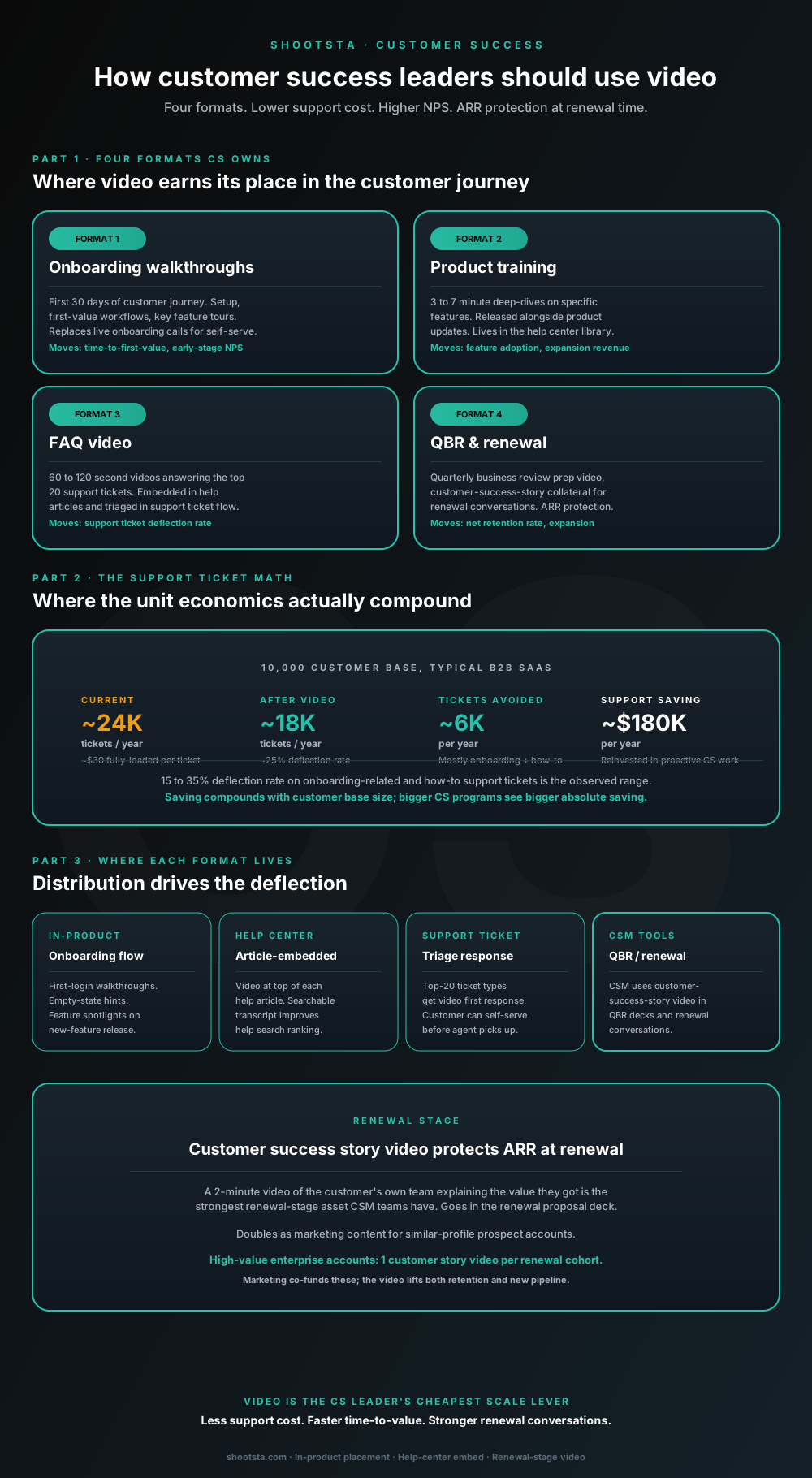
Customer success leaders are usually under-resourced for both reactive support volume and proactive retention work. Video is the cheapest lever to fix both - 15 to 35% deflection on onboarding and how-to tickets, faster time-to-value, and renewal-stage customer story video that lifts net retention. Here is the four-format model and where each piece earns its place.
How internal comms leaders should use video
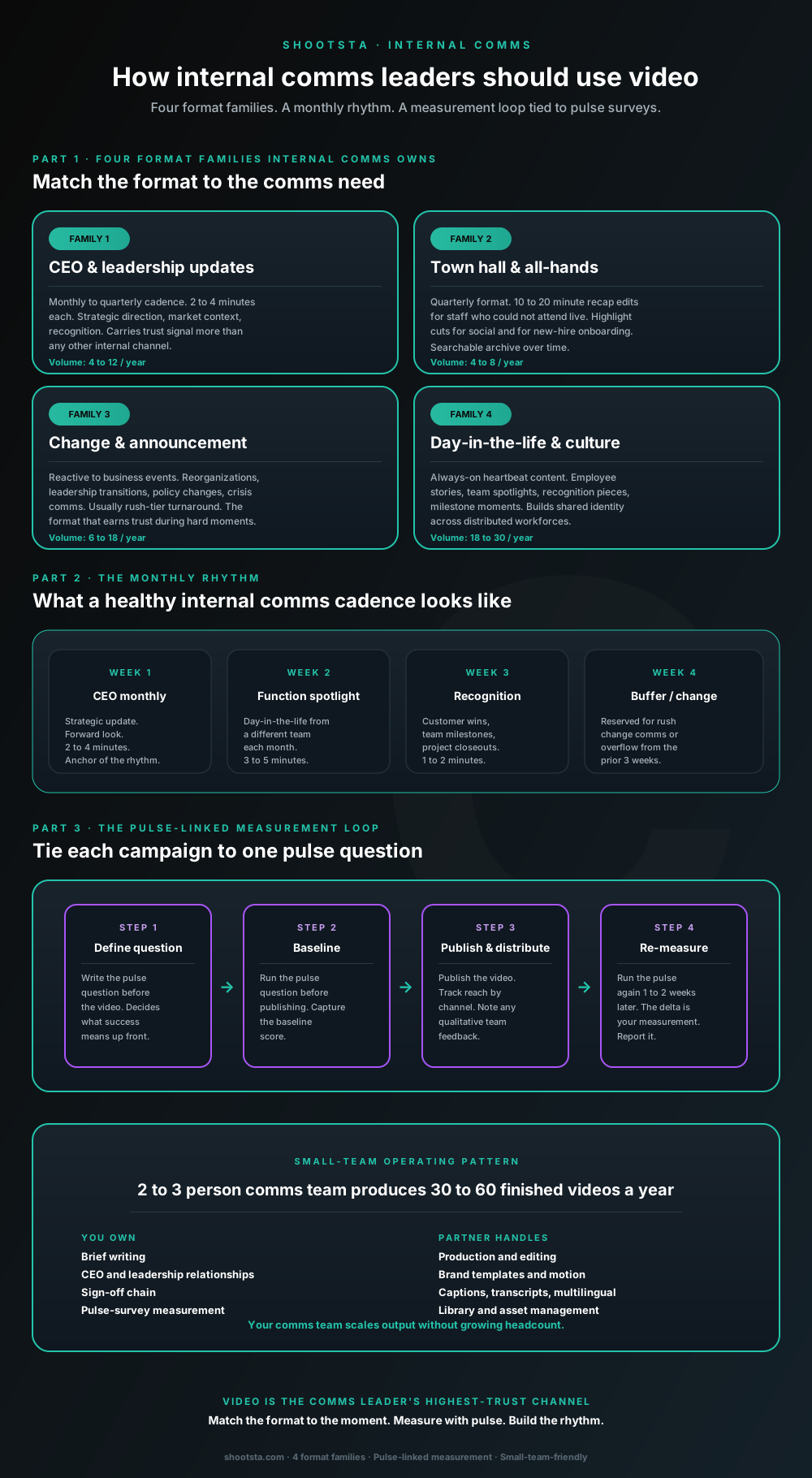
Internal comms leaders are usually under-resourced for the volume of video the business wants. The fix is not more headcount; it is structuring the program around four format families, a monthly rhythm, and a pulse-survey-linked measurement loop. Here is the operating pattern that lets a small comms team produce 30 to 60 finished videos a year.