
How to produce video for professional services
shootsta.
How to produce video for professional services
By Shootsta · Published April 13, 2026 · Updated October 2026
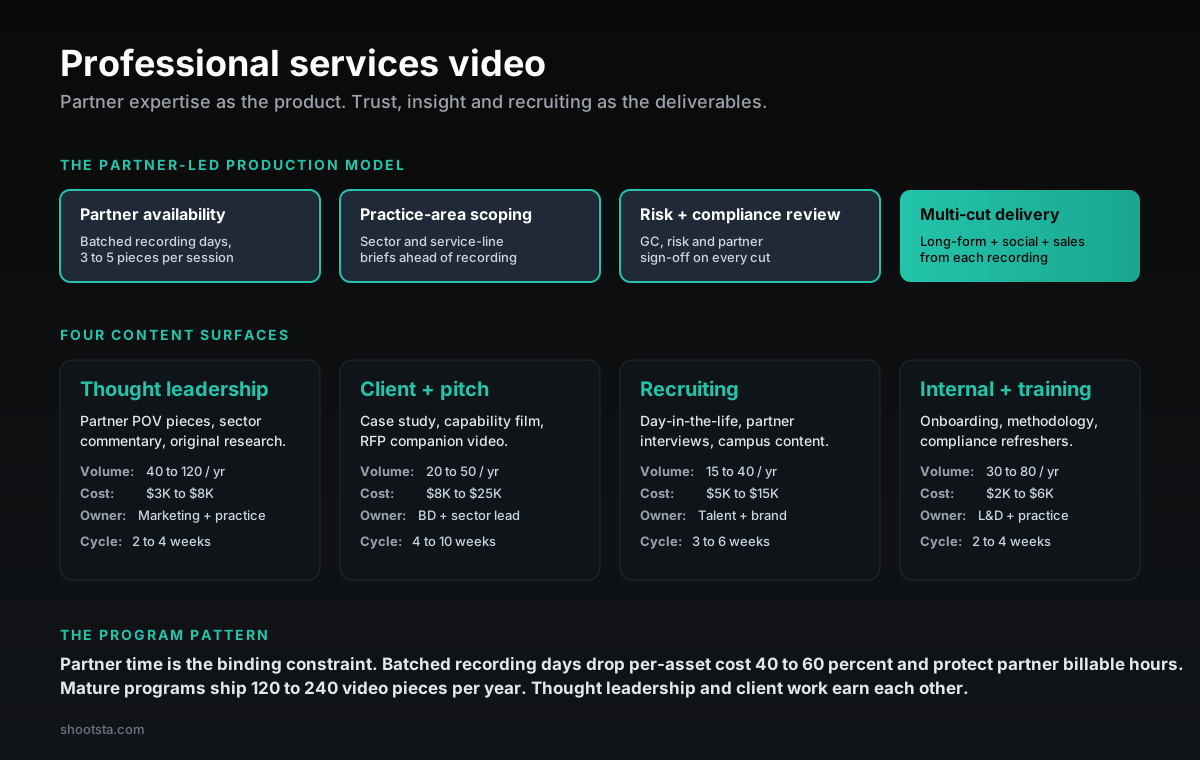
Professional services firms sell expertise. Video is the most efficient medium for proving it. The constraint: partner time. The model: batched recording days, practice-aligned scoping, risk and partner sign-off on every cut. Four content surfaces (thought leadership, client and pitch, recruiting, internal training) and the partner-led production pattern that ships 120 to 240 pieces per year without breaking the billable hour calendar.
Why professional services video carries a different production load
Professional services firms sell partner expertise. Consulting, accounting, legal and advisory firms compete on whose partners are most credible in front of which buyers. Video is the most efficient medium for proving that expertise at scale, because the buyer can see the partner think, hear the partner speak about the buyer's actual problem, and judge whether the firm matches the buyer's brief.
The constraint that shapes the whole program is partner time. Every hour a senior partner spends on a shoot is an hour they are not billing a client. So design the program around partner time, because production capacity is easy to add and partner hours are not. That means batched recording days where each partner records several pieces in one session. It means scoping by practice area so briefs take less time, and building risk and compliance review into the workflow. It also means cutting each recording many ways, so one partner-hour turns into a full set of assets. This post walks through that model.
The four content surfaces
Surface 1: Thought leadership
This surface covers partner POV pieces, sector commentary, original research videos and market outlooks. It has the highest volume and drives most of the program's brand value. Marketing and the practice lead own it together, and a batched piece can move from brief to release in a few weeks. This is the surface that builds the firm's authority in the market.
Surface 2: Client and pitch
This surface covers case study video, capability films, RFP companion video and pitch video for specific deals. Volume is lower and each piece costs more, because the crew often travels to the client and the creative direction is built for each pitch. Business development and the sector lead own it. This is the surface that closes specific deals.
Surface 3: Recruiting
This surface covers day-in-the-life video, partner interviews, campus and office footage, and alumni stories. Talent and brand own it together. It is the surface that wins technical hires at the analyst and associate level.
Surface 4: Internal and training
This surface covers onboarding, methodology training, compliance refreshers and leadership development. It has the biggest effect inside the firm. L&D and the practice own it, and turnaround is usually quick. This is the surface that spreads partner expertise across the firm.
The partner-led production model
Batched recording days
Each quarter, a senior partner records several thought leadership pieces in one session of a few hours. The studio setup and the prep stay the same, and the topics run one after another. Each piece costs much less than it would from an ad-hoc shoot. Partner time per piece also drops sharply, and at senior billing rates that is the only pattern that pays.
Practice-area scoping
Scope each recording session to a single practice or sector. Marketing prepares the brief and the partner reviews it before the session, with a shortlist of topics agreed in advance. The partner then walks into the studio with topics they have already thought through, which keeps the recording tight. The marketing producer who runs this briefing well is the most underrated person in the program.
Risk and compliance review
Consulting, accounting, legal and advisory firms review content closely. General counsel, risk management and a partner review every cut. This review chain adds weeks to delivery, and you cannot skip it. Build it into the schedule from the brief stage, because teams that try to squeeze it in after the first cut end up reshooting.
Multi-cut delivery
Each recording session produces a long-form thought leadership piece of 3 to 5 minutes and 4 to 8 social cutdowns of 45 to 90 seconds. It also yields a sales enablement version of 60 to 90 seconds and a written blog post to go with it. Cutting one session into that many assets is what makes the partner time worth spending.
Professional services program planner
Map your partner cadence to annual program output and cost
Set how many partners are in the program, their cadence and the other three content surfaces. The planner returns annual asset volume, indicative spend and the partner time the program asks for.
Partners on camera: 12
Thought leadership pieces per partner per year: 6
Practice case studies + RFP video per year: 20
Recruiting pieces per year: 20
Internal + training modules per year: 40
Mid-point per-asset cost assumptions: TL $5K, client + RFP $14K, recruiting $9K, training $3.5K. Per-partner hours per TL piece assumed at 2.5h (batched recording).
Annual assets
152
72 TL + 20 client + 20 recruiting + 40 training
Indicative spend
$0.96M
Partner hours / yr
180
~15h per partner
Cost / asset (avg)
$6.3K
Cost ranges are sector medians for established consulting, accounting, legal and advisory programs. Batched partner recording days drop the per-asset cost 40 to 60 percent against ad-hoc production.
The thought leadership surface in detail
Partner POV pieces
In a POV piece of 2 to 4 minutes, a senior partner sets out a strong view on a sector question or a client problem. Buyers look for this format while they evaluate firms. You publish it on the firm website, LinkedIn, sector publications and conference platforms. We covered the broader TL format in how to produce thought leadership video; professional services is one of the highest-impact sectors for this format.
Sector commentary
Here a partner comments each month or quarter on a sector development, such as a regulatory change, M&A activity or a shift in the market. These pieces are topical and need to go out while the news is fresh. This is the format that earns press citations and analyst mentions.
Original research videos
The firm presents its yearly or half-yearly research as a signature video of 5 to 8 minutes. The research might be a sector outlook, a market sizing study, or a CFO or CIO survey. These pieces earn the firm its strongest recognition, because original data is the clearest sign of authority. They also cost the most, since the data work is part of the job.
Market outlook video
Partners comment on scheduled market events such as a Fed decision, earnings season, a regulatory deadline or year-end. Because the dates are known, you can plan production ahead, keep one format and rotate partners. Timing makes this some of the most-watched thought leadership a firm puts out.
The client and pitch surface
Case study video
A case study video runs 3 to 5 minutes on one engagement. It shows the partner's view and, where the client agrees, a client testimonial. Coordinating with the client stretches the timeline. It is the asset that helps most in late-stage sales conversations.
Capability films
A capability film runs 3 to 8 minutes and covers one service line, sector practice or method. The BD team sends it ahead of a pitch to set the context. These films take longer to make than most pieces in the program.
RFP companion video
An RFP companion video runs 2 to 4 minutes and is made for one RFP response. A senior partner and the engagement leader walk through the proposed approach. The RFP deadline sets the schedule, so production has to move fast. In late-stage selection, this video can set your proposal apart.
Deal-specific pitch content
This is custom video for late-stage strategic deals, often made on tight timelines for a specific decision. Firms use it for top strategic accounts, follow-up after an RFP and as a companion to executive presentations. We covered the broader ABM pattern in how to produce video for ABM at scale; professional services firms often run this approach on their top strategic accounts.
The recruiting surface
Professional services firms compete for technical hires against in-house roles and other firms. Those hires include analysts, associates, managers and senior managers. Recruiting video is what wins over a candidate who is choosing between several offers.
Day-in-the-life content
This video follows an analyst, associate or manager through a typical day. It helps candidates picture the work and the culture. It usually runs 3 to 5 minutes.
Partner interviews
Senior partners talk on camera about their career path, the work they find most rewarding and the firm's culture as leaders see it. These interviews usually run 4 to 8 minutes.
Campus content
This is recruiting video for the firm's MBA, undergraduate and law school programs. Firms often make it as a standard set and refresh it lightly each year.
Alumni stories
Former employees talk about their time at the firm and what they learned. Candidates often trust these stories most, because an alum has no reason to overpromise.
The internal and training surface
Onboarding
Onboarding video covers firm policies, the basics of the firm's methods, IT systems, time tracking and client confidentiality. The firm uses the same set everywhere and refreshes it each year.
Methodology training
Video teaches the firm's own methods, such as consulting frameworks, audit methodology, legal practice approaches and advisory frameworks. This is how partner expertise spreads across the firm. Each practice area usually needs its own set of modules.
Compliance refreshers
Annual compliance training covers independence, conflicts, anti-money laundering, ethics and anti-bribery. These modules are standard and simple to produce, but they carry real regulatory weight.
Leadership development
This surface covers development for managers and directors, commercial training for partners and peer coaching. Firms often run it as a structured curriculum across the year.
What changes for the production team working on professional services content
Your production team will need to make three practical shifts. Each one protects partner time or cuts review rework.
Shift 1: Partner time discipline
Production teams have to work inside narrow windows of partner availability. A producer who can record several pieces in a short session with no overruns is worth far more than one who needs a full day per partner. In professional services, this discipline matters more than any other production skill.
Shift 2: Risk-aware editing
Editors and producers need to know what triggers a risk or compliance escalation. That includes details that identify a client, references to a specific deal, commentary that could read as advice and partner attribution of sector views. An editor who knows what will be flagged saves weeks of rework on each asset.
Shift 3: Practice-area fluency
Producers need to understand how consulting, audit, tax, legal and advisory work differ. That covers the questions to ask, the framing and the right level of detail. We covered the broader sector fluency model in how a partner gets up to speed on your industry; professional services adds the partner-protocol layer because partners have strong views on how they want to be represented.
Practical questions enterprise professional services teams ask
What does a complete program cost?
The cost depends on how many pieces you make and how they split across the four surfaces. A mid-market consulting, accounting or law firm runs a smaller program than a large firm, and the budget scales with that volume. Firms often underspend on thought leadership and recruiting while overspending on one-off capability films. Batched recording and multi-cut delivery bring the cost per asset down, and a partner that edits below agency cost helps you plan the year with fewer surprises.
How do we handle client confidentiality?
The standard approach is to keep client-specific references out of thought leadership. Case study video needs explicit written consent from the client, often agreed in the engagement letter at the start. Content made for a specific deal is disposed of once the deal closes. The contract pattern is covered in video production contracts: what to look for.
What about partner attribution and personal brand?
Firms usually separate content attributed to the firm, which runs under the firm masthead on firm channels, from content attributed to a partner, which runs on personal LinkedIn accounts and at conferences. Both have a place. The firm's editorial policy should specify which content surfaces support which attribution.
How do we run the program across multiple offices?
Large professional services firms usually have a central video lead who coordinates across offices. They add local production capacity in major markets such as London, New York and Hong Kong, plus secondary markets. The central lead owns brand templates and quality standards; local production handles capture. We covered the broader pattern in how to scale video across global offices.
What about AI-generated professional services content?
AI is useful inside the production workflow for script outlines that a partner reviews, transcript editing, picking social cutdowns and scheduling distribution. Using an AI voice or AI visuals in place of the partner is a mistake, because the trust signal in professional services is the partner attribution itself. The framing in how AI fits inside enterprise video workflows applies broadly.
Where to go next
For the thought leadership format that anchors the largest surface, read how to produce thought leadership video. For the ABM pattern that overlaps with deal-specific pitch content, read how to produce video for ABM at scale. For the contract patterns governing client confidentiality, read video production contracts: what to look for.
To scope a professional services video program that respects partner time and ships at scale, book a free consultation.
Take this article with you
Read the latest at shootsta.com/blog/how-to-produce-video-for-professional-services
You might also like
How to Brief an Animation Project
How to Brief an Animation Project
An animation brief is the document you send to your production partner before work starts. Get it right and you cut revision cycles in half. Get it wrong and you discover mid-production that everyone disagrees on what the video is for. This is what a complete brief looks like.
Animation for change management comms
Animation for change management comms
Animation handles change management communications better than live video for three reasons: no on-camera executives required during sensitive periods, scene-level updates when plans shift, and a single production that works across global teams with voiceover-only language swaps.
How sales leaders should use video at scale
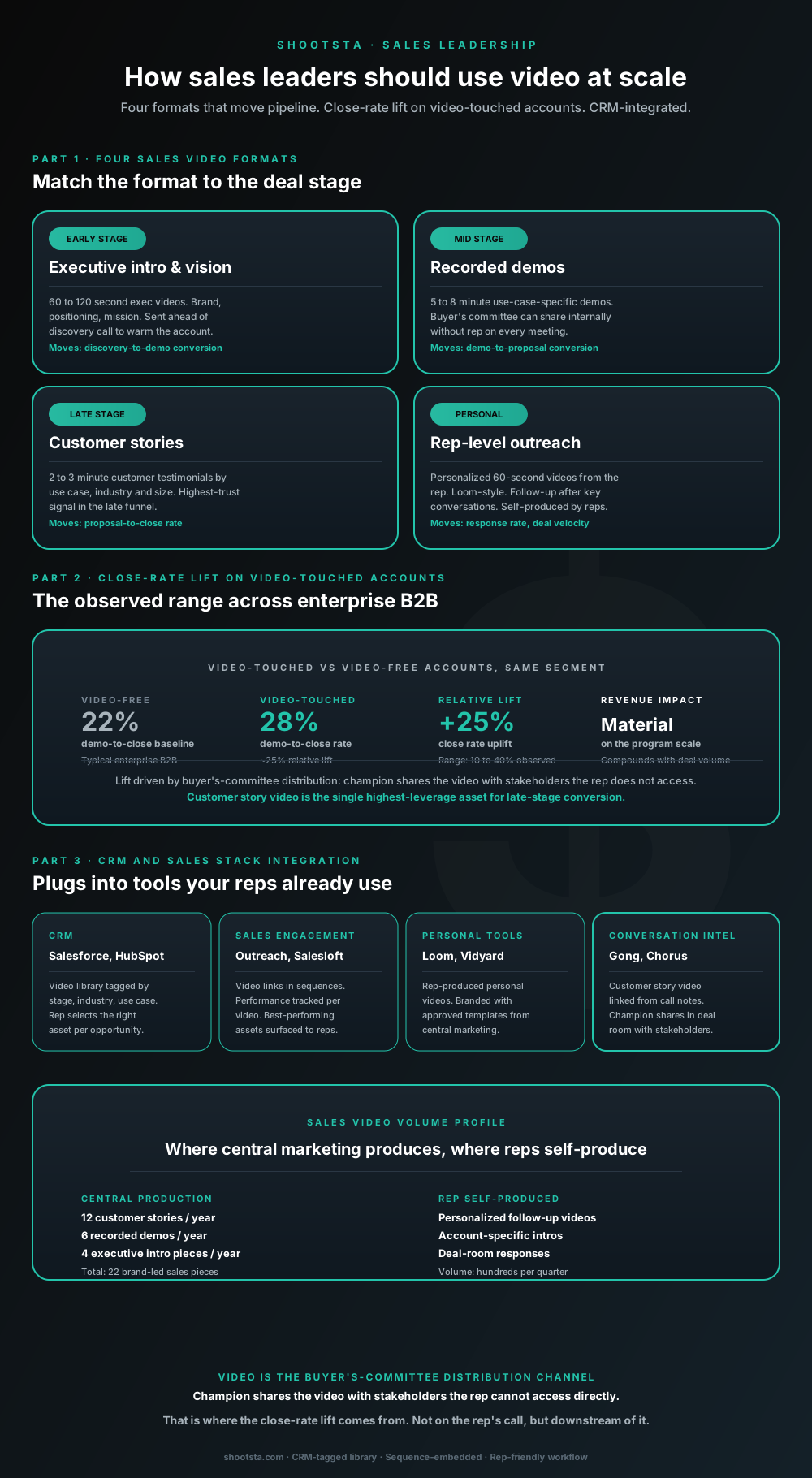
Sales leaders mostly think about video as personalized rep outreach (Loom, Vidyard) or as marketing-produced customer stories. Both are useful. The bigger opportunity is the buyer's-committee distribution layer: assets the champion shares internally with stakeholders the rep does not access directly. That is where the close-rate lift compounds.
How L&D leaders replace classroom with video
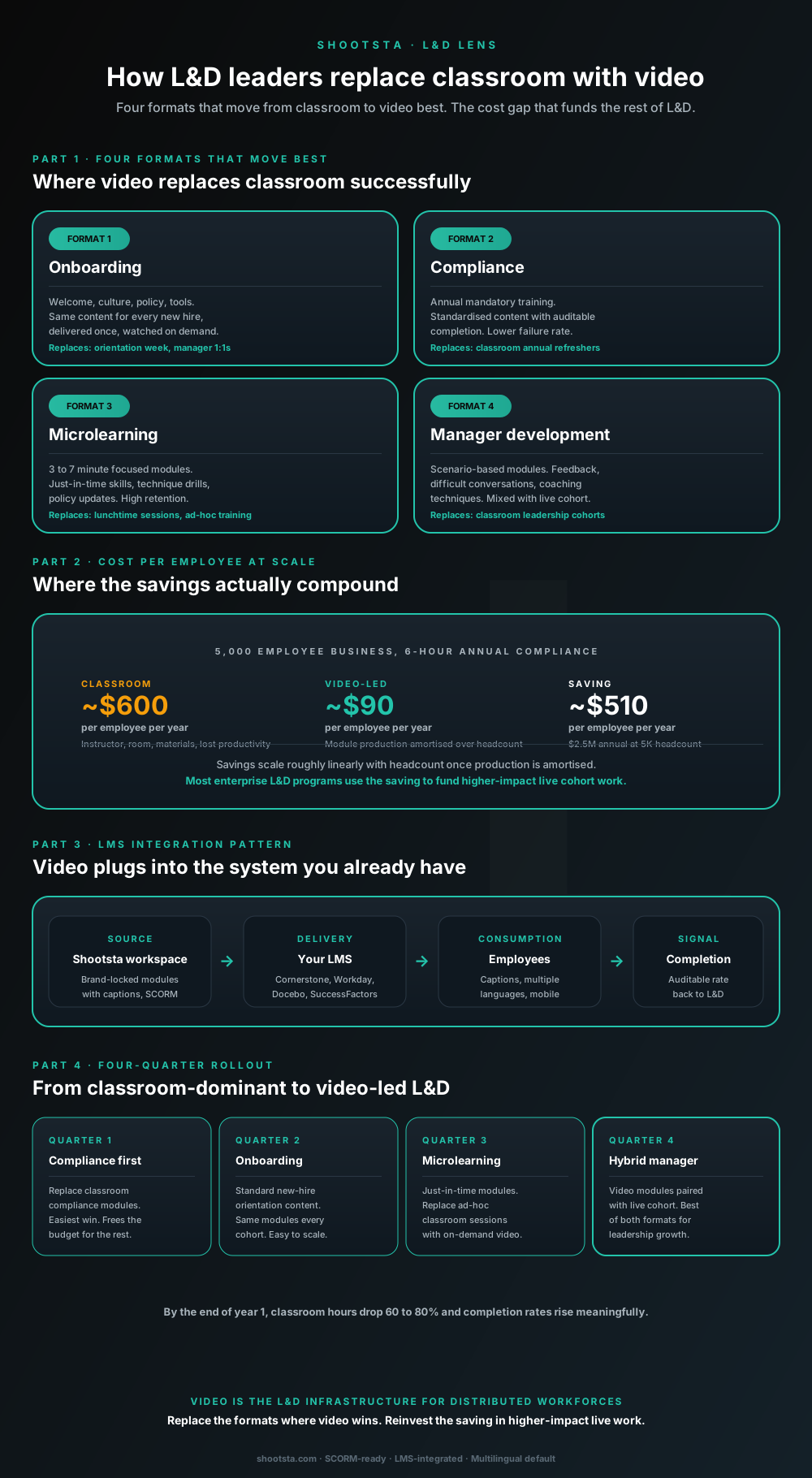
L&D leaders running classroom-heavy training programs typically have the largest single opportunity in the business to free budget through format change. Four training formats move from classroom to video cleanly; the savings fund higher-impact live work. Here is the rollout that compounds learner adoption over four quarters.
How customer success leaders should use video
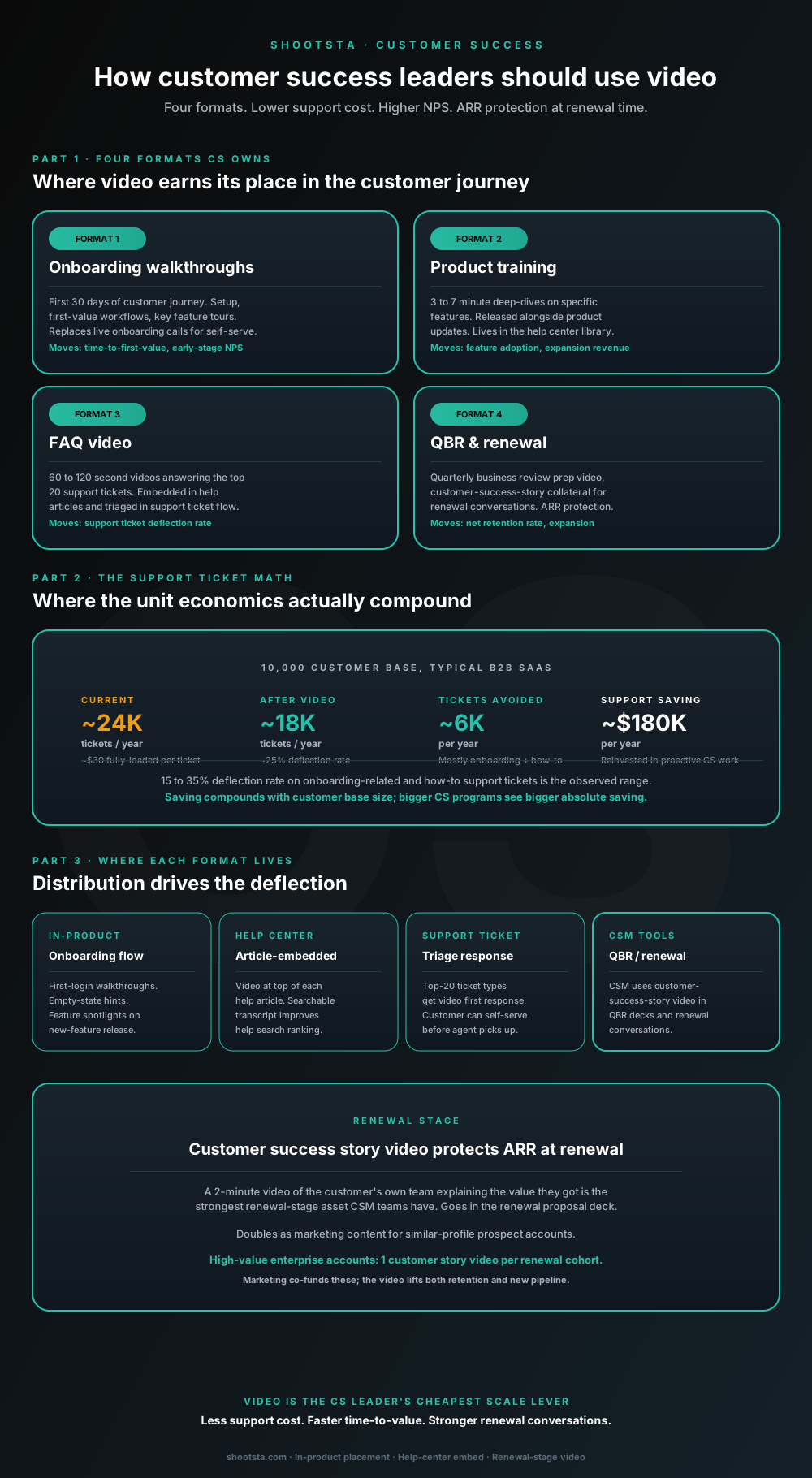
Customer success leaders are usually under-resourced for both reactive support volume and proactive retention work. Video is the cheapest lever to fix both - 15 to 35% deflection on onboarding and how-to tickets, faster time-to-value, and renewal-stage customer story video that lifts net retention. Here is the four-format model and where each piece earns its place.
How internal comms leaders should use video
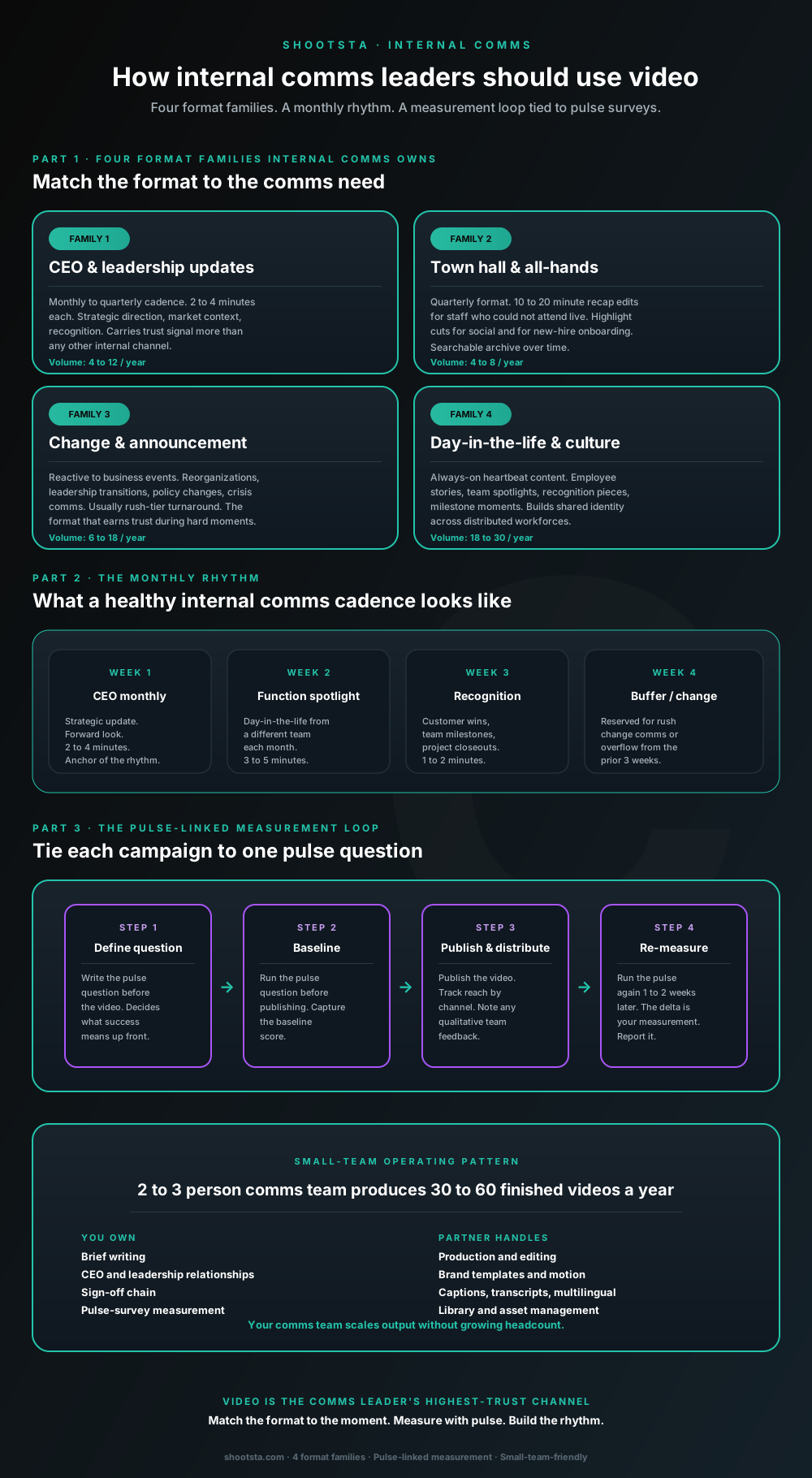
Internal comms leaders are usually under-resourced for the volume of video the business wants. The fix is not more headcount; it is structuring the program around four format families, a monthly rhythm, and a pulse-survey-linked measurement loop. Here is the operating pattern that lets a small comms team produce 30 to 60 finished videos a year.