
How to produce thought leadership video
shootsta.
How to produce thought leadership video
By Shootsta · Published April 20, 2026 · Updated October 2026
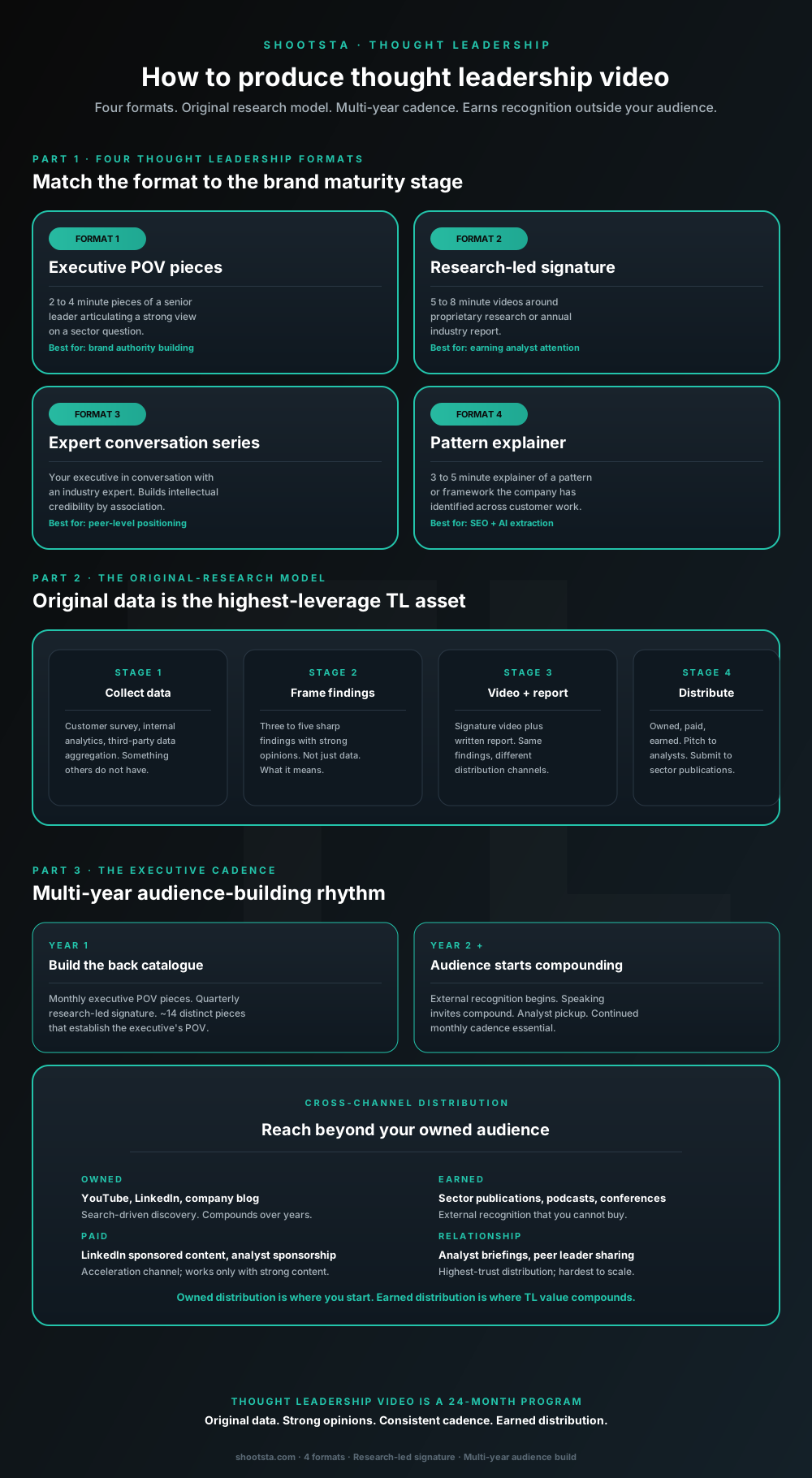
Thought leadership video builds a brand that buyers remember. Here are four formats, an original-research model for signature pieces, a cadence that earns recognition, and the distribution that puts your view in front of people your own channels do not reach.
Why most enterprise thought leadership video underperforms
In a typical enterprise thought leadership effort, marketing ships a quarterly "trends report" video, the CEO gives an annual keynote that gets cut for video, and a handful of executives post a LinkedIn video now and then. None of it adds up. Your audience never sees enough from any one executive to understand their point of view, and the videos rarely hold an opinion strong enough to be shared.
The fix is to treat thought leadership video as a program that builds an audience over several years. Pick 1 to 3 executives and commit each one to a monthly video. Add research-led signature pieces built on original data each quarter. Then distribute across owned, earned, paid and relationship channels. By year 2, your output is steady enough for platform algorithms to start bringing in new viewers on their own.
The four thought leadership video formats
Format 1: Executive POV pieces
These are 2 to 4 minute pieces in which a senior leader states a strong view on a question in their sector. The piece should hold a real opinion the executive is willing to be wrong about, which rules out a feature roundup or a panel summary. Batched production keeps the cost per piece low, and one piece a month per executive is the standard rhythm.
Format 2: Research-led signature
These 5 to 8 minute videos are built around your own research or an annual industry report. The video carries the headline findings and the written report carries the detail. This format earns the most external recognition, because original data is the strongest thought leadership asset. It is also the most expensive format once you count the data work, so 2 to 4 signature pieces a year is typical.
Format 3: Expert conversation series
Here your executive talks with an industry expert, such as an analyst, academic, journalist or peer leader. The series builds credibility by association: the expert lends authority, and the executive holds their own in the conversation. The format works well as podcast video, as we covered in how to produce podcast video for enterprise.
Format 4: Pattern explainer
This is a 3 to 5 minute explainer of a pattern or framework your company has spotted across its customer work. It is good for SEO because patterns and frameworks rank for search queries. It also suits AI search, because the format is easy for AI tools to summarize. The pattern explainer is often the highest-traffic format, since it answers practical "how do I do X" searches.
The original-research model that produces signature content
Original research is the thought leadership move that pays back the most. Analysts cite original data, sector publications pick it up and peer leaders share it. Enterprise programs often underinvest here because research feels expensive next to opinion pieces, yet the data keeps earning recognition for years.
Stage 1: Collect data
Your data can come from a customer survey, your own analytics or third-party sources, as long as competitors do not have it. Enterprise programs usually find their original data inside their own operations instead of commissioning new research. Customer behavior and internal usage data are good sources.
Stage 2: Frame findings
Pick three to five sharp findings and attach a strong opinion to each one. "Companies that do X see Y" is data, while "Companies should be doing X because many still do the wrong thing" is a point of view. You need the data, but the framing is what turns it into thought leadership.
Stage 3: Signature video + written report
A 5 to 8 minute signature video carries the headline findings, and the written report carries the detail. Each one points to the other. The video goes out through video channels such as YouTube, LinkedIn video and embeds on your site. The report goes out through download channels, including a gated landing page, analyst submissions and PR pitches.
Stage 4: Distribution across owned, paid, earned
Owned distribution uses your company channels. Paid distribution covers LinkedIn sponsored posts and analyst sponsorship of the research. Earned distribution comes from pitches to sector publications, analyst briefings under embargo and sharing by peer leaders. Earned distribution is where the value builds, because outside validation is something your company cannot create for itself.
The executive cadence that compounds
Year 1 is about building the back catalog, and year 2 is when outside recognition starts. By year 3 the program has grown into recognized authority. Here is the cadence that gets you there.
Per executive: monthly POV cadence
Each executive records one 2 to 4 minute POV piece per month. The pieces are batched into quarterly recording days of 3 to 4 pieces each, the same model we covered in how to produce a CEO video update series. That gives about 12 POV pieces per executive per year.
Across the program: quarterly signature pieces
Plan 2 to 4 research-led signature pieces a year. Each one takes 6 to 10 weeks to produce, and data collection is the longest step. Time them to match report cycles or sector conferences.
Plus: expert conversation series
If the program supports a podcast, release a conversation episode every two weeks or once a month. Each episode becomes one POV piece plus 4 to 8 social clips, which widens your reach.
A program with 2 executives, 4 signature pieces and a monthly conversation series produces about 52 distinct videos a year. That is enough steady output for platform algorithms to start recommending your channel to new viewers.
Interactive planner
What does a thought leadership video program scope to?
Set the number of executives, their cadence, and how many research-led signature pieces you want to ship per year. The planner returns annual volume and cost.
Annual pieces
26
24 POV + 2 signature
Annual cost
$132K
all-in production
Audience-build maturity
Building
On track for year 2 compound
The cadence that compounds
16+ pieces per year is enough to establish the executive's POV but below the threshold where algorithmic discovery starts compounding new audience to you. Consider adding 1 to 2 more pieces per month if external recognition is the year-2 goal.
Scope a thought leadership programAssumptions: executive POV piece ~$4K per piece (batched production). Signature research-led piece ~$18K (includes data collection, framing, production). Numbers are guides.
The cross-channel distribution that earns recognition
Owned distribution
Use a YouTube channel for long-form discovery and LinkedIn for each executive's personal brand. Your company blog is the main home for the written companion pieces. Owned distribution is where you start and where audience growth from search happens, and it keeps growing over the years as the back catalog builds.
Earned distribution
Earned distribution covers sector publications (the trade press for your industry), independent podcasts, conferences and analyst events. This is where outsiders validate your ideas. You cannot buy it, and it is what separates programs that earn recognition from those that only publish videos.
Paid distribution
Use LinkedIn sponsored posts to put your strongest pieces in front of target audiences, and analyst sponsorship for research-led signature pieces. Paid speeds things up, but it only works when a piece is strong enough to earn engagement without the push. Paying to promote weak pieces burns budget and does nothing for the program.
Relationship distribution
This channel includes analyst briefings under embargo and sharing by peer leaders through executive networks. It also covers customers who share your thought leadership with their own networks. It earns the most trust and is the hardest to scale, so treat it as a 6 to 12 month relationship investment instead of a campaign push.
How to choose which executives to put in front of camera
Some senior leaders make good thought leaders and some do not. Three honest criteria help you choose.
Distinctive POV
The executive should have something specific and defensible to say that others in their role do not. Generic POV ("AI will change everything") does not build a TL audience; specific POV ("most enterprise AI rollouts fail at the data-quality step, not the model selection step") does.
Willing to commit time
The commitment is roughly 2 to 4 hours per quarter for batched recording, plus 30 to 60 minutes per month for script review and approval. That comes to about 30 hours a year. Many senior leaders agree in principle but cannot sustain the commitment when the rest of the role intensifies. Better to start with one executive who will commit than three who will not.
Willing to have opinions
Some executives are comfortable defending positions in public; others are not. TL programs need the former. When a program tries to draw opinions out of leaders who prefer corporate diplomacy, the result is watered down and does not build an audience.
Frequently asked questions
How long does it take to see external recognition?
Plan on 18 to 24 months at the cadence above. The first 12 months build the back catalog and the executive's voice. Outside recognition tends to show up in the next 12 months, in the form of speaking invitations, analyst mentions, press citations and engagement from peer leaders. Programs that pause before month 18 often lose the momentum just as it starts.
Should we run TL through the CEO or through a function leader?
The answer depends on the audience. Thought leadership aimed at the C-suite usually runs through the CEO. For practitioners, a function leader works better: a CTO for a technical audience, a CFO for finance or a CRO for sales. Mature enterprise programs often run several executives in parallel because each one reaches a different audience.
How does TL video compare to written long-form content?
The two formats reach different audiences. Written long-form serves people doing deep research, such as analysts, peers and prospects doing due diligence. Video serves the wider awareness audience of potential prospects, recruiters and sector watchers. Strong programs produce both, since the video version of a piece usually reaches far more people while the written version earns deeper attention from the people it reaches.
What about AI-generated thought leadership?
People trust thought leadership because a real person stands behind the opinion. AI-generated thought leadership undermines the trust the format is supposed to build. AI is useful inside the production workflow (transcript editing, social clip selection, distribution scheduling) but not as a replacement for the human voice. We covered the broader AI framing in how AI fits inside enterprise video workflows.
How do we measure TL video success?
Measure it in three tiers. The tactical tier tracks views, subscribers and engagement on your owned channels. The middle tier tracks outside mentions, inclusion in analyst reports, podcast invitations and sharing by peer leaders. The strategic tier tracks pipeline revenue from accounts that engaged with your thought leadership, hiring gains from candidates who saw it and movement on the brand-tracker attributes you are targeting. Programs tend to measure the tactical tier well, the middle tier poorly and the strategic tier hardly at all.
What is the right ratio of executive POV to research-led signature?
Aim for about 80% executive POV and 20% research-led signature pieces by volume. Budget usually splits closer to half and half, because each signature piece costs several times more than a POV piece. The POV cadence builds the audience, and the signature pieces earn outside recognition, so you need both.
Where to go next
For the podcast video format that often anchors a thought leadership program, read how to produce podcast video for enterprise. For the CMO-level view of how TL fits into the broader marketing program, read how a CMO should think about enterprise video. For the executive video commitment that TL cadence requires, read how to produce a CEO video update series.
To scope a thought leadership video program for your executive bench, book a free consultation.
Take this article with you
Read the latest at shootsta.com/blog/how-to-produce-thought-leadership-video
You might also like
How to Brief an Animation Project
How to Brief an Animation Project
An animation brief is the document you send to your production partner before work starts. Get it right and you cut revision cycles in half. Get it wrong and you discover mid-production that everyone disagrees on what the video is for. This is what a complete brief looks like.
Animation for change management comms
Animation for change management comms
Animation handles change management communications better than live video for three reasons: no on-camera executives required during sensitive periods, scene-level updates when plans shift, and a single production that works across global teams with voiceover-only language swaps.
How sales leaders should use video at scale
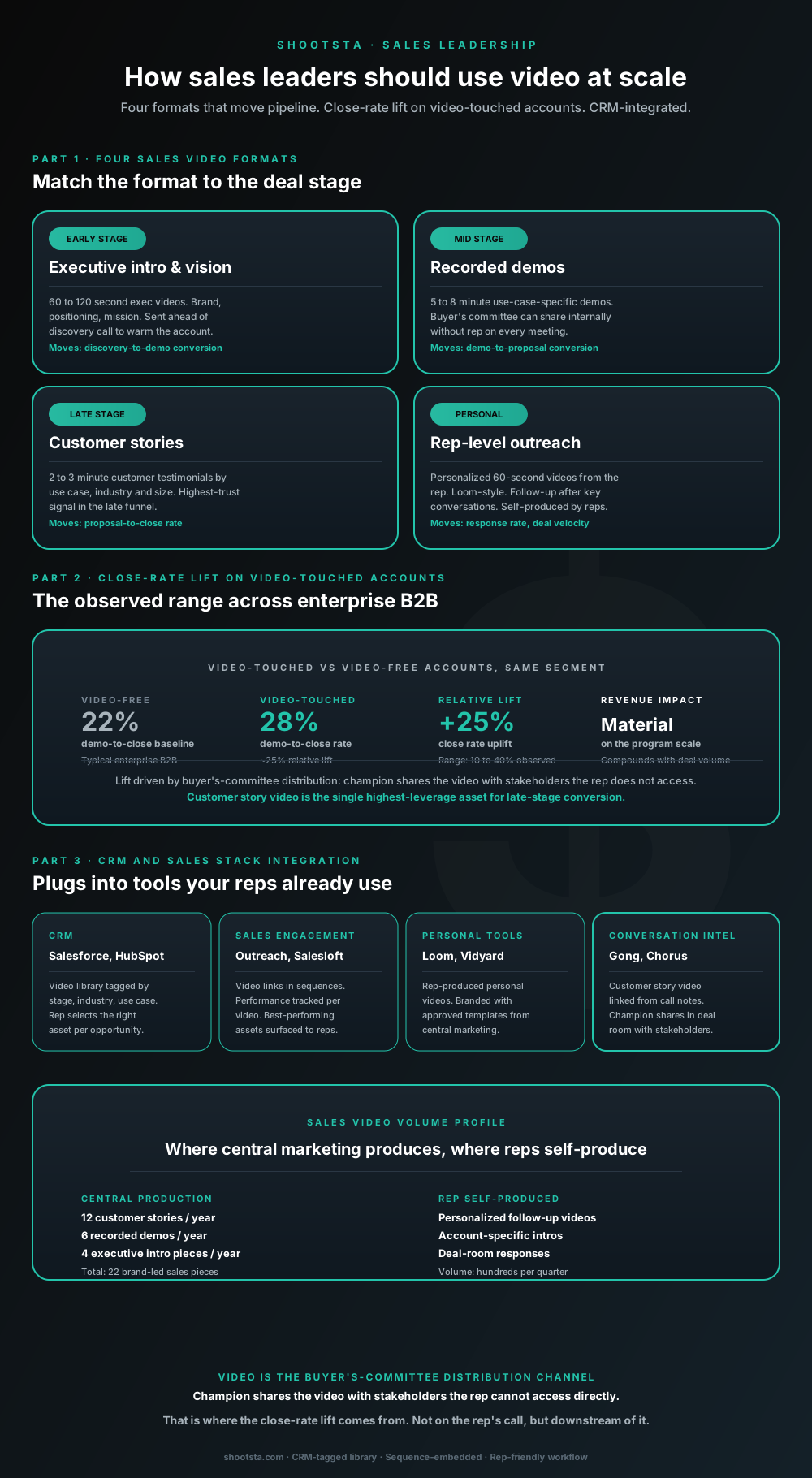
Sales leaders mostly think about video as personalized rep outreach (Loom, Vidyard) or as marketing-produced customer stories. Both are useful. The bigger opportunity is the buyer's-committee distribution layer: assets the champion shares internally with stakeholders the rep does not access directly. That is where the close-rate lift compounds.
How L&D leaders replace classroom with video
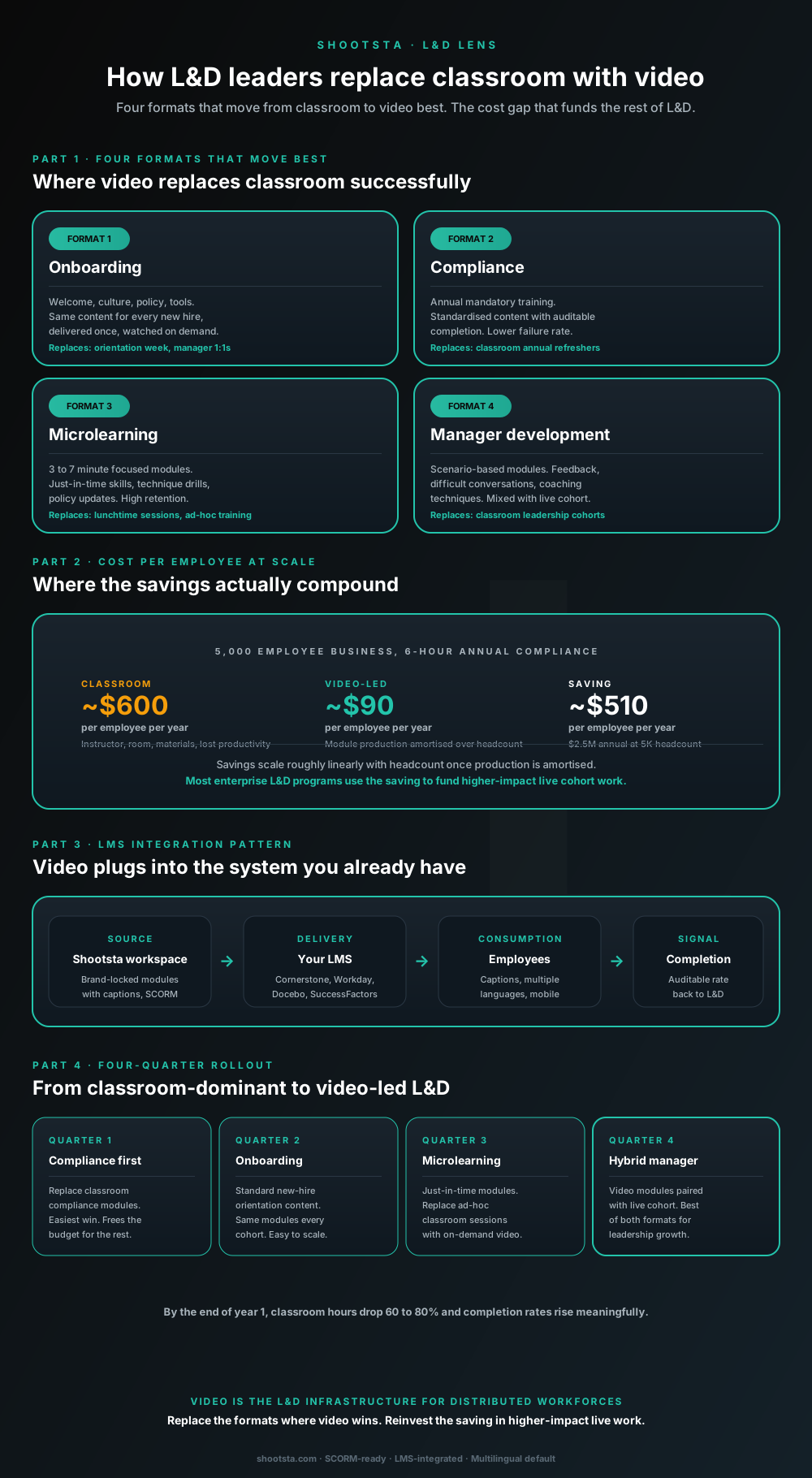
L&D leaders running classroom-heavy training programs typically have the largest single opportunity in the business to free budget through format change. Four training formats move from classroom to video cleanly; the savings fund higher-impact live work. Here is the rollout that compounds learner adoption over four quarters.
How customer success leaders should use video
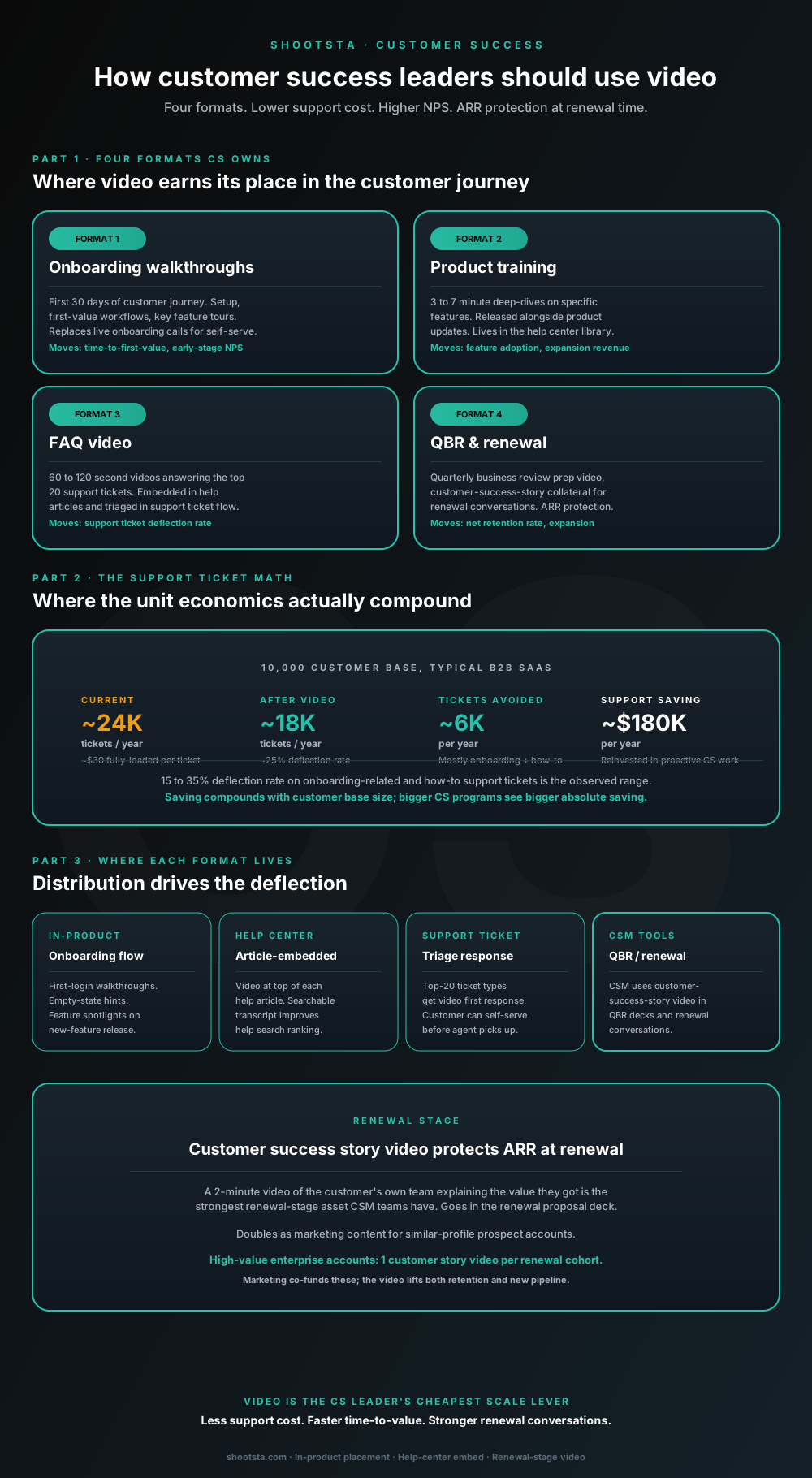
Customer success leaders are usually under-resourced for both reactive support volume and proactive retention work. Video is the cheapest lever to fix both - 15 to 35% deflection on onboarding and how-to tickets, faster time-to-value, and renewal-stage customer story video that lifts net retention. Here is the four-format model and where each piece earns its place.
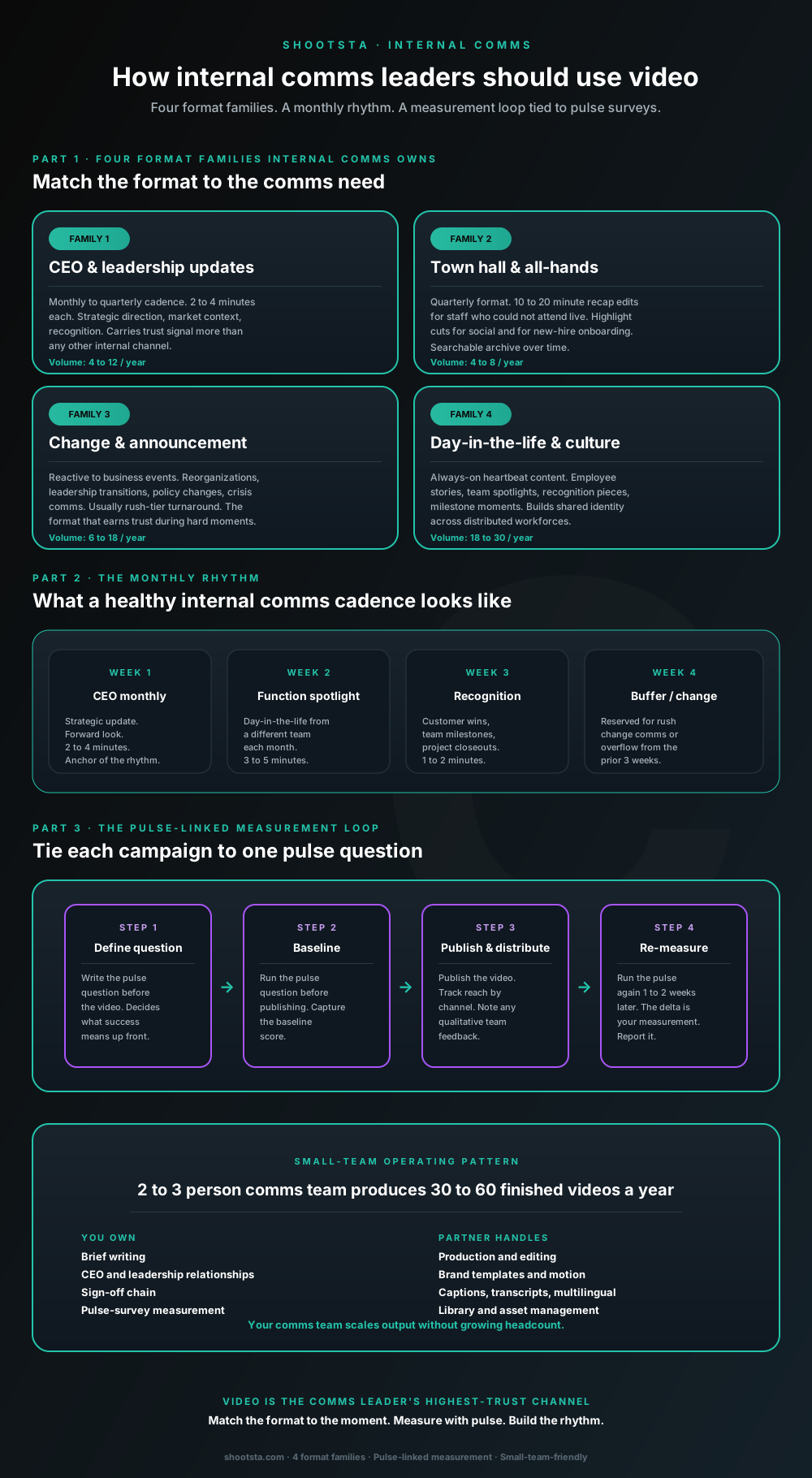
How internal comms leaders should use video
Internal comms leaders are usually under-resourced for the volume of video the business wants. The fix is not more headcount; it is structuring the program around four format families, a monthly rhythm, and a pulse-survey-linked measurement loop. Here is the operating pattern that lets a small comms team produce 30 to 60 finished videos a year.