
Video production contracts: what to look for
shootsta.
Video production contracts: what to look for
By Shootsta · Published May 18, 2026 · Updated October 2026
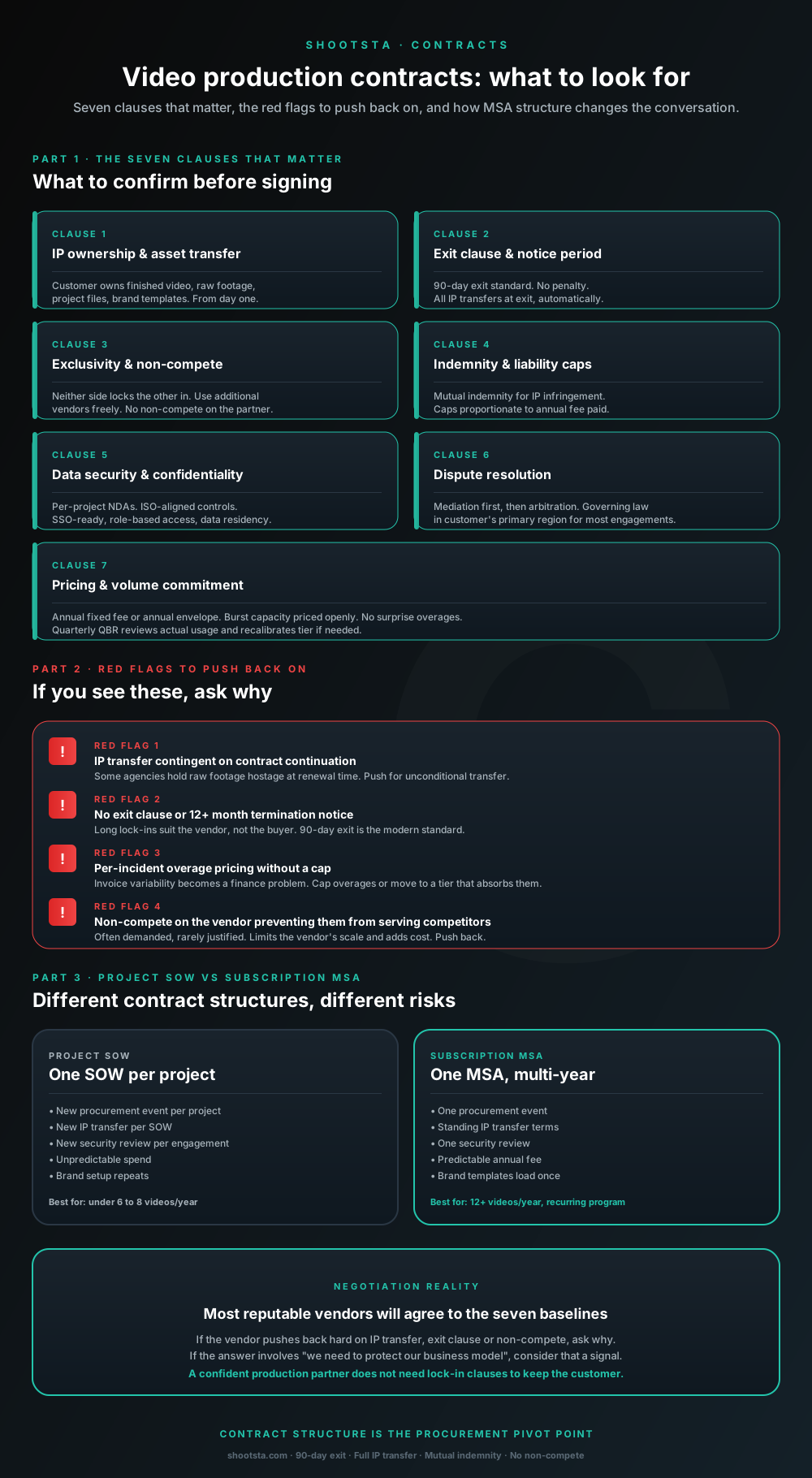
Procurement and legal often look at video production contracts last, after the strategy and budget are settled. By then the structural risks (IP transfer, exit clause, exclusivity, indemnity) are easier to fix in the contract than to argue about in renewal. Seven clauses that matter, four red flags, and how MSA structure changes the conversation.
Why the contract is the procurement pivot point
Enterprise video programs often get the strategy right, the budget approved, and the partner selected before procurement and legal see the contract. The result is that contract review happens under time pressure, with everyone wanting the program to start, and structural risks get accepted because the alternative is delaying the program by a month.
The seven clauses below are the ones that matter most in 2026 enterprise video contracts. None of them is radical, and a reputable vendor will negotiate all of them. Knowing them in advance turns the contract review from a delaying step into a quick confirmation.
The seven clauses that matter most
1. IP ownership and asset transfer
The customer should own the finished video, raw footage, project files, brand templates and all derivative assets, without conditions, from day one. Watch for three structures that undo this. One says "we own the project files until you have paid for 12 months". Another carves out "raw footage is our property", and a third says "you license the finished video, we retain copyright".
This is the single most important clause because it is the one most often abused. Some agencies hold raw footage hostage at renewal time, knowing that the cost of re-shooting is high enough that the customer will renew. A clean unconditional IP transfer clause removes the lever entirely and is the modern enterprise standard.
2. Exit clause and notice period
Exit terms vary a lot between vendors, so ask every partner to set theirs out in writing before you sign. Find out whether the agreement can end without cause or only for cause, what notice or cure period applies, and whether pre-paid fees are refundable. Check that the IP and your files stay with you when the agreement ends.
Then work out what the terms mean for your budget. If fees are non-refundable, the amount you commit up front is the amount at risk on a bad fit. That is a reason to size the first term with care, or to start with a scoped pilot before a longer commitment.
3. Exclusivity and non-compete
Neither side should lock the other in. The customer should be free to use additional vendors as needed (specialty production, regional supplementation, parallel pilots). The vendor should be free to serve other customers including sector competitors. Both restrictions limit market efficiency and rarely produce real protection.
Non-compete on the vendor is often requested by buyer procurement teams but rarely justified. The protection it offers (preventing the vendor's editor team from working on a competitor's account) is usually weaker than the cost it imposes (vendor cannot scale, has to charge more to cover lost opportunity, may decline to work with you because the restriction is too broad). Most reputable vendors decline these clauses politely.
4. Indemnity and liability caps
Mutual indemnity for IP infringement is the modern standard. If the vendor produces work using a third-party asset that infringes a copyright, the vendor indemnifies. If the customer briefs the vendor to use a customer-supplied asset that turns out to be infringing, the customer indemnifies. A mutual structure matches where the risk sits.
Liability caps should be proportionate to the annual fee paid (typical structure: cap at 12 months of fees for direct liability, exclude consequential damages). Unlimited liability is uncommercial for the vendor; no cap or token caps are uncommercial for the buyer. A proportionate cap is what most enterprise legal teams settle on.
5. Data security and confidentiality
Look for per-project NDAs and documented security controls. If your procurement policy needs an ISO 27001 certificate or a SOC 2 report from vendors, ask for it at the start. The platform should support SSO and role-based access control. Add data residency clauses where required (EU customer data resident in EU; APAC customer data resident in APAC). Sensitive content (executive scripts, regulatory disclosures, change comms) should sit behind per-project access tiers.
For regulated sectors, additional clauses cover sector-specific requirements (HIPAA for US healthcare, FCA-aligned controls for UK financial services, MAS-aligned for Singapore FS). Most reputable vendors have these clauses pre-drafted; ask for them at the start of contract review rather than negotiating them in.
6. Dispute resolution
Disputes should go to mediation first. If mediation fails, they move to arbitration in a venue both sides agree. For most engagements, governing law sits in the customer's primary region. The mediation step is important because most disputes are misunderstandings that resolve quickly with a neutral facilitator; jumping straight to arbitration is expensive and adversarial.
For multi-region engagements, the governing law clause can get complex. A common structure is one MSA with governing law in the customer's HQ jurisdiction, with regional sub-agreements that defer to local law where required by data residency or labor regulation.
7. Pricing and volume commitment
Pricing should be an annual fixed fee or an annual envelope (a number of finished videos per year at a stated tier). Extra capacity above the envelope should have open, predictable per-unit rates. A quarterly QBR reviews actual usage and moves the tier if needed, so there are no surprise overages or per-incident charges that drift.
For multi-year MSAs, ask how renewal pricing is set. Some vendors fix it for the term, some peg it to an index such as CPI, and others renew at their list price at the time of renewal. Each model is workable if you know which one you are signing and budget for it. We covered the pricing model in more detail in the business case for enterprise video.
Interactive checker
Does your video production contract have the right protections?
Toggle the clauses your current (or draft) contract already contains. The checker scores procurement readiness and flags the highest-priority gaps to close before signing.
Clauses present in your contract
Procurement readiness
0%
High-risk contract
Clauses in place
0 / 7
of the seven baselines
High-priority gaps
2
2 must-add
Clauses to push for before signing
Full IP transfer to customer (footage, files, finished video, templates) - unconditionalHigh
Without this, the vendor can hold raw footage hostage at renewal time, which makes it the most important clause on the list.
Clear exit terms agreed before you sign (notice period and how you get your files out)High
You should know how the agreement ends and what happens to your footage and files before you commit to a term.
No non-compete preventing the vendor from serving competitors
Often demanded, rarely justified. Non-competes limit vendor scale and add cost without giving buyer real protection.
Mutual indemnity for IP infringement with proportionate caps
Either side can introduce IP risk. Mutual indemnity reflects that. Caps should be in proportion to the annual fee.
Per-project NDAs and security controls such as SSO and role-based access
Regulated industries and most enterprise procurement teams require these before they will sign.
Capped overages or predictable burst pricing, no surprise per-incident charges
Removes invoice variability that finance teams find difficult to forecast. QBR-based recalibration is the modern standard.
Mediation-first dispute resolution with governing law in customer's region
Mediation before arbitration keeps disputes cheap to resolve. Governing law matters for cross-border enforcement.
What a good contract looks like
A confident production partner will agree to all seven baselines. If a vendor pushes back hard on IP transfer, exit clause or non-compete, ask why. The answer usually reveals whether the vendor is protecting their business model or yours.
See Shootsta's standard contract termsThis checker covers the seven clauses most often cited in enterprise procurement reviews. Your legal team will have additional jurisdiction-specific items; this is the baseline, not the complete checklist, and this is general guidance rather than legal advice.
Four red flags that should trigger pushback
1. IP transfer contingent on contract continuation
The vendor agrees to transfer IP, but only at the end of the contract or only if the customer has paid 12 months of fees. This is the "raw footage hostage" pattern, common in older agency contracts. Push for unconditional transfer that takes effect on delivery of each piece, not on contract milestones.
2. No exit clause, or 12+ month termination notice
Long lock-ins suit the vendor's revenue forecasting more than the buyer's risk profile. If the agreement has no exit terms at all, or the notice period runs past a year, ask the vendor to explain why. Compare what you would pay to leave with what you expect to spend in the first term, and push back if the gap looks out of proportion.
3. Per-incident overage pricing without a cap
The contract sizes a baseline volume; anything above the baseline is billed per-incident at the vendor's discretion. Invoice variability becomes a finance problem because the line item is unforecastable. The fix is either a cap on overages or a tier move that absorbs them into a predictable larger envelope.
4. Non-compete on the vendor preventing them from serving competitors
The buyer's procurement or legal team requests it; the vendor agrees because the deal is large. The result is that the vendor cannot scale, has to charge more to cover lost opportunity, and the relationship gets fragile because the vendor's incentives are no longer aligned. Most reputable vendors will push back; if they do not, the contract is probably bad for both sides.
Project SOW vs subscription MSA: structural difference
The contract structure should match the engagement structure, and there are two clear patterns.
Project SOW
One Statement of Work per project. Best for low-volume programs (under 6 to 8 videos a year) where each engagement has its own separate scope. Trade-offs: every project triggers a new procurement event, a new IP transfer, a new security review and a new brand setup. Spend is hard to predict, and brand templates do not pay back because each project rebuilds them.
Subscription MSA
You sign one Master Services Agreement, usually for an initial term of 1, 2 or 3 years. All seven clauses are negotiated once, and standing IP transfer terms apply to every project. One security review covers the whole relationship, and the annual fee is predictable. Brand templates load once and apply to every project. This structure suits 12+ videos per year and a recurring program with several stakeholders.
For most enterprise video programs in 2026, the MSA structure is the right fit because it removes the per-project procurement overhead that fragmented project SOWs create. The MSA can still be structured to allow per-project flexibility (sub-statements of work for unusual scope, regional sub-agreements for multi-jurisdiction programs).
What "good" looks like in negotiation
A reputable production partner will agree to all seven clauses without significant pushback. Most of them are not negotiable from the partner's side - they are standard for the market in 2026 and any vendor refusing them is signaling that their business model depends on something the modern standard does not allow.
Where genuine negotiation usually happens: liability caps (proportionate vs higher), data residency (specific jurisdiction requirements), renewal pricing (fixed, indexed or list price), and termination terms such as notice and cure periods. These are real negotiation points and most settle without drama.
Where negotiation should not be required: IP ownership, exit clause existence, mutual indemnity, basic security controls. If a vendor wants to negotiate these, ask why. The answer reveals more about the vendor than about the clauses.
What to do if you are already in a bad contract
You have three practical options. The first is to wait for renewal and renegotiate. Bad contracts in this category usually run for 12 or 24 month terms. The renegotiation at renewal is the natural moment to introduce the missing clauses. The vendor's incentive to keep the customer usually moves the contract closer to the modern standard.
The second option is to raise the IP gap in the renewal talks. If your current vendor refuses to transfer raw footage or project files at the end of the term, that is itself a renewal-time conversation. Show the vendor the seven-clause baseline and ask which ones they object to and why. The conversation often surfaces issues that get fixed.
The third option applies if the contract cannot be fixed. Scope a parallel pilot with a different vendor on modern terms. After 90 days you have evidence on what working under a clean contract looks like, and you can use it to either renegotiate or transition cleanly. We covered the pilot structure in how to pilot a video production partner.
Frequently asked questions
What is Shootsta's standard contract structure?
Our terms of service are published, and your legal team should read them alongside this checklist. Termination is for cause, after a 30-day cure period, and the full termination terms are set out in the agreement. Fees are non-cancellable and non-refundable, and renewal is at the list price in effect at renewal. Indemnity for IP and privacy claims is mutual. On security, the platform supports SSO and role-based access, files move over encrypted transfer, and we sign NDAs.
How long does contract negotiation typically take?
It depends on your legal team's availability and on any sector-specific clauses you need. Our terms of service are published, so your legal review can start before commercial terms are fully agreed. Most negotiation focuses on liability caps, data residency, and pricing escalator rather than on the baseline clauses above.
What happens to assets if Shootsta goes out of business?
All customer assets sit in the customer's Shootsta Workspace. Under Shootsta's terms, customers can export their data for up to 30 days after the agreement ends, so plan the export before the end date rather than after it. If your policy calls for escrow of project files, ask any vendor about it during contract review.
Can we structure the contract per region for multi-region operations?
Yes. Common structure is one global MSA with regional addenda covering local data residency, governing law and billing currency. Procurement signs one MSA; regional finance handles regional invoicing. We covered the multi-region operating model in how to scale video across global offices.
What about insurance?
Ask every vendor for certificates of insurance during procurement. The usual set is professional indemnity, public liability and cyber cover. Check the limits against your own procurement policy, and confirm the cover applies in each country where the vendor will work for you.
How do you handle SOC 2 or ISO 27001 audit requirements?
If your sector requires a SOC 2 report or an ISO 27001 certificate from vendors, raise it at the start of procurement and ask for the answer in writing. What we can confirm is that the platform supports SSO and role-based access, files move over encrypted transfer, and we sign NDAs. Your security team can then check those controls against its own questionnaire.
Does the contract cover AI usage in production?
Shootsta's terms treat its AI tools as Beta Services, and any AI output must be reviewed by the customer before it is used. If your organization needs more than that, such as rules on training data or IP attribution, raise it in contract review and ask for the answer in writing. We covered the broader AI framing in how AI fits inside enterprise video workflows.
Where to go next
For the pilot structure that proves the contract terms hold up in practice, read how to pilot a video production partner. For the brand-control framework that the IP transfer clause supports, read brand control with a video production partner. For the budget framework the pricing clause maps to, read the business case for enterprise video.
To walk your legal team through Shootsta's terms, book a consultation.
Take this article with you
Read the latest at shootsta.com/blog/video-production-contracts-what-to-look-for
You might also like
How to Brief an Animation Project
How to Brief an Animation Project
An animation brief is the document you send to your production partner before work starts. Get it right and you cut revision cycles in half. Get it wrong and you discover mid-production that everyone disagrees on what the video is for. This is what a complete brief looks like.
Animation for change management comms
Animation for change management comms
Animation handles change management communications better than live video for three reasons: no on-camera executives required during sensitive periods, scene-level updates when plans shift, and a single production that works across global teams with voiceover-only language swaps.
How sales leaders should use video at scale
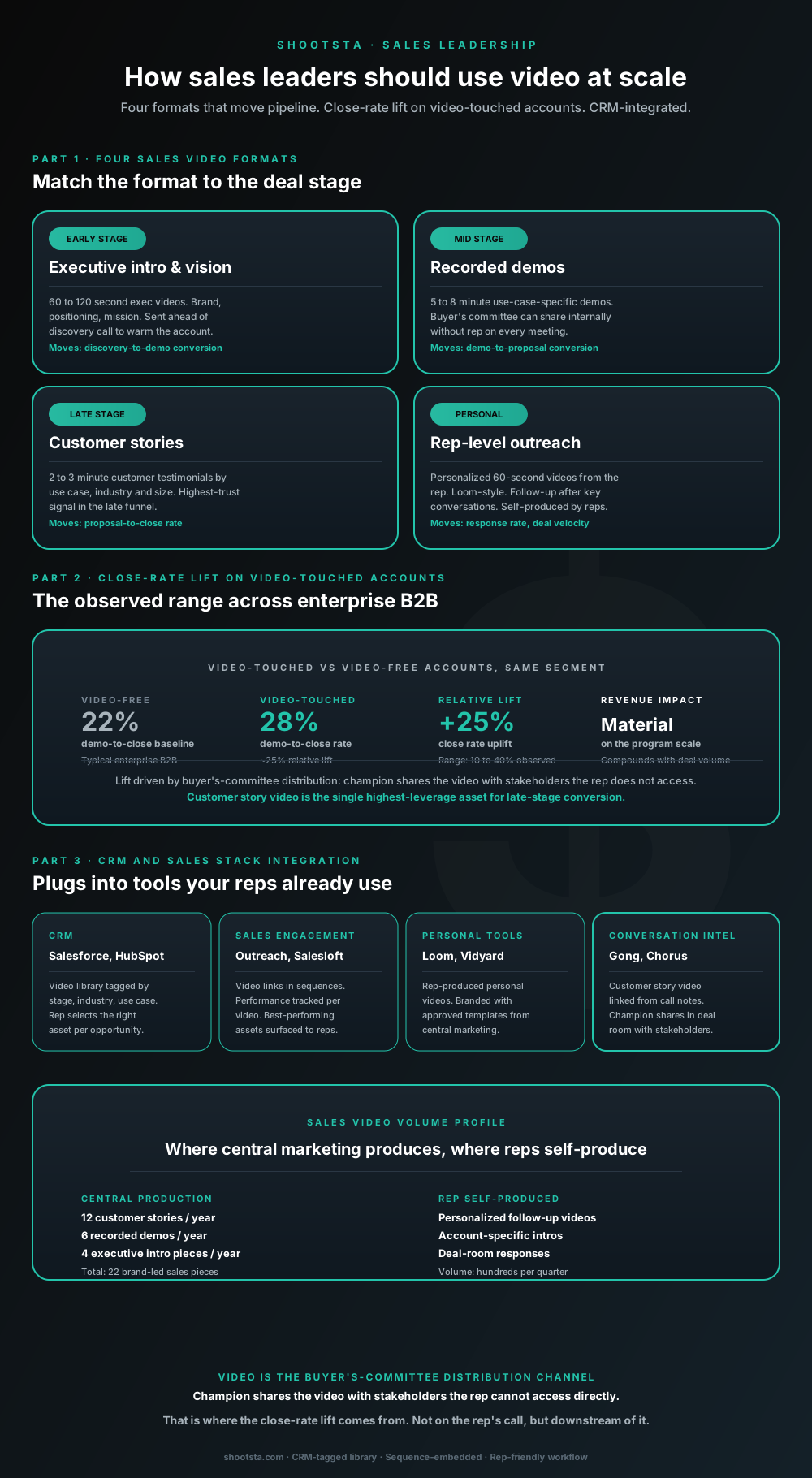
Sales leaders mostly think about video as personalized rep outreach (Loom, Vidyard) or as marketing-produced customer stories. Both are useful. The bigger opportunity is the buyer's-committee distribution layer: assets the champion shares internally with stakeholders the rep does not access directly. That is where the close-rate lift compounds.
How L&D leaders replace classroom with video
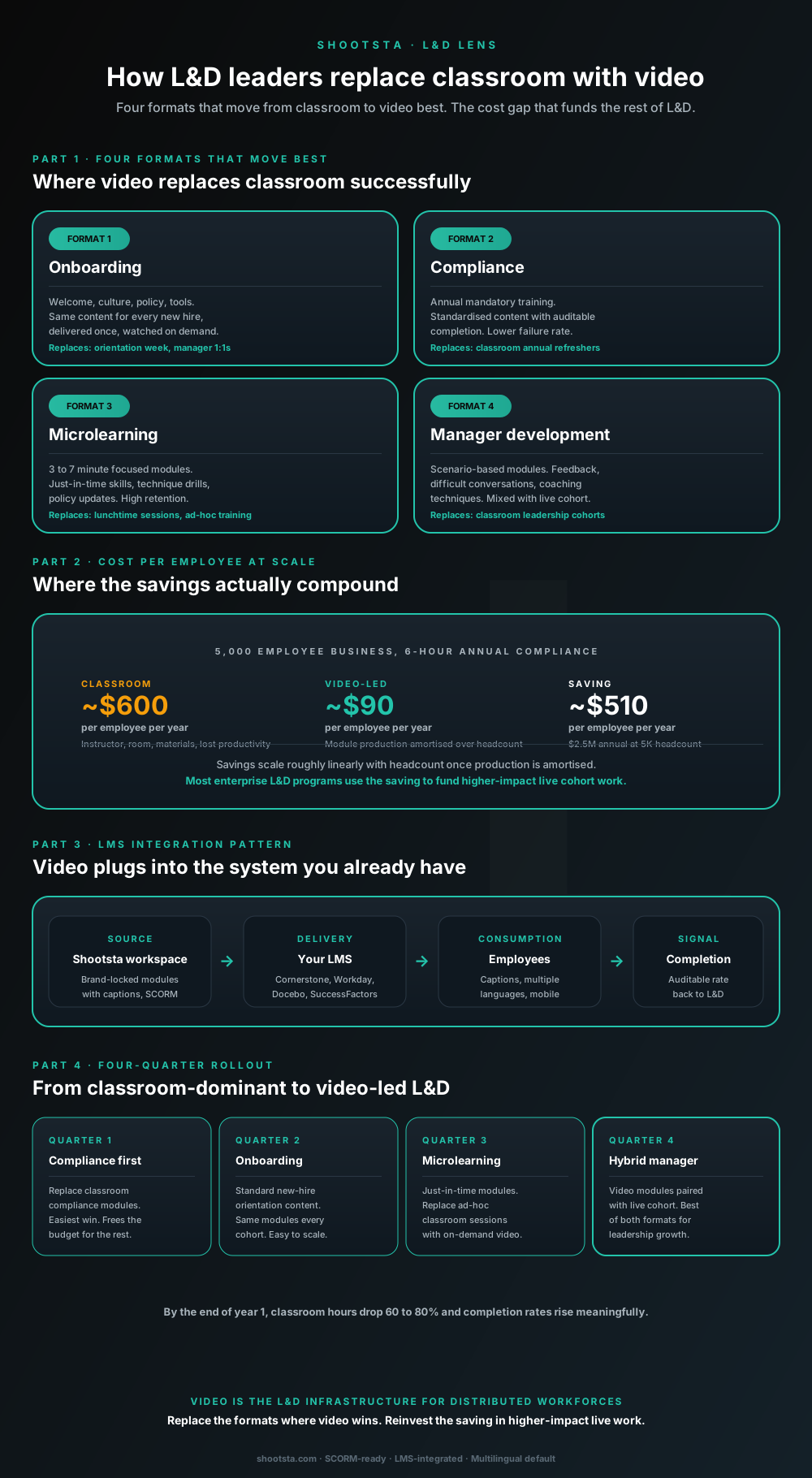
L&D leaders running classroom-heavy training programs typically have the largest single opportunity in the business to free budget through format change. Four training formats move from classroom to video cleanly; the savings fund higher-impact live work. Here is the rollout that compounds learner adoption over four quarters.
How customer success leaders should use video
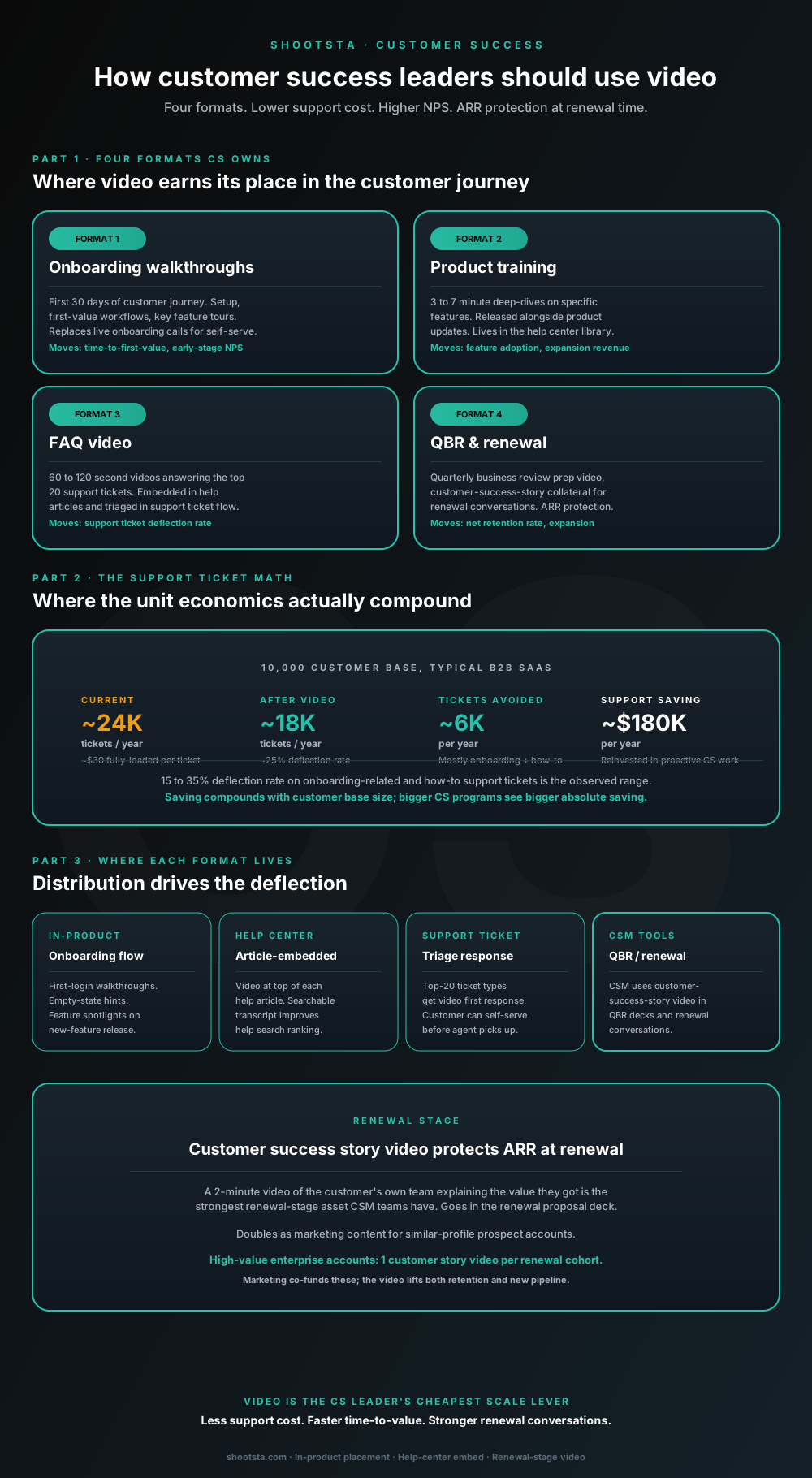
Customer success leaders are usually under-resourced for both reactive support volume and proactive retention work. Video is the cheapest lever to fix both - 15 to 35% deflection on onboarding and how-to tickets, faster time-to-value, and renewal-stage customer story video that lifts net retention. Here is the four-format model and where each piece earns its place.
How internal comms leaders should use video
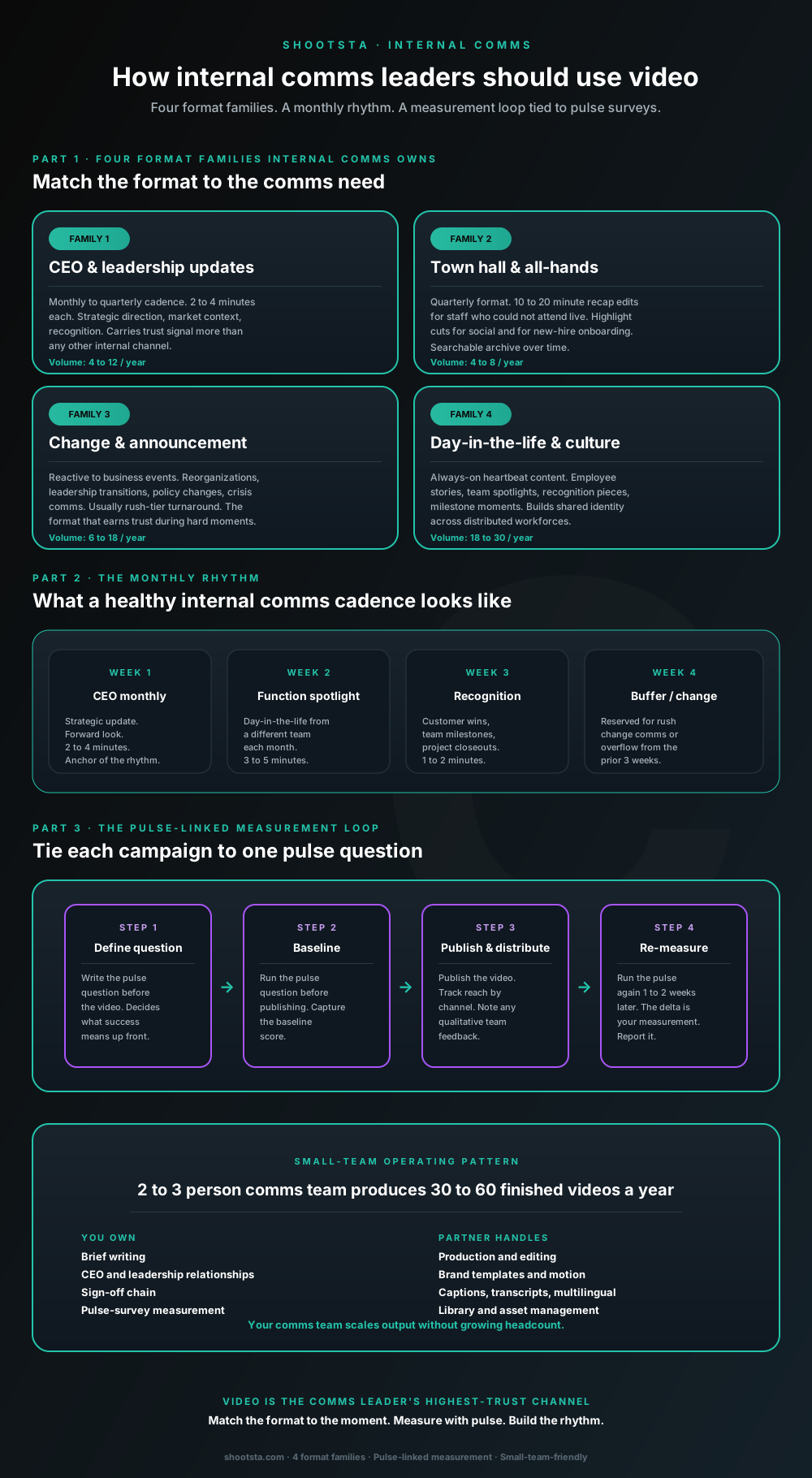
Internal comms leaders are usually under-resourced for the volume of video the business wants. The fix is not more headcount; it is structuring the program around four format families, a monthly rhythm, and a pulse-survey-linked measurement loop. Here is the operating pattern that lets a small comms team produce 30 to 60 finished videos a year.