
How to produce video for ABM at scale
shootsta.
How to produce video for ABM at scale
By Shootsta · Published April 24, 2026 · Updated October 2026
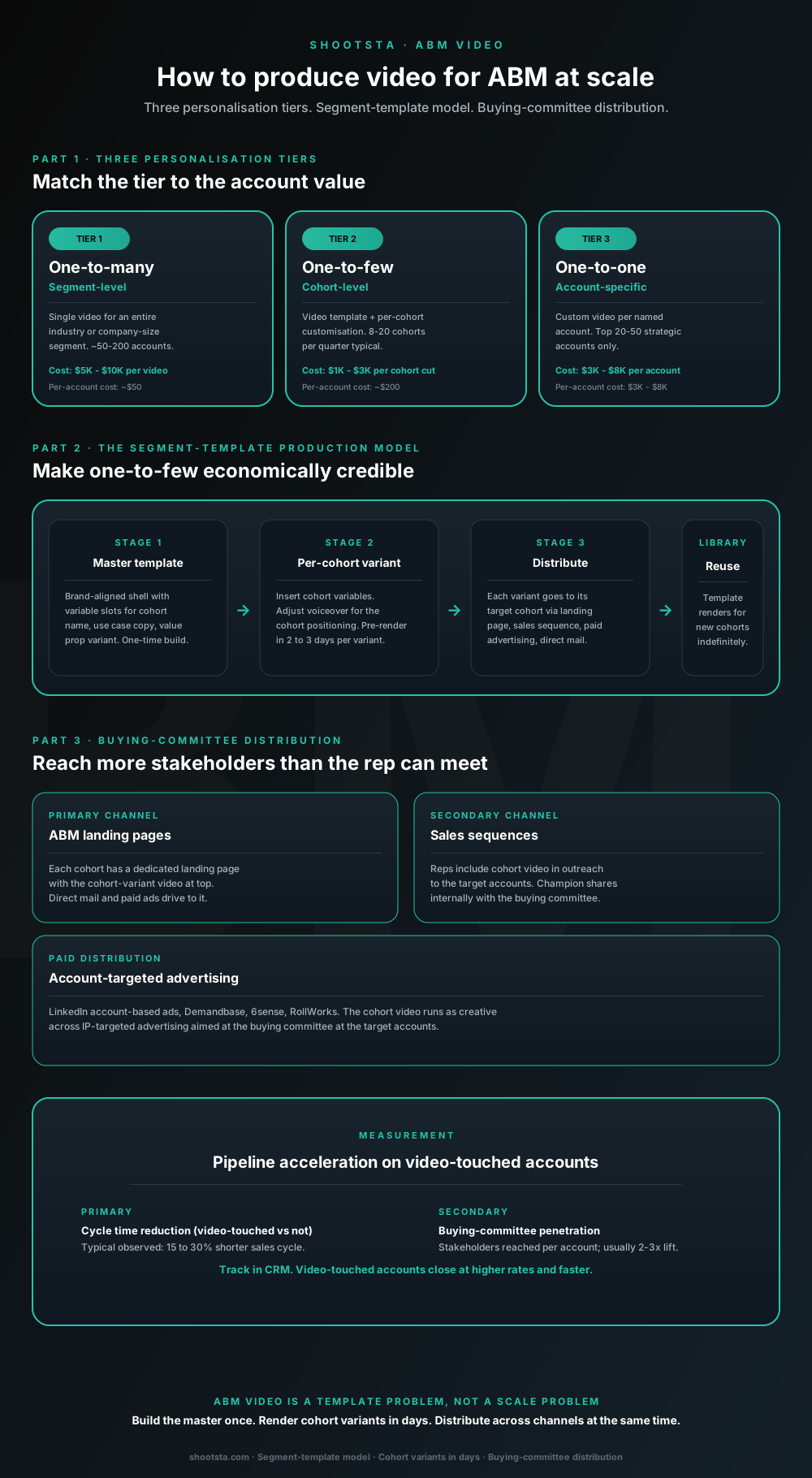
Account-based marketing video used to mean either generic creative serving everyone or one-to-one custom video for the top 10 accounts. Neither scales. The structural shift is segment-template production for one-to-few ABM, which is where most enterprise programs live. Three personalisation tiers, the segment-template model that makes the middle tier economically viable, and the buying-committee distribution that turns video-touched accounts into faster pipeline.
Why most ABM video falls into one of two failure modes
The first failure mode is generic top-of-funnel creative sent to everyone on the targeting list. The video is too broad to feel written for anyone. You end up with a brand awareness campaign that carries an account-based marketing label and slightly better targeting. It performs poorly because nothing in it earns the viewer's attention.
The second failure mode is one-to-one custom video made for a handful of strategic accounts. Each video is tailored and lands well with its account. The trouble is cost, because a custom production per account limits the program to a small slice of your target list. The rest of the list gets nothing, and the program looks expensive for the reach it buys.
The fix is the middle tier. Segment-template production makes one-to-few video, where each cohort variant costs a fraction of a custom film. A program with a dozen cohort variants can reach hundreds of named accounts at a per-account cost you can defend against ABM display spend. For an enterprise ABM video program, this middle tier is where most of the budget should go.
The three tiers of tailoring
Tier 1: One-to-many (segment-level)
You make one video for a whole industry or company-size segment, which might hold dozens or a few hundred target accounts. The video speaks to sector-level pain points and value props but does not name any account. Because one production cost is spread across the whole segment, the cost per account is the lowest of the three tiers. Use it for upper-funnel awareness in new segments, for sector-level paid media and for wider content distribution.
Tier 2: One-to-few (cohort-level)
Here you build one video template and change it for each cohort, often running a new set of cohorts every quarter. Each variant fits a specific industry sub-segment, use case or buyer persona within a segment. A cohort might be "healthcare CFOs at 1,000 to 5,000 employee hospitals" or "manufacturing operations leaders implementing IoT platforms". You pay once for the master template build, and each cohort variant after that costs much less. Use it for mid-funnel ABM activation, sales enablement for named accounts and account-level paid media. For an enterprise ABM program, this is the workhorse tier.
Tier 3: One-to-one (account-specific)
This is a custom video made for one named target account. It may name the account, speak to its specific situation or feature its industry peers as social proof. Programs usually keep this tier to a short list of strategic accounts each year. The full production cost lands on one account, with nothing to spread it across. Use it for top strategic accounts, for late-stage sales enablement on key deals and for post-RFP follow-up where a tailored message justifies the cost.
Interactive planner
What does an ABM video program cost across the three tiers?
Set target accounts at each personalisation tier. The planner returns annual cost, accounts reached, and an effective per-account cost across the program.
Tier 1: One-to-many (segment-level)
Tier 2: One-to-few (cohort-level)
Tier 3: One-to-one (account-specific)
Total accounts reached
520
across all three tiers
Total annual cost
$164K
all-in production
Effective per-account cost
$315
amortised across program
What this program looks like in practice
Most enterprise ABM video programs that scale economically use one-to-few as the primary tier (segment-template model), with one-to-many for upper-funnel awareness and one-to-one reserved for the top 20 to 50 strategic accounts. At this scope the effective per-account cost lands at roughly $315 spread across 520 target accounts. That sits inside most enterprise ABM budgets when video replaces or supplements lower-performing creative channels.
Scope an ABM video programAssumptions: one-to-many master template $8K + $5.5K per segment variant. One-to-few cohort variants $2K each on the segment template. One-to-one custom video $5.5K per account. Per-account costs vary widely with cohort size; bigger cohorts have lower per-account cost. Numbers are guides.
The segment-template production model that makes one-to-few work
The cost of each cohort variant drops sharply when you design the master template for variation from the start. The expensive work happens once, during the master build: brand alignment, script structure, the visual system and the motion templates. Every cohort variant after that reuses the master and only changes the variable slots.
Stage 1: Master template build (one-time)
The master is a brand-aligned shell video with variable slots for cohort-specific copy, voiceover, customer references and value-prop variants. The production team designs each slot so it is easy to swap. For example, a name slot takes a fixed number of characters, a use-case slot takes a short voiceover phrase and a customer-logo slot takes an SVG. The master renders as a working video for the first cohort, plus a template file that later variants render from.
Stage 2: Per-cohort variant (2 to 3 days each)
Your marketing or sales-enablement team writes the cohort-specific copy. Voiceover talent then records the short stretch of variable content, or you use a synthetic voice where the brand voice does not need a human read. The editor renders the variant with the new variables inserted. Because only the slots change, a variant moves from cohort brief to finished asset in a few working days.
Stage 3: Distribution per cohort
Each variant reaches its target cohort through a cohort-specific landing page, a sales sequence, account-targeted advertising (LinkedIn ABM, Demandbase, 6sense) and direct mail. These channels run in parallel, so no variant has to wait for another.
Stage 4: Master template reuse
You can keep rendering the master template for new cohorts for as long as it stays current. A common rhythm is one master template per fiscal year, with every cohort variant for that year rendered from it. The master stays on brand as long as your brand templates stay stable. Refresh it each year, or whenever your visual style changes.
The buying-committee distribution model
ABM video is worth making because it reaches the stakeholders your sales rep cannot meet in person. An enterprise B2B deal involves a buying committee, and the rep usually meets only some of its members face to face. The others form opinions from whatever material reaches them. ABM video is one of the few assets that can land with those people and be taken seriously.
Primary channel: ABM landing pages
Each cohort gets its own landing page with the cohort-variant video at the top. Direct mail and paid ads send people to that page, which works as the lead-magnet asset for the cohort. The main enterprise ABM platforms (Demandbase, 6sense, Mutiny, Folloze, Userled) support cohort-specific landing pages out of the box.
Secondary channel: sales sequences
Reps add the cohort-variant video to their outreach to target accounts. It shows up in sales engagement sequences (Outreach, Salesloft) as a link with a thumbnail preview. From there, your champion shares it inside the buying committee. We covered the sales mechanics in how sales leaders should use video at scale.
Paid distribution: account-targeted advertising
The usual options are LinkedIn account-based ads, Demandbase ABM display, 6sense audience ads and RollWorks. The cohort variant runs as creative across IP-targeted advertising aimed at the buying committee inside each target account. It tends to beat generic display creative on the same audience, because the viewer can see it was made for someone in their position.
How to measure ABM video impact
Primary: cycle time on video-touched accounts
Tag opportunities in your CRM as video-touched when the champion shared the cohort video with the committee, or when stakeholders engaged with the ABM landing page video. Then compare sales cycle length between video-touched and video-free accounts with a similar profile. A shorter cycle on the video-touched group is the result you are looking for. This is the cleanest measure because it isolates the effect of the video moving through the buying committee.
Secondary: buying-committee penetration
Count the stakeholders reached per account, using CRM activity logs, ABM platform engagement tracking and intent signals. Compare video-touched accounts against video-free accounts in the same cohort to see whether the video widens your reach. The video travels to people the rep never speaks to directly, and the engagement data shows where it went.
Tertiary: per-cohort engagement metrics
Track landing page conversion rate, video watch-through rate and click-through on video CTAs for each cohort. These numbers help you refine the cohort templates and spot which variants work and which need a new script. They are useful for tuning the program, but they are weaker as the headline ABM measure.
Roll all three into a quarterly ABM video review that covers pipeline contribution by cohort, cycle-time change across the program and the trend in buying-committee penetration. We covered the broader measurement framework in how to measure enterprise video success.
How ABM video integrates with the rest of the ABM stack
Intent signals trigger the cohort assignment
Signals from 6sense, Demandbase or Bombora show which research stage each account is in. That signal sets the cohort assignment, so the right variant goes live for the right account at the right moment. Run the assignment automatically if your platform allows it, because manual assignment falls behind as soon as the list grows.
The ABM platform delivers the video
The cohort variant sits in the ABM platform's content library. The platform serves it to the right account based on signals, persona and engagement state. Landing pages, paid ads and sales sequences all pull the matching variant from that one library, so each touch tells the account the same story.
CRM tracks the engagement back to revenue
Account-level engagement flows back into the CRM as activity, and video-touched accounts get their tag automatically. Sales reps can see which accounts watched which variants and shape their outreach to match. Each quarter, marketing reviews which cohorts added the most to pipeline.
Frequently asked questions
What is the right ratio of one-to-many, one-to-few and one-to-one?
Put the largest share of budget into one-to-few, since it is the workhorse tier. Split the rest between one-to-many for broad reach at a low cost per account and one-to-one for your top strategic accounts. The shape of your account list moves the split. A very long list pushes more spend toward one-to-many, and a short list of strategic accounts pushes more toward one-to-one.
How long should ABM video be?
Keep one-to-many and one-to-few cohort variants between 30 and 90 seconds. One-to-one custom video can run from 60 seconds to 2 minutes. Past 90 seconds, viewers at the cold-outreach stage tend to drop off. Cohort and account-specific variants hold attention for longer, but even they should stay under 2 minutes for most uses.
Can we use AI to tailor video at scale?
AI-assisted production works well for one-to-few cohort variants that only swap text and voiceover. The variant template renders with new copy and a new voice, and the visual layer stays under brand control. One-to-one video that names a specific account is riskier. A synthetic voice has to sound like your brand rather than a generic narrator, and the viewer's trust breaks easily if it does not. We covered the AI framing in how AI fits inside enterprise video workflows.
How do we keep cohort assignments updated as accounts move stages?
The main ABM platforms reassign accounts automatically as their signals update. Your part is to design cohort variants that map cleanly to clear stages and use cases. Then moving an account from one variant to the next is simple as it progresses toward a purchase.
What about ABM video for renewal and expansion?
The same model works, with customer-success cohorts in place of new-business cohorts. A cohort might be "customers using feature X but not feature Y" or "customers approaching 24-month renewal in healthcare segment". The economics are often better than new-business ABM, because existing customers respond more readily and you hold richer data on them. We covered the CS-side mechanics in how customer success leaders should use video.
How fast can a new cohort variant be produced?
On the segment-template model, a new variant takes a few working days from cohort brief to finished asset. Production is rarely the hold-up, and internal copy approval usually is. If you agree a cohort positioning framework in advance, your team can sign off copy faster and variants ship sooner.
Where to go next
For the broader sales mechanics that ABM video supports, read how sales leaders should use video at scale. For the CMO-level view of how ABM video fits into the marketing program, read how a CMO should think about enterprise video. For the customer story production model that supports the one-to-one tier, read how to produce customer story video at scale.
To scope an ABM video program for your target account list, book a free consultation.
Take this article with you
Read the latest at shootsta.com/blog/how-to-produce-video-for-abm-at-scale
You might also like
How to Brief an Animation Project
How to Brief an Animation Project
An animation brief is the document you send to your production partner before work starts. Get it right and you cut revision cycles in half. Get it wrong and you discover mid-production that everyone disagrees on what the video is for. This is what a complete brief looks like.
Animation for change management comms
Animation for change management comms
Animation handles change management communications better than live video for three reasons: no on-camera executives required during sensitive periods, scene-level updates when plans shift, and a single production that works across global teams with voiceover-only language swaps.
How sales leaders should use video at scale
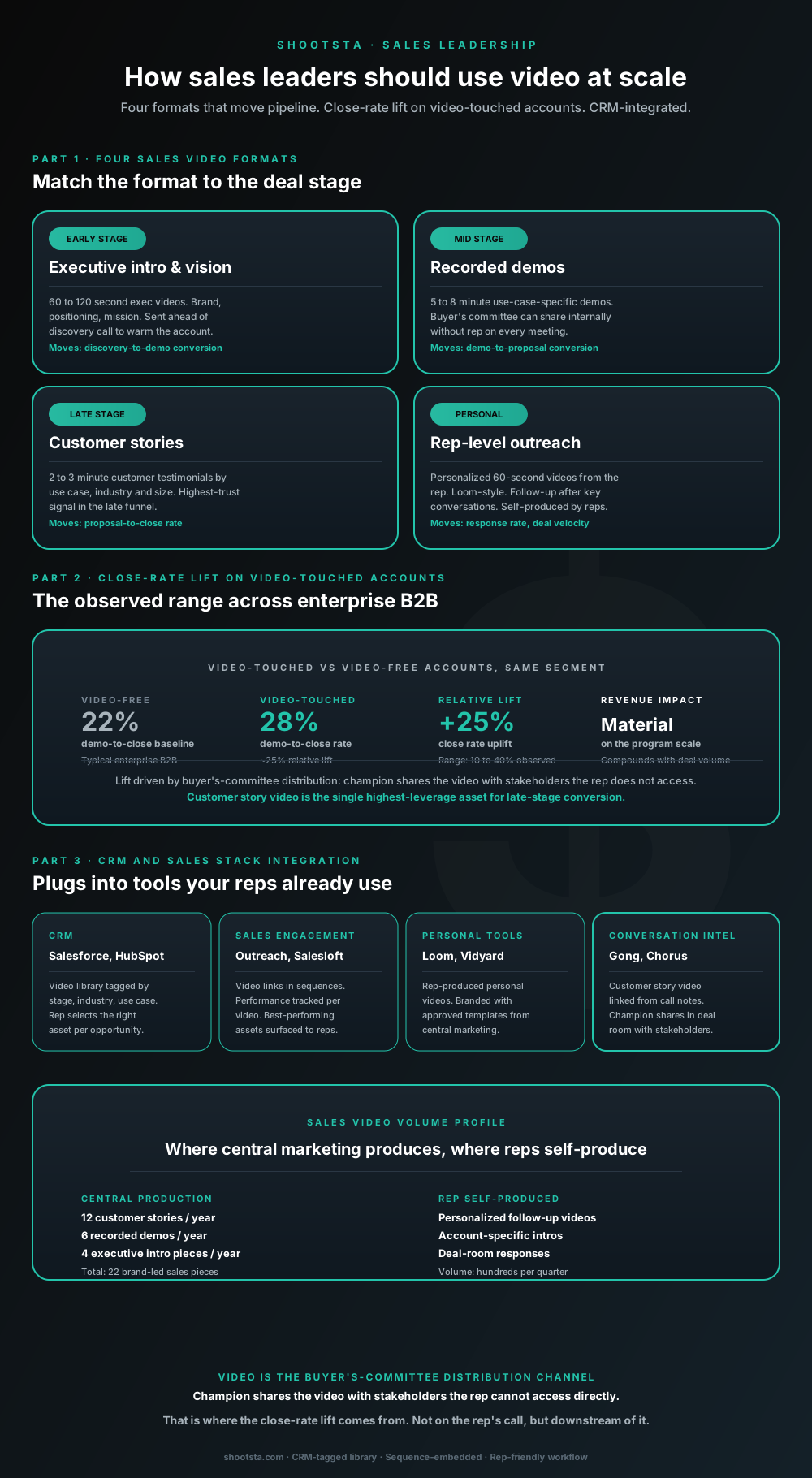
Sales leaders mostly think about video as personalized rep outreach (Loom, Vidyard) or as marketing-produced customer stories. Both are useful. The bigger opportunity is the buyer's-committee distribution layer: assets the champion shares internally with stakeholders the rep does not access directly. That is where the close-rate lift compounds.
How L&D leaders replace classroom with video
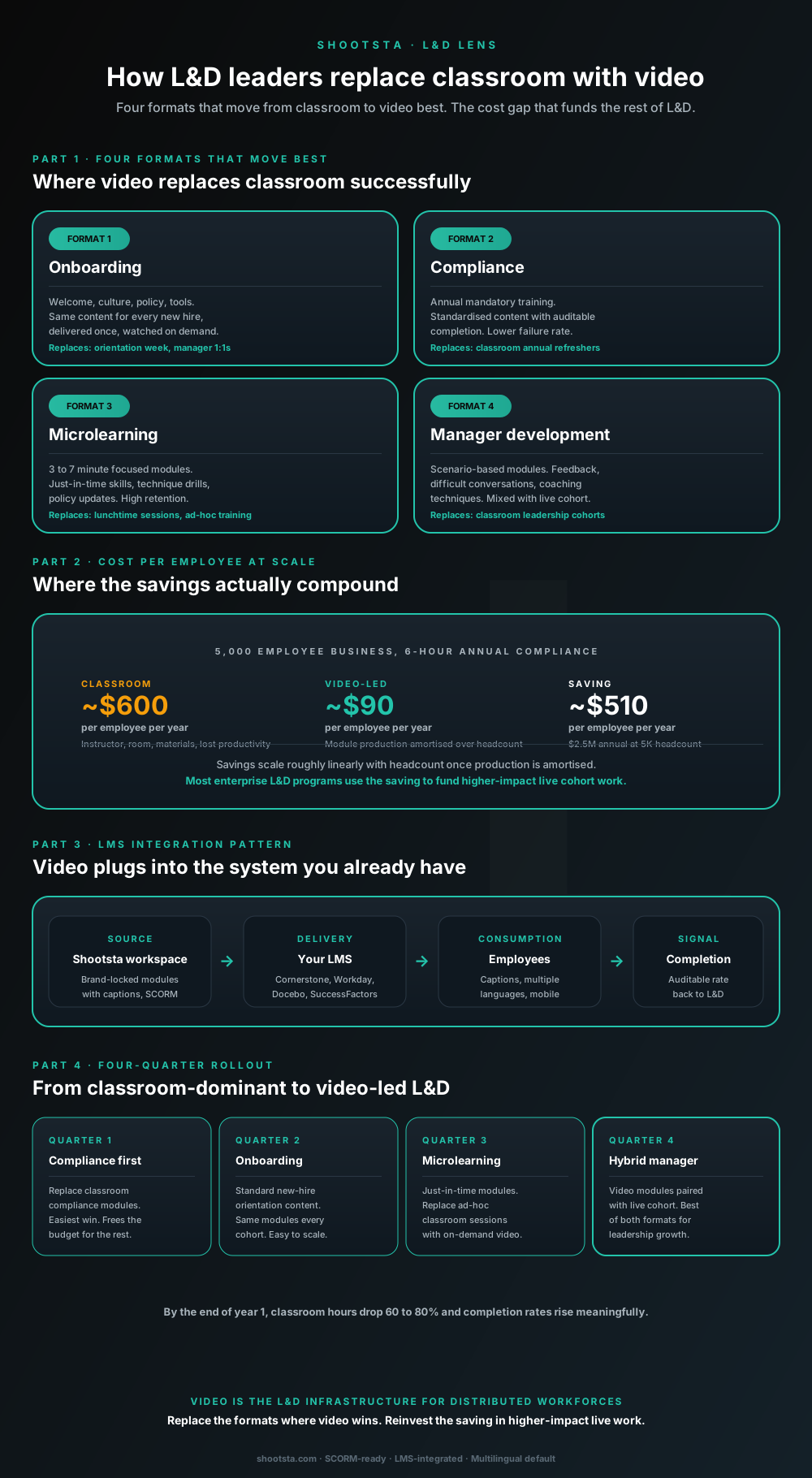
L&D leaders running classroom-heavy training programs typically have the largest single opportunity in the business to free budget through format change. Four training formats move from classroom to video cleanly; the savings fund higher-impact live work. Here is the rollout that compounds learner adoption over four quarters.
How customer success leaders should use video
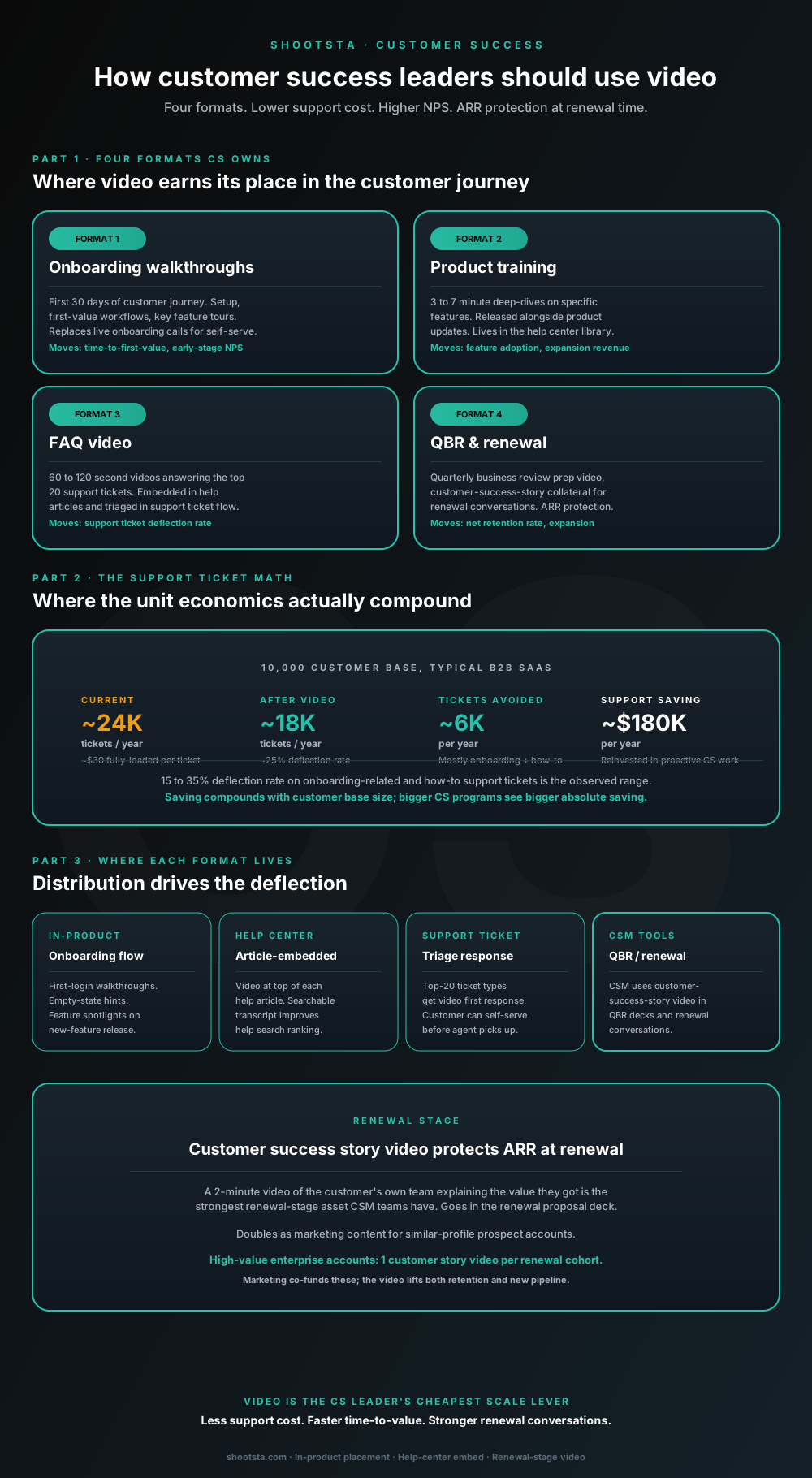
Customer success leaders are usually under-resourced for both reactive support volume and proactive retention work. Video is the cheapest lever to fix both - 15 to 35% deflection on onboarding and how-to tickets, faster time-to-value, and renewal-stage customer story video that lifts net retention. Here is the four-format model and where each piece earns its place.
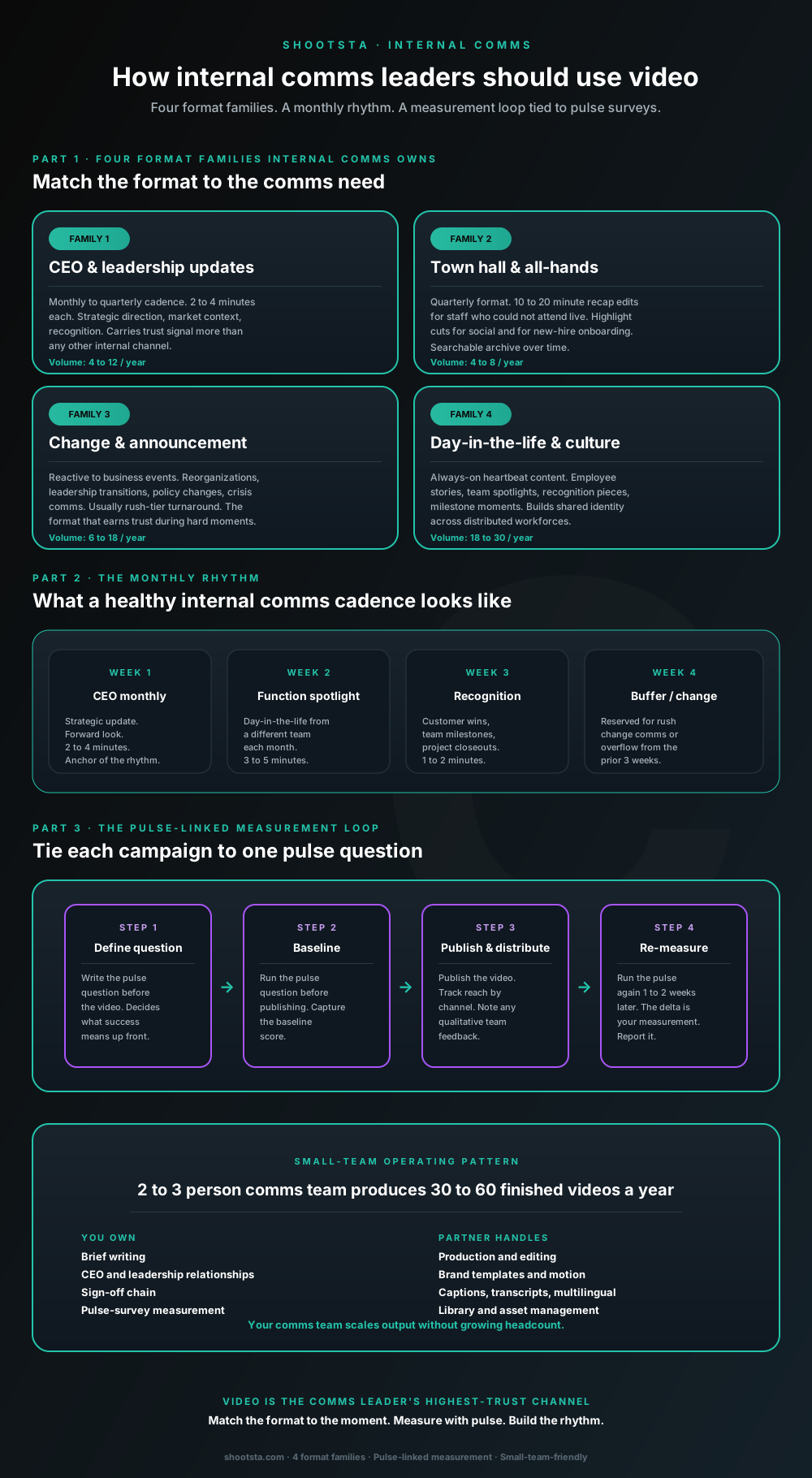
How internal comms leaders should use video
Internal comms leaders are usually under-resourced for the volume of video the business wants. The fix is not more headcount; it is structuring the program around four format families, a monthly rhythm, and a pulse-survey-linked measurement loop. Here is the operating pattern that lets a small comms team produce 30 to 60 finished videos a year.