
How to produce video for manufacturing and industrial
shootsta.
How to produce video for manufacturing and industrial
By Shootsta · Published April 11, 2026 · Updated October 2026
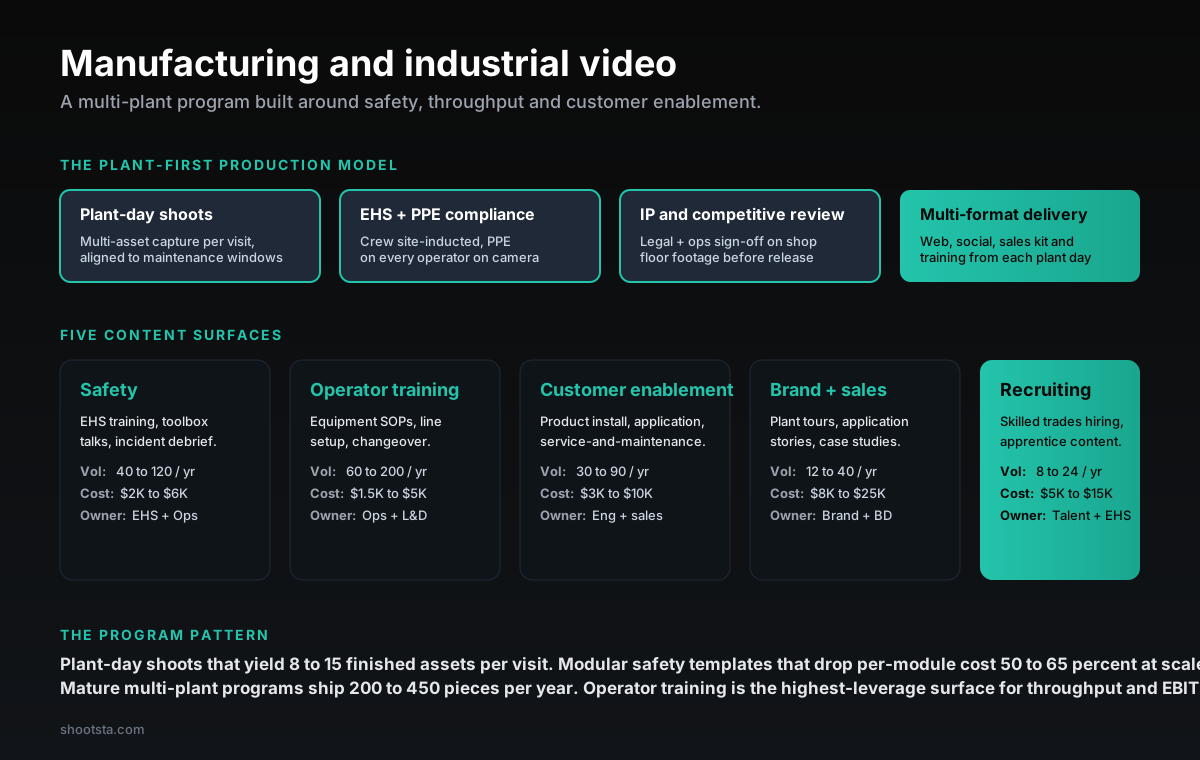
Manufacturing video runs across plants, not campaigns. The structural shift: a plant-day production model that captures 8 to 15 finished assets per visit across safety, operator training, customer enablement, brand and recruiting. EHS and PPE compliance baked into the crew. IP and competitive review gates protect shop-floor footage. The five-surface program ships 200 to 450 pieces per year across multi-plant operations.
Why manufacturing video programs need a plant-first model
Manufacturing video programs run across many plants, and every plant has hard limits: safety, throughput, maintenance windows and IP. Treating video as a marketing job run from headquarters causes friction on the floor. Plants push back on outside crews because safety and output matter more to them than marketing. Each visit turns into its own production with full inductions, separate scoping and separate brand review, so cost per video stays high while volume stays low.
A plant-first production model fixes this. One plant-day shoot captures footage for many finished videos, and the crew completes EHS and PPE requirements before it arrives. A single visit covers safety, operator training, customer enablement and brand content at once. The shoot fits around maintenance windows and the throughput calendar, so plant operations stay protected. This post is a guide to building that program across many plants.
The plant-first production model
Plant-day shoots
One production visit per plant should produce a batch of finished videos across your content surfaces. A typical mix includes several safety modules and operator training pieces, plus a few customer enablement videos and one or two brand or recruiting pieces. This lowers the cost of each video compared with a separate plant visit per video. Plant scheduling also deals with one production day instead of several.
EHS and PPE compliance
The crew completes site inductions before it arrives. Where required, the production team holds the same EHS authorization as plant operators. Every operator on camera wears the right PPE: hard hat, safety glasses, hi-vis, gloves, hearing protection and FRC where needed. Each plant gets its own site-specific RAMS. A crew that needs a fresh induction at every plant adds weeks to each visit, while a crew with standing inductions removes that delay.
IP and competitive review
Shop-floor footage can expose IP through process detail, equipment, layout, supplier names and automation patterns. Legal, operations and engineering should review every cut before release. Many manufacturers keep a written review checklist, and any cut going to an external channel needs explicit clearance.
Multi-format delivery
Each plant-day shoot feeds several formats. Training modules for the LMS run in 4:5 or 16:9, and customer enablement video runs in 16:9. Brand and sales kits use 16:9 plus 9:16 for social, while recruiting content is cut vertical-first for social feeds. You capture once and cut many versions from the same footage.
The five content surfaces
Surface 1: Safety
Safety covers EHS training, toolbox talks, incident debriefs, lockout-tagout refreshers, PPE awareness and near-miss communications. This is the surface that protects plant operators, and it usually has the highest volume of the five. Batching it into plant-day shoots keeps the cost per piece down. EHS and operations own it together. It gets the most internal scrutiny and has the biggest effect on daily operations.
Surface 2: Operator training
Operator training covers equipment SOPs, line setup, changeovers, quality-system training and lean or continuous-improvement content. This is the surface that lifts throughput, and it often runs to more pieces a year than any other. Operations and L&D share ownership. It is often the most underfunded surface, even though it has the most direct effect on EBITDA.
Surface 3: Customer enablement
Customer enablement covers product installation video, application engineering content, service and maintenance walkthroughs and troubleshooting guides for customer technical teams. This surface reduces support load and helps customers solve problems on their own. Pieces here tend to cost more than internal training because they carry more product detail and pass extra review. Engineering and sales engineering own it.
Surface 4: Brand and sales
Brand and sales covers plant tours, application stories, case studies, capability films, trade show video and RFP companion content. This surface supports business development and the brand. It has the lowest volume and the highest cost per piece, because each film carries more polish. Brand and business development own it.
Surface 5: Recruiting
Recruiting covers skilled trades hiring, apprenticeships, engineering roles and plant culture. This surface supports workforce supply, which is a hard limit for many manufacturers right now. Talent and EHS share ownership, because plant safety is a selling point for recruits.
The operator-training surface in detail
Operator training has the largest direct effect on EBITDA, and it is the surface many manufacturing video programs underinvest in. A few patterns hold across plants:
Equipment-SOP video library
Build a standard SOP video for every key piece of equipment, covering machine setup, calibration, changeover, basic maintenance and troubleshooting. Each major equipment line gets a set of modules. The template stays modular, so the editor swaps in equipment-specific footage. The library grows in value over the years as new equipment lines are added.
Line-setup and changeover
Record line changeover procedures on video, with time-study notes on screen. The footage serves operator training and continuous-improvement work. Throughput often improves once operators can review changeover steps between shifts.
Quality and inspection
This content covers visual inspection training, defect identification and the basics of statistical process control. It supports quality teams and helps reduce escape rates. It is often produced together with the quality engineering team.
Lean and continuous improvement
This content covers 5S walkthroughs, kaizen events, A3 problem-solving and value-stream mapping basics. It supports the manufacturer's improvement program. It helps onboard new operators and refreshes experienced ones on the program rhythm.
Manufacturing plant program planner
Map plants and content surfaces to annual asset volume and spend
Set the number of plants in scope, per-plant safety and operator training cadence, and the shared customer, brand and recruiting tiers. The planner returns annual assets, indicative spend and plant days required.
Plants in scope: 8
Safety pieces per plant per year: 10
Operator-training modules per plant per year: 14
Customer enablement pieces per year: 40
Brand + sales pieces per year: 18
Recruiting pieces per year: 12
Annual assets
262
80 safety + 112 ops + 40 customer + 18 brand + 12 recruit
Indicative spend
$1.25M
Plant days / yr
24
~10 finished assets per plant day
Cost / asset (avg)
$4.8K
Cost ranges are sector medians for multi-plant manufacturing programs. Plant-day shoots producing 8 to 15 assets per visit drop per-asset cost 50 to 65 percent against ad-hoc plant visits.
The IP and competitive review gates
Process detail review
Start by checking which process steps are visible in the footage and which of them are commercially sensitive. Footage that shows a competitor how you work stays internal-only. Other footage gets edited to hide process detail before external release. Engineering and operations sign off on each cut at this gate.
Equipment and supplier visibility
Check which equipment brands appear on screen and whether any supplier relationship should stay private. Many manufacturers keep written guidance on what can appear in external content. An editor working at speed needs that guidance open during the cut so nothing slips through to review.
Customer-named content
Customer enablement video that refers to a customer's application needs that customer's consent, and so does trade-show content that mentions their use case. Many manufacturers run a standing consent process. Your production workflow should route through it before any customer-identifiable content ships.
Cross-border compliance
Dual-use, export-controlled or sanctions-sensitive equipment needs an extra review by trade-compliance counsel. Manufacturers with defense work usually build this gate into the standard workflow. Missing it can bring regulator action, while including it adds only a few days per asset.
What changes for the production team working on manufacturing content
Three practical shifts change how a production team works on manufacturing content, and each comes from working inside a live plant.
Shift 1: Plant-floor fluency
Producers and crews need to understand a process flow and work around active operations. They should know the right questions to ask plant managers and respect the production calendar. A crew that disrupts a shift for the perfect shot does not get invited back to the next plant, while a crew that captures clean footage without hurting throughput does. We covered the broader sector fluency model in how a partner gets up to speed on your industry.
Shift 2: Standard template discipline
Much manufacturing content runs through standard brand and training templates. The editor swaps process-specific footage into a consistent structure. This is where the cost savings build across a multi-plant program, because editing time per asset drops sharply once the templates are set.
Shift 3: Audit-ready documentation
Training content that supports operator certifications and EHS compliance has to stand up to an audit. That means documented script approval, a record of each operator confirming they completed the training, and a clear retention policy for all training video. We covered the broader audit-trail pattern in how to produce video for financial services, and manufacturing applies a similar discipline to training and EHS audits.
Practical questions enterprise manufacturing teams ask
How do we run a video program across 10+ plants?
Own the program centrally at corporate level, covering brand templates, content standards, plant-day scheduling and coordination across plants. Local plant coordinators own the plant-day visits and each plant's content roadmap. Your production partner should hold standing site inductions across the plant network. We covered the broader global multi-site pattern in how to scale video across global offices, and manufacturing applies that pattern with an added EHS layer.
What about footage on competitor-sensitive equipment?
The standard approach is to keep footage of competitor-sensitive equipment internal-only or route it through extra IP review. Many manufacturers give the editor written guidance on which equipment can appear in external content. A frequent mistake is posting shop-floor footage to social without an IP review.
How do we handle automation and robotics footage?
Heavy automation needs extra safety planning, because the production team is working among moving equipment. Automation-heavy plants usually require the crew to stay in marked safe zones during filming. Drones and fixed cameras replace direct floor work for many automation shots.
What about training content for non-English-speaking operators?
Large manufacturers often keep training content in several languages, depending on who works in their plants. The usual approach is to produce the master version in the main language with a clean script ready for translation. Each language version then gets a dub or new captions. We covered the broader multi-language pipeline in how to scale video across global offices.
What about AI in manufacturing video production?
AI is useful inside the production workflow for transcripts, voice-over in other languages for routine training, picking social cutdowns and scheduling distribution. Use more caution with safety-critical training, where operators trust what they see: visible compliance and a named, real source. AI-generated voices or presenters weaken that trust. The framing in how AI fits inside enterprise video workflows applies here, with extra care for safety content.
Where to go next
For the training-library production model that operator training extends, read how to produce a training video library. For the global multi-site pattern, read how to scale video across global offices. For the customer story format that brand and sales content draws on, read how to produce customer story video at scale.
To scope a manufacturing video program with plant-day capture, EHS-compliant crew and the full five-surface coverage, book a free consultation.
Take this article with you
Read the latest at shootsta.com/blog/how-to-produce-video-for-manufacturing-and-industrial
You might also like
How to Brief an Animation Project
How to Brief an Animation Project
An animation brief is the document you send to your production partner before work starts. Get it right and you cut revision cycles in half. Get it wrong and you discover mid-production that everyone disagrees on what the video is for. This is what a complete brief looks like.
Animation for change management comms
Animation for change management comms
Animation handles change management communications better than live video for three reasons: no on-camera executives required during sensitive periods, scene-level updates when plans shift, and a single production that works across global teams with voiceover-only language swaps.
How sales leaders should use video at scale
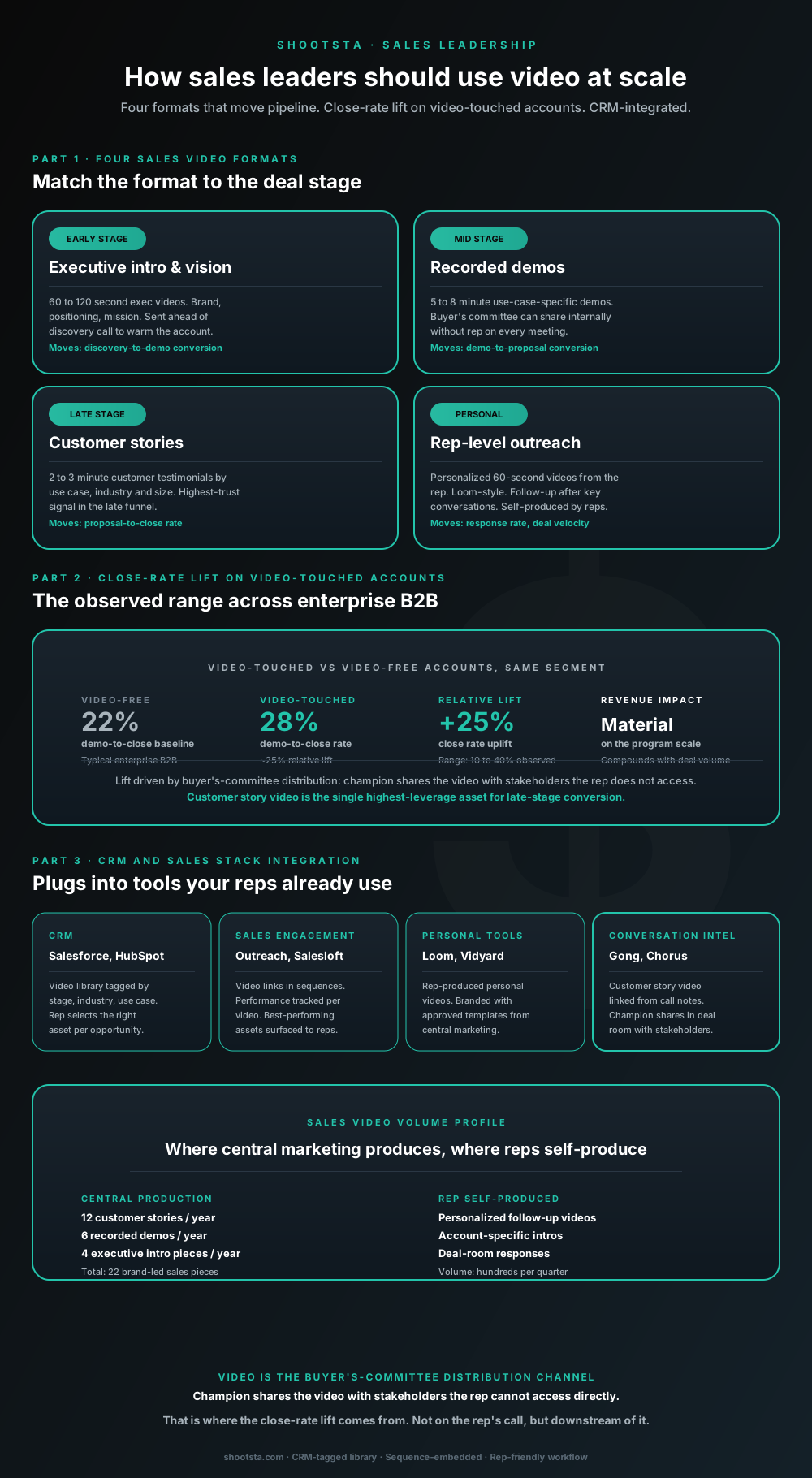
Sales leaders mostly think about video as personalized rep outreach (Loom, Vidyard) or as marketing-produced customer stories. Both are useful. The bigger opportunity is the buyer's-committee distribution layer: assets the champion shares internally with stakeholders the rep does not access directly. That is where the close-rate lift compounds.
How L&D leaders replace classroom with video
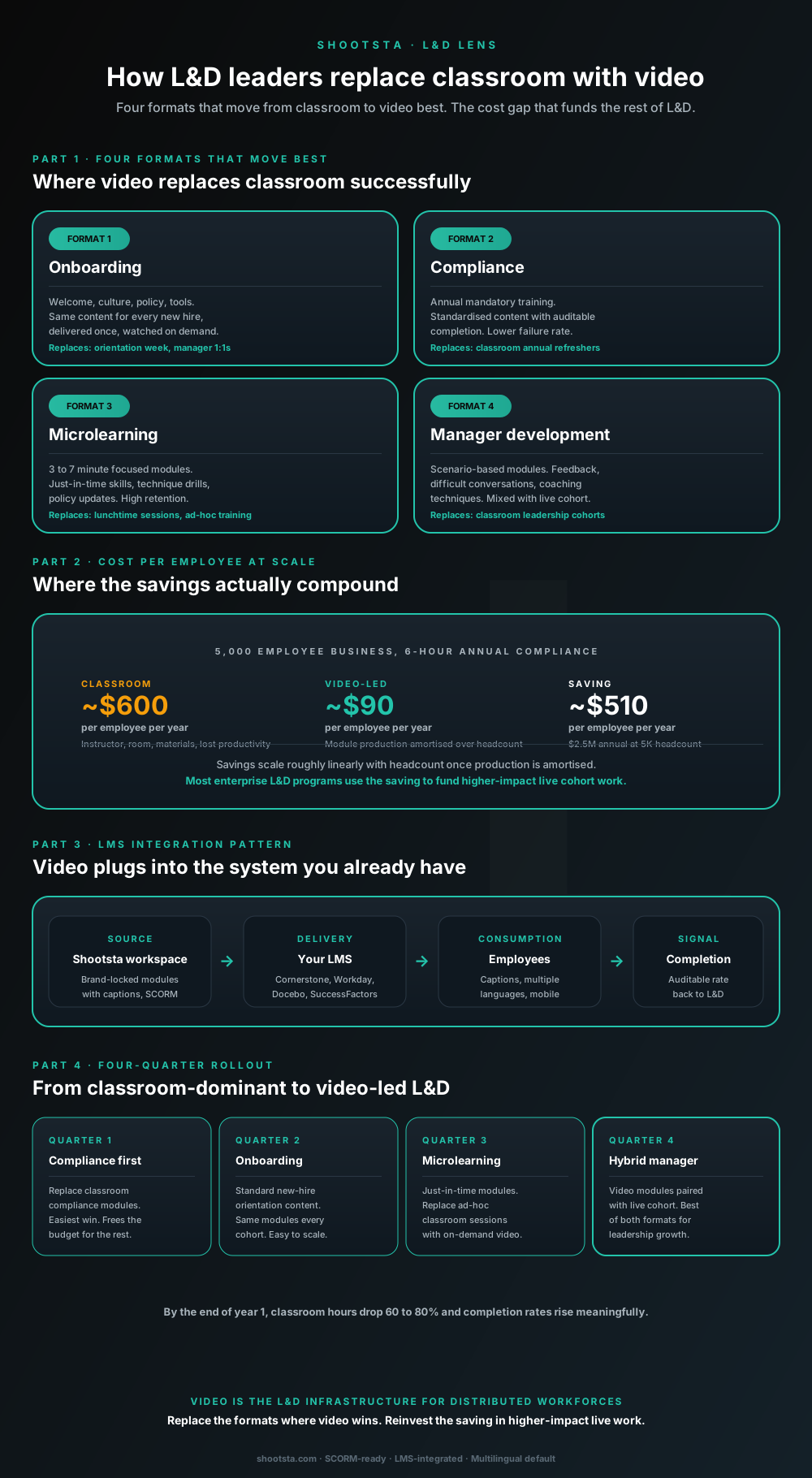
L&D leaders running classroom-heavy training programs typically have the largest single opportunity in the business to free budget through format change. Four training formats move from classroom to video cleanly; the savings fund higher-impact live work. Here is the rollout that compounds learner adoption over four quarters.
How customer success leaders should use video
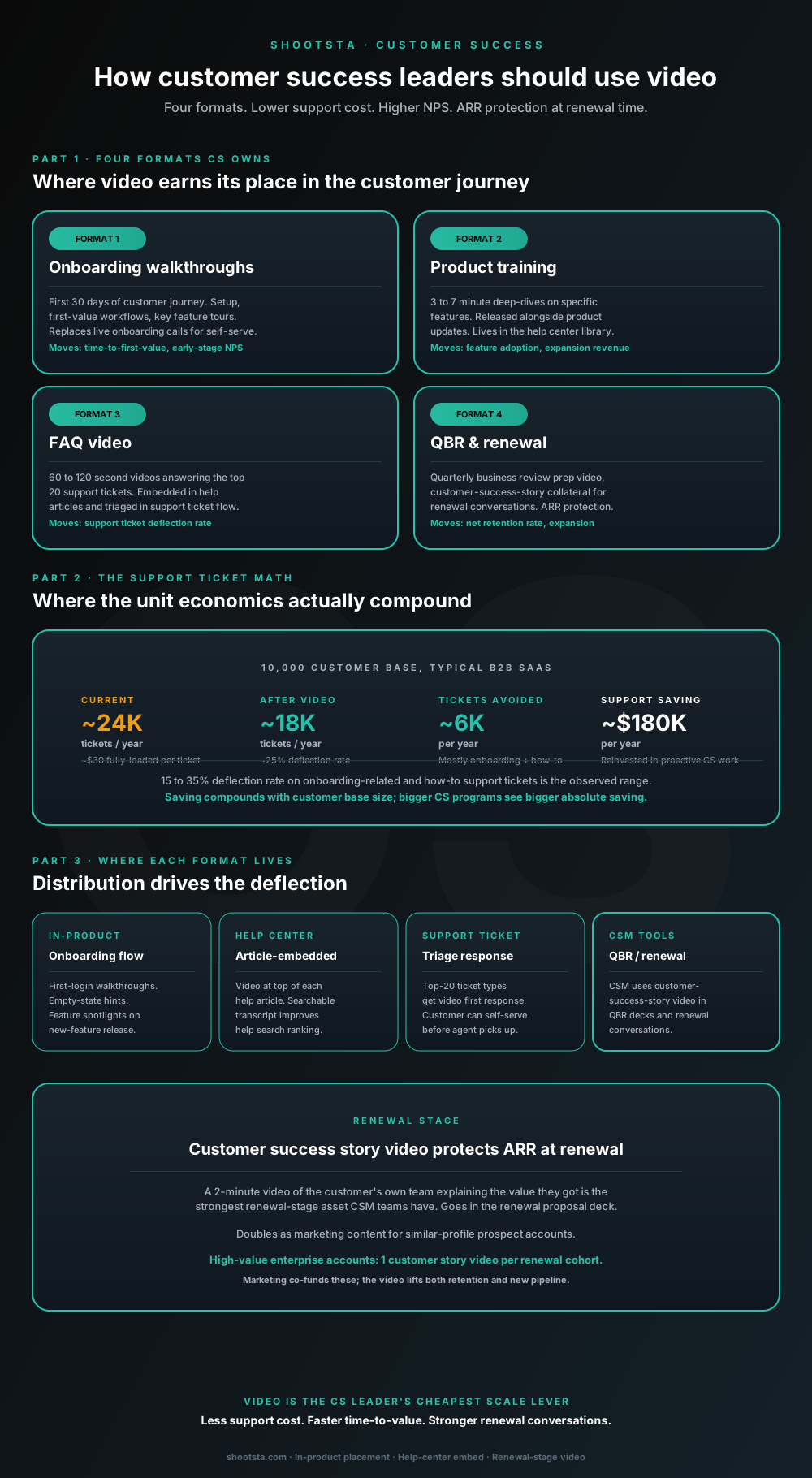
Customer success leaders are usually under-resourced for both reactive support volume and proactive retention work. Video is the cheapest lever to fix both - 15 to 35% deflection on onboarding and how-to tickets, faster time-to-value, and renewal-stage customer story video that lifts net retention. Here is the four-format model and where each piece earns its place.
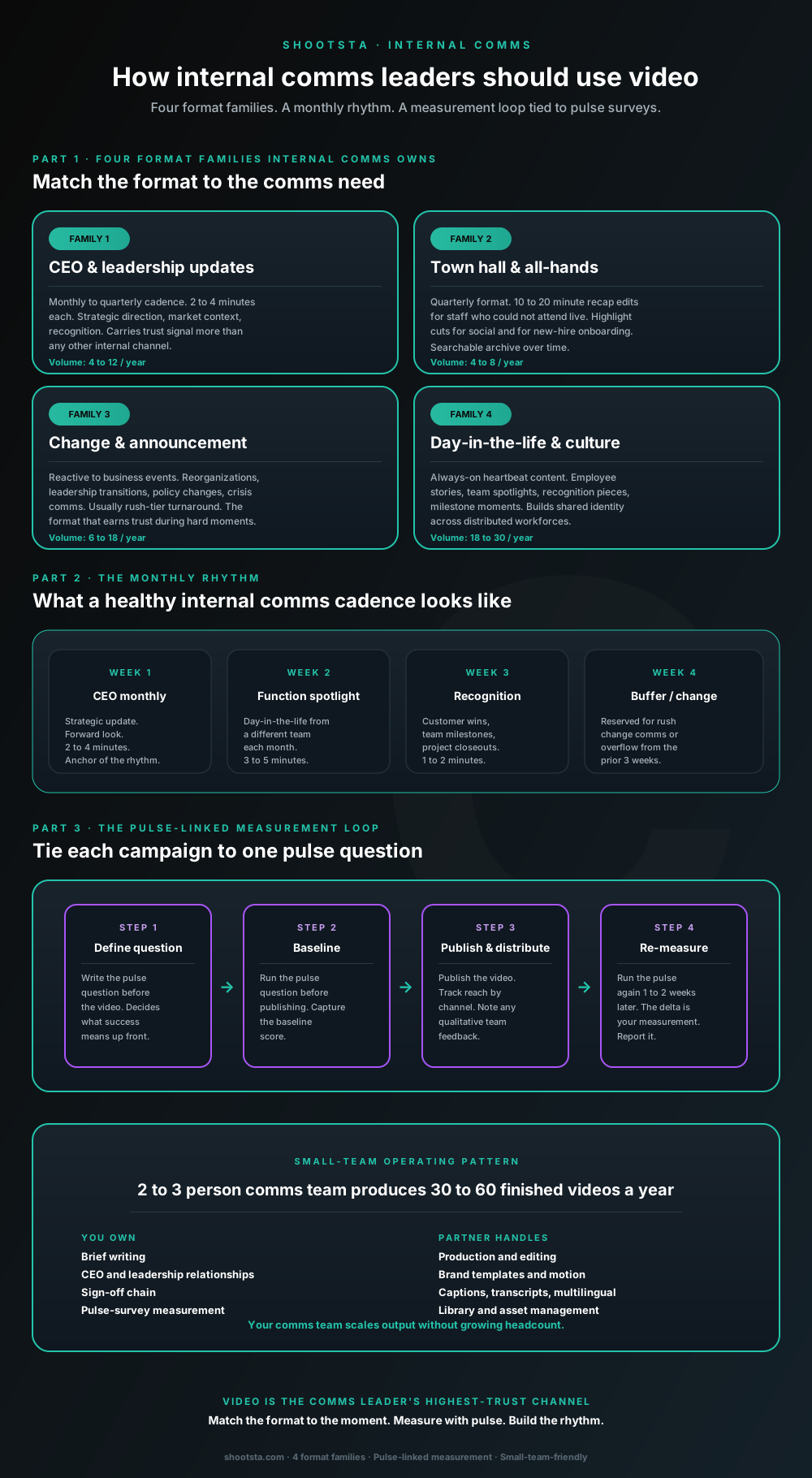
How internal comms leaders should use video
Internal comms leaders are usually under-resourced for the volume of video the business wants. The fix is not more headcount; it is structuring the program around four format families, a monthly rhythm, and a pulse-survey-linked measurement loop. Here is the operating pattern that lets a small comms team produce 30 to 60 finished videos a year.