
How to produce video for financial services
shootsta.
How to produce video for financial services
By Shootsta · Published April 19, 2026 · Updated October 2026
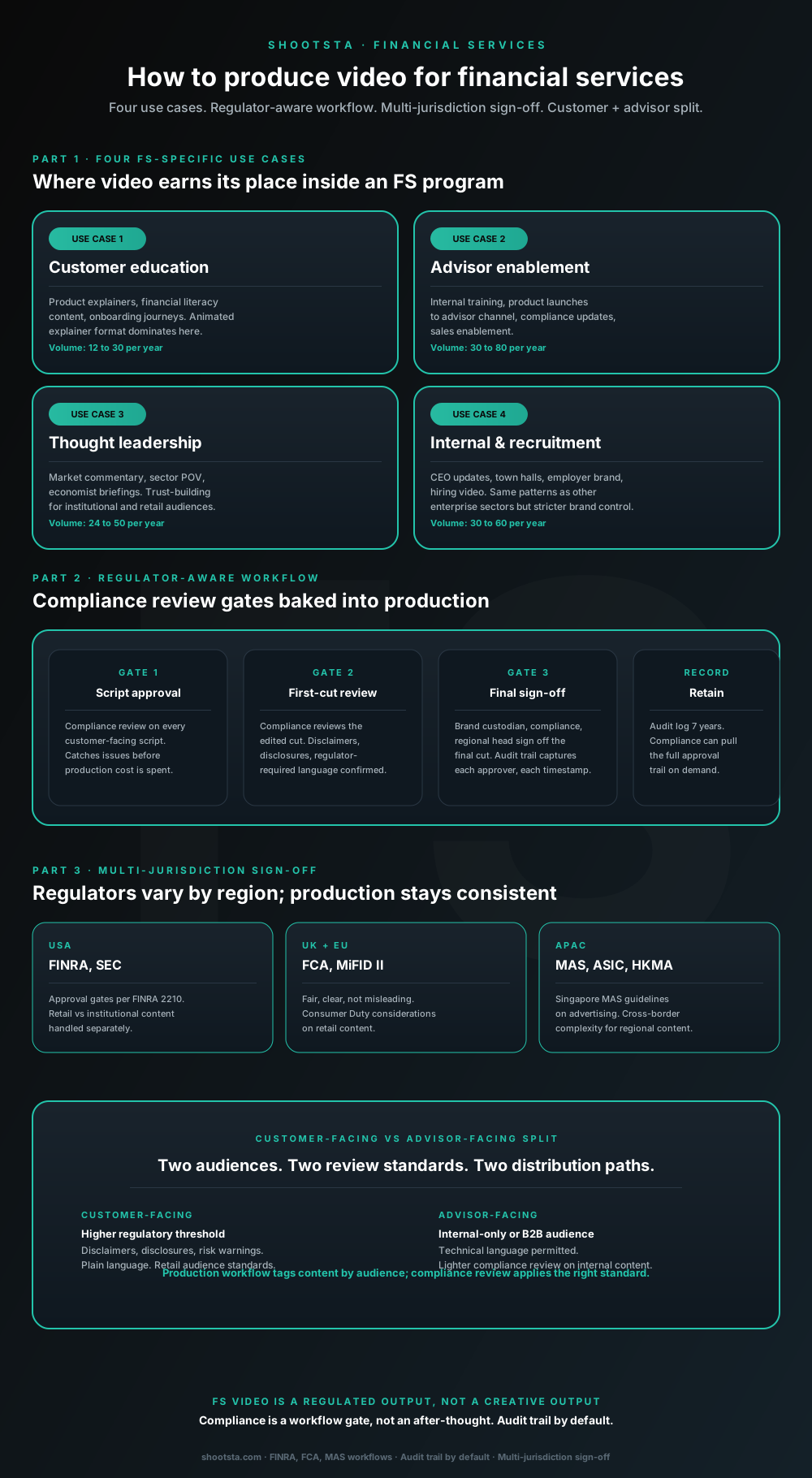
Financial services video sits inside a regulatory perimeter that most enterprise video partners are not built to operate inside. Four FS-specific use cases, a regulator-aware production workflow with compliance gates at script and first-cut stages, multi-jurisdiction sign-off for global firms, and the customer-versus-advisor content split that drives the program structure.
Why financial services video has its own production model
Financial services video uses the same production craft as any enterprise video, but the workflow differs. Every customer-facing piece sits inside a regulatory perimeter, so it needs compliance review at several stages. Disclaimers change by jurisdiction, cross-border videos need sign-off in each market, and you keep an audit trail for years in case a regulator asks to inspect it.
Plenty of enterprise video partners can produce financial services video. Fewer are set up to work inside the FS regulatory perimeter without stalling the program or raising compliance issues late in the cycle. The gap between them is in the workflow, and the creative side is much the same. This guide helps you build or assess a video program that meets the FS-specific requirements.
The four FS-specific use cases
Use case 1: Customer education
This group covers product explainers, such as how a savings account works or how to read a fund factsheet. It also covers financial literacy topics like compound interest, diversification and retirement planning, plus onboarding journeys for new account holders. Animation leads here because it avoids the compliance risk of on-camera talent. It is also easier to update when a product changes. Live action costs more, so firms often keep it for videos where a real face builds trust.
Use case 2: Advisor enablement
This group includes internal training for the advisor channel and product briefings that reach advisors before a customer launch. It also covers compliance updates that explain rule changes, and sales enablement videos advisors use with clients. It is often the highest-volume category in an FS program. Advisor-facing video has a lower regulatory threshold because the audience is internal, and it changes more often than customer-facing video.
Use case 3: Thought leadership and market commentary
Here you have market commentary from the chief economist or CIO, sector POV pieces, outlook videos and rate-cycle commentary. These videos build trust with institutional and retail audiences. They are also the category financial press is most likely to cite. Active programs often publish market commentary weekly or fortnightly, with a larger outlook piece each quarter.
Use case 4: Internal and recruitment
This group covers CEO updates, town halls, employer brand video for hiring, and change management video around acquisitions or restructuring. The patterns match other enterprise sectors. Brand control tends to be stricter, though, because FS firms guard brand consistency closely.
The regulator-aware production workflow
This workflow builds three compliance gates into production. It also keeps an audit trail in case a regulator asks to inspect it.
Gate 1: Script approval before production starts
Compliance reviews every customer-facing script before you spend money on production. This gate catches mis-statements, missing disclosures and risky language at the cheapest stage to fix them. Agree a review window with your compliance team up front, since script complexity changes how long it takes.
Gate 2: First-cut review
Compliance reviews the edited cut for disclaimers, disclosures and regulator-required language. The reviewer also checks the visuals, such as charts that imply a guarantee or testimonials that need disclosures. Issues at this gate are usually minor, and the gate catches them before final delivery rather than after publication.
Gate 3: Final sign-off
The brand custodian, compliance and the regional head each sign off the final cut, and each approval carries a timestamp. The production platform records the sign-off chain, so compliance can pull the full approval trail on demand. In the US, final sign-off for enterprise FS firms usually includes the supervising principal under FINRA Rule 3110. Other jurisdictions have their own supervisory rules.
Audit trail retention
Keep a full audit log of script approvals, first-cut approvals, final sign-offs and any revisions. Retain it for as long as your strictest regulator requires, and confirm that period with your compliance team. The log shows who approved what and when, so it holds up at an audit or inspection.
Interactive readiness checker
Is your FS video workflow regulator-ready?
Pick your jurisdictions and toggle which compliance controls are in place today. The checker returns readiness rating and the gaps to close before launching a regulator-aware video program.
Jurisdictions you operate in
Compliance controls in place today
Jurisdictions
1
in scope
Controls in place
0 / 6
4 must-have gaps
Status
Not ready
Close must-have gaps first
Must-have controls missing
Close the must-have gaps before launching: compliance reviews script before production starts, compliance reviews first cut for disclaimers and disclosures, brand custodian + compliance + regional head sign off the final cut, full audit log of approvals retained 7 years.
Scope an FS video programMust-have controls represent baseline compliance review for retail-facing FS video under most major regulators. Should-have controls are recommended for higher-volume programs or multi-jurisdiction firms. This checker is not legal advice; confirm specific requirements with your compliance team.
Multi-jurisdiction sign-off for global firms
Rules vary a lot from one jurisdiction to the next, while production stays the same. Here is how the workflow handles each region:
United States (FINRA, SEC)
Customer-facing video is approved under the FINRA Rule 2210 communications standards. Retail communications, correspondence and institutional communications each have different approval thresholds. Retail-facing video needs sign-off from a supervising principal. You map each video's classification and the right approver at the brief stage.
United Kingdom and European Union (FCA, MiFID II, ESMA)
Under the UK FCA standard, financial promotions must be fair, clear and not misleading. Consumer Duty applies to retail video as well, and it has raised the bar for retail-facing FS video in the UK. It was introduced in 2023 and enforced from 2024. In the EU, MiFID II covers investment services communications.
Asia-Pacific (MAS, HKMA, ASIC)
Singapore has the MAS advertising guidelines, Hong Kong has HKMA requirements and Australia has ASIC standards. Each sets its own rules for retail communications. Cross-border work is most complex in APAC, because firms often send the same video into several markets with different requirements.
Single workflow, multiple regulators
The right operating model runs every jurisdiction through one production workflow. Compliance reviewers in each market gate the videos for their region. You keep the same production team and brand templates, with a separate compliance review chain per market. Production cost stays steady while each market's rules are still met.
The customer-facing versus advisor-facing split
This is the classification that matters most in FS video. The two audiences have different regulatory thresholds, language and channels.
Customer-facing content
Customer-facing video carries a higher regulatory threshold. It needs disclaimers, disclosures and risk warnings, written in plain language that meets retail standards. Any performance claim must be supported and placed in context. The video also carries past performance disclaimers, fee disclosures and any wording the regulator requires. FS firms usually send customer-facing video through their strictest compliance review.
Advisor-facing content
Advisor-facing video goes to an internal or B2B audience. It can use technical language that advisors follow easily. Compliance review is lighter on internal video, since internal audiences are expected to know the regulatory context. The workflow tags each video by audience at the brief stage, and compliance then applies the right standard.
Tagging advisor-facing video as customer-facing adds review work you don't need. Tagging customer-facing video as advisor-facing creates regulatory risk. That is why the tag goes on at the brief, before the review stage.
What changes for the production team working on FS content
Three practical things change for the people who make the videos.
Producer team understands FS terminology
Your producer should know the difference between a structured product and a fund. They should know what a fair-comparison disclosure looks like and why past-performance disclaimers matter. That is sector knowledge rather than creative judgment, and it cuts the back-and-forth at compliance review.
Brand-trained editors apply disclaimer templates correctly
Standard disclaimer language sits in your brand templates, with the right typography, duration and placement for each jurisdiction. The editor knows where the disclaimer goes in the timeline, so the compliance reviewer doesn't have to ask for it.
Restricted-access workflow for sensitive content
Pre-launch product videos, M&A-adjacent material and earnings-related video all sit in restricted-access workspaces with controlled access lists. These controls mirror the IR video setup we covered in how to produce video for investor relations.
What about insurance and wealth management specifically
Insurance
Insurance follows a similar regulatory framework with its own sector rules on top. In the US, that means state-level insurance regulator requirements, and in the UK it means the FCA rules on insurance distribution. Insurance product video usually needs policy-specific disclosures and references to terms and conditions. It must also draw a clear line between marketing material and policy documents.
Wealth management
In the US, wealth management video has to respect fiduciary rules: Regulation Best Interest for broker-dealers and the fiduciary standard for RIAs. Product recommendations need a suitability disclosure. Performance figures follow reporting standards such as GIPS. Video for high-net-worth clients may get a lighter version of the retail review, depending on how it is classified.
Fintech and crypto
The rules for fintech and crypto are still changing. The SEC has taken a lot of enforcement action on crypto product marketing, and the FCA has issued specific guidance on crypto advertising. In Australia, ASIC's design and distribution obligations affect fintech marketing. Your workflow should expect frequent guidance updates and allow for faster review cycles than traditional FS.
Frequently asked questions
How long does compliance review typically add to FS video production?
It depends on your compliance team's capacity and the video's complexity, and each gate adds its own window. Agree target windows for each gate with compliance before production starts. Urgent videos can move faster with a pre-agreed expedited review, though compliance teams push back when every video is treated as urgent.
Can compliance review happen in parallel with production?
Partly. The script gate has to come before production starts, or you risk filming something compliance will change. The first-cut gate can run in parallel with cutting the social versions from the master. Final sign-off has to wait until the cut is finished. Regulated FS video takes longer overall than the same video in an unregulated sector.
What about AI-generated FS video?
AI-generated video is not ready yet for customer-facing FS work. Its audit trail does not meet FS compliance standards today. AI is useful inside the production workflow for transcript editing, social clip selection and automated captions. It should not be the main production method for regulated FS video. The framing in how AI fits inside enterprise video workflows applies with extra caution for FS.
How does this work for content distributed across multiple jurisdictions?
You run one shared production workflow with a compliance review chain for each jurisdiction. The master is produced once. Regional versions come from the master, with local disclaimers, language versions and any regulator-required additions. Each jurisdiction's compliance team reviews its own version, and the audit trail records each approval separately.
What about social media distribution?
Social video goes through the same compliance gates, with extra checks for each platform. LinkedIn generally works for both retail and advisor video when the right disclaimers are in place. X has been less reliable for retail FS communications since its platform changes. TikTok and Reels face specific scrutiny in some jurisdictions. The UK FCA has issued guidance on finfluencer posts, and the SEC has acted against unregistered crypto promotion on social.
How do we handle customer testimonials in FS?
Customer testimonials in FS are heavily regulated. The SEC lifted its ban on RIA testimonials in 2021 but added specific disclosure requirements. The UK FCA requires that testimonials do not mislead. FS firms usually send testimonial video through extra-strict compliance review. They also disclose whether the customer was paid and whether the experience is typical.
Where to go next
For the broader brand-control workflow that FS video sits inside, read brand control with a video production partner. For the contracts and security setup FS programs require from a partner, read video production contracts: what to look for. For the IR video workflow that overlaps with FS for public-company FS firms, read how to produce video for investor relations.
To scope an FS video program with regulator-aware workflow for your firm, book a free consultation.
Take this article with you
Read the latest at shootsta.com/blog/how-to-produce-video-for-financial-services
You might also like
How to Brief an Animation Project
How to Brief an Animation Project
An animation brief is the document you send to your production partner before work starts. Get it right and you cut revision cycles in half. Get it wrong and you discover mid-production that everyone disagrees on what the video is for. This is what a complete brief looks like.
Animation for change management comms
Animation for change management comms
Animation handles change management communications better than live video for three reasons: no on-camera executives required during sensitive periods, scene-level updates when plans shift, and a single production that works across global teams with voiceover-only language swaps.
How sales leaders should use video at scale
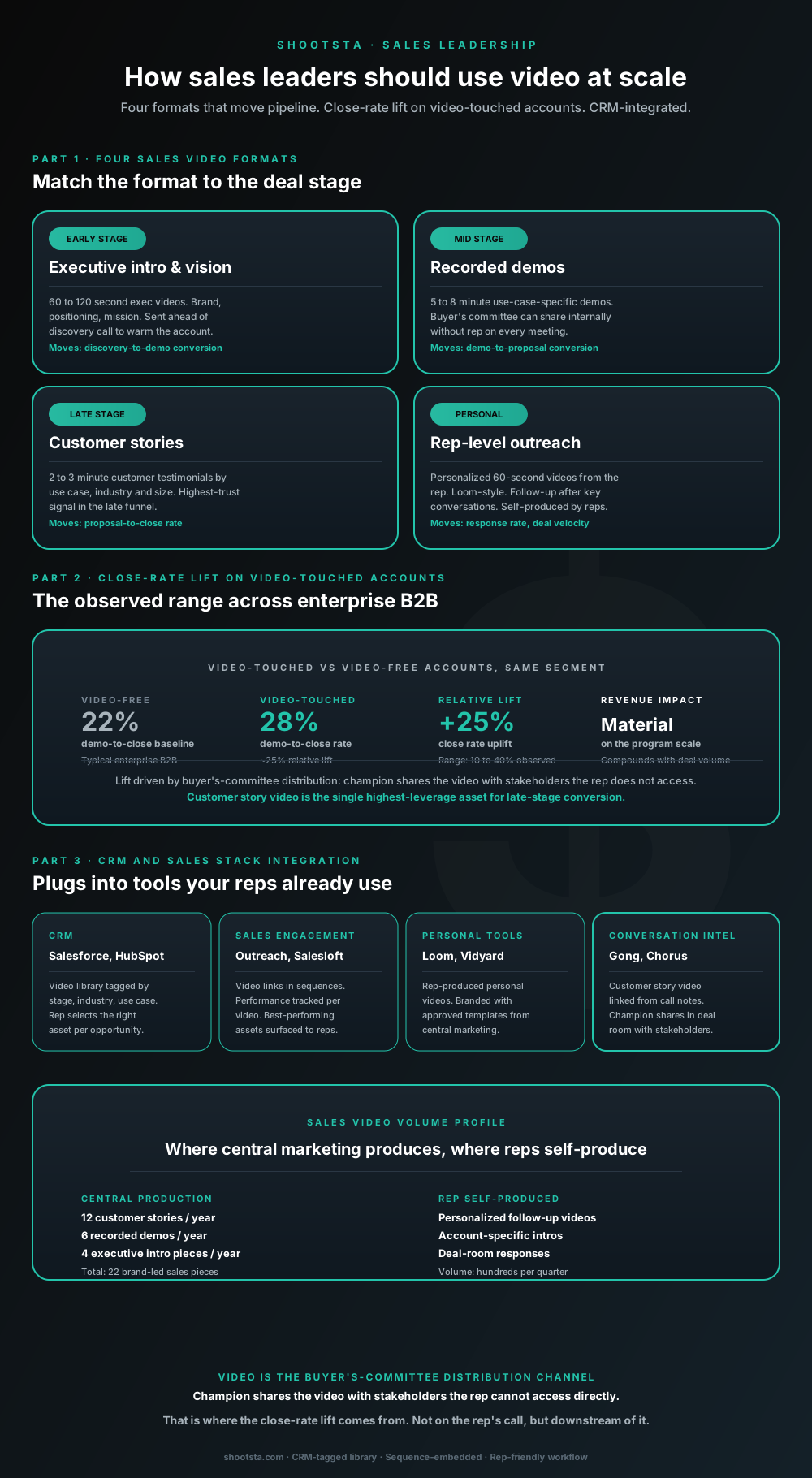
Sales leaders mostly think about video as personalized rep outreach (Loom, Vidyard) or as marketing-produced customer stories. Both are useful. The bigger opportunity is the buyer's-committee distribution layer: assets the champion shares internally with stakeholders the rep does not access directly. That is where the close-rate lift compounds.
How L&D leaders replace classroom with video
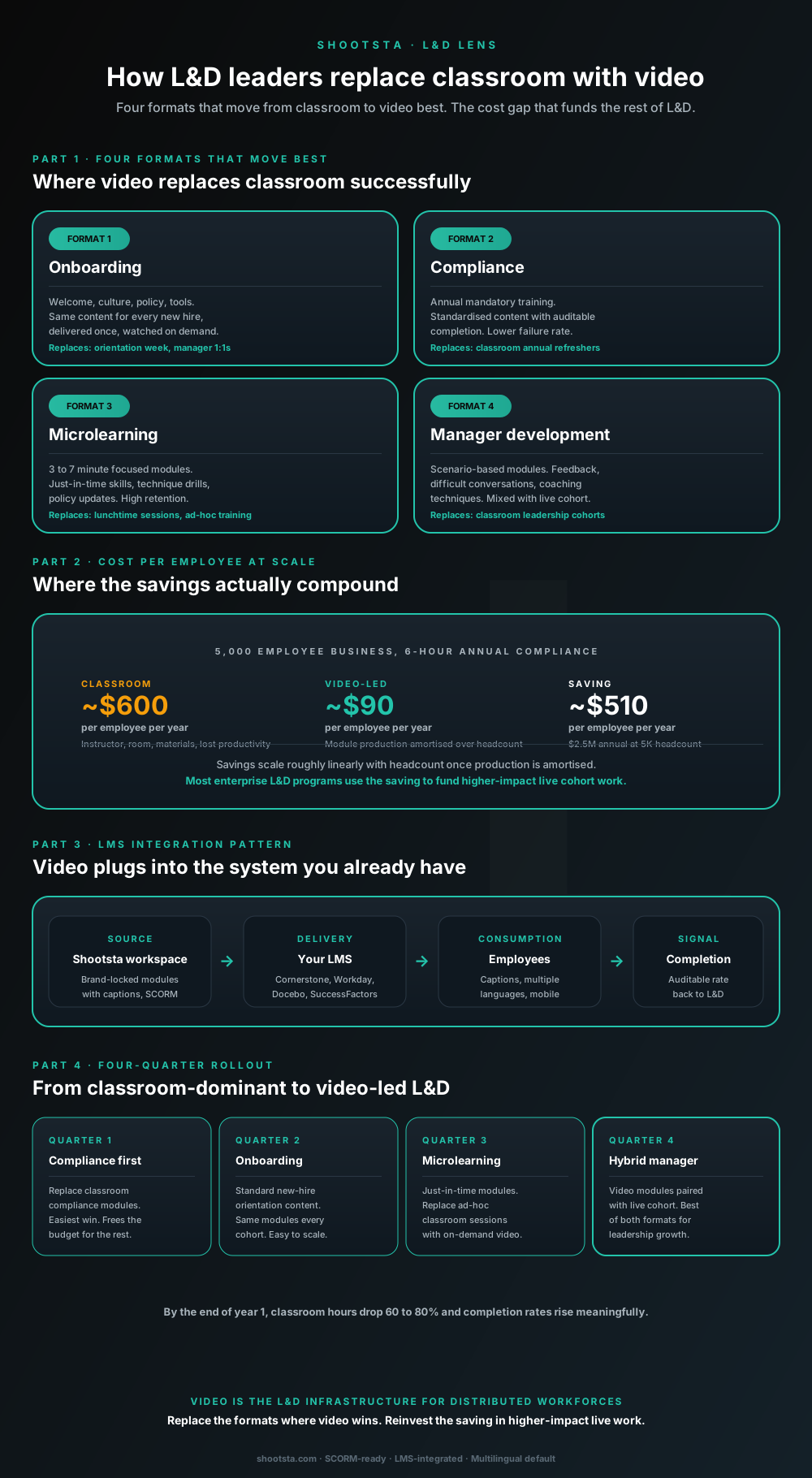
L&D leaders running classroom-heavy training programs typically have the largest single opportunity in the business to free budget through format change. Four training formats move from classroom to video cleanly; the savings fund higher-impact live work. Here is the rollout that compounds learner adoption over four quarters.
How customer success leaders should use video
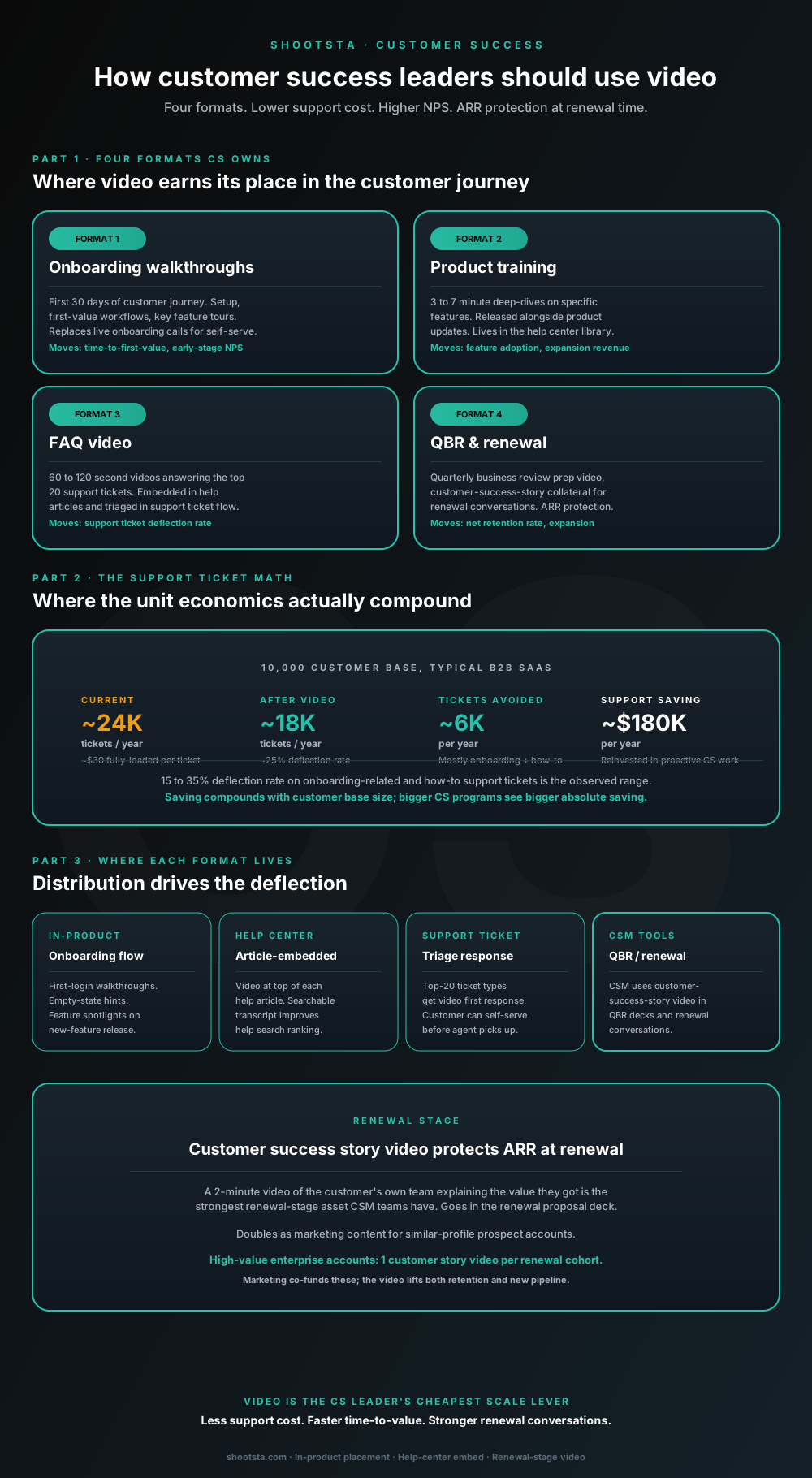
Customer success leaders are usually under-resourced for both reactive support volume and proactive retention work. Video is the cheapest lever to fix both - 15 to 35% deflection on onboarding and how-to tickets, faster time-to-value, and renewal-stage customer story video that lifts net retention. Here is the four-format model and where each piece earns its place.
How internal comms leaders should use video
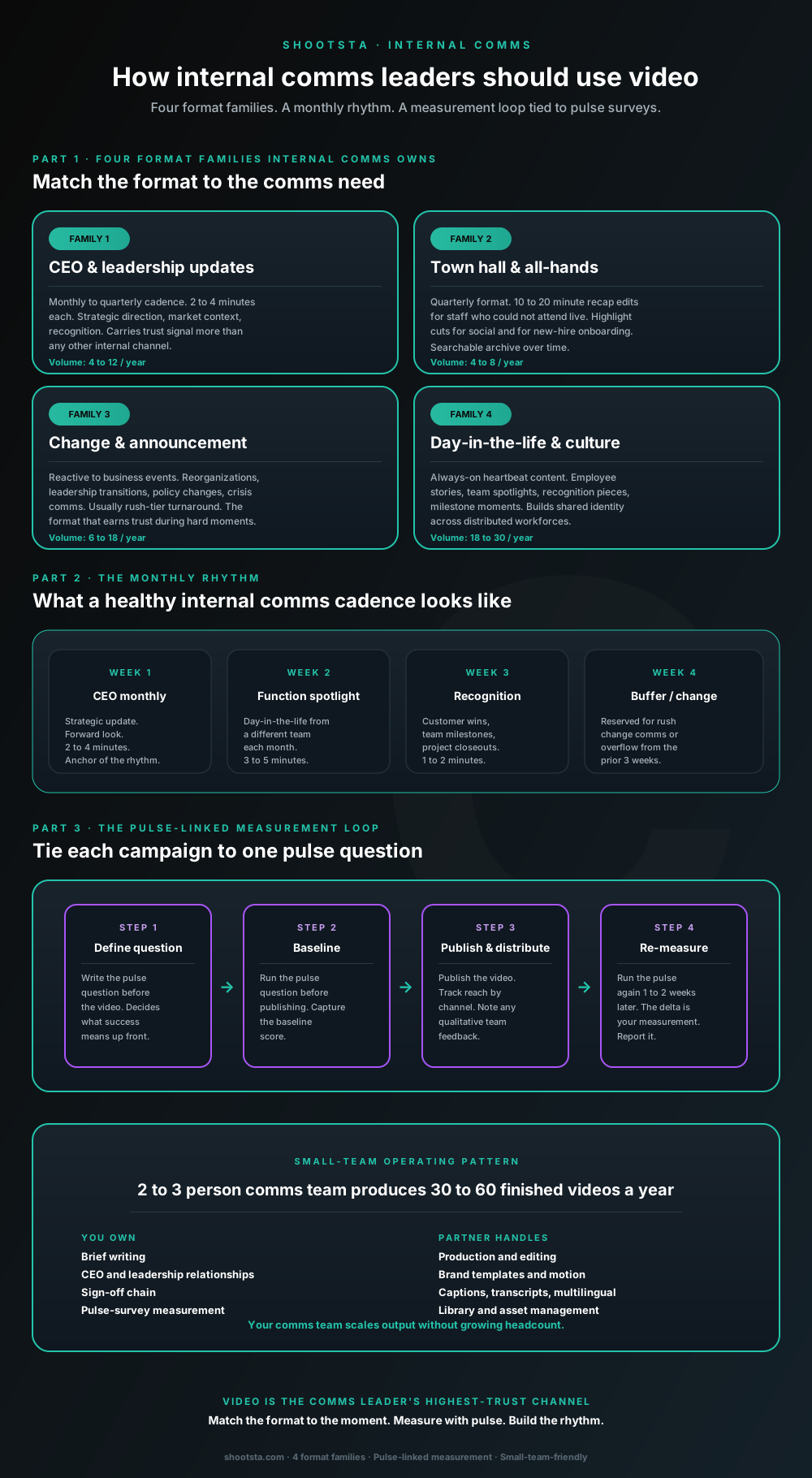
Internal comms leaders are usually under-resourced for the volume of video the business wants. The fix is not more headcount; it is structuring the program around four format families, a monthly rhythm, and a pulse-survey-linked measurement loop. Here is the operating pattern that lets a small comms team produce 30 to 60 finished videos a year.