
How a distributed video model cuts travel
shootsta.
How a distributed video model cuts travel
By Shootsta · Published May 9, 2026 · Updated October 2026
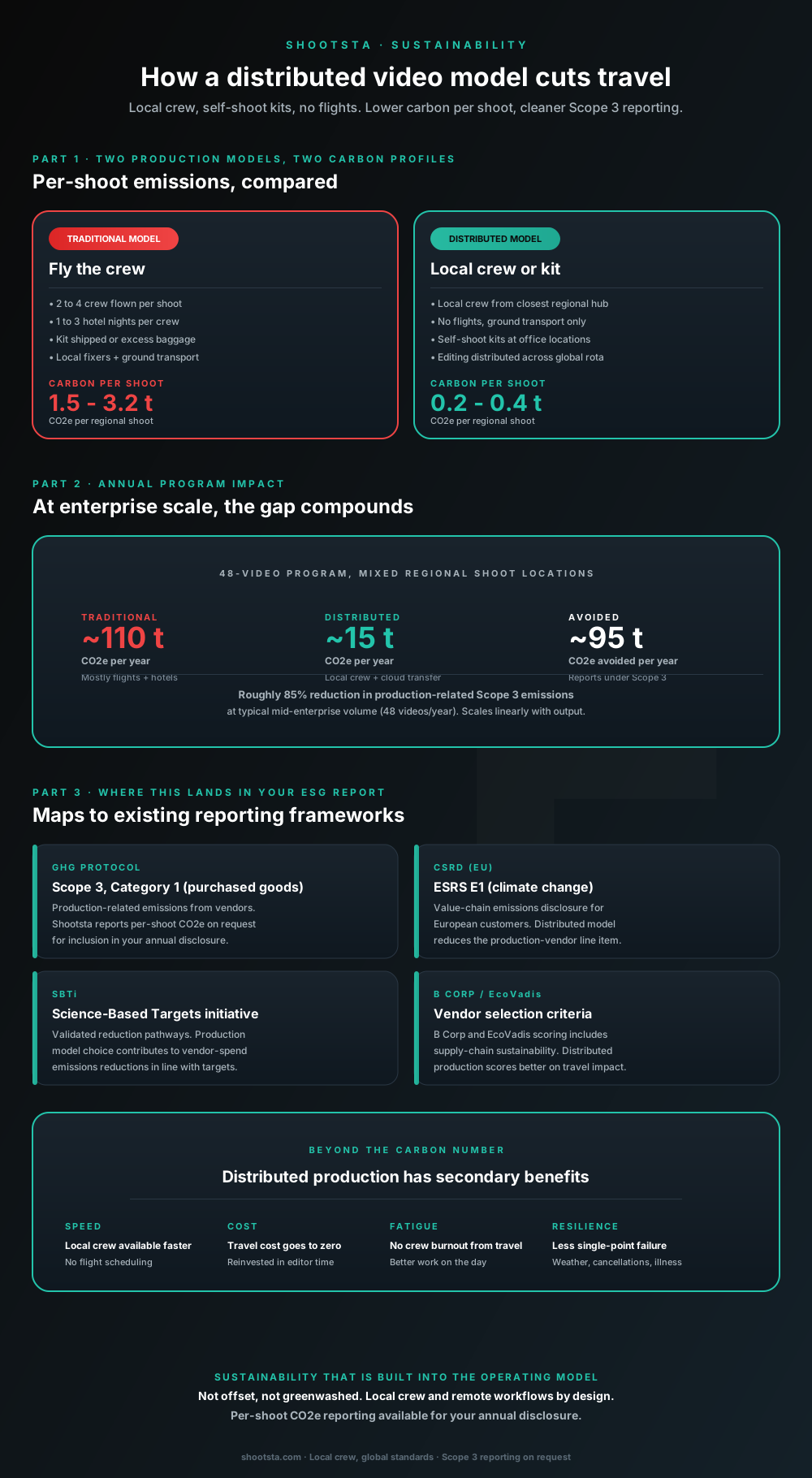
Traditional video production flies a crew to every shoot. A distributed model uses local crew or self-shoot kits from the closest regional hub. The carbon gap per shoot is large; across a year it lands in Scope 3 reporting as 60 to 130 tonnes CO2e avoided at typical enterprise volume.
Why traditional video production is travel-heavy by default
The traditional enterprise video model assumes the production crew comes to the shoot. A director, a DP, a sound recordist and an assistant fly to the location, and the kit ships separately or goes as excess baggage. The crew stays 1 to 3 nights in a hotel while local fixers arrange ground transport. Then the whole thing repeats for the next shoot in the next city.
For a 48-video annual program with mixed regional shoot locations, the travel footprint quietly stacks into 100+ tonnes of CO2e per year. Very little of that travel is needed for the creative work in 2026. It is a habit left over from the years when flying a crew was the only way to get footage, and the production model has not caught up with a distributed workforce.
What a distributed video model looks like
Three structural shifts replace flying the crew with sourcing locally. You hire crew near the shoot, keep camera kits in your own offices, and run the edit over the cloud.
Local crew from the closest regional hub
A shoot in Singapore uses Singapore-based crew, and a shoot in London uses crew who live in London. For San Francisco, the crew comes from San Diego or the Bay Area. Nobody boards a flight, books a hotel or turns up jet-lagged. The four-hub Shootsta model covers most major business cities directly; smaller cities are served by the closest hub's vetted local crew network.
Self-shoot kits at office locations
For high-volume internal content, a Shootsta kit (camera, lighting, audio, tripod) ships once to the office. Trained internal staff capture footage on the kit, upload to the platform, and the partner finishes the edit remotely. Once the kit has shipped, the production team does not travel at all. We covered the hybrid workflow in phones vs a video production partner.
Editing distributed across the global rota
Editors in Sydney, London, Singapore and San Diego work across time zones on the same edit. Files move over the cloud, so nobody couriers hard drives between sites. The carbon footprint of the post-production phase drops to near-zero compared to a traditional model where editing concentrates in one place and review cycles add travel.
The per-shoot and annual carbon profile
Per-shoot emissions in the traditional fly-the-crew model land at roughly 1.5 to 3.2 tonnes CO2e depending on geography. The dominant driver is flights, with hotel nights a distant second. Distributed model per-shoot emissions land at 0.2 to 0.4 tonnes - ground transport for local crew plus some kit shipping, no flights or hotels.
Across a 48-video annual program with mixed regional shoots, the traditional model lands at approximately 110 tonnes CO2e per year. The distributed model lands at approximately 15 tonnes. The avoided footprint is roughly 95 tonnes per year, an 85% reduction in production-related Scope 3 emissions. The saving scales in line with program size: a 24-video program avoids about 50 tonnes; a 120-video program avoids about 240 tonnes.
Interactive calculator
What does distributed production avoid in carbon?
Set your annual shoot volume and your typical travel mix. The calculator estimates the per-year carbon avoided versus a fly-the-crew baseline and shows how it would land in Scope 3 reporting.
Drives the baseline per-shoot emissions estimate
Traditional baseline
80.0 t
CO2e / year, fly-the-crew model
Distributed model
12.0 t
CO2e / year, local crew + kits
Avoided
68 t
~85% reduction
How this lands in your reporting
At 40 shoots a year with mixed regional travel, a distributed production model avoids approximately 68 tonnes CO2e per year compared to a fly-the-crew baseline. That is roughly equivalent to 267 passenger flight hours avoided. The saving sits under Scope 3 Category 1 (purchased goods and services) and is reportable under GHG Protocol, CSRD (ESRS E1) and SBTi disclosure frameworks.
Talk through per-shoot reporting for your programEstimates use UK DEFRA emission factors for short-haul and medium-haul flights, hotel nights, and ground transport. Per-shoot carbon varies widely with origin, destination and crew size. Shootsta can produce shoot-level CO2e reports on request for inclusion in your annual disclosure. Numbers are guides.
Where this lands in your ESG reporting
The avoided emissions sit under Scope 3, Category 1 (purchased goods and services) in GHG Protocol terms. That puts them in the vendor-related portion of your value-chain emissions, which is the disclosure category most enterprise customers are working to reduce in 2026.
GHG Protocol Scope 3
GHG Protocol is the international standard for value-chain emissions accounting, and production vendors fall under Category 1. Ask your production vendor for the travel data behind each shoot, such as flights, hotel nights and ground transport. Those are the inputs your reporting team needs for annual disclosure.
CSRD (Corporate Sustainability Reporting Directive)
CSRD is the European framework that requires detailed value-chain emissions disclosure from in-scope companies. Vendor sustainability data is a required input under ESRS E1 (climate change). Distributed production reduces the production-vendor line item meaningfully for European customers reporting under CSRD.
Science-Based Targets initiative (SBTi)
Companies with validated SBTi targets need credible reduction pathways across scopes. Vendor-spend emissions are part of the Scope 3 base, and choosing low-travel production models contributes to the year-on-year reductions the targets require.
B Corp, EcoVadis, CDP and sector-specific vendor frameworks
The vendor sustainability scores named above include supply-chain travel and emissions in their criteria. A distributed production partner scores better on these criteria than a traditional fly-the-crew vendor, which matters for procurement teams running sustainability gates on vendor selection.
The secondary benefits beyond carbon
Distributed production was originally designed for speed, cost and resilience reasons. Carbon reduction is a side-effect that has become a primary benefit as ESG reporting matured.
Speed
Local crew is available faster than crew that has to fly in. A shoot can land within 24 to 72 hours of brief approval, where flying a crew in adds 5 to 10 days of scheduling. We covered the speed model in how a video partner ships in 48 hours.
Cost
The travel line on the budget drops to zero. For a typical regional shoot, flights, hotels, per diems and crew travel time add $3,000 to $8,000 to the project cost. Distributed production reinvests that into editor time and brand templates that compound across the program.
Crew fatigue
Flown-in crews arrive jet-lagged, work the shoot, and fly out the next morning. Local crews arrive rested, and you can see the difference in the work on the day. The effect on any one shoot is small, but it adds up across a high-volume program.
Resilience
Travel-dependent production has single-point-of-failure risk: weather cancels flights, illness sidelines the crew lead, last-minute schedule changes break the timeline. Distributed production with multiple regional hubs has built-in redundancy.
What the model does not solve
There are two honest exceptions, and both come down to work that has to happen in one particular place with one particular crew.
Hero brand films and broadcast TVCs that need a named director, DP and specialist crew flown to a specific location often have travel that cannot be eliminated. These belong with Shootsta Premier for project-scale work, and the travel footprint is built into the project scope rather than the program baseline.
Multi-day shoots in remote locations (mining sites, oil platforms, expedition documentaries) have travel that is structural rather than optional. Distributed production reduces this but does not eliminate it. For these, the carbon reporting should be honest rather than understated.
How distributed production scales with growth
The distributed model gets more efficient as the program grows. The first 12 videos test the workflow. By video 30, the in-house team has the brief templates locked, the regional hubs know the brand, and the self-shoot kits at office locations are producing usable footage with minimal handholding. The carbon per video drops because the marginal video reuses infrastructure that is already in place.
Traditional fly-the-crew production scales linearly: the 30th video has the same carbon footprint as the 5th video. Distributed production scales sub-linearly: per-video carbon drops as templates, training and kit utilization mature.
Frequently asked questions
How accurate are the per-shoot carbon estimates?
Estimates use UK DEFRA emission factors for flights, hotels and ground transport, which are the standard inputs for Scope 3 reporting in most jurisdictions. The variance per shoot is wide (origin, destination, crew size, hotel category, ground distance all matter), so the numbers should be treated as planning estimates. For audited reporting, base the calculation on the actual travel data for each project rather than on these estimates.
Can Shootsta provide audit-ready Scope 3 numbers?
Raise it during procurement and ask what travel data can be shared for your shoots. Your sustainability team can then run that data through the emission factors it already uses for disclosure under GHG Protocol or CSRD. If you report under B Corp, SBTi or CSRD, agree the data format before the first shoot so the numbers arrive in a shape your team can use.
How does this compare to offsetting our existing production?
Reducing emissions at source beats offsetting under almost every credible framework. Offsetting credits are increasingly questioned for quality; structural reductions through distributed production are not. The order of preference in SBTi and CSRD guidance is reduce first, offset last for the residual.
Does this work for highly regulated industries with on-site shoot requirements?
Yes. Regulated industries (pharma facilities, financial services trading floors, government sites) typically require local crew with security clearances anyway. The distributed model fits these requirements better than flying in a crew that needs to be cleared through site security each visit.
Do you have an environmental policy or sustainability report?
Ask during procurement. Tell us which frameworks you report under, such as B Corp, EcoVadis, CDP or your own vendor code. We will then confirm in writing which documents we can provide against each one.
What about the carbon footprint of cloud editing and storage?
It is real, but it is small next to the flights. A reasonable approximation is that the cloud transfer and storage for a typical 90-second finished video produces roughly 2 to 5 kg CO2e end-to-end. That is 0.002 to 0.005 tonnes, which sits two orders of magnitude below the flight footprint it replaces. The math holds even with conservative assumptions.
Where to go next
For the four-hub regional operating model that makes distributed production possible, read how to scale video across global offices. For the hybrid capture-and-finish workflow that uses self-shoot kits to eliminate even more travel, read phones vs a video production partner. For the brand-control discipline that holds a distributed program consistent, read brand control with a video production partner.
To talk through how distributed production fits your ESG framework, book a free consultation.
Take this article with you
Read the latest at shootsta.com/blog/how-a-distributed-video-model-cuts-travel
You might also like
How to Brief an Animation Project
How to Brief an Animation Project
An animation brief is the document you send to your production partner before work starts. Get it right and you cut revision cycles in half. Get it wrong and you discover mid-production that everyone disagrees on what the video is for. This is what a complete brief looks like.
Animation for change management comms
Animation for change management comms
Animation handles change management communications better than live video for three reasons: no on-camera executives required during sensitive periods, scene-level updates when plans shift, and a single production that works across global teams with voiceover-only language swaps.
How sales leaders should use video at scale
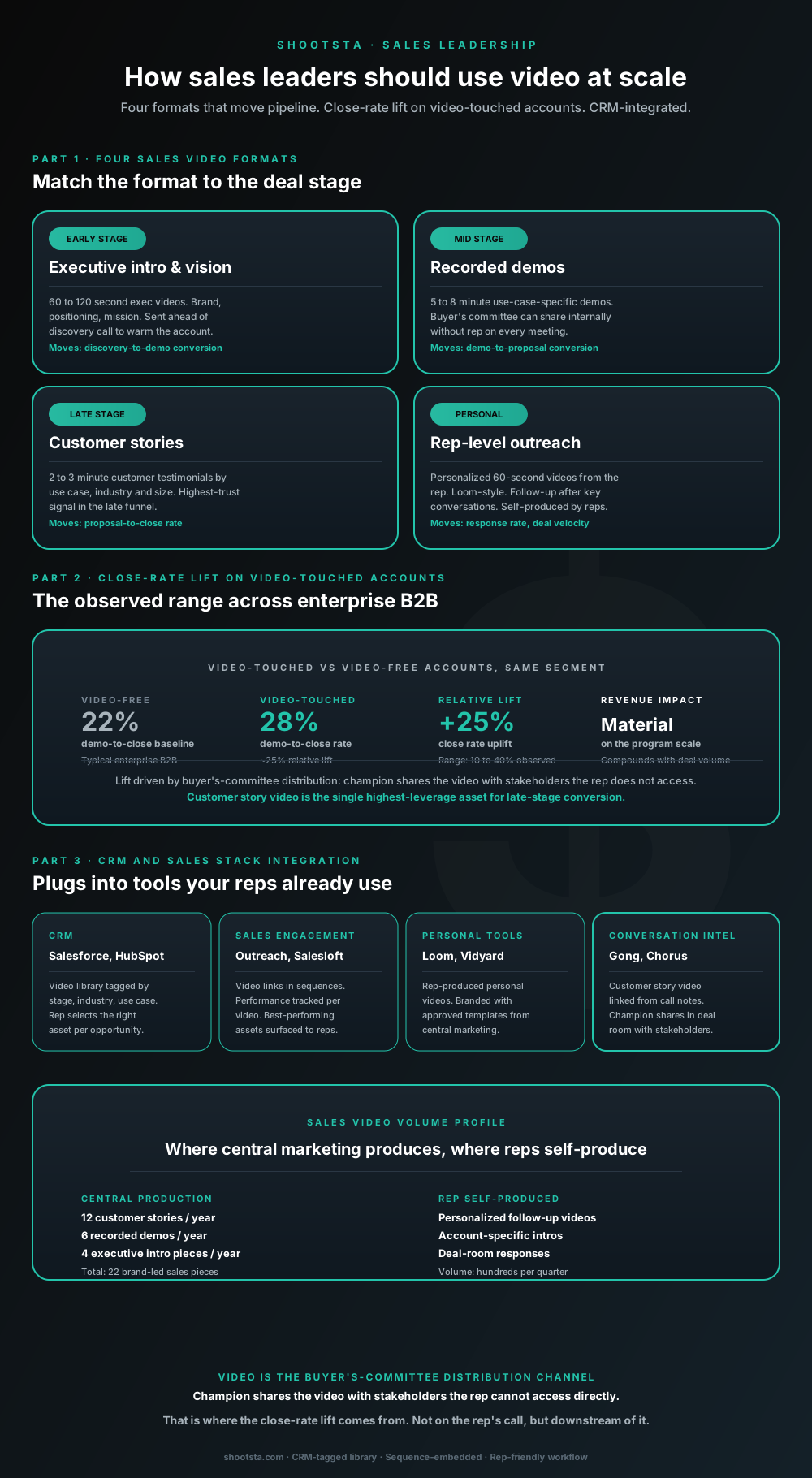
Sales leaders mostly think about video as personalized rep outreach (Loom, Vidyard) or as marketing-produced customer stories. Both are useful. The bigger opportunity is the buyer's-committee distribution layer: assets the champion shares internally with stakeholders the rep does not access directly. That is where the close-rate lift compounds.
How L&D leaders replace classroom with video
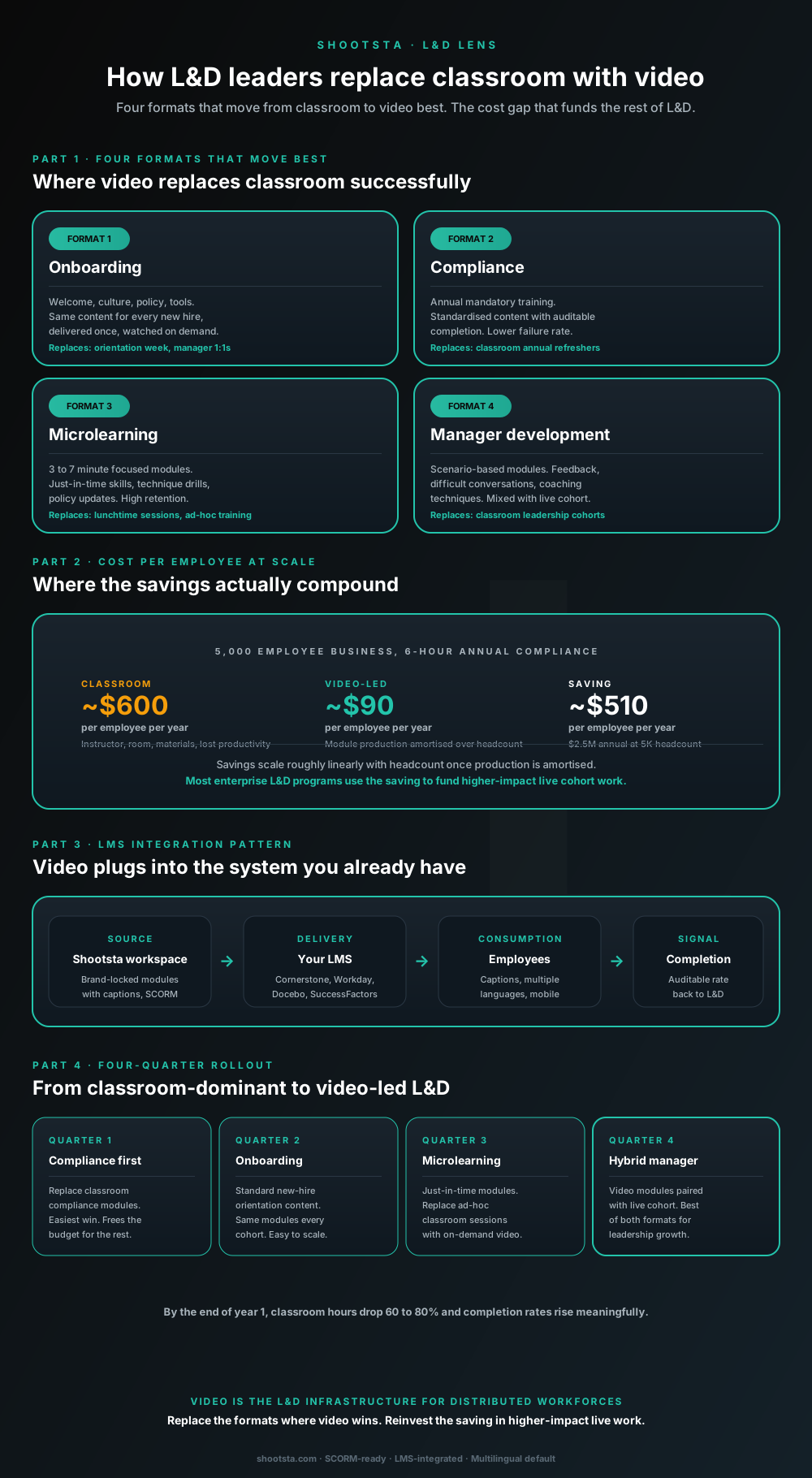
L&D leaders running classroom-heavy training programs typically have the largest single opportunity in the business to free budget through format change. Four training formats move from classroom to video cleanly; the savings fund higher-impact live work. Here is the rollout that compounds learner adoption over four quarters.
How customer success leaders should use video
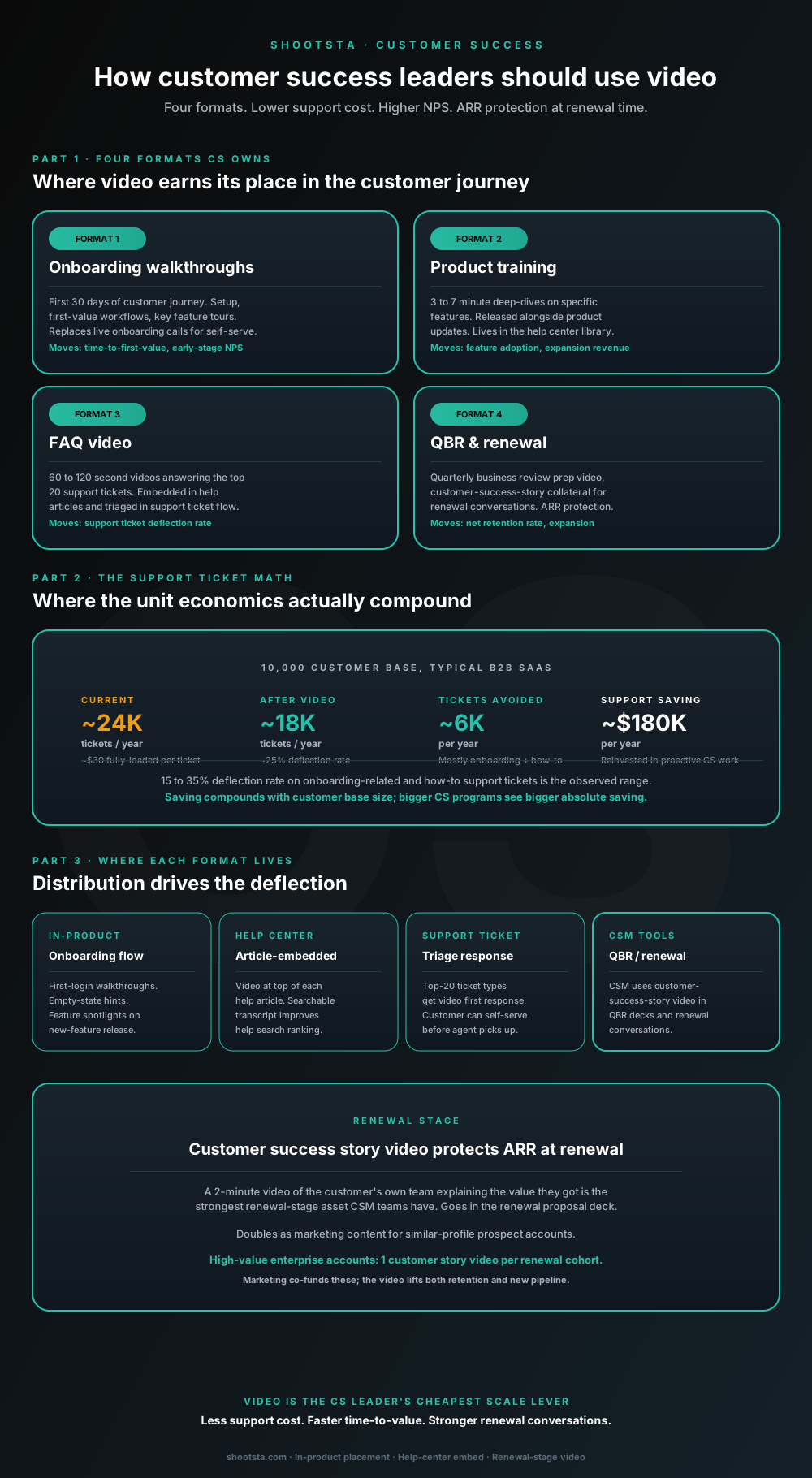
Customer success leaders are usually under-resourced for both reactive support volume and proactive retention work. Video is the cheapest lever to fix both - 15 to 35% deflection on onboarding and how-to tickets, faster time-to-value, and renewal-stage customer story video that lifts net retention. Here is the four-format model and where each piece earns its place.
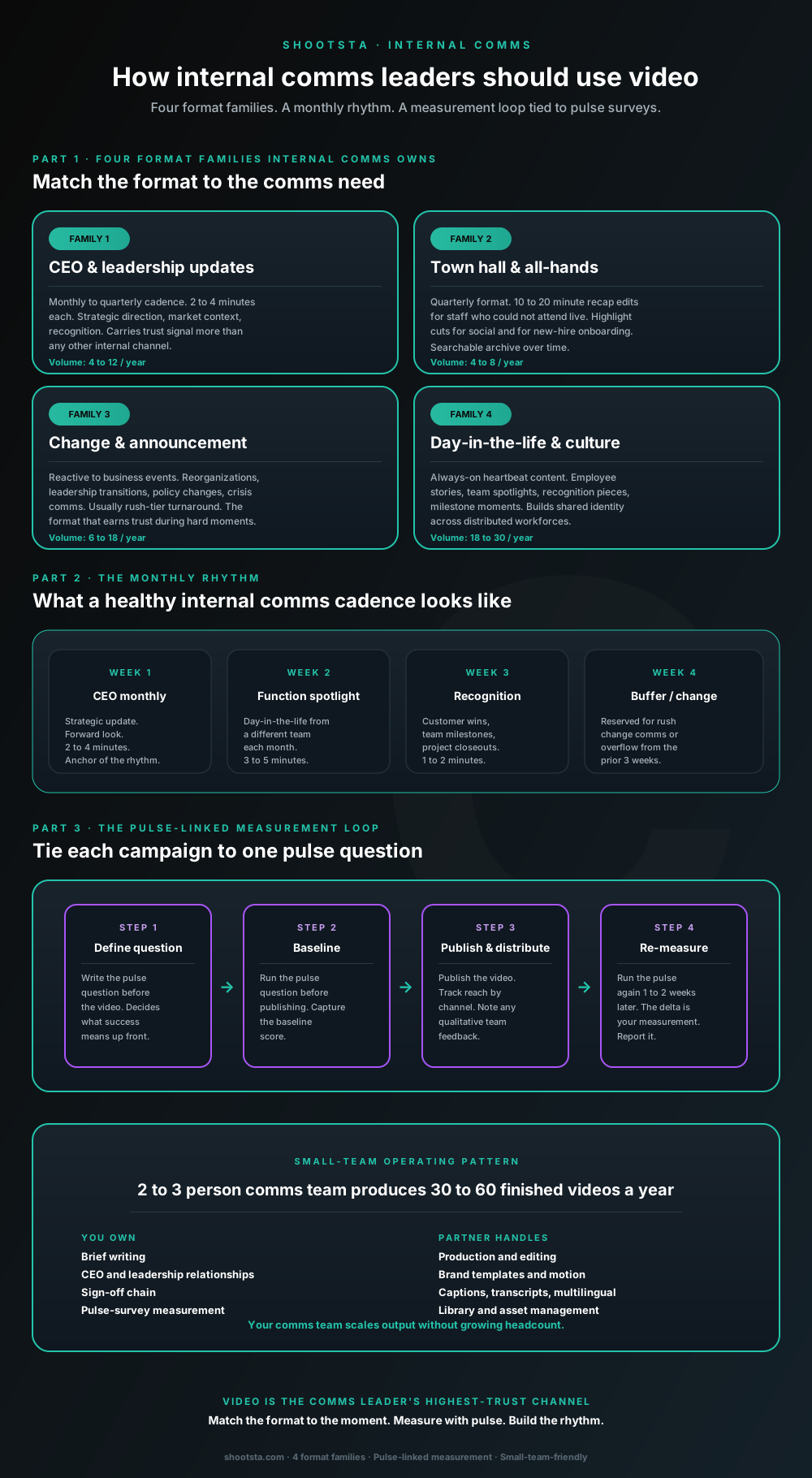
How internal comms leaders should use video
Internal comms leaders are usually under-resourced for the volume of video the business wants. The fix is not more headcount; it is structuring the program around four format families, a monthly rhythm, and a pulse-survey-linked measurement loop. Here is the operating pattern that lets a small comms team produce 30 to 60 finished videos a year.