
How to pilot a video production partner
shootsta.
How to pilot a video production partner
By Shootsta · Published May 13, 2026 · Updated October 2026
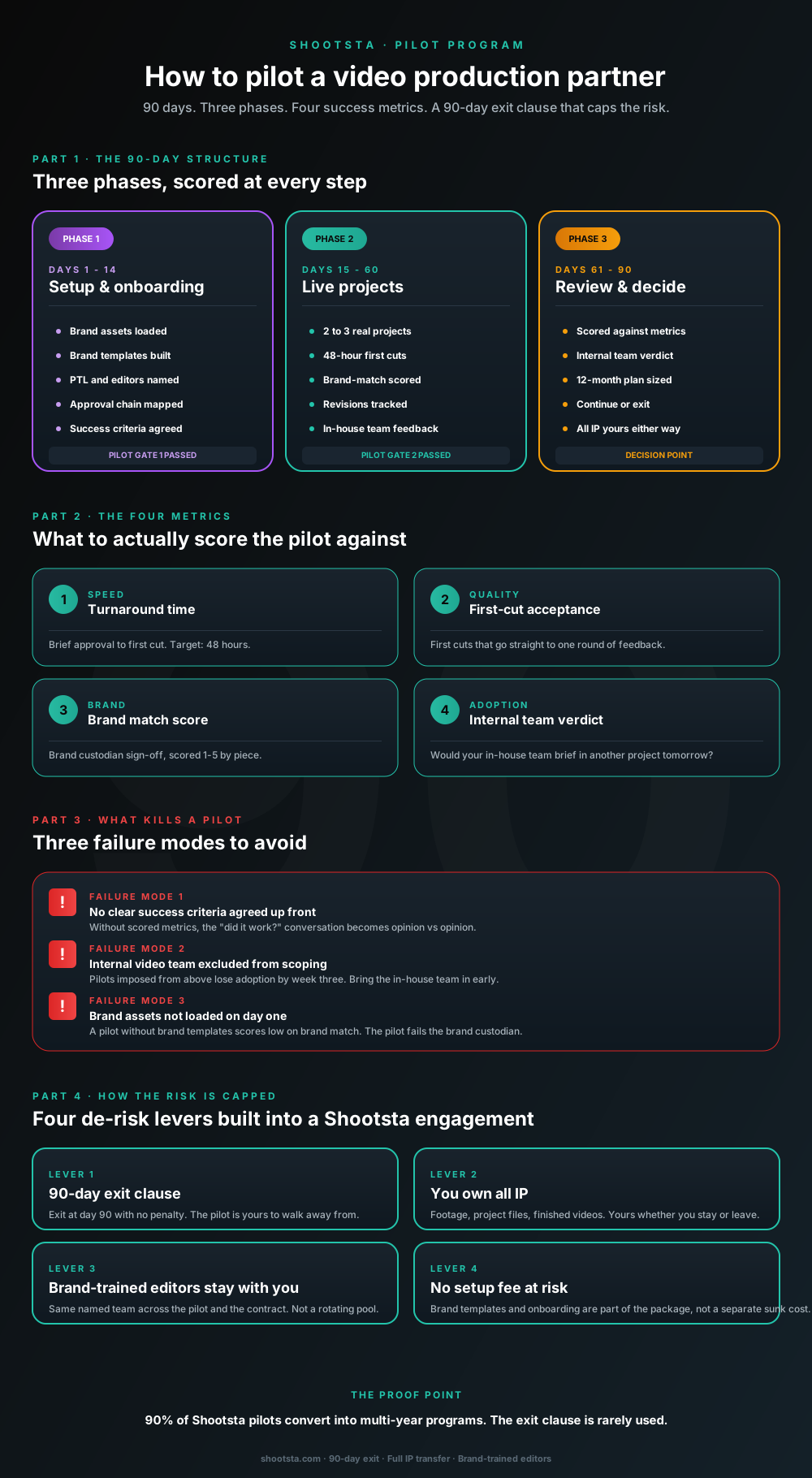
Most enterprise teams want to test a video production partner before locking into a 12-month agreement. A well-structured 90-day pilot with scored success metrics, a written exit clause, and full IP ownership caps the risk. Here is the structure that works.
What is a video production pilot?
A video production pilot is a fixed-length, fixed-scope engagement designed to test a production partner against real work before committing to a 12-month agreement. A good pilot runs 60 to 90 days, ships two or three real projects, and is scored against pre-agreed success metrics. At the end, both sides have enough evidence to decide on evidence whether to continue.
Done well, a pilot is the safest way for an enterprise team to test a partner. Done badly, it consumes internal time, produces work that does not get used, and leaves both sides arguing about what "success" was supposed to mean.
Why most enterprise buyers want a pilot first
The buyer's worry is reasonable. Video is the kind of program where the cost of getting a partner wrong is high: brand inconsistency, missed deadlines, internal team friction, a wasted budget cycle. The instinct to test before signing is the right one.
What goes wrong is the structure. Many "pilots" are loosely scoped one-off projects with no clear success criteria, no scoring, no defined decision point, and no exit clause. By week six, both sides are working from different definitions of what good looks like, and the conversation about renewal becomes a matter of opinion rather than evidence. The fix is to design the pilot like an experiment, with a hypothesis and a result, instead of treating it as a favor between friends.
The 90-day pilot structure that works
The pilot runs in three phases. Each one ends with a scored gate that decides whether the pilot continues.
Phase 1: Setup and onboarding (days 1 to 14)
The first two weeks are not about producing video. They are about loading brand assets, building brand templates, naming the Production Team Lead and the editors, mapping the approval chain inside your business, and agreeing the success metrics in writing. If this phase is rushed, every project that follows will score lower on brand match than it should. Gate 1 is whether all five setup steps are signed off before the first brief opens.
Phase 2: Live projects (days 15 to 60)
Two or three real projects flow through the workflow, each with a real brief, real stakeholders and a real deadline. First cuts should land in 48 hours. Your brand custodian scores brand match from 1 to 5, and you track how many revision rounds each project takes. The in-house team gives feedback after each project on whether they would brief in another tomorrow. Gate 2 is whether the projects hit the agreed turnaround and quality bars.
Phase 3: Review and decide (days 61 to 90)
The last 30 days are for scoring the pilot against the four success metrics, getting an honest verdict from the in-house team, sizing the 12-month plan if the pilot passes, and deciding to continue or exit. You own all IP either way: raw footage, project files, finished videos. Read the exit terms before the pilot starts, so the decision on day 90 is about the work and nothing else.
Interactive calculator
What does a 90-day pilot cost you?
Move the sliders to see what one quarter of pilot costs, what the full year would cost if the pilot converts, and how that compares to your current project spend.
What the pilot exposes you to
Pilot cost (90 days)
$21K
One quarter at this tier
Agree up front
Exit terms
Put the pilot length and exit terms in writing
You keep
All IP
Footage, files, finished videos
At this tier the pilot costs $21K. Agree the pilot length and exit terms in writing before you start. You own the output produced during the pilot whether you continue or not.
If the pilot converts into the full program
Annual program cost
$83K
at $2.3K per finished video
Annual saving vs project
$277K
vs $10,000 per video now
Pilot payback
0.9 mo
if the pilot converts
How the structure caps the risk
- Terms agreed in writing. The pilot length, volume and exit terms are set before the first brief.
- You own everything. Raw footage, project files, finished videos and brand templates stay with you either way.
- Brand-trained team stays with you. Same named editors across pilot and the full engagement.
- No setup fee at risk. Brand templates and onboarding are inside the package, not a separate sunk cost.
Assumptions: pilot cost is one quarter of the annual subscription at the volume tier shown. Per-video subscription cost declines with volume, from around $4,000 at 12 videos a year to under $2,000 at 60+. Numbers are guides, not quotes.
The four metrics every pilot should be scored against
Without scored metrics, the "did it work?" conversation becomes one opinion against another. The four numbers below give you something firmer to decide on.
1. Turnaround time
This measures the time from brief approval to first cut, and the target is 48 hours. Anything over 7 days is project work pretending to be a production workflow. This is the metric that most predicts whether the partnership scales beyond the pilot.
2. First-cut acceptance rate
This is the percentage of first cuts that go straight to one round of feedback instead of two or three. A healthy partnership lands above 70% by the third project. Below that means brand templates, brief quality or both need work.
3. Brand match score
Your brand custodian scores each piece 1 to 5 against brand guidelines. A pilot that averages 4+ on brand match is one your team will sign off without anxiety. Below 3.5 is a sign the brand templates were not loaded in full during Phase 1.
4. Internal team verdict
The most important question, asked of the in-house video team after every project: would you brief in another project tomorrow? If the answer is no by week six, the partnership is not working regardless of what the other three metrics say.
Three failure modes that kill pilots
Every pilot we have seen fail came back to one of these three.
1. No clear success criteria agreed up front
This is the most common one. The pilot starts on goodwill, three projects ship, and then the conversation about whether to continue becomes a debate about what "good" was supposed to look like. Both sides leave frustrated. To fix it, write the four metrics into the pilot agreement before Phase 1 starts.
2. Internal video team excluded from scoping
Pilots imposed from above without the in-house team's input lose adoption by week three. By week six, the in-house team is finding reasons to send work elsewhere. To fix it, bring the in-house team into the scoping conversation early. Their verdict carries more weight on day 90 than anyone else's.
3. Brand assets not loaded on day one
If the brand templates, fonts, voice guides and approval chain are not loaded inside the first 14 days, every project in Phase 2 underperforms on brand match. The pilot then fails the brand custodian's review, not because the partner is bad, but because they were not set up to win.
How the exit terms change the risk
Before you sign anything, ask each partner to show you their exit terms in writing. Find out how either side can end the agreement, what notice applies, and whether any fees are refundable. Also ask what happens to your files and data when the agreement ends. The answers tell you how much of the budget is at risk if the pilot does not work out.
With Shootsta, the termination terms are set out in the agreement, and you should read them with your procurement team before the pilot starts. Fees are non-cancellable and non-refundable, and renewal is at the list price in effect at renewal. You can export your data for up to 30 days after the agreement ends. Knowing all of this up front keeps the day 90 conversation focused on the scorecard.
What about IP and the work produced during the pilot?
All work produced during the pilot is yours, including raw footage, project files, finished videos, brand templates and edit decision lists. You own it regardless of whether you continue. This is written into the engagement agreement, not left as a verbal promise.
This matters because some agencies make IP transfer contingent on contract continuation, which turns the pilot into a hostage situation. That structure is bad for the buyer and bad for the partnership. A pilot only works when both sides can walk away cleanly on day 90 with nothing lost on either side.
How to compare two partners side by side
If you are evaluating multiple partners, the cleanest comparison is parallel pilots with identical briefs and identical success metrics. Each partner gets the same three projects and the same brand templates. You score them the same way and collect the same internal team feedback. At day 90, you have a like-for-like comparison instead of two engagements that defined success differently.
The cost is double for one quarter. The benefit is a defensible decision that procurement, finance and the in-house team all agree on. For a large enterprise program, the cost of a parallel pilot is small relative to the cost of picking the wrong partner.
Frequently asked questions
How much does a pilot cost?
For a Shootsta pilot, the price is quoted before the pilot starts. What it buys depends on the plan and the format mix, and we size it with you up front. Ask for the pilot price and the full-year price in the same quote so you can compare them like for like.
What happens to the work if we stop after the pilot?
You keep all of it: finished videos, raw footage, project files and brand templates. With Shootsta, you can export your data for up to 30 days after the agreement ends, so plan the export into your last month.
Can we run a pilot with multiple partners at once?
Yes. We have seen large enterprise buyers run 2 or 3 parallel pilots before committing. It costs more in the short term but produces a defensible decision. We do not require exclusivity during the pilot phase.
What if our internal team scores the pilot well but leadership wants to stop?
What leadership can do depends on the exit terms in your agreement, so agree who makes the final call before the pilot starts. With Shootsta, the termination terms are set out in the agreement. In practice, leadership rarely overrides a positive internal team verdict because the in-house team is the one who briefs the work day to day.
How is a pilot different from a paid trial project?
A paid trial project is one engagement with no defined success metrics, no decision point, and no exit clause. A pilot has all three written into the agreement. The difference matters at day 60 when both sides need to agree on whether to continue.
What if we want longer than 90 days to evaluate?
In our experience, enterprise teams settle the question in 90 days because Phase 2 produces real work against real metrics. A 6-month evaluation tends not to produce better information, and it pushes the decision back by a quarter. We can structure a 6-month pilot if your procurement process requires it, but we recommend against it.
How we built the numbers in this post
The pilot structure and success thresholds here draw on published procurement guidance for software and services pilots. The thresholds are working targets for you to agree with your partner, and we quote no Shootsta customer outcome figures here. The sources for each claim are listed below.
- 90-day pilot length. This is the Shootsta default. It is in line with standard enterprise software and services pilot durations published by procurement bodies (Gartner, Forrester). Long enough to ship 2 or 3 real projects, short enough to keep the decision in one budget cycle.
- Pilot cost. We give no pilot price here. A Shootsta pilot is quoted per customer, based on the plan and the format mix under evaluation.
- Where pilots go wrong. This is a pattern we see in our own work, and it is not a measured rate. When a pilot struggles, the cause is usually in Phase 1 (brand setup) rather than Phase 2 (project delivery).
- 48-hour first cut target. Shootsta returns a first cut in about 48 hours once brand templates and approval chains are loaded, and edits come back within 24 to 48 hours depending on package. See how a video partner ships in 48 hours for the workflow breakdown.
- First-cut acceptance rate above 70%, brand match averaging 4 out of 5. These are targets to agree with your partner before the pilot starts, and they are not averages from Shootsta customers. Falling below them usually indicates a brand template gap rather than an editor capability gap.
Editorial standards
- Numbers cited are the most up-to-date figures we had at the time of writing. The "last updated" date on this page is when the numbers and sources were last reviewed.
- External benchmarks come from publicly available salary, labor and industry data. We name the source where possible and summarize where the underlying data sits behind a paywall.
- Figures and ranges come from the public sources cited on this page and from published market rates. We do not quote any Shootsta customer outcome figures here.
- Where ranges are given, they cover variability across sector, geography and program maturity. Treat them as starting hypotheses for your own program rather than as warranties.
- Spotted a number you would challenge? Let our editorial team know what you are seeing in your business and the data behind it. Material updates get credited in the post footer.
Where to go next
If you want to see what a Shootsta engagement looks like beyond the pilot, the how a video partner extends your in-house team piece walks through the working pattern in detail. For the budget and ROI conversation that usually runs alongside the pilot evaluation, read the business case for enterprise video. The Shootsta platform page shows the workflow your team would use during the pilot.
If you want to scope a pilot for your team, book a free consultation and we will walk through the 90-day structure against your specific use case.
Take this article with you
Read the latest at shootsta.com/blog/how-to-pilot-a-video-production-partner
You might also like
How to Brief an Animation Project
How to Brief an Animation Project
An animation brief is the document you send to your production partner before work starts. Get it right and you cut revision cycles in half. Get it wrong and you discover mid-production that everyone disagrees on what the video is for. This is what a complete brief looks like.
Animation for change management comms
Animation for change management comms
Animation handles change management communications better than live video for three reasons: no on-camera executives required during sensitive periods, scene-level updates when plans shift, and a single production that works across global teams with voiceover-only language swaps.
How sales leaders should use video at scale
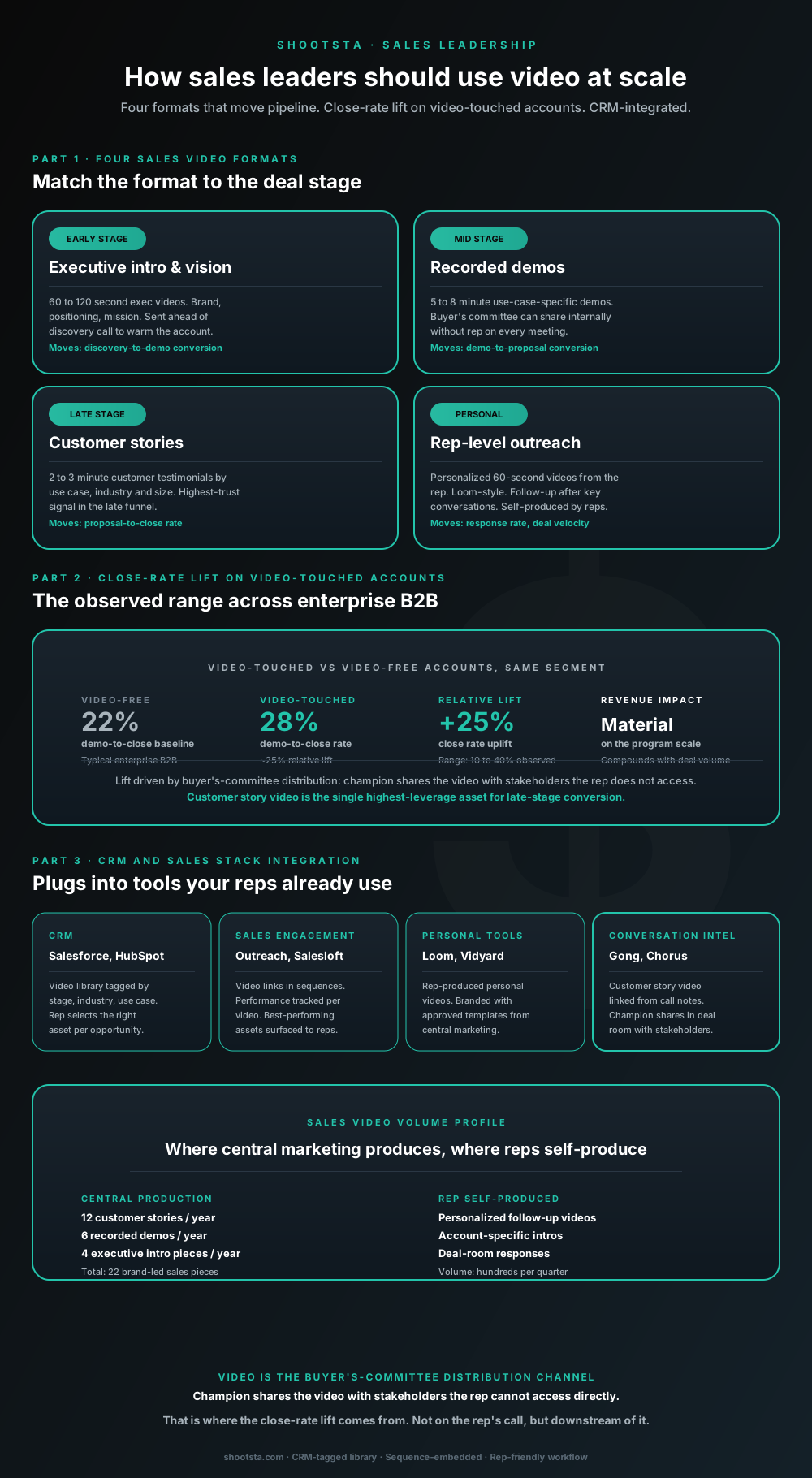
Sales leaders mostly think about video as personalized rep outreach (Loom, Vidyard) or as marketing-produced customer stories. Both are useful. The bigger opportunity is the buyer's-committee distribution layer: assets the champion shares internally with stakeholders the rep does not access directly. That is where the close-rate lift compounds.
How L&D leaders replace classroom with video
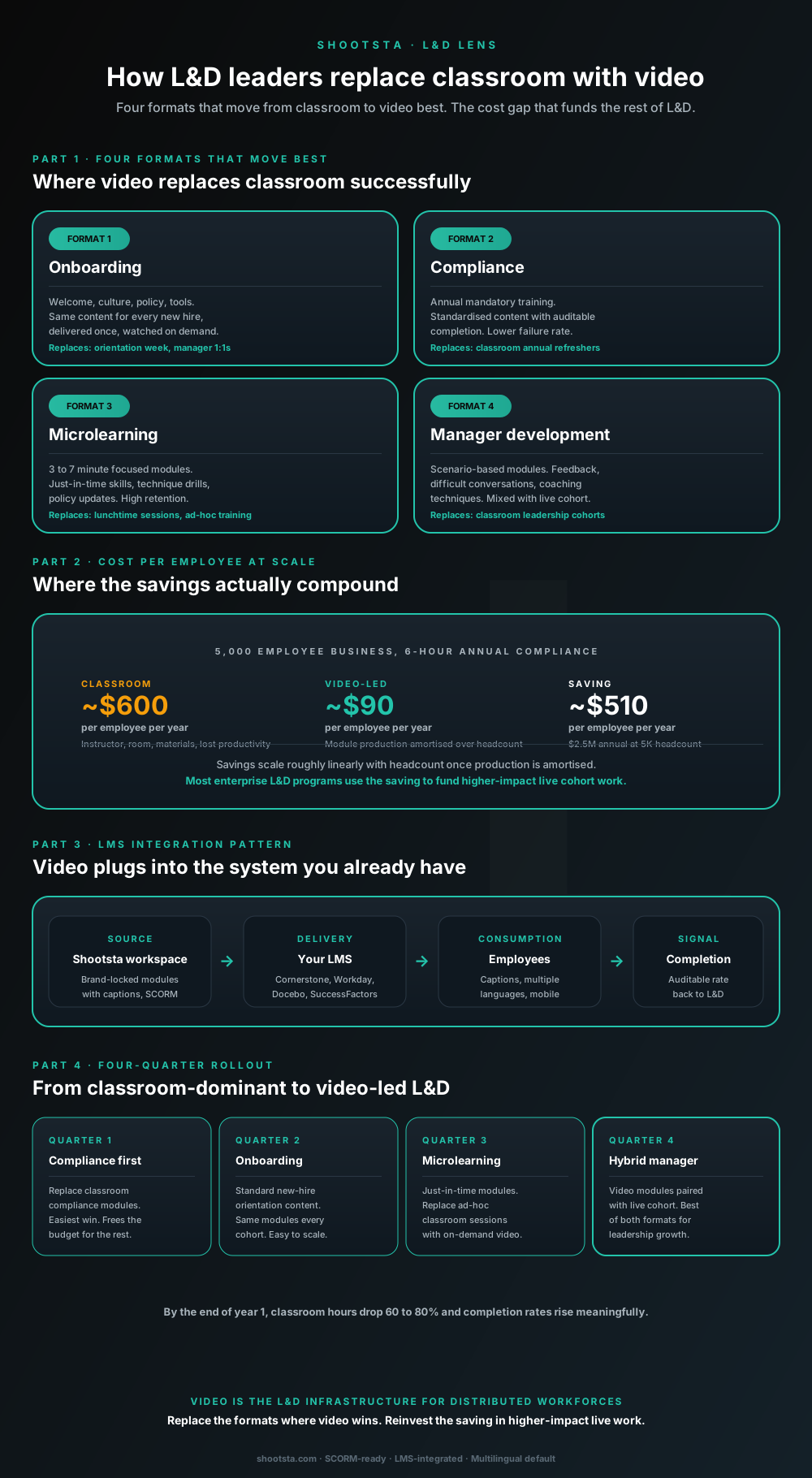
L&D leaders running classroom-heavy training programs typically have the largest single opportunity in the business to free budget through format change. Four training formats move from classroom to video cleanly; the savings fund higher-impact live work. Here is the rollout that compounds learner adoption over four quarters.
How customer success leaders should use video
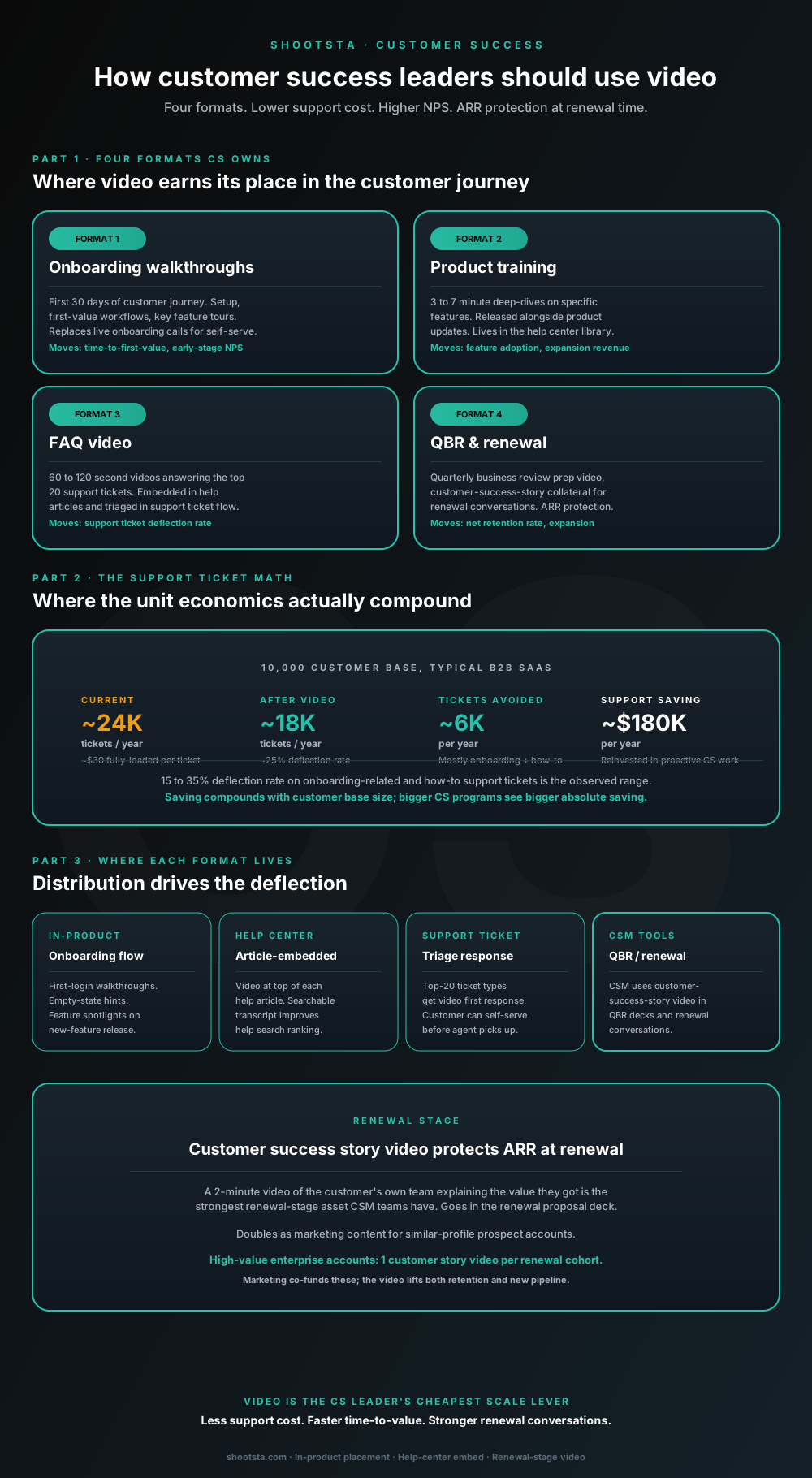
Customer success leaders are usually under-resourced for both reactive support volume and proactive retention work. Video is the cheapest lever to fix both - 15 to 35% deflection on onboarding and how-to tickets, faster time-to-value, and renewal-stage customer story video that lifts net retention. Here is the four-format model and where each piece earns its place.
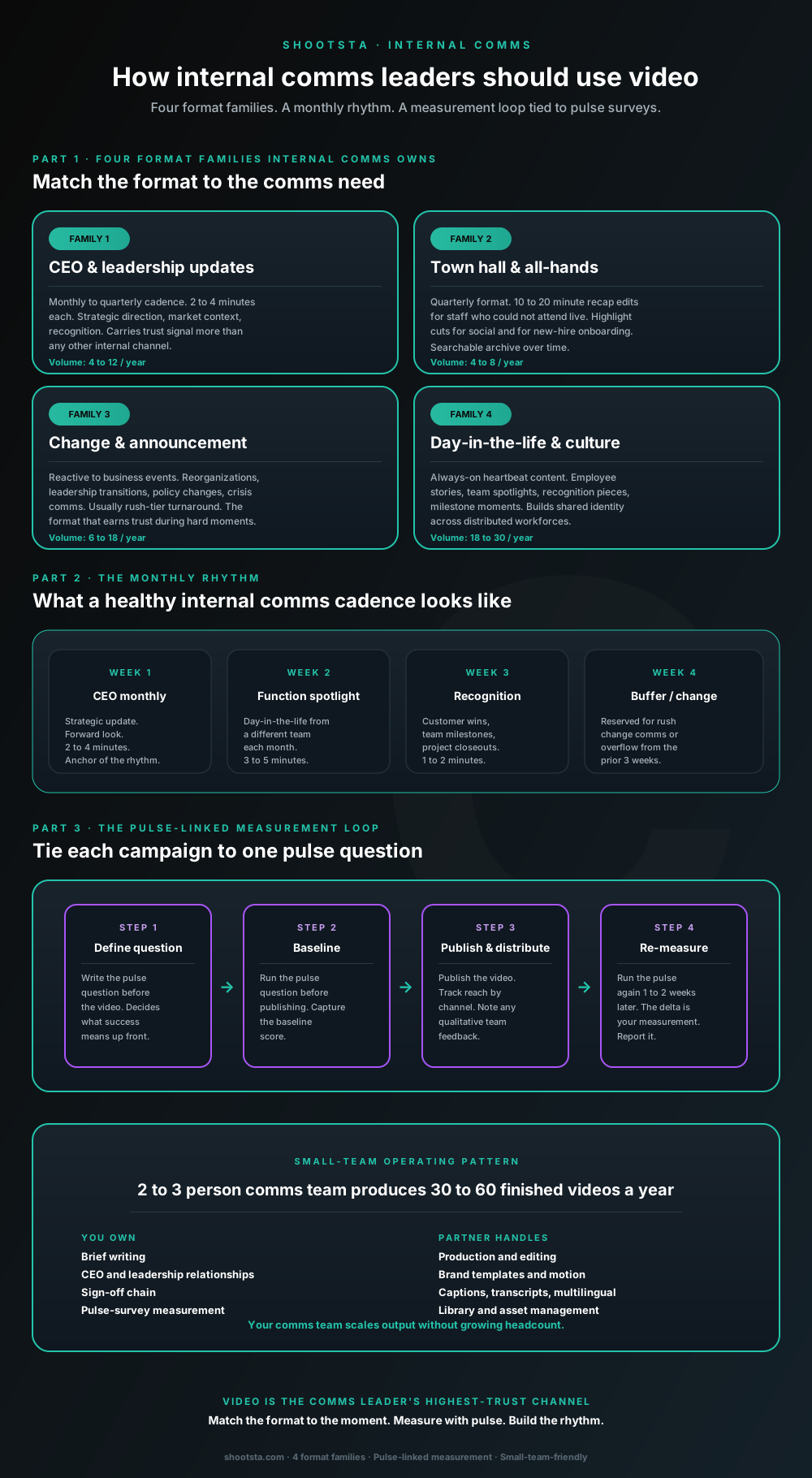
How internal comms leaders should use video
Internal comms leaders are usually under-resourced for the volume of video the business wants. The fix is not more headcount; it is structuring the program around four format families, a monthly rhythm, and a pulse-survey-linked measurement loop. Here is the operating pattern that lets a small comms team produce 30 to 60 finished videos a year.