
What Slow Video Production Costs Enterprises
shootsta.
What Slow Video Production Costs Enterprises
By Shootsta · Published July 13, 2026 · Updated October 2026
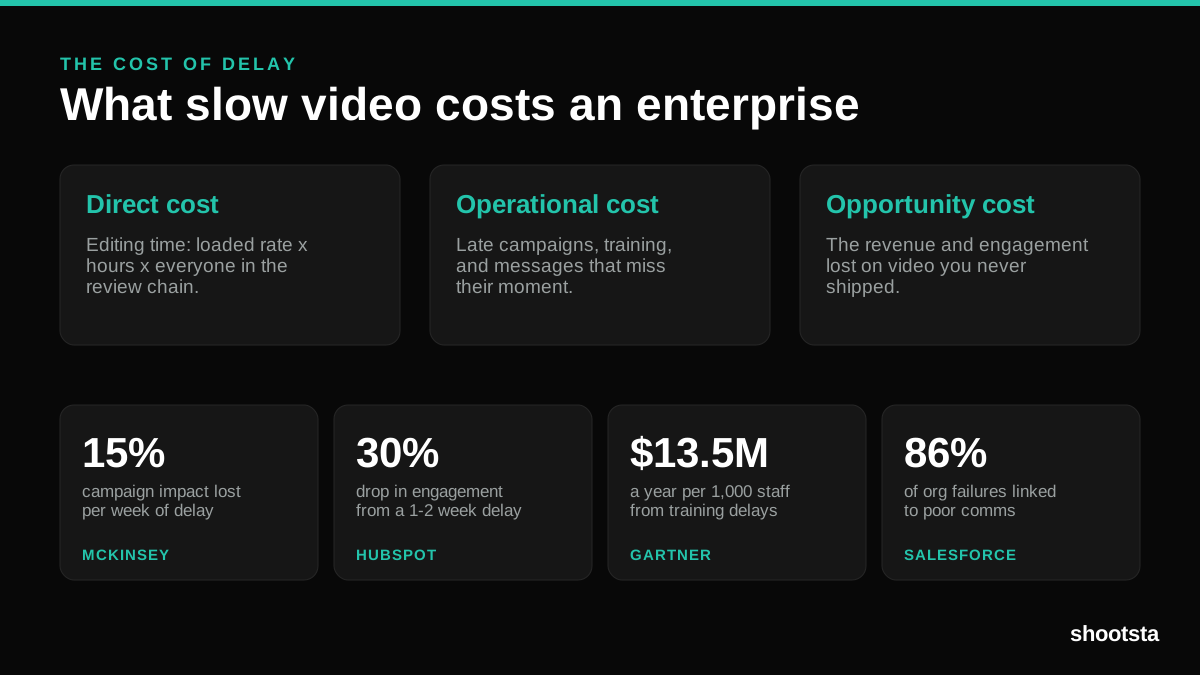
Slow video production has a price, and at enterprise scale it is bigger than the cost of the video itself. Here is how to see it and how to size it.
What does slow video production cost an enterprise?
The cost of slow video is what an organization loses when video takes too long to produce. It breaks into three parts. The first is the direct cost of editing. The second is the operational cost of being late, and the third is the revenue, engagement and alignment you give up while a video sits in a queue. At enterprise scale, the three together usually cost more than producing the video did.
If your budget only tracks the first cost, the other two stay off the books. Nobody owns them on a budget line, so they keep growing. You can size all three with the enterprise video ROI calculator.
The direct cost: editing and review
Direct cost is the loaded hourly rate times the hours to edit one video, times the number of people in the editing and approval chain. A long review chain is where this cost grows fastest. Each reviewer adds time, and that time repeats on every video. We break the formula down in how much in-house video editing costs.
The operational cost: being late
This is the cost that rarely gets a number in the budget. A campaign that launches a week late loses part of its impact, because it has less time in market before the next priority takes over. A training program that ships behind schedule means employees work without the knowledge for longer. An internal message that misses its moment lands flat. None of these show up as a line item, though each one costs you something.
The opportunity cost: what you did not ship
You probably have a backlog of video you would make if production were faster. The gap between what you produce now and what you would produce without the constraint is unmet demand, and it has a value. That gap is often the largest of the three costs. It is also the hardest to see, because nobody misses a video that was never made.
How do you size the total?
Run your real inputs (cost per video, annual volume, turnaround time, briefing time) through a model that calculates all three costs together. The output is an annual figure you can take into a budget conversation. To build the wider case, pair it with the business case for enterprise video.
Where to start
Measure your current cost of delay before you try to fix it. Run the enterprise video ROI calculator, then read how to calculate the cost of video delays to understand the method.
Sources
- Shootsta customer reporting across 70,000+ videos produced.
Take this article with you
Read the latest at shootsta.com/blog/cost-of-slow-video-production-enterprise
You might also like

How to Plan Video Team Capacity Around Leave
Your only editor just booked two weeks off, and you already know which projects will slip. Chad Lakin explains how to plan video team capacity so the work keeps moving when someone is away.
Corporate Video Editing Standards: Full Guide
A two-page editing standard does more for consistency than a forty-page brand book. Here is what it should cover, who owns each part, and how to enforce it with an in-house editor or an outside partner.
Quality Control in Outsourced Video Editing
When editing leaves the building, quality has to be checked by a system rather than by whoever happens to look. Here is the system: acceptance criteria, two QA gates, counted revision rounds and a quarterly audit.
Video Production Cost on the Gold Coast 2026
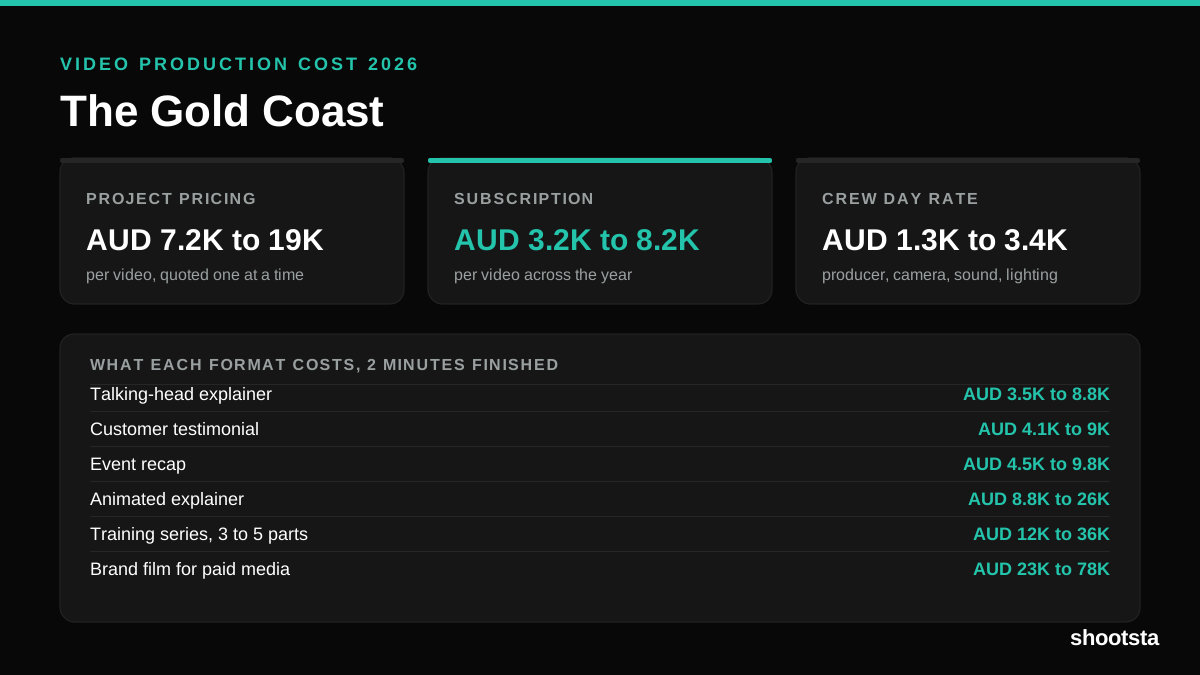
Video production in the Gold Coast costs AUD 3,200 to AUD 8,200 per finished video on a subscription model, and AUD 7,200 to AUD 18,500 for one-off project work. Here is what you are paying for, and how the three pricing models compare.
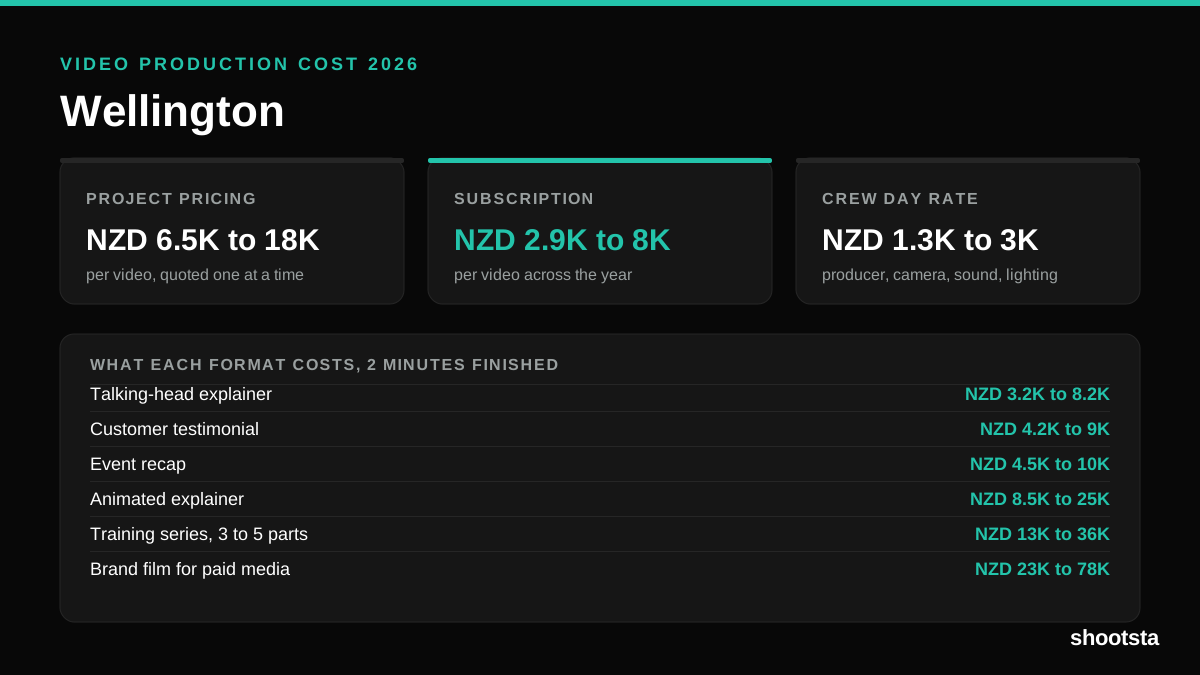
Video Production Cost in Wellington (2026)
Video production in Wellington costs NZD 2,900 to NZD 8,000 per finished video on a subscription model, and NZD 6,500 to NZD 18,000 for one-off project work. Here is what you are paying for, and how the three pricing models compare.
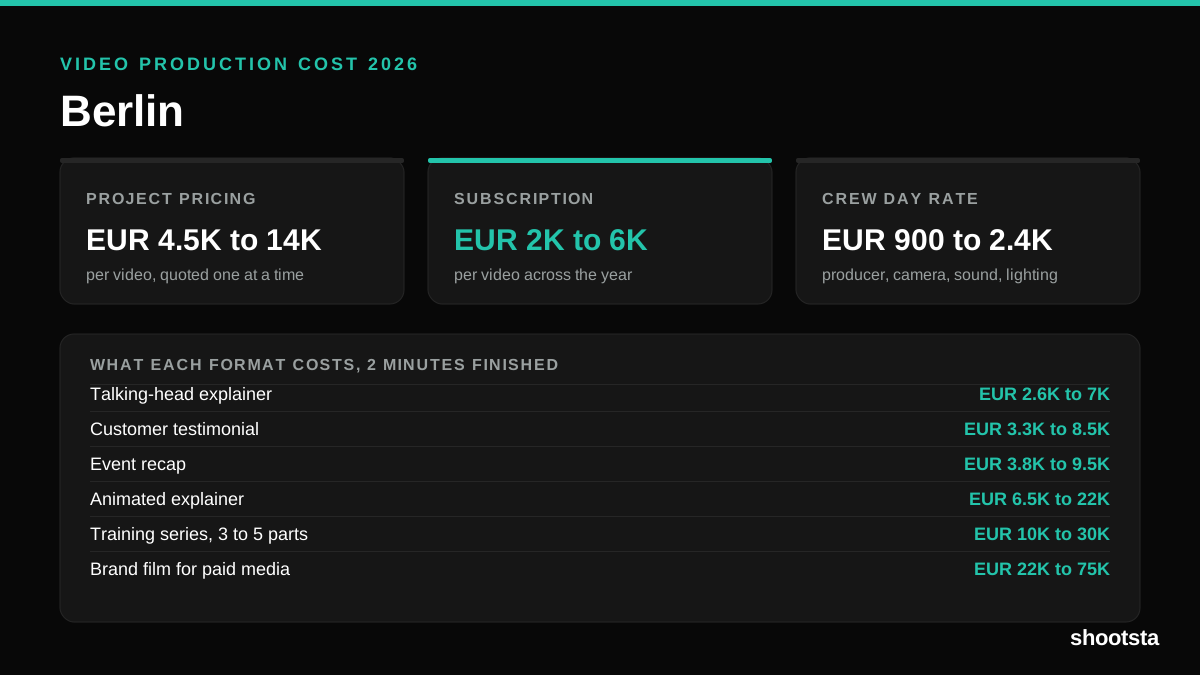
Video Production Cost in Berlin (2026)
Video production in Berlin costs EUR 2,000 to EUR 6,000 per finished video on a subscription model, and EUR 4,500 to EUR 13,500 for one-off project work. Here is what you are paying for, and how the three pricing models compare.