
Lean College Video Without a Videographer Hire
shootsta.
Lean College Video Without a Videographer Hire
By Shootsta · Published June 9, 2026 · Updated October 2026
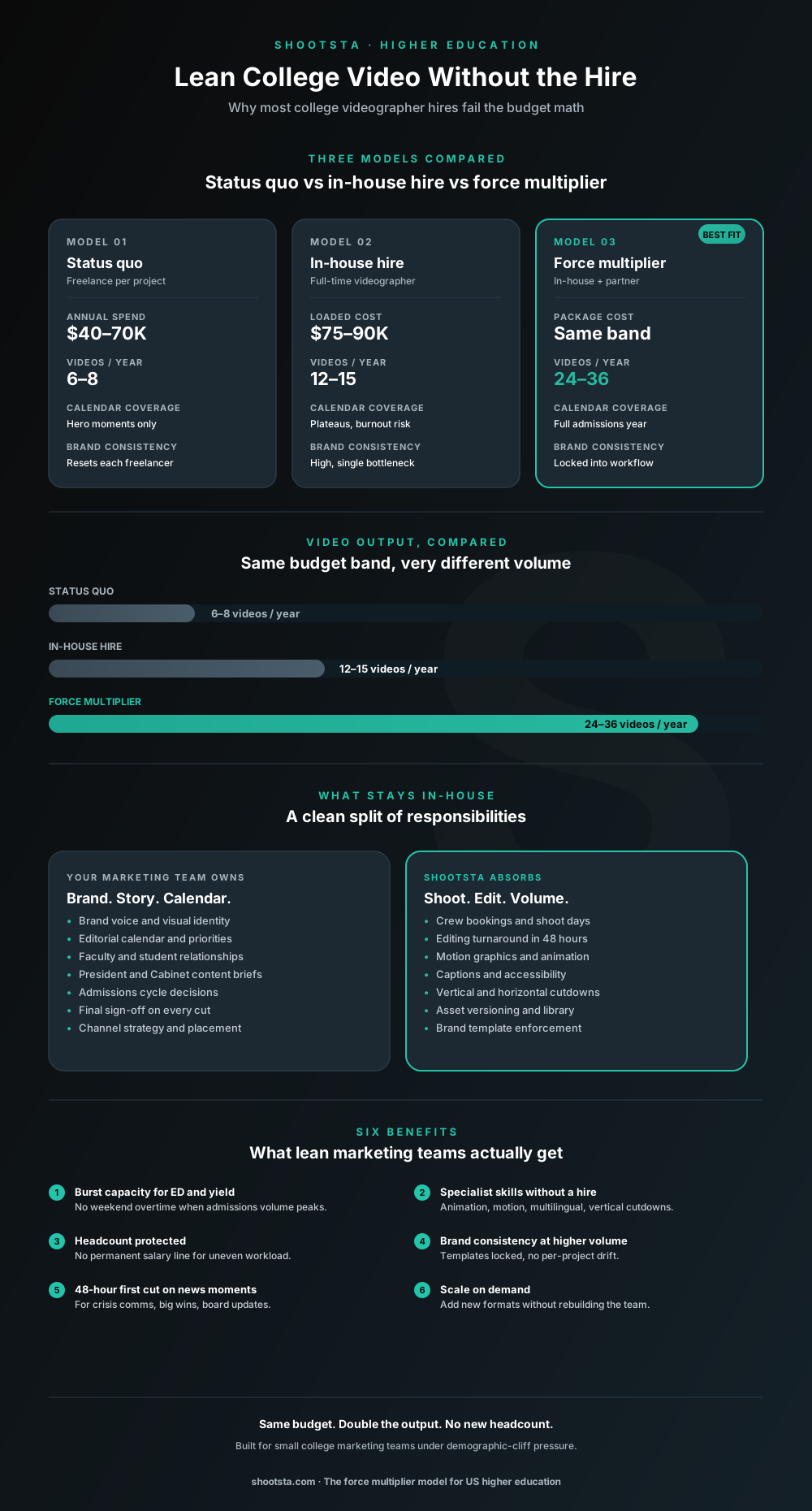
Most small US colleges respond to enrollment pressure by hiring a full-time videographer. The math rarely works. Here is the model that does, and the budget comparison that explains why.
Every small US college with growing video demand asks the same question: should we hire a videographer? It is the intuitive move. Volume is rising, freelance bills are climbing, and the comms team is tired. The hire feels like the answer.
Most of the time, the math does not work. A loaded full-time hire (salary, benefits, equipment, software, training) lands at $75,000 to $90,000 a year and produces 12 to 15 finished videos. The admissions calendar requires more than that. The video cadence the role is supposed to support is also uneven, which means the hire is over-resourced six months of the year and over-stretched the other six. This piece walks through why, with the budget figures and the alternative that small marketing teams are increasingly choosing.
If the post that built the inventory was our enrollment marketing video stack, this one is about how to produce it without rebuilding the org chart.
Quick answer. A loaded full-time videographer hire at a small US college costs $75,000 to $90,000 a year and produces 12 to 15 finished videos before plateauing. A production partner package at the same total cost produces 24 to 36 finished videos with full admissions calendar coverage. The force multiplier model wins on output, brand consistency and risk for most marketing teams of two to four people.
What does an in-house college videographer cost?
The salary is the visible part. It is also the smallest part. The fully loaded cost of an in-house videographer at a small US private college breaks down roughly as follows.
- Base salary: $52,000 to $68,000 depending on region and seniority.
- Benefits and payroll taxes: roughly 28 to 32 percent of base. Add $14,000 to $22,000.
- Equipment and software: camera body, lenses, audio kit, lights, gimbal, drone, editing workstation, Adobe Creative Cloud, storage. $8,000 to $15,000 in year one, $3,000 to $5,000 in subsequent years for upgrades and replacement.
- Onboarding and ramp: first 90 days are typically below capacity while the hire learns institutional brand, faculty relationships, and admissions calendar. Hidden cost in deferred output.
- Coverage gaps: vacation, sick days, and the hire's own specialty constraints (an editor who does not love shooting, a shooter who does not love motion graphics).
Fully loaded year one: $75,000 to $90,000 for one person producing roughly 12 to 15 finished videos.
Why the hire usually plateaus at 12 to 15 videos a year
The hire is one person. The eight enrollment marketing video formats most small US colleges should be producing (see the enrollment marketing video stack) span shoot work, edit work, motion graphics work, animation work, and a constant stream of cutdowns and versioning. A single producer cannot be excellent at all of those skills simultaneously. They will be great at two or three and stretched on the rest.
The volume cap shows up in the second year. By month nine the in-house videographer has produced the founding library (the President welcome, the Commencement reel, a faculty mini-doc series, one accepted-student-day teaser) and is exhausted. The third year is when most colleges either add a second hire (doubling the loaded cost to $150,000 to $180,000) or watch the original hire leave for a larger institution that can pay more.
What is the force multiplier model for college marketing teams?
The model that works for small US colleges is the same one we wrote up for enterprise teams in Singapore. A small in-house team owns brand, story, the editorial calendar, the relationships with deans and faculty. A production partner absorbs the shoot crew, editing, motion graphics, captioning, asset versioning, and brand template enforcement. The marketing team stays the same size while the number of finished videos goes up.
In practice for a small college, the in-house side is typically two people: a Director of Strategic Content who owns the calendar and the relationships, and a Writer/Editor who briefs, scripts, and reviews. Together they brief 24 to 36 finished videos a year. The partner runs the production pipeline behind them, and the split of work looks like this.
- Your marketing team owns: brand voice, editorial calendar, faculty relationships, President and Cabinet content briefs, admissions cycle decisions, final sign-off, channel strategy.
- The production partner absorbs: crew bookings, shoot days, 48-hour editing turnaround, motion graphics, captions, vertical and horizontal cutdowns, asset versioning, brand template enforcement.
The Director and the Writer keep the strategic and creative judgment in-house, where it has to live. The partner handles the parts of the process that scale linearly with hours, which is where outsourcing buys time back.
How does the budget compare across the three models?
Small US colleges tend to land in one of three patterns today. Each one below has a rough annual cost, an output range and a note on what happens to brand consistency.
Status quo
Annual spend $40,000 to $70,000 on freelance crews and editors hired per project. Output 6 to 8 videos a year, concentrated around hero moments (President welcome, Commencement, the big annual fundraiser). Brand consistency drifts because each freelancer rebuilds the visual system from scratch. Admissions calendar coverage is thin. This is where most colleges sit today.
In-house hire
Loaded annual cost $75,000 to $90,000. Output 12 to 15 finished videos a year. Brand consistency improves because one person owns the visual system. Calendar coverage doubles compared with the status quo, then plateaus because the role is a single bottleneck and burns out around month 18.
Force multiplier
Package cost lands inside the same band as the in-house hire ($75,000 to $90,000 a year for a 24 to 36-video package, depending on tier). Output is 24 to 36 finished videos a year, enough to cover the full admissions calendar. Brand consistency locked into the workflow because templates and approval chains sit inside the partner's production pipeline, not inside one person's head.
The reason the force multiplier model lands at roughly the same total cost as the hire is simple: the marginal cost of producing more video at scale through a partner is lower than the marginal cost of producing more video through a single full-time hire who runs out of hours. The partner spreads the underlying production capacity (editors, motion designers, crew bookings) across multiple clients. The college pays for output, not for capacity that sits idle in February.
| Metric | Status quo | In-house hire | Force multiplier |
|---|---|---|---|
| Annual cost | $40K to $70K | $75K to $90K loaded | $75K to $90K package |
| Finished videos a year | 6 to 8 | 12 to 15 | 24 to 36 |
| Calendar coverage | Hero only | Half of gates | Full year |
| News-cycle turnaround | Often missed | 48 to 72 hours best case | 24 to 48 hours by design |
| Brand consistency | Drifts per freelancer | Improves until hire leaves | Locked in partner templates |
| Headcount risk | None | High (single point of failure) | None |
| Ramp to full output | N/A | 90 days to 6 months | 30 to 45 days |
What does the in-house side of the team look like?
For most small US colleges, two roles are enough on the in-house side.
Director of Strategic Content. Owns the editorial calendar, the brand standard, the relationships with deans and faculty. Reports into the VP Communications and Marketing. This person is a content strategist who briefs video rather than shooting it. Often the role exists already inside the marketing team.
Online Content Writer/Editor. Writes the scripts and briefs, reviews cuts, manages publication across the college website, social channels, and admissions email. Also typically owns photography and copy beyond just video, because at a small college most marketing roles are multi-channel.
Neither role is a videographer. Both are content roles that scale across formats. Adding video to their portfolio works because the production partner absorbs the actual shooting, editing, and motion graphics work.
When does an in-house hire make sense?
There are three cases where hiring in-house is the right call. First, the college has more than 30 events a year that need same-day coverage. Athletics-driven institutions, performing arts schools, and conservatories with weekly performances justify a full-time hire because the same-day-coverage volume is too high for any partner pipeline.
Second, the college is a large research institution producing a steady stream of grant-funded research videos with restricted external sharing. In-house staff sometimes simplify the IP and licensing conversation.
Third, the college has the budget to do both: hire and partner. A small number of large colleges run this hybrid model, with the in-house videographer focused on athletics and signature events while the partner handles the admissions and advancement calendar.
For most small US colleges with marketing teams of two to four people and tuition-dependent enrollment, none of the three scenarios apply. The force multiplier model is the right answer.
How long does it take to ramp up a force multiplier package?
Most small US colleges reach full production cadence inside 45 days. The first two weeks are templates: brand kit, motion graphics templates, intro and outro lockups, caption styles, lower-third design, music licensing pool. Weeks three and four are the first batch shoot (one open campus day producing footage for 4 to 6 pieces). By week six the partnership is shipping on a regular delivery schedule and the in-house team has stopped writing one-off briefs and started running on a quarterly editorial calendar.
An in-house hire, for comparison, typically reaches full output around month six. The first 90 days are taken up by learning institutional brand, building relationships with deans and faculty, and procuring equipment. The force multiplier model skips those costs because the partner already operates a production pipeline at scale.
What is the headcount risk of relying on a single videographer?
Higher than most small-college marketing teams plan for. The average tenure of an in-house college videographer in 2024-2025 was 18 to 24 months before moving to a larger institution or leaving higher ed entirely (informal benchmark from regional CASE chapters). When the hire leaves, the institutional knowledge leaves with them: brand templates, faculty relationships, equipment maintenance, project files. The marketing team rebuilds from zero, then runs an extended search to backfill a role that took six months to onboard the first time.
The force multiplier model carries no equivalent risk. The brand templates and project files sit inside the partner's production system. Crew rotates inside the partner team, not at the college's expense. The Director of Strategic Content and the Writer/Editor stay in place, owning the editorial side, while production capacity continues uninterrupted.
What does total cost of ownership look like over three years?
For the in-house hire model: $75,000 to $90,000 a year times three, plus equipment depreciation, plus the cost of a six-month rebuild if the hire leaves in month 18 or 24. Likely three-year total cost: $250,000 to $310,000 producing 36 to 45 videos.
For the force multiplier model: $75,000 to $90,000 a year times three, no rebuild cost, no equipment depreciation. Three-year total: $225,000 to $270,000 producing 72 to 108 videos. The cost-per-finished-video on a three-year horizon is roughly two to three times lower under the force multiplier model, with the difference widening if a hire leaves mid-cycle.
How does this model compare to using an agency of record?
A traditional agency of record (AOR) charges by project at a higher unit cost and works on retainer plus production fees. Typical AOR engagement for a small college runs $120,000 to $180,000 a year for similar output. The agency carries client-services overhead the in-house team is paying for indirectly. The force multiplier model is closer to a production-only relationship: the partner runs the shoot, edit and asset pipeline, the in-house team runs strategy and brand. You get a lower unit cost and a faster turnaround, and you stop paying for account management you do not use. AORs still make sense for brand campaigns and integrated paid media. They are over-engineered for steady-cadence enrollment video.
Frequently asked questions
What if we already hired a videographer?
The hire and the force multiplier model are not mutually exclusive. The most effective small-college setups we see have a single in-house videographer focused on athletics, events and same-day coverage, with a production partner running the editing, motion graphics, animation and cutdown pipeline behind them. The in-house role becomes a creative lead, not a one-person production house. Output rises and the burnout risk drops.
How do we know we are ready to move from freelance to a package?
Three signs. The marketing team is turning down internal requests for video because there is no capacity, not because the requests are bad ideas. Freelance spend has grown to $50,000 a year or more without a matching rise in finished output. Brand consistency is drifting because no single freelancer owns the visual system. If two of the three are true, the package model is probably the right next move.
What is the contract structure for a college package?
Typically annual, with monthly delivery commitments inside it. The college briefs the volume up front (12, 24 or 36 videos a year), and the partner commits to delivery cadence and turnaround per video. Most US college contracts run on a July through June fiscal year to match the academic calendar.
Can we use a production partner for confidential or sensitive video?
Yes. Most production partners working with higher education sign institution-specific MSAs that cover FERPA, student privacy, internal communications and embargoed announcements. Practically, the same review and sign-off chain that operates internally extends out to the partner. Nothing publishes without college approval.
How does this work for community colleges and public regional universities?
The committee shape is similar (VP Comms, Director of Content, Writer/Editor) but the deal economics shift. Public institutions usually have lower per-video budgets and higher volume requirements, which often makes the 24-video package the right starting point. Community colleges in particular benefit from the model because workforce-development video has tight news-cycle deadlines that a freelance model cannot keep up with.
Can student workers replace a videographer hire?
For some formats, yes. For the full enrollment marketing stack, no. Student workers do well on the Single Question format, the Tradition format, and second-camera B-roll on flagship shoots. They are not a fit for the financial aid explainer, the President welcome, or the deposit reassurance series, which need consistent professional production specs and a turnaround time that student schedules cannot reliably hit. The best small-college setups use student workers on the formats that benefit from their texture and a production partner on the formats that need consistency.
What about graduate-assistant or workstudy programs?
Graduate assistantships in communications, film and digital media can absorb 10 to 15 hours a week of editing or asset versioning at a fraction of a full-time hire's loaded cost. The right place to deploy them is on Single Question and Tradition formats, social cutdowns, and asset versioning for shorter-form pieces. The structural limit is the same: a graduate assistant works on a two-year cycle, then leaves, taking the brand templates with them unless those templates live in a system the institution owns.
Is hiring a videographer tax-advantaged compared to a partner contract?
Slightly, but the math rarely changes the conclusion. An in-house hire's salary, benefits and equipment are operating expenses for the institution. A partner contract is the same. The depreciation schedule on production equipment offers a small accounting benefit when buying gear in-house, but the cost band already reflects that. Talk to the CFO if the tax treatment is a deciding factor, but the operating math (output per dollar) is the larger story.
Can the production partner work with our existing brand guidelines and visual system?
Yes. Standard kickoff for a new package includes a brand workshop in which the partner's motion graphics and template team adopts the college's typography, color palette, logo lockups, music style and tone of voice. The templates live inside the partner's production system, which means brand drift is structurally lower than in a freelance or in-house model. The Director of Strategic Content approves the template kit once, and every subsequent piece ships against it.
What is the typical contract length and cancellation policy?
Most US college contracts run annual, aligned with the July through June fiscal year. Cancellation typically requires 60 to 90 days notice. The annual structure exists to match the cadence of admissions and to give the partner's production planning predictability. Multi-year contracts are common in year two onward and usually come with a discount.
Lean college video glossary
- Loaded cost: The total annual cost of an employee including salary, benefits, payroll taxes, equipment, software, training and overhead. Typically 28 to 32 percent above base salary at small US colleges.
- Force multiplier: A production model where a small in-house team owns brand and editorial decisions while an external partner absorbs the shoot, edit and versioning workload, allowing output to grow without growing headcount.
- News-cycle turnaround: The 24 to 72-hour window between an event happening and the video about it shipping. The cadence that the deposit reassurance window, ED1 release reactions, and accepted student day recaps require.
- Asset versioning: The work of producing the horizontal, vertical, square and short-form cutdowns of a single piece for different channels. Typically the second-largest cost on any video budget.
- Brand template: The locked visual system (typography, color, motion graphics, lower thirds, intro and outro lockups, captions, music) that every piece ships against. Owned by whoever ships the most volume.
- FAFSA: The Free Application for Federal Student Aid. Drives the question volume that the financial aid explainer video is built to answer.
- Per-video unit cost: Total annual production spend divided by total finished videos delivered. The metric that exposes the difference between a 12-video output ceiling and a 36-video package.
Where to go next
If your college is considering a videographer hire in the next 12 months, the conversation worth having first is whether the force multiplier model gets you more video for the same budget. Talk to a Shootsta producer about what a 24 or 36-video package looks like inside the same band as a full-time hire. The math usually tells the story without much help.
Three companion pieces complete the higher-ed stack. The enrollment marketing video stack is the inventory of formats that should be filling those 24 to 36 slots. The college admissions video calendar is the release plan that maps the formats to the twelve admissions gates. The student storytelling formats playbook is the on-staff Writer/Editor's playbook for the formats that anchor consideration, decision, yield and retention together.
Take this article with you
Read the latest at shootsta.com/blog/lean-college-video-production-without-hiring
You might also like

How to Plan Video Team Capacity Around Leave
Your only editor just booked two weeks off, and you already know which projects will slip. Chad Lakin explains how to plan video team capacity so the work keeps moving when someone is away.
Corporate Video Editing Standards: Full Guide
A two-page editing standard does more for consistency than a forty-page brand book. Here is what it should cover, who owns each part, and how to enforce it with an in-house editor or an outside partner.
Quality Control in Outsourced Video Editing
When editing leaves the building, quality has to be checked by a system rather than by whoever happens to look. Here is the system: acceptance criteria, two QA gates, counted revision rounds and a quarterly audit.
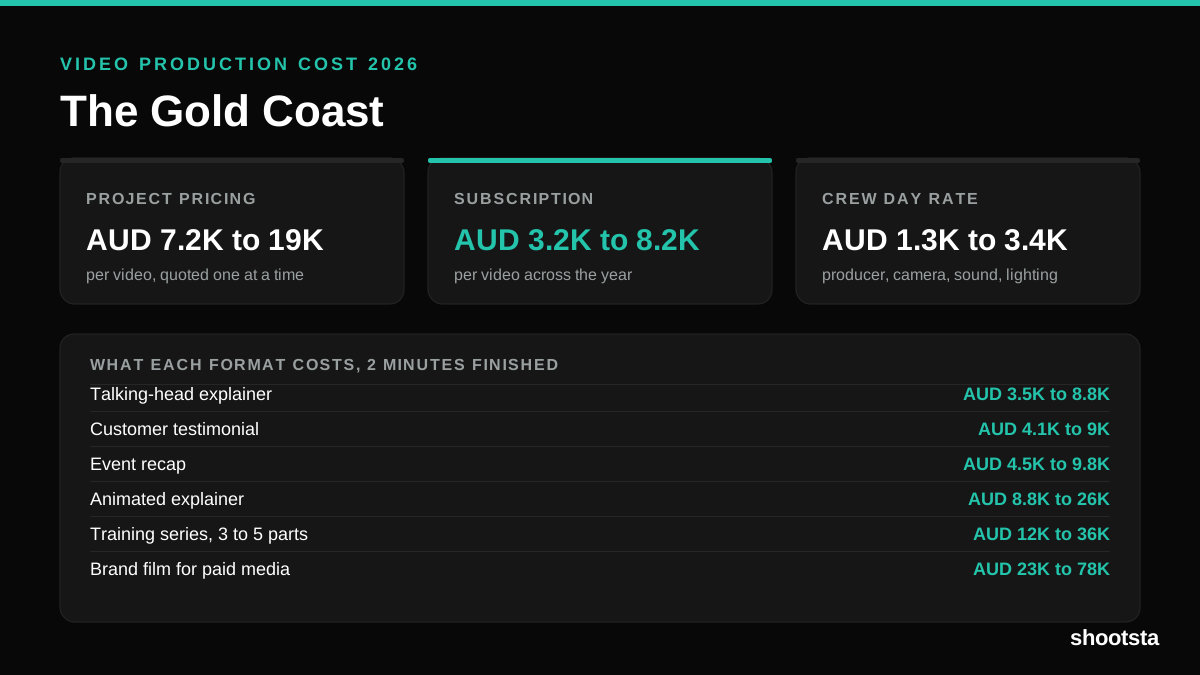
Video Production Cost on the Gold Coast 2026
Video production in the Gold Coast costs AUD 3,200 to AUD 8,200 per finished video on a subscription model, and AUD 7,200 to AUD 18,500 for one-off project work. Here is what you are paying for, and how the three pricing models compare.
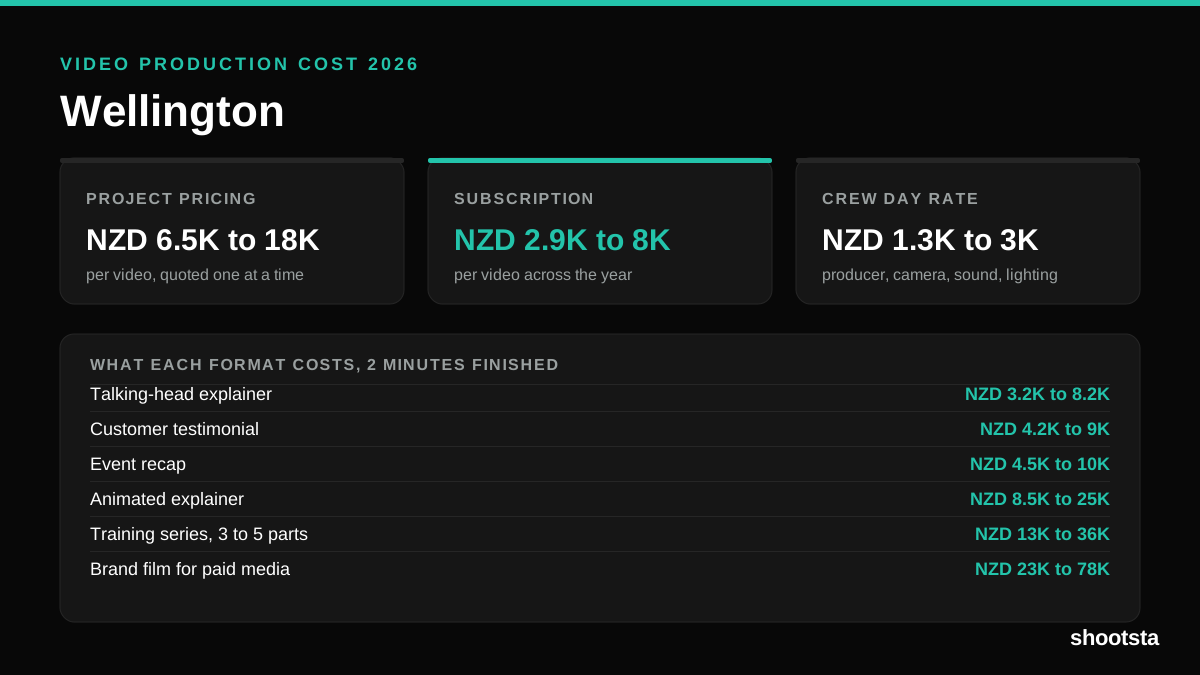
Video Production Cost in Wellington (2026)
Video production in Wellington costs NZD 2,900 to NZD 8,000 per finished video on a subscription model, and NZD 6,500 to NZD 18,000 for one-off project work. Here is what you are paying for, and how the three pricing models compare.
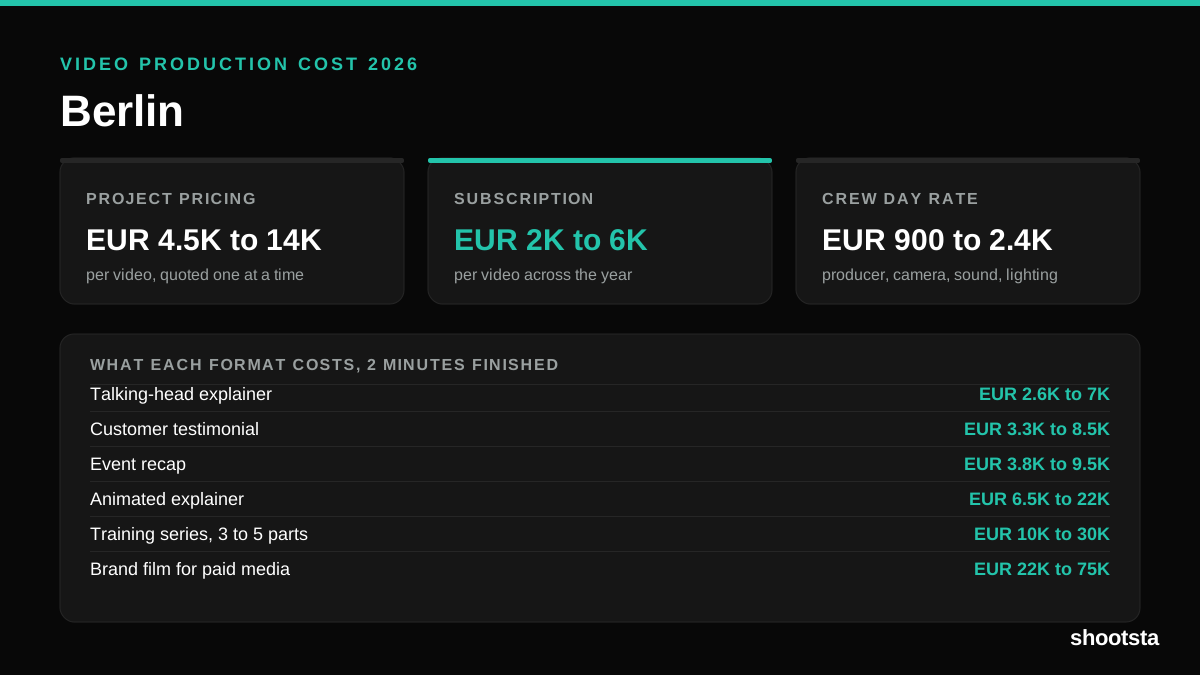
Video Production Cost in Berlin (2026)
Video production in Berlin costs EUR 2,000 to EUR 6,000 per finished video on a subscription model, and EUR 4,500 to EUR 13,500 for one-off project work. Here is what you are paying for, and how the three pricing models compare.