
How Singapore Video Teams Scale Without Hiring
shootsta.
How Singapore Video Teams Scale Without Hiring
By Shootsta · Published May 17, 2026 · Updated October 2026
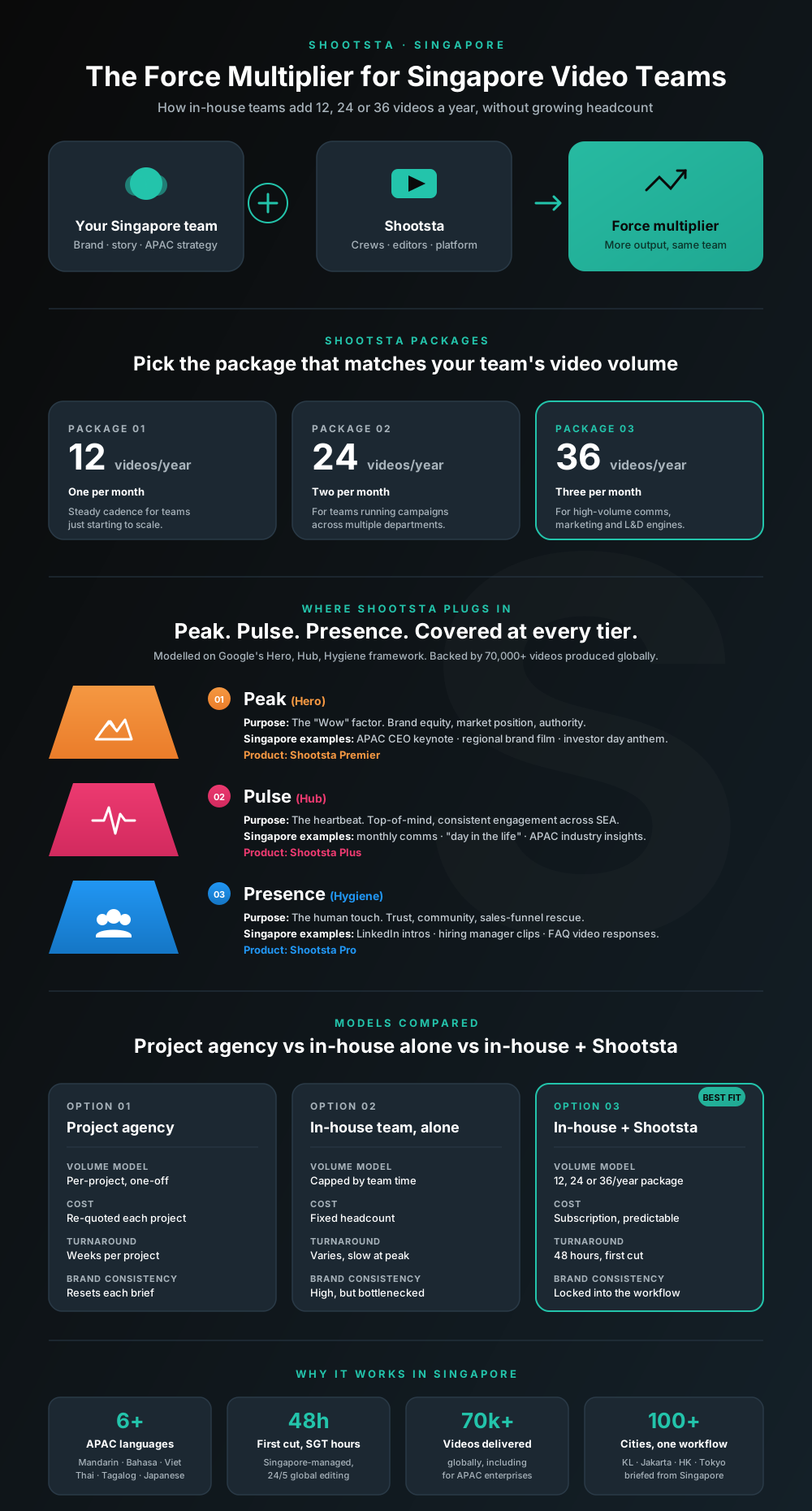
The force multiplier model is how enterprise comms and marketing teams scale video output 5x without adding headcount. Here is what it looks like in practice and the signals that say you are ready for it.
What is the force multiplier model for in-house video teams?
The force multiplier model is a working pattern where an internal video team owns brand, story and creative direction, and a production partner like Shootsta absorbs the volume around them. That volume covers extra shoots, editing, motion graphics, multilingual versions and time-sensitive turnarounds. Output goes up significantly without the in-house team growing, and without losing the brand control that makes their work valuable in the first place.
It works the other way round from outsourcing, where you hand the work over and hope the brief survives. The force multiplier model keeps the in-house team in charge of every project, and Shootsta runs the rest of the engine room.
The signal: your in-house team is already at capacity
If you lead an enterprise comms or marketing team, you probably know the symptoms. The internal team is producing good work, but a backlog is building. Sales is waiting on a customer testimonial. The CEO wants a new town-hall video by Thursday. Three product launches are queued for next quarter. A regional office in Singapore needs the same training video in Bahasa and Vietnamese. The video team is two people and a part-time editor.
The two usual moves both cause problems. You can hire more people, which takes 3 to 6 months, adds permanent headcount and assumes the volume stays high forever. You can also push back on requests, which teaches the rest of the business that video is slow and expensive, so people stop asking. Teams that only have these two options tend to swing between them year after year.
How the force multiplier model works
The internal team stays small and senior. Strategy, brand, creative direction, executive-facing scripts and sensitive comms all stay in-house. Volume work flows through Shootsta: crew bookings, editing, motion graphics, captioning, localization, asset versioning. The in-house team still writes the briefs and signs off every approval. The finished work comes back through the team that owns the brand.
The result is one team that looks much bigger than its headcount, without the cost or risk of being one.
What you get beyond the production team
The force multiplier model covers more than crew and editors, because Shootsta works as a content enablement partner. Every plan includes the Shootsta platform for briefing, review and asset management, and your account manager can help staff in regional offices plan and film their own footage.
The platform is where briefs are written, footage is uploaded, edits are reviewed and finished videos are stored. Approvals run through it and brand templates live in it. It removes the email and file-sharing chaos that slows most in-house teams down.
The training is for the people who are not on the in-house video team but who end up in front of or behind a camera anyway. They include subject-matter experts recording explainers, regional managers capturing customer stories and comms staff shooting executive intros. They learn how to frame, light, record audio and upload to the platform, so the in-house team gets usable footage to work with instead of unusable phone clips.
The kits ship to wherever content needs to be captured, and each one holds a camera, lighting, audio gear and a tripod. Anyone trained on the kit can produce footage that the in-house team and Shootsta editors can finish to brand. It is how a Singapore comms team of two ends up with usable footage from a Manila office without flying anyone there.
Mapping the model to Peak, Pulse and Presence
The cleanest way to see where a production partner plugs in is through the Peak, Pulse and Presence framework that Shootsta uses with enterprise customers (based on Google's Hero, Hub, Hygiene). Peak is the brand-equity work - investor day anthems, APAC CEO keynotes, hero films. Pulse is the heartbeat - monthly comms, "day in the life" series, ongoing campaigns. Presence is the human-touch volume - LinkedIn intros, hiring manager clips, FAQ video responses. An in-house team in Singapore can credibly own the strategy and brand decisions across all three. A partner absorbs the production of all three.
Interactive planner
Plan your year across Peak, Pulse and Presence
Set the volume you want in each tier. The planner shows your total annual program, the Shootsta package that fits it, and the production hours a partner would absorb each month.
Brand-equity work. Hero films, anthems, investor day keynotes.
The heartbeat. Monthly comms, campaign cuts, recurring series.
Human-touch volume. LinkedIn intros, FAQ replies, social cutdowns.
Your annual video program
76 videos / yearThat works out to about 6 finished videos a month. For most enterprise teams, that is well past the volume one or two in-house people can absorb on their own.
Recommended package
Custom enterprise plan
76+ videos / year
Past 48/year usually means multi-region rollouts or a global Presence stream. We size these case by case.
Production hours absorbed
50 hrs / month
~0.4 FTE
In-house editing, motion graphics, captioning and finishing hours that flow to the partner instead.
What this means
Your in-house team keeps owning brand, story and Peak creative direction. A partner absorbs roughly 50 production hours a month across Pulse and Presence so your team is not the bottleneck on the rest of the business. Output goes up. Headcount does not.
Get a free consultationAssumptions: 30 in-house production hours per Peak video, 12 per Pulse, 4 per Presence. Hours cover editing, motion graphics, captioning, versioning and finishing - not strategy or brief. Package recommendations map to public Shootsta tiers; volumes above 48/year are best handled as a custom enterprise plan.
Six benefits in-house teams get from a production partner
1. Burst capacity
Enterprise video volume is uneven, with spikes around the quarterly all-hands, the annual conference, product launch week and the end-of-year wrap video. A force multiplier partner means you do not have to staff for the peak. The peak gets absorbed without weekend overtime or pushing other work back into the next quarter.
2. Specialist skills on demand
An in-house team of two cannot reasonably cover everything. Animation, motion graphics, multilingual editing, subtitling, vertical social cutdowns and long-form documentary edits each need a different specialist. A partner gives you all of them without hiring for skills you only need now and then.
3. Global reach
If your business operates in more than one country, your video team probably does not. Shootsta has a global crew network and an editing team that runs across time zones. That means a Singapore comms team can run a Sydney shoot, a London product launch and a New York testimonial in the same week without flying anyone anywhere.
4. Protected headcount
Hiring a video producer is a 3 to 6 month process and a permanent line item. A partnership flexes up and down. If volume drops for two quarters, your cost drops with it. Headcount is the most expensive lever in a comms or marketing budget, so protect it for the work only your in-house team can do.
5. Scale on demand
The internal team can launch a new format - case studies, recruitment video, training series, executive thought leadership - without rebuilding the team or workflows. The partner already has the production capacity. The in-house team just briefs the new format.
6. Brand consistency at higher volume
Outsourcing often breaks brand, because templates drift and lower thirds get rebuilt on every project. Editors cut to their own taste instead of to the guideline. The force multiplier model locks templates, fonts, voice and the sign-off chain into the workflow on Shootsta's side. The 50th video looks like the first one, because the same partner produced both with the same set-up.
Where this model works (and where it does not)
It works for enterprise teams who want a predictable flow of internal comms, marketing video, training and sales enablement. Shootsta plans are a fixed monthly fee with a set number of video credits, so you size the plan to the volume the rest of the business asks your team for. Unused credits roll over within the contract period.
It does not work as well if you only need one-off broadcast TVCs or a single hero brand film a year. In those cases a project-based approach is the right fit, and that is what Shootsta Premier is built for: full-service production with creative direction, crew and post handled end to end, priced per project rather than per package. We tell people this honestly. The subscription model only earns its keep when there is ongoing volume to absorb. Premier sits alongside it for the one big project a year that needs its own treatment.
What the in-house team keeps doing
The in-house team keeps strategy, story and brand judgment. It runs the internal conversations that decide which videos get made and how the CEO wants to come across on camera. It holds the relationships with internal stakeholders and the knowledge of what worked last year and what bombed. None of that gets outsourced, and none of it should be. It is what makes the team's work valuable inside the business.
What changes is how much of that judgment can be applied across more projects. A small in-house team that briefs and reviews can take on a Shootsta plan sized to the volume it needs on top of whatever they produce themselves, without the headcount growing. The force multiplier is the editing, shooting and post-production hours the in-house team no longer has to do themselves.
How to know if you are ready
Three honest signals tell you the model fits. The first is that you are turning down internal requests because there is no capacity, even though the requests are good ideas. The video team is the bottleneck on other people's plans.
The second is that the same person is briefing, shooting, editing and uploading. That role does not scale, and it stops being enjoyable to do once you hit a certain volume.
The third is that other regions or business units are quietly building their own video workflows because central cannot serve them. That is the most expensive option of all, because the brand fragments and central loses oversight of what is being made.
If any two of those are true, a force multiplier partnership is probably the next move. The in-house team stays and the headcount does not have to grow, while the output goes up.
Frequently asked questions
Does Shootsta replace our in-house video team?
No. The model only works when the in-house team is in place and owns brand, strategy and creative direction. Shootsta absorbs the production volume around them. Customers who try to use Shootsta as a full replacement get worse results than customers who use it as a force multiplier, because the strategic judgment and brand ownership has to live inside the business.
How quickly does this start working?
The first project usually ships in 2 to 3 weeks. The team rhythm settles into a 48-hour turnaround per project by about the third or fourth piece, once the brand templates, voice and approval chain are locked into the workflow. After that, capacity scales as fast as the in-house team can brief.
What happens to existing freelancers and contractors?
Many teams keep some of them. Specialty work - long-form documentary, broadcast TVCs, particular animation styles - often stays with named freelancers. Shootsta replaces the part of the freelance roster that is doing repeatable production work: editing, cutdowns, captioning, motion templates, regional shoots. Those are the slots where reliability and brand consistency matter more than artistic signature.
Can the in-house team still own the brief?
Yes, the in-house team should own the brief. Shootsta does not write briefs on behalf of customers. The brief is the part of the process that only the in-house team can credibly do, because they know the audience and the strategic intent. The partnership only works when the in-house team owns it.
Where to go next
If your team is at capacity and you want to see how the force multiplier model works in practice, take a look at how internal comms teams use Shootsta or how in-house editors plug into the Shootsta workflow. For a broader view of how the production platform sits underneath all of this, the Shootsta platform page walks through the end-to-end workflow.
Take this article with you
Read the latest at shootsta.com/blog/how-singapore-video-teams-scale-without-hiring
You might also like

How to Plan Video Team Capacity Around Leave
Your only editor just booked two weeks off, and you already know which projects will slip. Chad Lakin explains how to plan video team capacity so the work keeps moving when someone is away.
Corporate Video Editing Standards: Full Guide
A two-page editing standard does more for consistency than a forty-page brand book. Here is what it should cover, who owns each part, and how to enforce it with an in-house editor or an outside partner.
Quality Control in Outsourced Video Editing
When editing leaves the building, quality has to be checked by a system rather than by whoever happens to look. Here is the system: acceptance criteria, two QA gates, counted revision rounds and a quarterly audit.
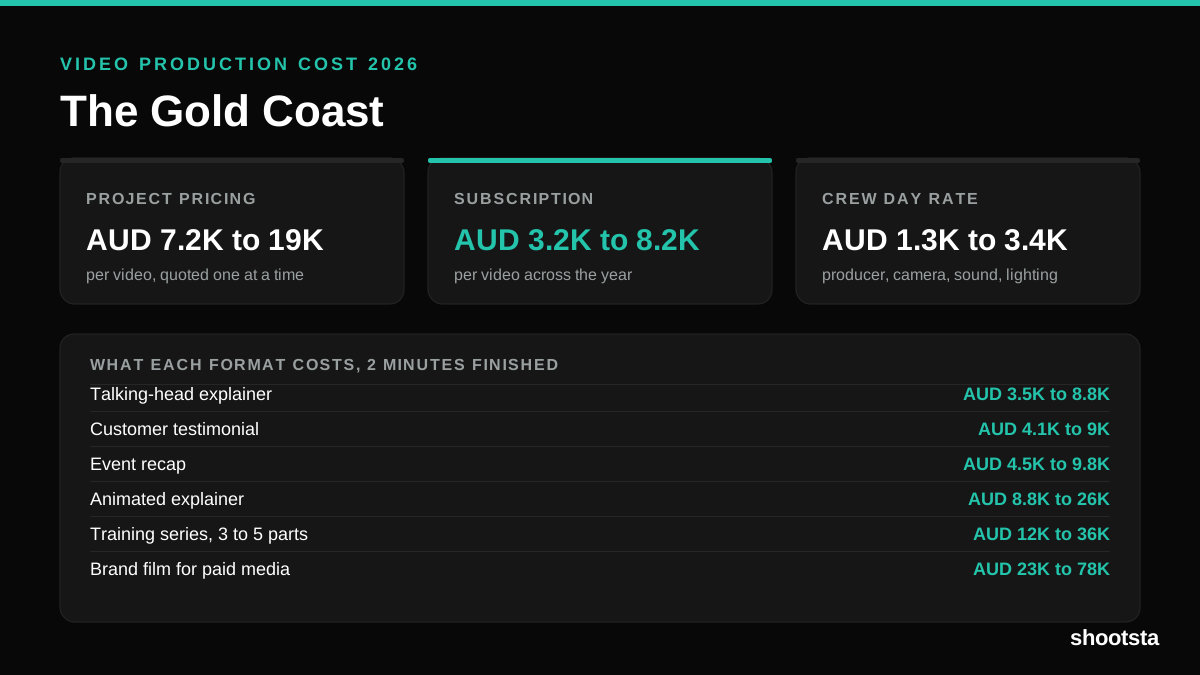
Video Production Cost on the Gold Coast 2026
Video production in the Gold Coast costs AUD 3,200 to AUD 8,200 per finished video on a subscription model, and AUD 7,200 to AUD 18,500 for one-off project work. Here is what you are paying for, and how the three pricing models compare.
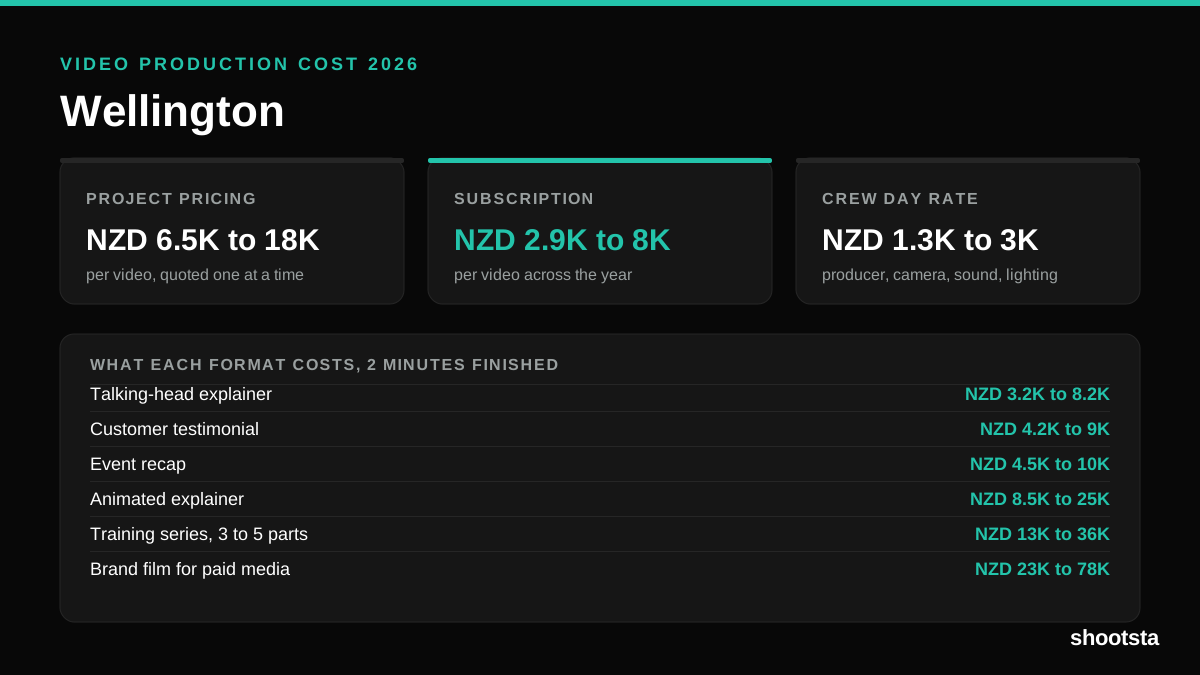
Video Production Cost in Wellington (2026)
Video production in Wellington costs NZD 2,900 to NZD 8,000 per finished video on a subscription model, and NZD 6,500 to NZD 18,000 for one-off project work. Here is what you are paying for, and how the three pricing models compare.
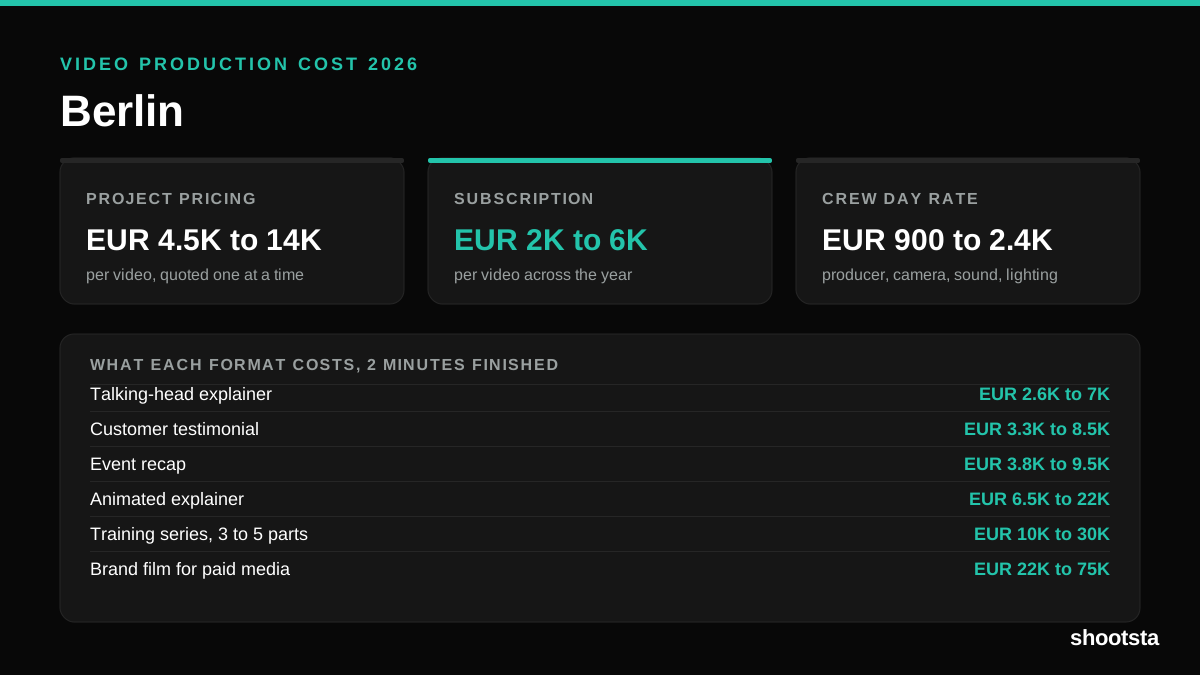
Video Production Cost in Berlin (2026)
Video production in Berlin costs EUR 2,000 to EUR 6,000 per finished video on a subscription model, and EUR 4,500 to EUR 13,500 for one-off project work. Here is what you are paying for, and how the three pricing models compare.