
The College Admissions Video Calendar (2026)
shootsta.
The College Admissions Video Calendar (2026)
By Shootsta · Published June 10, 2026 · Updated October 2026
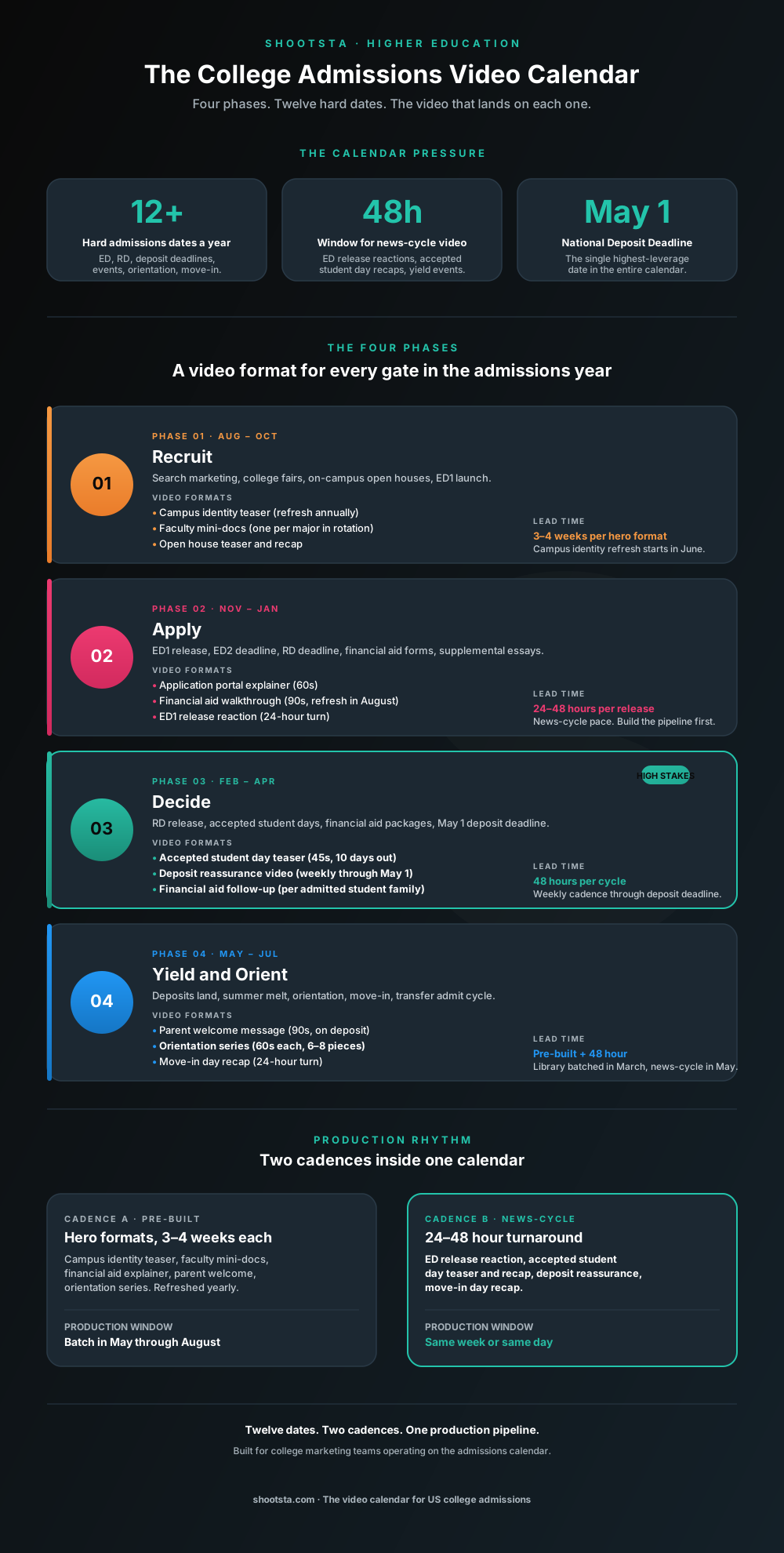
Twelve hard dates a year, four phases, two production cadences. The video calendar US college marketing teams should be working from in 2026.
The college admissions year is not 12 months. It is 12 hard dates and the production work between them. The marketing teams that hit yield in 2026 are the ones that have stopped planning video as quarterly campaigns and started running it on the admissions calendar.
This piece is the calendar itself. Four phases, twelve gates, two production cadences, and the specific video formats that need to ship on each one. If you are running marketing at a small US college and your video plan is not laid out month-by-month against ED1, RD, accepted student days and the May 1 deposit deadline, this is where to start.
It pairs with our enrollment marketing video stack (what to make) and our lean production model (how to make it without hiring). Read those first if you are missing format coverage or production capacity. Then come back here to map them to the year.
Quick answer. The US college admissions video calendar resolves into four phases (Recruit, Apply, Decide, Yield and Orient) and twelve gates running August through July. Each gate maps to specific video formats with defined runtimes and turnaround windows. Two production cadences run in parallel: pre-built hero formats with 3 to 4-week lead times, and 24 to 48-hour news-cycle pieces tied to release dates.
The admissions video calendar at a glance
The table has one row per gate. It lists twelve gates across four phases, in date order through the academic year. The cadence column tells you whether the piece can be pre-built or has to ship inside 48 hours of the event.
| Month | Gate | Phase | Primary video format | Cadence |
|---|---|---|---|---|
| Aug | Common App opens | Recruit | Campus identity teaser refresh | Pre-built |
| Sep | College fair circuit | Recruit | Faculty mini-doc series | Pre-built |
| Oct | Open houses, ED1 opens | Recruit | Open house teaser + recap | 48 hours |
| Nov | ED1 deadline | Apply | Application portal explainer | Pre-built |
| Dec | ED1 decisions release | Apply | ED1 release reaction video | 24 hours |
| Jan | RD deadline, FAFSA priority | Apply | Financial aid walkthrough | Pre-built, annual refresh |
| Feb | Aid packaging begins | Decide | NPC explainer + aid follow-up | Pre-built |
| Mar | RD release, accepted student day | Decide | Accepted student day teaser | 10 days lead |
| Apr | Deposit window peaks | Decide | Deposit reassurance series | Weekly |
| May | May 1 deposit deadline | Yield | Parent welcome message | Day-of |
| Jun-Jul | Orientation, housing assignments | Orient | Orientation series (6 to 8) | Pre-built, rolling release |
| Aug | Move-in | Orient | Move-in day recap | 24 hours |
What are the four phases of the college admissions year?
The US admissions calendar resolves cleanly into four phases. Each one has a job, a set of hard dates, and the video formats that have to land on those dates.
- Recruit (August through October): Search marketing, college fairs, on-campus open houses, ED1 launch.
- Apply (November through January): ED1 release, ED2 deadline, RD deadline, financial aid forms, supplemental essays.
- Decide (February through April): RD release, accepted student days, financial aid packages, May 1 deposit deadline.
- Yield and Orient (May through July): Deposits land, summer melt, orientation, move-in, transfer admit cycle.
What video should publish in Phase 1: Recruit (August through October)?
Recruit is the brand-building phase. Prospective students are first hearing the college's name, comparing it against twenty alternatives, and adding it to a long list. Video at this stage has to answer one question: what is this place like day to day.
Key dates in Phase 1
- Common App opens (early August).
- Search marketing list rentals land (mid-August through September).
- National college fair circuit (September through early November).
- On-campus open houses (October weekends).
- ED1 application opens (typically October 1).
Video formats to publish in Phase 1
- Campus identity teaser. 30-second vertical refresh, paid on social, YouTube pre-roll and Google Display. Front-loads search and college fair traffic.
- Faculty mini-docs. 60 to 90-second portraits, one per major in rotation. Anchors the consideration-stage research that starts the moment a student adds the school to their list.
- Open house teaser and recap. 30-second hype reel before the event, 60-second highlight reel after. Drives RSVP volume for the next open house and feeds the admitted-student conversation later in the year.
Lead time on Phase 1 is the most forgiving in the calendar. Hero formats can take 3 to 4 weeks because the dates are predictable months in advance. Most colleges should be shooting the campus identity teaser refresh in June and locking faculty mini-docs in July.
What video should publish in Phase 2: Apply (November through January)?
Apply is the highest-volume content phase. Multiple application gates, supplemental essay support, financial aid form deadlines, ED1 decision releases. Video at this stage has to do two jobs simultaneously: support applicants currently in the process, and convert RD-considering students before the January deadline.
Key dates in Phase 2
- ED1 deadline (typically November 1 or November 15).
- ED1 decisions release (mid-December).
- ED2 deadline (typically January 1 or January 15).
- RD deadline (January 1 or January 15 for most selective colleges).
- FAFSA priority deadlines (December and January, varies by state).
Video formats to publish in Phase 2
- Application portal explainer. 60-second walkthrough of how the college's application portal works. Cuts the volume of admissions counselor calls during peak season.
- Financial aid walkthrough. 90-second video on how aid packaging works at this institution. Bridges the gap between FAFSA submission and the aid letter that lands in March. The same explainer pattern we wrote up for animated financial services explainers applies directly: dense rules, anxious audience, deadline pressure.
- ED1 release reaction. 60 to 90-second video published within 24 hours of decisions going live. Featuring the President or Dean of Admissions speaking to admitted students, with a clear call to action for RD applicants still deciding. Highest engagement video the institution publishes all year.
Lead time on Phase 2 collapses. The ED1 release reaction has to ship inside 24 hours. The application explainer and financial aid walkthrough are evergreen but get refreshed every August when forms change. This is the phase where a college without a 48-hour production pipeline starts losing news cycles.
What video should publish in Phase 3: Decide (February through April)?
Decide is the highest-stakes phase. Admitted students are weighing offers, comparing financial aid packages, and locking in their May 1 commitment. Every video published in this window competes against three to seven other colleges trying to do the same job for the same student.
Key dates in Phase 3
- RD decisions release (mid to late March for most selective colleges).
- Financial aid packages mailed (typically within 2 to 4 weeks of decision).
- Accepted student day events (March and April weekends).
- Final aid appeal deadlines (varies, typically mid-April).
- National Candidate Reply Deadline (May 1).
Video formats to publish in Phase 3
- Accepted student day teaser. 45-second hype reel, 10 days before each event. Drives RSVP. Sent through admissions email, posted on the admitted student portal, dropped in a parent SMS.
- Deposit reassurance video. 60-second video from a current student, addressed to admitted students still deciding. One per week through May 1. Each one a different student with a different angle (financial, social, academic, geographic).
- Financial aid follow-up. 60-second personalized message from the financial aid office to families who have received their package but not yet deposited. Walks through how to read the package, what an appeal looks like, and the deadline.
Lead time on Phase 3 stays inside 48 hours per cycle. The cadence is weekly through the deposit deadline. Most colleges underproduce in this window, which is the exact opposite of what the conversion math says. Yield-stage content is the cheapest deposit channel a college has.
What video should publish in Phase 4: Yield and Orient (May through July)?
Yield and Orient runs from the deposit landing through orientation through move-in. The deposit is not the end of the conversation. Roughly 1 to 4 percent of deposited students melt over the summer, depending on the institution. Video in this phase is about reducing summer melt and starting the relationship that drives first-year retention.
Key dates in Phase 4
- Deposit deadline (May 1).
- Final transcript and AP score deadlines (June through July).
- Orientation registration (varies, typically June).
- Roommate matching and housing assignments (June through July).
- Move-in day (August, just outside Phase 4 but planned inside it).
Video formats to publish in Phase 4
- Parent welcome message. 90-second video from the President or Dean of Students, sent the same day the deposit lands. Acknowledges the family decision, frames the first six weeks, surfaces parent support resources.
- Orientation series. Six to eight 60-second pieces covering the practical questions every first-year asks. How to add a class, where to eat, how to access mental health support, how to find a campus job, how to set up direct deposit. Published rolling through July.
- Move-in day recap. 90-second highlight reel published within 24 hours of move-in. Used to welcome the next year's prospective students and signal cycle completion to current families.
Lead time on Phase 4 is hybrid. The orientation series is pre-built in March and April and queued for release. The move-in recap is news-cycle pace, 24-hour turnaround.
What does the production rhythm look like?
Two cadences run inside the same calendar. Cadence A covers pre-built hero formats. These have 3 to 4-week production windows and include the campus identity teaser, faculty mini-docs, financial aid explainer, parent welcome, orientation series. These get batched in May through August when the academic year is winding down and the production team has time to shoot, and each one gets a refresh once a year.
Cadence B: news-cycle 24 to 48-hour turnaround. ED release reactions, accepted student day teasers and recaps, deposit reassurance videos, move-in recaps. These cannot be pre-built. They have to ship in the same week or the same day as the event. Most colleges fail in this cadence because their production pipeline is sized for hero formats only. The fix is having a partner relationship that treats news-cycle turnaround as the normal way of working. The same pattern we wrote up in our 48-hour event recap workflow applies directly: pre-event briefing, on-the-day shoot, same-day handoff, overnight edit.
Frequently asked questions
How many videos does the full admissions calendar require?
If a college produces every format on this calendar, the count lands at 24 to 36 finished videos a year, depending on how many majors are covered in the faculty mini-doc rotation, how many weeks of deposit reassurance video go out, and how many orientation series pieces are produced. That cadence aligns with the 24 to 36-video annual packages most production partners offer.
What is the cheapest gate to cover first if we cannot afford the full calendar?
The deposit reassurance window in Phase 3. The unit cost per deposit driven by yield-stage video is lower than any other channel a small college has access to, including paid social, direct mail and travel-and-events. If the marketing team can produce only one new format this year, it should be the weekly deposit reassurance video published from late March through May 1.
How early do we need to plan Phase 1 content?
The campus identity teaser refresh should be in production by mid-May for an August launch. Faculty mini-doc shoots should be scheduled by July, ideally clustered into a single shoot week before the academic year begins and faculty calendars fill. Open house teasers can be turned in 2 to 3 weeks if last year's footage is usable.
Does this calendar work for community colleges and rolling-admission institutions?
The phase structure still applies, but the dates shift. Community colleges typically run two or three application waves a year (fall, spring, summer), which means Phases 2 and 3 repeat at a faster cadence. Rolling-admission institutions can compress the Apply-Decide loop into a continuous flow. Either way, the video formats stay the same. The calendar just changes its rhythm.
What is the minimum viable team to run this calendar?
Two in-house roles (Director of Strategic Content plus a Writer/Editor) plus a production partner running the shoot and edit pipeline. Output: 24 to 36 finished videos a year. We walk through the budget math for this model in our lean college video production piece.
When should the May 1 backwards-plan start?
Start the backwards-plan in late January. By February the deposit reassurance series should be cast and the first three pieces in production. The accepted student day teaser needs to be locked 10 days before each event in March and April. The parent welcome message needs to be approved by April 15, ready to ship the day each deposit lands. Working backward from May 1 is the planning discipline that most marketing teams skip and then pay for in late-March fire drills.
What is the difference between Early Decision and Early Action?
Early Decision is binding. A student admitted ED1 commits to enroll and withdraws all other applications. Early Action is non-binding. The student receives a decision earlier than Regular Decision but is not obligated to attend. Video strategy treats them differently. ED1 release reactions are the highest-stakes 24-hour video the college produces all year, because the student's decision is locked. EA decisions are a step in a longer conversation and the video that ships with them is closer to a "what comes next" piece than a celebration.
How does the calendar shift for graduate programs?
Graduate admissions runs on a different rhythm. Most master's programs operate on rolling admissions with a hard fall deadline in March or April. Doctoral programs have a single December or January deadline followed by interview weekends in February. The Apply and Decide phases compress into a different shape and the Recruit phase extends across the full year. The format inventory remains the same. The release schedule shifts.
How does the calendar handle transfer admissions?
Transfer admissions runs a second cycle in spring and summer with its own deposit deadline (typically June 1). The format set is similar with two specific additions. A transfer-student day in the life that addresses commuter and adult-learner concerns. A credit-transfer explainer that walks through how prior coursework maps to the new institution. Both run pre-built and can be produced once a year if the underlying credit transfer policy is stable.
What goes wrong when a college tries to run this calendar without a partner?
Three failures are predictable, and the first is missed news-cycle gates. The ED1 release reaction and the move-in day recap require 24-hour turnaround and a single in-house videographer cannot consistently hit that window without burning out. The second is brand drift. Across a 24-video year, the visual system slips when each freelancer rebuilds it. The third is yield-stage underproduction. The deposit reassurance series should ship weekly through May 1. Without a partner, a small in-house team tends to run out of capacity after the first few pieces.
College admissions calendar glossary
- Common App: The Common Application platform used by more than 1,000 US colleges. Opens August 1 each year. Powers the bulk of application volume at most small US private colleges.
- ED1 / ED2: Early Decision rounds 1 and 2. Binding application processes with November and January deadlines respectively. ED admit rates are typically higher than RD admit rates at the same institution.
- RD: Regular Decision is the non-binding January deadline that drives the largest application volume at most colleges.
- EA / REA: Early Action (non-binding) and Restrictive Early Action (single-choice EA). Less common than ED at small private colleges.
- FAFSA: Free Application for Federal Student Aid. The federal financial aid form. Opens October 1 (some years later) and drives the December-January aid priority deadlines.
- NPC: Net Price Calculator. The federally required tool on every US college website that estimates the total cost of attendance for a specific family.
- Accepted student day: An on-campus event for admitted students, typically held on March and April weekends. Many admissions offices see it as the strongest single predictor of deposit conversion.
- May 1: The National Candidate Reply Deadline. The day admitted students must commit and submit the enrollment deposit. The most important gate in the entire calendar.
- Summer melt: The share of deposited students who do not enroll in the fall. Mitigated by the orientation series and parent welcome message.
- Yield: The percentage of admitted students who deposit. The output metric for the Decide phase.
- NACAC: National Association for College Admission Counseling. Publishes the State of College Admission report and sets ethical standards for the field.
Where to go next
If your college's video plan is currently organized as quarterly campaigns rather than admissions-gate releases, the change is mostly mechanical: you keep the same formats and change when they ship. Talk to a Shootsta producer about mapping the 24 to 36-video package onto your specific admissions calendar. The first thing we sketch on a planning call is usually the May 1 backwards-plan.
Three companion pieces complete the higher-ed stack. The enrollment marketing video stack is the inventory of formats that fills the calendar. The lean production model is the budget math behind the team that runs it. The student storytelling formats playbook covers the five repeatable student-voice formats that anchor consideration, decision, yield and retention together.
Take this article with you
Read the latest at shootsta.com/blog/college-admissions-video-calendar
You might also like

How to Plan Video Team Capacity Around Leave
Your only editor just booked two weeks off, and you already know which projects will slip. Chad Lakin explains how to plan video team capacity so the work keeps moving when someone is away.
Corporate Video Editing Standards: Full Guide
A two-page editing standard does more for consistency than a forty-page brand book. Here is what it should cover, who owns each part, and how to enforce it with an in-house editor or an outside partner.
Quality Control in Outsourced Video Editing
When editing leaves the building, quality has to be checked by a system rather than by whoever happens to look. Here is the system: acceptance criteria, two QA gates, counted revision rounds and a quarterly audit.
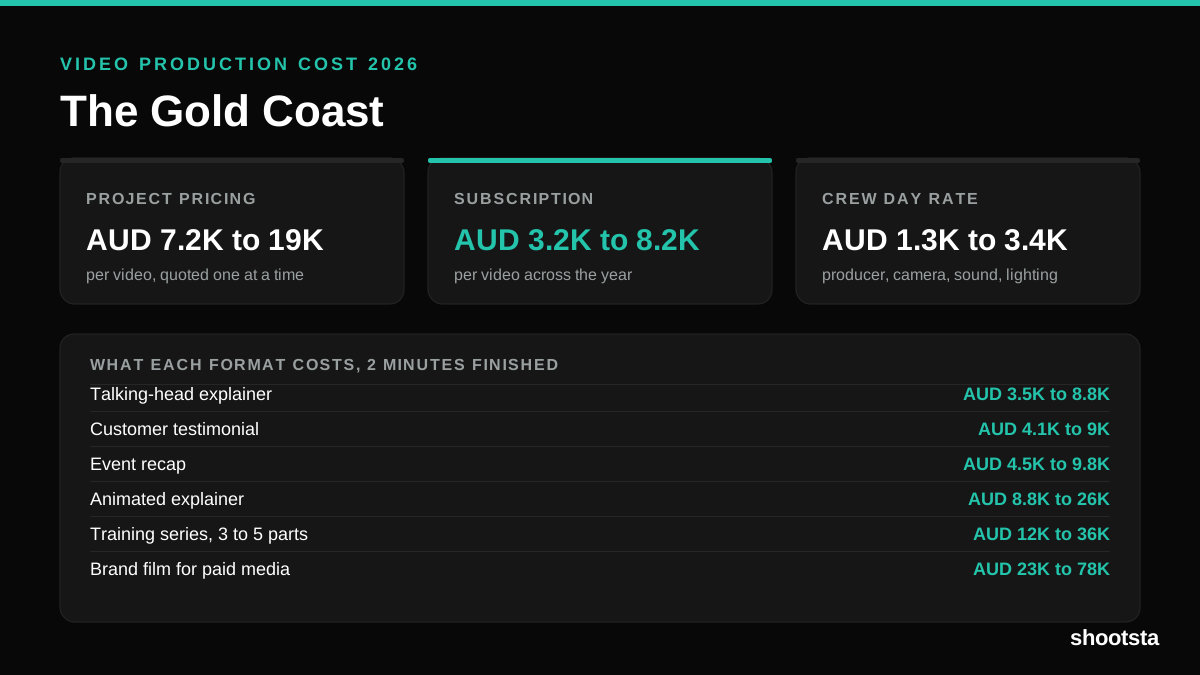
Video Production Cost on the Gold Coast 2026
Video production in the Gold Coast costs AUD 3,200 to AUD 8,200 per finished video on a subscription model, and AUD 7,200 to AUD 18,500 for one-off project work. Here is what you are paying for, and how the three pricing models compare.
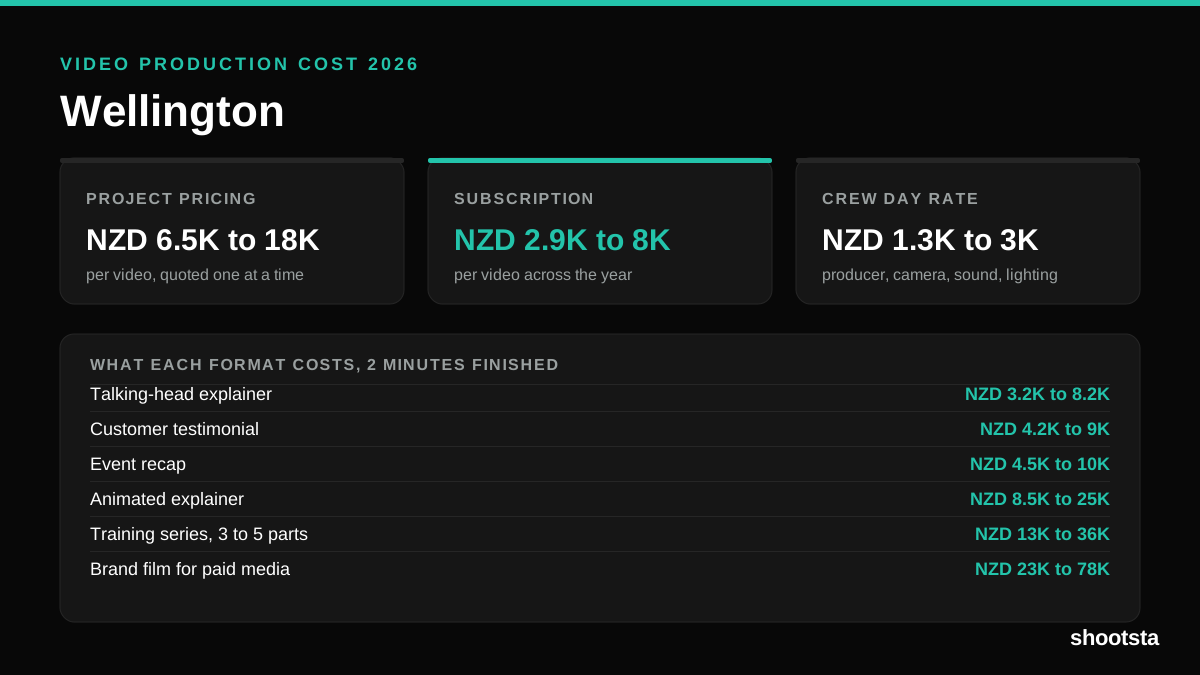
Video Production Cost in Wellington (2026)
Video production in Wellington costs NZD 2,900 to NZD 8,000 per finished video on a subscription model, and NZD 6,500 to NZD 18,000 for one-off project work. Here is what you are paying for, and how the three pricing models compare.
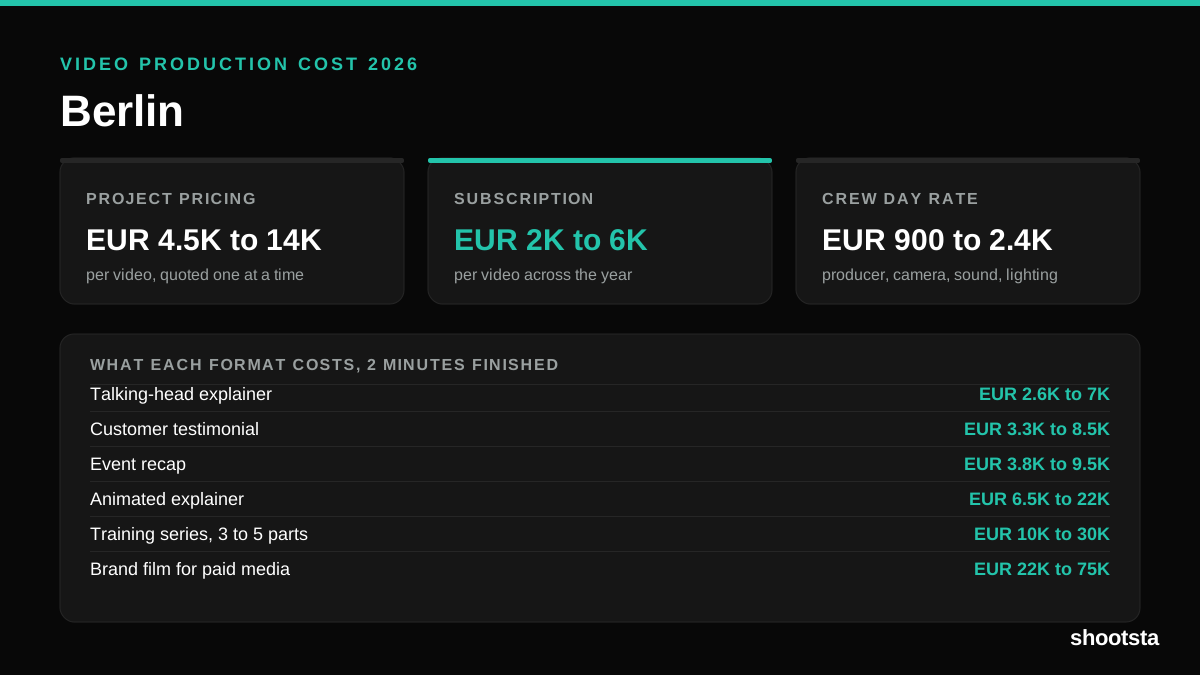
Video Production Cost in Berlin (2026)
Video production in Berlin costs EUR 2,000 to EUR 6,000 per finished video on a subscription model, and EUR 4,500 to EUR 13,500 for one-off project work. Here is what you are paying for, and how the three pricing models compare.