
Student Storytelling Formats for Small Colleges
shootsta.
Student Storytelling Formats for Small Colleges
By Shootsta · Published June 11, 2026 · Updated October 2026
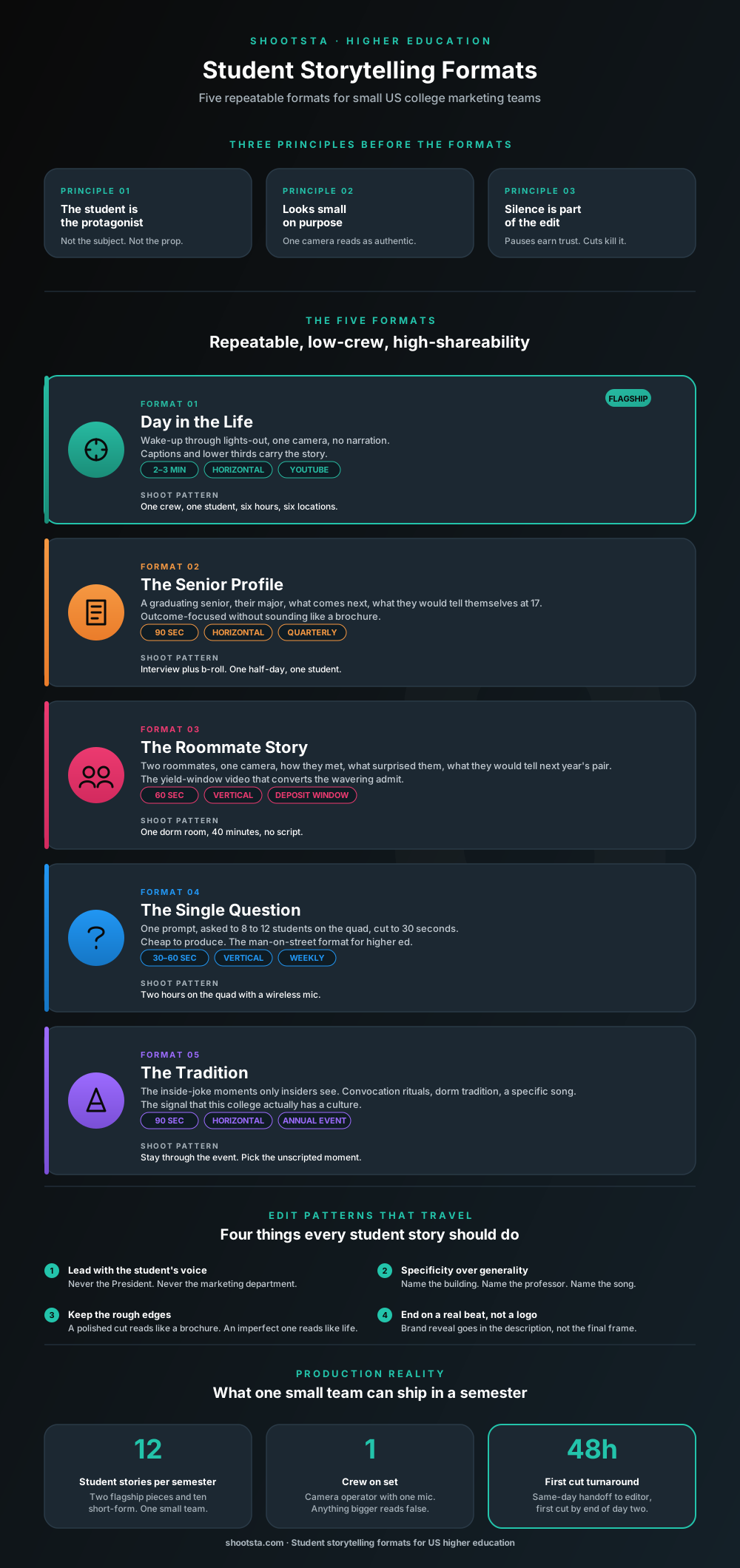
Five repeatable student storytelling video formats that work for small US college marketing teams. Shoot specs, edit patterns, and what makes each one travel further than a brochure.
Every small US college marketing team has the same line in the strategy document: more student storytelling. Most of them then produce one Commencement reel, two senior profiles, and a tour video, call it a year, and wonder why the engagement numbers are flat. The writing is rarely the problem. The missing piece is a set of repeatable formats.
This piece is the production playbook. It lays out five student storytelling video formats that work for a small marketing team (two to four people, a partner on the production side, a lean budget), with shoot specs, edit patterns, and what it takes to ship 12 student stories a semester. Treat it as a checklist for your Writer/Editor and Director of Strategic Content.
If you are still building the broader strategy, the enrollment marketing video stack is the bigger frame. This piece zooms in on the student-voice subset, because that is the work that touches every funnel stage from consideration through retention.
Quick answer. The five student storytelling formats every small US college should be producing are Day in the Life, Senior Profile, Roommate Story, Single Question and Tradition. Together they cover the full funnel from consideration through retention. A team of two to four people supported by a production partner can ship 12 finished student stories a semester (24 a year), with each format mapped to a specific runtime, channel and cadence.
The five-format student storytelling stack at a glance
The table is the production spec. Each format is broken out in detail below it, with shoot pattern, edit pattern and runtime targets.
| Format | Runtime | Orientation | Channel | Cadence | Funnel stage |
|---|---|---|---|---|---|
| Day in the Life | 2 to 3 min | Horizontal | YouTube, embedded | 3 to 6 a year | Consideration |
| Senior Profile | 90 sec | Horizontal | Career page, LinkedIn | Quarterly | Retention |
| Roommate Story | 60 sec | Vertical | Admitted student portal, Reels | Weekly Mar-May | Yield |
| Single Question | 30 to 60 sec | Vertical | Reels, TikTok, Shorts | Weekly | All stages |
| Tradition | 90 sec | Either | YouTube, alumni news | Annual | Consideration, retention |
What three principles make student storytelling video work?
Before the formats, here are three principles that decide whether the work travels or dies in the export folder.
The student is the protagonist
The story belongs to the student, who is never a subject, a prop or a vehicle for an admissions line. The student drives the narrative, names the things that matter to them and makes the choices the audience is watching. The marketing department stays invisible. If a student story reads like "look at this great place we are showing you", the format has failed. If it reads like "here is what this person did with their time", it works.
The production looks small on purpose
Use one camera, one mic and natural light where possible. The visual register that prospective students associate with authenticity in 2026 is the one a YouTube creator with a tripod produces, rather than a documentary crew. A larger crew, more lights and a Steadicam will make the format less effective with this audience. Production value is not the same thing as production size.
The edit values silence as much as dialogue
The best moments in a student story are usually not lines. They are pauses, glances, the half-second after a question lands. The usual college marketing edit cuts those out. The format works because they stay in, so resist the temptation to fill every frame with words.
Format 1: Day in the Life
Day in the Life is the flagship student storytelling format. It captures a real student's day vérité, from wake-up through lights-out, with no narration. Captions and lower thirds do the storytelling work, and the pacing follows the day rather than a script.
Runtime, channel, cadence
It runs 2 to 3 minutes, horizontal, and lives on the college's YouTube channel and embedded on consideration-stage landing pages. Plan three to six per academic year, sliced by major and by residential life category. A history major's day looks different from a biology major's, and prospective students notice.
Shoot pattern
One crew follows one student for six hours across six locations: a coffee shop or dining hall in the morning, two classes or labs, lunch with friends, one extracurricular and one quiet moment in the dorm. The crew shoots about 90 minutes of usable footage and trusts the edit to find the story.
Edit pattern
Time-of-day chapter cards mark the structure, with wide-to-tight cuts inside each location. Music sits low under dialogue and comes up full under transitions. The student's name and major appear once, mid-edit, in a lower third, and there is no on-camera introduction. The audience figures out who this person is by watching them be themselves.
Format 2: The Senior Profile
The Senior Profile is an outcome-focused mini-doc featuring a graduating senior: their major, what they are doing next and what they would tell themselves at 17. The format anchors the long arc from consideration through retention. Done well, the Senior Profile reads like a New Yorker portrait. Done badly, it reads like a brochure.
Runtime, channel, cadence
It runs 90 seconds, horizontal, and lives on the college's career outcomes page, alumni communications and LinkedIn. The cadence is quarterly, four to six per year, paced through senior year so the senior who features in March looks back on a path the rising senior watching in August can follow.
Shoot pattern
The shoot is an interview plus b-roll, one half-day with one student. The interview runs 25 to 30 minutes and produces 90 seconds of usable answers. B-roll covers the student in the spaces of their major (lab, studio, library, field). The interview happens after the b-roll so the student is warmed up and the camera shyness has mostly worn off.
Edit pattern
The edit cold opens on a single sentence the student said unprompted. It then runs b-roll over a thirty-second answer to "what does your major mean to you", moves to the outcome detail, and closes with "what would you tell yourself at 17". End on the student doing the thing, with no logo and no music swell, just the work.
Format 3: The Roommate Story
The Roommate Story puts two roommates in front of one camera to talk about how they met, what surprised them and what they would tell next year's pair. This is the yield-window format. It is published in March and April and addressed to admitted students who are deciding whether to deposit. It speaks directly to the social anxiety that does more damage to yield than the financial aid package.
Runtime, channel, cadence
It runs 60 seconds, vertical, and lives on the admitted student portal, parent SMS, Instagram Reels and TikTok. Publish weekly through the May 1 deposit deadline. Each one features a different pair, a different residential building and a different background match.
Shoot pattern
The shoot takes 40 minutes in one dorm room with no script. The crew sets the wireless mics on both students and asks three questions: how did you meet, what surprised you about each other, what would you tell next year's pair. The best answers come in the gaps between the questions rather than in the direct replies.
Edit pattern
Both heads stay in frame the whole time, and the only cuts fall between the three answers. Captions go in deposit-window red or the college color, large enough to read at thumb distance on a phone. Music is optional, and the cut is often better without it.
Format 4: The Single Question
The Single Question is the man-on-street format for higher ed: one prompt, asked to 8 to 12 students on the quad, cut to 30 to 60 seconds. It is the cheapest format in the stack to produce and runs at the highest cadence, and it gets surprisingly high engagement on social.
Runtime, channel, cadence
It runs 30 to 60 seconds, vertical, and lives on Instagram Reels, TikTok and the college's YouTube Shorts. A weekly cadence is sustainable. The format does not get tired because the question keeps changing.
Shoot pattern
Spend two hours on the quad with a wireless mic and one camera. Approach 15 to 20 students with the same question and use the 8 to 12 best responses. The tone of the prompt matters: "What is your favorite class?" produces wallpaper, while "What is the most embarrassing thing that has happened to you on campus?" produces something people share. The closer the prompt sits to a real conversation, the better the format performs.
Edit pattern
The question sits on screen for the first 1.5 seconds, then the edit cuts rapidly between answers of 2 to 5 seconds each. A closing card teases the next question coming up next week. The format works because it trains the audience to come back for the next installment.
Format 5: The Tradition
The Tradition format captures the inside-joke moments only insiders see: the Convocation entrance song, the dorm tradition during finals, the specific food cart everybody knows about, the unspoken rules of the library. The aim is to catch the moment when the tradition is happening and the people inside it are visibly enjoying it, rather than to explain what the tradition is.
Runtime, channel, cadence
It runs 90 seconds, horizontal or vertical depending on the tradition. It lives on the YouTube channel, the alumni newsletter, and the prospective-student landing pages that need to convince a high school junior this place has a culture of its own. The cadence is annual, tied to the calendar of the event itself.
Shoot pattern
Stay through the whole event and do not over-direct. Pick the unscripted moment over the planned ceremony. The crew that produces the best Tradition cut is the one that does the least.
Edit pattern
Open on a wide establishing shot, then cut to the moment people stop performing. Cut to one face and hold it longer than feels comfortable, then cut to the moment after. There is no voiceover, and the music is whatever was playing in the room.
What edit patterns make every student story travel further?
Four patterns apply across all five formats. Each one is cheap to follow and expensive to skip, because the audience notices when a college video breaks them.
Lead with the student's voice. The first line of dialogue belongs to the student rather than the President, a faculty member or the marketing department. If the first voice is anybody else, the audience clocks the production and stops listening.
Specificity over generality. Name the building, the professor and the song. Generic detail reads as fake, while specific detail reads as true even when the audience has no context for the specifics.
Keep the rough edges. A polished cut reads like a brochure. The audience for a college video already knows what a brochure looks like. An imperfect cut (one stumble in the dialogue, one missed focus pull, one inaudible word that the captions carry) reads like life. Trust the audience to handle it.
End on a real beat rather than a logo. The brand reveal belongs in the description, the channel branding, the captions, the lower thirds and the URL at the end, and it stays out of the final frame. The final frame is a moment. The format works because the audience leaves with that moment in their head rather than the logo.
What is the realistic production volume for a small team?
Twelve student stories per semester is the right target for a marketing team of two to four people with a production partner relationship. That breaks down to roughly two flagship pieces (Day in the Life or Senior Profile) plus ten short-form pieces (Roommate Story, Single Question, Tradition).
The math works like this. Each flagship piece is one half-day shoot plus 16 to 24 hours of edit, and each short-form piece is two hours of shooting plus 4 to 8 hours of edit. A semester is roughly 16 weeks. The team briefs and reviews while the partner shoots and edits, so the in-house time per piece is 2 to 4 hours. That means 12 pieces inside a semester sits well inside the bandwidth of a Director of Strategic Content plus a Writer/Editor without displacing their other work.
A 24-video-a-year production plan covers this volume cleanly. We laid out the budget math in our piece on lean college video production without a videographer hire.
Frequently asked questions
Should we let students shoot some of this themselves?
For the Single Question and the Tradition format, yes. Both work better with the rough texture of student-shot footage. For Day in the Life, Senior Profile and Roommate Story, the format depends on consistent shot quality and audio, which is harder to control on student-shot work. A workable mix is roughly 30 percent student-produced (in the lighter formats) and 70 percent crew-shot (in the flagship and yield-window formats).
How do we get FERPA and image release issues right?
Get one release form per student per shoot, signed before the camera comes out. Your legal office will usually have a template. For minors visiting campus during shoots, a parental release is non-negotiable. The release covers the college's use of the footage across owned and earned channels and (if relevant) paid social. A production partner will not start shooting without seeing the signed release.
How do we find the right students to feature?
Ask the Director of Residential Life and the heads of the largest student organizations. The students who are visibly engaged on campus are usually the students who will be visibly engaged on camera. Avoid the temptation to feature only the highest-achieving students. A first-generation transfer student who is figuring it out in real time is more relatable than a 4.0 senior who already has a job.
What if our students are camera-shy?
The format design above is built around this. Day in the Life has no on-camera narration because most students cannot deliver narration. Roommate Story uses two students together because conversation is easier than monologue. Single Question gives the student a clear, contained moment. Senior Profile is the only format that requires sustained on-camera presence, and the production technique (interview after b-roll) is specifically designed to relax the student before the interview camera rolls.
How do we measure whether student storytelling is working?
Track three metrics. The first is average watch time on YouTube as a percentage of runtime (target above 50 percent for Day in the Life, above 75 percent for short-form). The second is share-to-view ratio on social (target above 2 percent on Reels and TikTok). The third is qualitative: do admitted students mention specific student stories during accepted student day events. The third is the one that lines up with deposit conversion.
Should we feature international students in student storytelling video?
Yes, and the format usually works best when international students are not bracketed off into a separate "international student spotlight" track. Mix one international student into the Day in the Life rotation and one into the Roommate Story cast. The format reads more honestly when the international student experience appears alongside the domestic one, rather than in a parallel content stream. A separate piece for the international audience can still ship, but it should not be the only place international students appear.
How do we feature athletes without making everything look like a sports highlight reel?
Athletes work well in Day in the Life and Senior Profile, where the sport is one dimension of a longer day or arc. They work less well in Roommate Story and Single Question if the framing leans too hard on the sport. The rule of thumb: feature the athlete doing something other than competing for at least 60 percent of the runtime. The audience seeing a Division III soccer player who is also a chemistry major and an early childhood education volunteer is the version that moves yield, and the highlight reel does not.
What length should student stories be on each social platform?
Native runtimes matter more than the format runtime. On Instagram Reels and TikTok, hold under 60 seconds for the Roommate Story, under 45 seconds for Single Question. On YouTube Shorts, the cap is 60 seconds. On YouTube long-form, Day in the Life works at 2 to 3 minutes and Senior Profile at 90 seconds. On LinkedIn for Senior Profile, hold to 90 seconds or under and embed the runtime in the post copy so the audience knows what they are committing to. Resist the urge to cross-post a 3-minute Day in the Life directly to Reels. Cut it down or do not run it.
Do we need a separate piece for parents or just one for prospective students?
The Parent Welcome message is its own format (covered in the enrollment marketing video stack) and lives outside the student storytelling set. Inside the five student formats, the Roommate Story and Senior Profile carry parental appeal organically because they answer the questions parents ask (social fit, outcomes). No additional parent-specific version is required for the student storytelling stack. The parent-specific work happens in the welcome message and aid explainer pieces.
What music license budget should we plan for?
Subscription libraries such as Artlist, Musicbed or Epidemic Sound run at roughly $200 to $400 a year for unlimited use. The price band covers the entire student storytelling stack and the broader enrollment video work. The mistake to avoid is licensing per-track from indie artists for individual videos, which sounds great in the cut and creates rights drift across the channel two years later when a song's license terms change or the artist removes the track.
How do we keep the format library fresh when the same students keep showing up?
Rotate by major, by residential building, and by year. A single student should not appear in more than two formats in the same semester. The Roommate Story uses pairs, the Day in the Life uses individuals, and the Single Question pulls a different 8 to 12 students each week. The format library rotates on its own if the Director of Strategic Content keeps a casting tracker that flags who has been featured recently. If nobody keeps one yet, setting it up is a 30-minute job that prevents the "same five students keep appearing" problem.
What is the typical lead time from idea to published piece?
Day in the Life and Senior Profile run on a 3 to 4-week production cycle (casting, shoot day, edit, review, publish). Roommate Story and Tradition run on a 2-week cycle. Single Question runs on a 1-week cycle because it is so compressed. A team running this stack can publish weekly, with a mix of flagship and short-form pieces hitting the calendar in rotation.
Student storytelling glossary
- Vérité: A documentary style that captures real moments without staging or scripting. It is the visual language of the Day in the Life and Tradition formats.
- B-roll: Supplementary footage that covers a primary interview or scene. It carries narrative weight when dialogue is held under it.
- Lower third: A graphic overlay in the lower third of the frame, typically used for name and major. It is the only place the marketing department is allowed to speak in a student-voice format.
- Cold open: Starting a video on a single moment or line from the subject, before any introduction. It is the device that anchors Senior Profile.
- Cutdown: A shorter version of a longer piece, produced from the same source footage. A 3-minute Day in the Life typically produces 3 to 5 cutdowns for different channels.
- Watch time: The percentage of runtime a viewer watches on average. It is the primary engagement metric for YouTube performance.
- Share-to-view ratio: Shares divided by views, expressed as a percentage. It is the primary engagement metric for short-form social.
- FERPA: The Family Educational Rights and Privacy Act. It is the US federal law that governs how a college can use student footage, and it drives the image release requirement for every shoot.
- Image release: The signed permission form that allows a college to publish footage of a student. It is required before any shoot.
- Music sync license: The license to synchronize a piece of music to video. College work usually runs on subscription libraries (Artlist, Musicbed, Epidemic Sound) rather than per-track licensing.
Where to go next
If your college has the formats laid out but no production capacity behind them, the production rhythm above (24 finished pieces a year, partner-supported) sits inside the same budget band as a single in-house hire. Talk to a Shootsta producer about which two formats to start with this semester. The Day in the Life series is usually the right first move because it doubles as evergreen consideration-stage content and powers cutdowns for every other format on the list.
Three companion pieces complete the higher-ed stack. The enrollment marketing video stack is the wider format inventory across the full enrollment funnel. The lean production model is the budget math for the team behind the work. The college admissions video calendar is the release plan that maps formats to the twelve admissions gates.
Take this article with you
Read the latest at shootsta.com/blog/student-storytelling-formats-small-colleges
You might also like
How to Plan Video Team Capacity Around Leave
Your only editor just booked two weeks off, and you already know which projects will slip. Chad Lakin explains how to plan video team capacity so the work keeps moving when someone is away.
Corporate Video Editing Standards: Full Guide
A two-page editing standard does more for consistency than a forty-page brand book. Here is what it should cover, who owns each part, and how to enforce it with an in-house editor or an outside partner.
Quality Control in Outsourced Video Editing
When editing leaves the building, quality has to be checked by a system rather than by whoever happens to look. Here is the system: acceptance criteria, two QA gates, counted revision rounds and a quarterly audit.
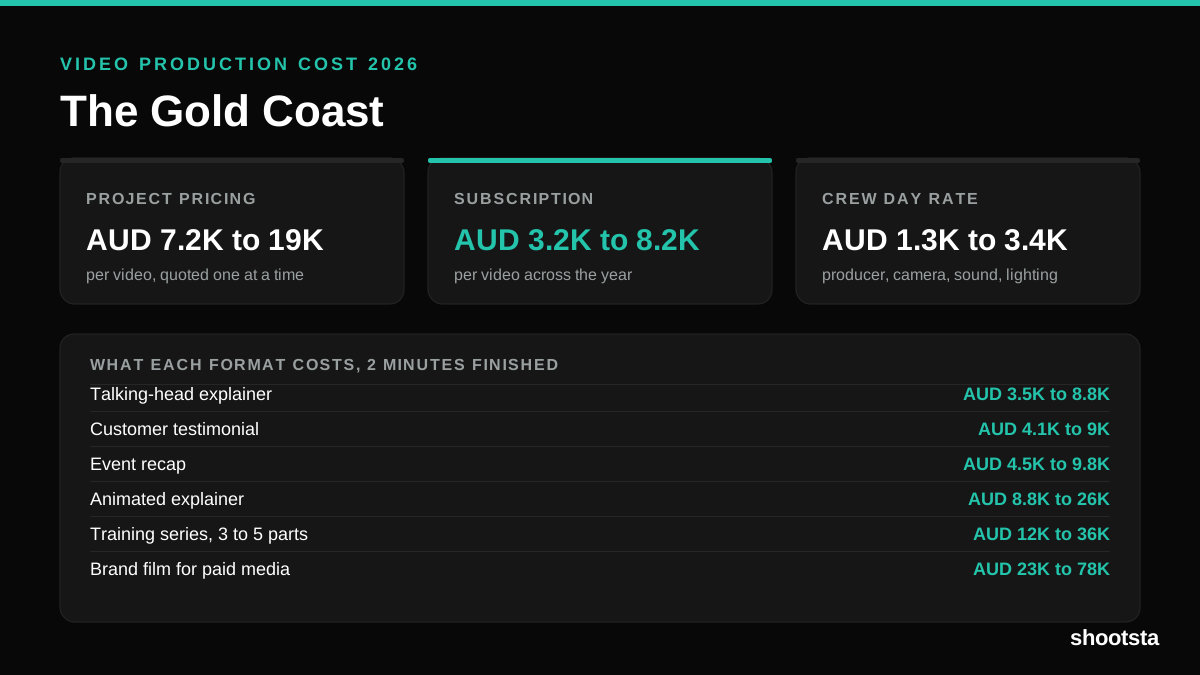
Video Production Cost on the Gold Coast 2026
Video production in the Gold Coast costs AUD 3,200 to AUD 8,200 per finished video on a subscription model, and AUD 7,200 to AUD 18,500 for one-off project work. Here is what you are paying for, and how the three pricing models compare.
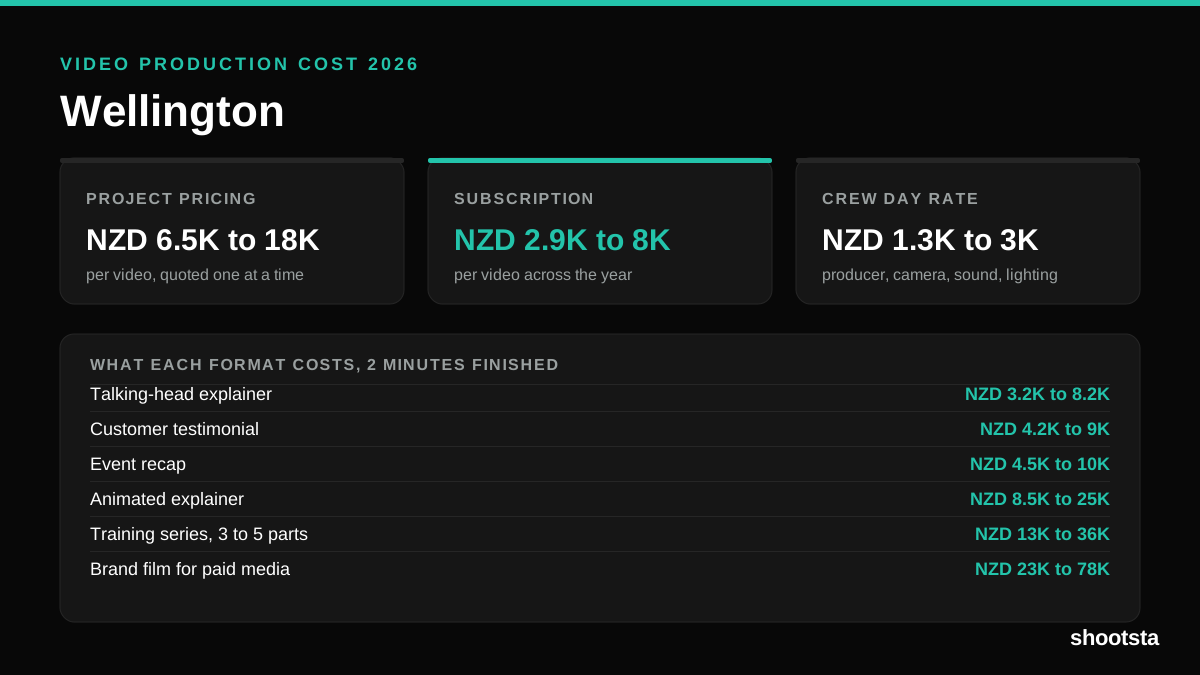
Video Production Cost in Wellington (2026)
Video production in Wellington costs NZD 2,900 to NZD 8,000 per finished video on a subscription model, and NZD 6,500 to NZD 18,000 for one-off project work. Here is what you are paying for, and how the three pricing models compare.
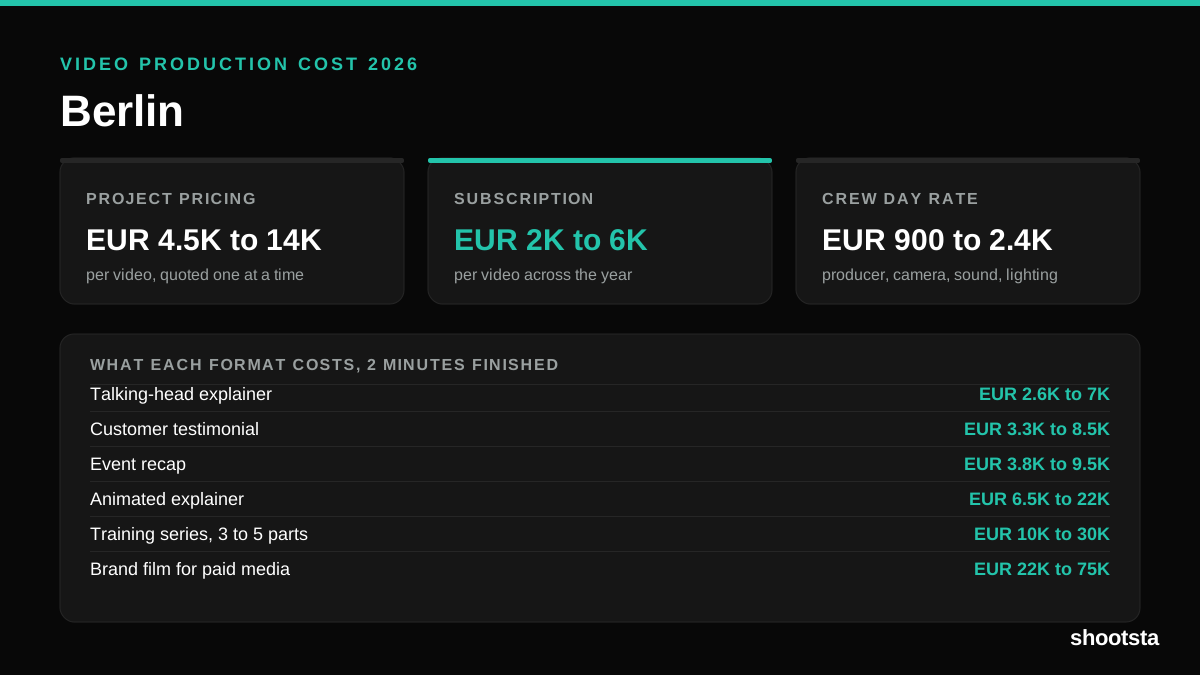
Video Production Cost in Berlin (2026)
Video production in Berlin costs EUR 2,000 to EUR 6,000 per finished video on a subscription model, and EUR 4,500 to EUR 13,500 for one-off project work. Here is what you are paying for, and how the three pricing models compare.