
How to produce video for investor relations
shootsta.
How to produce video for investor relations
By Shootsta · Published April 22, 2026 · Updated October 2026
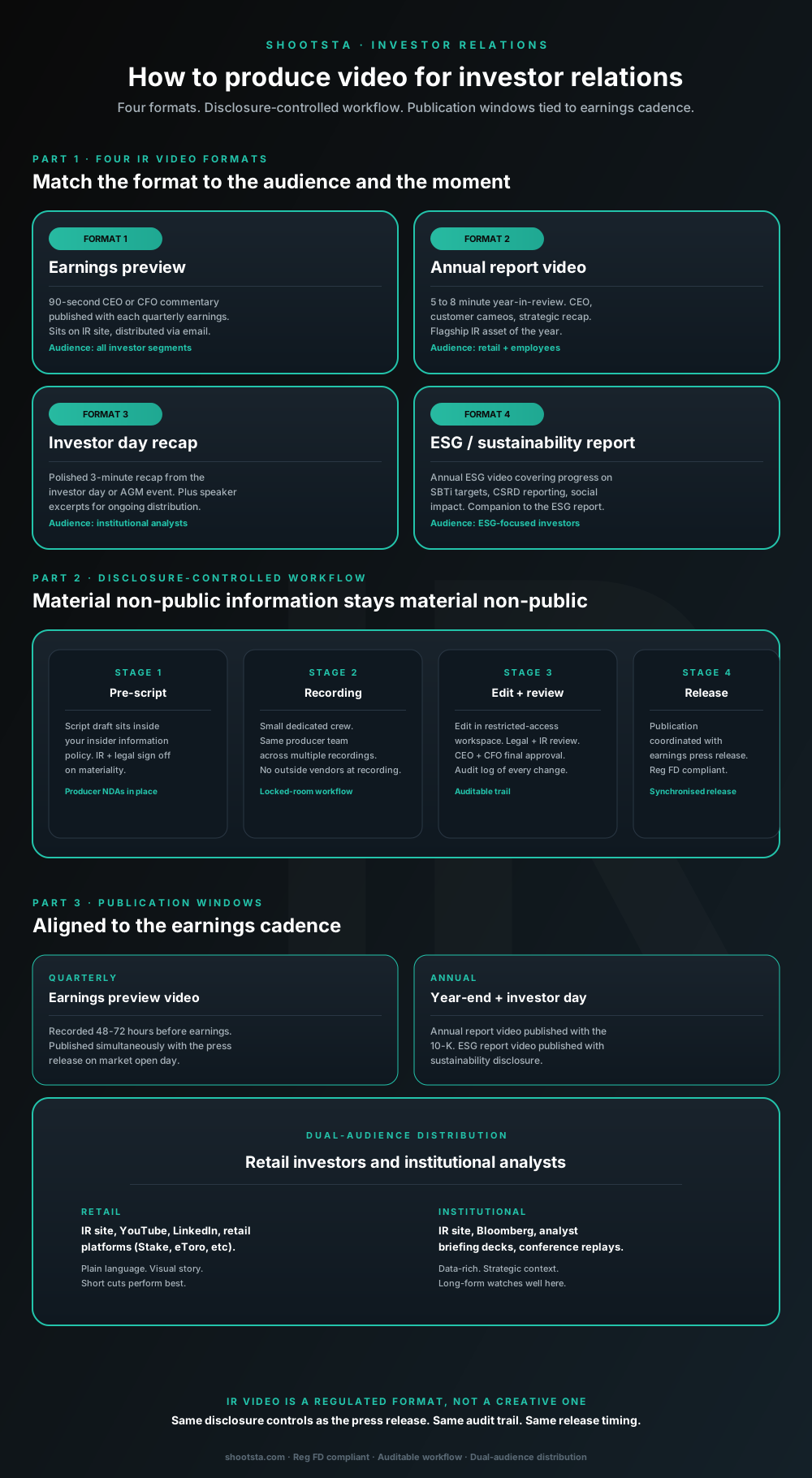
Investor relations video is a regulated format with the same disclosure controls as the press release it accompanies. Four formats, a disclosure-controlled production workflow that protects material non-public information through to release, and a dual-audience distribution model serving both retail investors and institutional analysts. Here is the production structure that does not surface material information ahead of release.
Why IR video is a regulated format, not a creative one
Investor relations video carries the same disclosure-control requirements as the press releases it accompanies. Material non-public information appears in the script, the recording, the rough cut and the final edit. Everyone involved in production sits inside the information control perimeter from script approval through to release. That includes the writer, producer, editor, any voiceover artist and the distribution platform. If you treat IR video as a creative format, you take on leak risk and regulatory exposure under Reg FD or equivalent rules. You also risk reputational damage if the workflow lets information out ahead of the official release.
The fix is to run IR video production under the insider information policies your press release process already uses. Apply the same NDAs, the same restricted-access workflow and the same audit trail, and coordinate the release with corporate communications in the same way. The production partner then works as an extension of your IR team rather than as a separate vendor.
The four investor relations video formats
Format 1: Quarterly earnings preview video
This is a 90-second commentary from the CEO or CFO, published with each quarterly earnings release. It gives strategic context, frames the quarter's results and signals what comes next. It sits on the IR site, goes out to investor email lists and is embedded in the press release. This format keeps you in regular touch with retail investors who never listen to the earnings call.
Format 2: Annual report video (year-in-review)
This 5 to 8 minute year-in-review piece is published with the 10-K or the equivalent annual filing. It combines the CEO on camera, customer cameos, a strategic recap and a look ahead. It is the flagship IR asset of the year. You publish it on the IR site, include it in digital editions of the annual report and present it at the AGM. Retail investors often form their view of the year from it, and institutional investors use it as context for their own research.
Format 3: Investor day or AGM recap
You produce a polished 3-minute recap of the investor day or AGM, plus a set of speaker excerpt cuts for ongoing distribution. The production model matches a marketing event recap, except that it runs under a disclosure-controlled workflow. This format carries the investor day to people beyond the analysts who attended live.
Format 4: ESG / sustainability report video
This annual ESG video covers progress on SBTi targets, CSRD reporting metrics and social impact programs. It accompanies the ESG report, and you use it in investor briefings with ESG-focused funds and in sector ratings submissions such as DJSI, MSCI ESG and EcoVadis. It helps set the company apart when you pitch to funds with an ESG mandate. We covered the broader sustainability angle in how a distributed video model cuts travel.
Interactive planner
What does an investor relations video program scope to?
Toggle the IR video formats you want to ship. The planner returns annual piece count, total cost, and an honest read on the program scope you are scoping into.
Formats in scope
Annual pieces
5
across selected formats
Annual cost
$62K
all-in production
Program tier
Mature
Earnings + flagship coverage
What this program signals to the market
Quarterly earnings preview plus an annual flagship is the standard public-company IR program. Most companies at this stage are signalling consistent leadership communication while leaving room to add ESG and investor day video later.
Scope an IR video programCosts include disclosure-controlled production, restricted-access editing workspace, multi-stage legal and IR review, and coordinated release with corporate communications. Per-piece costs higher than equivalent marketing video because of the disclosure overhead. Numbers are guides.
The disclosure-controlled production workflow
Stage 1: Pre-script (within information control perimeter)
The script is drafted under your company's insider information policy. IR and legal review it for materiality before production begins. The producer team signs NDAs that match your standard insider NDAs, with the same wording and the same enforcement. The partner shares its team list with your legal team so compliance knows who is involved.
Stage 2: Recording (locked-room workflow)
Use a small dedicated crew. Keep the same producer team for every recording all year, so the people inside the information control perimeter stay fixed instead of rotating. No outside vendors attend the recordings. Footage stays in a restricted-access workspace, never on general-purpose file-sharing platforms.
Stage 3: Edit and review (auditable trail)
Editing takes place in a restricted-access workspace where access goes to named individuals only, never to roles or teams. Every change is logged with a timestamp and the editor's identity. Legal and IR review the rough cut for materiality and accuracy, and the CEO and CFO give final approval. Keep the full audit log for compliance, for as long as your legal team's retention policy requires.
Stage 4: Release (timed with corporate comms)
Publication is coordinated with the distribution of the earnings press release. The video URL goes live at the same minute the press release crosses the wire. Simultaneous public release keeps you within Reg FD, since nobody gets the video selectively. If analysts get an embargoed preview, it follows the same rules as the press release.
The publication windows aligned to earnings cadence
Quarterly: earnings preview video
Record the video a few days before the earnings release, then edit and review it in the final day before earnings. It goes out at the same time as the earnings press release on market open day. During these days, the production partner's team sits in the same blackout window as your internal IR team.
Annual: year-end and investor day
The annual report video is published with the 10-K, a set period after fiscal year end. Production starts in the last month of the fiscal year using historical material, and the forward-looking statements are locked in the final weeks before publication. The ESG report video follows your sustainability disclosure cadence, which usually falls early in the next fiscal year. Investor day video is produced in the weeks after the event.
Ad-hoc: material announcements
A major acquisition, leadership change or strategic announcement may call for a CEO video alongside it. The timeline depends on the announcement, but expect a fast turnaround under disclosure controls. A standing relationship with one production partner lets you handle urgent requests without bringing a new vendor inside the information perimeter mid-event.
The dual-audience distribution model
Retail investors
Reach retail investors through the IR site, your YouTube channel, LinkedIn and retail brokerage platforms (Stake, eToro, Public and Robinhood, where they accept company video). Write in plain language and tell the story visually. Short cuts under 90 seconds hold retail attention best. This audience gains the most from regular video, because analyst reports and earnings calls are not their main source of information.
Institutional analysts
Institutional analysts find video on the IR site, usually on a different page from retail content. They also see it through Bloomberg Terminal integration where available, analyst briefing decks and conference replays. Give them data-rich cuts with strategic context. Long-form video of 5 to 8 minutes works here, because analysts have the attention and background to take in the detail. Sometimes a separate institutional cut includes material the retail cut leaves out.
Distribution timing matters
Under Reg FD, both audiences see the same content at the same time. Release is simultaneous, and only the channel mix differs. Releasing early to one audience creates regulatory problems whatever the intent.
What to include and what to exclude from IR video scripts
Include
Include historical results already in the press release and strategic context you have disclosed before. Forward-looking statements are fine if they match guidance you have already given. You can use customer references where the customer has published its own material about the relationship. Sustainability progress already in the public ESG report is safe, as is anything disclosed publicly before or at the same moment as the video.
Exclude
Leave out material information that is not yet public, such as the deal pipeline, unreleased product details, pending announcements and financial details missing from the press release. Do not disclose anything to one investor group that the other does not get. Avoid speculation beyond what the cleared guidance covers. Cut anything that would surprise the IR team if it appeared in a Bloomberg headline.
How to handle the CEO and CFO on camera
CEOs and CFOs tend to be comfortable on camera for investor communication, because the message matters to them professionally. Three production decisions shape how well it goes.
The first is teleprompter or talking points. A teleprompter is standard for earnings preview video, because the exact wording matters legally. Talking points suit annual report video better, since that format is conversational. At an investor day, the speaker presents their own material and the video captures the live delivery.
The second is the setting and visual quality. A studio and an office setting both work, and lighting and audio matter more than location. Keep a brand-consistent look across all IR videos, with the same lower thirds, grading and motion graphics templates.
The third is how many takes to allow. Two to four takes is standard for IR video, and more can hurt because the speaker's natural delivery fades after the fourth or fifth. Write the script so the speaker can deliver it in two or three takes.
Frequently asked questions
Who needs to sign the producer NDA?
Everyone on the production team who can see the script or the raw footage needs to sign. That usually means the producer, the director or DP, the editor, anyone with access to the restricted workspace and any voiceover talent. If the NDA wording matches your standard insider NDA, legal does not need to review it for each project.
What happens if the video accidentally surfaces material information?
Under Reg FD frameworks, the standard remedy is to disclose the material information publicly, quickly and widely. If the video has not yet spread far, you can edit it to remove the material information and upload it again. The audit log and disclosure controls are what limit your exposure if this happens, and a team that skipped them has no defense.
How does this work for newly-public companies?
The workflow is the same, but the program is usually lighter in the first year after the IPO. A quarterly earnings preview plus an annual report video is the usual starting point for a newly public company. ESG and investor day video tend to follow once the program has settled in.
What about IPO roadshow video?
Roadshow video is a different category with different rules. For US IPOs it is produced under SEC quiet period rules, and other jurisdictions have their own equivalents. Treat it as a separate scope with its own legal review, and keep the standard IR video workflow out of it until the quiet period ends.
How long are IR videos typically retained?
The versions on the IR site usually stay up indefinitely as part of the investor record. Production audit logs are kept for as long as your legal team's retention policy requires. Some companies move older videos to a "historical" section of the IR site to keep the current section clean.
Can the same production partner handle marketing video and IR video?
Yes, if the partner has shown it can keep information under control. Where practical, keep the IR team separate from the marketing team, with different editors, reviewers and file storage areas. People can move between the two teams as long as both sit inside the information control perimeter. Avoid rotating people on the IR team itself.
Where to go next
For the CEO video commitment that quarterly earnings preview video draws on, read how to produce a CEO video update series. For the brand-control workflow that holds across IR and other regulated video formats, read brand control with a video production partner. For the broader contracts and security setup IR programs need from a partner, read video production contracts: what to look for.
To scope an IR video program for your public company, book a free consultation.
Take this article with you
Read the latest at shootsta.com/blog/how-to-produce-video-for-investor-relations
You might also like
How to Brief an Animation Project
How to Brief an Animation Project
An animation brief is the document you send to your production partner before work starts. Get it right and you cut revision cycles in half. Get it wrong and you discover mid-production that everyone disagrees on what the video is for. This is what a complete brief looks like.
Animation for change management comms
Animation for change management comms
Animation handles change management communications better than live video for three reasons: no on-camera executives required during sensitive periods, scene-level updates when plans shift, and a single production that works across global teams with voiceover-only language swaps.
How sales leaders should use video at scale
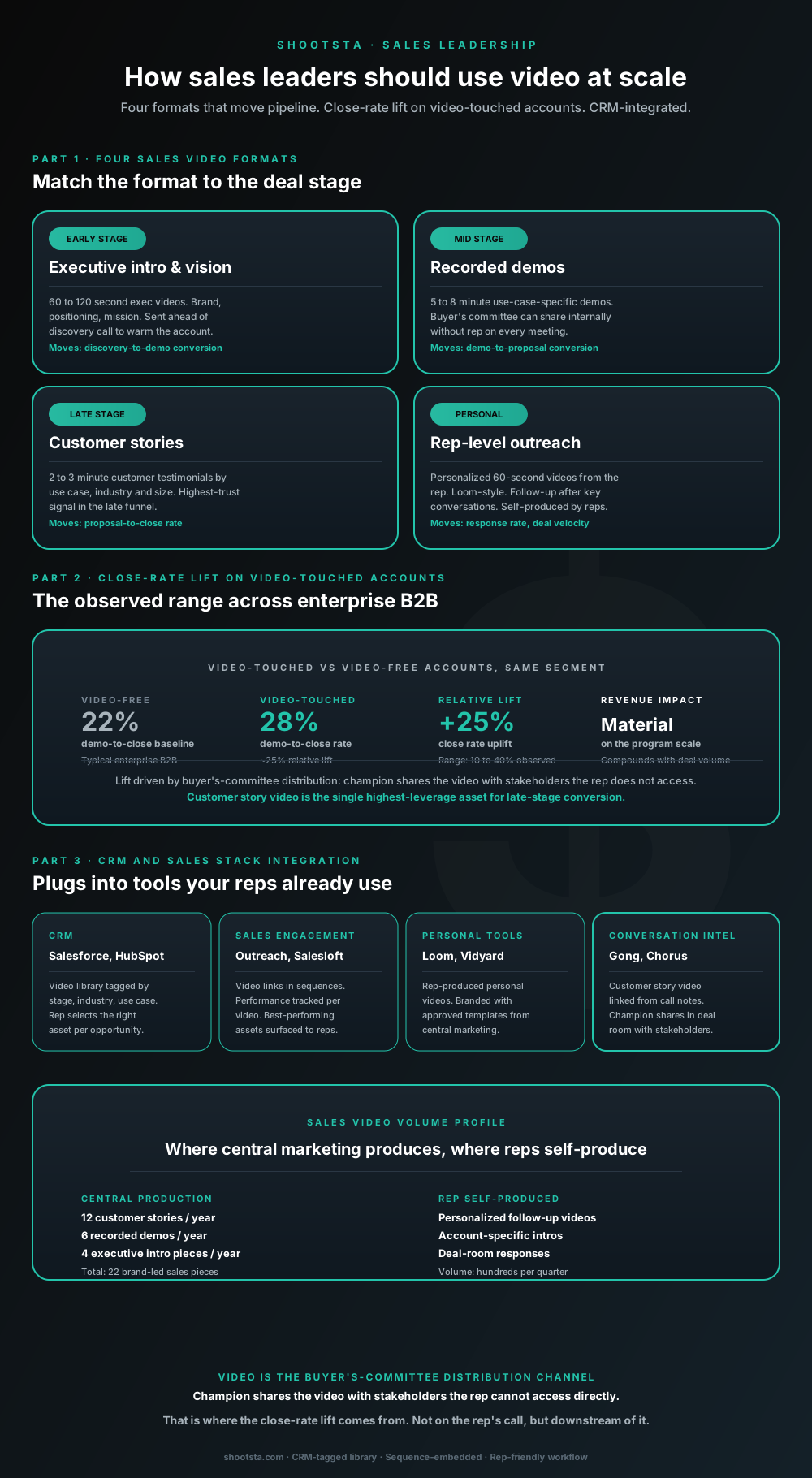
Sales leaders mostly think about video as personalized rep outreach (Loom, Vidyard) or as marketing-produced customer stories. Both are useful. The bigger opportunity is the buyer's-committee distribution layer: assets the champion shares internally with stakeholders the rep does not access directly. That is where the close-rate lift compounds.
How L&D leaders replace classroom with video
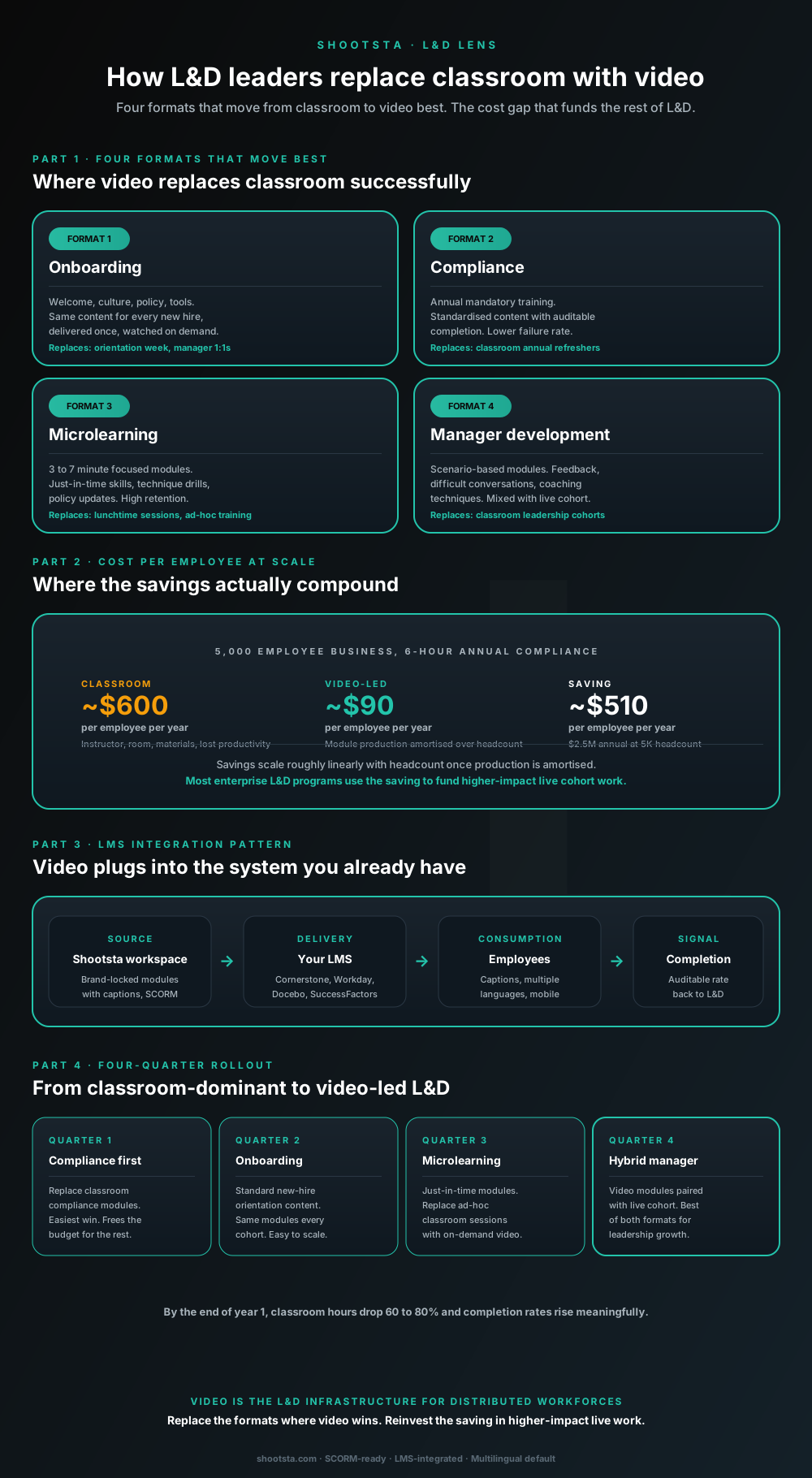
L&D leaders running classroom-heavy training programs typically have the largest single opportunity in the business to free budget through format change. Four training formats move from classroom to video cleanly; the savings fund higher-impact live work. Here is the rollout that compounds learner adoption over four quarters.
How customer success leaders should use video
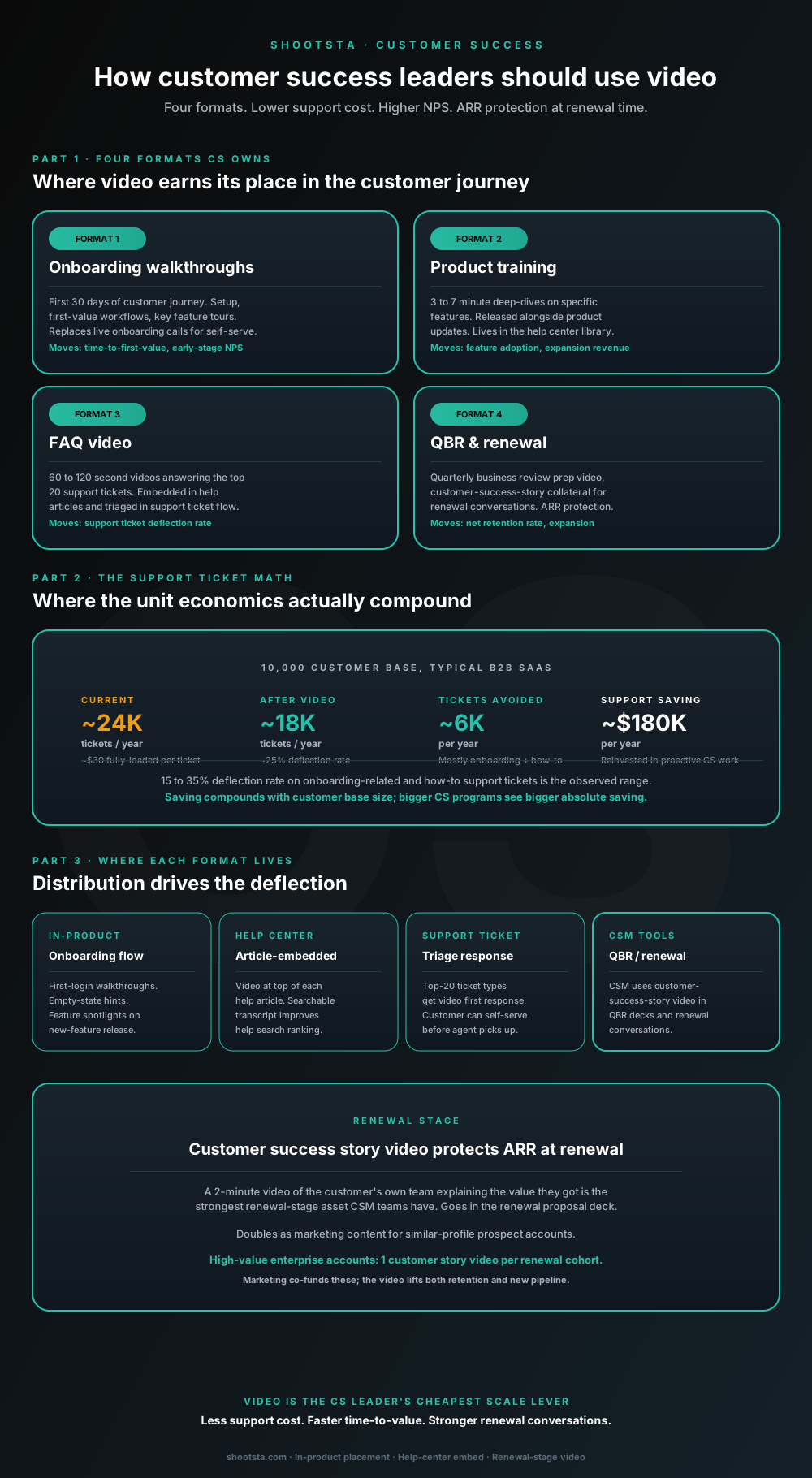
Customer success leaders are usually under-resourced for both reactive support volume and proactive retention work. Video is the cheapest lever to fix both - 15 to 35% deflection on onboarding and how-to tickets, faster time-to-value, and renewal-stage customer story video that lifts net retention. Here is the four-format model and where each piece earns its place.
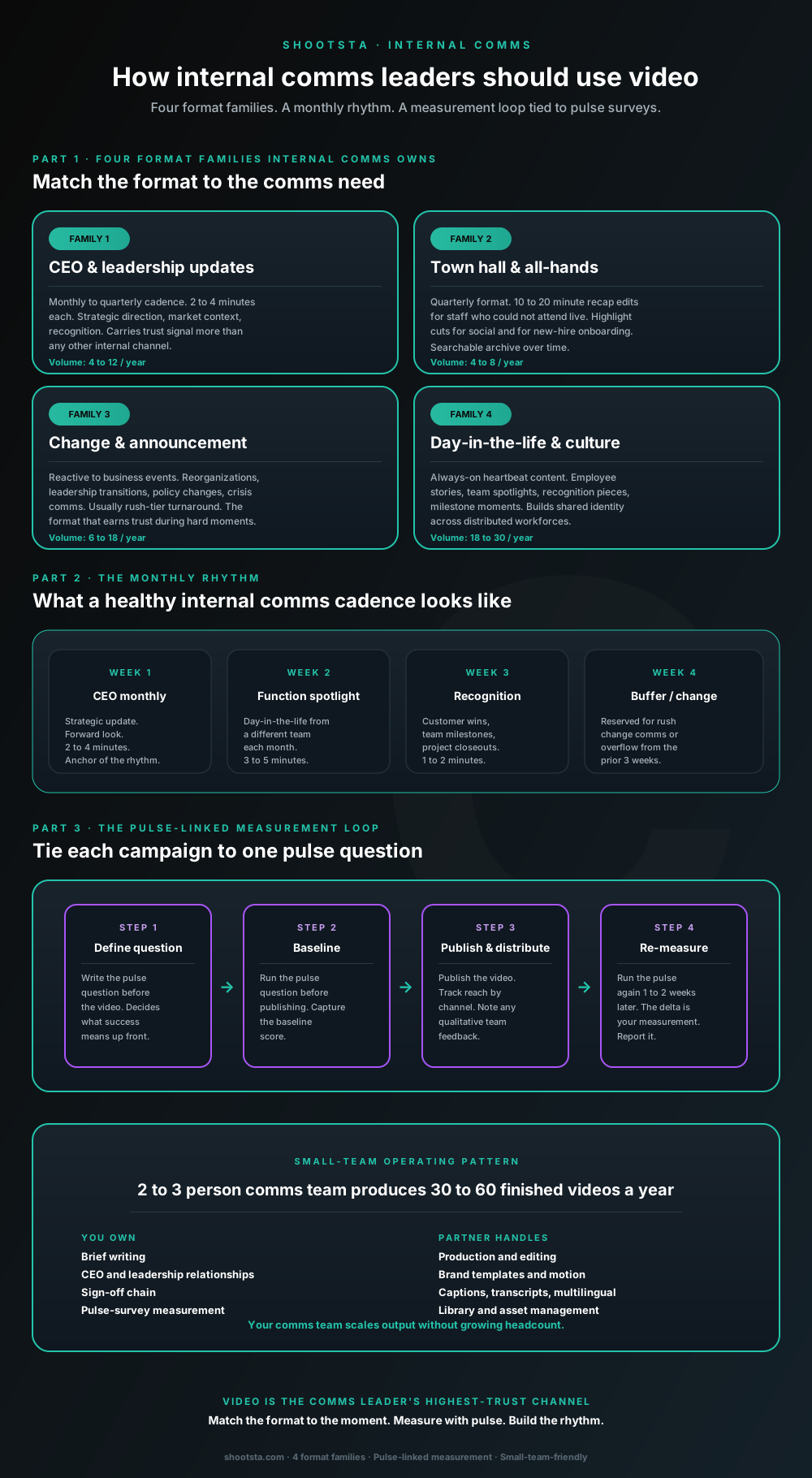
How internal comms leaders should use video
Internal comms leaders are usually under-resourced for the volume of video the business wants. The fix is not more headcount; it is structuring the program around four format families, a monthly rhythm, and a pulse-survey-linked measurement loop. Here is the operating pattern that lets a small comms team produce 30 to 60 finished videos a year.