
How to produce video for energy and utilities
shootsta.
How to produce video for energy and utilities
By Shootsta · Published April 12, 2026 · Updated October 2026
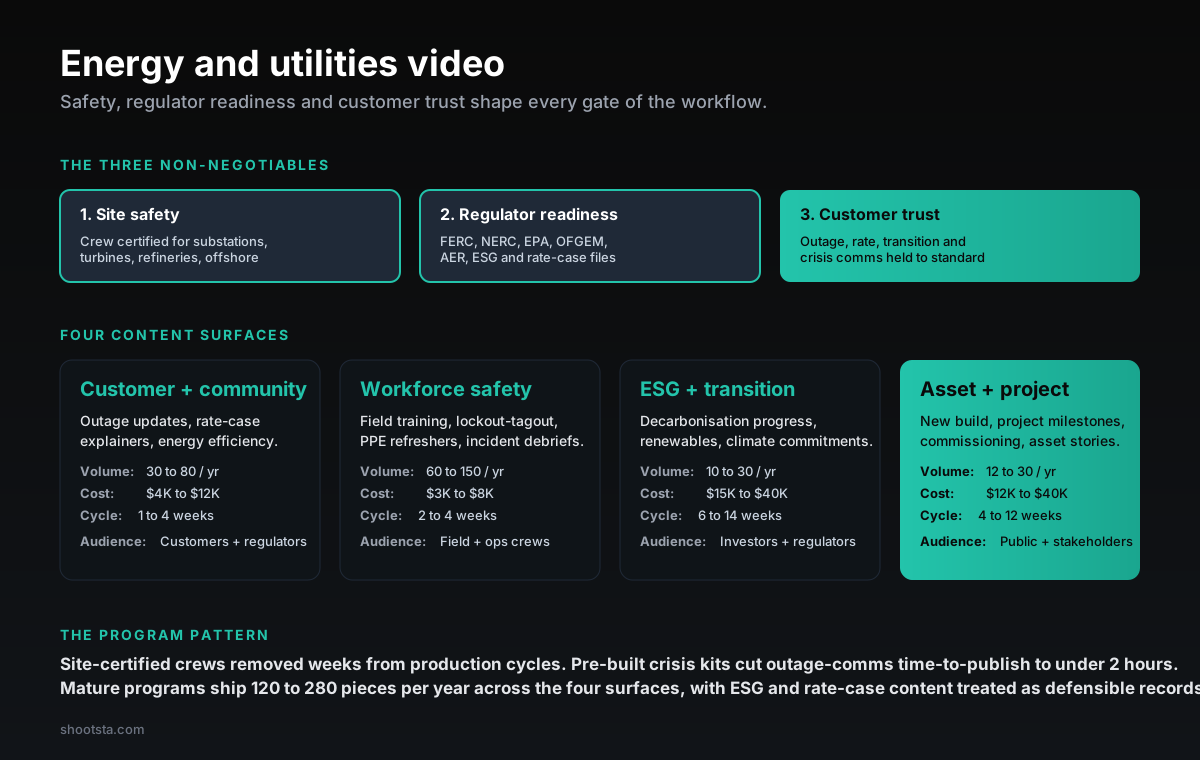
Energy and utilities video carries three non-negotiables: site safety, regulator readiness and customer trust. Four content surfaces (customer and community, workforce safety, ESG and transition, asset and project), the pre-built outage-comms kit that publishes inside 2 hours, and the multi-site program pattern that ships 120 to 280 pieces per year across generation, transmission, distribution and retail.
Why energy and utilities video carries a different production load
Energy and utilities video carries three loads that most other sectors do not. The first is site safety. Substations, turbines, refineries, offshore platforms and gas plants are hazardous places, and they need site induction, PPE and crew training before anyone films. The second is regulator readiness. FERC, NERC, EPA and PHMSA in the US, OFGEM in the UK and AER in Australia all draw on video evidence, through rate-case proceedings, ESG disclosure regimes and reliability reporting. The third is customer trust, because the public and the press examine outages, rate changes, transition messaging and crisis comms far more closely than they examine a typical commercial brand.
It is easy to underestimate how much these loads shape production. A crew without site certification adds weeks of induction time. Outage comms ship hours late when nobody built the kit in advance, and ESG video that misses disclosure standards draws regulator attention. So design your program around site-certified crews, pre-built crisis kits and regulator-ready ESG content from day one. If you handle the four content surfaces below well, you can sustain a high annual volume and still pass regulator, customer and workforce scrutiny.
The three non-negotiables
Non-negotiable 1: Site safety
The crew must be certified for the specific site type before filming starts. Substations need electrical safety induction, and turbines need working-at-heights certification. Refineries and gas plants need hot-work and confined-space awareness, while offshore platforms need BOSIET or an equivalent. Every operator who appears on camera wears PPE: hard hat, hi-vis, safety glasses, gloves and FRC where required. Each shoot also needs a site-specific risk assessment and method statement (RAMS). A crew that already holds the right certifications skips weeks of site induction, while one that does not holds up every production day until inductions are done.
Non-negotiable 2: Regulator readiness
Rate-case and reliability video gets referenced in PUC, FERC and state-regulator filings. ESG video has to align with disclosure standards such as SASB, GRI, TCFD, CDP and ISSB. Sustainability reporting video supports CSRD reporting in Europe and SEC climate disclosure in the US. Once the asset enters the regulator record, production has to treat it as defensible evidence rather than as marketing. A mature program keeps documented sources for every claim and an archive that meets the longest retention rule of any regulator it answers to.
Non-negotiable 3: Customer trust
Outage updates, rate-case explainers and transition or decarbonization messaging all face more public scrutiny than most sectors see. Tone, source attribution, accuracy, accessibility and multilingual delivery all weigh more in customer-facing utilities video than in similar commercial work. A badly handled customer comms moment can damage the utility's social license for years.
The four content surfaces
Surface 1: Customer and community
This surface covers outage updates, rate-case explainers, energy efficiency videos, safe-digging awareness, transition messaging and community investment stories. It faces the most public scrutiny of the four. Routine pieces take a few weeks, while outage updates can go out within hours if you have a pre-built crisis kit. Expect to deliver most pieces with accessibility features and in more than one language.
Surface 2: Workforce safety
Here you produce field crew training, lockout-tagout refreshers, PPE and fall-protection training, switching safety and incident debriefs. For a utility, this is usually the highest-volume surface, because the safety catalog keeps growing year after year. The audience is internal. These videos protect field crews and help bring incident rates down.
Surface 3: ESG and transition
This surface includes decarbonization progress reports, renewables project stories, climate commitment updates and scope 1-2-3 emissions reporting video. It also covers just-transition workforce stories and biodiversity and water stewardship pieces. Volume is lower and each piece costs more, and the cycle runs for weeks because the data work has the longest lead time. This is where regulator and investor audiences overlap.
Surface 4: Asset and project
This surface holds new-build construction documentation, commissioning footage, major maintenance and outage planning videos and asset-life stories. Location and site access drive most of the cost here. These videos keep the asset history on record and support community engagement around major projects.
The outage-comms crisis kit that publishes in under 2 hours
For any utility, outage comms is the content surface with the highest stakes. The time between detecting an outage and the first customer message decides whether the utility leads the story or chases it. A kit built from the four elements below is what lets you publish within that window.
Element 1: Pre-approved script template
Legal, regulatory affairs and customer service approve an outage statement template before any incident happens. At incident time, your team fills in the variables: the affected area, the expected restoration window and the guidance for customers. That takes drafting and approval out of the incident, where it does not need to happen.
Element 2: Field-ready capture kit
Place a capture kit at control rooms and key depots ahead of time. It holds a lighting and audio setup good enough for the CEO, which ops staff can run after a short induction. Tier-1 incidents then need no crew dispatch, and you skip the wait for a crew to mobilize.
Element 3: Standby editor
Agree a documented response time with your production partner, with 24/7 coverage. The editorial workspace comes set up with brand templates, lower thirds and outage map graphics. This removes vendor onboarding and project setup from the incident timeline.
Element 4: Distribution map
Map every channel ahead of time, including social channels, customer email systems, the regulator portal, app push notifications and internal channels. The published video then reaches customers, regulators and press within minutes of final approval. No time goes to coordinating distribution mid-outage.
Together, these elements let a tier-1 outage video reach customer screens within hours of incident detection. Without the kit, the same video can take most of a day, and by then the social and press cycles have already shaped the story. We covered the broader crisis comms playbook in how to produce video for crisis comms; utilities is one of the most demanding applications.
Energy and utilities program planner
Map your annual volume and outage-comms readiness
Set planned annual volume per content surface. Toggle which crisis-kit elements are in place. The planner returns total assets, indicative spend and an outage-comms time-to-publish rating.
Outage updates, rate-case, energy efficiency
Mid-point cost $8K per asset.
EHS training, lockout-tagout, PPE refreshers
Mid-point cost $5K per asset.
Decarbonisation, renewables, climate commitments
Mid-point cost $25K per asset.
New build, commissioning, asset stories
Mid-point cost $22K per asset.
Outage-comms crisis kit
Annual assets
176
Indicative spend
$1.63M
Outage-comms readiness
Outage-comms not ready
0/4 kit elements in place
Cost ranges are sector medians for established energy and utilities programs. Site-certified production crews drop the per-asset cost 20 to 30 percent against vendors who need fresh site induction every visit.
The site-certified crew model that protects the cycle time
Substations and switching stations
Substation work needs electrical safety induction, which is NFPA 70E in the US and an equivalent standard elsewhere. Access lists carry documented training records for each person. Many utilities require the production crew to hold the same access approvals as the operating crew before filming. Training a new crew costs money and adds weeks of induction time, and a stable site-certified crew avoids both.
Working at heights
Towers, turbines, transmission lines and stack work all need formal working-at-heights certification, rescue planning and equipment inspection. Utilities usually expect fall-protection certification that matches their own field-crew standard. For routine capture at height, drone footage often replaces climbing altogether.
Refineries and gas processing
Crews need hot-work, confined-space, gas-detection and emergency-escape training, along with a site-specific risk assessment. Many sites also issue a permit-to-work for every shoot. Schedule production around the site's maintenance windows, since routine filming is not allowed during active operations.
Offshore and remote
Offshore work needs BOSIET or HUET training, which includes helicopter underwater escape. You also have to plan remote-site logistics for the crew and equipment. Access makes an offshore production day far more expensive than the same work onshore. The best value comes from batching capture across several work packages in one trip.
The ESG and transition surface in detail
Emissions reduction progress video
This is an annual or half-yearly reporting video that shows progress against scope 1-2-3 emissions targets. It should align with SBTi commitments, regulator disclosure standards and investor expectations. The data work adds to the cost, so budget for it from the start. Expect this asset to be cited in investor calls and rate-case filings.
Renewables project stories
These films cover new wind farms, solar farms, battery storage and green hydrogen projects. They mix construction documentation with storytelling after commissioning. You can use each project film in community engagement, regulator filings and investor communications.
Just-transition workforce content
These are reskilling and redeployment stories from workers moving out of coal, gas and oil into renewables, electrification and grid modernization. They support the social license the energy transition depends on.
Biodiversity and stewardship content
This covers land use, water stewardship, fisheries impact and community partnerships tied to the asset footprint. These videos support stakeholder relationships in communities near major energy assets.
What changes for the production team working on energy and utilities content
The production team has to change how it works in three practical ways.
Shift 1: Site safety fluency
Producers and crews need to know substation, turbine, refinery and offshore safety well. The crew should already hold the right certifications and arrive with the right PPE and risk assessment. A crew that needs a fresh induction at every site adds weeks to every production cycle.
Shift 2: Regulator-ready content discipline
Editors and producers need to understand the rate-case process, ESG disclosure regimes and reliability reporting standards. Every numerical claim needs a source, and the supporting documents need an archive that would stand up to review. We covered the broader regulator-aware workflow in how to produce video for financial services; energy and utilities apply similar discipline with different regulator focus.
Shift 3: Crisis-ready operating posture
The production team should run with the same incident-response discipline as the operating team. That means the outage kit is built, a standby editor is available and the distribution map is locked. A team that treats crisis comms like routine content gets caught out at the moment that matters most.
Practical questions enterprise energy teams ask
How do we handle multi-jurisdiction regulator requirements?
Large utilities often answer to several regulators at once, such as PUCs in several US states, regulators across EU markets or separate state-level regulators in Australia. The usual approach is to produce the master ESG and rate-case content once. You then make regional versions that meet each regulator's filing requirements. We covered the broader pattern in how to scale video across global offices.
What about field-crew video produced by operations teams?
Many utilities keep their own field-operations video capability for routine documentation, such as switching procedures, post-storm assessment and asset condition reporting. Your professional video program should work alongside that capability and leave it in place. The professional program handles the customer-facing, regulator-facing and brand-facing surfaces, while field ops keeps the internal documentation.
How do we handle community concerns around new projects?
Start with community engagement video before construction, such as stakeholder briefings and FAQ videos that answer common concerns. Keep people updated with progress video during construction, then publish operational video after commissioning. At each stage, the video should address what the affected communities are worried about, in a measured tone and with sources named. The pattern in how internal comms leaders should use video extends to community comms with a higher trust threshold.
What about AI in energy and utilities video production?
AI helps in narrow places, such as transcript editing, picking social cutdowns and scheduling distribution. It should not stand in for source video in regulator-facing or customer-facing communications. In utilities communication, trust comes from real footage and a named source. AI-generated footage wears away the trust that customer and regulator relationships depend on. The framing in how AI fits inside enterprise video workflows applies with extra caution for energy.
How do we handle protected information?
Grid operational details, footage with cyber-security implications and market-sensitive material all need controlled handling. The usual setup is a restricted-access editorial workspace and distribution limited to approved channels. Each asset also needs an audit trail that would stand up to review, plus an archive that meets the longest retention rule of any regulator you answer to. The contract pattern is covered in video production contracts: what to look for.
Where to go next
For the broader crisis-comms framework that outage comms extends, read how to produce video for crisis comms. For the regulator-aware workflow pattern that ESG video extends, read how to produce video for financial services. For the multi-site production model, read how to scale video across global offices.
To scope an energy or utilities video program with site safety, regulator readiness and customer trust handled correctly, book a free consultation.
Take this article with you
Read the latest at shootsta.com/blog/how-to-produce-video-for-energy-and-utilities
You might also like
How to Brief an Animation Project
How to Brief an Animation Project
An animation brief is the document you send to your production partner before work starts. Get it right and you cut revision cycles in half. Get it wrong and you discover mid-production that everyone disagrees on what the video is for. This is what a complete brief looks like.
Animation for change management comms
Animation for change management comms
Animation handles change management communications better than live video for three reasons: no on-camera executives required during sensitive periods, scene-level updates when plans shift, and a single production that works across global teams with voiceover-only language swaps.
How sales leaders should use video at scale
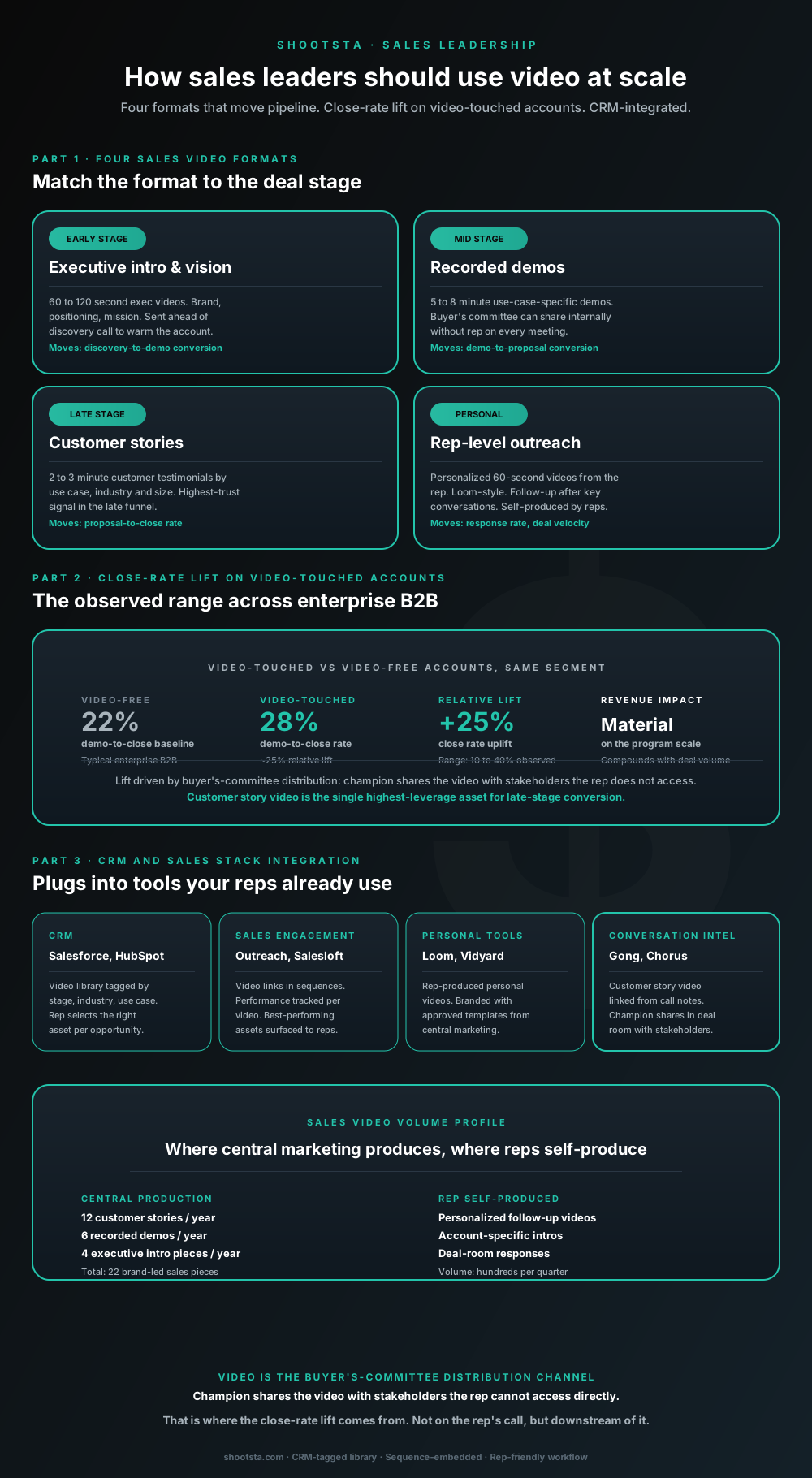
Sales leaders mostly think about video as personalized rep outreach (Loom, Vidyard) or as marketing-produced customer stories. Both are useful. The bigger opportunity is the buyer's-committee distribution layer: assets the champion shares internally with stakeholders the rep does not access directly. That is where the close-rate lift compounds.
How L&D leaders replace classroom with video
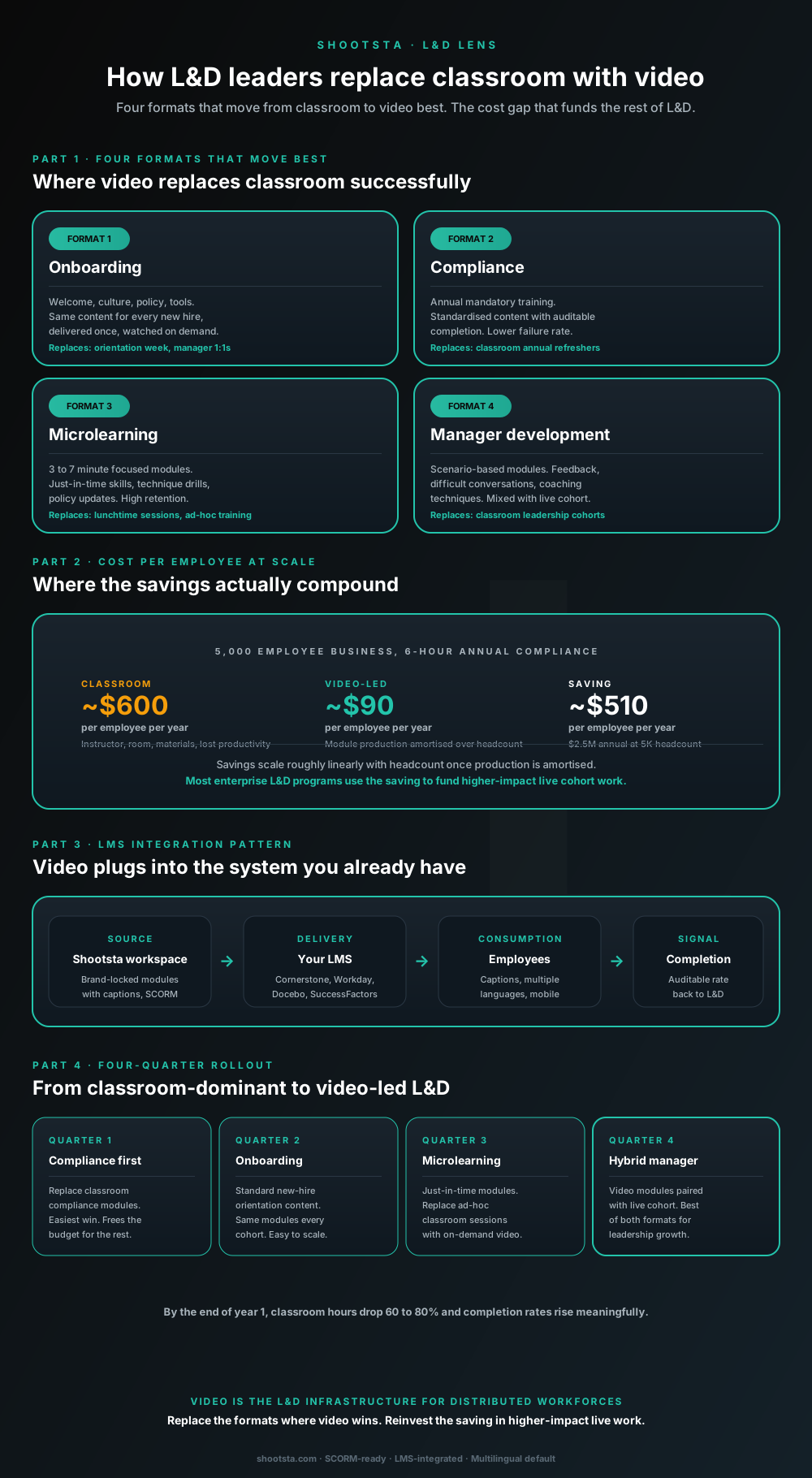
L&D leaders running classroom-heavy training programs typically have the largest single opportunity in the business to free budget through format change. Four training formats move from classroom to video cleanly; the savings fund higher-impact live work. Here is the rollout that compounds learner adoption over four quarters.
How customer success leaders should use video
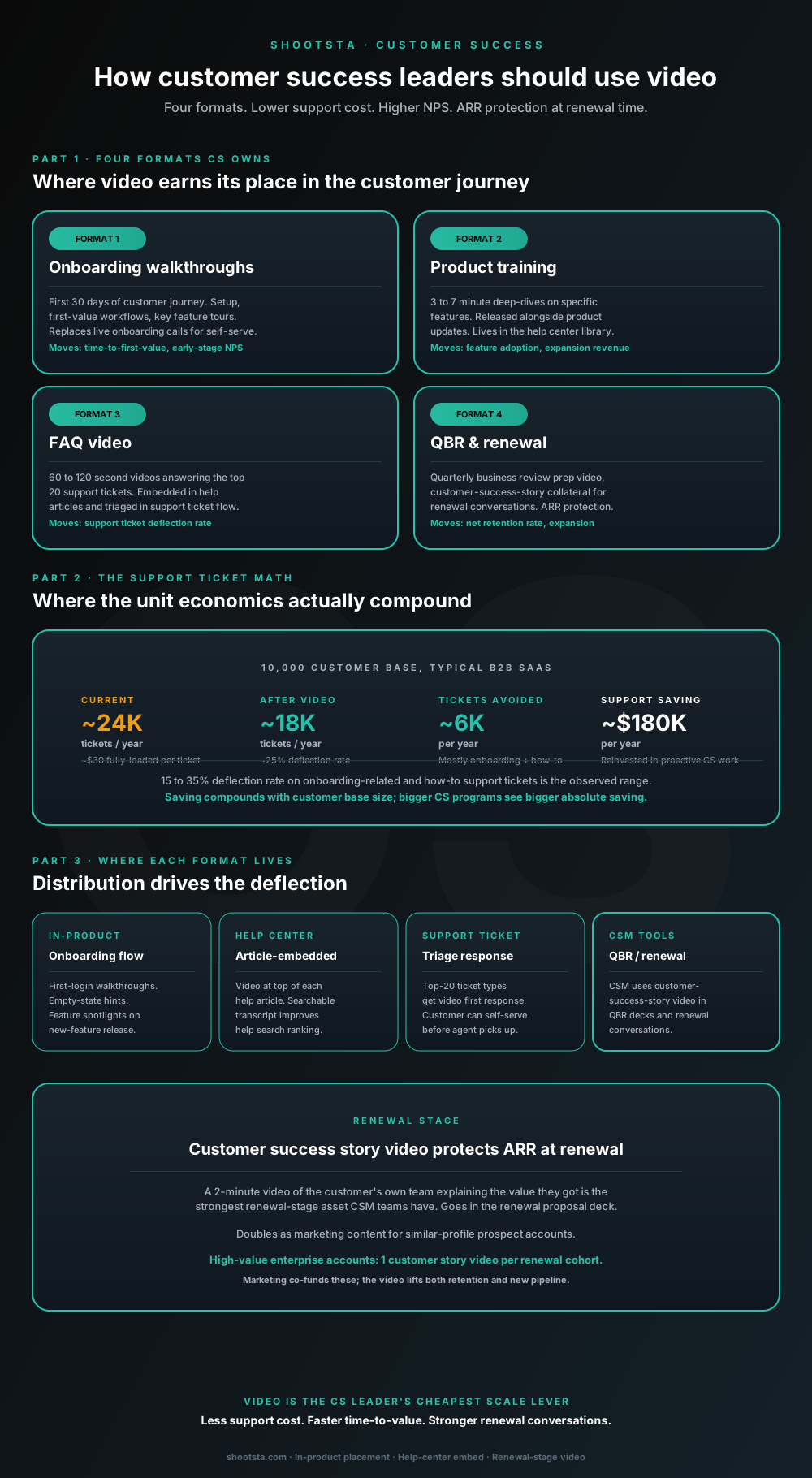
Customer success leaders are usually under-resourced for both reactive support volume and proactive retention work. Video is the cheapest lever to fix both - 15 to 35% deflection on onboarding and how-to tickets, faster time-to-value, and renewal-stage customer story video that lifts net retention. Here is the four-format model and where each piece earns its place.
How internal comms leaders should use video
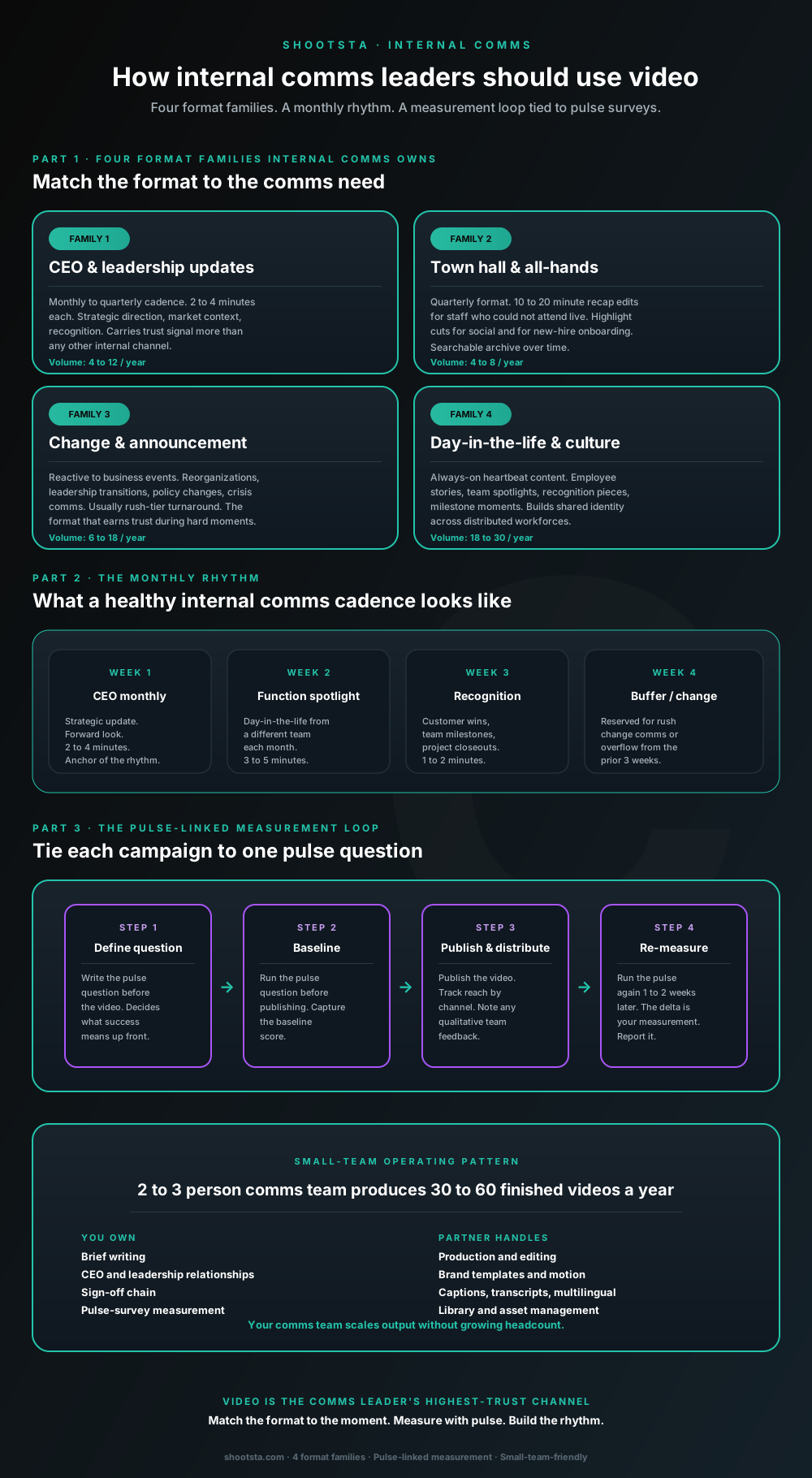
Internal comms leaders are usually under-resourced for the volume of video the business wants. The fix is not more headcount; it is structuring the program around four format families, a monthly rhythm, and a pulse-survey-linked measurement loop. Here is the operating pattern that lets a small comms team produce 30 to 60 finished videos a year.