
How to produce enterprise video across EMEA
shootsta.
How to produce enterprise video across EMEA
By Shootsta · Published April 8, 2026 · Updated October 2026
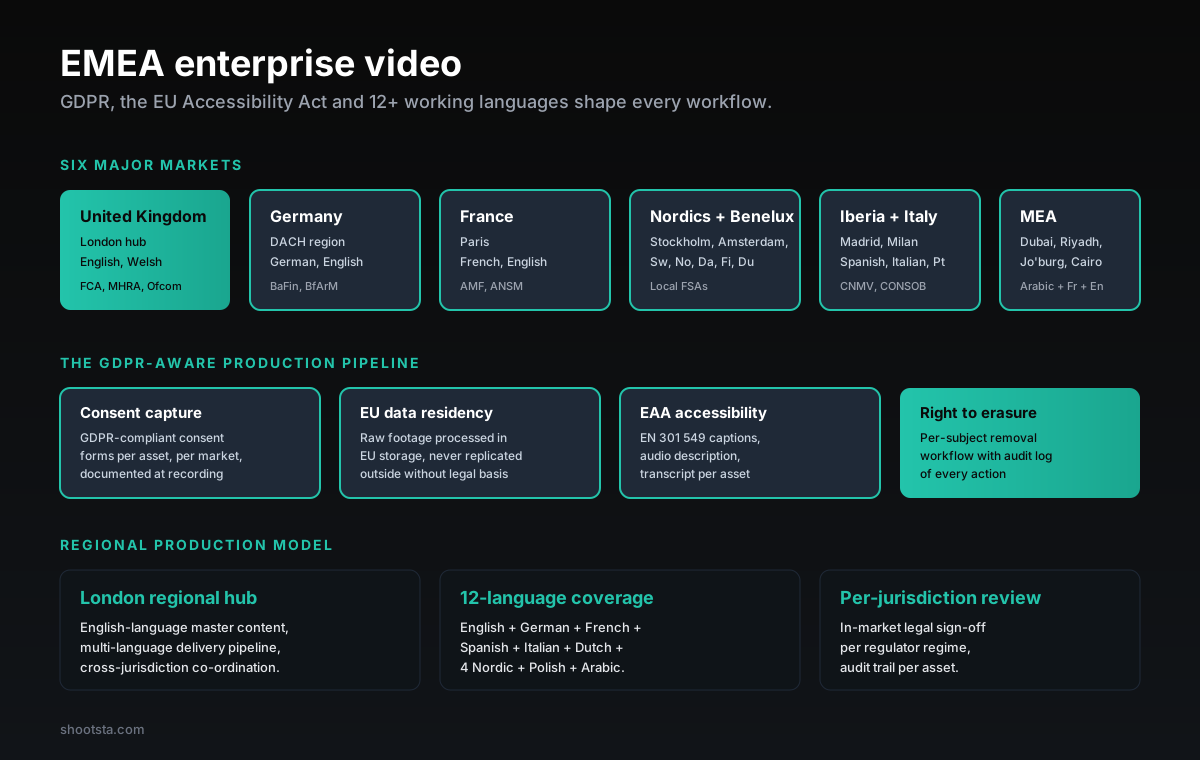
EMEA enterprise video runs against the strictest regulatory load in the world. GDPR shapes every consent and data-handling decision. The EU Accessibility Act sets the highest accessibility baseline globally. Twelve+ working languages across the region. London as the regional hub, the GDPR-aware production pipeline, and the per-jurisdiction legal sign-off pattern that ships clean across the UK, DACH, France, Iberia, Nordics, CEE and MEA.
Why EMEA video runs differently from a single-market model
Enterprise video in EMEA runs into three structural facts that other regions do not share. The first is regulatory load. GDPR is the strictest data protection regime in the world, and it applies to any video that shows an identifiable person. The EU Accessibility Act (EAA) sets the highest accessibility baseline anywhere and has covered customer-facing digital content since June 2025. The second is language: 12 or more working languages across the major markets, each with dialect variation and its own editorial standards.
The third fact is that many enterprise programs underestimate the compliance load. They run a single hub out of US headquarters, treat GDPR consent as paperwork for legal, and ship content that fails accessibility or carries silent GDPR exposure. The fix is structural: a London-anchored regional model, GDPR-compliant pipelines from capture through archive, EAA accessibility in every delivery, and legal sign-off in each jurisdiction rather than one centralized review. This post is a guide to that model.
The six major EMEA markets
United Kingdom
The UK is the regional hub for most multinational EMEA programs. English is the primary working language, with Welsh needed for some public-sector content. The regulators are the FCA for finance, the MHRA for healthcare and Ofcom for media. Since Brexit, the UK runs UK GDPR alongside EU GDPR for cross-border content. London is the EMEA production hub because of its talent depth, time zone and English-language masters.
Germany, Austria and Switzerland (DACH)
The DACH region uses German as the primary working language, with English for alignment with global HQ. The regulators are BaFin for finance and BfArM for healthcare in Germany, FINMA in Switzerland and the FMA in Austria. DACH audiences hold higher editorial standards than most regions: production values, factual accuracy and source attribution all matter more here. Hamburg, Berlin, Munich and Frankfurt are the primary production hubs.
France and Belgium FR
France works in French, with the AMF for finance and ANSM for healthcare. Belgium's French-speaking communities work to similar standards, and Paris is the primary production hub for both. French audiences expect high editorial standards and content adapted to their culture, so English-language content with French captions does not perform as well as a French-language master.
Spain, Portugal and Italy
Spain works in Castilian Spanish, with Catalan and Basque for regional content. The CNMV regulates finance and AEMPS regulates healthcare, and Madrid and Barcelona are the primary hubs. Portugal needs European Portuguese, which is distinct from Brazilian Portuguese. Italy works in Italian with plenty of regional variation, CONSOB and AIFA as regulators, and Milan and Rome as the primary hubs.
Nordics and Benelux
Swedish, Norwegian, Danish and Finnish are all distinct languages, so each needs its own production. English fluency is high across the Nordics, so an English-language master works in some content categories and fails in others. Benelux needs Dutch and Flemish for the Netherlands and Belgium-NL, plus French for Belgium-FR. Each of these markets has a strong local financial regulator.
MEA (Middle East and Africa)
The major MEA enterprise markets are the UAE (with Dubai as the primary hub), Saudi Arabia (Riyadh), South Africa (Johannesburg) and Egypt (Cairo). The working languages are Arabic, French for North Africa, and English for South African and UAE business audiences. Each market has its own regulator, including SAMA in Saudi Arabia, the SCA in the UAE and the FSCA in South Africa. Cultural sensitivity matters across the whole region.
The London-anchored hub-and-spoke model
Why London as the regional hub
London anchors most multinational EMEA video production for three reasons. The time zone comes first: a London morning overlaps part of the APAC workday and a London afternoon overlaps part of the US one. The second is talent depth, because one city can produce English-language masters at scale and language versions for the rest of the region. The third is the operating environment. Even after Brexit, London is a stable base for cross-border production rights, recruitment and technology.
Regional content hub
London hosts the central brand template library, the multi-language asset archive, cross-market campaign coordination and the editorial standards function. Regional teams in DACH, France, Iberia, the Nordics, CEE and MEA work to the standards set there. Master content is produced in London in English, and a region produces its own master where the culture or the audience requires it.
Regional production spokes
The DACH spoke handles German-language production and the Paris spoke handles French. Spanish comes out of Madrid or Barcelona, Italian out of Milan, the Nordics and Benelux out of Stockholm or Amsterdam, and MEA out of Dubai. Each spoke is a full production unit for its market and shares brand templates and editorial standards with London.
Cross-jurisdiction co-ordination
With the right hub-and-spoke model, one central campaign concept can land across 8 to 12 EMEA markets on a single planned timeline. Without it, the same campaign takes far longer and the brand drifts from one market to the next. This coordination is where EMEA video programs find their largest cycle-time wins.
The GDPR-aware production pipeline
Consent capture
You need a GDPR-compliant consent form for each asset, market and language. The form specifies the lawful basis (usually consent or contract), the data controller, the purposes of processing, the categories of personal data, the retention period and the data subject's rights, including erasure. A multinational EMEA program keeps a template library covering recording, distribution and channel-specific consent. Documented consent at the point of recording is the production team's single largest GDPR responsibility.
EU data residency
Raw footage that shows identifiable people should be processed and stored inside the EU data residency boundary. Many production platforms support this, but teams often fail to enforce it. Moving data outside the EU needs either an adequacy decision (the UK, Switzerland and several others have one) or standard contractual clauses plus a transfer impact assessment. The safer default is an EU-resident production workspace.
EAA accessibility
The EU Accessibility Act has applied to customer-facing digital content since June 2025. For video, the baseline is EN 301 549, which incorporates WCAG 2.1 AA: captions, audio description where required, a transcript, a keyboard-accessible player and sufficient text contrast. A mature EMEA program delivers EAA-compliant content as its default rather than as a per-asset extra.
Right to erasure
GDPR Article 17 gives data subjects the right to have their personal data deleted in many circumstances. For video, that can mean removing an identifiable person from published content or from an archive. Your workflow has to support erasure per subject: a record of which assets contain which people, a process for removing or anonymizing those assets, and an audit trail of every erasure. Teams that treat the right to erasure as paperwork are the ones that get caught, because they never built the workflow.
EMEA jurisdiction planner
Map EMEA market coverage to spend and compliance readiness
Set the master content volume, pick markets in scope, and check which GDPR and EAA controls are in place. The planner returns localised asset count, indicative spend and compliance rating.
Annual master assets: 80
EMEA markets in scope (5/9)
GDPR + EAA controls (0/6)
Languages covered
9
Localised assets
720
Indicative spend
$1.20M
Compliance rating
Not compliant
EMEA programs operating without the must-have controls carry material GDPR and EAA exposure. Cost ranges are sector medians for established EMEA programs.
Per-jurisdiction legal sign-off
UK
The FCA, the MHRA, Ofcom and the ASA all enforce specific rules for video. FCA Consumer Duty has raised the bar for retail-facing financial services video, and the ASA enforces against misleading advertising claims. UK GDPR runs alongside EU GDPR with much the same requirements.
EU member states
Each member state has national authorities that apply the EU-wide frameworks on top of their own requirements: BaFin and BfArM in Germany, the AMF and ANSM in France, CONSOB and AIFA in Italy, the CNMV and AEMPS in Spain. For regulated content categories, sign-off in each member state is non-negotiable.
Switzerland and EFTA
Switzerland sits outside the EU regulatory framework but holds adequacy decisions for data transfer. Its regulators are FINMA for finance and Swissmedic for healthcare. Norway, Iceland and Liechtenstein apply the EU framework through the EEA.
MEA
In the UAE the SCA covers finance and the Ministry of Health and Prevention covers healthcare. Saudi Arabia has SAMA and the SFDA, South Africa has the FSCA and SAHPRA, and Egypt has the FRA and the EDA. Each framework is distinct, so a cross-MEA campaign usually needs legal review in every country it touches.
What changes for the production team working on EMEA content
Three practical shifts follow from the model above. Each one changes how your team works.
Shift 1: GDPR-aware production fluency
Your producers and crews need to be fluent in GDPR consent capture, EU data residency and the right-to-erasure workflow. A team that treats GDPR as paperwork ships content with silent exposure, while a team that builds the workflow ships compliant content without a cycle-time penalty.
Shift 2: Multi-language editorial discipline
Editing in 8 to 12 EMEA languages calls for native-speaker review of every language and cultural adaptation for every market. DACH editorial standards differ from Italian ones, which differ from Nordic ones, which differ again from MEA. The programs that get this right keep an editorial lead per language alongside the central production team.
Shift 3: Per-jurisdiction legal navigation
Your producers also need to be fluent in legal review across jurisdictions. Teams that pull legal review back to headquarters add weeks to every asset, while teams that delegate to in-market legal leads stay on cycle. The model that works is central template approval at HQ with sign-off at the regional spoke.
Practical questions enterprise EMEA teams ask
How do we handle post-Brexit UK and EU content?
The UK and the EU run GDPR regimes that are much the same in substance, with mutual adequacy decisions for routine business data transfer. For video, that means one production pipeline for UK and EU content, adapted for each market. The Brexit complications are real but manageable.
What about Russia and CIS markets?
Multinationals have largely wound down or suspended Russia and Belarus operations since the sanctions framework arrived in 2022. CIS markets including Ukraine, Kazakhstan and Georgia operate under growing sanctions pressure and humanitarian considerations. Video production across the CIS has changed materially since 2022, so get a current legal view before you plan anything there.
How do we handle accessibility at scale across EMEA?
EAA compliance has set the EMEA-wide baseline since June 2025. The standard package is EN 301 549 compliant content: captions, audio description, a transcript and an accessible player embed. Captions and audio description in every language multiply the cost of the language versions, but baseline accessibility is non-negotiable for customer-facing content.
What about AI in EMEA video production?
AI-assisted dubbing and voice-over for non-launch content cuts the cost of each language version by a meaningful margin. The EU AI Act adds compliance considerations, including biometric data and disclosure requirements for AI-generated content. Enterprise EMEA programs tend to use AI inside the workflow (transcript editing, social cutdown selection, distribution scheduling) and treat AI-generated talent and voice with extra caution, because European markets set a high bar for authenticity. The framing in how AI fits inside enterprise video workflows applies here, with that caution added.
How do we handle Arabic content for MEA?
Use Modern Standard Arabic (MSA) for pan-MEA brand content, and the local dialect for market-specific consumer content (Khaleeji for the Gulf, Egyptian for Egypt, Levantine for the Levant). All on-screen text needs a right-to-left layout, and imagery, dress and lifestyle content need cultural adaptation. A multinational MEA program keeps its own Arabic-language production capacity.
Where to go next
For the APAC equivalent of the regional production model, read how to produce enterprise video across APAC. For the Americas equivalent, read how to produce enterprise video across the Americas. For the global multi-site pattern, read how to scale video across global offices.
To scope an EMEA enterprise video program anchored on London with regional spokes across DACH, France, Iberia, Nordics, CEE and MEA, book a free consultation.
Take this article with you
Read the latest at shootsta.com/blog/how-to-produce-enterprise-video-across-emea
You might also like
How to Brief an Animation Project
How to Brief an Animation Project
An animation brief is the document you send to your production partner before work starts. Get it right and you cut revision cycles in half. Get it wrong and you discover mid-production that everyone disagrees on what the video is for. This is what a complete brief looks like.
Animation for change management comms
Animation for change management comms
Animation handles change management communications better than live video for three reasons: no on-camera executives required during sensitive periods, scene-level updates when plans shift, and a single production that works across global teams with voiceover-only language swaps.
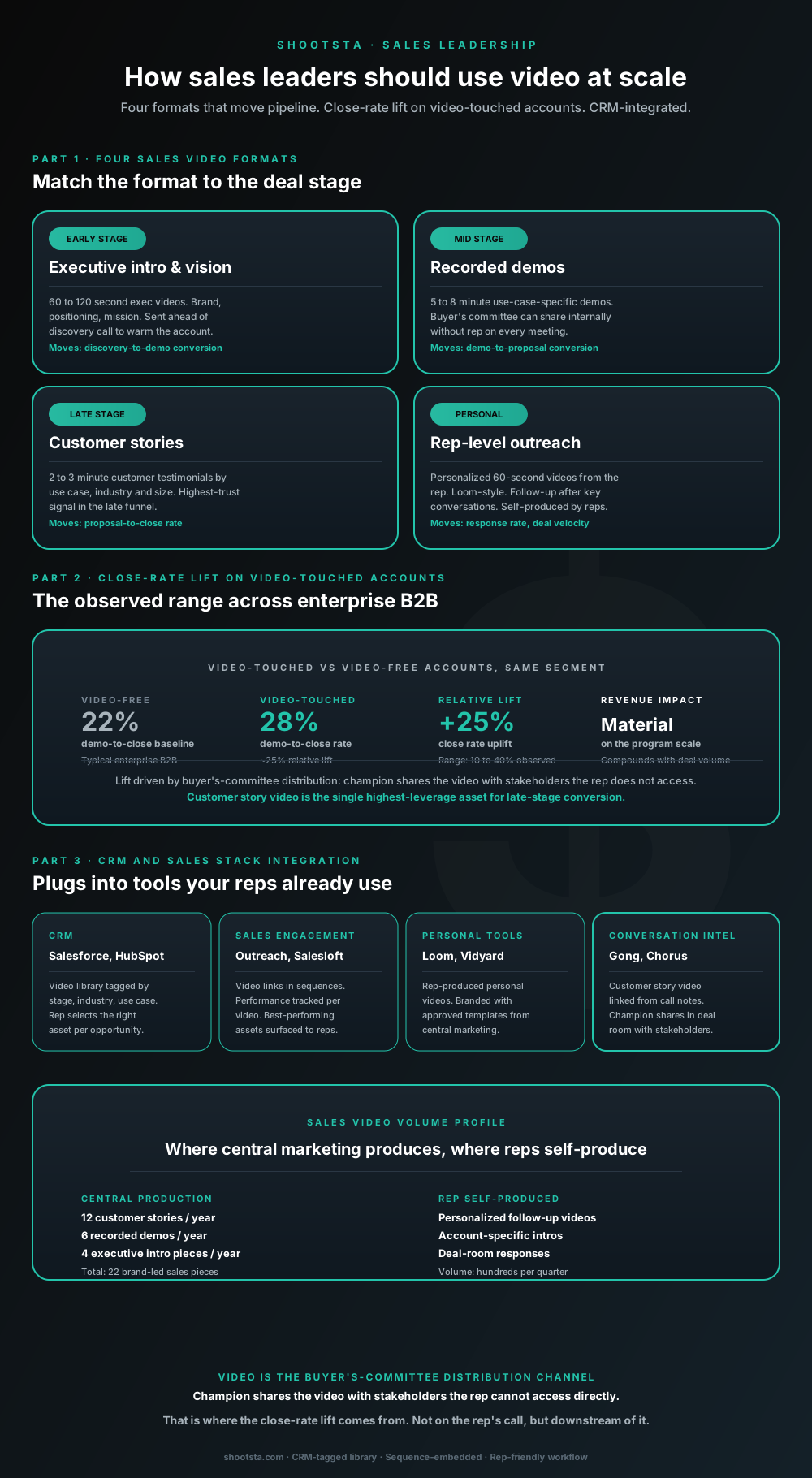
How sales leaders should use video at scale
Sales leaders mostly think about video as personalized rep outreach (Loom, Vidyard) or as marketing-produced customer stories. Both are useful. The bigger opportunity is the buyer's-committee distribution layer: assets the champion shares internally with stakeholders the rep does not access directly. That is where the close-rate lift compounds.
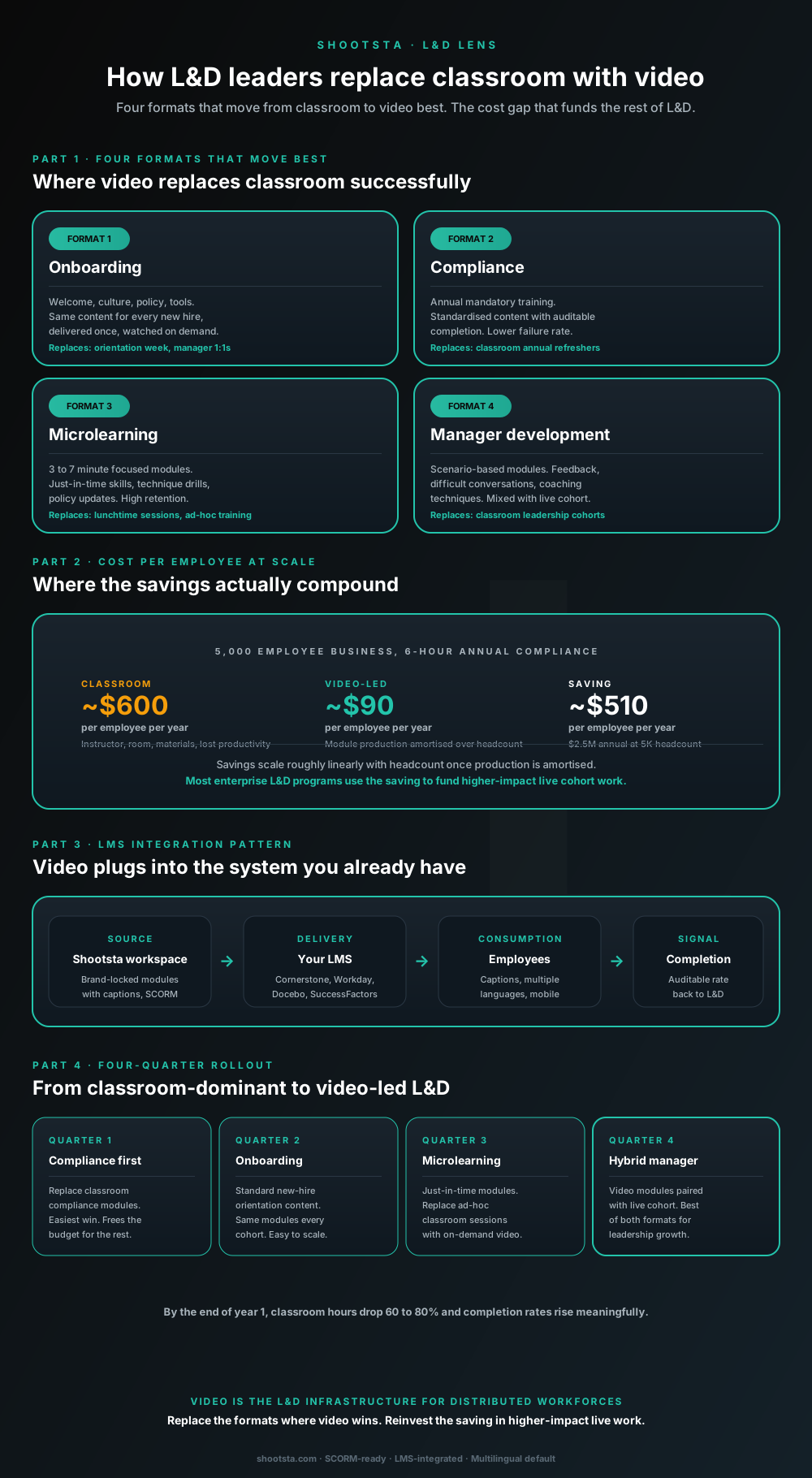
How L&D leaders replace classroom with video
L&D leaders running classroom-heavy training programs typically have the largest single opportunity in the business to free budget through format change. Four training formats move from classroom to video cleanly; the savings fund higher-impact live work. Here is the rollout that compounds learner adoption over four quarters.
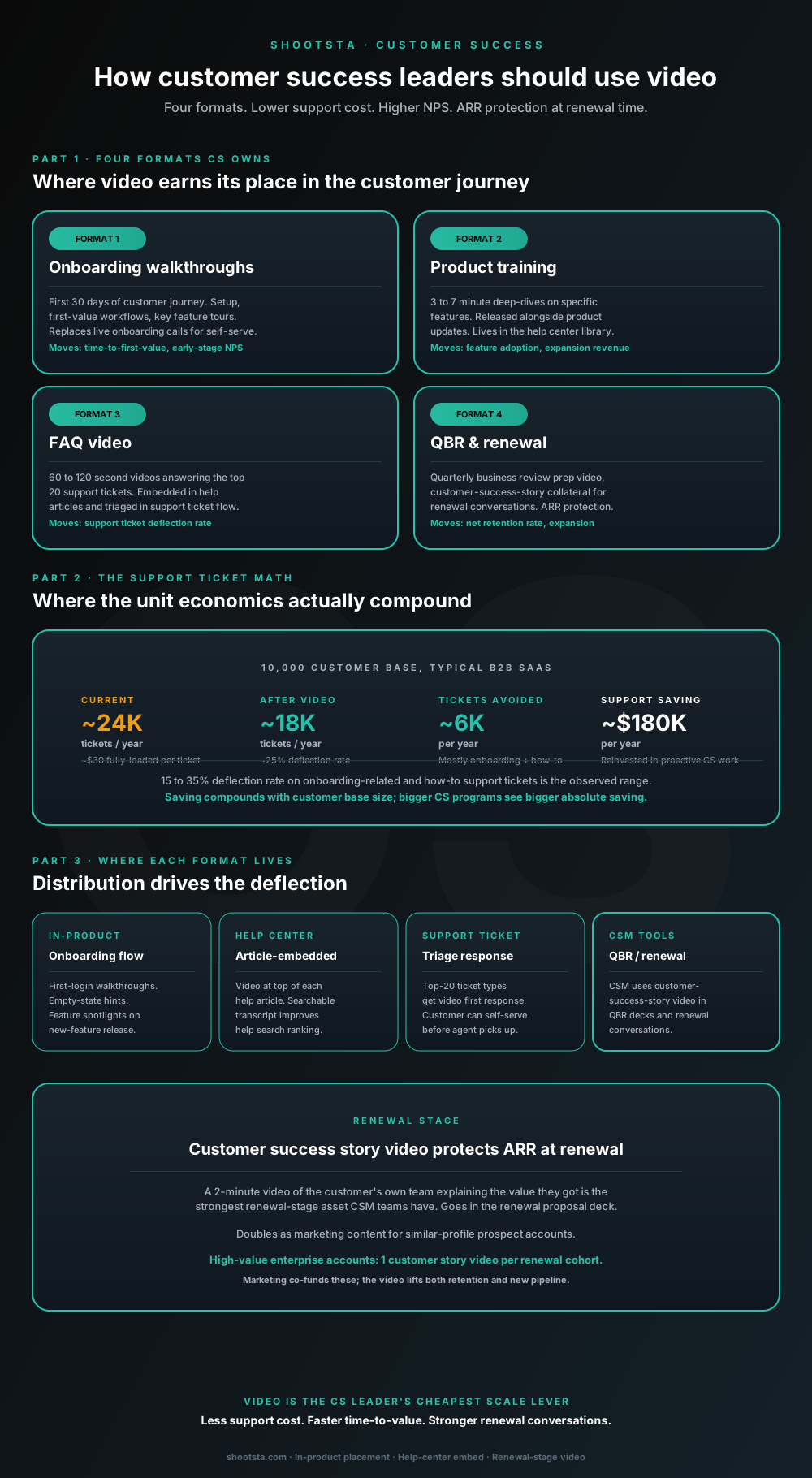
How customer success leaders should use video
Customer success leaders are usually under-resourced for both reactive support volume and proactive retention work. Video is the cheapest lever to fix both - 15 to 35% deflection on onboarding and how-to tickets, faster time-to-value, and renewal-stage customer story video that lifts net retention. Here is the four-format model and where each piece earns its place.
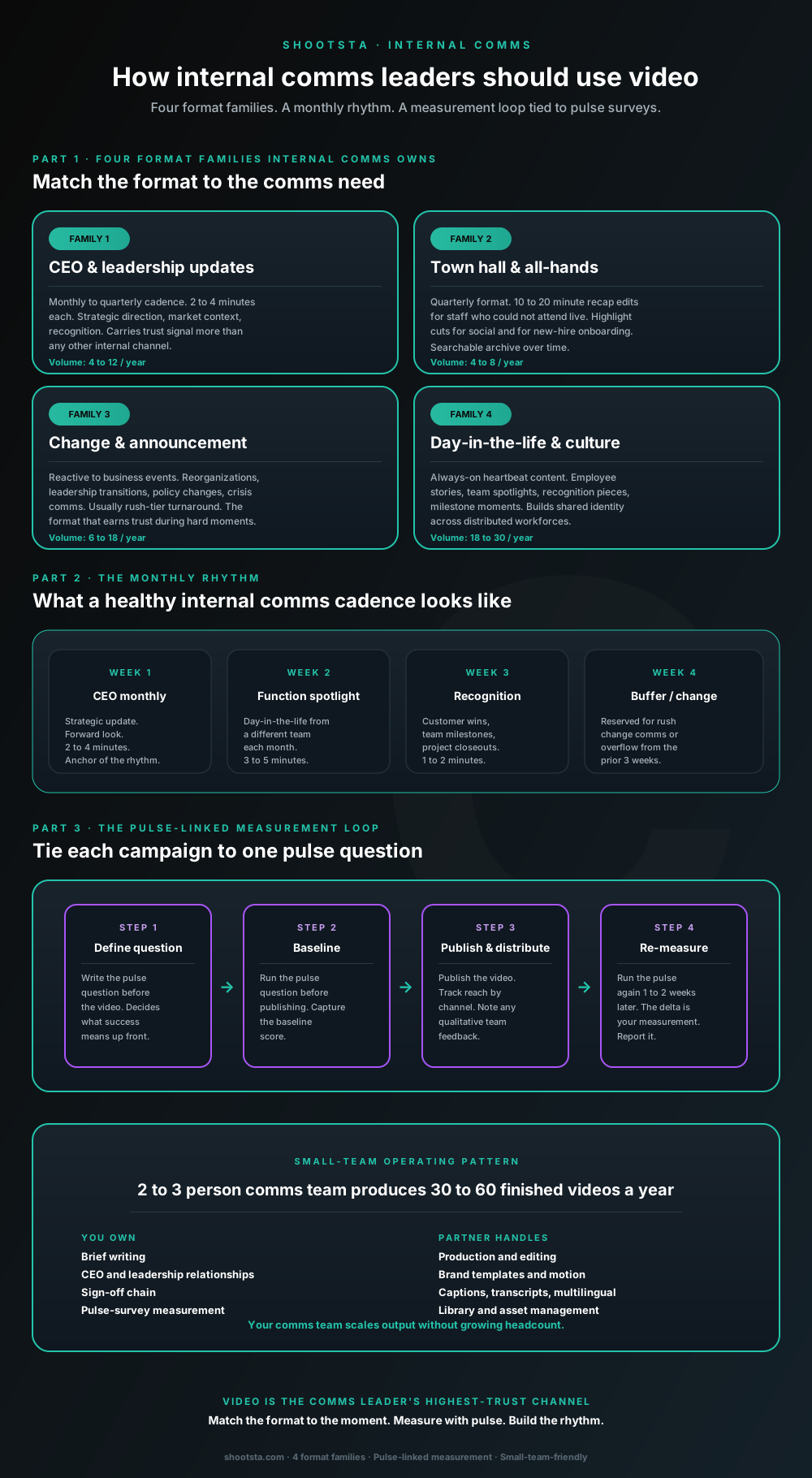
How internal comms leaders should use video
Internal comms leaders are usually under-resourced for the volume of video the business wants. The fix is not more headcount; it is structuring the program around four format families, a monthly rhythm, and a pulse-survey-linked measurement loop. Here is the operating pattern that lets a small comms team produce 30 to 60 finished videos a year.