
How to produce enterprise video across APAC
shootsta.
How to produce enterprise video across APAC
By Shootsta · Published April 9, 2026 · Updated October 2026
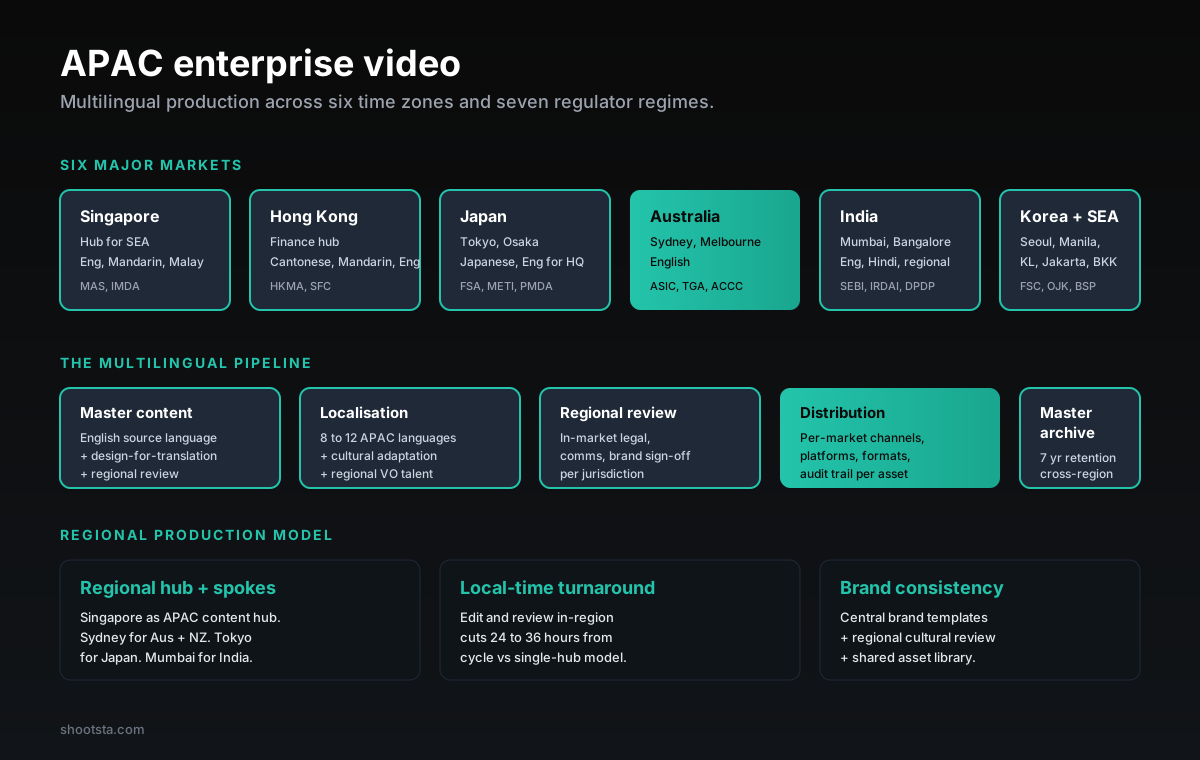
APAC enterprise video runs against six time zones, six major markets and 12+ working languages. The hub-and-spoke regional production model anchored on Singapore, the multilingual pipeline that delivers in days instead of weeks, and the regulator-aware workflow for MAS, HKMA, FSA, ASIC, SEBI and the SEA financial regulators.
Why APAC video runs differently from a single-market model
APAC video at enterprise scale has to deal with three conditions that most other regions do not share. The first is time-zone spread, with six major time zones from India to New Zealand and Singapore in the middle. The second is language load: the major markets use 12 or more working languages, and several have dialect splits. The third is the regulator overlay, where MAS, HKMA, FSA, ASIC, SEBI, KFSC and the SEA financial regulators each run their own framework with little mutual recognition.
Enterprise programs often run everything from one hub at headquarters in the US or Europe and accept language versions that take weeks. The result is video that lands flat in markets where nobody adapted it for the culture. The better approach is a hub-and-spoke model anchored on Singapore, with regional production in Sydney, Tokyo and Mumbai. It pairs a multilingual pipeline that delivers in days with review workflows tailored to each major regulator.
The six major APAC markets
Singapore
Singapore is the regional hub for SEA enterprise programs. Its working languages are English (primary), Mandarin and Malay. The main regulators are MAS for financial services, IMDA for media and HSA for healthcare. International enterprises working across SEA tend to route their regional video production through Singapore, and the Singapore hub is also the central archive for cross-market campaigns. We cover the Singapore-specific patterns in the Singapore enterprise video hub.
Hong Kong
Hong Kong is the region's finance hub. Its working languages are Cantonese (primary), Mandarin and English, and its main regulators are HKMA and SFC. International banks and financial services firms usually keep Hong Kong-specific video production for retail-facing financial videos. Choosing Cantonese or Mandarin changes how many people you reach.
Japan
Japan has its own production tradition with deep editorial standards. Japanese is the primary working language, with English used to align with global HQ. The main regulators are FSA for financial services, METI for manufacturing and PMDA for pharmaceuticals. Production cycles in Japan usually run longer than elsewhere in APAC, because internal review is stricter and the bar for language versions is higher. For serious work in the Japan market, you need production capacity in Tokyo or Osaka.
Australia and New Zealand
These are English-speaking markets with their own regulators. Australia has ASIC, TGA and ACCC, plus state-level regulators, while New Zealand has FMA and Medsafe. Production in Sydney covers both markets with a shared brand and English-language video. Audiences in both reject video that reads as US-centric.
India
India is a large and fast-growing enterprise market. English is the primary language for enterprise audiences and Hindi reaches the mass market. Depending on where you are targeting, you may also need Tamil, Telugu, Marathi, Bengali, Gujarati or Punjabi. The main regulators are SEBI for finance and IRDAI for insurance, and the DPDP Act covers data protection. Mumbai and Bangalore are the primary production hubs.
Korea and SEA cluster
Korea works in Korean, with Seoul as the primary hub, and answers to KFSC and other Korean regulators. The SEA cluster includes Manila (Tagalog plus English), Kuala Lumpur (Malay, English and Mandarin), Jakarta (Indonesian), Bangkok (Thai) and Ho Chi Minh City (Vietnamese). Each of these markets usually needs its own language version and its own cultural adaptation.
The Singapore-anchored hub-and-spoke model
Why Singapore as the regional hub
Multinationals working across APAC tend to anchor regional video production on Singapore for three reasons. The first is time zones: Singapore sits in the middle of the APAC range and shares part of its workday with both Tokyo and London. The second is neutrality of language and culture, because video made in Singapore lands cleanly across SEA, Hong Kong and Australia in a way that Tokyo or Mumbai output often does not. The third is the operating environment, since Singapore is a stable base for cross-border rights, hiring and capital.
Regional content hub
Singapore holds the central brand template library, the asset archive, cross-market campaign planning and the editorial standards team. Regional teams in Sydney, Tokyo and Mumbai work to the standards set in Singapore.
Regional production spokes
Sydney covers Australia and New Zealand, Tokyo covers Japan and Mumbai covers India. Each spoke handles production in the local language, casting of local talent, cultural review and sign-off with the local regulator. The spokes share brand templates with Singapore, and each one handles production in its own market. With Shootsta, the Tokyo and Mumbai spokes are regional crews served through the Singapore office and local videographer networks. Shootsta's offices are in Sydney, London, Singapore and San Diego.
Local-time turnaround
Editing and reviewing in the region, instead of routing every step through Singapore, takes days out of each delivery cycle. In the model that works, regional spokes handle local-language master videos from start to finish. Singapore keeps the brand consistent across markets.
The multilingual production pipeline
Stage 1: Master content with design-for-translation
The English master is made with translation in mind. Editors leave longer pauses for languages that expand in translation, such as Japanese and Korean, and use shorter cuts for languages that compress, including some SEA languages. Text overlays allow for different character sets, and the edit leaves room for lip-sync when the video is dubbed. APAC language versions often fail because nobody designed the master for translation. Building this in at the script stage removes most later rework.
Stage 2: Language versions
Each language gets its own adaptation. Native regional talent re-records the voiceover, in-region translators handle the captions and in-market reviewers check the cultural fit. Markets with strong dialect splits need several regional versions per language, such as Mandarin for Singapore, Hong Kong, Taiwan and the Mainland. The pattern that scales is a central pipeline with regional review, instead of one-off production in each market.
Stage 3: Regional review
Each jurisdiction needs in-market legal sign-off, plus a comms and brand review by the in-market lead. Where a regulator applies, you add its compliance check. Teams that pull this review back to headquarters add weeks to every asset, while teams that hand it to in-region leads stay on schedule.
Stage 4: Distribution
Every market has its own channels. These include regional social platforms such as WeChat for China-facing programs, Line in Japan, and KakaoTalk and Naver in Korea. Mobile-first format specs vary from market to market, and each market needs an audit trail that meets its local regulator's rules.
APAC multilingual coverage calculator
Map master content to APAC market coverage and spend
Set the annual master content volume, pick which APAC markets are in scope and the localisation method. The calculator returns localised asset count, indicative spend and pipeline cycle time.
Annual master assets: 60
Localisation method
Centralised localisation pipeline: $850 per asset per language, ~5 days per language.
APAC markets
Languages covered
6
Localised assets
360
60 master × 6 languages
Indicative spend
$636K
$330K master + $306K localisation
Pipeline cycle
30 days
Parallelised per language
Cost ranges are sector medians for established APAC multilingual programs. Centralised pipelines drop per-language cost 60 to 75 percent against ad-hoc per-market production.
The regulator overlay across APAC
Financial services
MAS in Singapore, HKMA and SFC in Hong Kong, FSA in Japan, ASIC in Australia, SEBI and IRDAI in India, KFSC in Korea, OJK in Indonesia, BSP in the Philippines, BNM in Malaysia. Each runs its own compliance regime for financial services video. Multinationals usually route APAC financial services video through a per-jurisdiction MLR-style review chain. We covered the pattern in how to produce video for financial services; APAC adds the per-jurisdiction complexity.
Healthcare and pharma
HSA in Singapore, MHRA-equivalent regional regulators across SEA, PMDA in Japan, TGA in Australia, CDSCO in India. Pharma promotion rules vary widely. Some jurisdictions allow direct-to-consumer promotion under set conditions, and others ban it outright. We covered the broader pattern in how to produce video for healthcare and pharma; APAC pharma adds per-market promotion-rule variation.
Data and privacy
PDPA in Singapore, PIPL in China, APPI in Japan, PIPA in Korea, DPDP Act in India, GDPR-equivalents across SEA. Your production workflow has to meet regional data residency rules for footage that shows identifiable people. Regional programs usually keep a separate data-residency setup for each market.
Cross-border content rights
Talent rights, music licensing, footage clearance and on-air appearances all vary by jurisdiction. APAC programs that avoid trouble keep a rights framework for each market instead of assuming one regional clearance covers them all. Teams get caught when they run the same talent across markets without the right clearance, then find the gap when one jurisdiction blocks distribution.
What changes for the production team working on APAC content
Your production team needs to make three practical shifts, and the biggest is learning to work in many markets at once. Each shift below comes from that.
Shift 1: Regional production fluency
You need producers and crews who know how to work across several APAC markets. Talent contracts have to hold up in more than one jurisdiction, and you need trusted location and equipment vendors in each market. A team that has already worked in Singapore, Sydney, Tokyo, Mumbai and the SEA cluster delivers much faster than one meeting each market for the first time.
Shift 2: Multi-language editorial discipline
Editing in 8 to 12 APAC languages needs either a dedicated editor for each language or a central pipeline with native-speaker review per language. Programs that do this well usually run the central pipeline, with regional spokes sending culturally adapted versions back to the central master.
Shift 3: Time-zone-aware project management
APAC project teams work across six or more time zones. Project managers and producers should work inside those time zones instead of asking regional teams to join meetings on US or European hours. The project rhythm then moves around the clock: Sydney briefs in the morning, Singapore edits in the afternoon, Mumbai delivers overnight and the work is back in Sydney the next morning.
Practical questions enterprise APAC teams ask
Should we have a single APAC production partner or per-market partners?
Large enterprises across APAC often run one regional partner anchored on Singapore, plus specialist partners in markets where local expertise matters most, especially Japan, Korea and India. The regional partner handles brand consistency, multi-market campaigns and shared infrastructure.
How do we handle China-specific markets?
Multinationals usually run China production through partners based in China. The platforms are different (WeChat, Douyin, Bilibili), the regulatory rules are different (PIPL and content review) and the culture needs specific knowledge. The China program runs alongside the broader APAC program instead of sitting inside it.
What about AI in APAC video production?
AI-assisted dubbing and voiceover can cut the cost of each language version sharply for videos that are not launch pieces. It works well for English-to-Japanese, English-to-Mandarin and English-to-Korean dubbing of internal training and other videos that customers will not see. AI is the wrong choice for regulator-facing financial services, healthcare or customer-facing brand content where the trust signal is the named human voice. The framing in how AI fits inside enterprise video workflows applies with extra APAC consideration around dialect and cultural authenticity.
How do we handle accessibility across APAC?
Accessibility standards vary across APAC: Section 508-style frameworks in Singapore, JIS X 8341 in Japan, KS X 9211 in Korea, RPwD Act in India, DDA in Australia. Multinational enterprises usually set a regional WCAG 2.1 AA baseline that meets the strictest jurisdiction in the region.
What is the time difference impact?
Sydney is 2 to 3 hours ahead of Singapore, depending on daylight saving, and Tokyo is 1 hour ahead. Mumbai is 2.5 hours behind, London is 7 to 8 hours behind and New York is 12 to 13 hours behind. With Singapore as the hub, part of the workday overlaps with both Tokyo and London, which makes it easier to coordinate across regions.
Where to go next
For the Singapore-specific enterprise video patterns, visit the Singapore enterprise video hub. For the EMEA equivalent of the regional production model, read how to produce enterprise video across EMEA. For the financial services regulator pattern that APAC extends, read how to produce video for financial services.
To scope an APAC enterprise video program run from our Singapore office, with regional crews in markets such as Tokyo and Mumbai, book a free consultation.
Take this article with you
Read the latest at shootsta.com/blog/how-to-produce-enterprise-video-across-apac
You might also like
How to Brief an Animation Project
How to Brief an Animation Project
An animation brief is the document you send to your production partner before work starts. Get it right and you cut revision cycles in half. Get it wrong and you discover mid-production that everyone disagrees on what the video is for. This is what a complete brief looks like.
Animation for change management comms
Animation for change management comms
Animation handles change management communications better than live video for three reasons: no on-camera executives required during sensitive periods, scene-level updates when plans shift, and a single production that works across global teams with voiceover-only language swaps.
How sales leaders should use video at scale
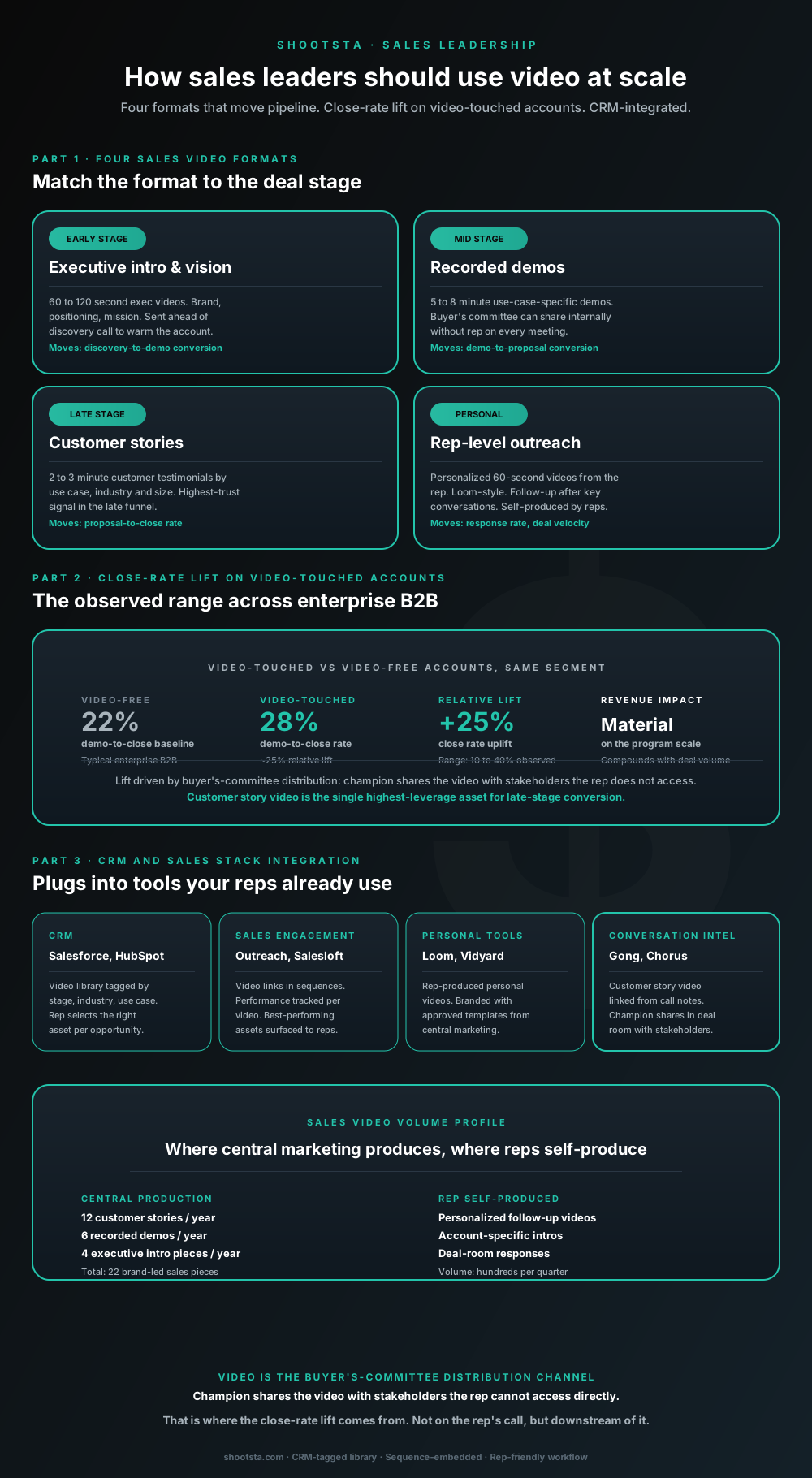
Sales leaders mostly think about video as personalized rep outreach (Loom, Vidyard) or as marketing-produced customer stories. Both are useful. The bigger opportunity is the buyer's-committee distribution layer: assets the champion shares internally with stakeholders the rep does not access directly. That is where the close-rate lift compounds.
How L&D leaders replace classroom with video
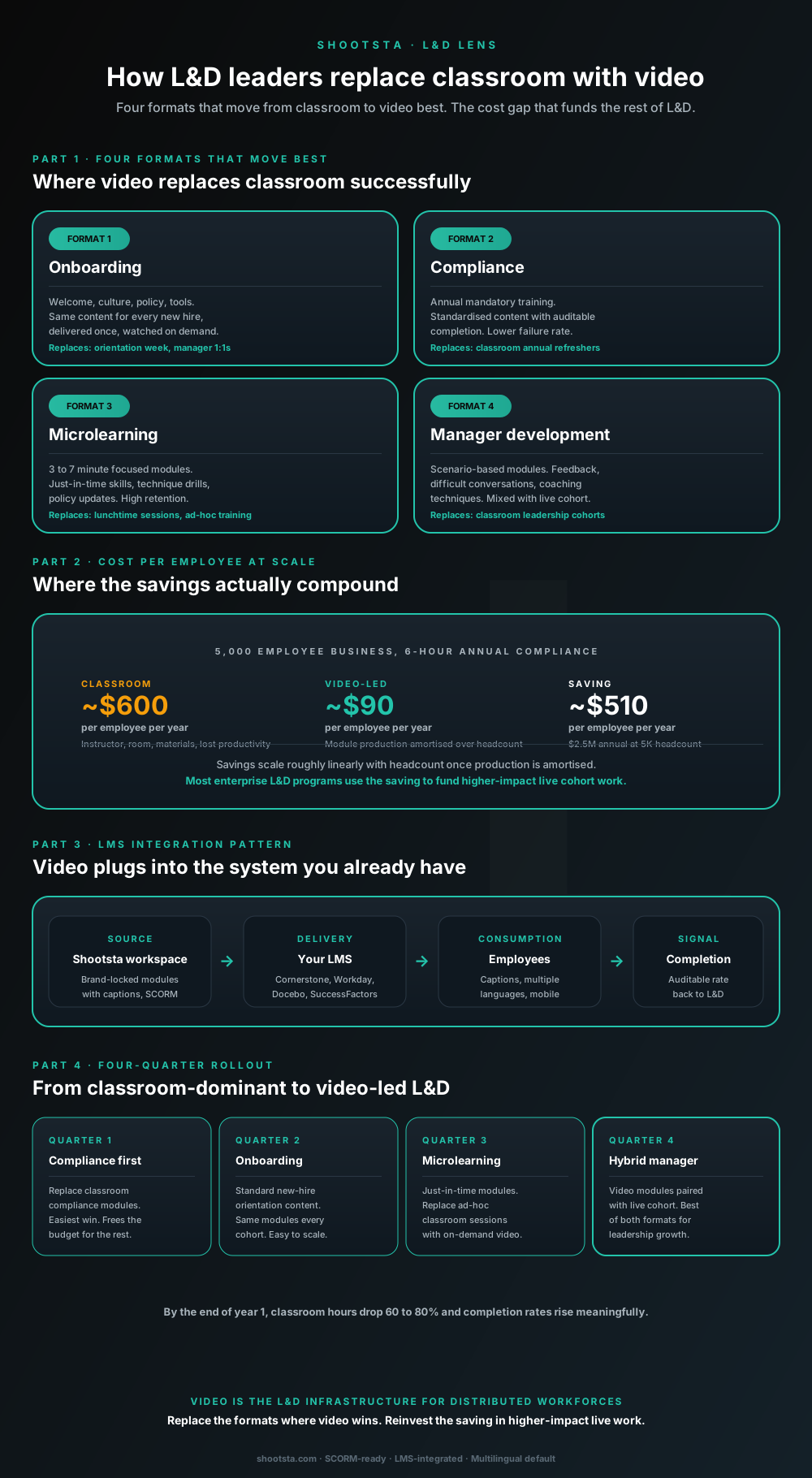
L&D leaders running classroom-heavy training programs typically have the largest single opportunity in the business to free budget through format change. Four training formats move from classroom to video cleanly; the savings fund higher-impact live work. Here is the rollout that compounds learner adoption over four quarters.
How customer success leaders should use video
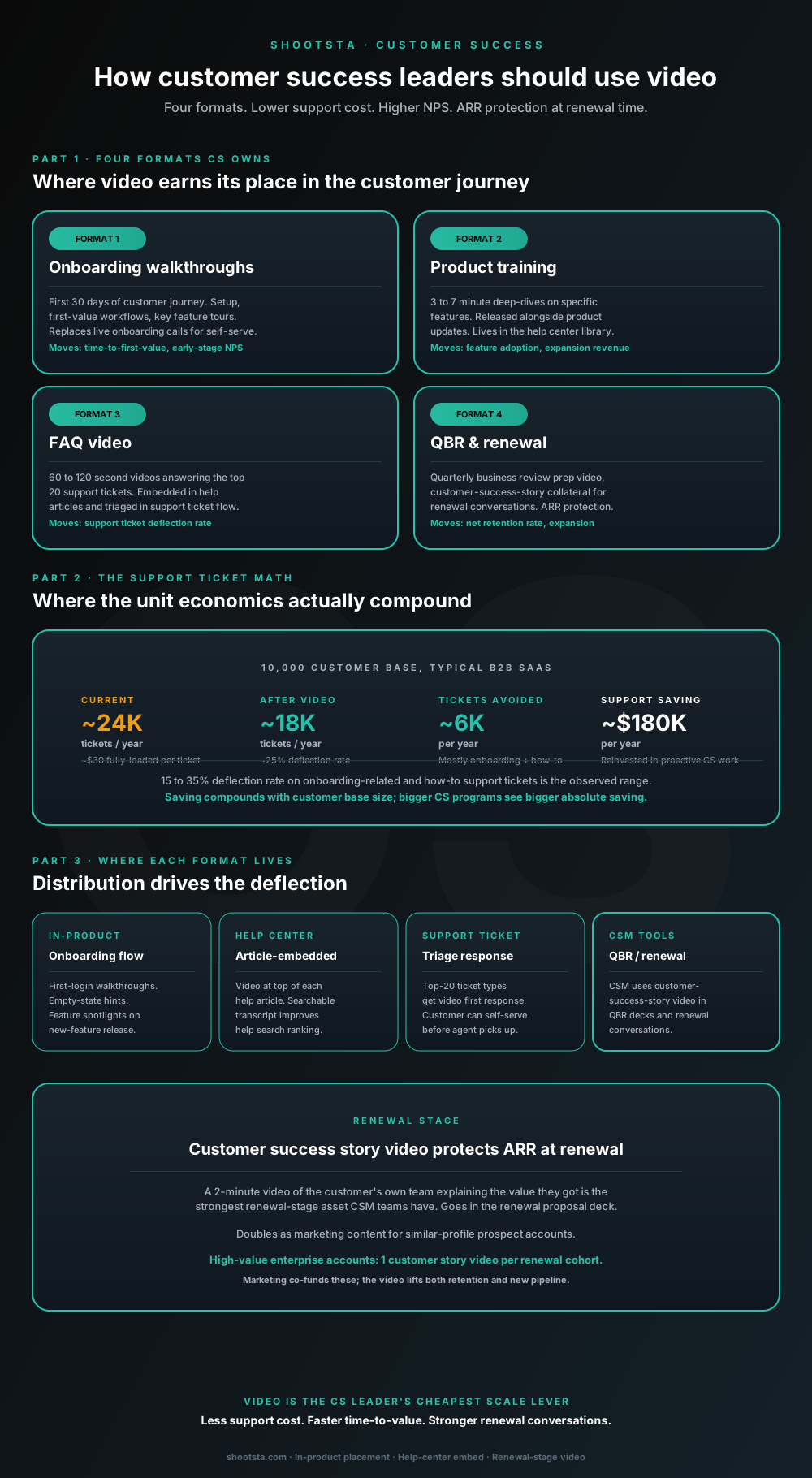
Customer success leaders are usually under-resourced for both reactive support volume and proactive retention work. Video is the cheapest lever to fix both - 15 to 35% deflection on onboarding and how-to tickets, faster time-to-value, and renewal-stage customer story video that lifts net retention. Here is the four-format model and where each piece earns its place.
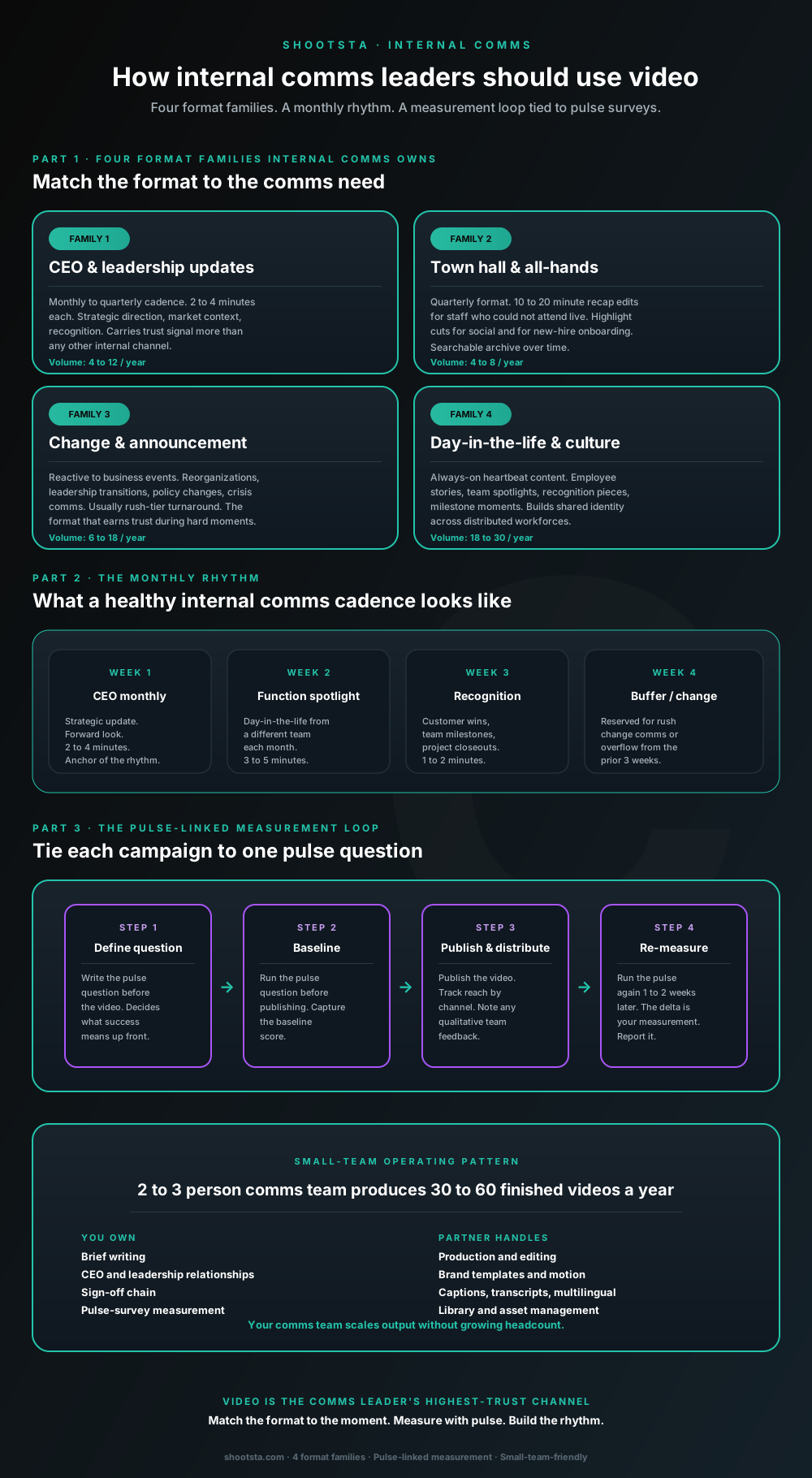
How internal comms leaders should use video
Internal comms leaders are usually under-resourced for the volume of video the business wants. The fix is not more headcount; it is structuring the program around four format families, a monthly rhythm, and a pulse-survey-linked measurement loop. Here is the operating pattern that lets a small comms team produce 30 to 60 finished videos a year.