
How to produce enterprise video across the Americas
shootsta.
How to produce enterprise video across the Americas
By Shootsta · Published April 7, 2026 · Updated October 2026
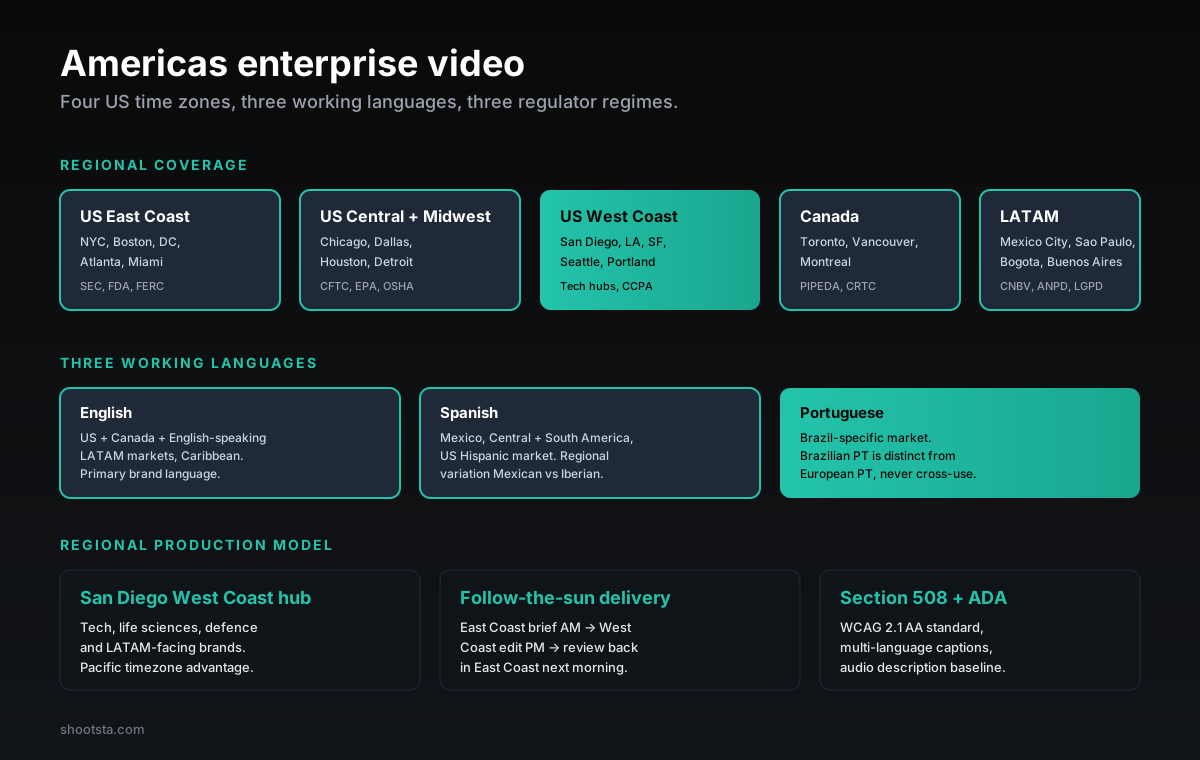
Americas enterprise video runs across four US time zones, three working languages and a regulator overlay spanning SEC, FDA, FERC, CFTC, EPA, OSHA and FINRA in the US plus per-country regimes in Canada and LATAM. The follow-the-sun production model anchored on the West Coast, the multilingual pipeline for English-Spanish-Portuguese, and the Section 508 baseline that holds across customer-facing and federal content.
Why Americas video runs differently from a single-time-zone model
Americas enterprise video runs against three structural realities most regional models do not address. Time-zone spread: four US time zones from Eastern to Pacific, plus Atlantic Canada to Hawaii. Language load: English as the primary working language, Spanish for US Hispanic and LATAM markets, Brazilian Portuguese for Brazil. Regulator overlay: SEC, FDA, FERC, CFTC, EPA, OSHA, FINRA at federal level in the US, state regulators including CCPA in California, plus per-country regimes across Canada and LATAM.
Most enterprise programs underestimate the operating complexity. They concentrate production in a single time-zone hub, accept the friction this creates with the other coast and with LATAM, and ship Spanish-language content from generic translation pipelines rather than market-adapted production. The structural shift: a follow-the-sun production model with hubs on the US East Coast, US West Coast and in LATAM. English-Spanish-Portuguese pipeline operating in parallel rather than sequentially. Federal accessibility baselines (Section 508) baked into the standard delivery. This post is a guide to that model.
The Americas regional coverage
US East Coast
NYC, Boston, DC, Atlanta and Miami are the primary production markets. Federal regulator workflows run through the SEC and FINRA in NYC, the FDA in Maryland and FERC in DC. State regulators add their own layer, including NY DFS, the MA Division of Banks and Florida OFR. Eastern Standard Time gives the East Coast a natural overlap with EMEA partial workdays. Most multinationals with EMEA exposure anchor their US regulator workflows on the East Coast.
US Central and Midwest
Chicago, Dallas, Houston and Detroit are the primary production markets. Regulator workflows include the CFTC out of Chicago, EPA regional offices, OSHA enforcement, industrial regulatory frameworks across the manufacturing belt. Central Time as the operating standard. Many enterprise programs run Central US production as a satellite of either East or West Coast hubs rather than as a primary hub.
US West Coast
San Diego, Los Angeles, San Francisco, Seattle and Portland are the primary production markets. Pacific Time gives the West Coast a natural overlap with both APAC partial workdays in the morning and East Coast partial workdays in the afternoon. Most tech, life sciences and defense enterprise programs anchor on the West Coast. CCPA and California-specific data privacy adds a layer of compliance not present in the rest of the US.
Canada
Toronto, Vancouver and Montreal are the primary production markets. Working languages: English (primary), French for Quebec and federal bilingual content. Regulator workflows: OSC for finance in Ontario, AMF in Quebec, CRTC for media, PIPEDA for privacy. Canada often operates as part of a North American production pipeline with separate Quebec-specific French-language production.
LATAM
Mexico City, Sao Paulo, Bogota and Buenos Aires are the primary production markets. Working languages: Spanish (Mexican variant for Mexico, regional variants for Spanish-speaking South America), Brazilian Portuguese for Brazil. Regulator workflows: CNBV in Mexico, ANPD and LGPD in Brazil, SFC in Colombia, CNV in Argentina. Each country operates a distinct regulatory framework; most multinationals route LATAM video through per-country production capacity rather than running it all from a single hub.
The follow-the-sun production model
How the model works
The East Coast briefs in the morning, Eastern Time. The West Coast then runs edit and creative work through its own morning and afternoon, and the East Coast reviews and gives feedback at the start of the next Eastern Time business day. The total cycle is 24 to 36 hours for routine content versus 72+ hours for single-hub production. The follow-the-sun model is the structural advantage of running Americas production across two coasts.
Adding the LATAM dimension
With LATAM as the third hub, the follow-the-sun pattern extends further. Sao Paulo and Mexico City sit between East Coast and West Coast in operational hours. LATAM hubs handle Spanish and Portuguese-language production with native-speaker editorial. The follow-the-sun model extends to support both US East-to-West and Americas-North-to-South handoffs.
San Diego as the West Coast hub
San Diego sits on the Pacific time zone with direct proximity to LATAM markets (Tijuana 30 minutes south) and a natural cultural-language overlap. Tech enterprise sectors (Qualcomm, biotech, defence), life sciences and LATAM-facing brands all benefit from San Diego production capacity. The Pacific time-zone advantage applies for both APAC overlap and West Coast Americas operations.
Brand consistency across hubs
A central brand template library is shared across hubs. An editorial standards function (often run centrally from HQ, wherever HQ sits) sets the tone, voice and visual standard. Each hub operates as fully capable production for its geographic responsibility while maintaining brand consistency through the central templates and standards.
The three working languages
English
English is the primary working language across the US, Canada (outside Quebec) and English-speaking LATAM markets including the Caribbean. Master content is typically produced in English, then adapted into Spanish and Portuguese language versions for the regional markets. Production scale in English is the largest of the three.
Spanish
Mexican Spanish covers Mexico and the US Hispanic market. Regional variants serve the South American Spanish-speaking markets (Argentina, Chile, Colombia, Peru). Iberian Spanish is typically not cross-used for Americas content because the regional editorial standards and idiomatic usage differ. Many multinationals run Mexican Spanish as their Americas-Spanish primary with regional adaptation as needed.
Portuguese
Brazilian Portuguese is distinct from European Portuguese and should never be cross-used. Brazil is its own market, with regional editorial standards, idiomatic usage, casting preferences and cultural adaptation. Sao Paulo is the primary production hub.
Americas follow-the-sun planner
Map your Americas production hubs to cycle time and spend
Set monthly content volume, pick the production hubs you run and the number of working languages (English, Spanish, Portuguese). The planner returns cycle time, weekly capacity and indicative spend.
Monthly assets: 60
Working languages: 2
1 = English-only. 2 = English + Spanish. 3 = English + Spanish + Brazilian Portuguese.
Production hubs (2/3)
1 hub = 72h cycle. 2 hubs = 48h. 3 hubs (East + West + LATAM) = 24h follow-the-sun.
Cycle time
48h
Brief → first cut → delivery
Weekly capacity
15
finished assets / week
Annual localised assets
1,440
720 master × 2 languages
Indicative spend
$3.85M
Cycle-time figures are sector medians for established Americas programs. Follow-the-sun pipelines cut routine cycle time roughly 24 to 36 hours against single-hub models.
The federal accessibility baseline
Section 508 for federal content
Section 508 of the Rehabilitation Act applies to federal agency content and to federal contractor content. The baseline includes captions, audio description for non-text content where required, transcript, accessible player embed. Most US enterprises selling to federal agencies maintain Section 508 compliance across their video portfolio rather than per-asset.
ADA for customer-facing content
ADA Title III enforcement against inaccessible websites and digital content includes video. Most enterprise legal teams have settled on WCAG 2.1 AA as the de facto compliance standard. Plaintiff law firms in the US are active on web accessibility, which has pushed customer-facing content up the priority list.
CCPA and state privacy
California Consumer Privacy Act (CCPA) and the related CPRA add data-subject rights similar to GDPR for California residents. Virginia, Colorado, Connecticut, Utah, plus a growing list of other states have followed with their own privacy laws. For video, this means consent capture for identifiable individuals, retention windows, and per-state data subject request handling.
Industry-specific federal regulators
Financial services answer to the SEC, FINRA and the CFTC, while healthcare and pharma answer to the FDA. Media falls under the FCC and energy under FERC. The EPA covers environmental content, and OSHA covers workplace safety. Each regulator operates distinct compliance frameworks for video produced under their oversight. Most enterprise programs maintain per-regulator workflow capacity for the regulators that apply to their business.
What changes for the production team working on Americas content
Three practical shifts follow for the team, and each one changes how producers plan and staff a project.
Shift 1: Cross-coast production fluency
Producers work across East Coast and West Coast hubs and hand off cleanly between them. Project management respects time-zone differences instead of forcing one coast to work the other coast's hours. The team that operates fluently across coasts ships 24 to 36 hours faster than the team forcing single-hub workflows.
Shift 2: Multi-language editorial in English-Spanish-Portuguese
Each language needs native-speaker editorial and cultural adaptation. Mexican Spanish editorial differs from Argentine Spanish editorial, and both differ from Brazilian Portuguese editorial. Successful Americas programs maintain dedicated per-language editorial leads rather than relying on translation pipelines.
Shift 3: Federal compliance navigation
Producers need to be fluent in Section 508 baseline delivery, ADA accessibility, CCPA consent capture and per-regulator workflow for industry-specific content. The teams that treat federal compliance as a finishing step ship content with silent exposure; the teams that bake compliance into the brief ship cleanly.
Practical questions enterprise Americas teams ask
Should the primary hub be East Coast or West Coast?
Depends on the business. Financial services, federal-facing and EMEA-overlap programs benefit from East Coast anchoring. Tech, life sciences, defence and APAC-overlap programs benefit from West Coast anchoring. Most large enterprises operate both with the headquarters location often determining the primary anchor.
How do we handle the US Hispanic market versus LATAM markets?
Different audiences with different content needs. US Hispanic content typically uses Mexican Spanish but with US cultural framing (US sports references, US holidays, US lifestyle). LATAM content uses regional Spanish variants with country-specific cultural framing. Most successful programs maintain separate production capacity for US Hispanic and LATAM-targeted Spanish content.
What about Canada French versus France French?
Canadian French (Quebec French specifically) is distinct from France French and should not be cross-used. Quebec audiences reject France-French content. Most multinationals operating in Quebec maintain dedicated Quebec French production capacity in Montreal.
How do we handle LGPD in Brazil?
Brazil's General Data Protection Law (LGPD) is substantively similar to GDPR. For video, this means consent capture for identifiable individuals, data subject rights including erasure, retention windows. Most multinational Brazil video programs operate LGPD-compliant pipelines that mirror the GDPR-compliant pipelines used in EMEA. We covered the broader GDPR pattern in how to produce enterprise video across EMEA; LGPD applies similar discipline in Brazil.
What about AI in Americas video production?
AI is widely used in Americas video workflows: AI-assisted dubbing for non-launch Spanish and Portuguese content, transcript editing, social cutdown selection, distribution scheduling. The US has lighter AI regulation than the EU AI Act creates in EMEA. State-level AI regulation is emerging (California, Colorado, New York). Most enterprise Americas programs use AI inside the workflow but maintain caution for customer-facing branded content where the trust signal is the named human voice. The framing in how AI fits inside enterprise video workflows applies broadly.
Where to go next
For the APAC equivalent of the regional production model, read how to produce enterprise video across APAC. For the EMEA equivalent, read how to produce enterprise video across EMEA. For the global multi-site pattern, read how to scale video across global offices.
To scope an Americas enterprise video program with East Coast, West Coast and LATAM hubs and the follow-the-sun production model, book a free consultation.
Take this article with you
Read the latest at shootsta.com/blog/how-to-produce-enterprise-video-across-the-americas
You might also like
How to Brief an Animation Project
How to Brief an Animation Project
An animation brief is the document you send to your production partner before work starts. Get it right and you cut revision cycles in half. Get it wrong and you discover mid-production that everyone disagrees on what the video is for. This is what a complete brief looks like.
Animation for change management comms
Animation for change management comms
Animation handles change management communications better than live video for three reasons: no on-camera executives required during sensitive periods, scene-level updates when plans shift, and a single production that works across global teams with voiceover-only language swaps.
How sales leaders should use video at scale
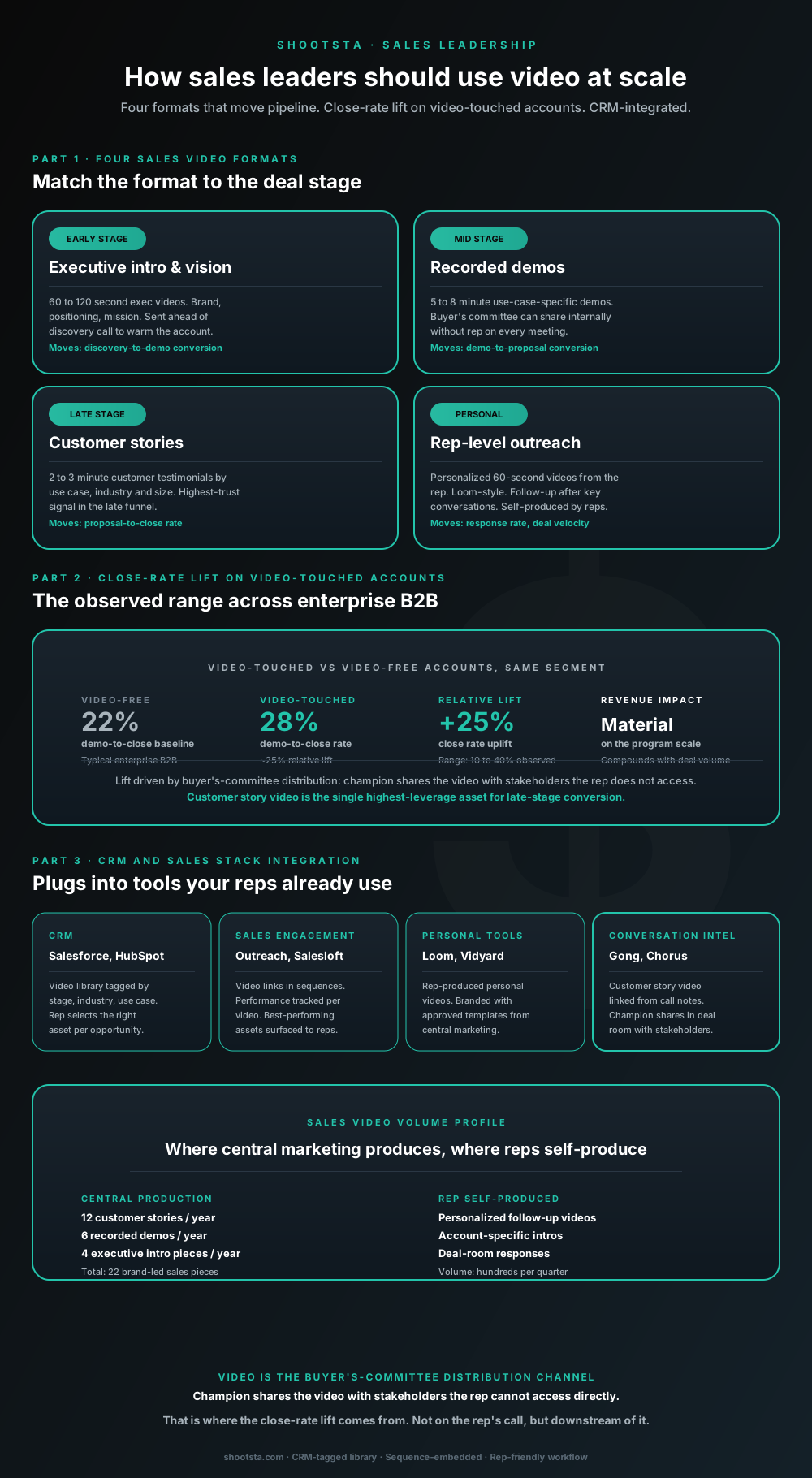
Sales leaders mostly think about video as personalized rep outreach (Loom, Vidyard) or as marketing-produced customer stories. Both are useful. The bigger opportunity is the buyer's-committee distribution layer: assets the champion shares internally with stakeholders the rep does not access directly. That is where the close-rate lift compounds.
How L&D leaders replace classroom with video
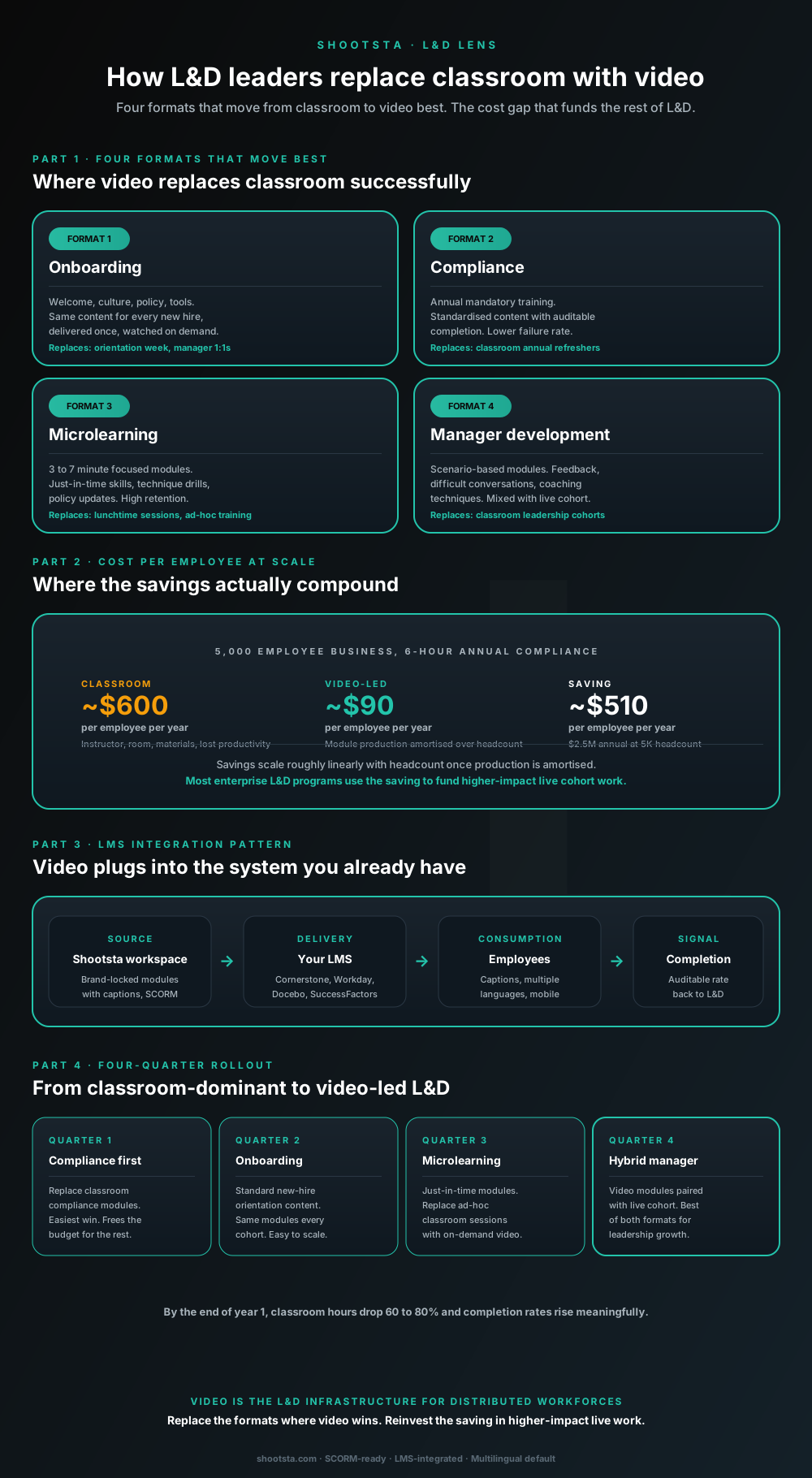
L&D leaders running classroom-heavy training programs typically have the largest single opportunity in the business to free budget through format change. Four training formats move from classroom to video cleanly; the savings fund higher-impact live work. Here is the rollout that compounds learner adoption over four quarters.
How customer success leaders should use video
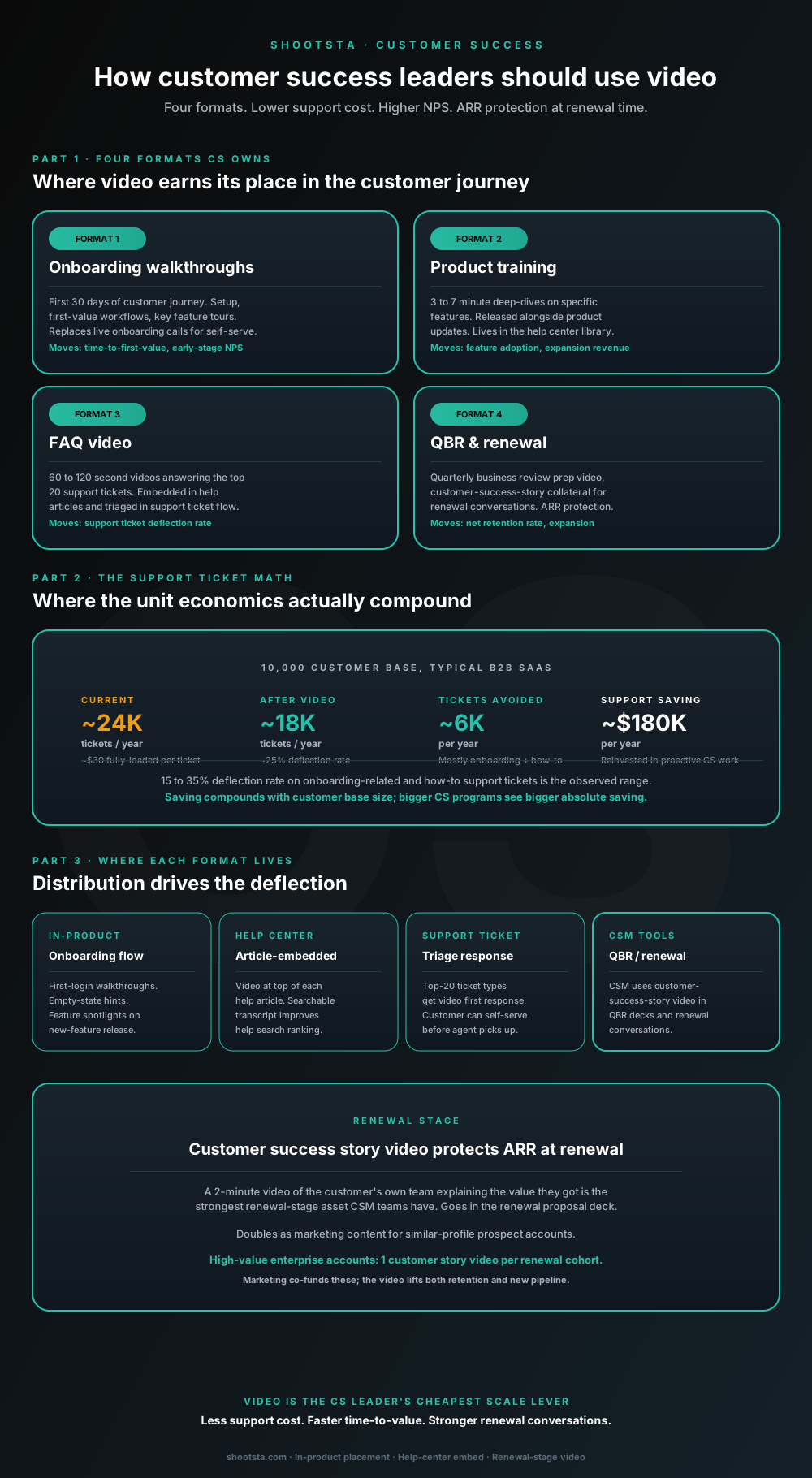
Customer success leaders are usually under-resourced for both reactive support volume and proactive retention work. Video is the cheapest lever to fix both - 15 to 35% deflection on onboarding and how-to tickets, faster time-to-value, and renewal-stage customer story video that lifts net retention. Here is the four-format model and where each piece earns its place.
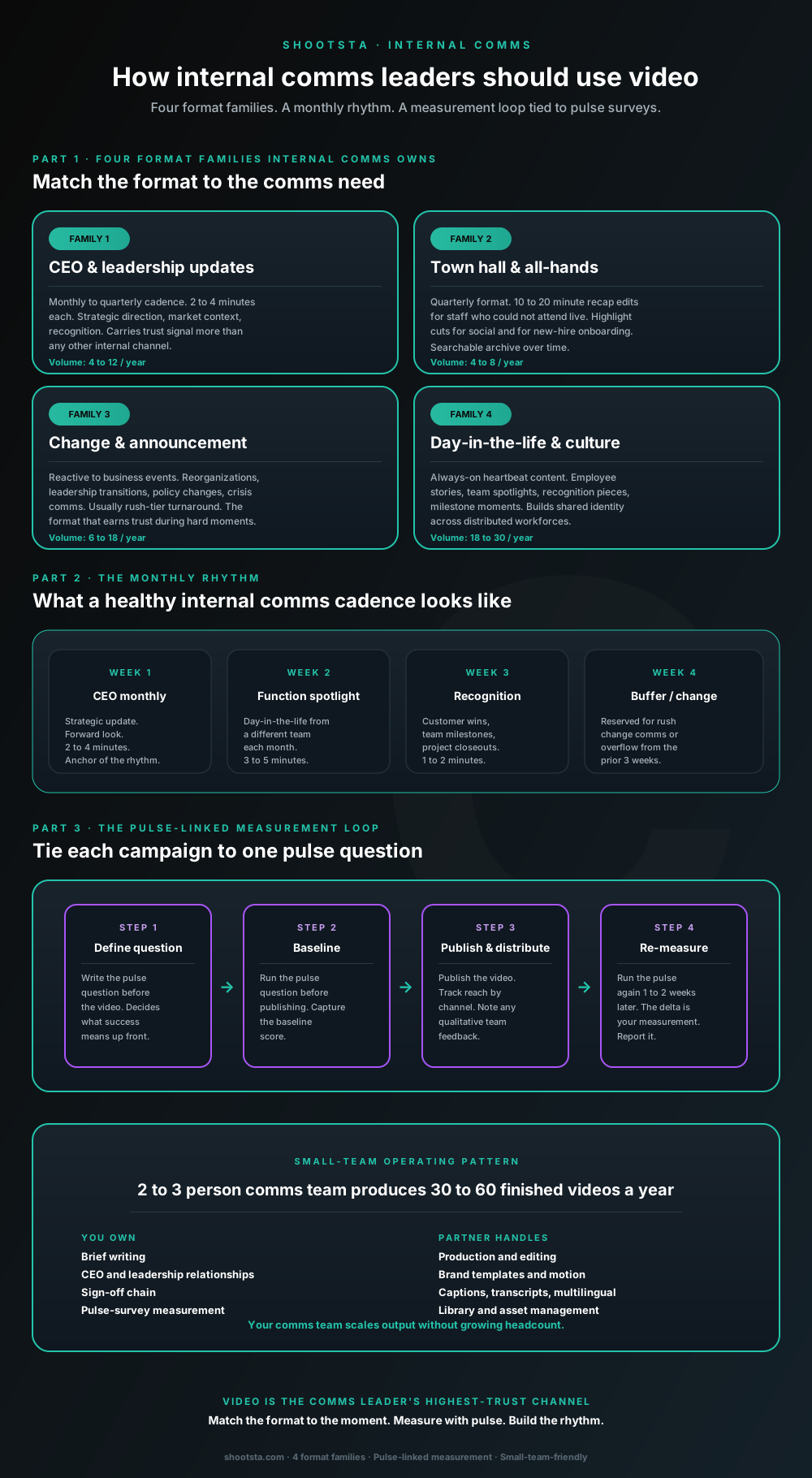
How internal comms leaders should use video
Internal comms leaders are usually under-resourced for the volume of video the business wants. The fix is not more headcount; it is structuring the program around four format families, a monthly rhythm, and a pulse-survey-linked measurement loop. Here is the operating pattern that lets a small comms team produce 30 to 60 finished videos a year.