
How Sydney Video Teams Scale Without Hiring
shootsta.
How Sydney Video Teams Scale Without Hiring
By Shootsta · Published June 6, 2026 · Updated October 2026
Sydney enterprise video teams hit a capacity ceiling at 10 to 15 finished videos a year per in-house head. The force-multiplier model that lifts output to 24 to 36 videos without growing headcount, used by the Big 4 banks, super funds and ASX-listed tech companies operating from Sydney.
Why most Sydney enterprise video teams stall at 10 to 15 videos a year
The pattern is consistent across Sydney CBD enterprises: an in-house video lead is hired into a comms, brand or marketing team to "build video capability." Year one, they ship 8-12 finished videos. Year two, demand outpaces capacity and the backlog grows. Year three, the conversation shifts to "we need to hire a second producer." The hire happens, output reaches 18-22 videos, and the backlog stays the same.
The structural problem is that hiring more video producers is the most expensive way to add capacity. A fully loaded video producer in Sydney (salary, super, on-costs, equipment, software licences) typically lands at AUD 180K-230K per head per year. That covers 10-15 finished videos at most. Before you open a role, get a production partner's quote for 24 or 36 videos a year and set it against that salary. The force-multiplier model is the pattern that lifts output without growing headcount.
What is the force-multiplier model?
The force-multiplier model splits the video work into two tiers based on where the in-house team adds the most value.
Tier 1: In-house team owns brand and message
The in-house video lead, comms team and marketing function own brand, voice, editorial standard, internal stakeholder relationships, executive coaching and the strategic content roadmap. This work cannot be outsourced because it requires deep institutional context, ongoing trust relationships and creative judgement that maps to the organisation's culture.
Tier 2: Production partner delivers volume
The production partner takes the brief from the in-house team, runs the shoot, edits the cut, manages reviewer comments and ships the finished video. The partner brings production capacity, technology platform, multi-location crew network and the editing volume that allows the in-house team to operate as a creative director function rather than a video producer function.
The split that works in Sydney
The in-house team retains the 4-6 highest-stakes hero pieces a year (CEO message for the AGM, brand campaign film, signature culture content). The production partner takes the 20-30 ongoing pieces (monthly internal comms, training modules, customer testimonials, product explainers, social cutdowns). The total program reaches 24-36 videos a year with the same in-house team that previously shipped 10-15.
What does this model cost compared to hiring?
Hiring a second video producer
A second producer costs AUD 180K-230K a year fully loaded. That buys 10-15 more finished videos a year, assuming the new hire ramps up well and the equipment is already in place. Your total program then reaches 20-30 videos a year with two in-house heads.
Adding a 24-video subscription package
A 24-video package adds 24 finished videos a year of capacity. The price depends on how complex the production is, so ask for a quote against your real mix of formats. Your total program then reaches 34-39 videos a year with one in-house lead and a production partner.
Adding a 36-video subscription package
A 36-video package adds 36 finished videos a year, and the quote again depends on production complexity. Your total program then reaches 46-51 videos a year with one in-house lead and a partner. We covered the full pricing breakdown in Sydney video production cost (2026 guide).
The economic asymmetry
Put the two numbers side by side: the fully loaded cost of a second producer and the partner quote for 24 or 36 videos. Then divide each by the finished videos it buys. If the partner's cost per video comes out lower, that gap is why the model holds up over time, and it is why Sydney banks, super funds, ASX-listed tech companies and professional services firms use it.
How does the force-multiplier model handle creative quality?
The usual worry from in-house teams is simple to state. If you hand production volume to a partner, how do you keep the quality and the brand voice consistent?
Brand templates and editorial standards locked in
Your brand fonts, palette, lower thirds, voice and editorial standards are locked into the partner's workflow at the start of the engagement. Every video produced through the package uses those templates. The partner cannot accidentally drift from your brand because the templates are programmatically applied at the editing stage.
Brief-led production, not partner-led creative
The in-house team writes the brief, sets the creative direction and reviews the cuts. The partner produces against your brief rather than its own creative take. This is the main difference from agency engagements where the agency owns the creative direction.
Iterative review inside one workflow
Briefs, drafts, revisions and final files live in one workspace. The in-house team comments on a draft directly rather than chasing email and SharePoint links. Final approval happens inside the workflow with a documented audit trail per asset.
Hero work stays with the in-house team or agency
The highest-stakes 4-6 pieces a year (brand campaign films, big launch moments, signature CEO content) stay with the in-house team or with a specialist agency on the hero engagement model. The partner handles the volume tier so the in-house team has capacity for the hero work.
What does the model look like in practice in Sydney?
Big 4 bank example
One in-house comms video lead in Sydney CBD. The partner runs a 36-video annual package covering internal town hall recordings, CEO video updates, monthly internal comms shorts, employee culture content, conduct training modules and product explainers. The in-house lead manages stakeholder relationships, brand voice and the brand campaign film that the agency produces. Total output: 36-42 finished videos a year.
Super fund example
One in-house brand and content manager in Sydney North Shore. The partner runs a 24-video annual package covering member communications, investment commentary, internal training, recruitment and culture content. The in-house lead owns the member voice, the compliance review chain and the hero brand film. Total output: 28-32 finished videos a year.
ASX-listed tech example
One in-house video producer in Sydney's Surry Hills tech corridor. The partner runs a 36-video annual package covering product marketing, feature explainers, customer stories, recruiting content and event recap. The in-house producer owns the product narrative, the engineering relationships and the major launch film. Total output: 42-48 finished videos a year.
Magic Circle-tier law firm example
One in-house marketing lead in Sydney CBD covering video, plus a brand agency on hero work. The partner runs a 24-video annual package covering partner thought leadership (batched recording days with 3-5 pieces per partner per session), client case studies, recruiting and methodology training. Total output: 28-32 finished videos a year.
What does the in-house team do differently?
The in-house role keeps its scope and moves up the value chain. Your team spends its hours on decisions instead of logistics.
From producer to creative director
The in-house lead spends less time on the day-to-day mechanics of production (crew coordination, edit reviews, file management) and more time on the editorial roadmap, brand consistency and stakeholder relationships. The partner handles the mechanics.
From single project to program management
With 24-36 videos in flight per year through the partner, the in-house lead is managing a program rather than a series of projects. The conversation with the business becomes "what does the quarter's video program look like?" rather than "can we squeeze in another video this month?"
From reactive to proactive
Capacity ceases to be the binding constraint. The in-house team can plan a year ahead, build forecastable content roadmaps, and respond to internal demand rather than rationing it.
From service function to strategic function
The in-house team's value to the business shifts from "they make our videos" to "they run our video program." That positions video as a strategic capability rather than a service line that scales with headcount.
Practical questions Sydney enterprise teams ask
How do we get internal buy-in for the model?
The business case usually frames around the cost-per-video at scale and the opportunity cost of capacity. We covered the full framing in building the business case for enterprise video. The most persuasive framing is usually a side-by-side: 12 months of in-house-only output vs 12 months of force-multiplier output at the same total cost.
What if we already have a small video team?
The model still works. The in-house team continues to own the hero work, the strategic content and the brand voice. The partner adds capacity above what the in-house team can ship. Sydney teams that adopt the model keep their full in-house team and add the partner alongside it as extra capacity.
How do we choose the right partner?
Two criteria matter most: production capacity that scales with your needs over multi-year horizons, and a workflow platform that integrates with your internal review chain. Sector fluency (banking, super, tech, professional services, mining) matters more in Sydney than in some other markets because the editorial standards differ meaningfully across sectors. We covered the broader selection criteria in how to pilot a video production partner.
What happens to our existing agency relationships?
The agencies stay involved on the hero work. You keep the agency and point it at the highest-stakes 4-6 pieces a year, while a production partner handles the 24-36-piece volume tier. Agencies often welcome the split because their commercial model works better on the hero work than on the volume tier.
How do we measure success?
Measure success in three tiers. The tactical tier tracks output volume, cycle time and brief-to-publish time. The mid tier looks at engagement, completion rates and how satisfied internal stakeholders are. The strategic tier covers pipeline revenue from video-engaged accounts, shifts in employee engagement and recruitment lift from candidates who watched. Programs tend to measure the tactical tier well and the strategic tier poorly. We covered the full measurement framework in how to measure enterprise video success.
Where to go next
For the full pricing breakdown, read Sydney video production cost (2026 guide). For the business case framework, read building the business case for enterprise video. For the broader scaling model, read how a video partner extends your in-house team. To talk specifics for your team, visit the Sydney video production hub or book a free consultation.
Take this article with you
Read the latest at shootsta.com/blog/how-sydney-video-teams-scale-without-hiring
You might also like

How to Plan Video Team Capacity Around Leave
Your only editor just booked two weeks off, and you already know which projects will slip. Chad Lakin explains how to plan video team capacity so the work keeps moving when someone is away.
Corporate Video Editing Standards: Full Guide
A two-page editing standard does more for consistency than a forty-page brand book. Here is what it should cover, who owns each part, and how to enforce it with an in-house editor or an outside partner.
Quality Control in Outsourced Video Editing
When editing leaves the building, quality has to be checked by a system rather than by whoever happens to look. Here is the system: acceptance criteria, two QA gates, counted revision rounds and a quarterly audit.
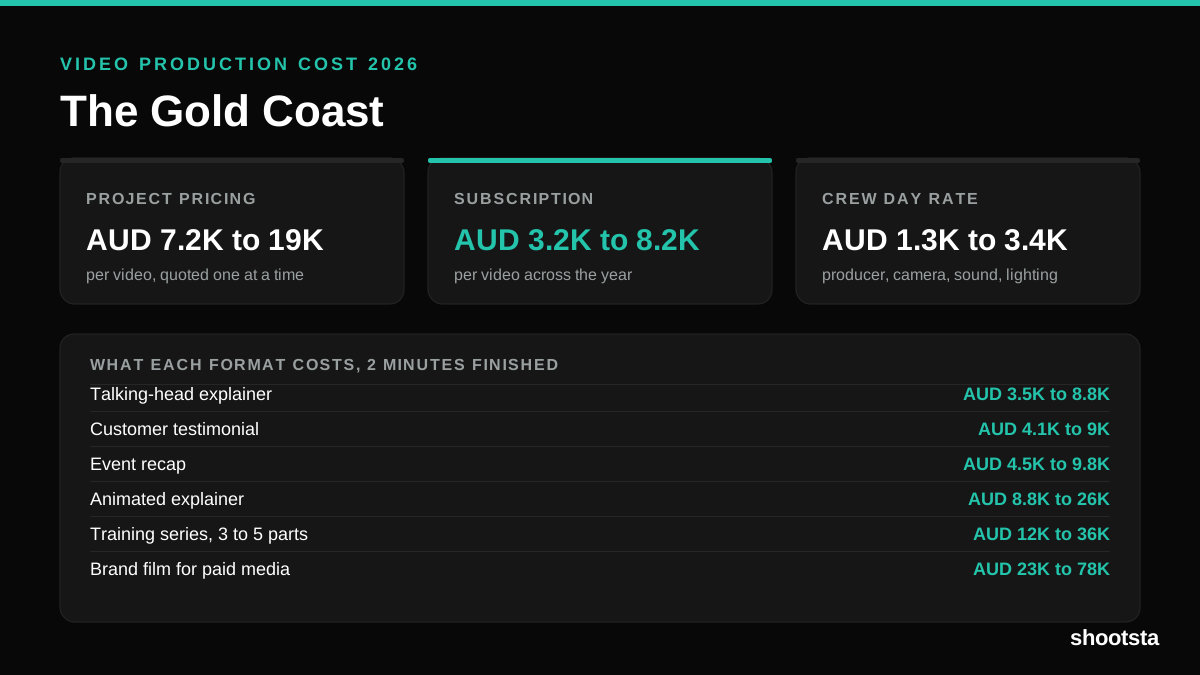
Video Production Cost on the Gold Coast 2026
Video production in the Gold Coast costs AUD 3,200 to AUD 8,200 per finished video on a subscription model, and AUD 7,200 to AUD 18,500 for one-off project work. Here is what you are paying for, and how the three pricing models compare.
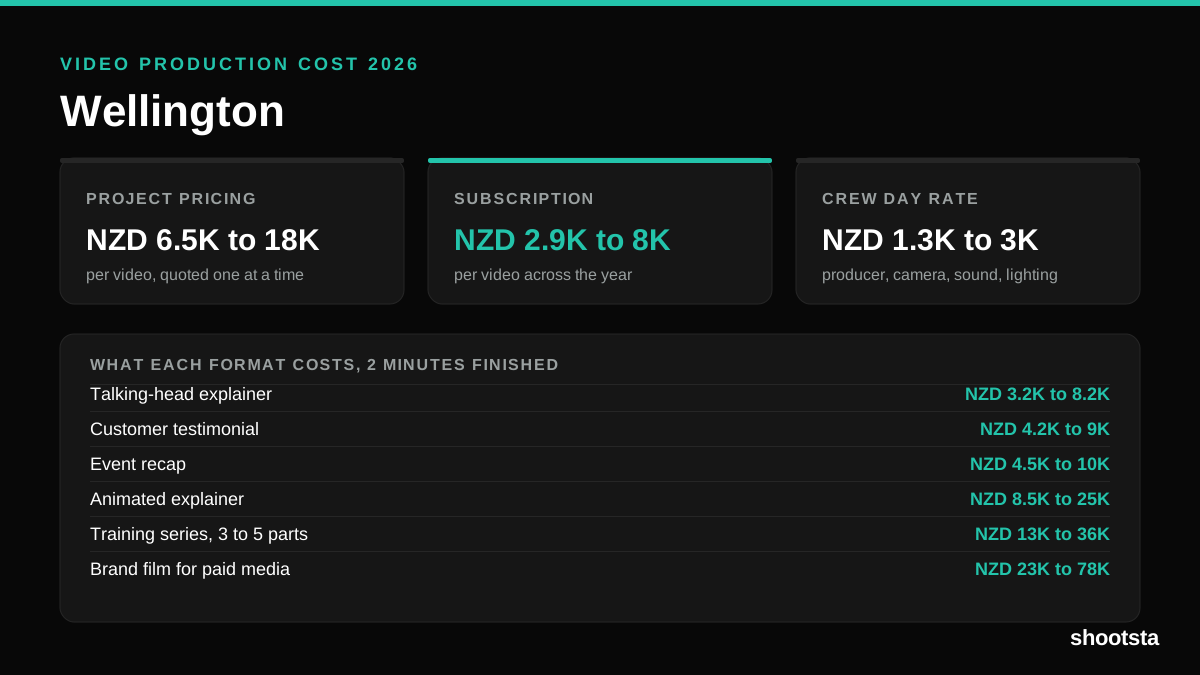
Video Production Cost in Wellington (2026)
Video production in Wellington costs NZD 2,900 to NZD 8,000 per finished video on a subscription model, and NZD 6,500 to NZD 18,000 for one-off project work. Here is what you are paying for, and how the three pricing models compare.
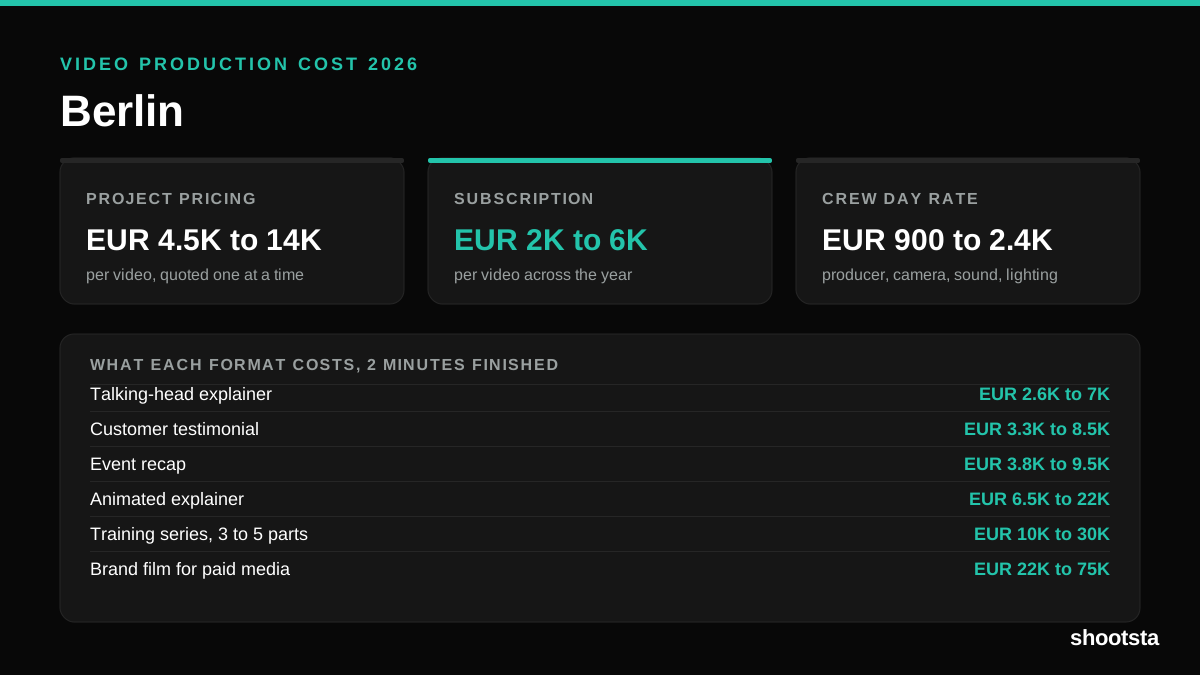
Video Production Cost in Berlin (2026)
Video production in Berlin costs EUR 2,000 to EUR 6,000 per finished video on a subscription model, and EUR 4,500 to EUR 13,500 for one-off project work. Here is what you are paying for, and how the three pricing models compare.