
The Financial Services Compliance Trap
shootsta.
The Financial Services Compliance Trap
By Shootsta · Published June 27, 2026 · Updated October 2026
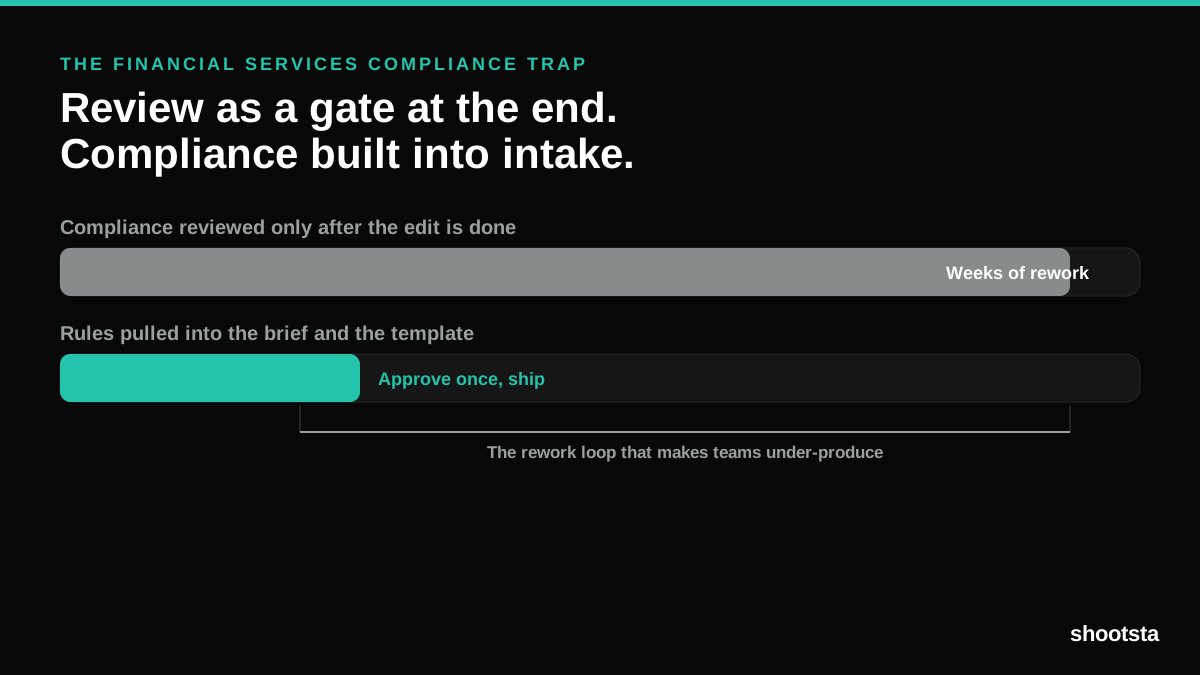
Regulated financial brands produce less video than they should, and it is rarely about budget or talent. When compliance review is a gate at the end of production, every piece risks weeks of rework or gets killed, so teams under-produce. Here is how to build compliance into the workflow so video ships faster and stays on the right side of the regulator.
Short answer. Regulated financial brands often produce less video than they should, and it is rarely a budget or talent problem. It happens because compliance and legal review is treated as a gate at the very end of production, so every piece risks weeks of back-and-forth or gets shelved. Over time that makes teams gun-shy. The fix keeps every standard in place. Pull compliance into the brief and intake, use pre-approved templates and disclaimers, run a defined approval workflow with one owner and an audit trail, and keep source files controlled. Done that way, compliant video ships faster and stays on the right side of the regulator.
Walk into the marketing team at a large bank, an insurer, or a payment network and you will not find a shortage of video ideas. You will find a backlog of ideas that never got made. Product explainers, adviser training, customer stories, executive updates, campaign cutdowns for every market: the pipeline is full. What is missing is the confidence to ship it. Every piece has to clear compliance and legal, and nobody can say how long that will take or whether the answer will be no.
So the safe move becomes doing less. Picture a team that has been burned by a three-week review loop, or watched a finished edit get killed on a disclaimer technicality, It learns to propose fewer videos next quarter, and that is the compliance trap. It looks like caution, but it quietly caps output in the one sector where trust and clear communication matter most.
Why do financial services brands produce less video than they should?
In many regulated financial teams, compliance review is bolted onto the end of production rather than built into the start of it. The brief goes out, the shoot happens, the edit gets finished, and only then does a legal or compliance reviewer see it for the first time. By that point the cost of a change is highest and the timeline is already spent.
When review lands last, three things follow. The reviewer flags an issue that was baked in weeks earlier, so the team re-edits or re-shoots. The clock runs out and the piece misses its moment. After living through that once, the team starts self-censoring the next request before it is even scoped. The compliance team is not being difficult here. The workflow puts them in an impossible spot, because they must approve or reject finished work they had no chance to shape.
The rework loop is the real cost
The edit is rarely the slow part. A two-minute explainer takes an editor a few hours to cut. The expensive part is the loop that starts when a late reviewer finds something that should have been settled in the brief: a claim that needs substantiation, a missing risk disclosure, an old disclaimer, an off-strategy tone. Each pass adds days, and a couple of passes turn a quick video into a month. We mapped this timeline in detail in the FSI animation compliance review timeline.
What does compliant video production require?
Regulators are clear that marketing communications must be fair and clearly disclosed, and must not mislead. In the US, FINRA rules on communications with the public and the SEC marketing rule set expectations for how financial promotions can be presented, and equivalents exist across the UK, EU, and APAC. Read the guidance and you will see the rules are about substance and evidence. Nothing in them asks you to slow down for its own sake.
That matters, because compliant video then comes down to design rather than luck or one heroic reviewer at the end. If you know the rules up front, you can build them into how work is briefed, made and approved. The finished piece is then compliant by construction rather than by inspection.
How do you build compliance into the workflow instead of bolting it on?
The shift is to move compliance from a final gate to an ingredient of the brief. Four moves do most of the work, and each one keeps the standard where it is.
Pull compliance into the brief and intake
Give every request one intake route that captures the claims being made, the audience, the market, and the required disclosures before a camera rolls or an animation starts. A compliance reviewer signs off on the concept and the claims at brief stage, when changing them costs minutes instead of weeks. The full version of this sits in our guide to producing video for financial services.
Use locked, pre-approved templates and disclaimers
Much of the compliance risk in financial video is repetitive: the same risk warnings, the same disclaimers, the same brand and legal boilerplate. Build those into locked templates and lower-third libraries that reviewers have already approved. A producer then works inside guardrails, so the disclaimer is correct and current every time instead of being retyped and re-checked on each project.
Run a defined approval workflow with one owner and an audit trail
Name a single accountable approver rather than a committee that responds in the gaps between meetings. Reviews run in parallel rather than in a chain, and every decision is logged with who approved what and when. A regulator or an internal auditor may ask for that audit trail later. It is also what lets the team move quickly with confidence. Our compliance-ready video production guide walks through building this step by step.
Keep source files and versions controlled
Approved video has a habit of getting re-cut, re-captioned, and re-shared long after sign-off. Keep master files, approved versions, and expiry dates in one controlled place so nobody publishes a stale disclosure or an out-of-date rate. Version control is quiet insurance against the compliance issue that surfaces months after everyone forgot the original review.
Does building in compliance slow production down?
It does the opposite. Late review feels fast because the first cut appears quickly, but the real timeline is dominated by the rework loop that follows. When you front-load the rules, that loop goes away. The reviewer shapes the concept once, at the cheapest possible moment, and the finished piece clears with days of sign-off instead of weeks of ping-pong.
The bar for output changes too. When a team knows a request will move predictably through a defined workflow, they stop self-censoring and start briefing the volume the business needs. A compliant-by-design process protects the brand, and it also frees the pipeline that the trap had frozen. There is more on making that case to a budget owner in the business case for a video production platform.
What does this look like when it works?
DUAL, a specialty insurer, is a clear proof point. Insurance is one of the more heavily reviewed corners of financial services, yet DUAL ships on-brand, compliant video at volume without hiring a production team or briefing a new agency for every piece. They did it by building a repeatable model where brand and compliance requirements live inside the process rather than waiting at the end of it.
The result is more output with faster turnaround, and every piece stays on brand and compliant. The regulator's bar never dropped, but the workflow around it got smarter.
You can read the full story in the DUAL case study. It is the clearest example of a regulated financial brand escaping the compliance trap without cutting a single corner.
Frequently asked questions
Is the problem the compliance team or the workflow?
It is the workflow. Compliance reviewers are asked to approve or reject fully-finished video with no chance to shape it earlier, which is the worst possible position for everyone. Move review to the brief stage and give reviewers pre-approved templates to work from. The same people who felt like a bottleneck then become a fast and predictable checkpoint. You fix this by changing the process and keeping the people.
How do you make compliant video ship faster without cutting corners?
Start by front-loading the rules. Capture claims and required disclosures at intake, get concept-level sign-off before production, and build the recurring risk warnings and disclaimers into locked templates. Then run approvals in parallel with one named owner and a logged audit trail. The standard stays the same, and the end-of-line rework loop that was quietly making everything slow goes away.
What are the compliance requirements for financial services marketing video?
The specifics vary by regulator, but the themes are consistent: communications must be fair and not misleading, material claims must be substantiated, and required risk disclosures and disclaimers must be present and current. FINRA and SEC rules in the US, and their UK, EU, and APAC equivalents, all point that way. Treat those requirements as brief inputs rather than final hurdles, and much of the friction disappears.
Can a regulated financial brand really scale video without a big in-house team?
Yes, and DUAL is the example. The limit is rarely headcount. What matters is a production model that flexes with demand and carries compliance inside the workflow, so every piece is on-brand and defensible without a bespoke review each time. Once that model is in place, output climbs and the team stops leaving good ideas on the shelf.
Sources and further reading
The regulatory context above is general and jurisdiction-dependent; treat it as a starting point and check your own compliance requirements. For wider reading:
- FINRA rules and guidance on communications with the public, on fair and not-misleading financial promotions.
- SEC guidance on the Marketing Rule, covering how advisers may present marketing content.
- Wistia State of Video report on rising video production volume across businesses.
On Shootsta's side, see the guide to producing video for financial services and the DUAL case study.
Where to go next
This post is part of a series for marketing leaders in regulated sectors. For the operational detail, read the compliance-ready video production guide. To see where review time goes, read the FSI animation compliance review timeline. To make the case to whoever owns the budget, read the business case for a video production platform.
To see where your own compliance and production workflow is losing time, book a free consultation.
Take this article with you
Read the latest at shootsta.com/blog/financial-services-video-compliance-trap
You might also like

How to Plan Video Team Capacity Around Leave
Your only editor just booked two weeks off, and you already know which projects will slip. Chad Lakin explains how to plan video team capacity so the work keeps moving when someone is away.
Corporate Video Editing Standards: Full Guide
A two-page editing standard does more for consistency than a forty-page brand book. Here is what it should cover, who owns each part, and how to enforce it with an in-house editor or an outside partner.
Quality Control in Outsourced Video Editing
When editing leaves the building, quality has to be checked by a system rather than by whoever happens to look. Here is the system: acceptance criteria, two QA gates, counted revision rounds and a quarterly audit.
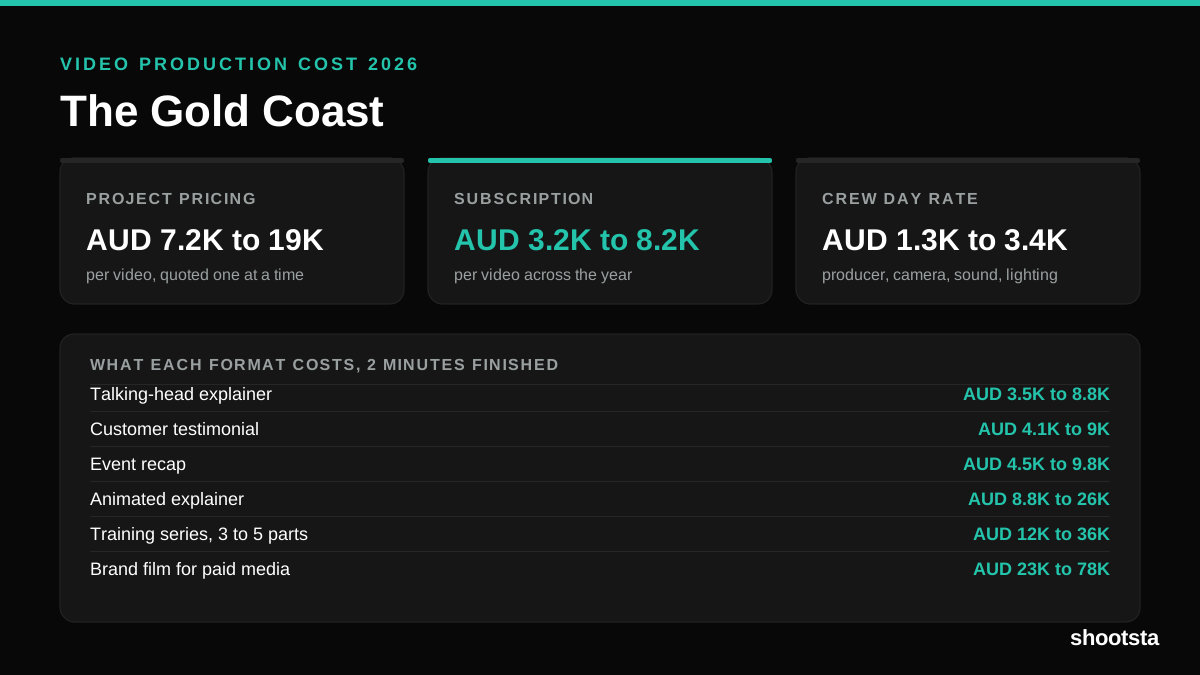
Video Production Cost on the Gold Coast 2026
Video production in the Gold Coast costs AUD 3,200 to AUD 8,200 per finished video on a subscription model, and AUD 7,200 to AUD 18,500 for one-off project work. Here is what you are paying for, and how the three pricing models compare.
Video Production Cost in Wellington (2026)
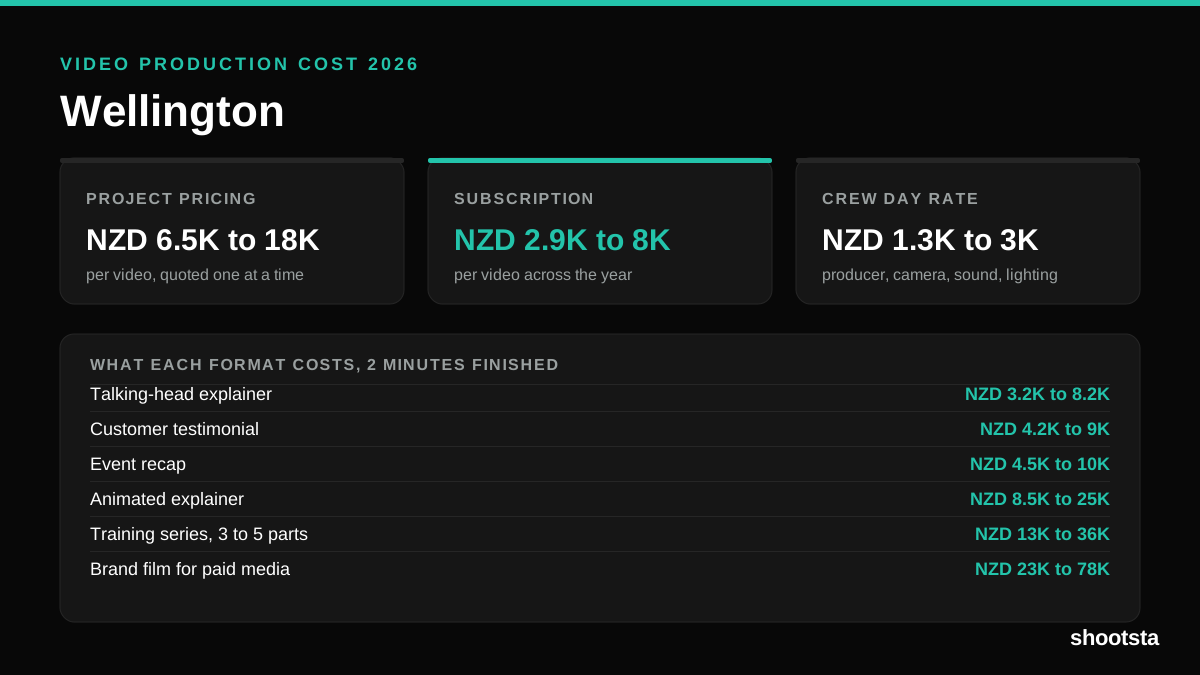
Video production in Wellington costs NZD 2,900 to NZD 8,000 per finished video on a subscription model, and NZD 6,500 to NZD 18,000 for one-off project work. Here is what you are paying for, and how the three pricing models compare.

Video Production Cost in Berlin (2026)
Video production in Berlin costs EUR 2,000 to EUR 6,000 per finished video on a subscription model, and EUR 4,500 to EUR 13,500 for one-off project work. Here is what you are paying for, and how the three pricing models compare.