
How to Plan FSI Animations Without Losing 6 Weeks to Legal
shootsta.
How to Plan FSI Animations Without Losing 6 Weeks to Legal
By Shootsta · Published May 28, 2026 · Updated October 2026
Compliance review is the bottleneck in most financial services video production. With animation, you can design around it. Here is the timeline that works.
Why does compliance review take so long?
Most FSI marketing teams budget 2 to 6 weeks for compliance review on video content. That is not because legal is slow. It is because the review happens at the wrong time, with the wrong materials, and with the wrong number of reviewers.
Typical pattern: marketing produces a near-finished video, sends it to legal in a 90-minute meeting invite, gets back 5 pages of redlines, redoes the voiceover, sends a v2, gets new redlines because the new wording triggered something else, and so on. By the time the video is approved, the launch window has moved.
You can fix this. With animation, you can design the production process so compliance review takes 3 to 5 days in total rather than 3 to 5 weeks. The change comes from how the process is built, and it does not depend on anyone working late.
The 4-stage compliance review timeline
Stage 1: Pre-brief alignment (Day 0, 30 minutes)
Before the script is written, the marketing lead and one named compliance reviewer agree on what the video is going to say at a high level. What product is being communicated, who the audience is, what claims will be made, and what disclosures are required.
This is a 30-minute conversation. It catches the issues that would otherwise come back as a Stage 4 disaster. Most marketing teams skip this because it feels like extra work. It is the single most valuable 30 minutes in the production cycle.
Stage 2: Script review (Day 2-3)
The marketing team writes the script and sends it to the named compliance reviewer with three things attached: the brief, the source documents (policy disclosure, product literature, regulatory filings), and the line-by-line mapping of which claim ties to which source.
Compliance reviews the script against the source. Because they have the sources in hand, the review is fast. Their job is to confirm the script does not say anything that contradicts or weakens the existing approved disclosures. Most script reviews come back in 24 to 48 hours.
If there are issues, they are usually at the wording level. Rewriting a script is hours of work. Rewriting an animated video is days.
Stage 3: Storyboard review (Day 5-7)
Once the script is approved, the production partner builds a storyboard showing what each scene will look like, including on-screen text. The compliance reviewer sees both the script and the visual treatment, including any text-on-screen, charts, or numerical claims.
This is where compliance teams sometimes flag issues that did not appear in the script review: a misleading chart, a percentage shown without proper context, a brand element from the old organization that should not appear. Catching these at storyboard is cheap. Catching them at final delivery is expensive.
Stage 4: Final review (Day 9-10)
The finished animation goes back to the same reviewer for confirmation. Because Stages 1 through 3 have caught the substantive issues, this review is fast: 24 hours, usually under an hour of work for the reviewer. Most final reviews approve with no changes.
End-to-end timeline: 10 business days for a fully compliance-approved animation. Compare that to the 3 to 6 week timeline that FSI marketing teams often budget for. The difference is moving the review left and giving the reviewer the source documents.
Why this works better with animation than with live action
Three reasons:
Animation is scripted from end to end
Every word is in the script. There is no improvisation, no off-the-cuff explanation, no "let me try that line again." Reviewers can approve the script with confidence that the final video says exactly that. With live action, the reviewer often has to watch the final edit because the spoken delivery can subtly shift the meaning.
Animation makes on-screen text auditable
Every chart, statistic, disclaimer, and product term that appears on screen is in the storyboard. Reviewers can see it before it gets animated. With live action, on-screen graphics are added in post and sometimes get less compliance scrutiny than they should.
Animation is easier to update
If a regulator publishes a new guideline after the video is in market, you re-record the voiceover for the affected section and replace 5 seconds of animation. The rest of the asset is reused. For more on production economics, see the different kinds of animation for business.
What about the "name a single reviewer" rule?
The biggest delay in FSI video production is not the reviewer. It is the chain of reviewers. Three people CC'd on a thread is not a review process. It is a delay.
Designate one named compliance reviewer per video. They consult internally with their own team as needed. The marketing team works with one person. This is how legal review timelines collapse from weeks to days.
For larger organizations where multiple legal teams have to weigh in (consumer compliance, securities law, brand legal), designate one named coordinator who owns the consolidated response back to marketing. Marketing should not be reading a thread between five lawyers.
What does this look like across the year?
Once the model is running, most subsequent animations in the same product or campaign area move even faster. The reviewer has seen the source material. The brand and disclaimer templates are reusable. The conversation about what claims are acceptable has already happened. A second or third animation in a series often clears compliance in 3 to 4 days.
This is what makes animation workable as an ongoing format in regulated industries. You set up the framework on the first video, and every video after it reuses that framework. For more on this from a strategy perspective, see compliance-ready video production for financial services.
Where to start
Pick your next FSI animation. Set up a 30-minute pre-brief alignment with one named compliance reviewer before the script is written. Track how long the full review cycle takes compared to your previous projects. The difference is usually 3 to 5 weeks saved on the first project, then continued savings on every subsequent one. Learn more about animation production at scale, see how Dual North America runs production for a specialty insurer, or read our guide to compliant video production for UK financial services for the UK regulatory context.
For the frameworks behind scaling this kind of work, read The Business Animation Playbook.
Take this article with you
Read the latest at shootsta.com/blog/fsi-animation-compliance-review-timeline
You might also like
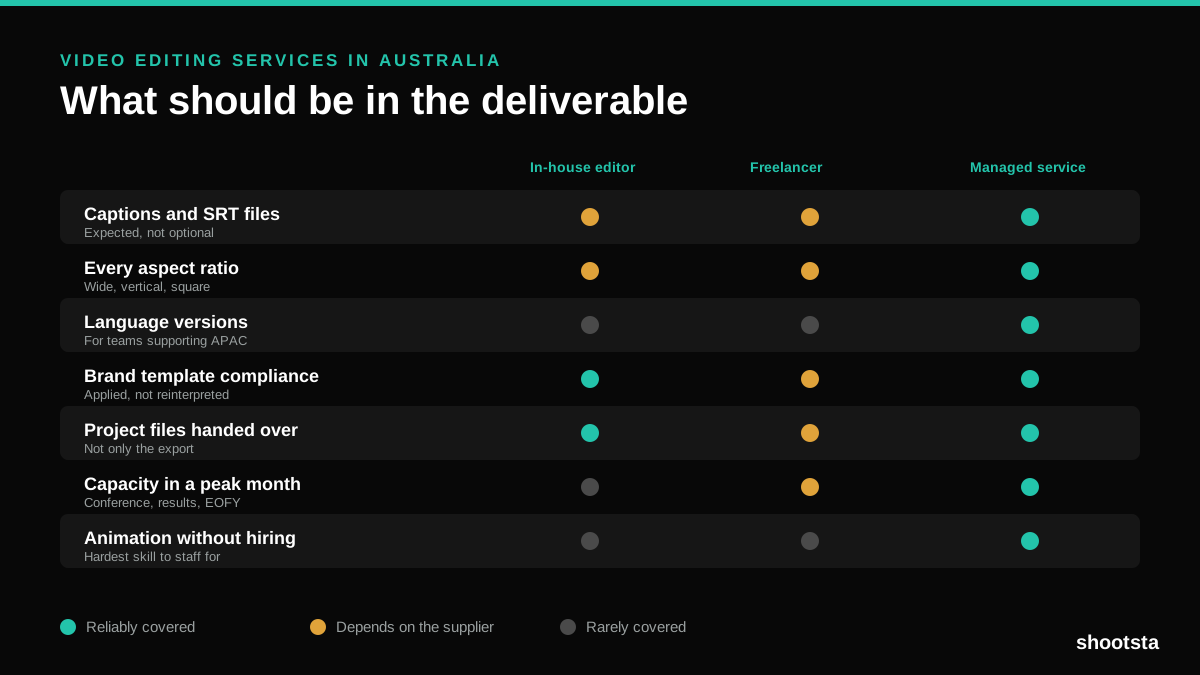
Video Editing Services in Australia
Australian teams are spread across time zones and offices, so the editing queue matters more than the editing. Here is what to expect on cost and turnaround.
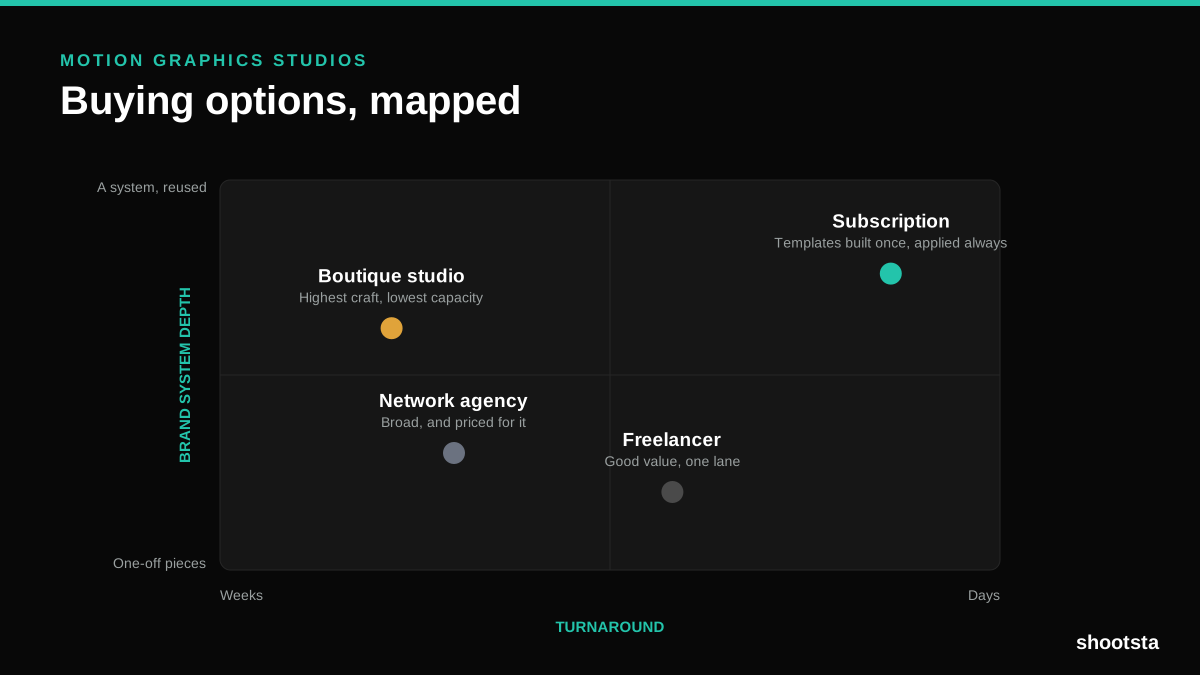
How to Choose Between Motion Graphics Studios
Every motion graphics studio has a good reel. The reel is the one thing that will not tell you how the fifth project goes. These ten criteria will.
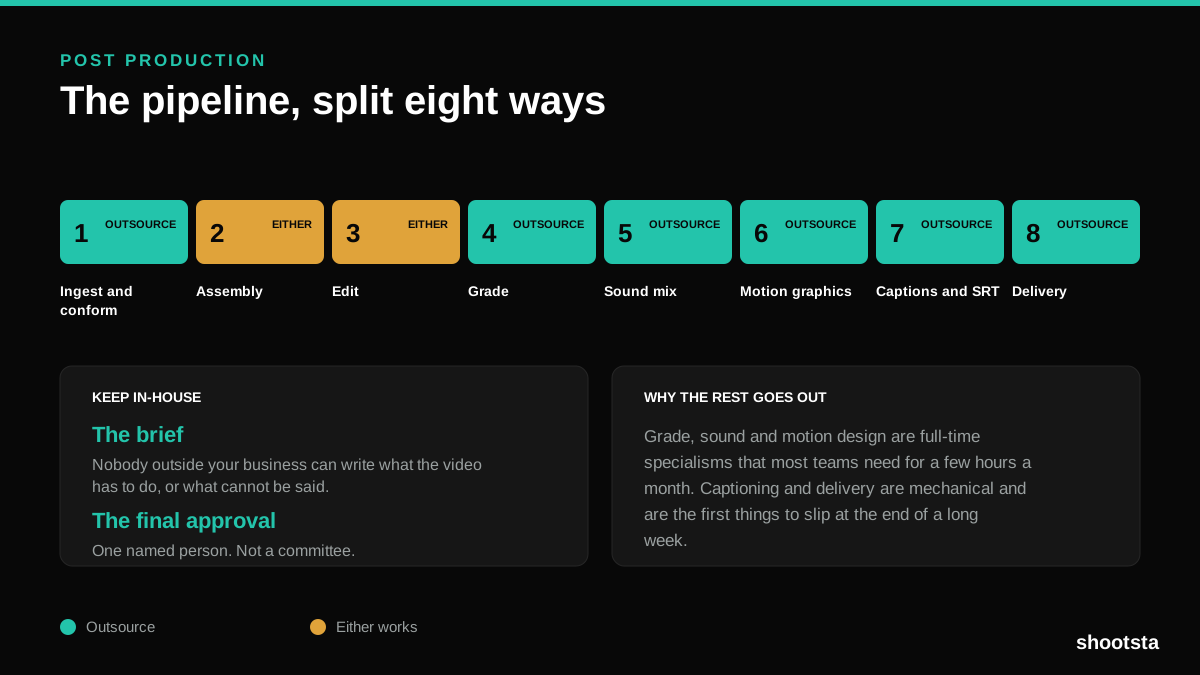
Post Production Agency or In-House Team?
Post production is eight stages, not one. Some of them need context only your team has. The rest are mechanical and are the first things worth handing over.
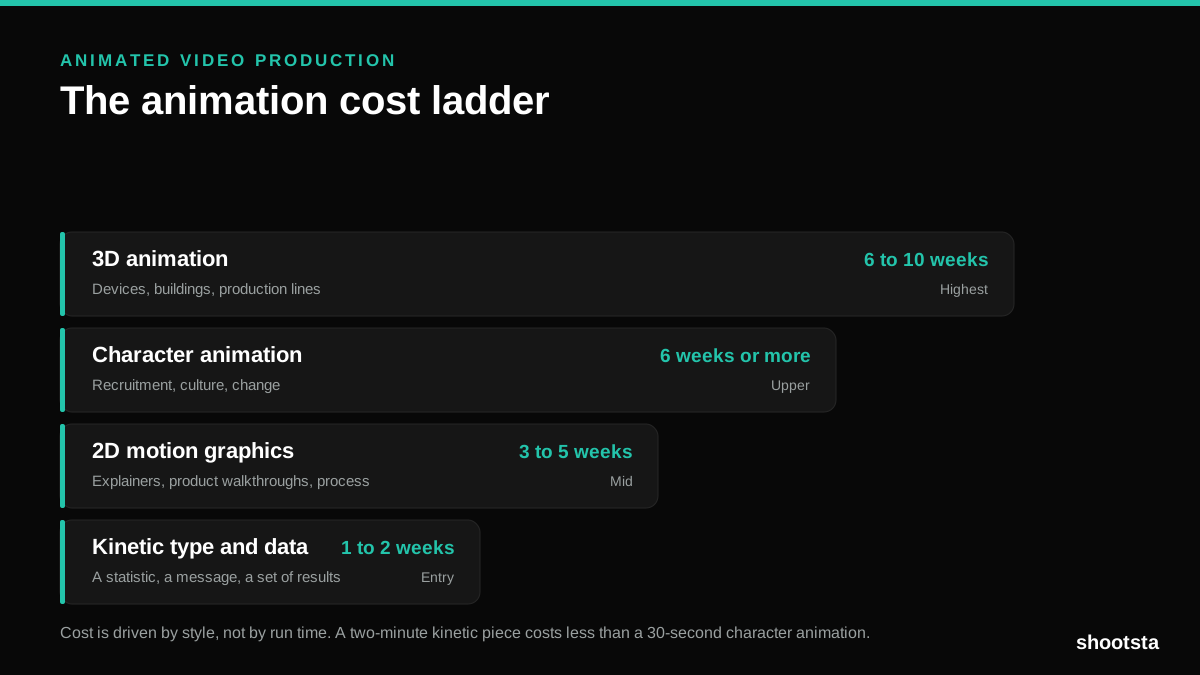
Animated Video Production Cost in the US
Animated video production costs move with style, not with length. Kinetic type, 2D motion, character and 3D sit on four rungs of a ladder. Here is what separates them.
How to Commission Medical Training Animation
Commissioning a medical training animation is mostly decisions you make before anyone animates a frame. The brief fields that matter, what to ask a studio, how much expert time to budget, and the contract terms that stop a rebuild in two years.
How to Write an Animation Brief
How to Write an Animation Brief
Most animation briefs cause delays because they over-specify the visual style and under-specify the outcome. Here are the nine fields an animation production team needs to quote accurately and start without rework.