
Animation Use Cases for College Marketing
shootsta.
Animation Use Cases for College Marketing
By Shootsta · Published June 16, 2026 · Updated June 2026
Small college marketing teams are stretched thin and animation does work a camera cannot. Here is where animated video fits across admissions, the student journey, and campus communications.
Why does animation fit higher ed marketing?
College marketing teams are small, the calendar is relentless, and a lot of what they need to explain has no obvious thing to film: financial aid, application steps, program structures, deadlines. That is exactly where animation does work a camera cannot, and it does it without booking a crew every time.
Animation also pairs naturally with the live action a college already shoots. The campus tours, the student stories, and the faculty interviews carry the emotion. Animation carries the information. Together they cover the whole journey. If you are building a lean program, start with our guide to lean college video without a videographer hire.
1. Financial aid and cost explainers
Aid is the most confusing and most decision-critical topic a prospective family faces, and almost nobody reads the PDF. A short animated explainer that walks through aid types, the application steps, and the deadlines answers the question that decides whether a family applies at all. It is also the single most repeatable piece of content in the funnel.
2. The application and admissions process
Steps, portals, requirements, dates. This is process content, the natural home for animation. A clear animated walkthrough cuts the volume of "how do I apply" questions hitting the admissions office and keeps every applicant on the same path. It pairs well with the cadence in our college admissions video calendar.
3. Program and major overviews
Animated overviews explain how a program is structured, what the path through it looks like, and where it leads after graduation. Animation handles the structure cleanly, then you cut to a real student or faculty member for the human proof. That blend is stronger than either piece alone.
4. Orientation and onboarding for admitted students
Once a student commits, a wave of logistics begins: enrollment steps, housing, registration, deadlines. Animated onboarding content delivers it consistently to every new student without staff repeating the same briefing, and it stays current with a quick edit when a date or a step changes.
5. Internal and campus communications
Policy changes, system rollouts, campus updates. The same internal comms case that applies to any organization applies on campus, where the audience is staff, faculty, and students at once. Short animated pieces land better than another all-staff email or a recorded slideshow.
Where should colleges still use live action?
Anywhere the value is a real person or a real place. Student testimonials, campus tours, faculty introductions, and event coverage all depend on authenticity that animation cannot fake. Prospective students want to see the actual campus and hear from actual students. Use animation for the explaining, and keep the camera for the proof. We cover the storytelling side in student storytelling formats for small colleges.
How does a small team produce all this?
By building a shared animation style once and reusing it across every piece, instead of commissioning each video as a standalone project. That keeps a stretched team producing consistent content all year without a consistent crew. The same logic carries across functions, which we lay out in animation use cases for enterprise teams.
Where to start
Begin with the financial aid explainer. It answers the highest-stakes question in the funnel, it is fully reusable across cycles, and it takes the most pressure off your admissions team. To scope a higher ed program, see our animation production services or get a free consultation.
Planning a bigger animation program? The Business Animation Playbook covers the operating model leading teams use.
Take this article with you
Read the latest at shootsta.com/blog/animation-use-cases-college-marketing
You might also like
Corporate Video Editing Standards: Full Guide
A two-page editing standard does more for consistency than a forty-page brand book. Here is what it should cover, who owns each part, and how to enforce it with an in-house editor or an outside partner.
Quality Control in Outsourced Video Editing
When editing leaves the building, quality has to be checked by a system rather than by whoever happens to look. Here is the system: acceptance criteria, two QA gates, counted revision rounds and a quarterly audit.
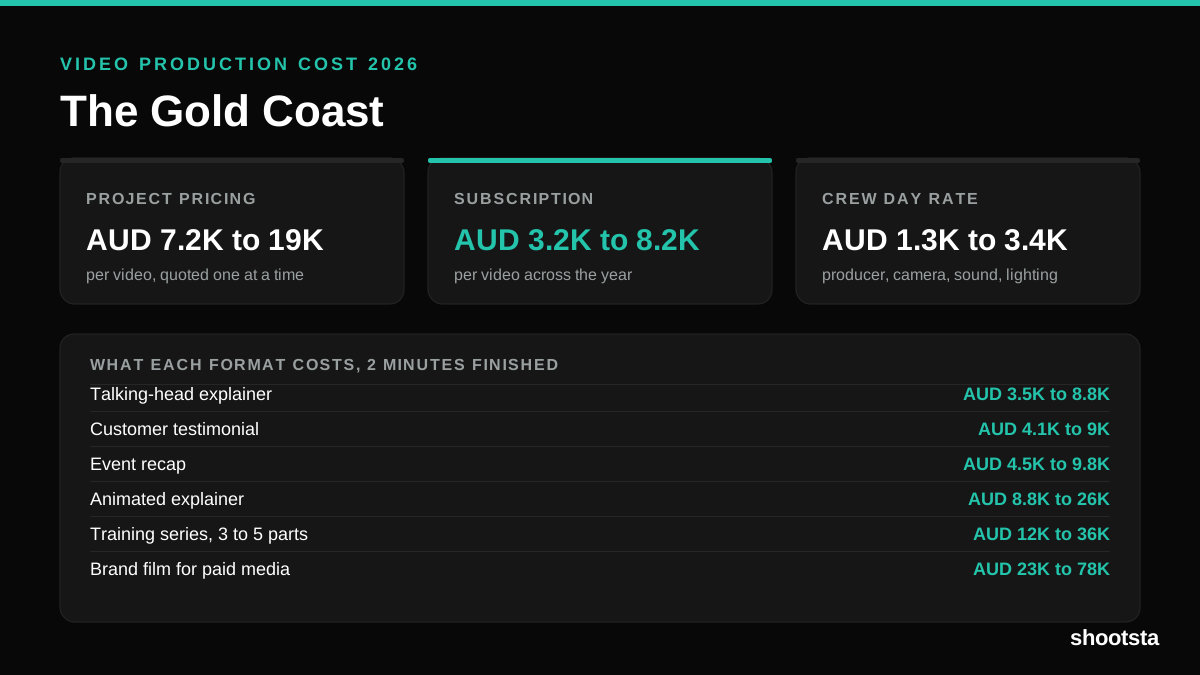
Video Production Cost on the Gold Coast 2026
Video production in the Gold Coast costs AUD 3,200 to AUD 8,200 per finished video on a subscription model, and AUD 7,200 to AUD 18,500 for one-off project work. Here is what you are paying for, and how the three pricing models compare.
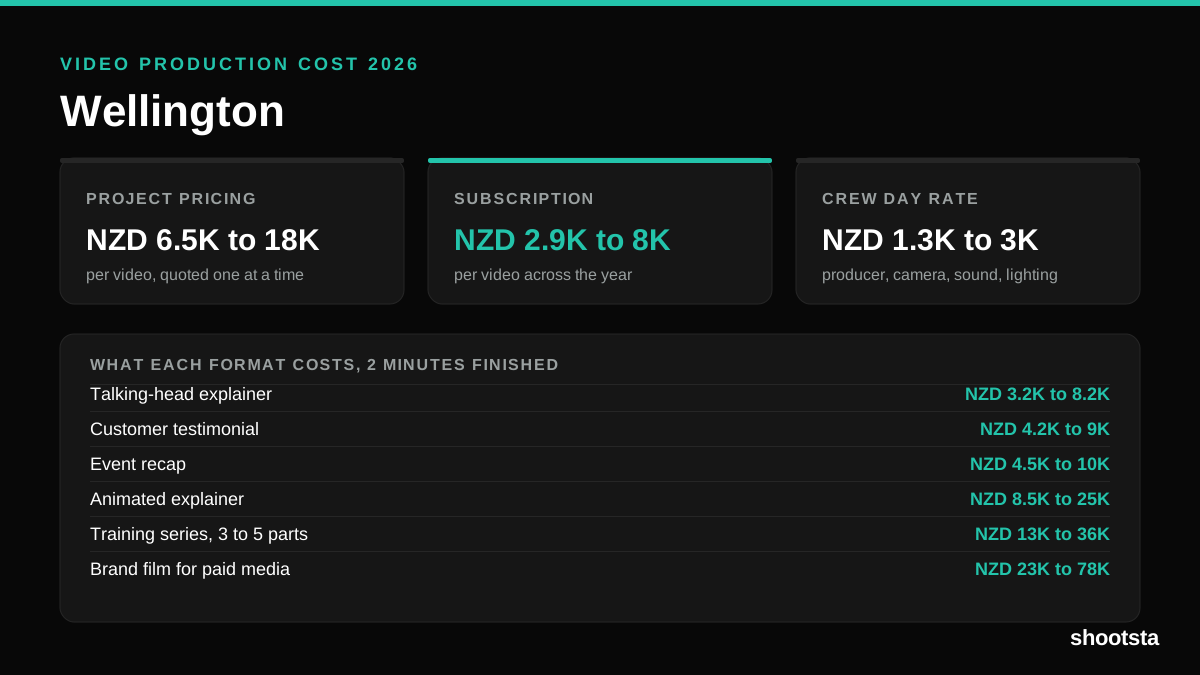
Video Production Cost in Wellington (2026)
Video production in Wellington costs NZD 2,900 to NZD 8,000 per finished video on a subscription model, and NZD 6,500 to NZD 18,000 for one-off project work. Here is what you are paying for, and how the three pricing models compare.
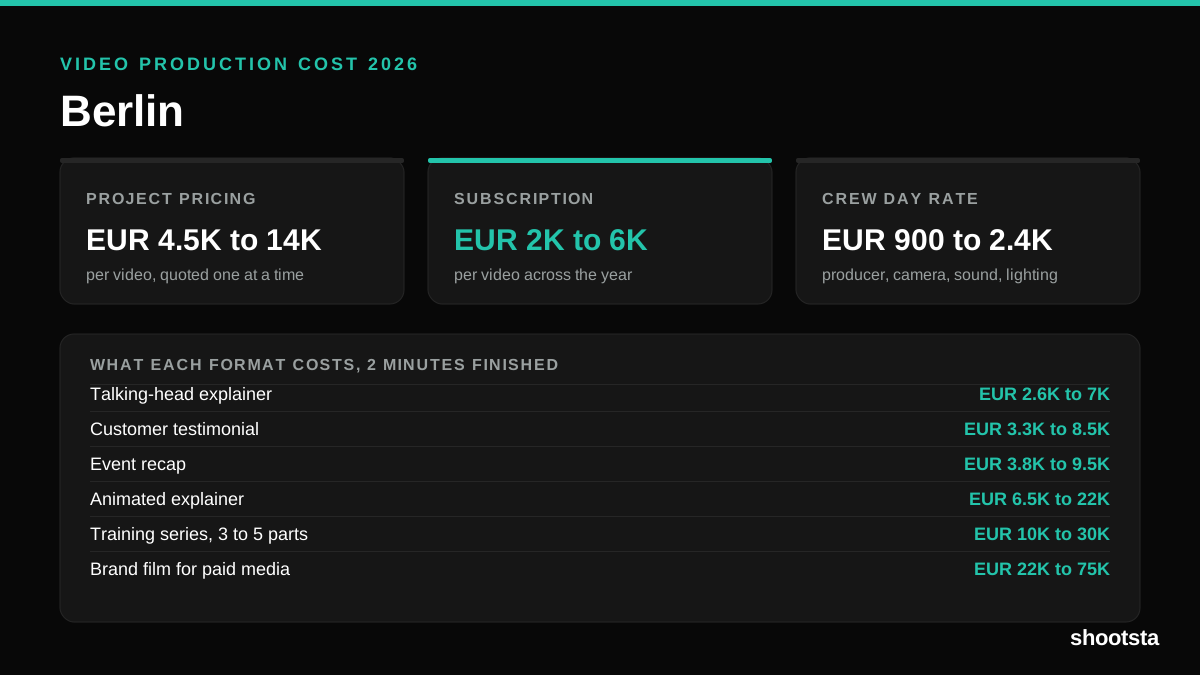
Video Production Cost in Berlin (2026)
Video production in Berlin costs EUR 2,000 to EUR 6,000 per finished video on a subscription model, and EUR 4,500 to EUR 13,500 for one-off project work. Here is what you are paying for, and how the three pricing models compare.
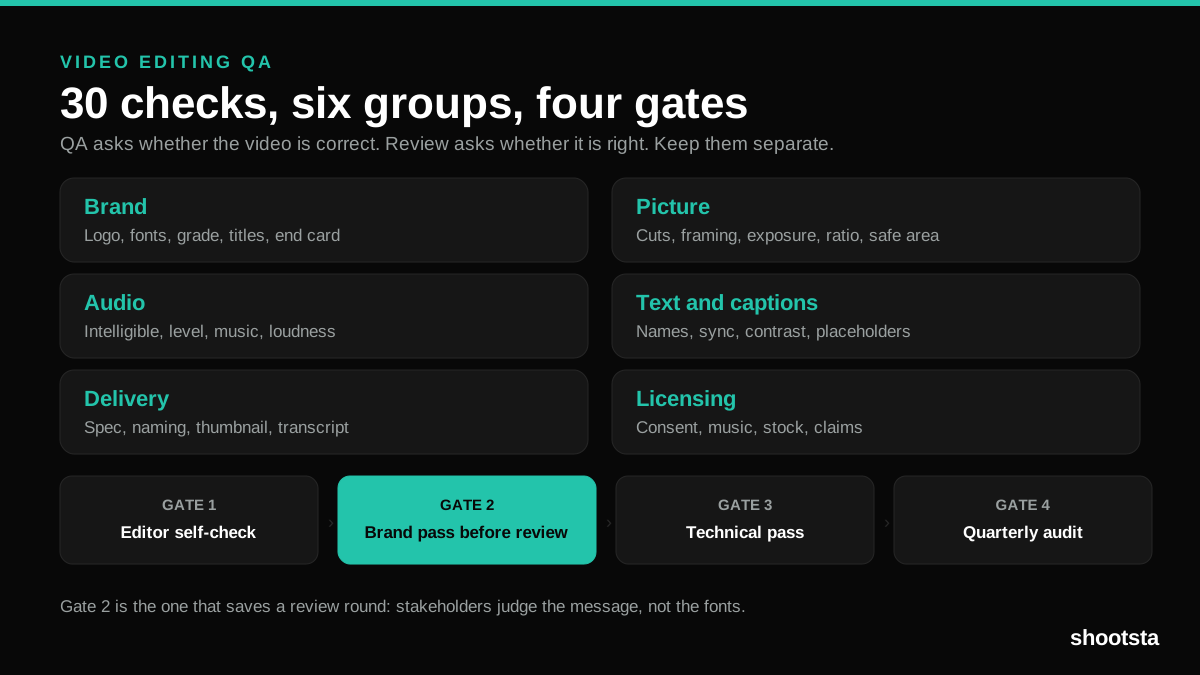
Video Editing QA: The Complete 2026 Guide
Video editing QA is the pass that catches brand drift, bad audio and wrong deliverables before stakeholders do. Here is the 30-point checklist, the four stage gates, and how to run it at 40 videos a month.