
Why Brand Guidelines Don't Keep Video Consistent
shootsta.
Why Brand Guidelines Don't Keep Video Consistent
By Shootsta · Published August 3, 2026 · Updated October 2026
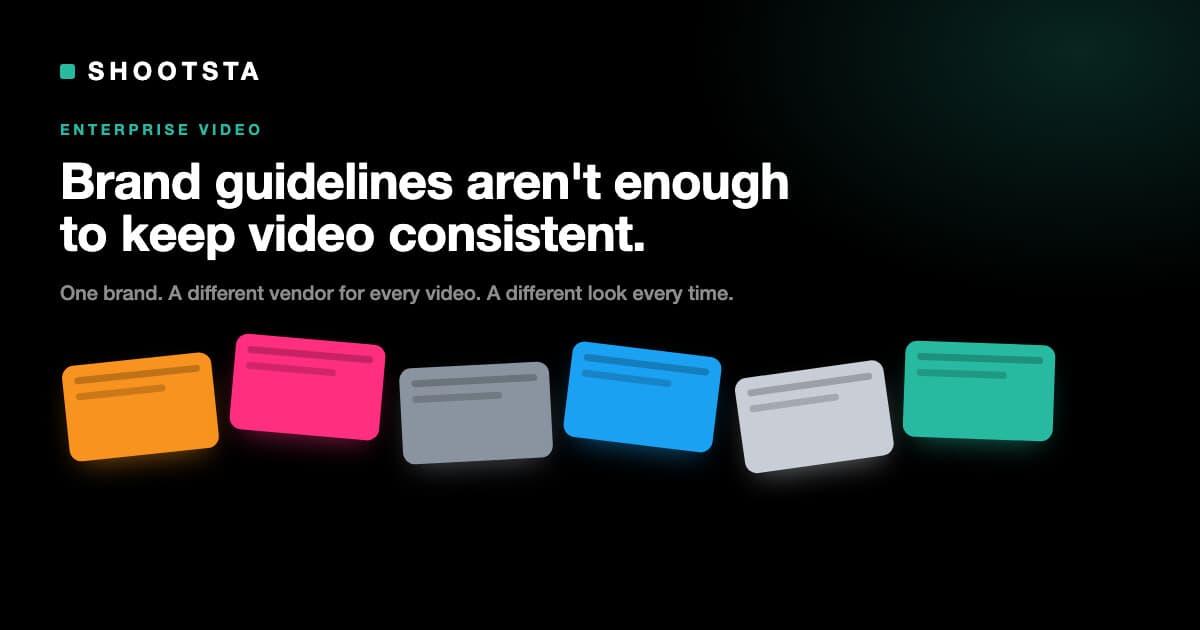
Marketing hires a freelancer. Comms hires another. HR finds someone local. Every call is sensible, and before long every video looks different. Chad Lakin on why consistency is an operating-model problem, not a guidelines problem.
This problem tends to go unnoticed until it shows up in every corner of the business. Marketing hires a freelancer, and internal comms hires a different one. HR finds someone nearby for a recruitment film, while the regional teams bring in their own production partners. Every one of those calls is reasonable on the day it gets made.
Then you line the videos up side by side. The graphics don't match and the storytelling wanders from one film to the next. One looks broadcast-grade, and the next looks like a phone propped up in a meeting room. Each one reads the brand a little differently, so what you're left with is a fragmented customer experience, assembled one sensible hire at a time.
Consistency builds trust, and fragmentation wears it down slowly. Over time the brand people meet in your videos stops matching the one in your guidelines.
In this clip, Chad Lakin, Senior Vice President of Growth at Shootsta, explains why brand consistency is rarely a guidelines problem. Good guidelines are only half the story, and the other half is the operating model that puts them into every video.
Watch the clip above. Below we cover why guidelines keep losing and what holds a brand together across every team that makes video.
Why don't brand guidelines keep video consistent?
A guideline is a document, and a document can't do anything on its own. It tells people what good looks like, but it can't make good happen. The moment ten teams brief ten different vendors, that PDF gets read ten different ways, because interpretation is the whole job of the person holding the camera and cutting the edit.
Some things survive that game of telephone. Your logo and the brand palette usually make it through. The rest does not: the tone, the pacing, the way a story is built, the feel of the thing. Guidelines assume one careful person is applying them. When you spread the work across freelancers who have never met, the document loses every time.
How does the fragmentation happen?
Nobody sits in a meeting and decides to go off-brand. It builds up one deadline at a time. Marketing needs a campaign out fast, so they call a freelancer they trust. Comms has a town hall next week and books someone else. HR finds a local crew for a recruitment film. A regional team already has a partner they like and sees no reason to switch. You end up with five reasonable decisions and five different looks.
This is the same trap as leaning on one person for all your video, just flipped around. Instead of one overloaded hire, you have a dozen vendors who each own a slice and nobody owns the whole. It is also why no single production model absorbs enterprise video volume on its own. The fix is a system everyone briefs into, rather than more suppliers working in isolation.
What keeps video consistent?
The operating model behind the guidelines keeps it consistent. That model has shared templates, one brand system and a review step every video passes through. It also has a small group of people, or a single partner, who apply the standard the same way in every market.
When the standard lives in the system instead of a PDF nobody reopens, consistency stops depending on who you happened to hire that week. That is the difference between a guideline and a guardrail. A guideline hopes you stay on brand, while a guardrail makes it hard to wander off. We get into the mechanics in keeping brand consistency as video scales, and how the pieces fit together in the enterprise video operating model.
In practice that usually means one managed partner and a shared platform carrying the bulk of the volume: same templates, same review, a first edit back in about 48 hours, and the same look whether the footage was shot in Sydney or London. Your team still owns the brand. The system just makes sure every video sticks to it.
Frequently asked questions
Aren't brand guidelines enough to keep video on brand?
Guidelines set the standard, but they don't apply it. A PDF can't run a review or rebuild a template when an edit drifts off tone. Consistency comes from the operating model that puts the guidelines to work: shared templates, one brand system, a review step, and a small crew or single partner doing the production. More on that in keeping brand consistency as video scales.
We already have an in-house team and brand guidelines. Why add a partner?
You keep both. A partner gives you one brand system and one review process across every market, so the volume that used to scatter across freelancers comes back looking like one company again. Your team owns the standard. The partner holds it at scale, without you hiring for every spike. More on that split in how a video partner extends your in-house team.
How many video vendors is too many?
There is no magic number. The trouble starts when nobody owns consistency across all of them, whatever the count. Every extra vendor is one more read of your brand with no one checking it against the last. One system that everyone briefs into will beat five talented vendors working blind to each other.
How do you keep quality consistent when non-experts shoot the footage?
You keep it consistent with templates and a fast, tailored edit. Give people a simple format to shoot into and run everything through the same edit and brand system. Even phone footage then comes back looking like it belongs, because the polish lives in the process rather than with whoever held the camera.
Where to go next
For the system that holds it all together, read the enterprise video operating model. For why one production approach can't cover every job, read why one model can't scale enterprise video. And for what happens when the whole load falls on a single hire, read when your whole video team is one person.
Try counting the vendors producing video across your organization right now. If the number takes a while to work out, that is usually the first sign the brand has already started to drift.
Take this article with you
Read the latest at shootsta.com/blog/brand-guidelines-video-consistency
You might also like

How to Plan Video Team Capacity Around Leave
Your only editor just booked two weeks off, and you already know which projects will slip. Chad Lakin explains how to plan video team capacity so the work keeps moving when someone is away.
Corporate Video Editing Standards: Full Guide
A two-page editing standard does more for consistency than a forty-page brand book. Here is what it should cover, who owns each part, and how to enforce it with an in-house editor or an outside partner.
Quality Control in Outsourced Video Editing
When editing leaves the building, quality has to be checked by a system rather than by whoever happens to look. Here is the system: acceptance criteria, two QA gates, counted revision rounds and a quarterly audit.
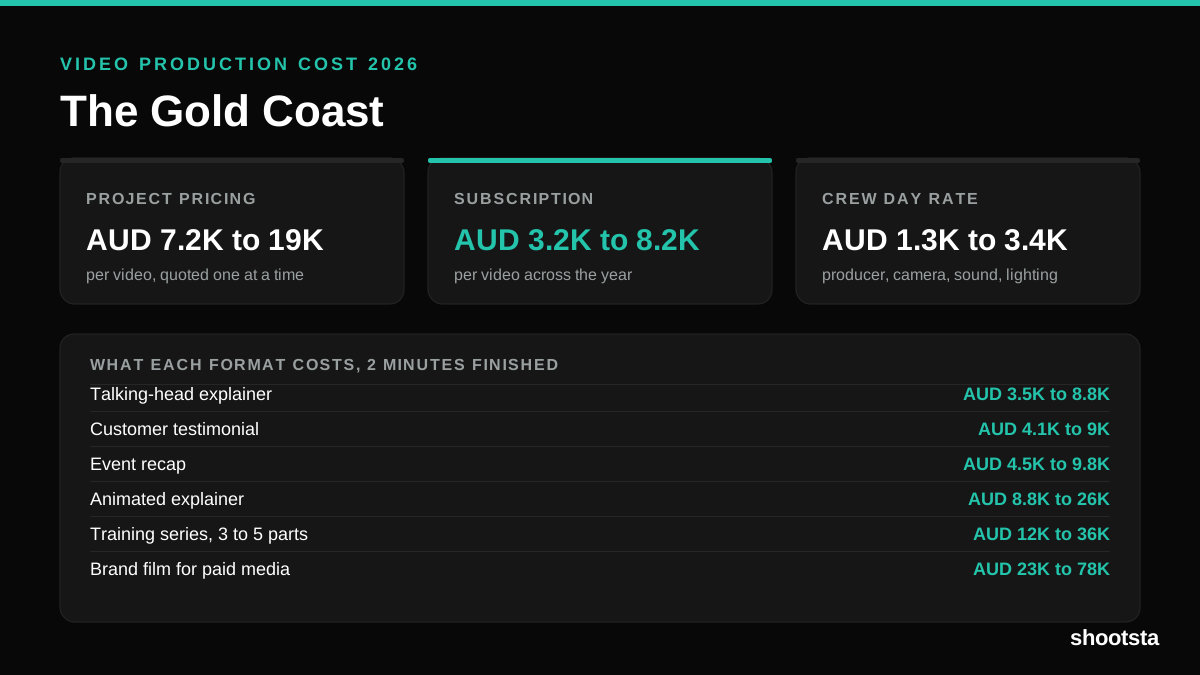
Video Production Cost on the Gold Coast 2026
Video production in the Gold Coast costs AUD 3,200 to AUD 8,200 per finished video on a subscription model, and AUD 7,200 to AUD 18,500 for one-off project work. Here is what you are paying for, and how the three pricing models compare.
Video Production Cost in Wellington (2026)
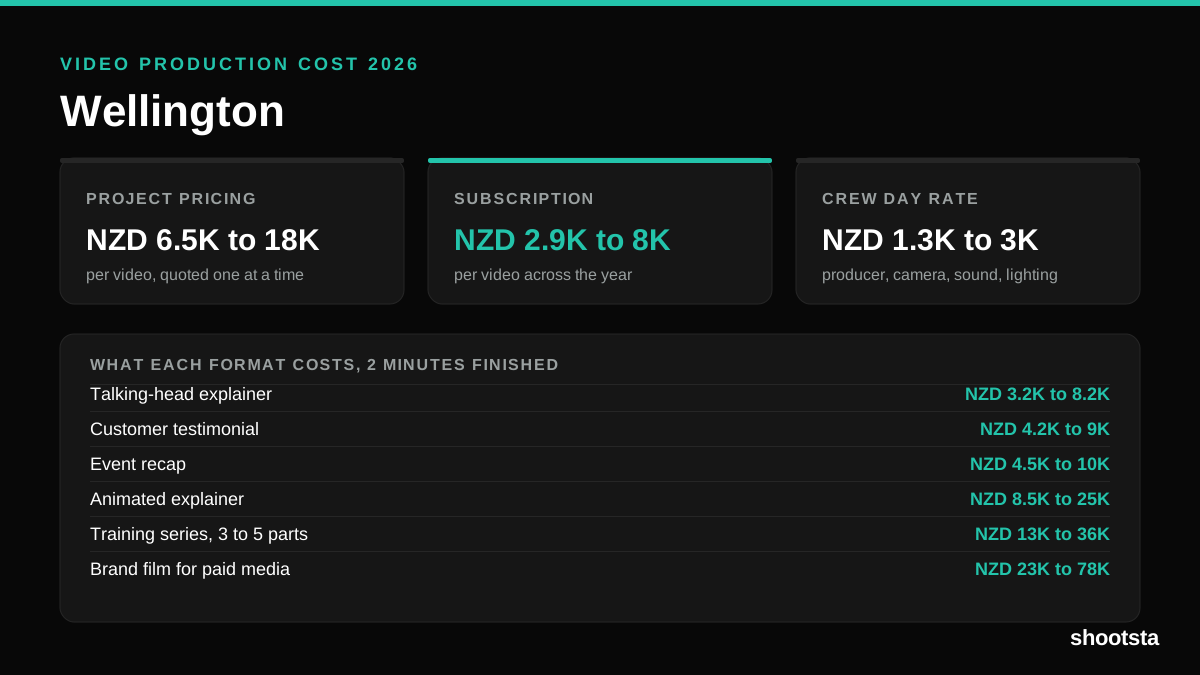
Video production in Wellington costs NZD 2,900 to NZD 8,000 per finished video on a subscription model, and NZD 6,500 to NZD 18,000 for one-off project work. Here is what you are paying for, and how the three pricing models compare.
Video Production Cost in Berlin (2026)
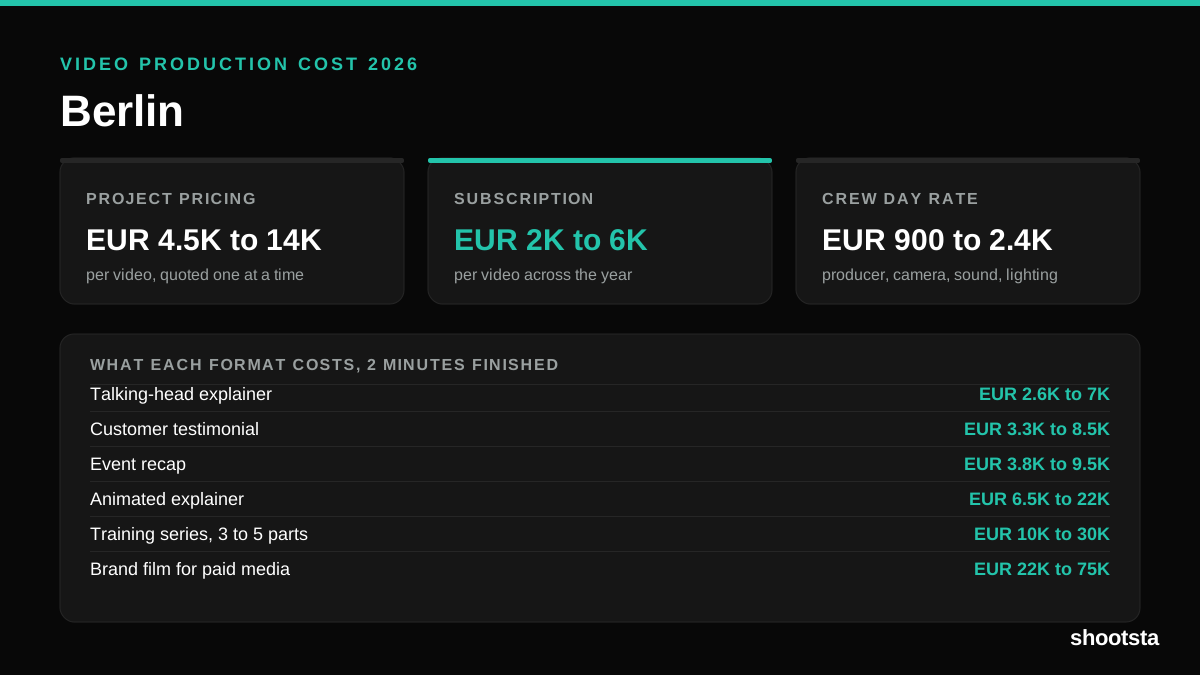
Video production in Berlin costs EUR 2,000 to EUR 6,000 per finished video on a subscription model, and EUR 4,500 to EUR 13,500 for one-off project work. Here is what you are paying for, and how the three pricing models compare.