
How to produce video for higher education
shootsta.
How to produce video for higher education
By Shootsta · Published April 14, 2026 · Updated October 2026
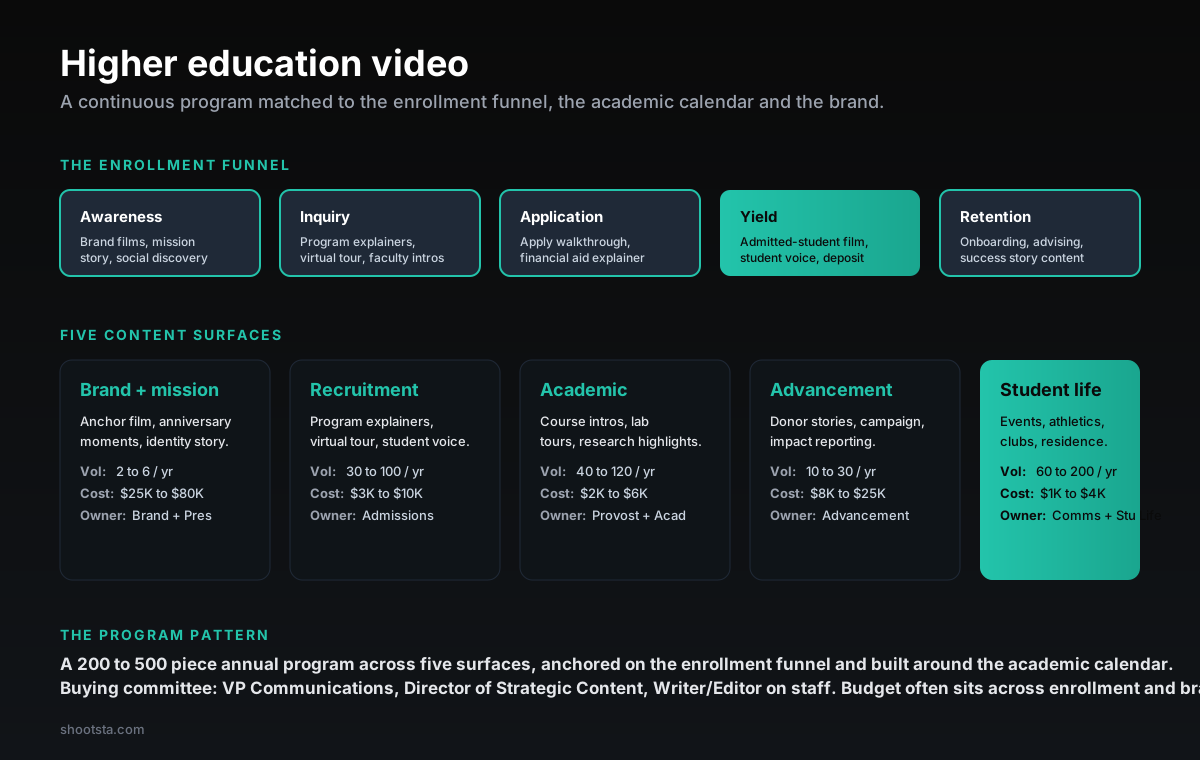
Higher education video sits across five content surfaces and runs against the enrollment funnel from awareness through yield to retention. The buying committee is consistent across small US private colleges: VP Communications, Director of Strategic Content, Writer/Editor. The program that holds: a continuous 200 to 500 piece annual cadence built around the academic calendar with batched faculty and student recording days.
Why higher education video programs need a continuous model
Higher education has two ways to run video. In the traditional model, the college makes one anchor brand film every few years and deans commission program videos as they need them. The comms office patches social content together, and student affairs produces student-life video when it can. In the continuous model, a central video lead owns a yearly program across five surfaces. It is built around the academic calendar and commissioned by enrollment, brand, academic affairs, advancement and student life.
The big change is matching your video cadence to the enrollment funnel. Awareness video runs at the top, inquiry video runs when you capture applicants, and yield video runs at the deposit decision. Retention video carries on through onboarding and into student success stories. Academic, advancement and student life video sit around that funnel and build the institution's wider voice. This post will help you build or assess that program.
The buying committee at small US private colleges
At small US private colleges, the buying committee looks much the same from one campus to the next. Three roles drive the video decision.
VP Communications
The VP Communications owns the brand voice and the institution's story. They often share the enrollment marketing budget with the VP Enrollment. They have the final word on tone, hero film direction and crisis communications protocols, and they choose the partner at the strategic level.
Director of Strategic Content
This director owns the program calendar, the editorial planning and the production roadmap. They brief partners, manage stakeholder reviews and handle distribution. They make the day-to-day calls on production workflow, and they are the person who relies on a partner for extra capacity.
Writer / Editor
The writer or editor owns the scripts, the voice and the story shape across video, written and social. Colleagues often defer to them on whether a script meets the institution's editorial standards. They make the detailed calls on creative direction.
Programs that align stakeholder communication to these three roles ship cleanly. Programs that negotiate with each dean separately, or run video through a marketing committee with no editorial owner, slow to a crawl. Video is the most central content surface an institution has, so the team that owns it needs to be small and accountable, with a sharp editorial eye.
The five content surfaces
Surface 1: Brand and mission
This surface covers anchor films, anniversaries and milestones, and the story of the institution's identity. It has the lowest volume and the highest production value, because these pieces shape how people see the institution. The brand team and the President's office own it. A hero film here can take several months from brief to release.
Surface 2: Recruitment
This surface covers program explainers (one per major, plus interdisciplinary clusters), virtual tours, student voice video and faculty introductions. It also covers financial aid explainers, welcome videos for admitted students and deposit-decision videos. It has the biggest effect on enrollment of any surface. Admissions and enrollment marketing own it.
Surface 3: Academic
This surface covers course introductions, lab and studio tours, research highlights, faculty perspective video and signature programs. Volume varies widely, since many colleges barely invest in academic video at all. The provost's office and academic affairs own it.
Surface 4: Advancement
This surface covers donor stories, campaign video, scholarship impact pieces, video to go with the annual report and planned giving video. Each piece tends to cost more, because donor-facing video needs a higher production value. The advancement office owns this surface.
Surface 5: Student life
This surface covers athletics, residence life, clubs and events, plus student-produced video with editorial oversight. At many colleges it is the highest-volume surface. Comms and student affairs share ownership of it.
The enrollment funnel and which video runs at each stage
Awareness
At this stage you run brand films, mission stories and social video that helps students discover you. The audience is high school students who have not yet chosen which colleges to consider. You reach them through paid social, YouTube pre-roll and college search platforms. The job of video here is to get the institution on the list, and the metric is conversion to inquiry.
Inquiry
Here you run program explainers, virtual tours, faculty introductions and videos about the location. The audience has heard of the college and wants to judge whether it fits. You reach them on your website, in email follow-up to inquiries and with video sent before a campus visit. The job of video is to show what the institution offers, and the metric is conversion to application.
Application
This stage needs a how-to-apply walkthrough, a financial aid explainer, a scholarship overview and video on the application process. You share these through the applicant portal, email nurture sequences and the financial aid office. The job of video is to remove friction from applying, and the metric is completed applications.
Yield
Admitted students who have not yet deposited get a welcome film, student testimonials, a faculty welcome and video on residence and academic life. This is the stage where video does the most work, because yield decisions are emotional and video carries emotion better than any other medium. You share it through the admitted-student portal, yield campaign emails and accepted-student events. The metric is conversion to deposit.
Retention
Current students get onboarding video, academic advising, student success stories and alumni stories. Colleges often underinvest here because retention sits outside the enrollment marketing budget. You share it through the student portal, advising channels and a library of success stories. The metric is persistence and graduation.
Higher ed enrollment funnel calculator
What does a 3-point yield lift from video actually return?
Set your funnel volumes plus the yield lift you expect from a continuous video program. The calculator returns the additional enrolled students and indicative net tuition revenue.
Annual inquiries: 8,000
Inquiry to applicant rate: 35%
Applicant to admit rate: 65%
Baseline yield: 22%
Yield lift from video program: +3 pts
Net tuition per enrolled student: $28,000
Applicants
2,800
Admits
1,820
Additional enrolled
+55
400 → 455 per class
Incremental net tuition
$1540K
Yield-lift estimates draw on cross-sector data; actual lift depends on program quality, student mix and competing institutions. Calculator shows one cohort; multi-year compounding is meaningfully larger.
The academic calendar pattern
Higher ed video runs against a hard external calendar that does not flex.
Fall semester production push
From August through October you produce orientation video, fall semester academic video, student life as campus fills up and first-year experience video. The shoot days that capture the most student voice fall in September and October, when campus is full and students are keen to take part.
Open house and admission events
From September through March you run campus visit days, virtual open houses and admitted-student events. Video for each event is made in the weeks before it. Cutdowns for social are edited during the event itself.
Yield season
March through May carries the highest stakes, because this is when deposit decisions land. You produce yield video from January through March, and distribution peaks in April. It is the video team's busiest time of the year.
Summer production planning
From June through August, campus is quiet. That makes summer the right time for hero brand films, faculty interview days and evergreen video. Plan the fall semester roadmap during summer as well.
Commencement
In May you film commencement, which becomes part of the year's institutional story. It is the most emotional video of the year, and it is usually the most-viewed video among alumni.
The batched-day production model that holds at scale
Faculty recording days
A quarterly faculty recording day captures a full batch of faculty interviews in one session. The studio setup stays the same and the questions follow one structure, so the answers cut cleanly into program-specific videos. Each video costs far less than it would with ad-hoc faculty recording. Colleges that scale faculty video tend to run this model.
Student voice recording days
A monthly student voice session records many student interviews in a single day. You then cut them into program-specific, campus life and yield videos. The student voice library holds an enrollment marketing program together, because admitted students respond to current students more than to anything else on screen.
Walkabout days
A quarterly walkabout day captures footage of the campus, classrooms, labs, athletics and student life. That footage feeds the library for the next few months of production. With a good library, you stop sending crews back to the same locations.
Event production days
Attach a production crew to major campus events such as open houses, admitted-student days, commencement and signature speakers. The crew captures the day itself and the footage is later re-cut into evergreen video. The event serves the people who attend and gives you material for months.
What changes for the production team working on higher ed content
Your production team will need to make three practical shifts. Each one comes from how colleges plan, approve and publish video.
Shift 1: Editorial discipline
Writers and editors need to know the voice of higher education. It should aim high without sounding grand, be specific about programs without going dry, and carry emotion without turning sweet. A producer who can brief a faculty member and get a usable take quickly is worth more than one who needs a whole afternoon. We covered the broader sector fluency model in how a partner gets up to speed on your industry.
Shift 2: Calendar discipline
A production team that ships well in higher ed locks its calendar to the academic year. It treats yield-season delivery as fixed. A schedule built around the commercial calendar breaks once it meets the academic year's outside deadlines.
Shift 3: Stakeholder navigation
Producers have to work across many groups in higher ed: deans, the provost's office, admissions, advancement, athletics, student affairs, brand and communications. There are often more stakeholders per asset than in commercial production. The producer who can hold a project together across all of them makes the difference.
Practical questions enterprise higher ed teams ask
What does a complete higher-ed video program cost?
The cost depends on how many pieces you make and how they split across the five surfaces. A small private college runs a smaller program than a large university at full coverage, and the budget scales with that volume. A common pattern is to underspend on recruitment and academic video while overspending on one-off hero brand films. A partner that edits for a predictable fee, below agency cost, lets you plan that volume a year ahead.
How does video lift enrollment yield?
Yield tends to rise when video coverage moves from ad-hoc to continuous. The effect is strongest when video for admitted students is well made and tailored to each major. Admitted students who have not yet deposited want to see themselves on campus, and student voice video shows them that. Compare deposit rates for students who watched yield video with those who did not.
Should we use student-produced content?
Use it for student life and social-first surfaces, but not for hero brand films or yield-stage video. Strong programs keep a student multimedia team for frequent social posts, with editorial oversight from the central video lead. Professional production then covers the surfaces where more is at stake.
How do we handle FERPA and accessibility?
Under FERPA, a student who can be identified in a video must give documented consent. Minors need a parent's or guardian's consent, and any reference to a student record in an interview needs explicit consent. For accessibility, WCAG 2.1 AA is the working standard for college websites, so every published video needs captions and a transcript. Large institutions often add audio-described tracks for hero films too.
What about AI in higher ed video production?
AI is useful in narrow places, such as transcript editing, picking social cutdowns and captioning faculty video. It should not replace student voice or faculty perspective. The trust signal in higher ed content is the authentic student and faculty voice; AI-generated voice or talent erodes that trust. We covered the broader AI framing in how AI fits inside enterprise video workflows.
Where to go next
For the customer story pattern that overlaps with student voice production, read how to produce customer story video at scale. For the broader accessibility framework that higher ed extends, read how to make enterprise video accessible. For the recruiting video pattern that overlaps with admissions video, read how heads of TA should use video for hiring.
To scope a higher education video program matched to the academic calendar and the enrollment funnel, book a free consultation.
Take this article with you
Read the latest at shootsta.com/blog/how-to-produce-video-for-higher-education
You might also like
How to Brief an Animation Project
How to Brief an Animation Project
An animation brief is the document you send to your production partner before work starts. Get it right and you cut revision cycles in half. Get it wrong and you discover mid-production that everyone disagrees on what the video is for. This is what a complete brief looks like.
Animation for change management comms
Animation for change management comms
Animation handles change management communications better than live video for three reasons: no on-camera executives required during sensitive periods, scene-level updates when plans shift, and a single production that works across global teams with voiceover-only language swaps.
How sales leaders should use video at scale
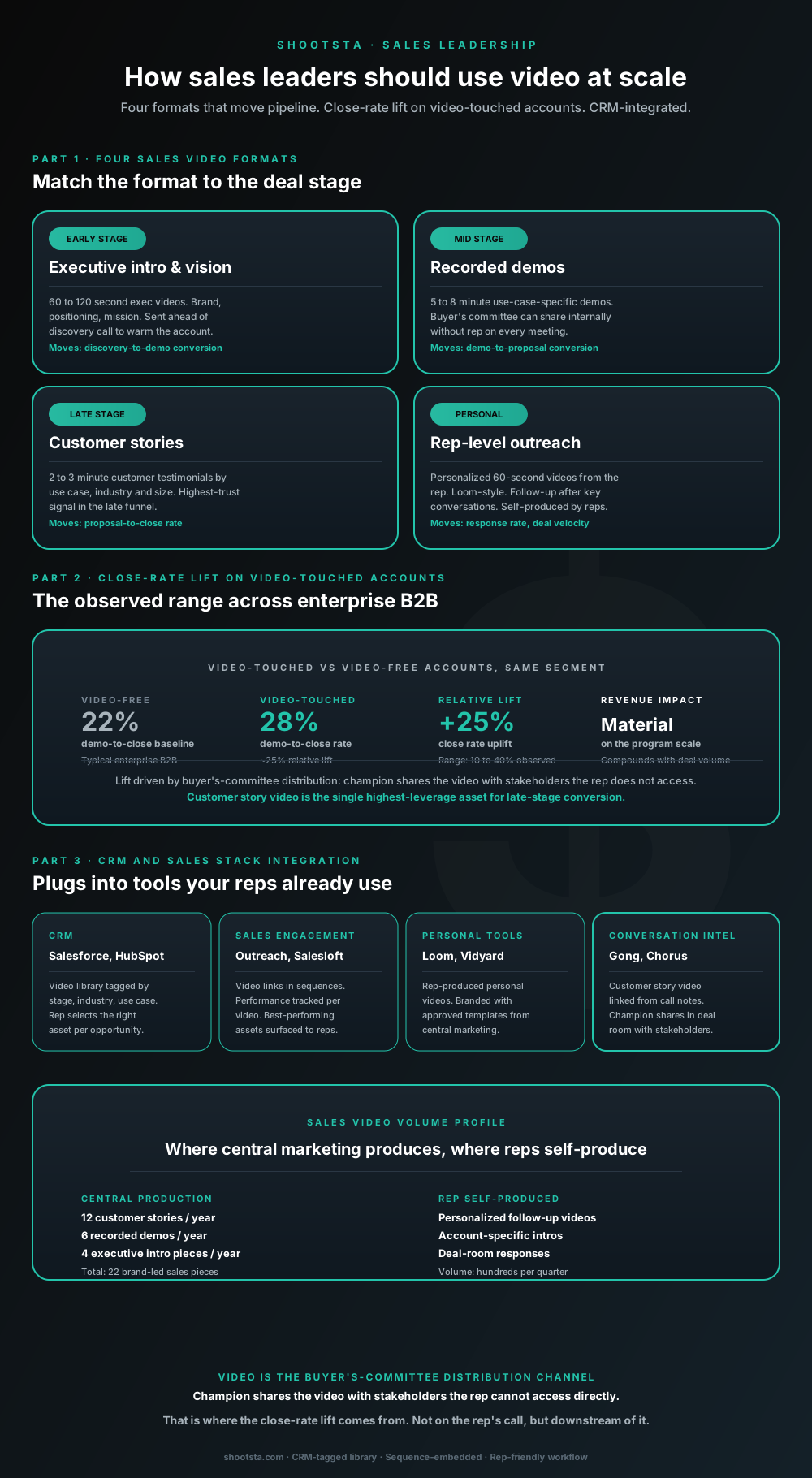
Sales leaders mostly think about video as personalized rep outreach (Loom, Vidyard) or as marketing-produced customer stories. Both are useful. The bigger opportunity is the buyer's-committee distribution layer: assets the champion shares internally with stakeholders the rep does not access directly. That is where the close-rate lift compounds.
How L&D leaders replace classroom with video
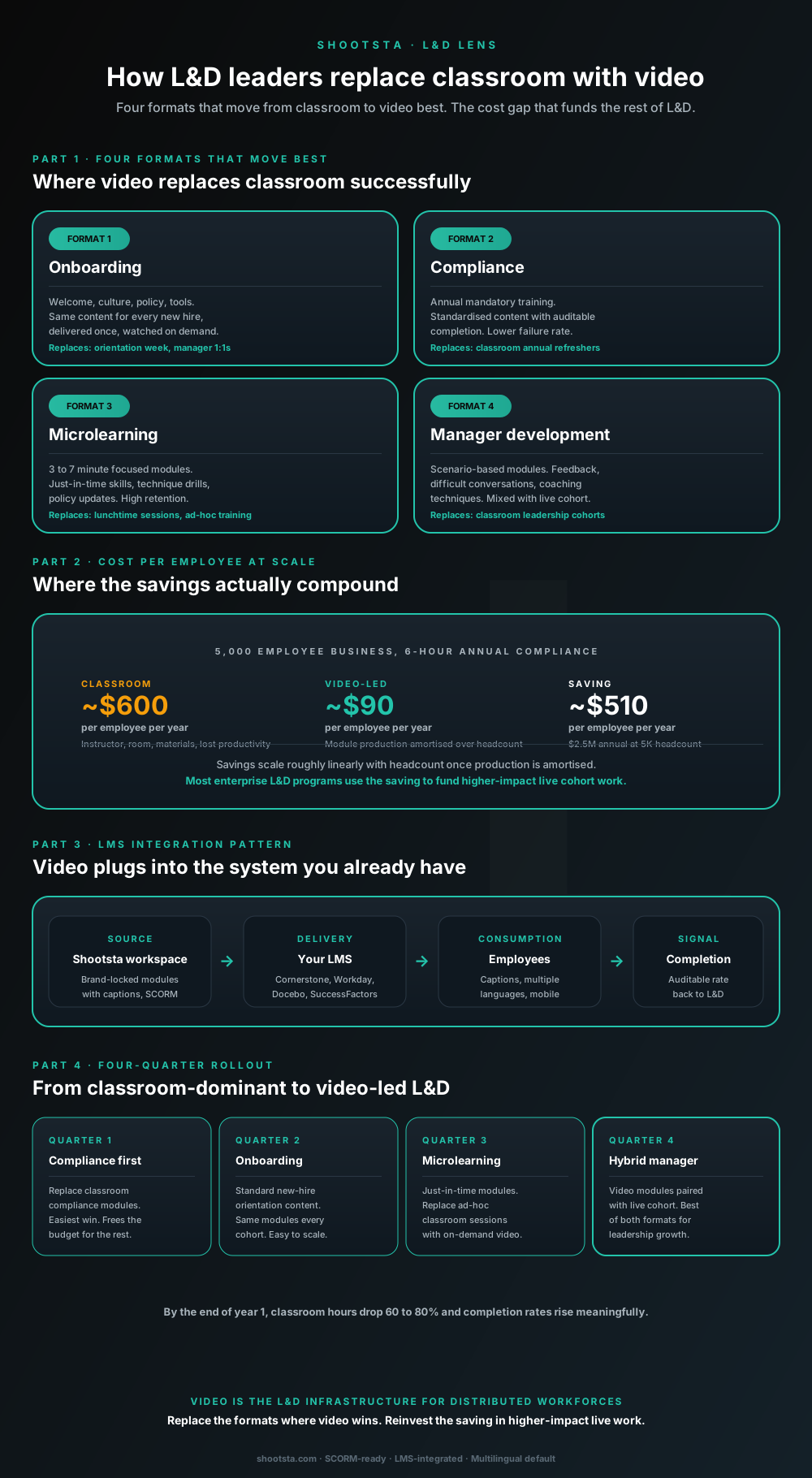
L&D leaders running classroom-heavy training programs typically have the largest single opportunity in the business to free budget through format change. Four training formats move from classroom to video cleanly; the savings fund higher-impact live work. Here is the rollout that compounds learner adoption over four quarters.
How customer success leaders should use video
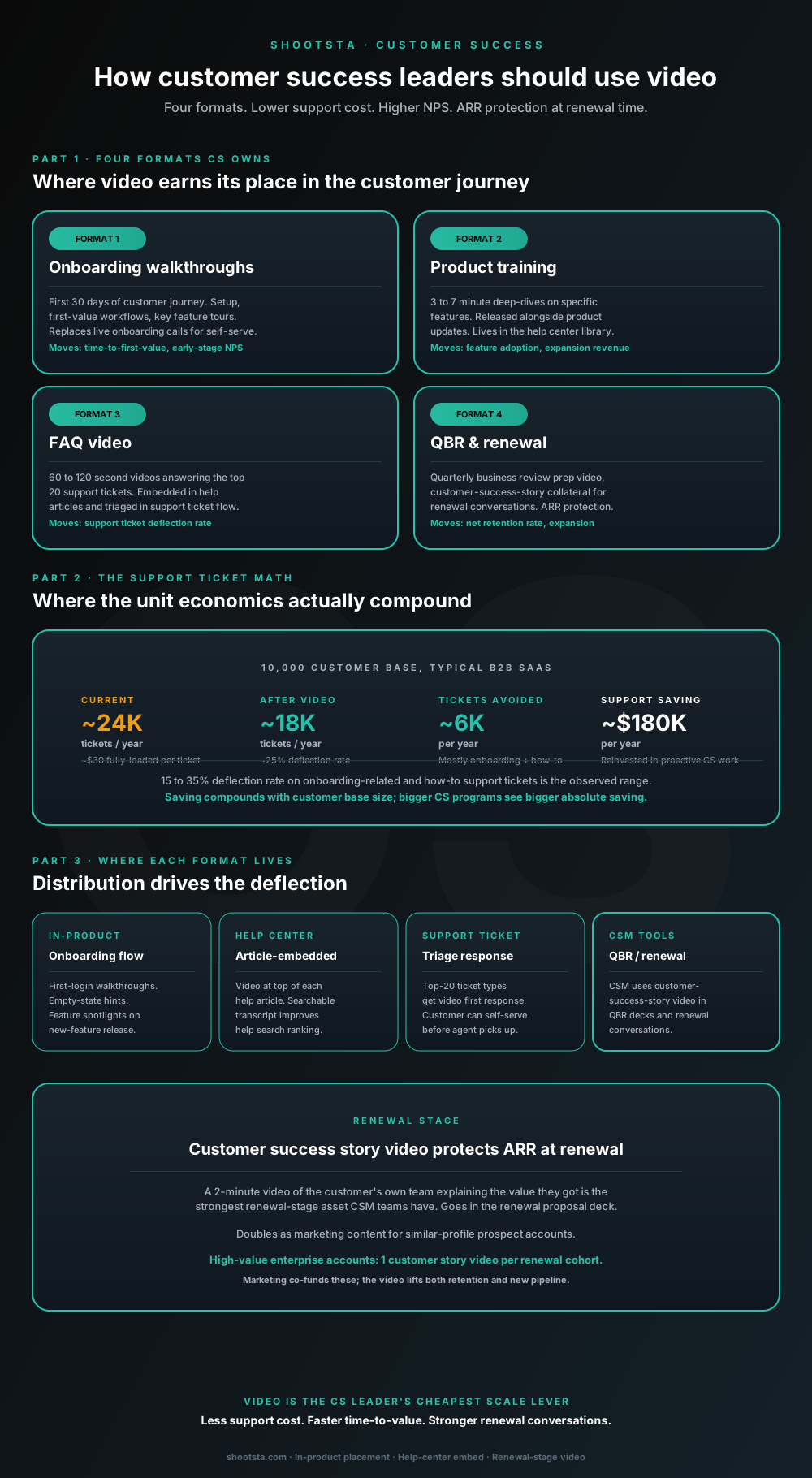
Customer success leaders are usually under-resourced for both reactive support volume and proactive retention work. Video is the cheapest lever to fix both - 15 to 35% deflection on onboarding and how-to tickets, faster time-to-value, and renewal-stage customer story video that lifts net retention. Here is the four-format model and where each piece earns its place.
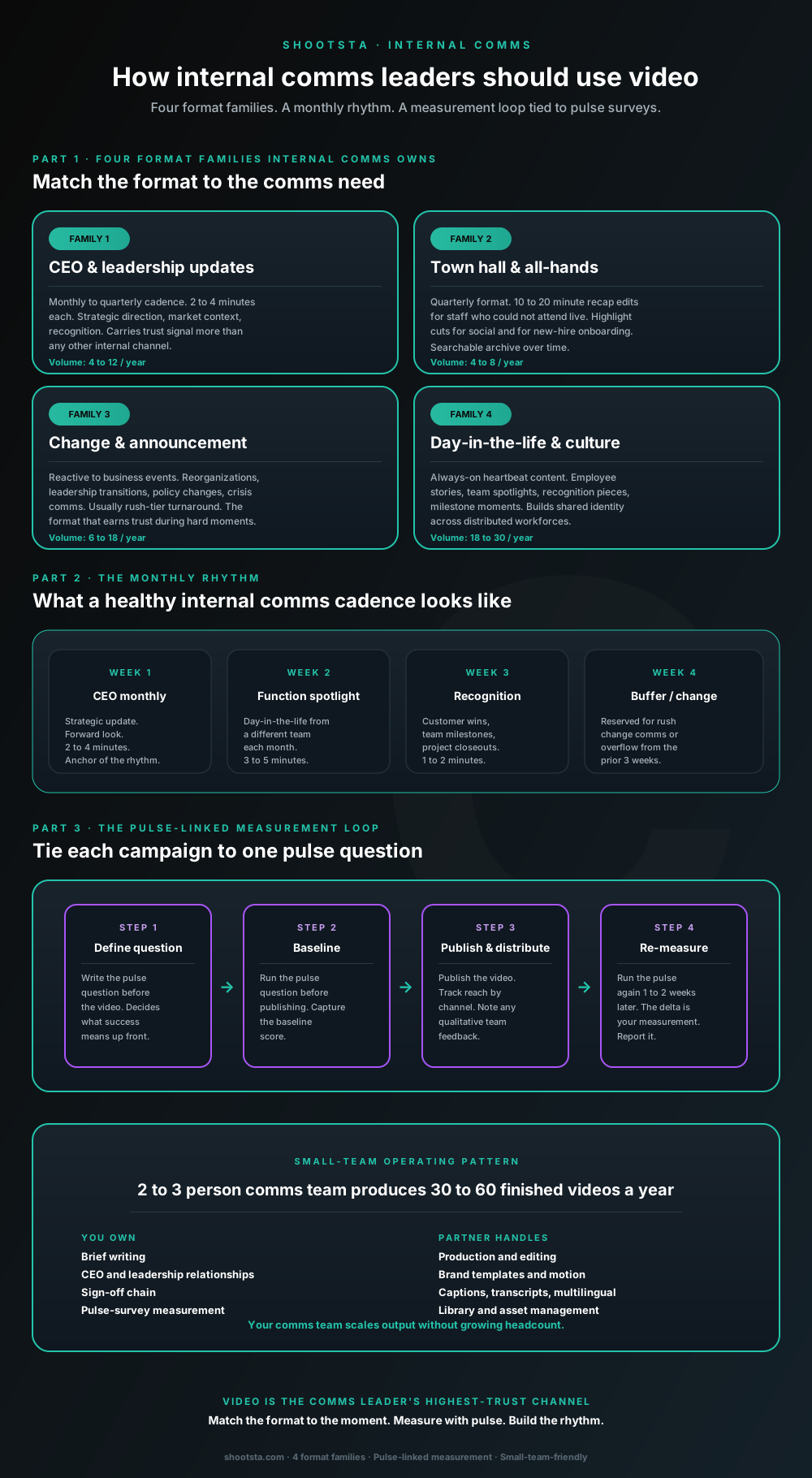
How internal comms leaders should use video
Internal comms leaders are usually under-resourced for the volume of video the business wants. The fix is not more headcount; it is structuring the program around four format families, a monthly rhythm, and a pulse-survey-linked measurement loop. Here is the operating pattern that lets a small comms team produce 30 to 60 finished videos a year.