
How to produce video for healthcare and pharma
shootsta.
How to produce video for healthcare and pharma
By Shootsta · Published April 18, 2026 · Updated October 2026
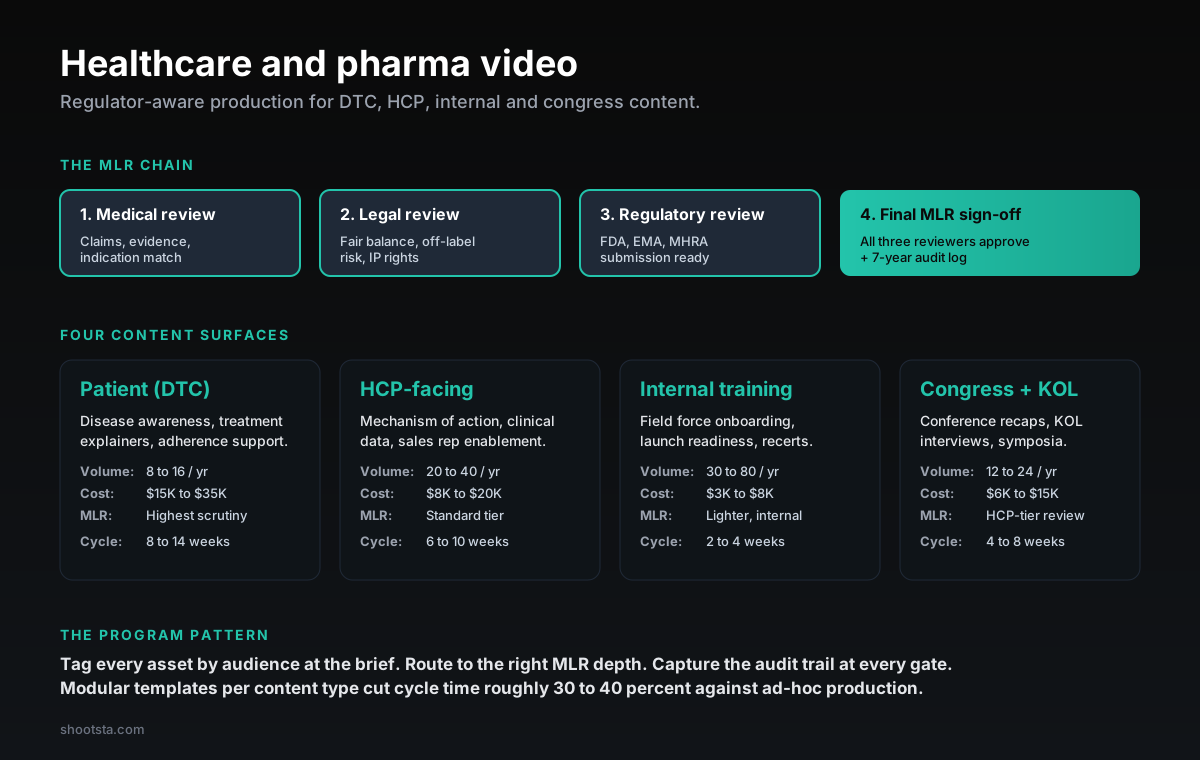
Healthcare and pharma video carries the highest regulatory load of any sector. The structural difference is workflow: medical, legal and regulatory review at multiple stages, audience-tagged routing, audit trails retained for years. Four content surfaces (DTC, HCP, internal, congress), an MLR review chain that holds up at inspection, and the program pattern that protects the program from regulator action.
Why healthcare and pharma video carries a different production load
Healthcare and pharma video sits under the heaviest regulatory load of any enterprise sector. The FDA in the US, the EMA in Europe, the MHRA in the UK, the PMDA in Japan and the TGA in Australia each set rules for promotional content that carries a medical claim. Industry codes from PhRMA, EFPIA, ABPI and Medicines Australia sit on top of those rules. So every asset goes through medical-legal-regulatory (MLR) review at more than one stage. Fair-balance and risk language is built into every claim, and you keep an audit trail in case a regulator asks to inspect it.
Programs often treat healthcare video like any other corporate video at first. Then the MLR chain hits every asset, review cycles stack up, and the team ships a fraction of the planned volume. The fix is to design the workflow around MLR from day one. Tag every asset by audience at the brief stage, route it to the right depth of review, and capture the audit trail at every gate. This post will help you build or assess a program that handles these rules.
The four content surfaces
Surface 1: Patient-facing (DTC)
This surface covers direct-to-consumer disease-awareness video, treatment explainers, adherence support and patient stories. It gets the closest MLR scrutiny because the audience is not expert and the regulator standard is highest. Every piece needs fair-balance disclosures, a match to the approved indication and the right risk language. The voiceover and on-screen text must match the approved label exactly.
Surface 2: HCP-facing (healthcare professional)
This surface covers mechanism of action explainers, clinical-data summaries, sales rep enablement, congress booth video and MSL (medical science liaison) training. It sits on the standard MLR tier, because the audience expects a promotional context and is presumed to be clinically literate. It is often the largest surface, because the field force and HCP marketing both pull from this catalog.
Surface 3: Internal training
This surface covers field force onboarding, launch readiness training, recertification modules and internal product updates. Compliance review is lighter here, since internal audiences are presumed to know the regulatory context. Cycle time is the shortest of the four, so pharma programs often get the most output per dollar here.
Surface 4: Congress and KOL
This surface covers conference recaps, KOL (key opinion leader) interviews, symposium recordings and congress-booth video. It goes through HCP-tier compliance review, and the volume follows the congress calendar. Deadlines here are often tight. Pre-built templates and pre-approved KOL contracts are what keep these pieces on time.
The MLR review chain
The chain runs as three reviews in sequence plus a final sign-off. An audit log records what happened at every gate.
Gate 1: Medical review
The medical reviewer checks the clinical accuracy of every claim and its match to the approved label. They confirm the evidence is cited correctly and check each reference against the source study. This is the deepest review and the one most likely to force script edits before production starts. New claims take longer to clear than routine content.
Gate 2: Legal review
Legal checks fair-balance language, so every benefit claim is paired with the right risk language. They remove any wording that could imply off-label use, and they clear IP and trademarks. They also check the industry code that applies: PhRMA in the US, EFPIA in the EU, ABPI in the UK or the Medicines Australia code. Legal reviews the script and then the final cut.
Gate 3: Regulatory review
This review depends on the asset and the jurisdiction. Some assets must go to the regulator before they are published, and most must be archived so they are ready for inspection on request. The regulatory reviewer checks that the asset could be submitted to the FDA, EMA, MHRA, PMDA or TGA, depending on the market.
Final MLR sign-off and audit trail
All three reviewers sign off the final cut. The audit log captures who approved what, when, on which version and with which evidence references. You keep it for as long as the local rules require. The audit log protects the company from regulator action, because a single missed gate can trigger enforcement and the log either defends you or exposes the gap.
The cycle-time pattern that holds
The MLR chain makes healthcare video take much longer than the same video in an unregulated sector. These four patterns help.
Pattern 1: Front-load the review
A script-gate review at the brief stage catches structural issues while they are still cheap to fix. Those issues include off-label risk, missing disclosures and wording that puts the asset in a stricter regulator category. When a team struggles with cycle time, the usual cause is MLR review that starts too late.
Pattern 2: Parallel-track production and review
Production can run while legal and regulatory review the script. The edit can start while medical reviews the first cut. Most of the time you save comes from removing steps that wait on each other when they do not need to.
Pattern 3: Pre-approved templates
MLR approves brand and disclosure templates for each content category in advance. Editors and producers work inside the template, and reviewers focus on the parts that change. Pharma programs that ship at high volume tend to invest in these templates, because they cut the review work on every asset.
Pattern 4: Modular MLR review
Copy blocks such as the indication, ISI, references and contact details are approved once and reused across assets. The reviewer no longer re-checks the same text in every asset. The editor no longer waits on that repeated review either.
Healthcare and pharma program planner
Map your annual volume to MLR effort and spend
Set the planned annual volume per content surface. The planner shows total assets, indicative spend, MLR review hours and a weighted average cycle time.
Disease awareness, treatment explainers
Mid-point cost $22K per asset. Cycle ~11 wks. MLR ~18 hrs / asset.
Mechanism of action, clinical data, rep enablement
Mid-point cost $13K per asset. Cycle ~8 wks. MLR ~10 hrs / asset.
Field force, launch readiness, recerts
Mid-point cost $5K per asset. Cycle ~3 wks. MLR ~3 hrs / asset.
Conference recaps, KOL interviews, symposia
Mid-point cost $10K per asset. Cycle ~6 wks. MLR ~7 hrs / asset.
Annual assets
88
Indicative spend
$872K
MLR hours / yr
638
Avg cycle
5.8 wks
Cost and cycle ranges are sector medians for established MLR programs; actuals shift with therapy area, regulator and review chain maturity.
Multi-jurisdiction sign-off for global pharma
Regulators differ a lot by jurisdiction, but the production patterns can stay the same.
US: FDA and FTC oversight
The FDA regulates prescription drug promotion through OPDP (the Office of Prescription Drug Promotion). DTC video needs fair-balance treatment, a major statement and adequate provision. The FTC oversees video for OTC products and supplements. Some states add their own rules on top, including California (Prop 65) and New York.
EU and UK: EMA, MHRA and industry codes
The EMA sets EU-wide rules for promoting prescription medicines. National authorities handle local enforcement, such as BfArM in Germany, ANSM in France, AIFA in Italy and AEMPS in Spain. Since Brexit the UK MHRA has run on its own, with the ABPI code for industry self-regulation. The EFPIA code applies across the EU.
APAC: PMDA, TGA, HSA and others
Japan's PMDA, Australia's TGA, Singapore's HSA and Korea's MFDS each have their own rules. Pharma video in APAC often needs a version per market because the differences between regulators are large. Global pharma firms usually make master content and adapt it by region, rather than shoot a separate original for each market.
The workflow that scales
You make the content once, run it through regional MLR review chains and get final sign-off per jurisdiction. The production team and brand templates stay the same while the compliance review chains multiply. That keeps production cost steady while you meet each regulator's rules. We covered the broader multi-jurisdiction sign-off pattern in how to produce video for financial services; the structural pattern is similar but the review chain is deeper for healthcare.
Patient confidentiality and HIPAA
Any video involving identifiable patients requires HIPAA (US) or equivalent (GDPR in EU, Privacy Act in Australia) consent documentation. Patient testimonials need extra consent because viewers use them to weigh treatment decisions. Standard pharma practice is to document consent at recording and get separate consent for each distribution channel. You then keep the consent records for the life of the content, plus whatever window the regulator sets after a patient withdraws.
Pharma video programs usually keep a library of consent templates. It covers recording consent, distribution consent and consent for specific channels, since social media has stricter rules than gated medical channels. The production workflow tags every asset with an identifiable patient and sends it through a consent check before it is published.
What changes for the production team working on healthcare content
Your production team has to make three practical shifts. Each one cuts the back-and-forth at MLR review.
Shift 1: Sector literacy
Producers and editors need to know the difference between a Phase II and a Phase III study. They need to know what fair-balance disclosure looks like, which tone of risk language regulators accept, and why the indication match matters. None of this is creative judgment; it is sector knowledge that reduces rework at MLR review. Enterprise pharma programs often train their production team on these patterns.
Shift 2: Template-led editing
Disclaimer placement, ISI (important safety information) timing, reference citations and contact details all sit in pre-approved brand templates. Each template sets the right type, duration and placement per jurisdiction. The editor knows where every required element goes in the timeline, so they do not wait for MLR to ask for it.
Shift 3: Secure handling of clinical data
Clinical study data, unpublished trial results and patient material are handled under the company's data classification policy. Production happens in restricted workspaces with controlled access lists. This mirrors the IR video controls we covered in how to produce video for investor relations but with extra patient-data protections layered on top.
How AI fits inside healthcare video production
AI is useful in a few narrow places and banned in others. It helps with transcript extraction, voiceover in non-regulated languages, picking social clips and scheduling distribution. Many enterprise pharma firms ban AI from writing medical content such as claims, indications and risk language, because the trust signal in healthcare content is the clinical sign-off. The framing in how AI fits inside enterprise video workflows applies with extra caution for healthcare.
Practical questions enterprise healthcare and pharma teams ask
How long does MLR review take?
Routine content moves through the three gates and final sign-off in a few weeks. Complex content takes much longer, such as a new indication, a new claim or a head-to-head comparison. Either way, plan for a longer timeline than the same video would need outside a regulated sector. You can agree an expedited review in advance for urgent pieces, but MLR teams push back when every asset is marked urgent.
Can we use generative AI to draft clinical scripts?
Many enterprise pharma firms ban AI-generated medical content at the script stage. AI is useful for transcript editing, social cutdown selection and distribution scheduling but not as a primary production method for regulated medical content. The trust signal in healthcare is the human clinical sign-off chain.
How do we handle multi-market language versions?
You produce the master content once. Each market's version, with its regional disclosures, language version and any additions its regulator requires, comes from that master. Each jurisdiction's MLR team then reviews its own version. The audit trail captures each jurisdiction's approval independently.
What about social-first healthcare content?
Social is the newest area that regulators are watching. Examples include FTC enforcement against unregistered health promotion on social, FDA OPDP guidance on social pharma promotion and TGA guidance on social influencers in Australia. Your production workflow should anticipate frequent guidance updates and build in faster review cycles for social-first content than traditional channels.
How do we handle patient testimonials?
Patient testimonials are the highest-risk content category. Pharma firms usually send testimonial video through a stricter MLR review. That review needs specific consent records, disclaimers for atypical results and a clear line between editorial and promotional content. The consent records are kept for the life of the content.
Where to go next
For the financial services equivalent of the regulator-aware workflow, read how to produce video for financial services. For the IR video workflow that overlaps with healthcare for public-company pharma firms, read how to produce video for investor relations. For the contract patterns that govern data security and audit trails, read video production contracts: what to look for.
To scope a healthcare or pharma video program with MLR-ready workflow for your organization, book a free consultation.
Take this article with you
Read the latest at shootsta.com/blog/how-to-produce-video-for-healthcare-and-pharma
You might also like
How to Brief an Animation Project
How to Brief an Animation Project
An animation brief is the document you send to your production partner before work starts. Get it right and you cut revision cycles in half. Get it wrong and you discover mid-production that everyone disagrees on what the video is for. This is what a complete brief looks like.
Animation for change management comms
Animation for change management comms
Animation handles change management communications better than live video for three reasons: no on-camera executives required during sensitive periods, scene-level updates when plans shift, and a single production that works across global teams with voiceover-only language swaps.
How sales leaders should use video at scale
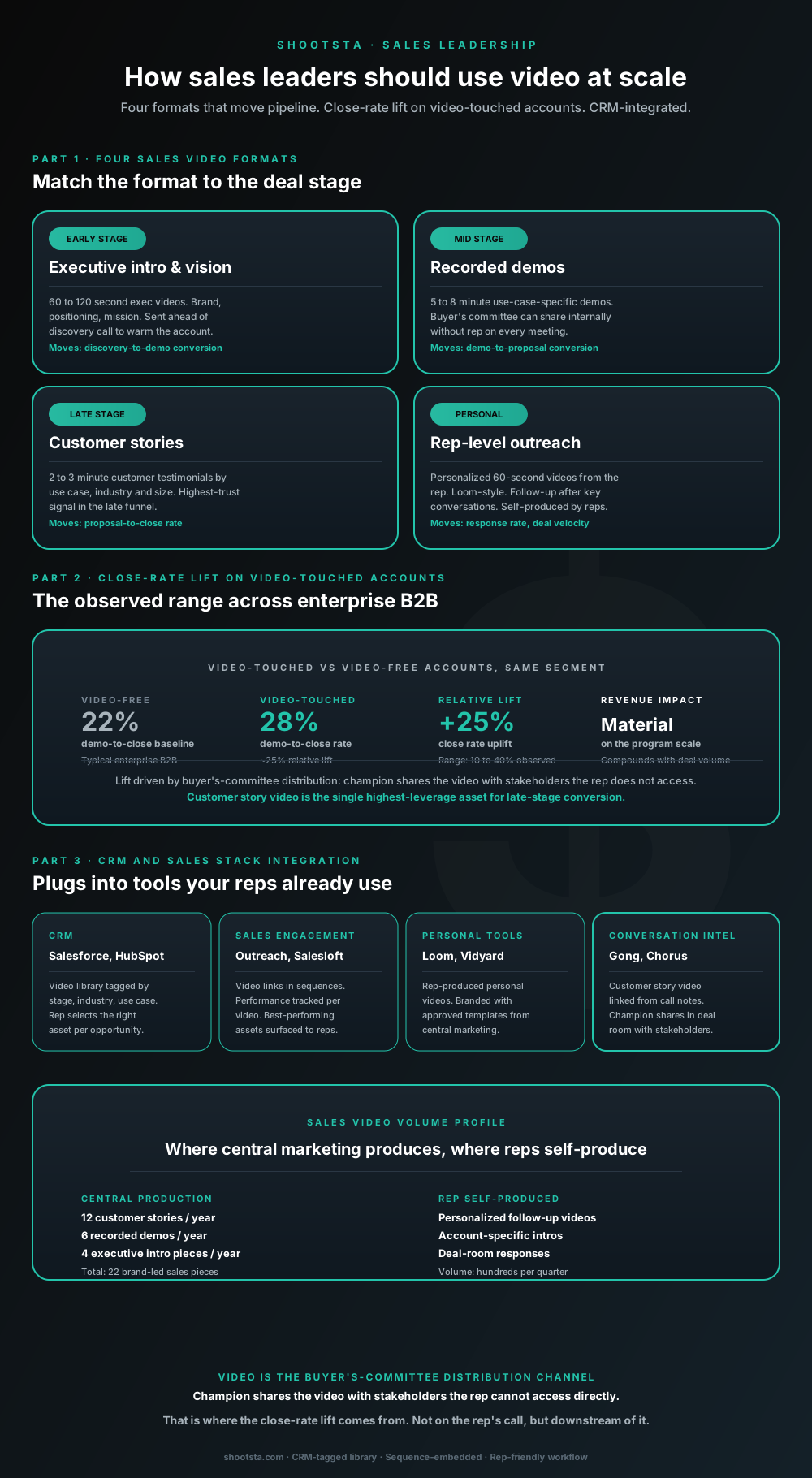
Sales leaders mostly think about video as personalized rep outreach (Loom, Vidyard) or as marketing-produced customer stories. Both are useful. The bigger opportunity is the buyer's-committee distribution layer: assets the champion shares internally with stakeholders the rep does not access directly. That is where the close-rate lift compounds.
How L&D leaders replace classroom with video
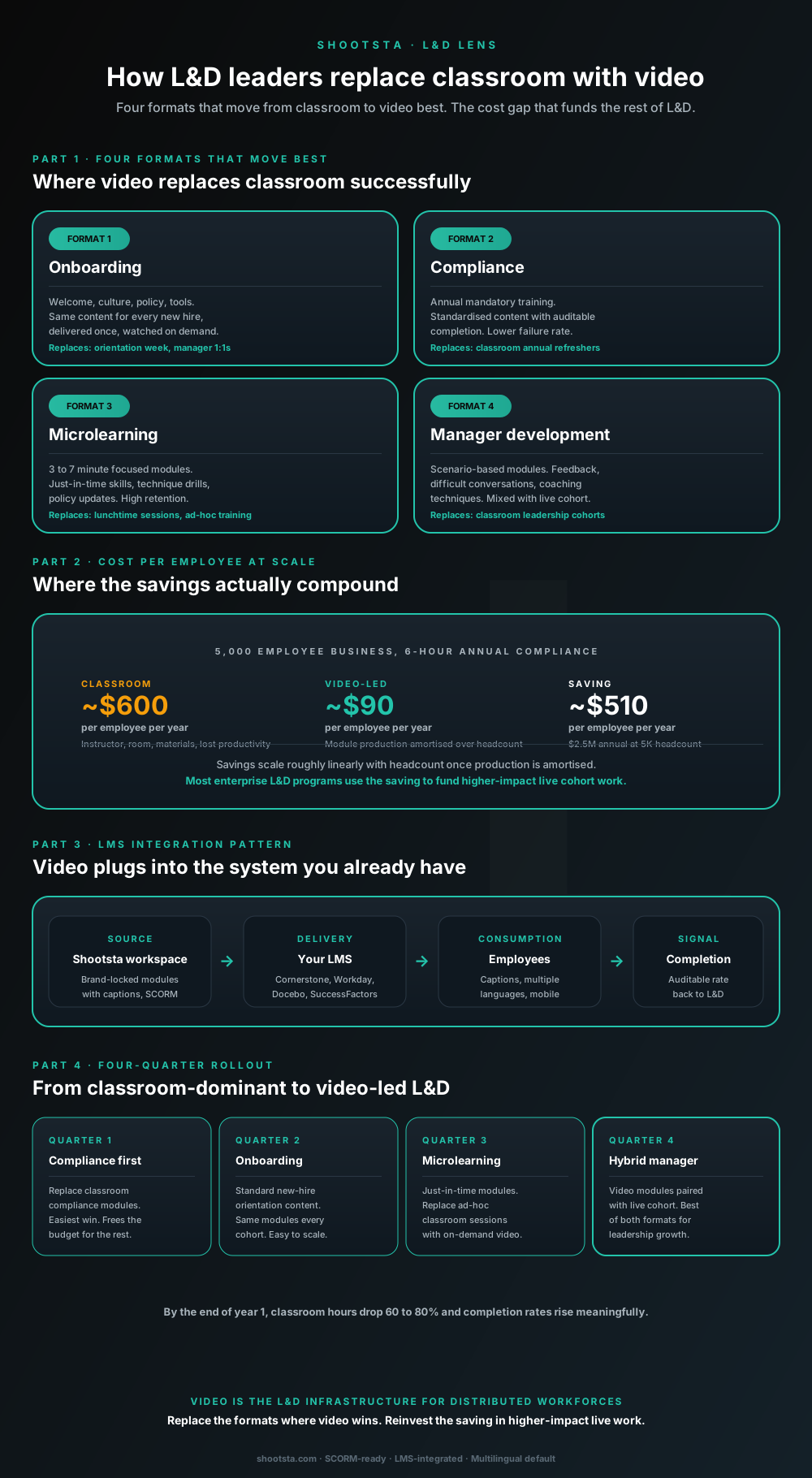
L&D leaders running classroom-heavy training programs typically have the largest single opportunity in the business to free budget through format change. Four training formats move from classroom to video cleanly; the savings fund higher-impact live work. Here is the rollout that compounds learner adoption over four quarters.
How customer success leaders should use video
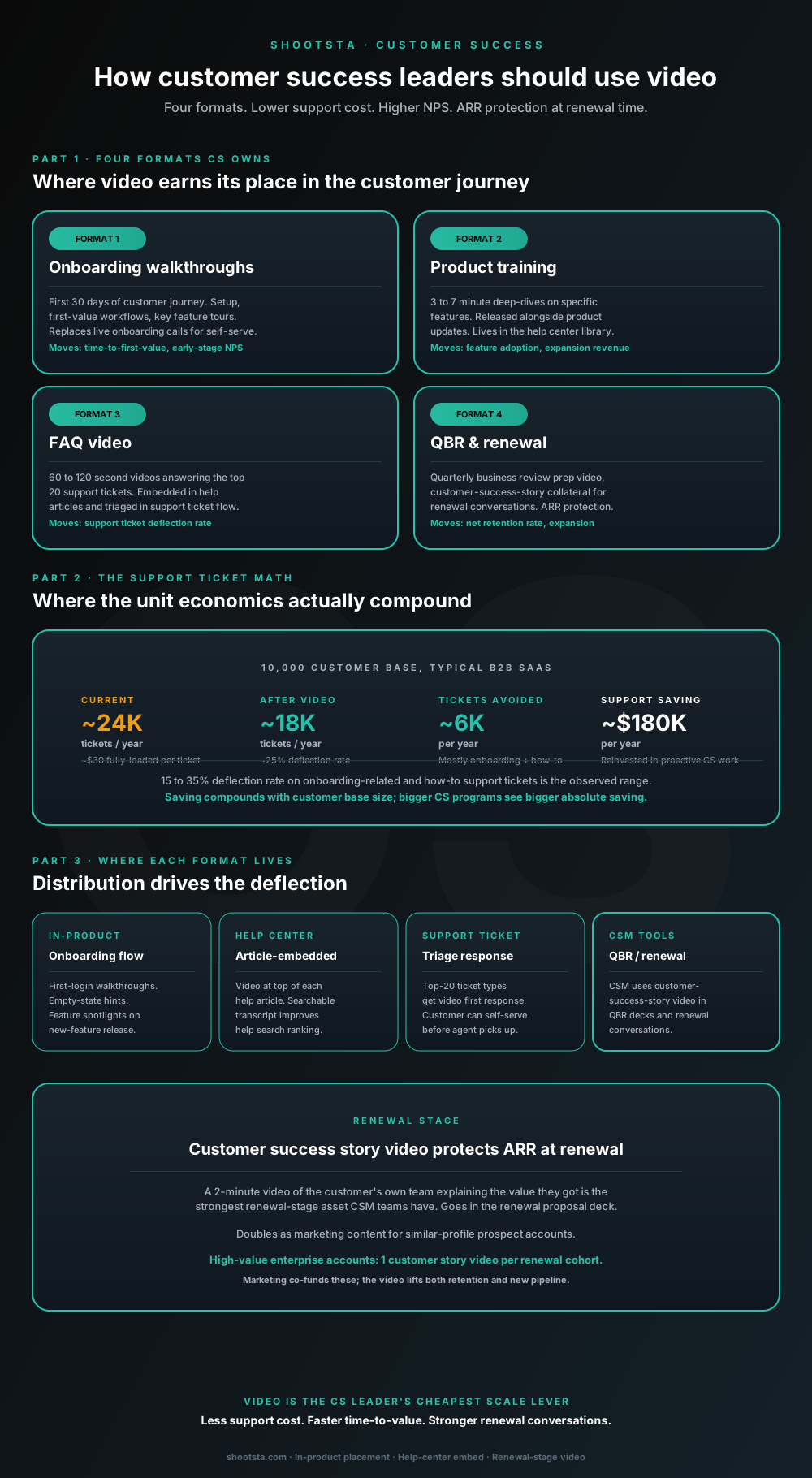
Customer success leaders are usually under-resourced for both reactive support volume and proactive retention work. Video is the cheapest lever to fix both - 15 to 35% deflection on onboarding and how-to tickets, faster time-to-value, and renewal-stage customer story video that lifts net retention. Here is the four-format model and where each piece earns its place.
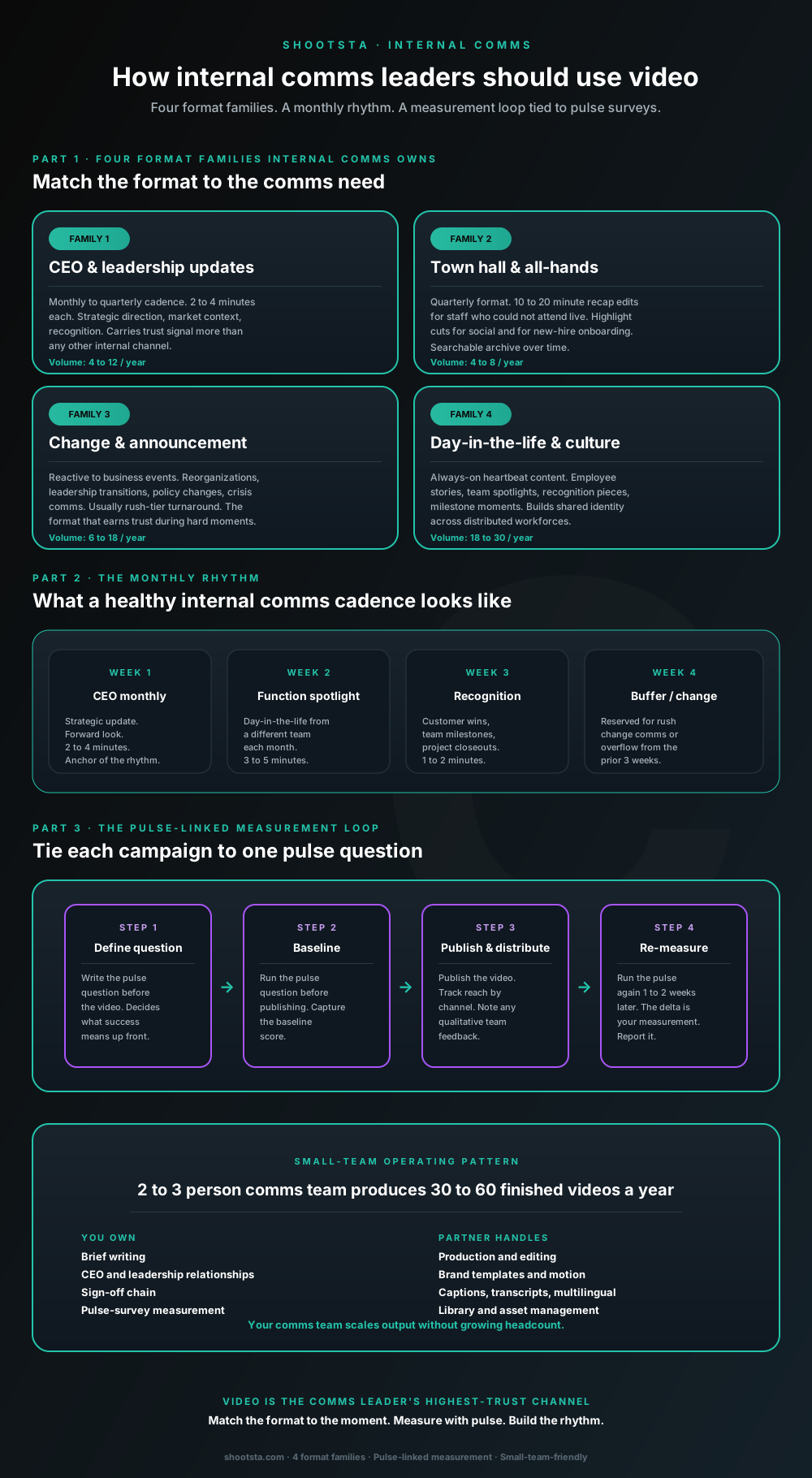
How internal comms leaders should use video
Internal comms leaders are usually under-resourced for the volume of video the business wants. The fix is not more headcount; it is structuring the program around four format families, a monthly rhythm, and a pulse-survey-linked measurement loop. Here is the operating pattern that lets a small comms team produce 30 to 60 finished videos a year.