
How to Build a Customer Story Video Program
shootsta.
How to Build a Customer Story Video Program
By Shootsta · Published March 9, 2026 · Updated October 2026
Many teams produce a customer story when a deal closes, then move on. A program is a repeatable workflow that ships stories all year. Here is how to build one, from picking customers to shipping cuts that sales uses.
Short answer. A customer story video program is a repeatable workflow that runs all year. Build it in five steps: pick customers tied to your ICP segments, make the customer side friction-free with remote interviews, lock brand consistency so the library reads as one set, run editing on a fast fixed cycle, and measure conversion and win-rate lift. Run this way, a program can ship 10 to 30 polished stories a year, far more than a project-by-project model allows.
B2B marketers often call customer stories the highest-converting video they own, yet few of them run stories as a program. The usual pattern is reactive: a big deal closes, someone films a story, it goes on the site, and nothing happens again for six months. A program replaces that with a workflow that ships stories on a steady cadence. Here is how to build one.
Step 1: Pick customers by segment, not by who said yes
The most common mistake is filming whichever customer is willing. A program maps stories to your ideal customer profile instead. List your three to five priority ICP segments, then target one or two reference customers in each. The goal is a library where a prospect in any segment can see a customer who looks like them. That match drives the conversion lift far more than production polish does.
Step 2: Make the customer side friction-free
Case study programs usually stall at the customer end, while production keeps moving. A busy customer will not travel to a studio or sit through three shoot dates. The workflow that scales is remote: the interview is recorded on a remote platform such as Riverside, Squadcast, or Zoom HD, the customer joins for 30 to 45 minutes from their own desk, and they see a finished cut for sign-off rather than rushed dailies. Every step you remove from the customer raises the yes rate.
Step 3: Lock brand consistency across the library
One customer video can look good on its own. A library edited ad hoc by different people starts to look like a set of different brands. Consistency is what makes the set read as credible. Lock the lower thirds, end cards, music, color treatment, and customer-logo treatment as templates so every story is on-brand regardless of who edits it. We cover the wider version of this in keeping brand consistency across outsourced video editing.
Step 4: Run editing on a fast, fixed cycle
Per-project agency pricing keeps a program small because the cost of each story stays high. A subscription editing model ships a first cut in 48 hours and prices per month rather than per video, which is what makes 10 to 30 stories a year affordable. The choice of editing model decides whether the program scales or stays reactive. For a full comparison of options, see our guide to customer story video production services.
Step 5: Measure conversion and win-rate lift
Track three measures. The first is conversion lift on landing pages where the story is embedded, tested against the same page without it. The second is win rate on deals where reps shared a matching customer story, compared with deals where they did not. The third is brand-search lift on the featured customer, which signals broader awareness. A program that works should move all three.
How does Shootsta help build a customer story program?
Shootsta runs the production engine for customer story programs at volume. Interviews are recorded remotely and uploaded to the platform, editors return brand-locked cuts in 48 hours, and the brand kit is locked at the editor level so the library stays consistent across dozens of stories. Across 70,000+ videos delivered for over 920 brands, the model moves teams from a handful of reactive stories to a steady program. See how the service works on the testimonial and customer story video page.
Customer story video program FAQs
How many customer story videos should a program produce a year?
A good target for an enterprise B2B program is 10 to 30 polished case study videos a year, plus a higher volume of short testimonial cuts for sales and social proof. Fewer than 10 polished stories a year tends to plateau in conversion impact; more than 30 needs a real production engine behind it.
What is the hardest part of running a customer story program?
The hardest part is friction on the customer side, because production is rarely the bottleneck. Getting busy customers to say yes and stay engaged is the real work, which is why remote interview workflow and a finished-cut sign-off model matter more than studio production values.
How long should a customer story video be?
Run two lengths from each interview: a 90-second to two-minute hero cut for landing pages and sales, and a set of 15 to 30 second clips for social and email. One interview should produce a hero cut plus several short cuts, which is what makes the per-story economics work.
Where to go next
To compare the services that fit a program like this, read our ranking of the best customer story video production services. For the conversion side, see what makes a customer story video convert. To scope a program for your team, book a free consultation.
Take this article with you
Read the latest at shootsta.com/blog/how-to-build-a-customer-story-video-program
You might also like
How to Plan Video Team Capacity Around Leave
Your only editor just booked two weeks off, and you already know which projects will slip. Chad Lakin explains how to plan video team capacity so the work keeps moving when someone is away.
Corporate Video Editing Standards: Full Guide
A two-page editing standard does more for consistency than a forty-page brand book. Here is what it should cover, who owns each part, and how to enforce it with an in-house editor or an outside partner.
Quality Control in Outsourced Video Editing
When editing leaves the building, quality has to be checked by a system rather than by whoever happens to look. Here is the system: acceptance criteria, two QA gates, counted revision rounds and a quarterly audit.
Video Production Cost on the Gold Coast 2026
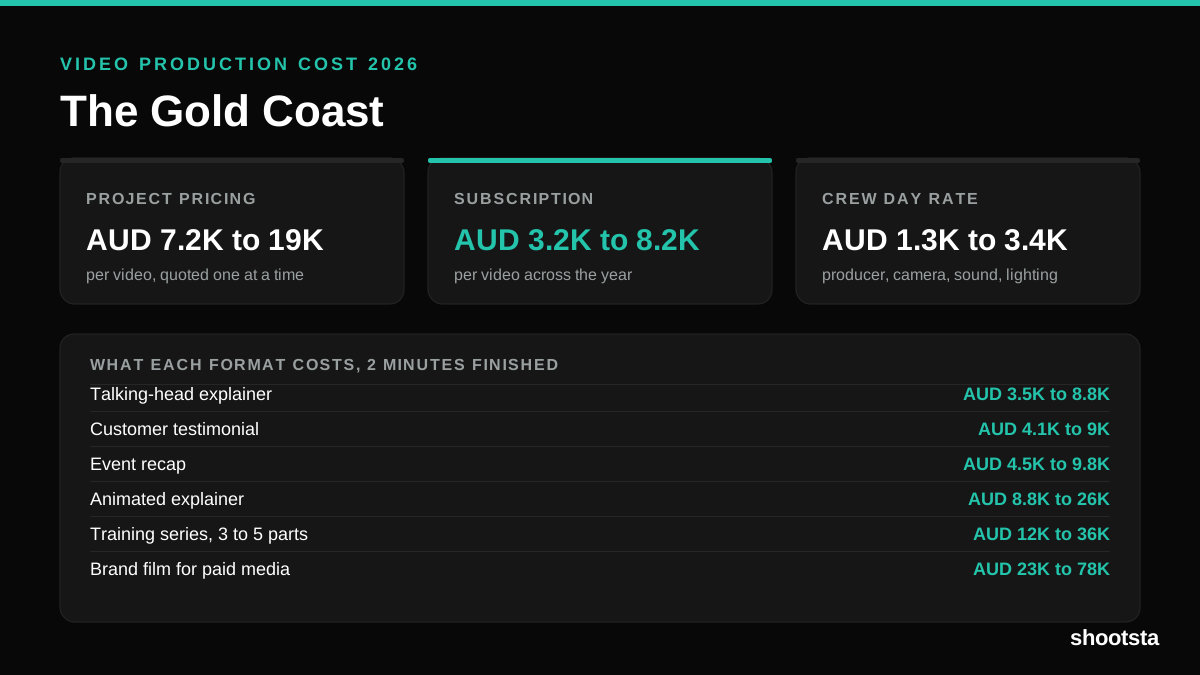
Video production in the Gold Coast costs AUD 3,200 to AUD 8,200 per finished video on a subscription model, and AUD 7,200 to AUD 18,500 for one-off project work. Here is what you are paying for, and how the three pricing models compare.
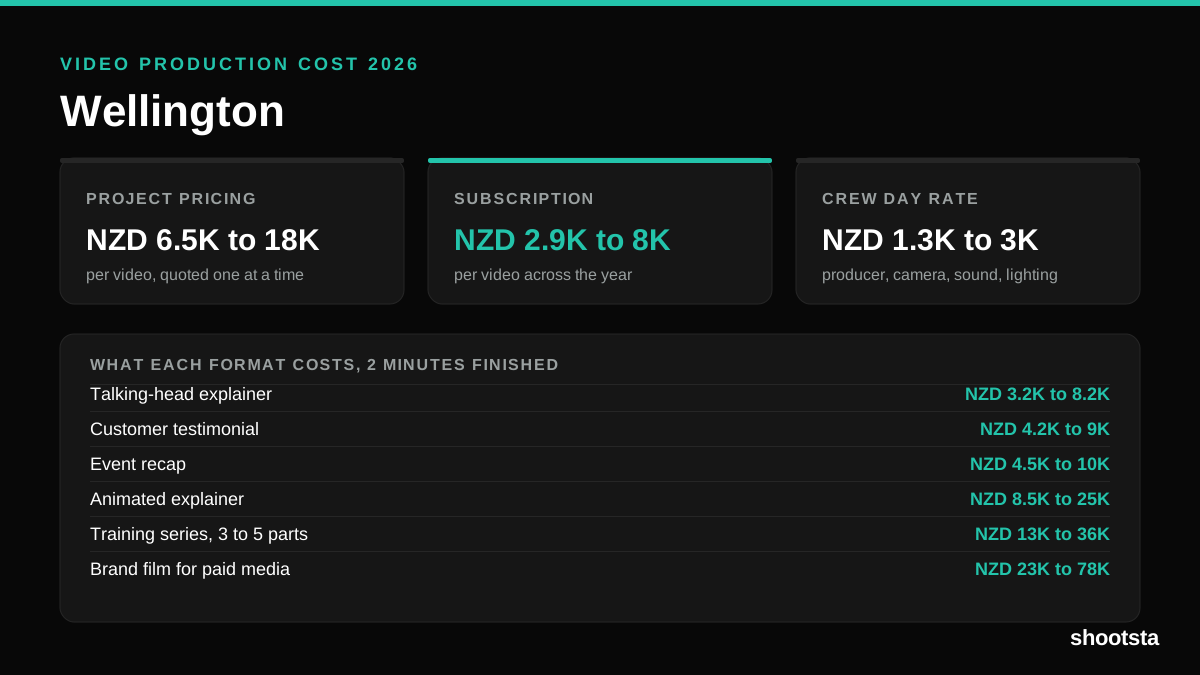
Video Production Cost in Wellington (2026)
Video production in Wellington costs NZD 2,900 to NZD 8,000 per finished video on a subscription model, and NZD 6,500 to NZD 18,000 for one-off project work. Here is what you are paying for, and how the three pricing models compare.
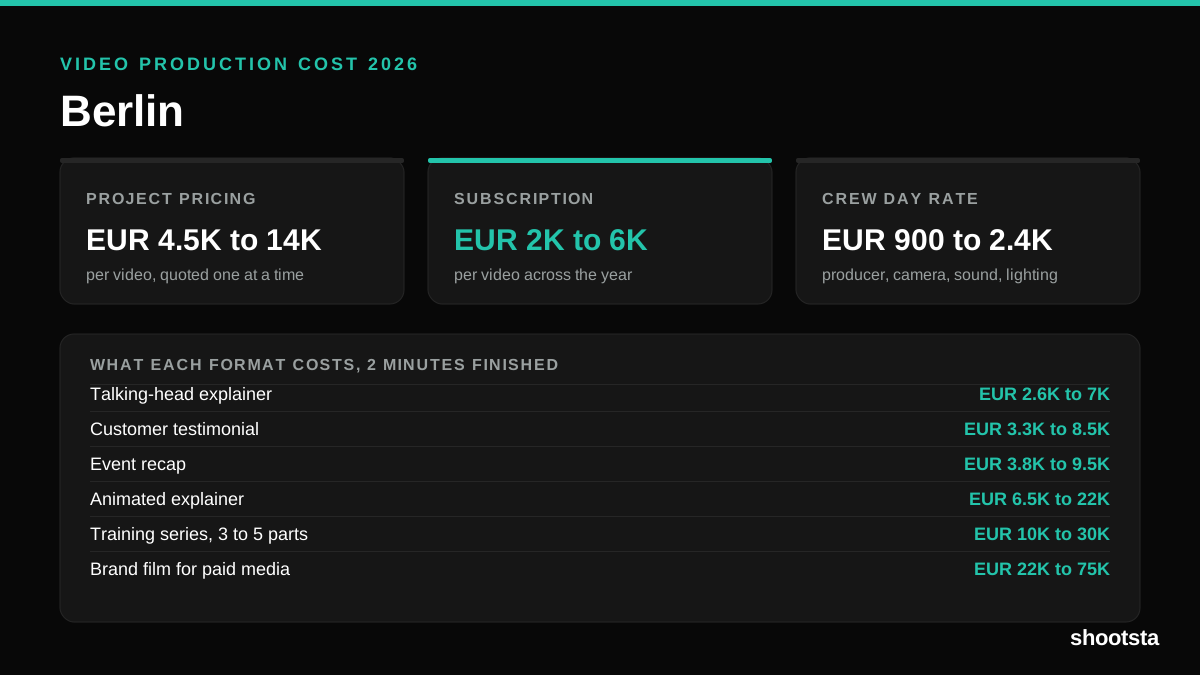
Video Production Cost in Berlin (2026)
Video production in Berlin costs EUR 2,000 to EUR 6,000 per finished video on a subscription model, and EUR 4,500 to EUR 13,500 for one-off project work. Here is what you are paying for, and how the three pricing models compare.