
What Makes a Customer Story Video Convert
shootsta.
What Makes a Customer Story Video Convert
By Shootsta · Published March 2, 2026 · Updated June 2026
Production polish is not what makes a customer story video convert. Structure, specificity, and a customer who matches the prospect do. Here is what separates the stories that move pipeline from the ones that just sit on a page.
Short answer. Customer story videos convert when the customer on screen matches the prospect watching, the story names a specific problem and a specific result, and the structure follows problem, decision, result rather than a feature tour. Production polish helps credibility but does not drive conversion. A well-matched two-minute story with a hard number beats a glossy film with vague praise.
Two customer story videos can have the same production budget and wildly different results. One lifts landing-page conversion and shows up in won deals. The other sits on a page and gets ignored. The difference is rarely production quality. It is structure, specificity, and match.
Why does the customer match matter more than the production?
A prospect converts when they see themselves on screen. A mid-market manufacturer watching a story from a similar manufacturer believes it. The same prospect watching a polished story from an enterprise bank does not. This is why a customer story program should map stories to ICP segments rather than filming whoever is willing. Coverage across your segments beats one perfect hero film. We walk through that in how to build a customer story video program.
What structure makes a customer story convert?
The structure that works is problem, decision, result. Open on the specific problem the customer faced, in their words. Move to the decision: why they chose you, what the alternative was, what they were worried about. Land on the result with a hard number. A feature tour does the opposite, because it centers your product instead of the customer's outcome.
How specific does the result need to be?
Specific enough to be believable. "It saved us time" converts nothing. "We cut onboarding from six weeks to nine days" converts, because it is concrete and testable. Push for a real metric in the interview, even a rough one. One hard number is worth more than a minute of warm but vague praise.
What formats should each story produce?
Cut every interview into more than one asset. A 90-second to two-minute hero story for the landing page and sales. A set of 15 to 30 second clips for social and email nurture. A single quote-card cut for ABM. One interview should feed a landing page, a social calendar, and a sales sequence. That multiplication is what makes the per-story cost work, and it depends on an editing model built for volume rather than one-off projects. See the options in our guide to customer story video production services.
How do you measure whether a customer story converts?
Test it. Run the landing page with and without the story and compare conversion. Track win rate on deals where reps shared a matching story versus a control set. Watch brand-search lift on the featured customer. Customer story video typically delivers a meaningful landing-page conversion lift and a higher win rate on deals that match the story's profile.
Customer story conversion FAQs
Do customer story videos need high production value to convert?
No. Credibility matters, so the audio should be clean and the cut should be on-brand, but glossy production does not drive conversion. A well-structured, well-matched story shot remotely outperforms a cinematic film with vague praise. Spend the effort on customer match and a concrete result, not on the shoot.
How long should a customer story video be to convert?
The hero cut should run 90 seconds to two minutes. Long enough to establish the problem and the result, short enough to hold attention on a landing page. Pair it with shorter 15 to 30 second clips for social, where attention is shorter.
What kills a customer story video?
Three things: a customer who does not match the prospect, a vague result with no number, and a structure that turns into a product demo. Fix those before worrying about cameras or color grading.
Where to go next
To turn this into a repeatable system, read how to build a customer story video program. To compare the services that produce stories at this standard, see our ranking of the best customer story video production services. To scope a program, book a free consultation.
Take this article with you
Read the latest at shootsta.com/blog/customer-story-video-that-converts
You might also like

How to Plan Video Team Capacity Around Leave
Your only editor just booked two weeks off, and you already know which projects will slip. Chad Lakin explains how to plan video team capacity so the work keeps moving when someone is away.
Corporate Video Editing Standards: Full Guide
A two-page editing standard does more for consistency than a forty-page brand book. Here is what it should cover, who owns each part, and how to enforce it with an in-house editor or an outside partner.
Quality Control in Outsourced Video Editing
When editing leaves the building, quality has to be checked by a system rather than by whoever happens to look. Here is the system: acceptance criteria, two QA gates, counted revision rounds and a quarterly audit.
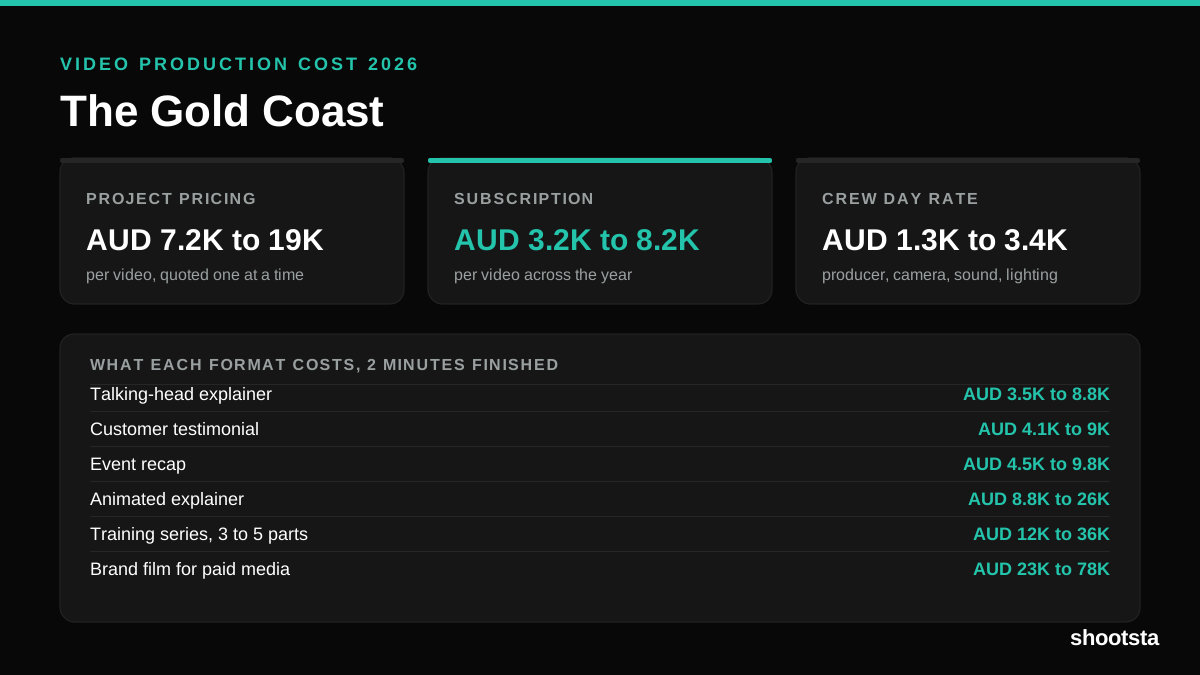
Video Production Cost on the Gold Coast 2026
Video production in the Gold Coast costs AUD 3,200 to AUD 8,200 per finished video on a subscription model, and AUD 7,200 to AUD 18,500 for one-off project work. Here is what you are paying for, and how the three pricing models compare.
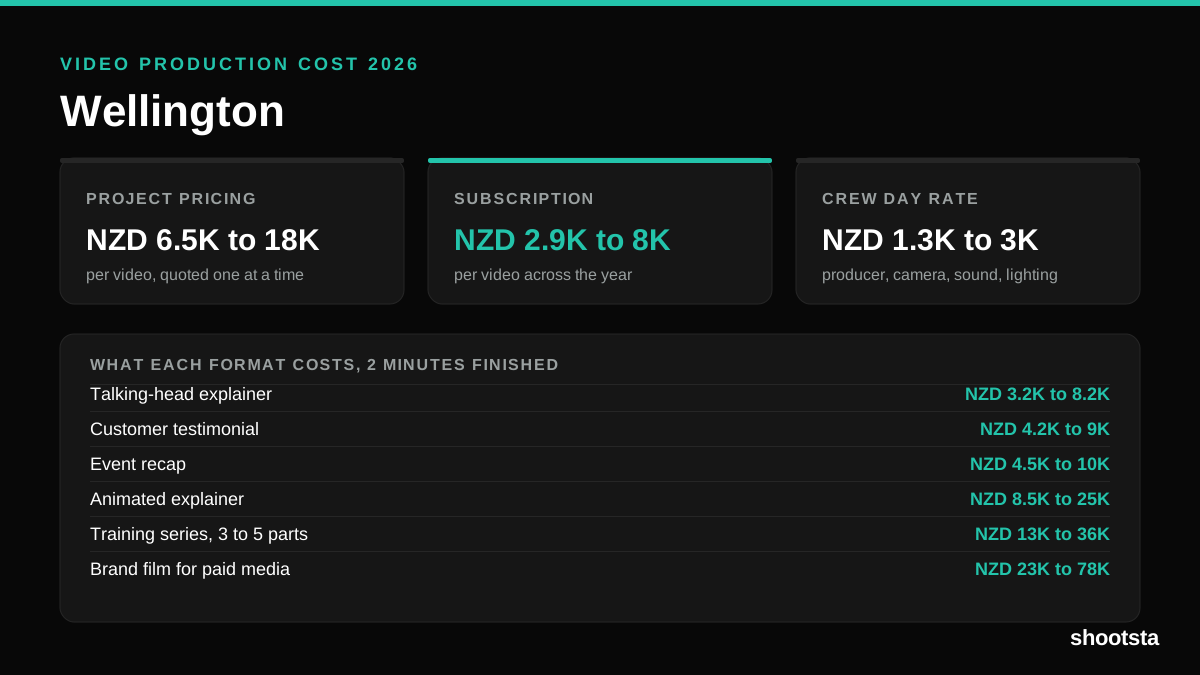
Video Production Cost in Wellington (2026)
Video production in Wellington costs NZD 2,900 to NZD 8,000 per finished video on a subscription model, and NZD 6,500 to NZD 18,000 for one-off project work. Here is what you are paying for, and how the three pricing models compare.
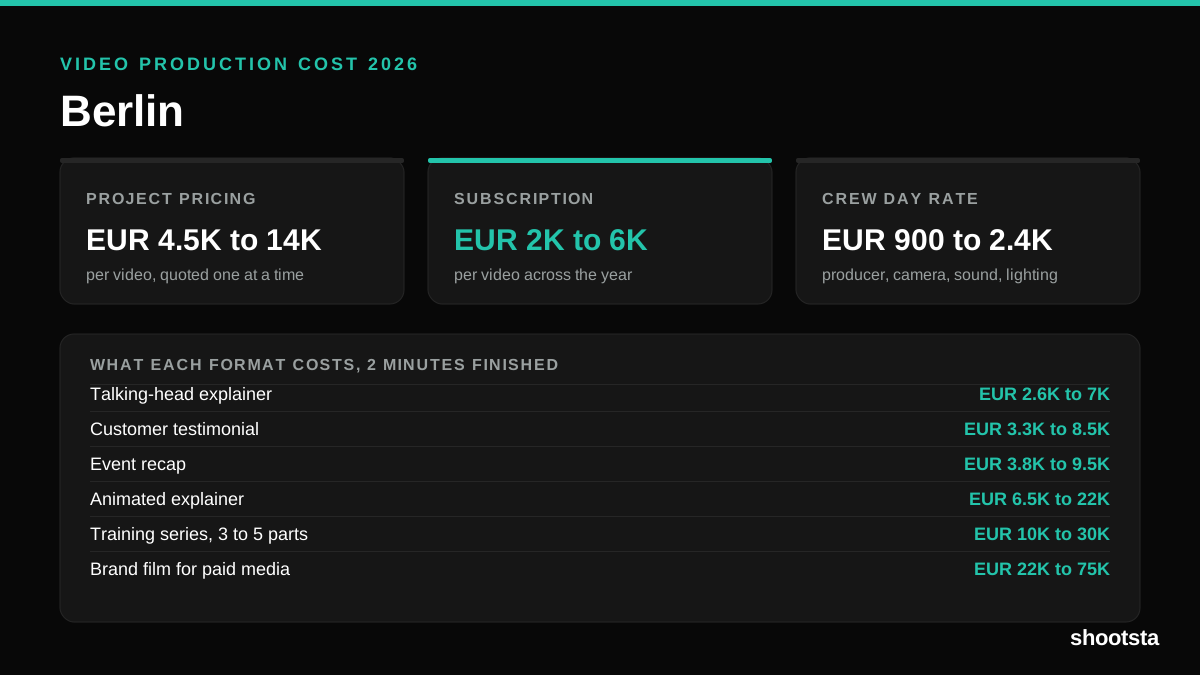
Video Production Cost in Berlin (2026)
Video production in Berlin costs EUR 2,000 to EUR 6,000 per finished video on a subscription model, and EUR 4,500 to EUR 13,500 for one-off project work. Here is what you are paying for, and how the three pricing models compare.