
How Teams Innovate With Video
shootsta.
How Teams Innovate With Video
By Shootsta · Published June 28, 2026 · Updated October 2026
The teams pushing video forward are not chasing trends. They are testing new formats against real problems. Here is how useful video innovation happens.
What does video innovation look like?
Video innovation is a new format or method that solves a problem better than the old one did. A flashy effect on its own does not count. The teams worth watching test each new idea against a real outcome, and they ignore whatever looked good on a feed last week.
Chasing novelty for its own sake is the trap to avoid. The changes that last made something cheaper or clearer, and someone proved it.
Where does useful innovation come from?
New formats for old problems
A rep sends a 1:1 sales video in place of a deck, or HR swaps a policy PDF for an animated explainer. The format is new, but it is aimed at a problem the team already had. See how shifting formats plays out in how corporate video trends have changed in 2026.
AI in the workflow
The biggest current shift is where AI fits into production: scripting, editing, versioning, localization. The teams getting value build it into steps they already run, rather than adding it for show. We cover this in how AI fits inside enterprise video workflows.
Testing cheaply, scaling what works
Teams that innovate well try a format on one campaign and measure it. They scale it only if it beats the old way. Treat innovation as a series of small bets, and expect most of them to stay small.
What separates real innovation from novelty?
The difference is a result you can measure. A new technique that does not move a number is a hobby. The trailblazers can point to what changed because they tried something different, then made it repeatable so the rest of the team could use it too.
How this connects to the Impact Awards
The Innovation Trailblazer award at the Shootsta Impact Video Awards 2026 rewarded this kind of work: the individual pushing boundaries with new formats, techniques, or use cases, especially first-of-its-kind work that others can learn from. The panel scored entries on creativity, business or social impact, innovation, best practice, and collaboration.
If that sounds like you or someone on your team, keep a record of the work for next year. Entry was free, and nominations for 2026 closed on 31 July 2026. The winners were announced from 3 September.
To read about this year's winners, go to See the 2026 Impact Video Awards winners.
Where to start
Pick one format you have never tried, aim it at a problem you already have, and run it as a small test with a clear metric. Keep what works. For where to apply new formats first, read what makes a great animated video.
Take this article with you
Read the latest at shootsta.com/blog/how-teams-innovate-with-video
You might also like

How to Plan Video Team Capacity Around Leave
Your only editor just booked two weeks off, and you already know which projects will slip. Chad Lakin explains how to plan video team capacity so the work keeps moving when someone is away.
Corporate Video Editing Standards: Full Guide
A two-page editing standard does more for consistency than a forty-page brand book. Here is what it should cover, who owns each part, and how to enforce it with an in-house editor or an outside partner.
Quality Control in Outsourced Video Editing
When editing leaves the building, quality has to be checked by a system rather than by whoever happens to look. Here is the system: acceptance criteria, two QA gates, counted revision rounds and a quarterly audit.
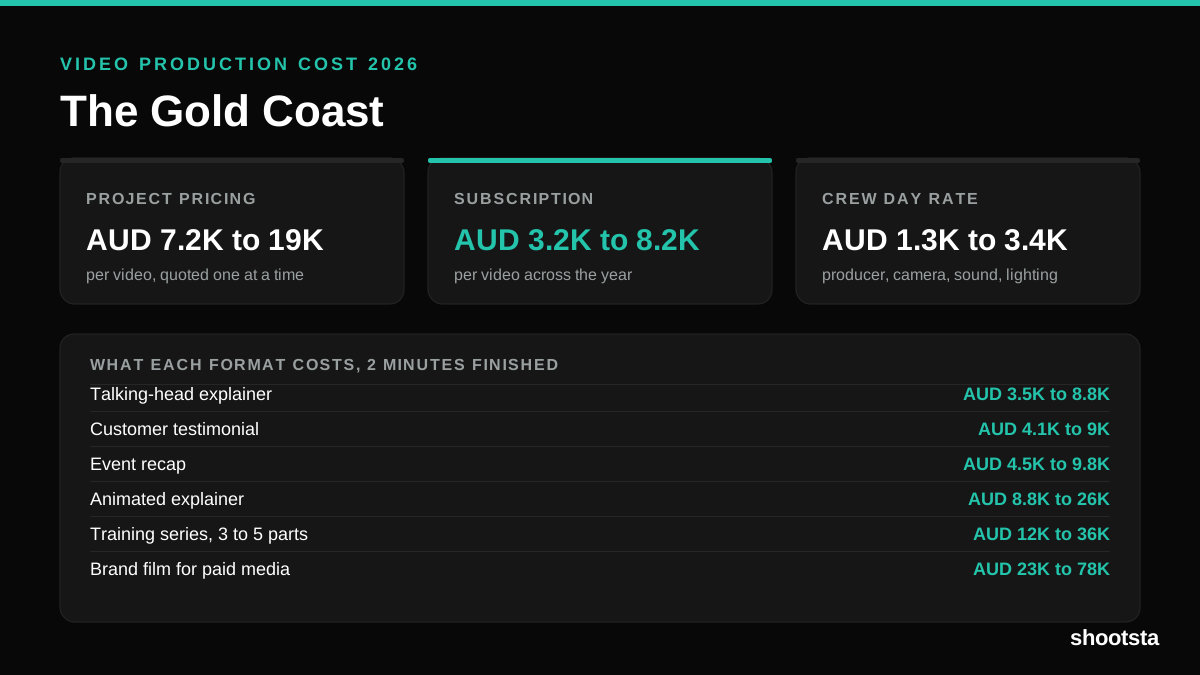
Video Production Cost on the Gold Coast 2026
Video production in the Gold Coast costs AUD 3,200 to AUD 8,200 per finished video on a subscription model, and AUD 7,200 to AUD 18,500 for one-off project work. Here is what you are paying for, and how the three pricing models compare.
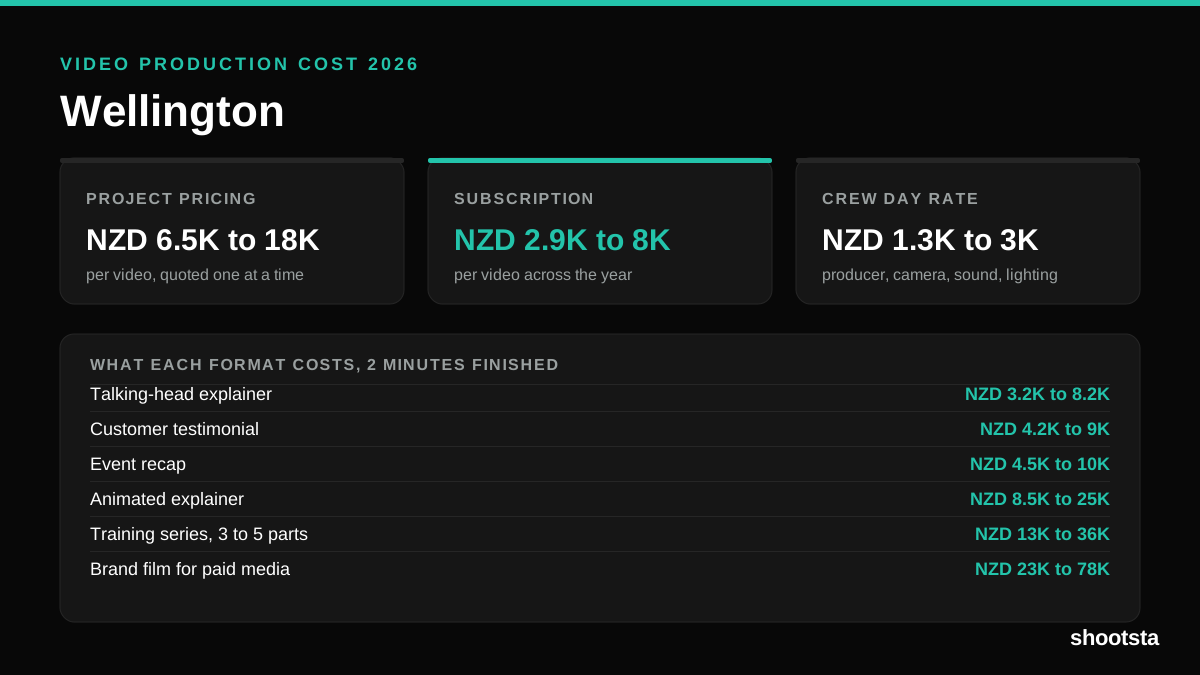
Video Production Cost in Wellington (2026)
Video production in Wellington costs NZD 2,900 to NZD 8,000 per finished video on a subscription model, and NZD 6,500 to NZD 18,000 for one-off project work. Here is what you are paying for, and how the three pricing models compare.
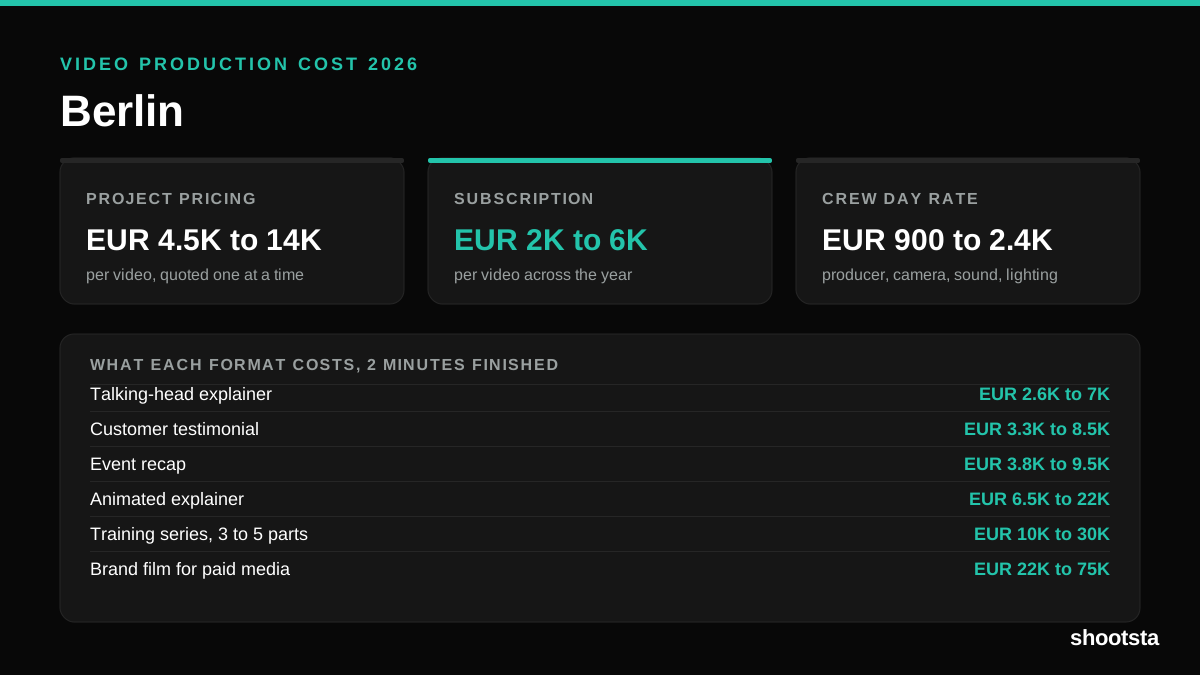
Video Production Cost in Berlin (2026)
Video production in Berlin costs EUR 2,000 to EUR 6,000 per finished video on a subscription model, and EUR 4,500 to EUR 13,500 for one-off project work. Here is what you are paying for, and how the three pricing models compare.