
How to Calculate the Cost of Video Delays
shootsta.
How to Calculate the Cost of Video Delays
By Shootsta · Published July 14, 2026 · Updated October 2026
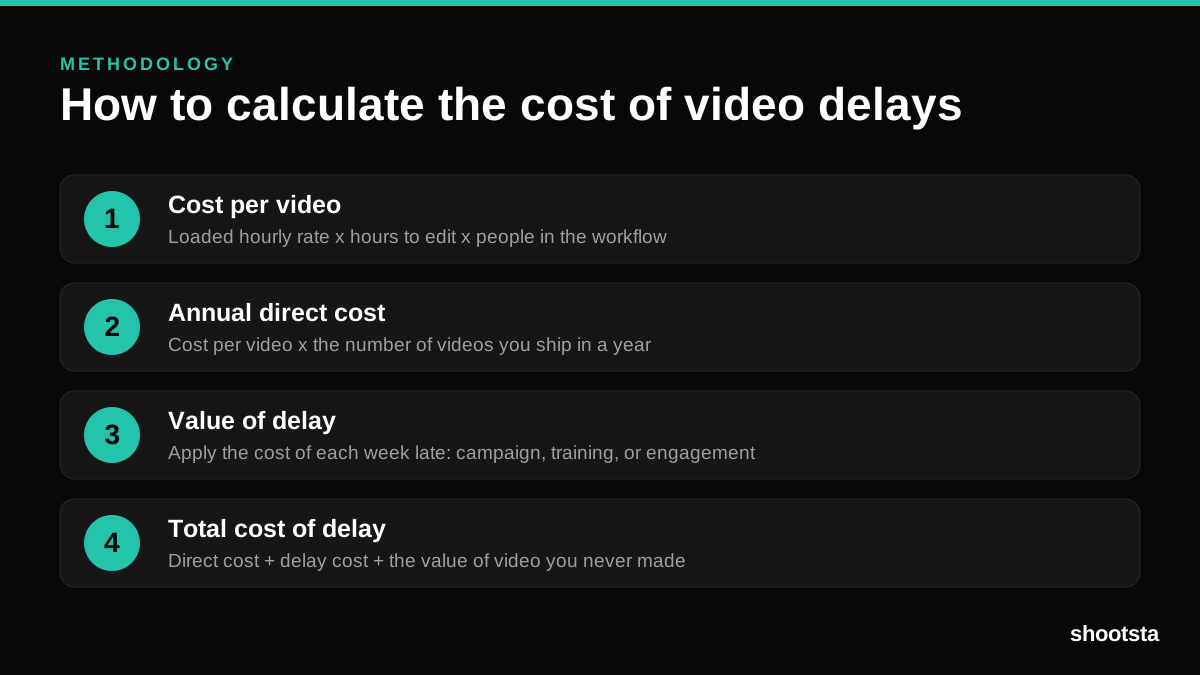
A step-by-step method for putting a dollar figure on slow video, so you can take the cost of delay to finance instead of describing it as a feeling.
How do you calculate the cost of video delays?
You calculate it in two halves: the direct cost of producing each video, and the operational cost of producing it too slowly. Add them, multiply by your annual volume, and you have a defensible number. Here is the method.
Step 1: Calculate cost per video
Multiply three inputs:
- Your fully loaded hourly rate (salary, benefits, overhead).
- The average hours to edit one video.
- The number of people in the editing and approval workflow.
A team at a $50 loaded rate, two hours per edit, and five people in the workflow spends about $100 in direct labor per video before revisions. Full detail is in how much in-house video editing costs.
Step 2: Calculate annual direct cost
Multiply cost per video by the number of videos you produce in a year. You may already have a rough sense of this number. Treat it as the floor, because the cost of delay sits on top of it.
Step 3: Put a value on each week of delay
This is the half that tends to get skipped in budget conversations. Pick the measure that fits the content. For marketing, use your own campaign results to estimate how much impact a launch loses for each week it runs late. For internal comms, compare engagement on messages that went out on time with ones that went out a week or two late. For training, count the hours people spend working without the knowledge and multiply them by a loaded hourly cost. Apply the relevant measure to your average delay.
Step 4: Add the volume gap
Estimate what you would produce if turnaround were not the constraint, and value the videos you are not making. This is the opportunity cost, and it is often the biggest line. We cover sizing it in how many videos an enterprise should produce per month.
A faster way to run the numbers
The enterprise video ROI calculator runs all four steps for you and returns an annual figure plus the days you could save by speeding up. To model the upside of the video itself rather than the cost of delay, use the video ROI calculator.
Where to start
Gather your four inputs (loaded rate, hours per edit, people in the workflow, current turnaround) and run them. Then read what slow video production actually costs an enterprise for the full picture.
Sources
- Shootsta customer reporting across 70,000+ videos produced.
Take this article with you
Read the latest at shootsta.com/blog/calculate-cost-of-video-delays
You might also like

How to Plan Video Team Capacity Around Leave
Your only editor just booked two weeks off, and you already know which projects will slip. Chad Lakin explains how to plan video team capacity so the work keeps moving when someone is away.
Corporate Video Editing Standards: Full Guide
A two-page editing standard does more for consistency than a forty-page brand book. Here is what it should cover, who owns each part, and how to enforce it with an in-house editor or an outside partner.
Quality Control in Outsourced Video Editing
When editing leaves the building, quality has to be checked by a system rather than by whoever happens to look. Here is the system: acceptance criteria, two QA gates, counted revision rounds and a quarterly audit.
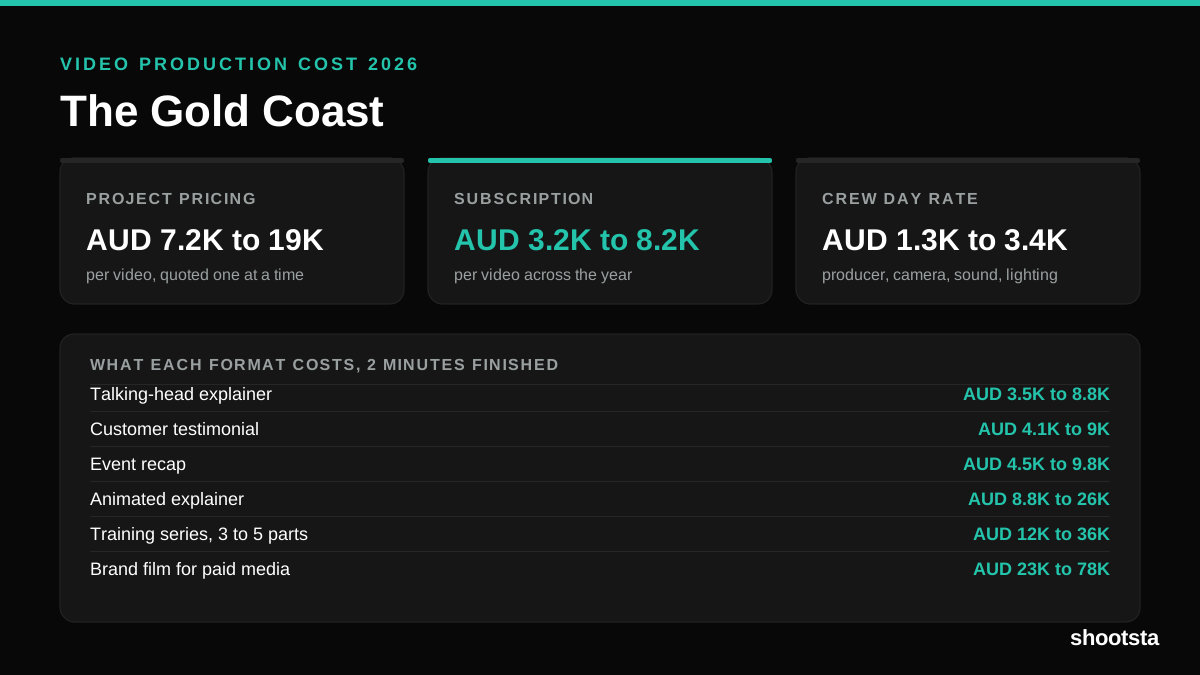
Video Production Cost on the Gold Coast 2026
Video production in the Gold Coast costs AUD 3,200 to AUD 8,200 per finished video on a subscription model, and AUD 7,200 to AUD 18,500 for one-off project work. Here is what you are paying for, and how the three pricing models compare.
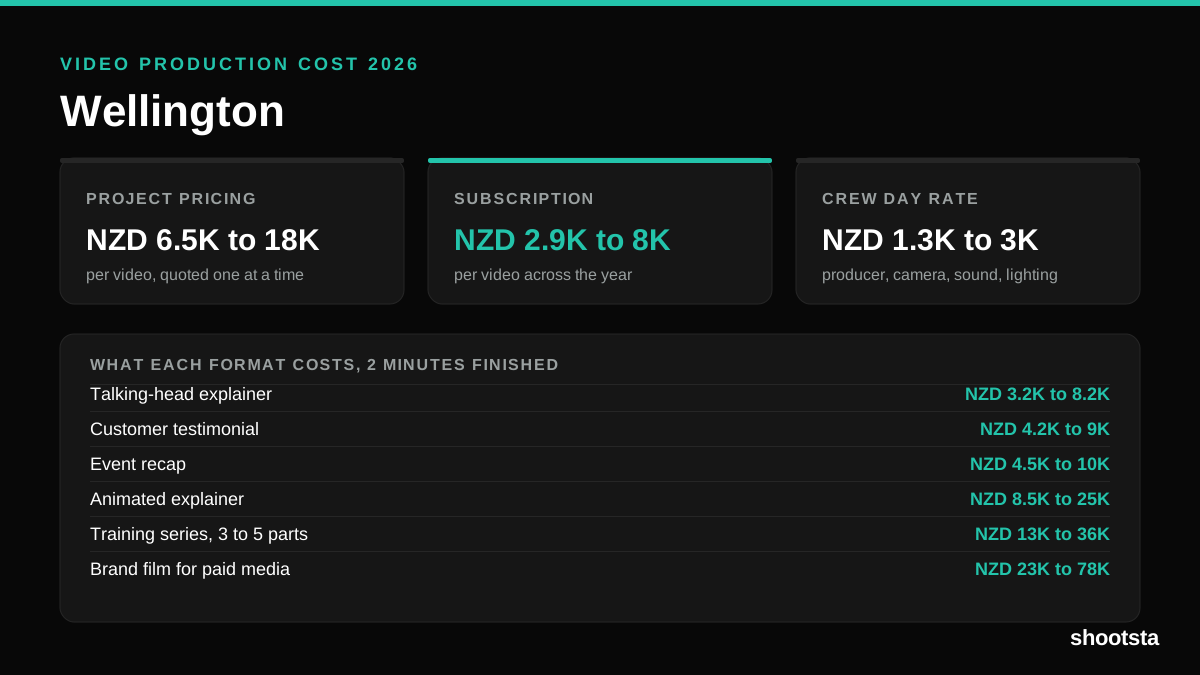
Video Production Cost in Wellington (2026)
Video production in Wellington costs NZD 2,900 to NZD 8,000 per finished video on a subscription model, and NZD 6,500 to NZD 18,000 for one-off project work. Here is what you are paying for, and how the three pricing models compare.
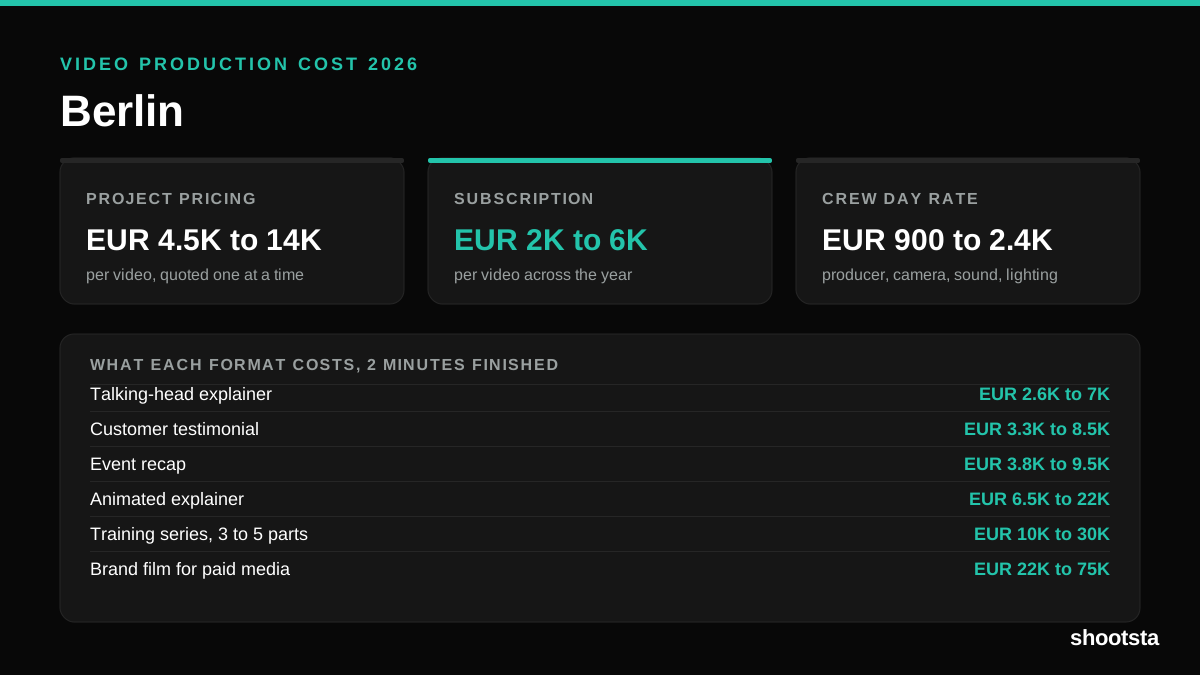
Video Production Cost in Berlin (2026)
Video production in Berlin costs EUR 2,000 to EUR 6,000 per finished video on a subscription model, and EUR 4,500 to EUR 13,500 for one-off project work. Here is what you are paying for, and how the three pricing models compare.