
Brand Consolidation in FSI Using Animation
shootsta.
Brand Consolidation in FSI Using Animation
By Shootsta · Published May 25, 2026 · Updated October 2026
Liberty Mutual is folding Safeco into a single brand. John Hancock became Manulife John Hancock. Brand consolidations create a flood of communication needs. Animation is the fastest way to keep up.
Why is brand consolidation a content problem?
Every brand consolidation in financial services creates a wave of communications work. Liberty Mutual is consolidating its Safeco personal lines brand into a single Liberty Mutual identity starting April 2026. John Hancock Investments and John Hancock Retirement transitioned to Manulife John Hancock branding in April 2025. First Citizens Bank extended its brand across CIT business verticals in late 2023. NCR Atleos spun out of NCR Corporation in 2023 as a new standalone brand.
In each case, the business underneath stays largely the same. What changes is the visual identity, the way the company describes itself, and the way staff, partners and customers refer to it. None of that is technical work, but all of it has to be explained to people.
What does a brand consolidation need to communicate?
You are talking to three audiences, and each one needs a different message.
Staff need to know what the new brand stands for
Staff need more than the new logo. They need the new positioning and the new way of describing the business. They also need to know which parts of the old brand stay. Staff are the first people to carry the new identity to customers.
Partners need to know what changes for them
For partners, the change reaches distributor agreements, technology integrations, co-branded materials, support channels and contact lists. At the partner level the brand change is rarely only visual, and each partner-facing system has touchpoints that need updating.
Customers need to know they are still in the same relationship
For many customers, the brand change is the only thing they notice. They want reassurance that their account, their policy, their relationship continues unchanged. The visual identity may be different, but the substance is not.
Why animation works better than live action for brand rollouts
Live action has its place, but animation suits a brand rollout better. There are three reasons for that.
Animation is brand
The new visual identity has to be the protagonist of the rollout. Animated video lets the new logo, palette, typography and motion language do the work. A live action video puts a person on screen instead.
Animation scales across audiences
You can reuse the same illustrations with three scripts and three voiceovers. That lets you produce a unified visual rollout across staff, partners, and customers without three separate shoots. The shared visual language reinforces "this is one brand" at every touchpoint.
Animation is faster to update
Brand consolidations rarely happen in a single moment. They roll out across regions, business lines or product families over many months, and each phase needs new communications. Animation lets you update voiceover, swap individual scenes, and republish without re-shooting.
The brand consolidation video set
Brand introduction video
This is the hero piece: an animated video of 60 to 90 seconds. It explains what the new brand is, what it stands for and what it means for the customer. It lives on the homepage, the LinkedIn announcement and the email banner. Get it right first, because every other video builds on it.
Staff orientation video
The staff video is an animated piece of 2 to 3 minutes. It is the deeper version of the brand intro, with the positioning, the story and what staff should remember. Embed it in the internal portal and make it required viewing for everyone.
Partner explainer videos
Make one 60-second video for each major partner segment, such as brokers, agents, distributors and technology partners. Each one covers the specific changes that audience cares about. Use the same visual style as the hero video.
Customer reassurance video
At 45 to 60 seconds, this animated video is the shortest of the set. It confirms what continues, shows the new brand and points customers to the help pages for specifics.
Phase-specific updates
These are animated videos of 30 to 60 seconds each. Use them as the brand consolidates across business lines, regions or products. They keep the same visual style with new scripts. They are easy to forget when planning, then get rushed.
How fast can a brand consolidation video set be produced?
A 5-video set made together in a single visual style takes longest at the start, because the style has to be developed first. After that, each new video moves much faster, with a first cut in about 48 hours.
Produce the style kit once and reuse it for every video in the set. Overspending on brand consolidation video usually comes from redoing the foundational work for each new video instead of reusing the style. For an example of a marketing team running this kind of production efficiently, see the Dual North America case study.
How do you handle compliance and legal sign-off?
The brand consolidation videos do not usually carry the same regulatory weight as product disclosures, but they do need legal review for trademark, naming convention, and disclaimer accuracy. Build legal review into the script stage, not the post-production stage. That keeps the production timeline tight.
For more on getting video through compliance in financial services generally, see our compliance-ready guide.
How do you measure success?
Two short-term metrics, two long-term:
- Short-term: video completion rates internally (target 70%+) and partner help-desk inquiries about the brand change (lower is better)
- Long-term: brand recognition surveys at 3 and 6 months, and search volume for the new brand name vs the old
Where to start
If you have a brand consolidation upcoming or in flight, lock the visual style with one production partner first. Brief the hero video and the staff orientation video against that style. Roll out partner and customer videos in the second wave. Plan the phase-specific updates from week one. If you already have animations carrying the old identity, see our guide on how to refresh outdated FSI animations to decide what to update and what to rebuild. Learn more about animation production at scale, see how corporate video trends have shifted in 2026, or how Shootsta supports financial services and insurance.
If you want the strategy behind producing animation at volume, see The Business Animation Playbook.
Take this article with you
Read the latest at shootsta.com/blog/fsi-brand-consolidation-animation
You might also like
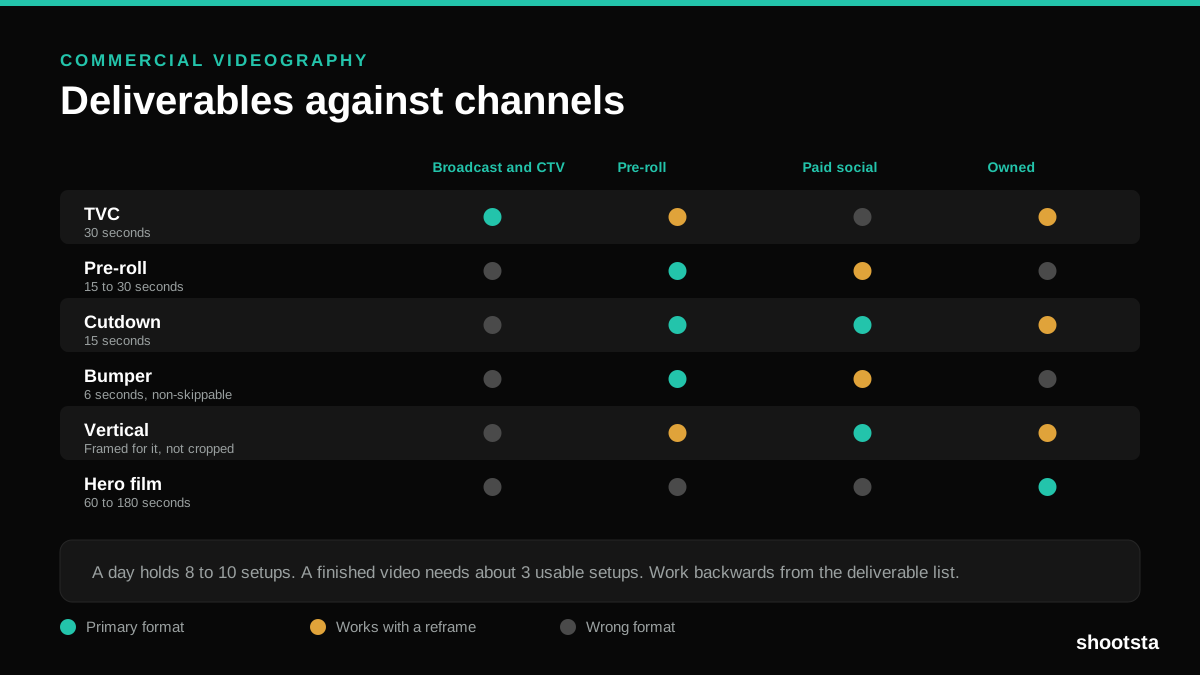
Commercial Videography: Cost and Scope
Commercial videography is priced by the day and judged by the deliverable. Most projects go wrong because those two numbers were never reconciled.
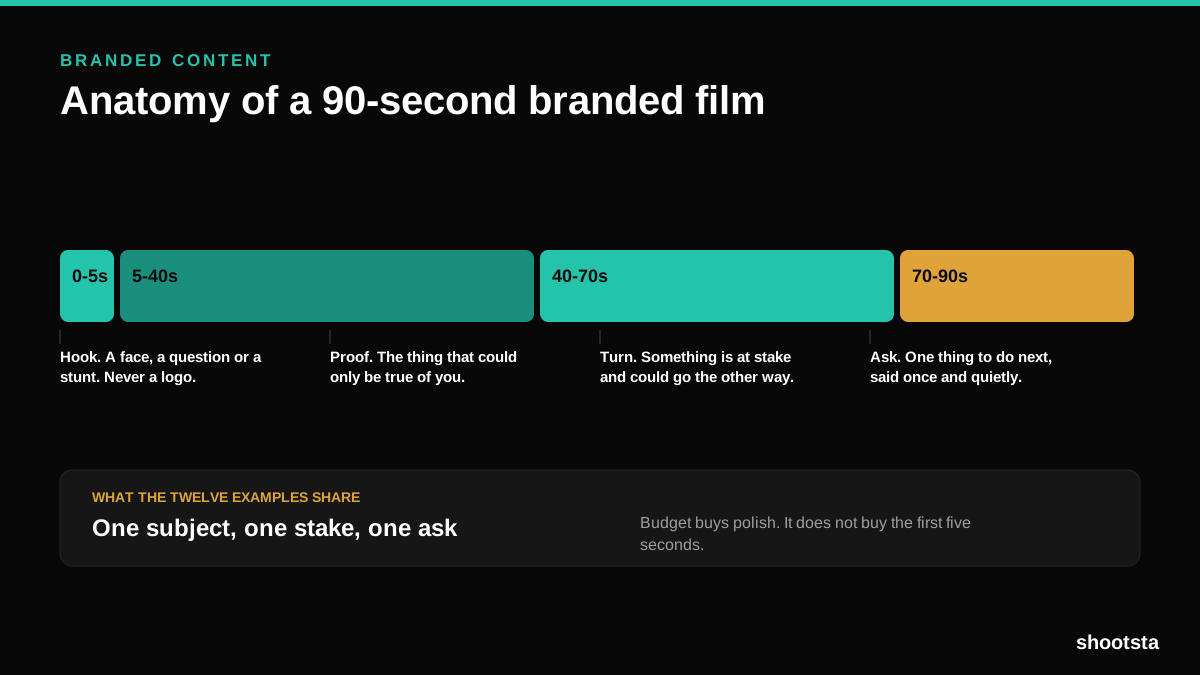
12 Branded Content Examples That Worked
Twelve pieces of branded content that people chose to watch, what each one got right, and the structure underneath all of them.
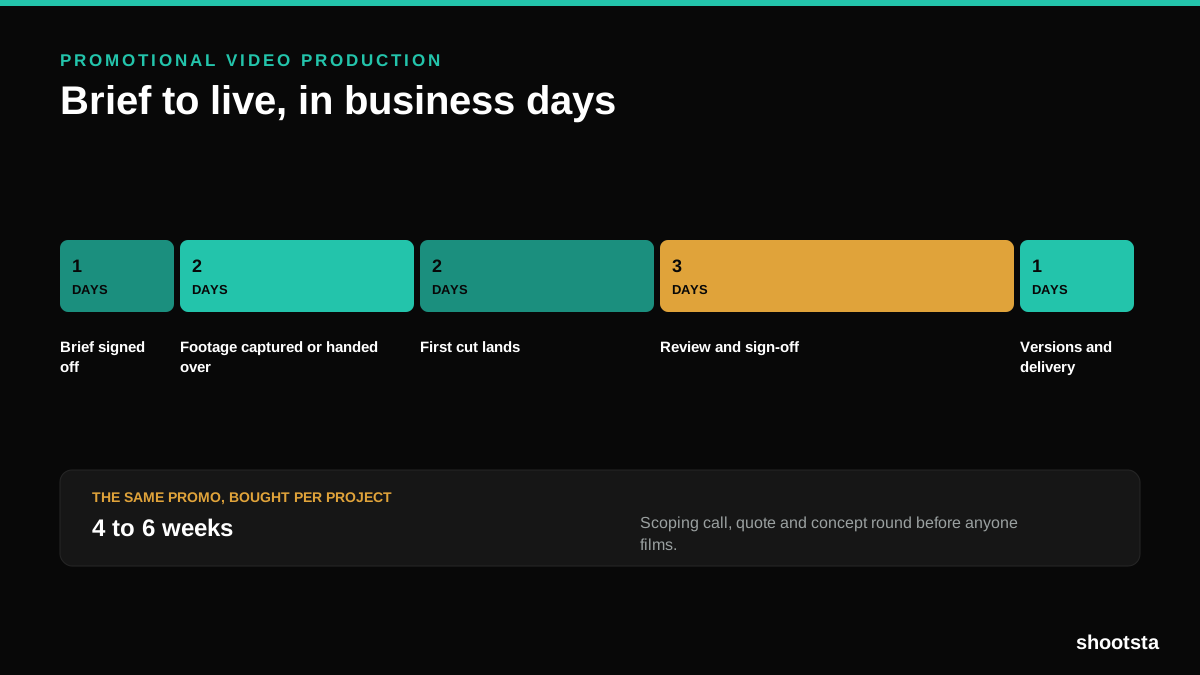
Promotional Video Production: Cost and Time
Most promotional video production schedules are not slow because of the edit. They are slow because of the approval chain. Here is where the days go.
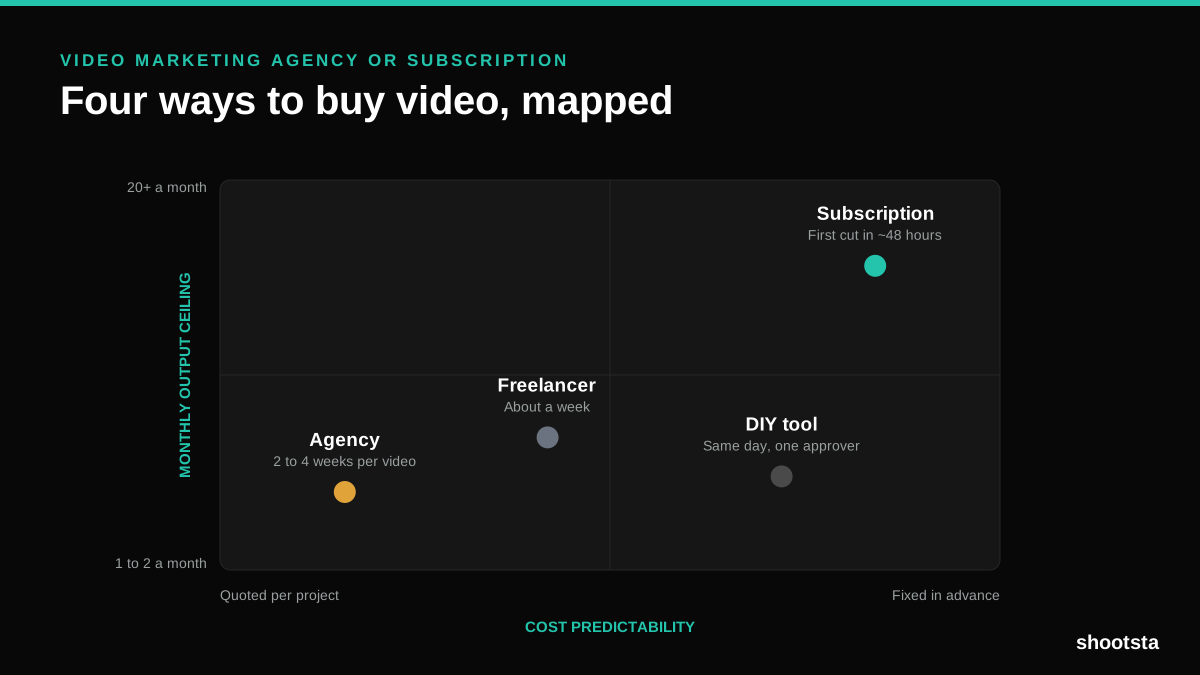
Video Marketing Agency or Subscription?
A video marketing agency prices per project and works in weeks. A subscription prices the year and works in days. Which one fits depends on how often you publish, not on which is better.

B2B Video Production: Costs and Buying Models
There are five ways to buy B2B video production. Each one works well up to a point and then breaks, usually at a volume nobody planned for. Here is what each costs and where the ceiling sits.
How to Measure Video Speed-to-Market
How to Measure Video Speed-to-Market
Speed-to-market is the lag between needing a video and publishing it. For marketing teams it is a revenue metric. Here is how to measure and improve it.