
Sustainable Tourism Storytelling: Video That Moves Travelers
shootsta.
Sustainable Tourism Storytelling: Video That Moves Travelers
By Shootsta · Published May 29, 2026 · Updated October 2026
Most sustainable tourism video reads like a corporate sustainability report. Travelers do not respond. The format that works puts specific people and places first, with the board's program in the background.
Why does sustainability video fail in tourism?
A lot of sustainable tourism video reads like a corporate sustainability report. It strings together carbon offset statistics and B-roll of solar panels under a voiceover about commitment, and travelers do not respond to it. The metrics that matter (booking intent, destination preference, partner engagement) do not move.
The format fails because it speaks to the wrong audience. The video is built for the sustainability stakeholder - the board ESG committee, the legislator who voted for the green tourism initiative, the partner property's sustainability lead. It is not built for the traveler making a destination decision.
The right sustainability video for tourism reaches the traveler emotionally first, with stakeholder credibility built in as the substrate. That needs a different format from the one many tourism boards reach for first.
The traveler vs the stakeholder split
Sustainability video for travelers should answer: why does this destination care, what specifically are they doing, and how does my visit fit into that?
Sustainability video for stakeholders should answer: what is the measured impact, what targets are being met, and how does the board's spend translate into outcomes.
These are two different videos. Combining them produces a video that satisfies neither. The most efficient production approach is one shoot that produces two cuts: a 90-second traveler-facing version and a 3-minute stakeholder version.
Specific stories vs broad commitments
Travelers respond to specific stories about specific places and people. A 90-second video about a specific local conservation project, a specific Indigenous-led tourism partner, a specific reef restoration program, or a specific small business that benefited from the tourism board's sustainability program is more memorable and more shareable than a 90-second video about the board's sustainability commitments overall.
This is also where many tourism boards lose the format. The instinct is to make the video about the board's strategy. The format that works is making the video about the person on the ground doing the work, with the board appearing as the enabler in the background.
Local voices vs HQ talking heads
Sustainability video featuring the board director talking about commitment underperforms sustainability video featuring a local guide, a small business owner, or a community elder talking about the place. The board still gets credit. It just gets credit through the people whose lives the program affects.
The casting question matters here. The habit is to cast whoever is easiest to schedule for an on-camera moment. The strongest sustainability stories come from people who would not be on camera by default - the guide whose family has worked the trail for three generations, the artisan whose craft is sustained by visitor demand, the conservation team member at the partner attraction.
Animation for systems thinking
Some sustainability stories are about systems rather than specific people. How a reef or forest recovers, supply chain transparency and regional economic impact are hard to film because there is no single person or place to point a camera at. Live action struggles with these topics, while animation handles them well.
A motion graphics sequence showing how visitor spend cycles back to local conservation funding is more memorable than a chart. An animated explainer of regenerative tourism practices reaches travelers who would tune out a traditional documentary segment. For format guidance, see our piece on animation production at scale and the different kinds of animation for business.
Where does sustainable tourism video live?
Sustainable tourism video has five main distribution channels, and each one suits a different cut.
- The board's destination marketing site, on a dedicated sustainable travel page
- Paid social campaigns targeting traveler segments with sustainability preferences
- Travel trade partner channels, especially with operators positioning sustainable tours
- The board's stakeholder reporting channels (for the longer cut)
- Earned media and travel publications that increasingly request sustainability angle content
Each channel has different format and length requirements. Plan the cuts before production. Getting several cuts from one shoot takes far less work than running separate shoots, but you have to plan for it from the start. See corporate video trends in 2026 for more on multi-format distribution.
How do you measure sustainable tourism storytelling?
Start with booking intent surveys that compare travelers who watched the video with matched controls. Then track engagement on social channels (saves, shares and comments) and count travel trade requests for sustainability assets. You can also log earned media pickup and gather feedback from the board's sustainability committee.
Direct booking attribution is hard to measure for sustainability video, because sustainability is rarely the single deciding factor. It is one of several contributing factors. So measure how the video contributes to bookings rather than trying to attribute each booking to it.
The casting and consent question
Sustainability stories often feature Indigenous communities, small business owners in vulnerable economic positions, and local environmental experts. The casting and consent process for those subjects requires more care than typical destination video.
Build the consent process into the pre-production phase. Subjects should understand how their footage will be used, where it will be distributed, and for how long. Paying subjects, even a small amount, shows that you respect their time and story. Local cultural advisors should review scripts before shoots in sensitive communities. These steps prevent the kind of well-intentioned-but-extractive sustainability video that has alienated travelers in recent years.
Where to start
Pick one specific sustainability project your board funds or supports. Brief a 90-second traveler-facing video and a 3-minute stakeholder cut from the same shoot. Test the traveler version with paid social against a control. Use the result to fund the next 3 stories across the year. For broader testimonial workflow, see producing testimonial videos at scale.
Take this article with you
Read the latest at shootsta.com/blog/sustainable-tourism-video-storytelling
You might also like

Shootsta at Day 1 of B2B Marketing Leaders Forum
Shootsta is at B2B Marketing Leaders Forum Asia in Singapore on 14 and 15 October 2026. Watch our day 1 video, edited overnight and ready before the first coffee break on day 2.
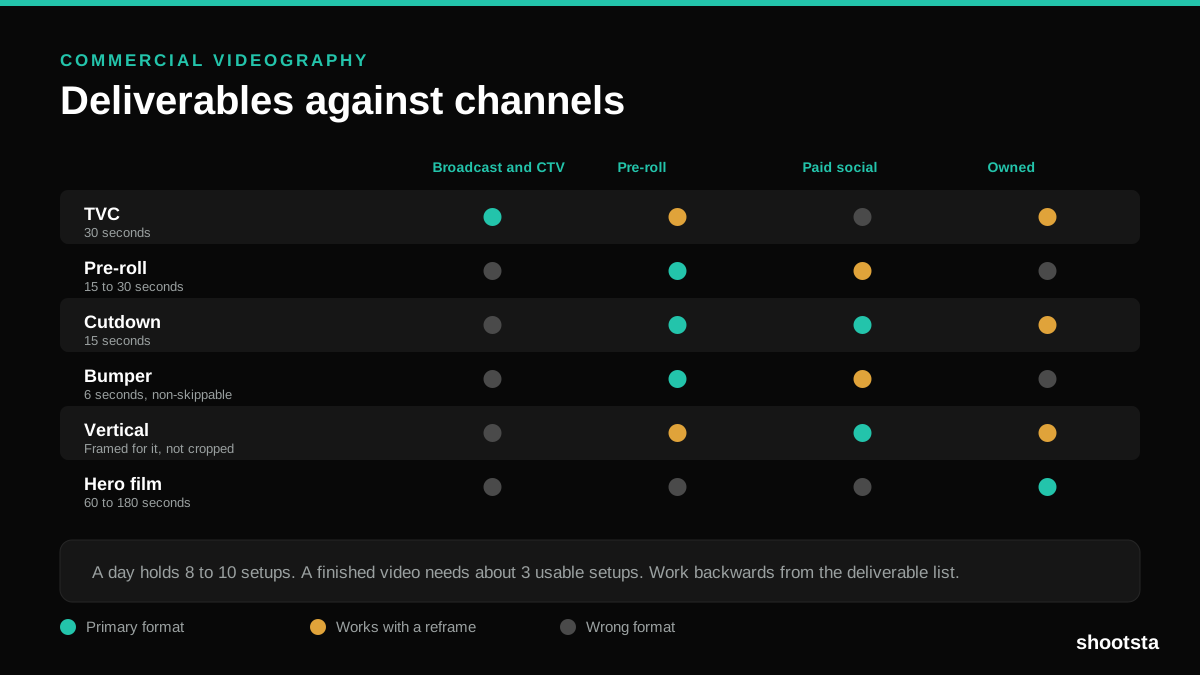
Commercial Videography: Cost and Scope
Commercial videography is priced by the day and judged by the deliverable. Most projects go wrong because those two numbers were never reconciled.
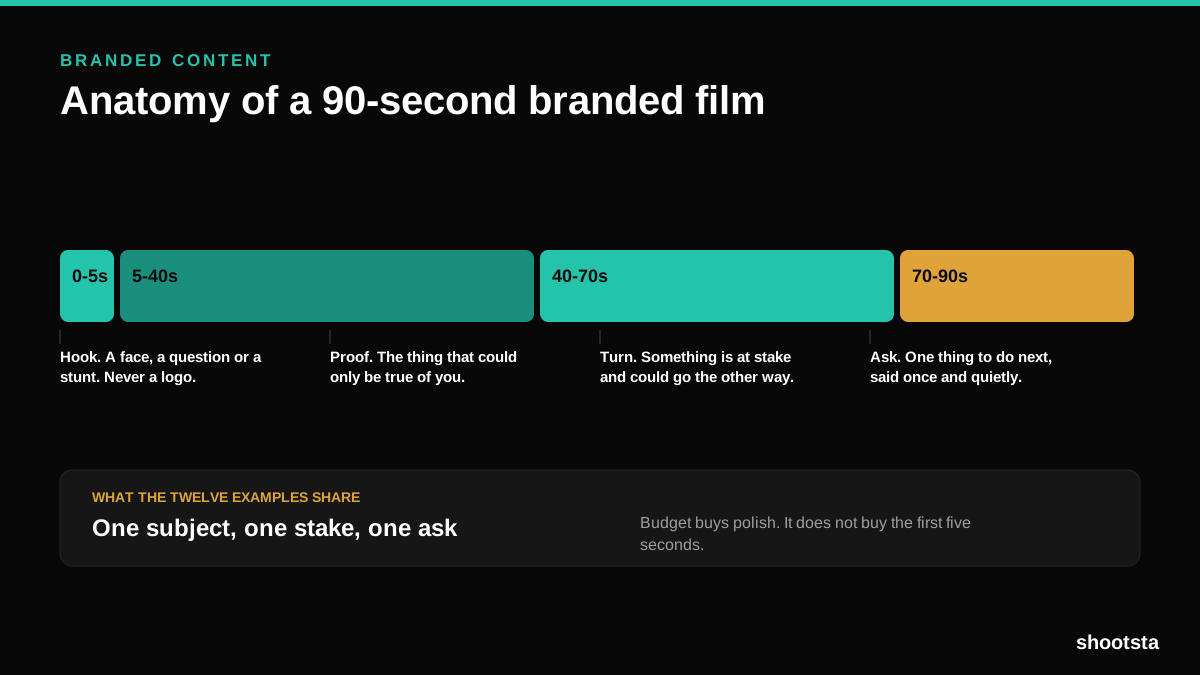
12 Branded Content Examples That Worked
Twelve pieces of branded content that people chose to watch, what each one got right, and the structure underneath all of them.
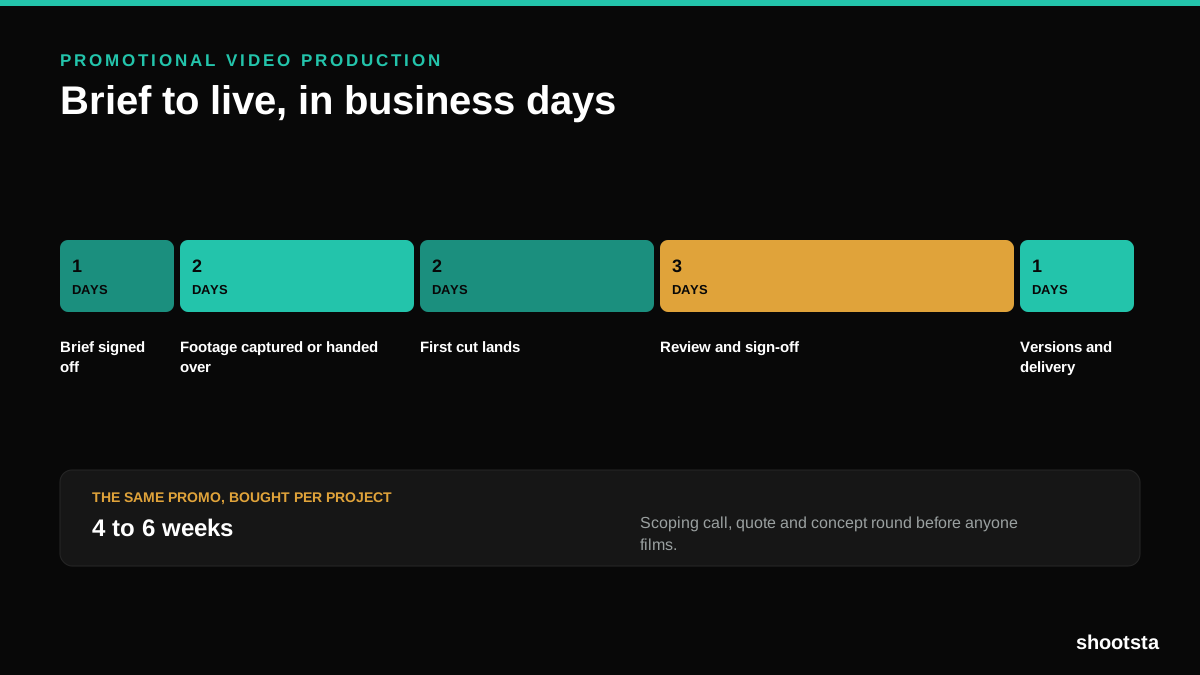
Promotional Video Production: Cost and Time
Most promotional video production schedules are not slow because of the edit. They are slow because of the approval chain. Here is where the days go.
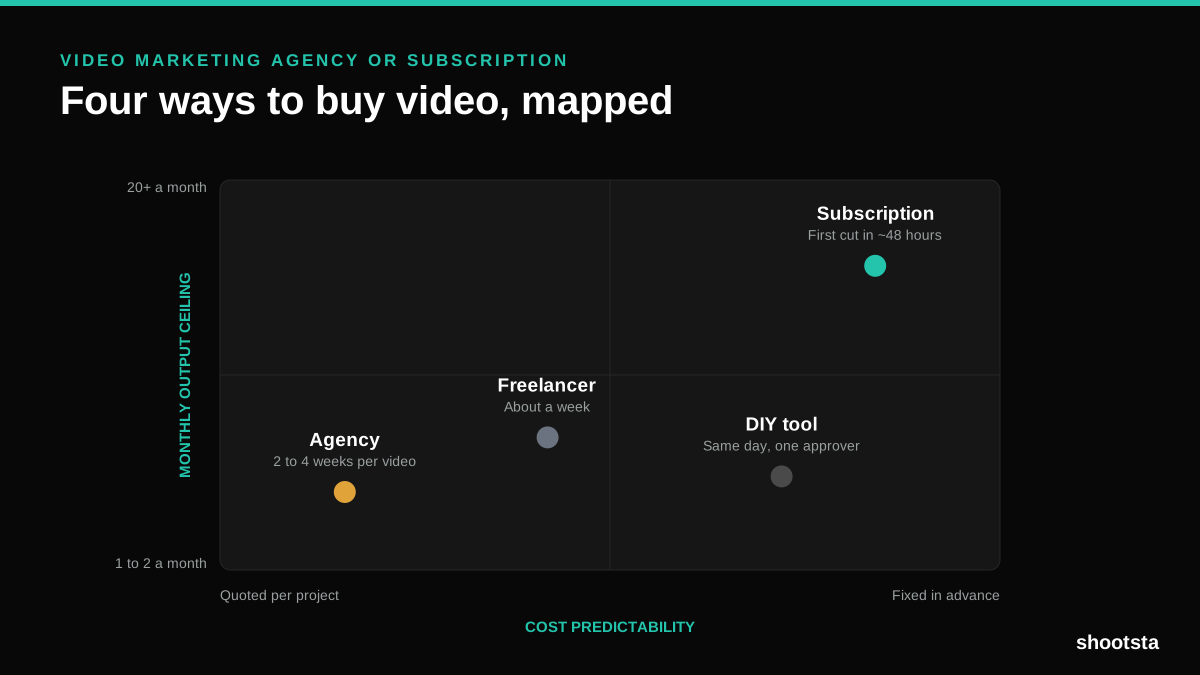
Video Marketing Agency or Subscription?
A video marketing agency prices per project and works in weeks. A subscription prices the year and works in days. Which one fits depends on how often you publish, not on which is better.

B2B Video Production: Costs and Buying Models
There are five ways to buy B2B video production. Each one works well up to a point and then breaks, usually at a volume nobody planned for. Here is what each costs and where the ceiling sits.