
Video Production Cost for US Tourism Boards
shootsta.
Video Production Cost for US Tourism Boards
By Shootsta · Published June 5, 2026 · Updated October 2026
Tourism boards budget for video the way other marketing teams budget for media buys. The numbers look very different. Here is what US state tourism offices, CVBs, and DMOs spend on video production in 2026.
How much does video production cost for a US tourism board?
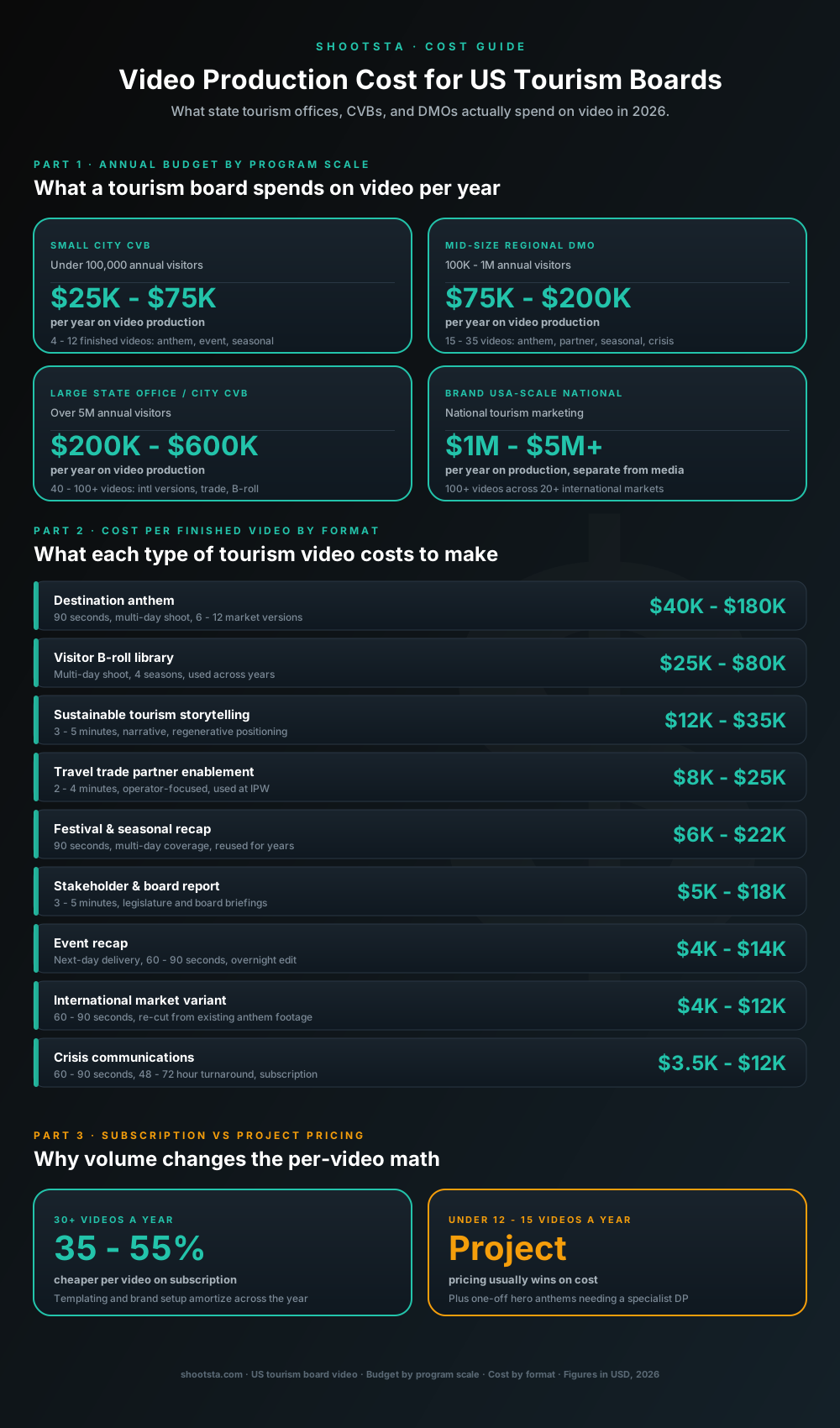
A US state tourism office, convention and visitors bureau, or destination marketing organization typically spends between USD 75,000 and USD 600,000 a year on video production, depending on program scale and how much is produced in-house. Per-asset, finished videos land between USD 3,000 and USD 80,000 each. The wide range is real - a 30-second social cutdown looks nothing like a 90-second international anthem. Below is the full breakdown by format, by program scale, and by funding model.
What are tourism boards paying for in a video production quote?
Tourism video has a different cost shape than corporate video. Three line items get bigger, two get smaller.
What gets bigger: Location production (multi-day shoots across destinations), drone and specialty cinematography (anywhere a tourism board wants to make a destination feel cinematic), and travel for crew and talent.
What gets smaller: Scripted talking heads (most tourism content is visual-led with light VO), and corporate brand template overhead (tourism brands rotate creative more often than corporate brands).
The five core cost drivers:
- Crew and equipment. Director, DP, camera operator, drone operator, sound, lighting. Tourism crew rates run USD 800 to USD 3,000 per day depending on city and seniority. Add USD 500 to USD 1,500 per day for drone with FAA-licensed operator.
- Location shoot days. A multi-day tourism shoot across attractions, neighborhoods, and seasons often runs 3 to 7 days, not the half-day of a typical corporate shoot.
- Pre-production and scouting. Location scouts, attraction coordination, permits where required, talent casting. USD 1,500 to USD 8,000 per project.
- Post-production and motion graphics. Editing, color grading, music licensing, motion graphics overlays. USD 2,000 to USD 12,000 per project.
- Multi-language and multi-market versions. Most state tourism offices and DMOs deliver in 4 to 8 international market versions. Each adds 20% to 50% to base cost. Covered in detail in our multi-language destination videos guide.
Tourism video cost by format in 2026
Destination anthem (90 seconds, multi-day shoot, multi-market versions)
USD 40,000 to USD 180,000 per anthem program, including 6 to 12 market versions. The hero piece of most state tourism marketing programs.
International market cultural variants (60 to 90 seconds, edited from existing footage)
USD 4,000 to USD 12,000 per market version when the original anthem footage exists. Re-edit, re-grade, re-music, new VO, market-specific captions and on-screen text.
Travel trade partner enablement video (2 to 4 minutes)
USD 8,000 to USD 25,000 per video. Operator-focused, fact-rich, used at IPW and partner sales meetings.
Crisis communications video (60 to 90 seconds, 48 to 72 hour turnaround)
USD 3,500 to USD 12,000 per video on a subscription model. Project work for this is often 3x to 5x as expensive because the rapid turnaround requires premium scheduling.
Event recap video (next-day delivery, 60 to 90 seconds)
USD 4,000 to USD 14,000 per event. Higher cost reflects overnight editing and same-day delivery pressure. Covered in our event recap video guide.
Stakeholder report and board video (3 to 5 minutes)
USD 5,000 to USD 18,000 per report. Used for legislature briefings, board meetings, and annual stakeholder updates. The full operating pattern is in our stakeholder reporting video guide.
Festival and seasonal recap (90 seconds, multi-day coverage)
USD 6,000 to USD 22,000 per recap. Repeatable seasonal asset that gets used for years.
Visitor B-roll library (multi-day shoot, ongoing usage)
USD 25,000 to USD 80,000 for a comprehensive B-roll package covering 4 seasons, key attractions, and visitor experience footage. A DMO can use that library across years of campaigns, which often makes it the highest-ROI single video production investment a DMO makes.
Sustainable tourism storytelling (3 to 5 minutes, narrative)
USD 12,000 to USD 35,000 per story. Long-form narrative pieces aligned with sustainability and regenerative tourism positioning. Detail in our sustainable tourism storytelling guide.
Total annual tourism video budgets by program scale
Small city CVB (under 100,000 annual visitors)
USD 25,000 to USD 75,000 a year. Typically 4 to 12 finished videos covering one or two anthem pieces, event recaps, and seasonal cutdowns.
Mid-size regional or county DMO (100K to 1M annual visitors)
USD 75,000 to USD 200,000 a year. 15 to 35 finished videos including anthem program, partner enablement, multiple seasonal pieces, and crisis-ready capacity.
Large state tourism office or large city CVB (over 5M annual visitors)
USD 200,000 to USD 600,000 a year. 40 to 100+ finished videos including international market versions, stakeholder reports, travel trade content, and a comprehensive B-roll library.
Brand USA-scale national tourism marketing
USD 1M to USD 5M+ a year on video production specifically (separate from media buys), covering 100+ finished videos across 20+ international markets.
Funding sources tourism boards use to pay for video
Unlike corporate marketing teams, tourism boards usually have multiple funding sources. The mix shapes how video budgets are structured.
- Lodging tax and TID (Tourism Improvement District) revenue. It is the main source for most CVBs and DMOs in the US, and statute earmarks it for tourism marketing.
- State tourism appropriations. Annual budget from the state legislature, often with line-item visibility on how it is spent.
- Co-op partner funding. Lodging partners, attractions, and regional businesses contribute to specific campaigns and get co-branded video assets in return.
- Federal grants for recovery, sustainability, or rural tourism. One-off but can fund significant production projects.
- Brand USA market match funding. Available to state tourism offices for international-market campaign work, with specific deliverable requirements.
The funding source often dictates the production model. State-appropriated budgets favor competitive bid project work. Lodging-tax-funded ongoing programs can support subscription production models. Co-op partner-funded campaigns are usually one-off project work tied to specific marketing windows.
Why subscription production usually wins for ongoing tourism programs
For state tourism offices and large DMOs producing 30+ videos a year across anthem, partner enablement, event recap, crisis comms, and stakeholder reporting, subscription production typically lands 50% to 60% cheaper per video than equivalent project work. The reason is the same as in corporate video: pre-production templating, brand setup, and project management amortize across the year. The added reason in tourism is turnaround - the 48-hour cycle for event recap and crisis comms is structurally impossible on a project-based workflow. We covered the operating pattern in our 48-hour video workflow guide.
When project pricing is the right model for a tourism board
If annual video production volume is under 10 to 15 finished pieces, project pricing wins on cost. The same applies for one-off hero anthem films that need a specialist director or DP, broadcast TVCs with national paid media, and specific co-op-funded campaigns where the partner has named creative requirements.
Hidden costs that catch tourism boards out
- Talent fees for visitor footage. Real visitors filmed at attractions need signed releases. Cast talent for visitor stand-ins runs USD 600 to USD 2,500 per day plus usage rights.
- Music licensing for paid media use. Standard production music libraries cover trade and stakeholder use. Paid social and broadcast use can require premium licensing at USD 500 to USD 5,000+ per track.
- Drone permits and FAA Part 107. Required at most attractions and national parks. Usually USD 500 to USD 2,000 per project in coordination time.
- State or attraction filming permits. Varies wildly. Some destinations are free, some run USD 1,000 to USD 5,000 per shoot day at specific locations.
- International market cultural review. A 90-second anthem cutdown for the German market may need a German-speaking cultural reviewer to flag references that do not translate. USD 500 to USD 2,000 per market per major asset.
Frequently asked questions
What is the typical annual video production budget for a US state tourism office?
USD 200,000 to USD 600,000 a year for production specifically (separate from media buys). Larger states with international market programs spend more. Smaller states or those with anchor festival programs spend less. The figure scales roughly with overall marketing budget, which scales with lodging tax revenue.
How much should a small US city CVB budget for video in 2026?
USD 25,000 to USD 75,000 a year is the typical range for a CVB serving under 100,000 annual visitors. This covers 4 to 12 finished videos a year, typically a 60 to 90 second anthem updated every 2 years, plus event recaps and seasonal cutdowns. Going below USD 25,000 usually means freelance one-offs without brand consistency.
What does a destination anthem video cost in the US in 2026?
USD 40,000 to USD 180,000 for a 90-second anthem including multi-day shoot, multiple seasons, and 6 to 12 international market versions. Standalone anthem with no international versions and a single shoot block runs USD 25,000 to USD 80,000. International market re-cuts from existing footage add USD 4,000 to USD 12,000 each.
How do DMOs justify video production budget to their boards?
Boards tend to accept three kinds of case. First, they look at attribution to visitation lift via media-mix modeling and conversion lift studies. Second, they look at partner revenue from co-op-funded campaigns where video drove partner contribution. Third, they value the defense it gives during a crisis. A DMO with video capacity in place can put out hurricane, wildfire, or pandemic recovery messaging that DMOs without it cannot match. A stakeholder reporting video on its own often shifts the conversation toward continued investment.
Is video production cheaper through Brand USA market match funding?
Not cheaper per se, but it can effectively double the available budget for international-market video work. Brand USA match funding matches state tourism office spend on qualifying international campaigns. Production work tied to those campaigns becomes substantially more affordable from the state's perspective. The match process has specific deliverable and timeline requirements that need to be in the brief from day one.
Where to go next
For broader context on tourism board video programs, see our 5 video formats every US tourism board should be producing. For the operating model behind tight-turnaround programs, the 48-hour video workflow guide. For a scoped quote based on your board's volume and format mix, get in touch.
Take this article with you
Read the latest at shootsta.com/blog/video-production-cost-us-tourism-boards
You might also like

Shootsta at Day 1 of B2B Marketing Leaders Forum
Shootsta is at B2B Marketing Leaders Forum Asia in Singapore on 14 and 15 October 2026. Watch our day 1 video, edited overnight and ready before the first coffee break on day 2.
Commercial Videography: Cost and Scope
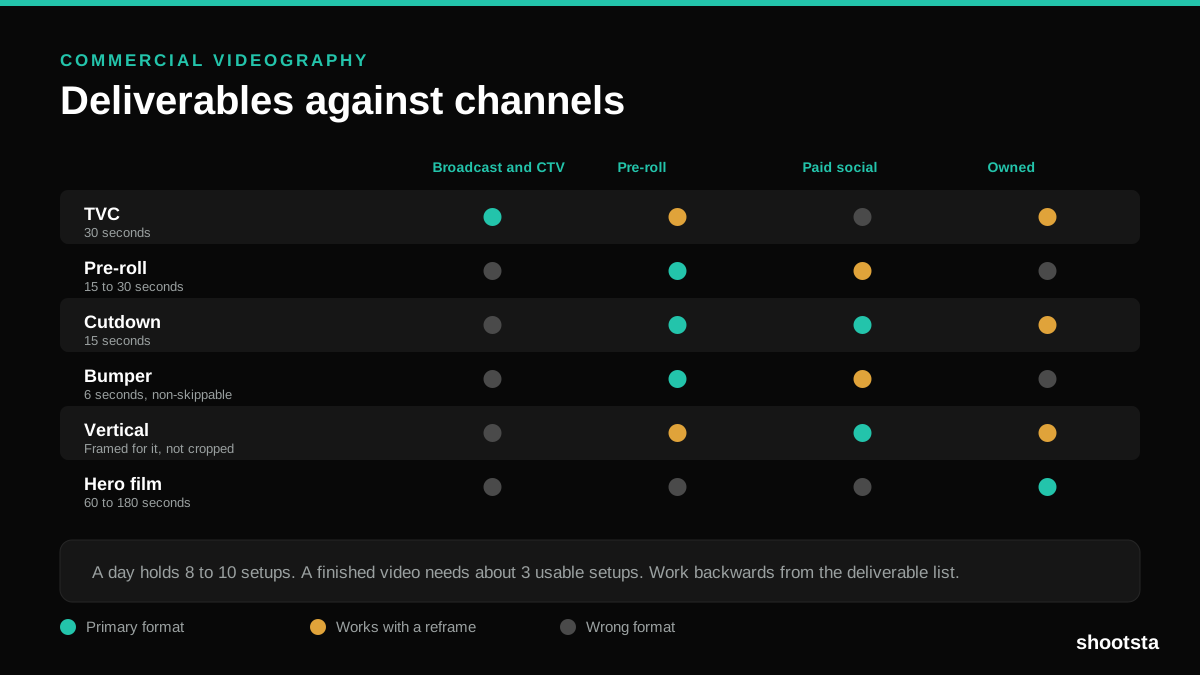
Commercial videography is priced by the day and judged by the deliverable. Most projects go wrong because those two numbers were never reconciled.
12 Branded Content Examples That Worked
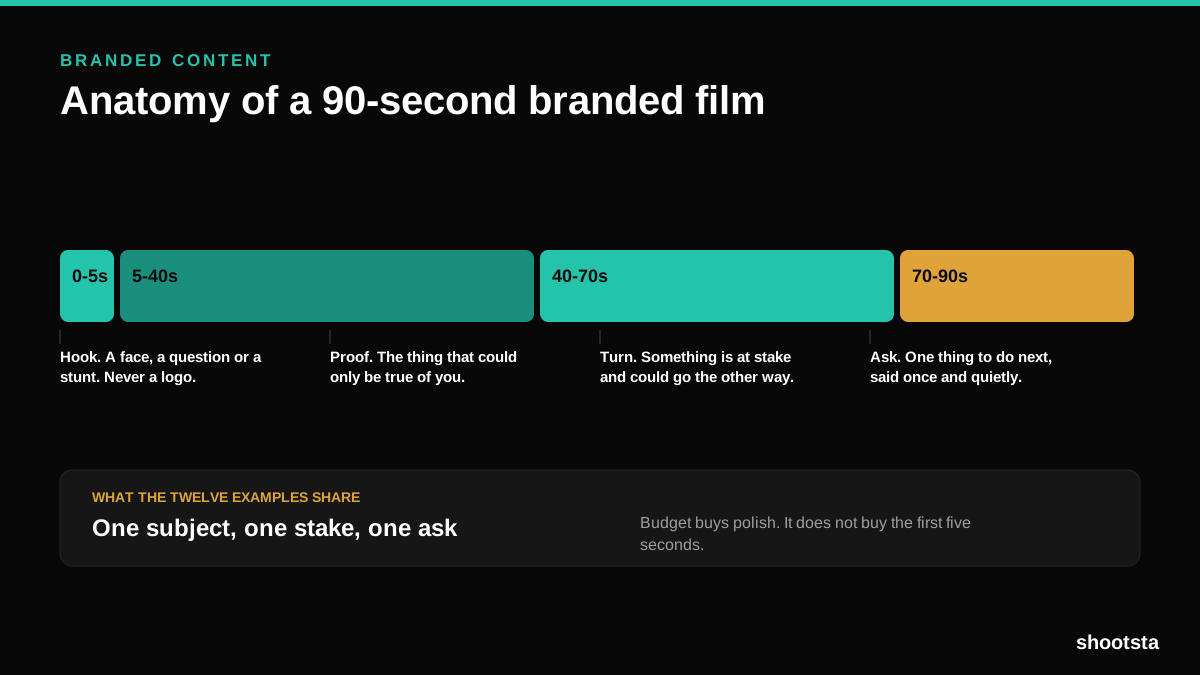
Twelve pieces of branded content that people chose to watch, what each one got right, and the structure underneath all of them.
Promotional Video Production: Cost and Time
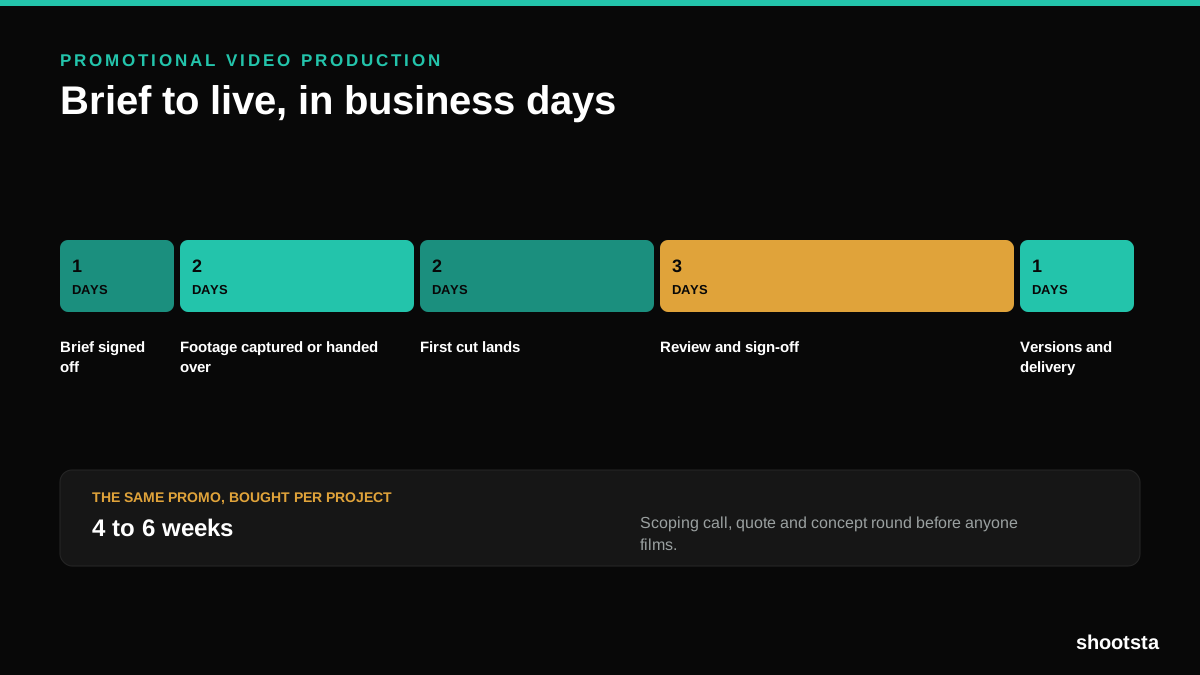
Most promotional video production schedules are not slow because of the edit. They are slow because of the approval chain. Here is where the days go.
Video Marketing Agency or Subscription?
A video marketing agency prices per project and works in weeks. A subscription prices the year and works in days. Which one fits depends on how often you publish, not on which is better.

B2B Video Production: Costs and Buying Models
There are five ways to buy B2B video production. Each one works well up to a point and then breaks, usually at a volume nobody planned for. Here is what each costs and where the ceiling sits.