
shootsta.
Video Marketing Budget Planning and Optimization
By Mark Ashworth · Published July 7, 2025 · Updated October 2026
Understanding Video Marketing Budget Fundamentals
A video marketing budget covers all the money you spend on video. That includes making it, hosting it, promoting it and measuring it. Talent, ad spend, software and staff time all belong in the plan. Some costs are direct, such as filming and editing. Others are indirect, such as planning, reporting and the testing you do after launch. Both count when you judge the return.Core Budget Components and Categories
A video production budget usually has five parts. They are pre-production planning, the shoot, post-production editing, hosting costs and paid promotion. You have to balance them against the money you have, and the right balance depends on what the video is for. The way you split the budget shapes how well the campaign does. Set your priorities and expected results up front. Then keep some room to move money once the first performance data comes in. Essential Video Marketing Budget Categories- Production Costs: Creative development, filming, equipment, talent, and location expenses
- Post-Production: Video editing, motion graphics, sound design, and color correction services
- Distribution: Platform advertising spend, promoted content, and paid promotion campaigns
- Technology: Software licenses, equipment rentals, and platform subscription costs
- Strategy and Management: Campaign planning, performance analysis, and optimization activities
- Contingency: Reserved funds for unexpected costs and optimization opportunities
Budget Planning Timeline and Process
Start the plan with the campaign goal and the audience you need to reach. Then look at what competitors publish and set the results you expect. Those three inputs give you a realistic timeline and tell you where the money should go. Use your own past performance data where you have it, plus any market research. Plans change once a campaign is live, so build in a review point where you can shift money toward the videos that are working.Strategic Budget Allocation for Maximum ROI
A good split balances the quality of the video against how many people see it. It also keeps some money back for measurement and testing. Base the split on how your audience watches video and what each channel needs. Keep the focus on the business result.Production vs Distribution Budget Balance
A common starting point is 60-70% for production and 30-40% for distribution and promotion. Treat it as a rule of thumb. The right ratio depends on your goal, your audience and how crowded your market is. Think about how long each video will stay useful. A how-to video that works for two years can carry more production cost than a post for a single campaign week.Platform-Specific Budget Considerations
Each platform rewards a different kind of spend. YouTube rewards channels that publish good quality on a steady schedule. On LinkedIn, the deciding factor is whether the video is useful to a professional audience. Instagram rewards strong visuals that make people stop scrolling. When you split money between platforms, look at who uses each one and what format it needs. Then put the money where your buyers spend their time. Platform Budget Optimization Guidelines- YouTube: Invest 40% in content quality, 35% in SEO optimization, 25% in advertising and promotion
- LinkedIn: Allocate 50% to professional content creation, 30% to targeted promotion, 20% to lead nurturing
- Instagram: Focus 45% on visual production, 40% on stories and reels, 15% on influencer partnerships
- Facebook: Balance 35% content creation, 45% paid promotion, 20% community engagement
- TikTok: Emphasize 30% content creation, 50% trend adaptation, 20% hashtag optimization
- Website/Landing Pages: Invest 60% in conversion-focused content, 40% in technical optimization
Video Production Budget Planning and Cost Management
Video production budget planning starts with the cost lines. Talent fees, gear hire, locations and post-production all add up to the total you pay. To manage cost, weigh the quality you need against the money you have. Then look for ways to cut cost that keep the video at a professional standard.Production Cost Variables and Factors
Production costs move a lot with a few choices. These are how complex the video is, how polished it needs to be and how fast you need it. The fourth choice is who does each part of the work, your in-house team or an outside partner. When you know what drives the cost, you can plan better and negotiate with vendors from a stronger position. You also set realistic expectations with stakeholders. Key Production Cost Factors- Content Complexity: Simple talking heads ($2,000-$8,000) vs. complex productions ($15,000-$75,000+)
- Production Duration: Single-day shoots vs. multi-day productions with location changes
- Talent Requirements: Internal speakers vs. professional actors or industry experts
- Equipment Specifications: Basic setups vs. professional cinema-grade equipment packages
- Location Considerations: Studio rentals vs. on-location filming with associated logistics
- Post-Production Scope: Basic editing vs. complex motion graphics and animation work
Cost Optimization Strategies
You can lower the cost of each video without dropping quality. Build templates for the formats you make often and buy the gear you hire every month. Cut the steps that slow each project down, and keep a small group of vendors who know your brand. Aim for savings that last. A cheap shortcut that makes the video worse costs more in the end, because the video does not do its job.Marketing Video Costs Analysis and Benchmarking
To analyze marketing video costs, compare your spend with typical market rates for the quality you need. That comparison helps you plan the budget and judge vendor quotes. When you benchmark, take account of your company size, your sector and what the campaign has to achieve. Prices also change by city and region, so compare quotes from the market where you will film.Industry Cost Benchmarks and Standards
Video marketing costs vary widely by sector and company size. A small business might spend $5,000-$25,000 per video. An enterprise often sets aside $25,000-$150,000+ for a full campaign with several videos and wide distribution. Compare the cost of the whole campaign as well as the cost per video. Then weigh it against what the campaign achieved for the business. That result is what justifies the spend and sets next year's budget. Video Marketing Cost Benchmarks- Small Business: $3,000-$15,000 per video with focus on essential content and local distribution
- Mid-Market: $10,000-$50,000 per campaign including multiple videos and targeted promotion
- Enterprise: $50,000-$300,000+ for comprehensive campaigns with premium production and extensive reach
- Startup/Lean: $1,500-$8,000 per video emphasizing efficiency and performance optimization
- B2B Professional: $8,000-$35,000 per video with emphasis on authority building and lead generation
- E-commerce: $5,000-$25,000 per video focusing on product demonstration and conversion optimization
Performance-Based Budget Justification
To justify a video marketing budget, link the money to the results you expect. Those results might be leads, conversion rates, brand awareness or revenue you can trace back to a video. Report the quick numbers from the campaign and the slower effect on the business. Set up the measurement before launch. It then guides each review during the year and the next budget you ask for.Budget Optimization Through Performance Measurement
Regular measurement lets you improve the budget using data. You can see which videos and channels earn their cost and cut the spend that does not. Track how each video performs and how well each channel spreads it. Keep the focus on business results. Views and likes are easy to count, yet they often have little to do with the return you get.Key Performance Indicators for Budget Optimization
- Cost Per Acquisition (CPA): Total campaign cost divided by number of new customers acquired
- Return on Ad Spend (ROAS): Revenue generated divided by advertising investment for direct ROI measurement
- Cost Per Engagement: Budget divided by meaningful interactions including shares, comments, and clicks
- Lifetime Value Attribution: Long-term customer value attributed to video marketing touchpoints
- Conversion Rate: Percentage of viewers taking desired actions weighted by acquisition cost
- Brand Lift Metrics: Awareness and perception improvements measured against investment levels
Continuous Budget Optimization Process
Ongoing optimization means a regular review. On a set day each month or quarter, you look at the data and find what to improve. Then you move money from the weak videos to the strong ones. Keep the plan steady enough that the brand stays consistent. Still leave room to respond quickly when the market shifts or a new channel opens up.Technology and Tools for Budget Management
Managing a video marketing budget is easier with the right tools. You need to track spend, see results and act on them while the campaign is still running. Pick tools that connect to the systems you already use. They should give you data you can act on and automate the routine work, so your team spends less time on spreadsheets.Budget Tracking and Analytics Platforms
A good budget platform shows production costs, ad spend and results in one place. You can then report on all three together and make the case for the budget with real numbers. When you choose one, check how well it connects to your other systems and how clear its reports are. Make sure it can grow with the program and keeps its data accurate. Essential Budget Management Tools- Project Management: Detailed cost tracking, resource allocation, and timeline management systems
- Analytics Platforms: Comprehensive performance measurement and ROI attribution tools
- Financial Software: Budget planning, expense tracking, and financial reporting integration
- Campaign Management: Multi-platform advertising spend optimization and performance tracking
- Creative Asset Management: Production cost tracking and resource utilization analysis
- Business Intelligence: Advanced reporting and predictive analytics for strategic planning
Automation and Efficiency Tools
Marketing automation tools help you spend the budget well. They handle bidding, move spend between ads and react to results faster than a person could. Let automation handle the routine tasks. Keep people in charge of strategy and creative decisions, so the brand stays consistent across every video you run.Common Budget Planning Mistakes and Solutions
Video marketing budgets often run into the same problems. Expectations are too high, there is no money set aside for surprises, or nobody measures the results. Careful planning fixes all of them. If you know these mistakes in advance, you can plan around them.Typical Budget Allocation Errors
The usual errors are spending too much on production and too little on distribution. Another is leaving no money for measurement. A third is keeping no reserve, which leaves you stuck when a cost changes or a chance comes up. To avoid them, balance the split and plan each stage. Set expectations that match the market and how complex the campaign is.- Production Over-Investment: Spending 80%+ on production while neglecting distribution and promotion needs
- Platform Spreading: Diluting budgets across too many platforms without sufficient investment depth
- Performance Neglect: Insufficient allocation for measurement, testing, and optimization activities
- Contingency Absence: No reserved funds for unexpected costs or optimization opportunities
- Timeline Compression: Rush production requiring premium pricing without quality benefits
- Vendor Lock-in: Single-source dependency creating cost inflation and service limitation risks
Before you set next year's number, put your program through the CMO video scorecard. Knowing which of the five measures is weakest makes the budget easier to defend line by line.
Frequently Asked Questions
What percentage of marketing budget should be allocated to video content?
There is no single right share, and the published figures vary a lot from survey to survey. Start from what video has to do for you this year. Then cost those videos and their promotion and see what share of the marketing budget that comes to. If video drives a large part of your leads or sales training, it deserves a larger share. The answer also depends on your audience and what competitors already publish.How can small businesses optimize video marketing budgets for maximum impact?
Pick one or two platforms where your buyers spend time and put the money there. Spreading a small budget across every channel leaves each one too thin to work. Favor evergreen videos that stay useful for a long time, and film several in one session to share the setup cost. Templates and a consistent brand look lower the cost of each video while keeping it professional.What factors most significantly impact video production budget requirements?
How complex the video is, how fast you need it and how polished it must be are the main cost drivers. A simple talking-head video might cost $2,000-$8,000, while a complex production can run $15,000-$75,000+. Locations, talent fees, gear and the amount of editing all add to the price. Batching shoots, allowing a sensible timeline and writing a clear brief all bring the cost down without hurting quality.How should video marketing budgets be adjusted based on campaign performance?
Review the numbers on a set schedule, monthly for paid campaigns and quarterly for the wider program. Move money toward the videos and channels that hit your cost-per-acquisition target. Cut back or stop the ones that miss it after a fair test. Keep a small reserve for trying new ideas and for seasonal peaks, and let the data decide how you use it.What ROI expectations are realistic for video marketing investments?
The honest answer depends on your sales cycle, your price point and how you track results. A B2B buyer may watch several videos over months before they talk to sales, so the return can take a while to show. Set a target before launch based on your own conversion rates and deal size. Count direct conversions and the effect on brand awareness and sales conversations.Strategic Budget Planning Framework
A video marketing budget planning framework ties the goals, the split of money and the review process together. It should still leave room to change course when the market moves or a new opening appears. Video Marketing Budget Benefits- Performance Optimization: You can see which videos earn a return and move money toward them
- Cost Efficiency: Cost per acquisition is easier to track and lower when spend is planned
- Campaign Effectiveness: A balanced split means good videos also get seen
- Resource Utilization: Less money goes to rush fixes and one-off projects with no follow-up
- Scalability: A repeatable process makes it easier to grow from a few videos to many
- Risk Management: A reserve and a review schedule keep overruns small
Video Marketing Budget Readiness Assessment
Evaluate your organization's readiness for strategic video marketing budget planning and optimization: Budget Planning Readiness Checklist Rate your current capabilities on a 1-5 scale: Strategic Foundation- Clear business objectives and target audience definition for video marketing initiatives
- Historical performance data and baseline metrics for informed budget planning
- Understanding of video marketing funnel and conversion attribution requirements
- Executive alignment and stakeholder support for video marketing investment
- Comprehensive cost tracking and financial management systems in place
- Performance measurement and ROI calculation capabilities established
- Vendor evaluation and negotiation processes for production and advertising
- Budget allocation and reallocation procedures for campaign optimization
- Project management and timeline coordination capabilities for video campaigns
- Quality control and brand consistency management across video content
- Performance analysis and optimization processes for continuous improvement
- Technology and tool integration for comprehensive campaign management
- 48-60 points: Excellent readiness for comprehensive video marketing budget optimization
- 36-47 points: Good foundation requiring targeted improvements in specific budget areas
- 24-35 points: Moderate preparation needed before implementing advanced budget strategies
- Below 24 points: Foundational development required in budget planning and management capabilities
Next Steps for Video Marketing Budget Success
Start by reviewing how your current videos perform and where this year's money went. Then set clear goals for next year and decide how you will measure them. Build a planning routine and a measurement habit your team can repeat. Each budget then rests on data, and the program gets stronger every year. Strategic Implementation Plan- Performance Audit: Comprehensive analysis of current video marketing ROI and budget efficiency
- Strategic Planning: Objective definition and budget framework development aligned with business goals
- Resource Allocation: Balanced budget distribution across production, distribution, and optimization activities
- Measurement Systems: Comprehensive tracking and analytics implementation for performance optimization
- Optimization Process: Systematic review and reallocation procedures for continuous improvement
- Scaling Strategy: Growth planning and budget expansion frameworks for successful campaign scaling
- Performance Excellence: Advanced optimization and strategic refinement for sustained competitive advantage
Maximize Your Video Marketing Investment
Shootsta helps you get more from a video marketing budget. Our editors deliver a first cut in about 48 hours, and customers who move agency work to us pay 50-60% less per video. You keep your in-house team in charge and add our editing, animation and creative support when you need it. Complete Budget Optimization Solutions:- Strategic budget planning and allocation guidance based on performance data and industry benchmarks
- Cost-effective production solutions that maximize quality while minimizing per-video expenses
- Performance measurement and optimization tools for continuous improvement and ROI maximization
- Scalable video marketing programs that grow efficiently with business success and market expansion
- Expert consultation and strategic support for sustainable video marketing budget management
Keep reading
- How to Measure Video Marketing ROI and Analytics
- Video Production ROI Calculator
- In-House vs Outsourced Video Production Cost
For the bigger picture beyond this market, read what video production actually costs by stage and model.
Take this article with you
Read the latest at shootsta.com/blog/video-marketing-budget-planning-guide
You might also like

How to Plan Video Team Capacity Around Leave
Your only editor just booked two weeks off, and you already know which projects will slip. Chad Lakin explains how to plan video team capacity so the work keeps moving when someone is away.
Corporate Video Editing Standards: Full Guide
A two-page editing standard does more for consistency than a forty-page brand book. Here is what it should cover, who owns each part, and how to enforce it with an in-house editor or an outside partner.
Quality Control in Outsourced Video Editing
When editing leaves the building, quality has to be checked by a system rather than by whoever happens to look. Here is the system: acceptance criteria, two QA gates, counted revision rounds and a quarterly audit.
Video Production Cost on the Gold Coast 2026
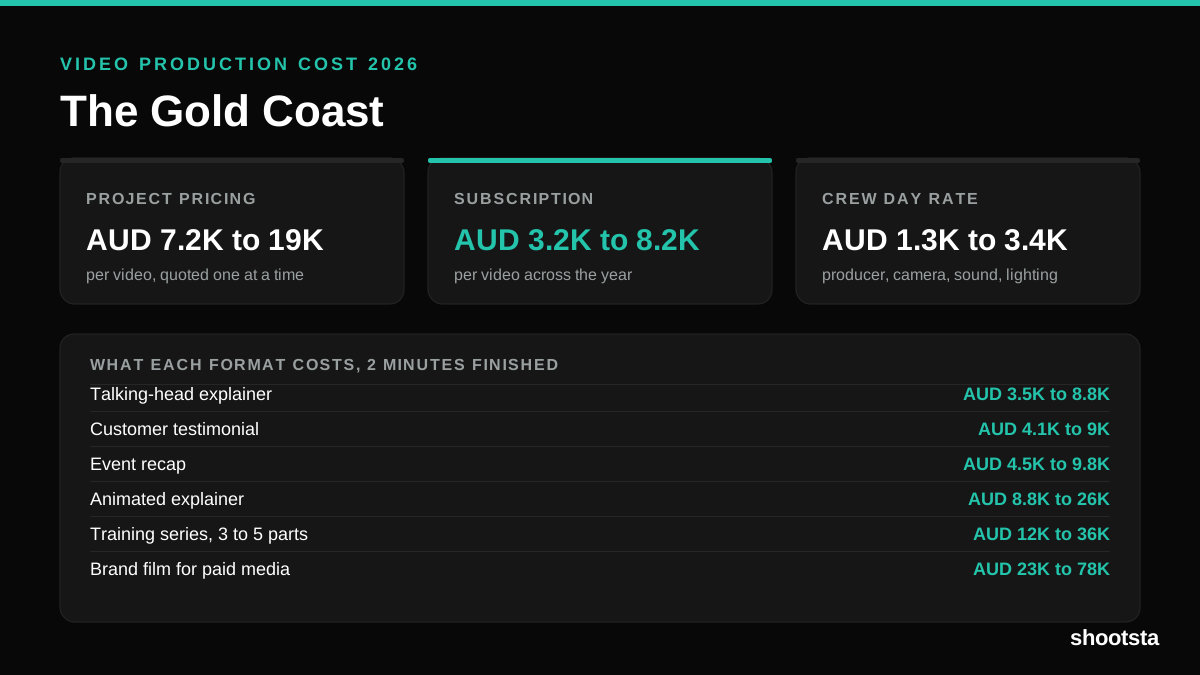
Video production in the Gold Coast costs AUD 3,200 to AUD 8,200 per finished video on a subscription model, and AUD 7,200 to AUD 18,500 for one-off project work. Here is what you are paying for, and how the three pricing models compare.
Video Production Cost in Wellington (2026)
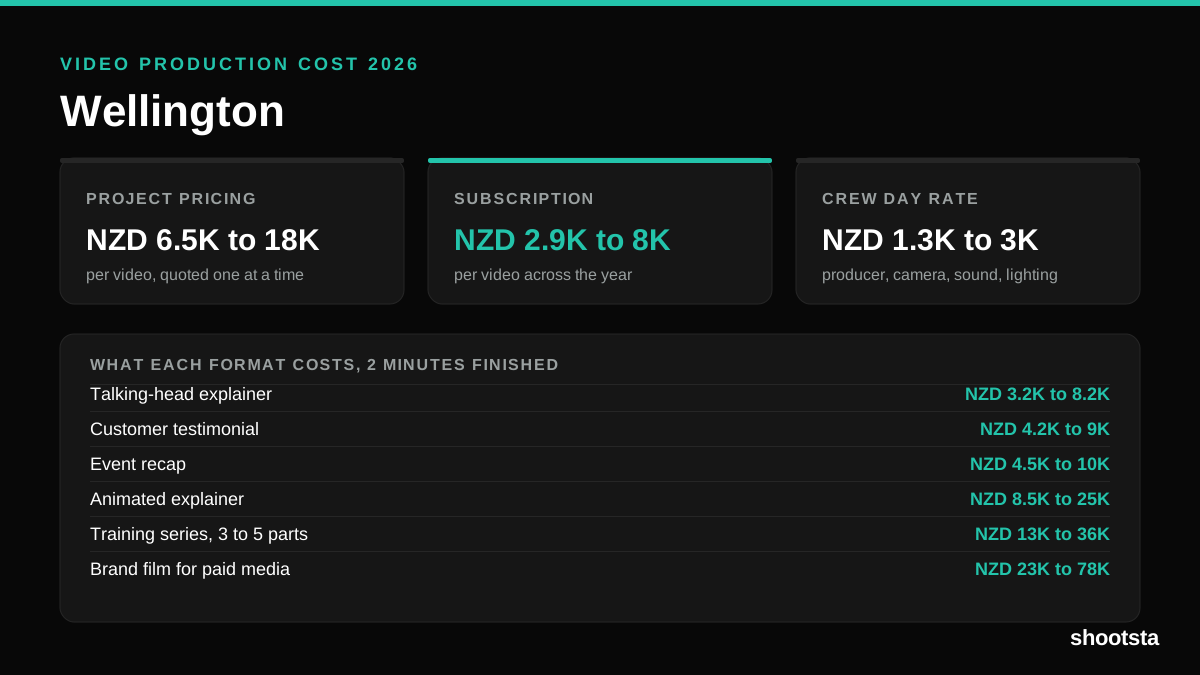
Video production in Wellington costs NZD 2,900 to NZD 8,000 per finished video on a subscription model, and NZD 6,500 to NZD 18,000 for one-off project work. Here is what you are paying for, and how the three pricing models compare.
Video Production Cost in Berlin (2026)
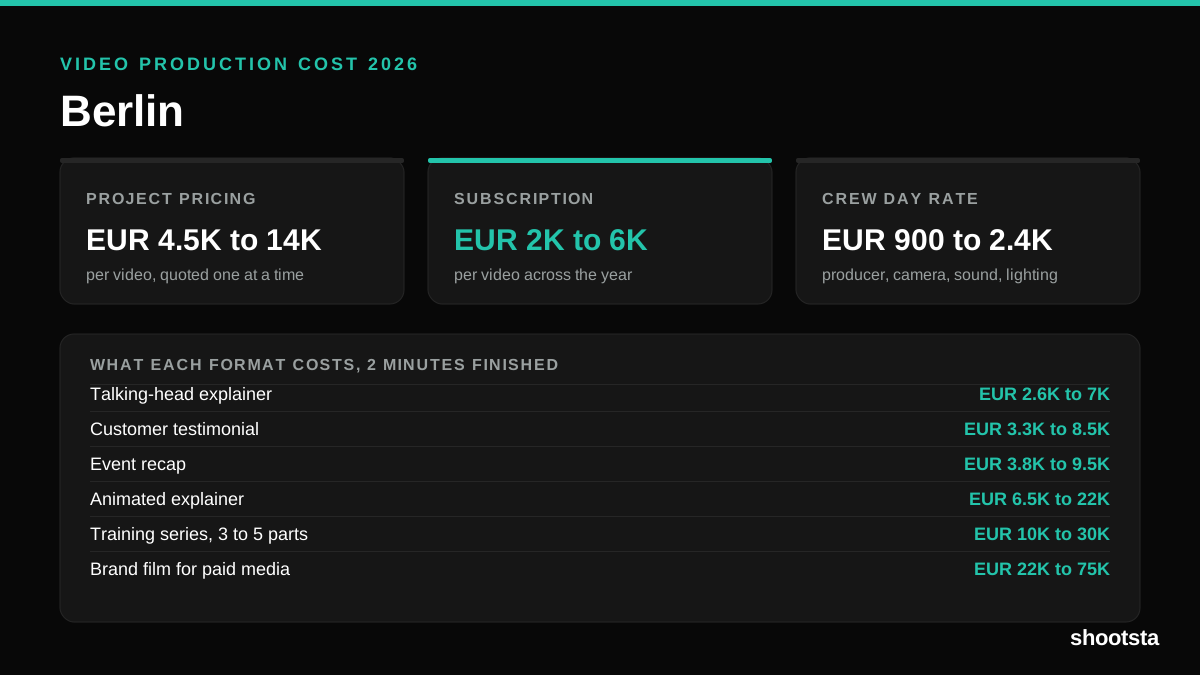
Video production in Berlin costs EUR 2,000 to EUR 6,000 per finished video on a subscription model, and EUR 4,500 to EUR 13,500 for one-off project work. Here is what you are paying for, and how the three pricing models compare.