
shootsta.
Compliant Video Production for UK Financial Services
By Mark Ashworth · Published November 21, 2025 · Updated October 2026
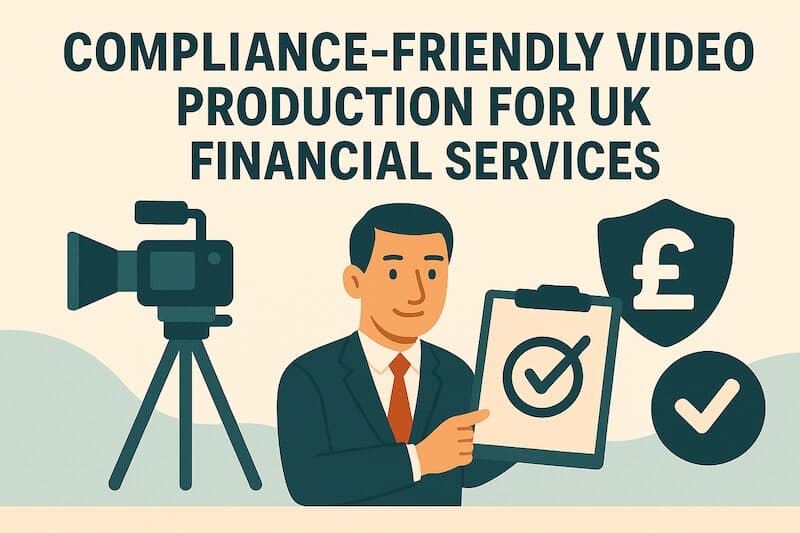
Complete guide to video production financial services UK covering FCA compliance, governance frameworks, and safe implementation of compliance video UK in regulated environments.
Financial services firms often avoid video because of compliance risks, complex approvals, and regulatory uncertainty. That caution makes sense given FCA oversight, strict content rules, and the reputational cost of getting communications wrong.
But this risk-averse approach also means missing one of the most effective communication tools available.
Compliant video production is entirely achievable with the right frameworks, approval processes, and production partners. Leading financial institutions already use video for client communications, internal training, regulatory reporting, and employee engagement while staying fully compliant.
This guide shows how firms set up video programs that satisfy compliance teams, engage audiences, and deliver measurable results without taking on unnecessary risk.
Understanding Video Production Financial Services UK Compliance Requirements
Financial services video has unique regulatory needs beyond general corporate communications.
FCA Financial Promotions Rules
Video content that promotes financial products or services falls under FCA financial promotions rules. That means it must be clear, fair, and not misleading. All claims need backing, risk warnings must appear correctly, and you need to consider target audience suitability. Approved persons with the right qualifications must sign off on promotional content.
These rules do not block video production. They just require proper processes. Many firms produce compliant promotional video by setting up clear approval workflows, keeping documentation, and working with providers who understand financial services.
Record-Keeping and Archiving
Financial services firms must keep copies of all client-facing communications for at least 6 years. Video programs need systems that archive final approved versions with metadata: approval dates, reviewers, and distribution channels.
Modern video platforms have built-in archiving that meets these needs, removing the manual work that creates compliance gaps.
Brand and Messaging Consistency
Beyond regulations, financial institutions keep strict brand standards for consistent professional presentation. Video must follow visual identity guidelines, approved messaging, and tone standards right for a financial services context.
Platform-based video production builds brand compliance into the workflow, stopping deviations that create regulatory or reputational risk.
Data Protection and Privacy
Video with clients, case studies, or testimonials must meet GDPR and data protection rules. This means getting proper consent, providing required disclosures, and handling data subject rights including deletion requests.
Your video production process should document all consents, maintain records of data processing, and allow quick responses to data subject requests.
Compliance Clarity
The idea that video is too risky for financial services comes from unfamiliarity, not actual regulatory barriers. FCA guidance applies to video the same way it applies to written communications.
If you have solid approval processes for written materials, you can build similar ones for video with proper planning and the right production partner.
Safe Applications for Video Production Financial Services UK
Different video uses carry different compliance complexity. Smart firms start with lower-risk uses before moving to more regulated ones.
Internal Communications and Training
Internal comms is the lowest-risk video use. Content that stays internal and explains policies, procedures, systems, or corporate updates faces few regulatory limits beyond standard employment and data protection rules.
Training video works especially well in financial services. Complex regulations and systems need consistent explanation across spread-out teams. Video cuts classroom time, keeps messaging uniform, and gives employees an on-demand reference they can revisit.
Recruitment and Employer Brand
Recruitment video carries low regulatory risk while tackling a real challenge: attracting talent in competitive markets. These videos help firms hire without triggering financial promotions rules.
Focus on authentic employee voices, genuine workplace culture, and career growth rather than generic corporate messaging.
Thought Leadership and Educational Content
Educational content about market trends, economic analysis, or general financial topics builds authority without needing full financial promotions approval. It does require proper disclaimers, but it avoids the heavier rules that apply to product-specific content.
This type of video positions executives as experts while staying compliant through clear boundaries between education and promotion.
Process and Procedure Explanations
Video that explains how to complete forms, use platforms, or follow procedures helps clients with complex financial services processes. These carry minimal risk when focused on guidance rather than promotion.
Procedure videos are especially useful for onboarding, system changes, and reducing support queries. Visual guidance beats text instructions.
Product Explanations with Proper Controls
Product-focused video is doable with the right approval framework. These videos need compliance sign-off, risk warnings, clear target audience definitions, and backed-up claims. But when done right, product videos improve client understanding far better than long written disclosures.
Risk Mitigation Priority
Set up your video governance framework before producing any client-facing content. Define approval authorities, create compliance checklists, set up archiving, and document your processes. Proper planning easily avoids risks that come from producing video without clear controls.
Building Compliant Video Production Financial Services UK Workflows
Successful compliance video programs need systematic workflows that meet regulatory needs every time.
Content Classification System
Set clear categories that define compliance needs for each video type:
- Internal-only content: minimal approval
- Educational content: compliance review for accuracy
- Promotional content: full financial promotions approval
- Product videos: senior compliance sign-off with documented evidence
Classify at the start of each project. This makes sure the right approval path is followed from the beginning.
Approval Workflow Design
Design tiered approval that matches content risk. Internal comms may need only a department head sign-off. Educational content needs a subject expert and compliance review. Promotional material needs approval from an approved person. Major client communications should have senior leadership visibility.
Modern platforms provide built-in workflow tools that route content to the right approvers automatically. This prevents bottlenecks while keeping proper oversight in place.
Script and Storyboard Review
Reviewing compliance at the script stage prevents expensive reshoots. Check all claims, statistics, and statements before production starts. Review storyboards to make sure visuals support the compliance messaging.
Catching issues at the script stage is easy and cheap. Finding them at final review is costly and time-consuming.
Version Control and Archiving
Keep clear version tracking throughout production. Mark final approved versions clearly, archive them with approval documents, and protect them from unauthorized changes. Draft versions should not be available for distribution.
Your systems should automatically archive approved content with metadata: approval dates, reviewers, evidence references, and intended channels.
Distribution Controls
Use technical controls to restrict video distribution to approved channels and audiences. Target audience definitions should drive platform selection. Retail investor content needs different controls than professional client communications.
Internal content benefits from authentication to make sure it reaches only the intended audience. External content needs the right public-facing controls and disclaimers.
Benefits of Strategic Video Production Financial Services UK
Firms that set up compliant video programs see real advantages despite the initial effort.
Improved Client Understanding
Financial products are complex. Long written disclosures often fail to explain them well. Video with visual explanations improves client understanding by a wide margin, reducing confusion and potential mis-selling risks.
When clients understand a product, both sides gain. Informed clients make better decisions and face fewer surprises, so they file fewer complaints.
Enhanced Training Effectiveness
Financial services training covers complex regulations, procedures, and systems. Video improves knowledge retention, cuts classroom time, and keeps messaging consistent across spread-out teams.
Organizations report 40-60% less training time and 30-50% better competency scores when they add video modules to traditional training.
Stronger Internal Communication
Internal comms using video gets much higher engagement than text-only alternatives. Leadership messages, policy updates, and change communications delivered by video see 60-70% view rates versus 15-25% for email only.
That engagement matters in financial services where regulatory changes and compliance updates demand workforce attention.
Competitive Differentiation
Many financial services firms avoid video because of compliance worries. Those that build compliant video programs stand out through better client experience, more engaging communications, and a modern brand image.
Video that shows transparency and a commitment to client education builds trust that text alone cannot.
Operational Efficiency
Video that explains procedures and processes reduces support queries and improves efficiency. Clients and employees can watch guidance on demand instead of contacting support for routine questions.
Compliance Success
Financial services firms with mature video programs report zero regulatory issues. They also see 50-70% better client understanding, 40-60% more efficient training, and 30-50% higher employee engagement compared to text-only communications. Proper governance removes risk while delivering strong performance gains.
Measuring Compliance Video UK Performance
Track the right metrics to make sure video programs deliver value while staying compliant.
Compliance Metrics
Watch these indicators: the percentage of videos completing required reviews, average approval timeline, and revision frequency. Track archiving compliance so all client-facing content is stored correctly. Log any compliance concerns for ongoing improvement.
Zero compliance incidents while producing regular video proves your governance works.
Engagement and Comprehension
Start by tracking view rates, completion percentages and engagement signals. For training, measure knowledge retention through tests. For client education, monitor understanding through surveys or reduced support tickets.
Internal comms video should show higher engagement than equivalent text communications, and that gap is what justifies the spend on video.
Business Outcomes
Connect video to actual business results. Training videos should improve scores and reduce errors. Client education should boost understanding and satisfaction. Recruitment videos should attract better candidates.
These outcome metrics justify continued investment and prove video delivers genuine value.
Efficiency Gains
Work out time savings from shorter training, fewer support queries, and faster client communications. Many firms find video costs are fully offset by efficiency gains, making programs self-funding.
Implementation Roadmap
Rolling out video in financial services takes a phased approach that manages compliance, change, and capability building.
Phase 1: Governance Framework (Months 1-2)
Set up video governance: content classification, approval workflows, archiving systems, and distribution controls. Bring in compliance, legal, risk, and communications teams to build consensus. Document all processes clearly so they are applied the same way each time.
Phase 2: Pilot with Low-Risk Content (Months 2-4)
Start with internal comms or recruitment video, which have minimal regulatory complexity. Test workflows, refine processes, train teams, and check that governance works before moving to regulated content.
Phase 3: Expand to Training and Education (Months 4-8)
Scale to training and educational materials once internal processes are proven. These deliver strong value while staying manageable from a compliance standpoint. Build content libraries and set a regular production rhythm.
Phase 4: Client-Facing Content (Months 8-12)
Only move to client-facing video after internal processes are mature and teams are experienced. Start with lower-risk educational content before tackling promotional material that needs full financial promotions compliance.
Phase 5: Optimization and Scale (Months 12+)
Keep improving based on performance data and feedback. Speed up approval processes, add new content types, and increase volume as your capability grows. Mature programs produce regular content across many uses while keeping perfect compliance records.
Compliance Video UK Implementation Checklist
Use this checklist to make sure you have proper governance before launching video programs.
Financial Services Video Readiness
Governance Foundations:
- Content classification system defining compliance needs for each video type
- Documented approval workflows with clear authority and timelines
- Archiving system that meets regulatory record-keeping rules
- Version control that prevents distribution of unapproved content
Compliance Integration:
- Compliance team trained on video-specific regulatory needs
- Review checklists adapted for video format
- Evidence process for all claims, stats, and statements
- Risk warning templates that meet FCA rules for promotional content
Production Capability:
- Production partner who understands financial services compliance
- Workflow tools that support approval routing and documentation
- Brand compliance systems for consistent presentation
- Fast turnaround capability so timely comms do not mean rushed approvals
Distribution Controls:
- Platform controls limiting distribution to approved channels and audiences
- Authentication systems for internal-only content
- Tracking that monitors where content appears and who views it
- Quick takedown process if content needs removal or updates
Taking Action on Video Production Financial Services UK
Building a compliant video program means moving past risk avoidance and into real capability building.
Bring stakeholders in early. Compliance, legal, risk, communications, and business teams need to agree on strategy, governance, and success criteria. This prevents departmental pushback from blocking progress later.
Document your governance before producing any content. Creating video without clear frameworks adds unnecessary risk. Proper planning makes video as compliant as any other communication channel.
Pick partners who know financial services. Generic video agencies do not understand compliance constraints, approval processes, or archiving needs. Platform providers with financial services experience offer the right workflows and tools.
Start with internal video to prove governance works before creating client-facing content. Success with internal comms builds confidence, trains teams, and validates processes before higher-risk work.
Track compliance metrics alongside business outcomes. Zero regulatory incidents plus measurable value proves video programs are both safe and effective. That record justifies expanding scope and investment.
Modern platforms that blend human creativity with AI-powered tools make video production possible at scales traditional approaches cannot match. Under 48-hour turnaround supports timely communications while keeping proper compliance review in place.
The financial services firms winning with video treat compliance as a solved problem, not an impossible barrier. They set up proper governance, pick the right partners, and build capability that gives them a real edge through better communications.
Frequently Asked Questions About Video Production Financial Services UK
Is video production legal under FCA regulations?
Yes. Video production for financial services is fully compliant with FCA regulations when it goes through the right governance. FCA rules apply to video the same way they apply to written communications. Financial promotions need clear, fair, non-misleading messaging with proper risk warnings and evidence.
Non-promotional content like training or educational materials faces fewer rules. What matters is an approval workflow that runs before you publish anything. FCA-regulated firms already use video for training and client education, and many use it for promotions too.
The belief that video is too risky comes from unfamiliarity with the format, because the rules themselves treat it like any other medium. If you have strong approval processes for written materials, you can build the same for video.
What approval process do we need for FS internal comms video?
Internal comms video needs simpler approval than client-facing content, but still needs oversight.
A typical process works like this: the content creator writes the script and storyboard, the department head reviews for accuracy, compliance reviews if it covers regulations or procedures, and senior leadership approves anything covering big changes or sensitive topics.
Internal video avoids financial promotions rules but should stay professional and accurate. Most firms use tiered approval that matches content sensitivity. Routine updates get light oversight. Major policy changes get full review.
The goal is proper oversight without creating bottlenecks that delay timely communications. Modern platforms route content to the right approvers based on preset rules, keeping the process smooth while maintaining governance.
How do we archive video to meet regulatory requirements?
You need to store final approved versions with supporting metadata for at least 6 years.
Good archiving captures:
- The final approved video in its original format and quality
- Approval documents showing who reviewed and signed off
- Evidence for any claims or statistics used
- Distribution records showing where and when content was published
- Version history separating approved content from drafts
Modern platforms built for financial services handle archiving automatically. Videos should sit in tamper-proof systems. Metadata should allow quick retrieval if a regulator asks for specific content.
Check periodically that archived content stays accessible and intact. Treat video archives with the same rigor as written communications archives.
Can we use testimonials in compliance video UK?
Client testimonials in financial services video are allowed with proper controls.
You need:
- Written consent covering what content can be used and where
- Genuine, non-incentivized testimonials
- Disclaimers noting results may not be typical
- Evidence backing any performance claims
- Distribution restricted to the right target audiences for product-specific testimonials
Testimonials should show typical client experiences rather than the best result you ever had. You also need to disclose any payment to participants. GDPR requires proper documentation and the ability to handle deletion requests.
Treat every testimonial as a regulated financial promotion that goes through full governance. It is easy to file them under casual marketing, and that is where firms get caught out.
What production partner should we select for video production financial services UK?
You need partners who understand compliance constraints and approval processes. Look for:
- Proven financial services experience with similar regulated clients
- Workflow systems that support approval routing and documentation
- Archiving that meets regulatory rules
- Fast turnaround (about 48 hours to a first cut) that supports timely comms without rushing compliance
- Working knowledge of FCA rules that goes beyond generic awareness
Skip generic video agencies that do not appreciate financial services governance. They make great-looking content that needs heavy rework or creates compliance risk.
Platform providers with financial services experience deliver the right production approaches, built-in compliance tools, and scalable capacity for ongoing programs. Ask for references from existing financial services clients and review their compliance processes during evaluation.
The right partner works as an extension of your compliance framework, not an external vendor needing constant oversight.
Keep reading
Take this article with you
Read the latest at shootsta.com/blog/fs-video-production-uk
You might also like

How to Plan Video Team Capacity Around Leave
Your only editor just booked two weeks off, and you already know which projects will slip. Chad Lakin explains how to plan video team capacity so the work keeps moving when someone is away.
Corporate Video Editing Standards: Full Guide
A two-page editing standard does more for consistency than a forty-page brand book. Here is what it should cover, who owns each part, and how to enforce it with an in-house editor or an outside partner.

Quality Control in Outsourced Video Editing
When editing leaves the building, quality has to be checked by a system rather than by whoever happens to look. Here is the system: acceptance criteria, two QA gates, counted revision rounds and a quarterly audit.
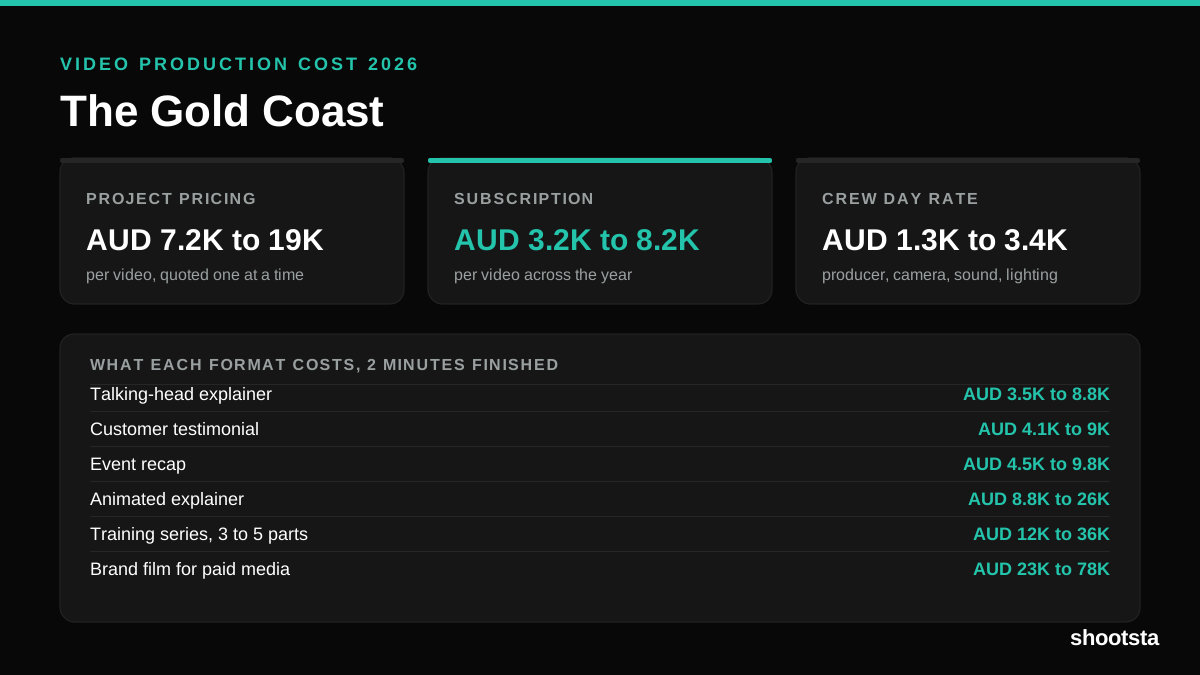
Video Production Cost on the Gold Coast 2026
Video production in the Gold Coast costs AUD 3,200 to AUD 8,200 per finished video on a subscription model, and AUD 7,200 to AUD 18,500 for one-off project work. Here is what you are paying for, and how the three pricing models compare.
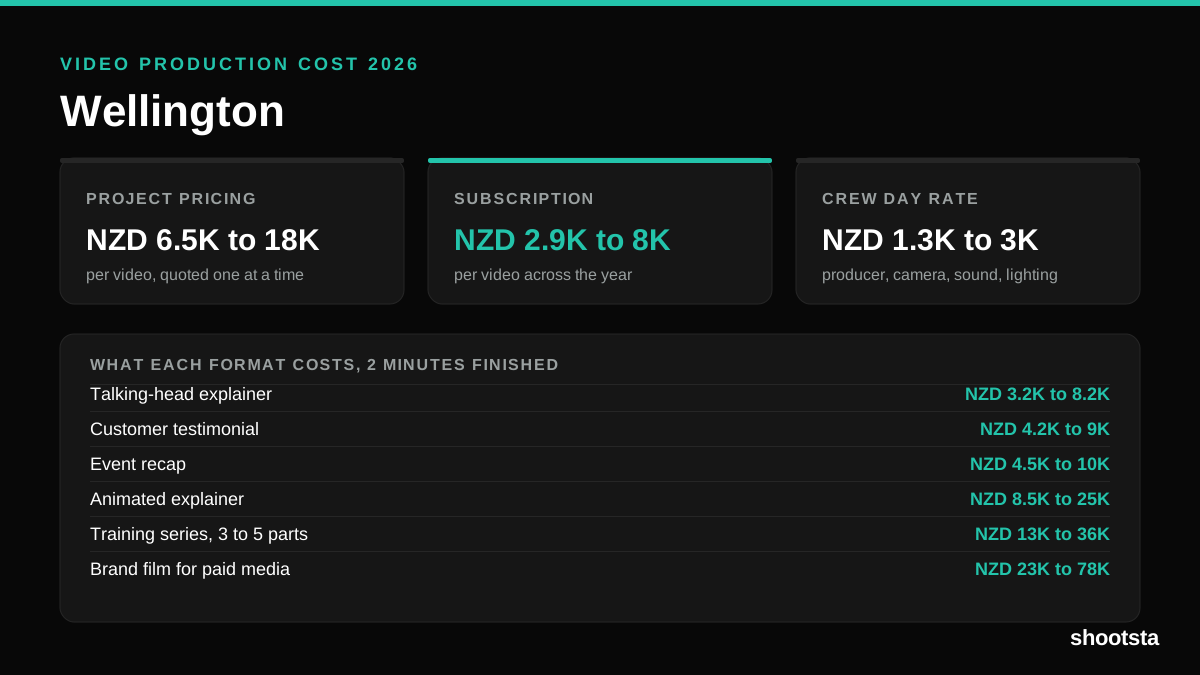
Video Production Cost in Wellington (2026)
Video production in Wellington costs NZD 2,900 to NZD 8,000 per finished video on a subscription model, and NZD 6,500 to NZD 18,000 for one-off project work. Here is what you are paying for, and how the three pricing models compare.
Video Production Cost in Berlin (2026)
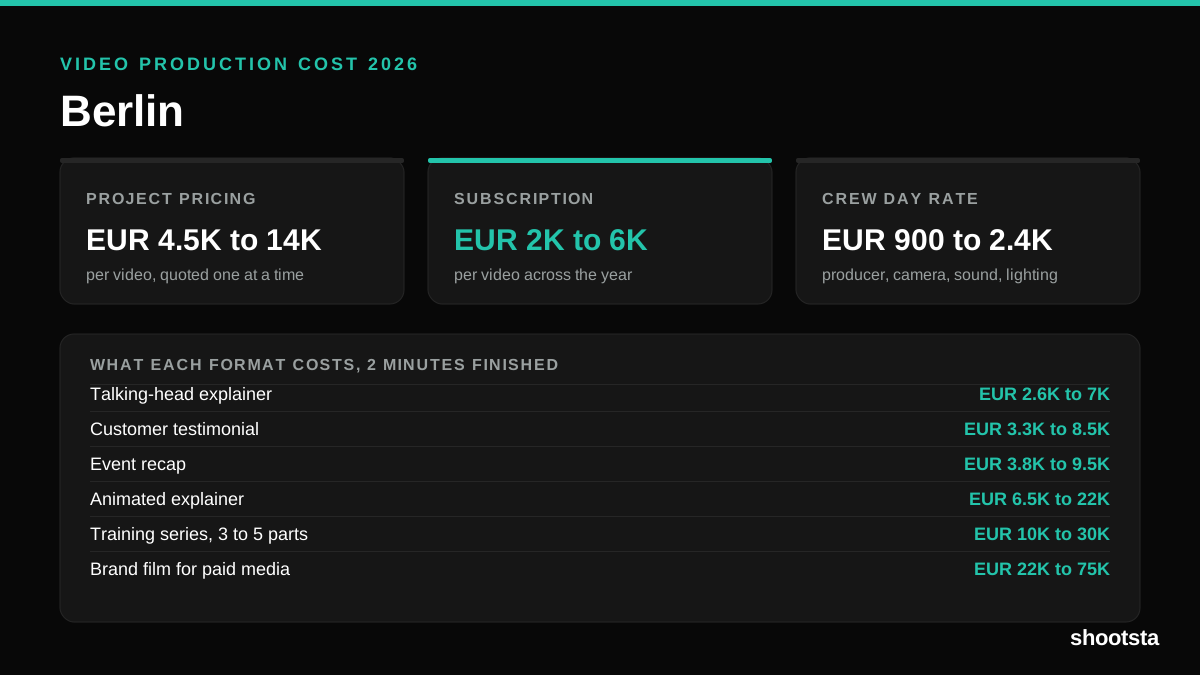
Video production in Berlin costs EUR 2,000 to EUR 6,000 per finished video on a subscription model, and EUR 4,500 to EUR 13,500 for one-off project work. Here is what you are paying for, and how the three pricing models compare.