
Modern Video Pre-Production Workflow
shootsta.
Modern Video Pre-Production Workflow
By Shootsta · Published May 6, 2026 · Updated October 2026
The six stages of modern video pre-production, the tools used at each one in 2026, and how AI has compressed what used to take 2 to 3 weeks into 2 to 5 working days.
The video pre-production workflow has changed shape in the past three years. The steps are mostly the same (brief, concept, script, storyboard, shot list, schedule), but the tools at each step are different, and the order is no longer linear.
This guide walks through the workflow video teams use in 2026, from a one-line brief to a ready-to-shoot package. For the storyboard-specific shift, see our guide to storyboard alternatives in modern video production.
What is modern video pre-production?
Modern video pre-production is the planning phase of a video project, run through digital tools that compress what used to take 2 to 3 weeks into 2 to 5 working days. It covers six stages: brief, concept and reference, script, storyboard, shot list and schedule, and pre-production review. AI tools, cloud collaboration software, and template-driven document systems handle most of the work that producers used to do manually.
The six stages of modern video pre-production
Stage 1: Brief and discovery
Every video starts with a brief. A good brief names the audience, the goal (what should the viewer do after watching), the platform, the length, the budget, and any brand or legal constraints. Teams now collect briefs through structured intake forms, because a free-text email rarely answers all of those questions.
Tools used in 2026: Notion or Airtable for structured intake, Loom for stakeholder context videos, and AI tools like the free Shootsta Video Brief Planner to help teams write a brief that does not need three rounds of follow-up questions.
Time: 30 minutes to 2 hours, including the back-and-forth with the requester.
Stage 2: Concept and visual reference
Before the script, the team agrees on a creative direction: tone, format (talking head, animated explainer, mini-documentary, vertical social), and visual reference. The output of this stage is a one-paragraph concept and a mood board.
Common tools are Milanote, Pinterest, Frame.io for moving reference, Notion for the written concept, and AI image tools like Midjourney for sketching out a look that does not exist yet. For B2B and corporate work, the concept stage is often where AI saves the most time, because a producer can generate 10 visual options in the time it used to take to gather one mood board.
Time: 2 hours to half a day.
Stage 3: Script
The script comes after the concept. Teams use the concept to set limits on the script, which keeps writers from drafting a 90-second video when the budget only covers 30 seconds.
Tools: Google Docs and Notion for collaborative drafting, ChatGPT and Claude for first versions and rewrites, and Final Draft for narrative work. Talking-head scripts usually run at about 130 words per minute, while voiceover-led explainers run at 150 to 170.
Time: 2 to 6 hours for a typical 60 to 120 second video, including a round of revisions.
Stage 4: Storyboard
This is the stage that has changed the most. Where storyboarding used to take 1 to 5 days with a designer, AI storyboard tools now produce a full set of illustrated panels in under a minute. Teams use the AI output for internal review and client sign-off, then refine the parts that matter most.
Tools: the Shootsta AI storyboard generator (free, reads a brand URL for tone), Boords, Storyflow, StoryboardHero, and LTX Studio for full 3D-style boards. For the comparison breakdown, see the best AI storyboard generators in 2026. For complex shots that AI cannot handle well (visual effects, virtual production), teams add a 3D pre-visualization pass on top.
Time: 5 to 30 minutes for the AI pass, plus optional refinement time.
Stage 5: Shot list, schedule, and call sheet
The shot list translates the storyboard into the actual shots that need to be filmed, in the order they will be filmed (which is rarely the order they appear in the final video). The schedule turns the shot list into a half-day or full-day plan. The call sheet tells everyone where to be and what to bring.
StudioBinder, Yamdu and Saturation can generate a full schedule and call sheet. Smaller teams use a Notion or Google Sheets template. AI tools have started to fill in the gaps, generating a shot list directly from the storyboard.
Time: 2 to 4 hours for a typical one-day shoot, less if the team has a reusable template.
Stage 6: Pre-production review and lock
The final stage is a sign-off pass before the shoot. The producer walks the client or stakeholder through the brief, concept, script, storyboard, and schedule, and gets explicit approval on each. A problem found at this stage costs a few hours to fix. The same problem found on shoot day can cost thousands.
Teams use Frame.io for asynchronous review, Loom for a recorded walkthrough, and a structured sign-off document in Notion or Airtable. Animatics often appear at this stage, and many clients prefer to sign off on them because they show pacing in a way still panels cannot.
Time: 1 to 3 hours including stakeholder review.
Free AI Storyboard Tool
Storyboard faster with AI
Turn a brief into a storyboard in minutes and share it with your team. It is free to try in your browser.
How long does modern video pre-production take?
For a typical 60 to 120 second corporate video with a clear brief, the full pre-production process now runs 2 to 5 working days. Five years ago the same scope took 2 to 3 weeks. The compression comes mainly from the storyboard stage and the script stage, both of which used to be days and are now hours.
For shoots involving travel, locations, talent, or visual effects, pre-production still takes 2 to 6 weeks because the bottleneck shifts from creative to logistics.
What does the modern video pre-production stack cost?
A working stack for a small in-house team in 2026:
- Notion or Airtable: $10 per user per month
- Frame.io: $15 to $30 per user per month
- AI storyboard tool (paid tier): $20 to $80 per user per month, or $0 with the free Shootsta AI storyboard generator
- StudioBinder or Yamdu: $30 to $100 per user per month
- ChatGPT or Claude (for script and brief support): $20 per user per month
The total comes to roughly $75 to $240 per user per month. For an internal video team, that spend replaces 30 to 60 hours of producer time per project, and that time is where the saving comes from.
Modern video pre-production workflow FAQs
What are the steps of video pre-production?
There are six steps: brief and discovery, concept and visual reference, script, storyboard, shot list and schedule, and pre-production review. Each stage has dedicated tools and a clear output. With current tools, teams can fit the full process into 2 to 5 working days for a typical corporate video.
What is the difference between concept and script in video pre-production?
The concept is the creative direction (tone, format, visual reference, length). The script is the actual words the on-camera talent or voiceover will say. The concept comes first, because it constrains the script. A 90-second talking-head concept and a 90-second animated explainer concept produce very different scripts from the same brief.
How long does video pre-production take in 2026?
It takes 2 to 5 working days for a typical 60 to 120 second corporate video with a clear brief. Larger productions involving travel, talent, or visual effects still take 2 to 6 weeks. The biggest compression comes from AI storyboard tools and AI-assisted scripting, which together saved 5 to 7 days from the old workflow.
Do small video teams need all six stages?
Yes, but the time spent on each varies. A two-person team running social-first content might spend 30 minutes on the brief, an hour on concept, an hour on script, 5 minutes on storyboard, and an hour on shot list. Each stage gets shorter, but none of them goes away.
What is the most important pre-production stage?
The brief matters most. Almost every problem on shoot day traces back to a brief that was vague about the audience, the goal or a constraint. A clear brief takes about 30 minutes to write, and a fuzzy one costs far more time later in the project.
Can AI handle the whole pre-production process?
AI cannot run the whole process yet, but it handles large parts of brief support, scripting and storyboarding. The stages that still need a human producer are concept, schedule, and pre-production review. That split keeps changing as the tools improve.
Where does the storyboard fit in modern pre-production?
Storyboarding is now stage four, after the script and before the shot list. It is also the stage where AI has compressed the timeline the most, taking what was a 1 to 5 day pass and turning it into minutes. For the wider context, see our guide to video storyboard templates and storyboard alternatives in modern video production.
Compress the storyboard stage to under a minute
Of the six pre-production stages, storyboarding is where AI tools have moved the fastest. The Shootsta AI storyboard generator is free, reads a brand URL for tone and audience, and produces a full set of illustrated panels in under a minute. For the wider context, read storyboard alternatives in modern video production or our breakdown of the best AI storyboard generators in 2026.
Take this article with you
Read the latest at shootsta.com/blog/modern-video-pre-production-workflow
You might also like
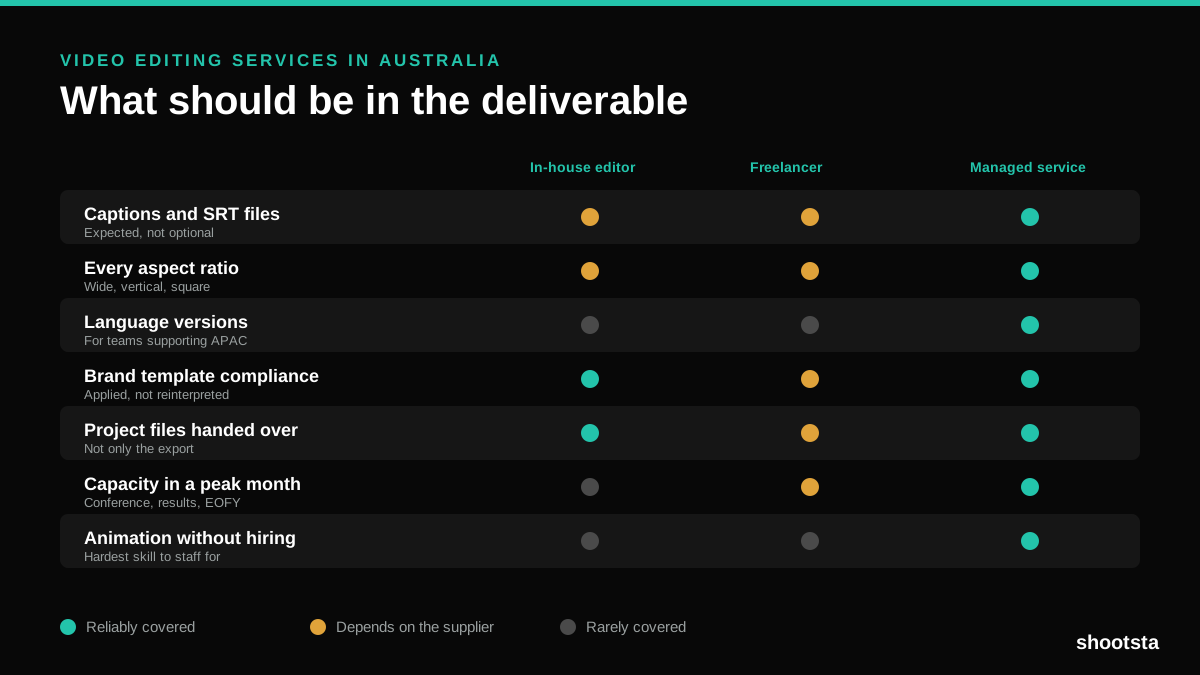
Video Editing Services in Australia
Australian teams are spread across time zones and offices, so the editing queue matters more than the editing. Here is what to expect on cost and turnaround.
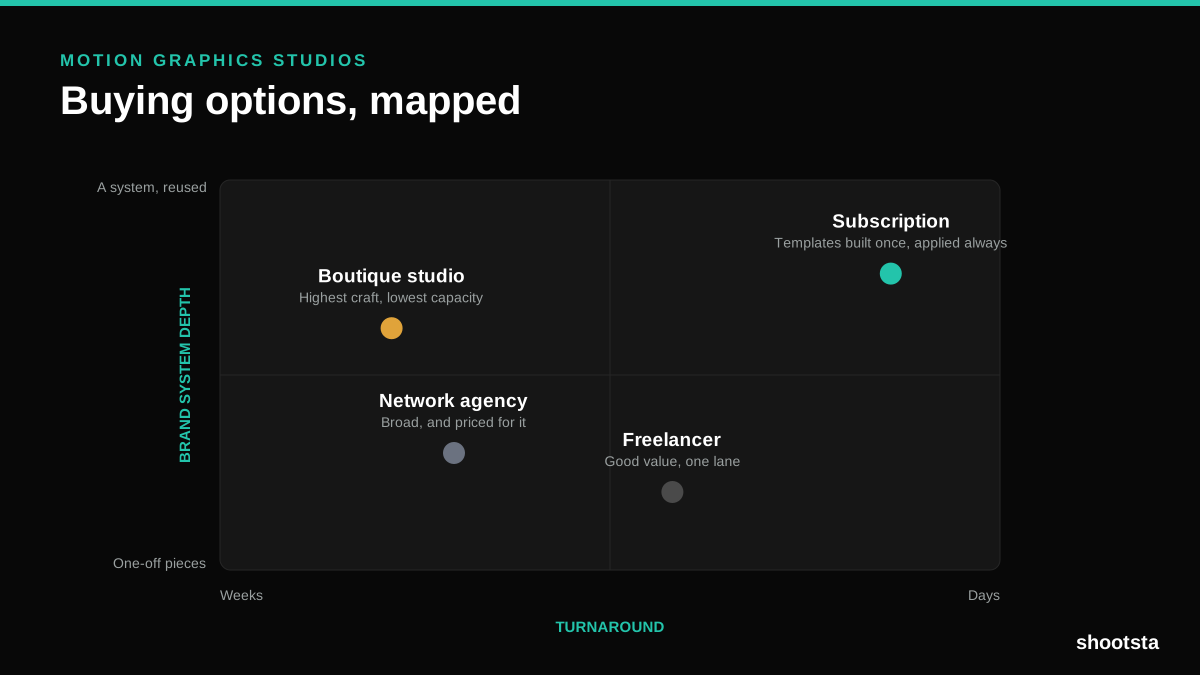
How to Choose Between Motion Graphics Studios
Every motion graphics studio has a good reel. The reel is the one thing that will not tell you how the fifth project goes. These ten criteria will.
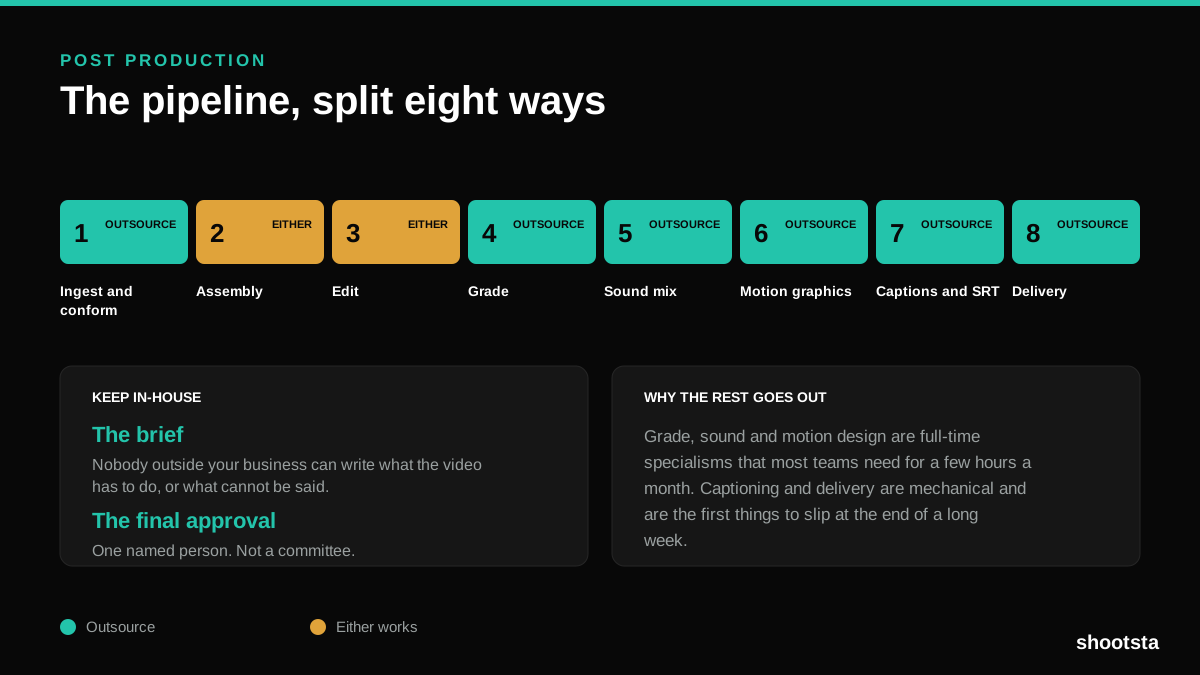
Post Production Agency or In-House Team?
Post production is eight stages, not one. Some of them need context only your team has. The rest are mechanical and are the first things worth handing over.
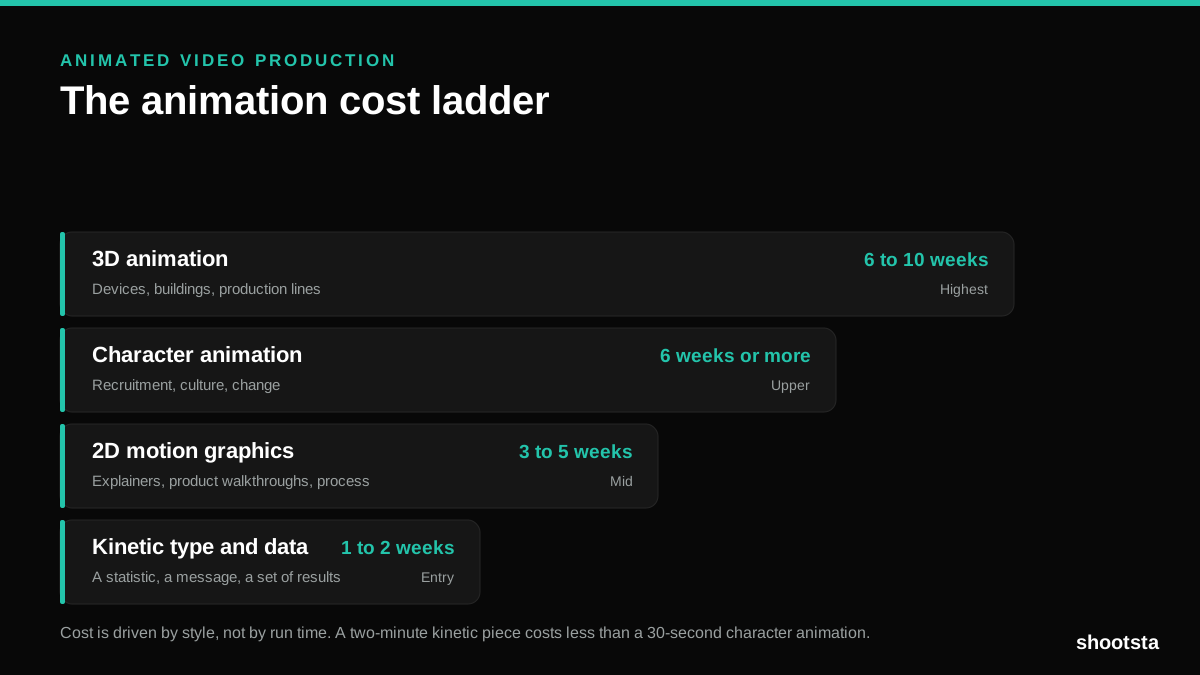
Animated Video Production Cost in the US
Animated video production costs move with style, not with length. Kinetic type, 2D motion, character and 3D sit on four rungs of a ladder. Here is what separates them.
How to Commission Medical Training Animation
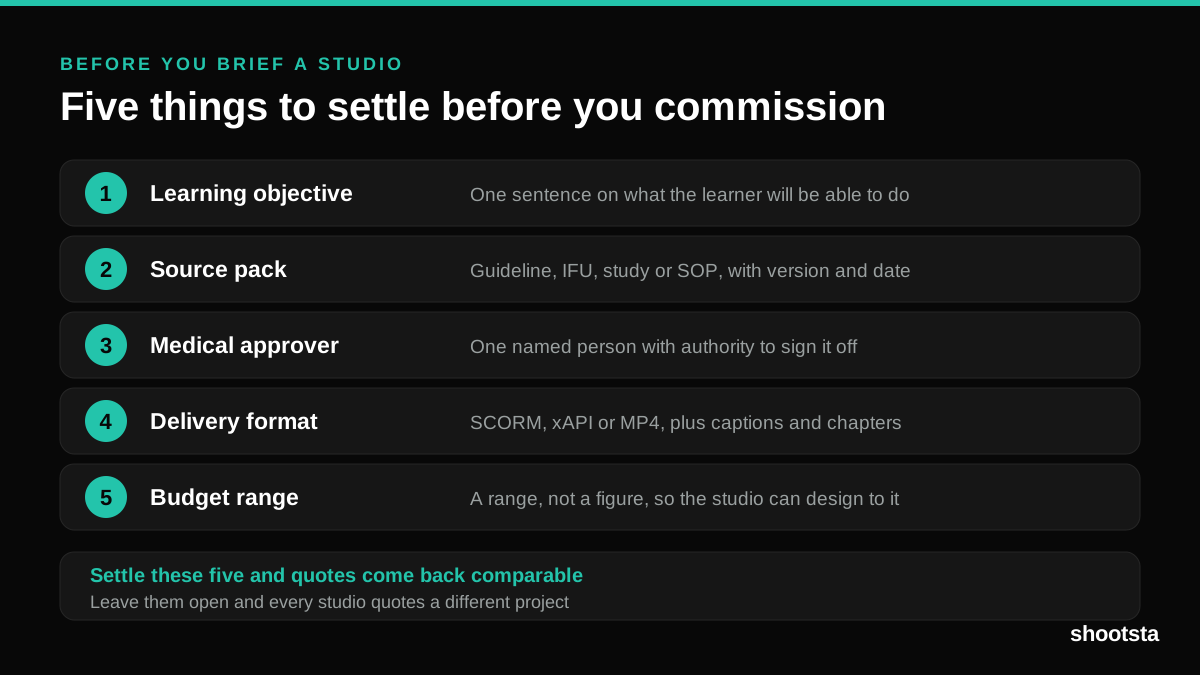
Commissioning a medical training animation is mostly decisions you make before anyone animates a frame. The brief fields that matter, what to ask a studio, how much expert time to budget, and the contract terms that stop a rebuild in two years.
How to Write an Animation Brief
How to Write an Animation Brief
Most animation briefs cause delays because they over-specify the visual style and under-specify the outcome. Here are the nine fields an animation production team needs to quote accurately and start without rework.