
2D vs 3D Animation for Business Video
shootsta.
2D vs 3D Animation for Business Video
By Shootsta · Published June 15, 2026 · Updated June 2026
3D animation looks impressive, but it is the wrong choice for most business video. Here is how to decide between 2D and 3D based on the job, not the wow factor.
What is the real difference between 2D and 3D animation?
2D animation works in a flat plane: illustration, motion graphics, characters and objects with height and width. 3D animation builds objects in a modeled space with depth, lighting, and camera moves around them. The practical difference for a business buyer is not the look. It is the cost, the turnaround, and how easy it is to change later.
3D is more expensive and slower to produce, because every object is modeled, textured, lit, and rendered. 2D is faster and cheaper, and far easier to update. That trade-off decides most cases before the creative discussion even starts.
When does 2D animation win?
For most business video. 2D motion graphics are the right call when the job is explaining a concept, a process, or data: product explainers, onboarding, internal comms, training, social content. The subject is an idea, and 2D draws ideas clearly and quickly.
2D also wins whenever the content needs to stay current. Updating a 2D animation when a product or a stat changes is a quick edit. Re-rendering a 3D scene is not. For ongoing content that has to keep pace with the business, 2D is the sustainable choice. The broader format range is in the different kinds of animation for business.
When is 3D animation worth it?
Three situations justify the cost. First, physical products where form matters: hardware, devices, machinery, anything a buyer needs to see from every angle. Second, processes that genuinely happen in three dimensions, like how a component fits inside a machine or how a molecule behaves. Third, a high-stakes hero piece where the production value itself is part of the message.
Outside those cases, 3D usually buys you spectacle you did not need at a cost you did not have to pay. If the subject is abstract, 3D does not explain it any better than 2D, it just costs more.
A simple decision framework
Three questions settle most choices:
- Is the subject a physical object whose form matters, or an abstract idea? Object leans 3D, idea leans 2D.
- How often will this need updating? Frequent updates lean 2D. A one-time hero piece can justify 3D.
- What is the budget and turnaround? Tight on either leans 2D.
If you answer "abstract idea, needs updating, limited budget," which describes most business video, the answer is 2D. The exceptions are real but narrower than the impressive 3D showreels suggest.
What about mixing the two?
Common and often smart. A mostly 2D explainer with one 3D product shot at the moment the viewer needs to see the device gives you the clarity and economy of 2D with a targeted hit of 3D where it earns its keep. You do not have to pick one for the whole video.
How does the choice affect cost and timeline?
2D is the cheaper, faster, more updateable option, which is why it carries most ongoing business video. 3D commands a premium and a longer schedule, and changes after delivery are costly. We break down the numbers in our guide to animated explainer video cost.
Where to start
Take your next animation and run it through the three questions above before anyone pitches you a style. Most of the time you will land on 2D, with the option of a 3D moment where the product needs it. To talk through the right approach for a specific project, see our animation production services or learn how Shootsta produces animation at scale.
Running animation as more than a one-off? The Business Animation Playbook lays out how teams scale it into a repeatable program.
Take this article with you
Read the latest at shootsta.com/blog/2d-vs-3d-animation-business
You might also like
Post Production Agency or In-House Team?
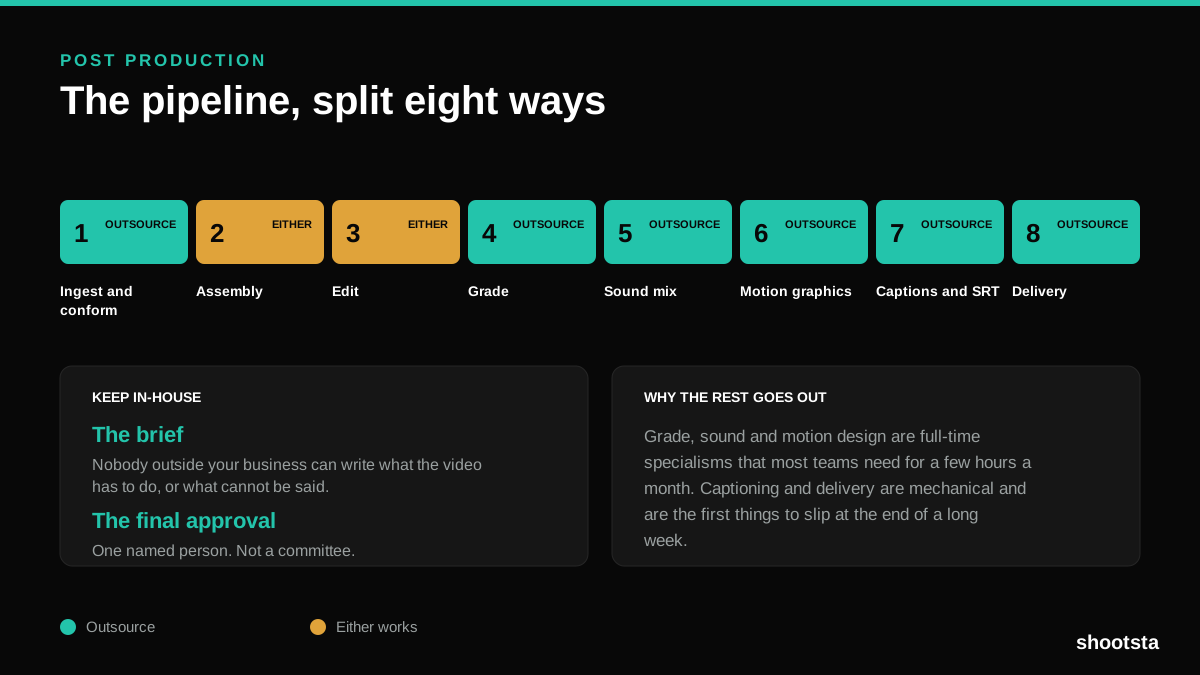
Post production is eight stages, not one. Some of them need context only your team has. The rest are mechanical and are the first things worth handing over.
Animated Video Production Cost in the US
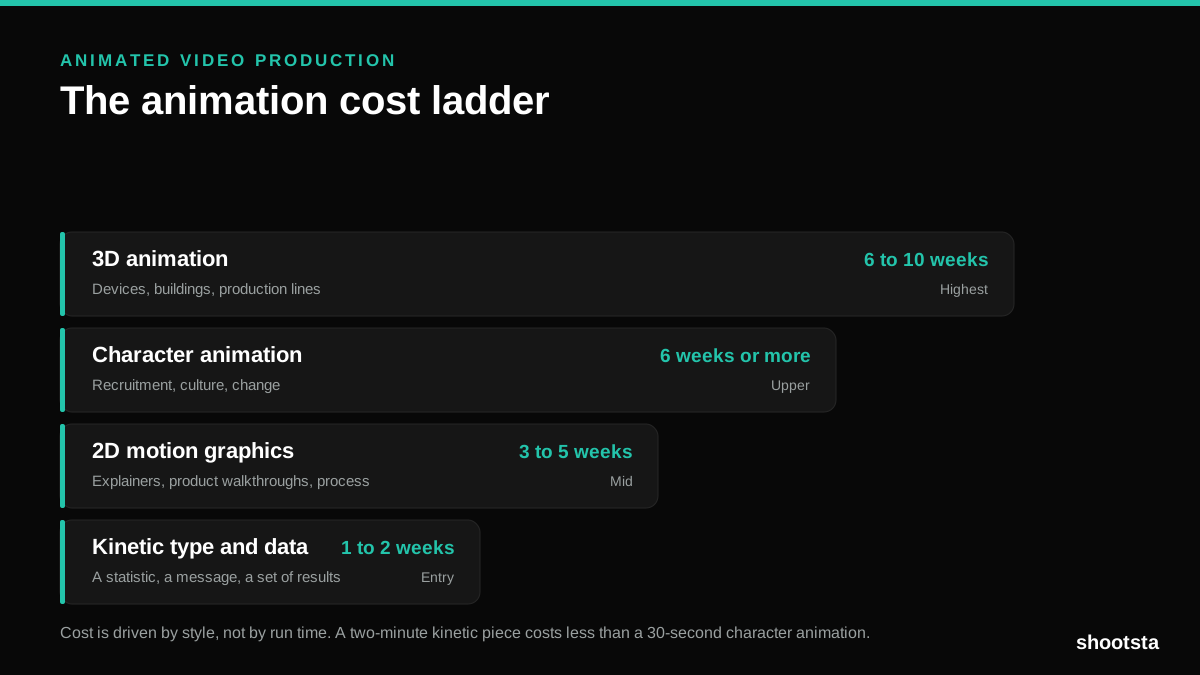
Animated video production costs move with style, not with length. Kinetic type, 2D motion, character and 3D sit on four rungs of a ladder. Here is what separates them.
How to Commission Medical Training Animation
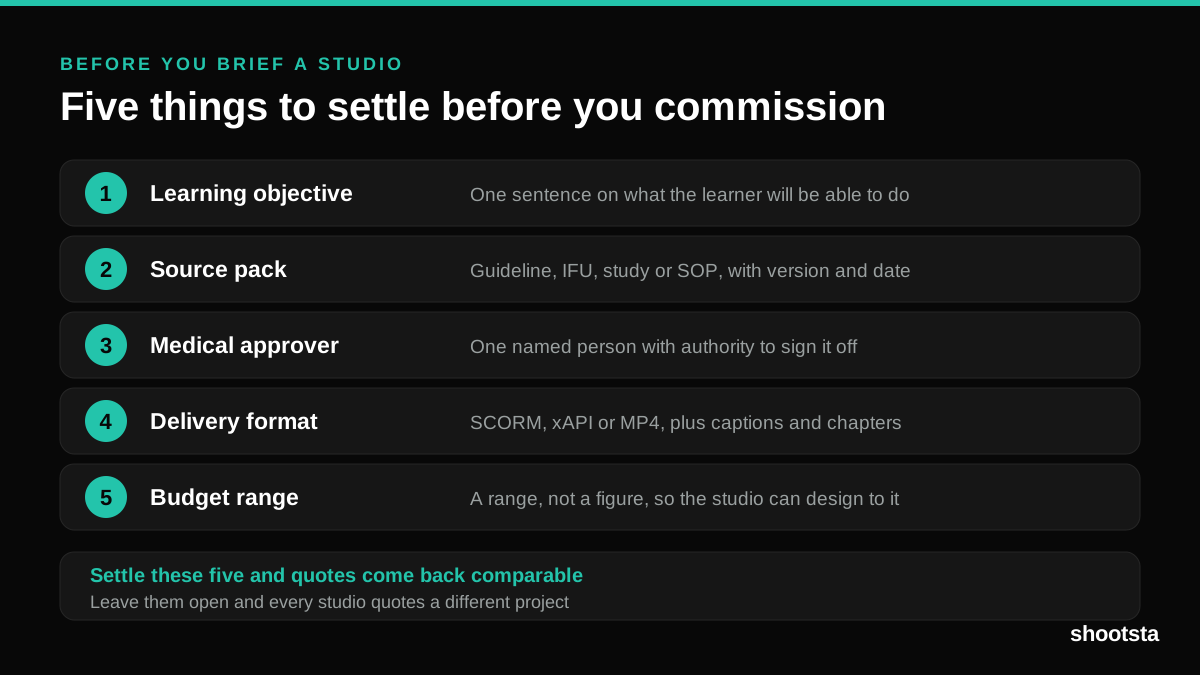
Commissioning a medical training animation is mostly decisions you make before anyone animates a frame. The brief fields that matter, what to ask a studio, how much expert time to budget, and the contract terms that stop a rebuild in two years.
How to Write an Animation Brief
How to Write an Animation Brief
Most animation briefs cause delays because they over-specify the visual style and under-specify the outcome. Here are the nine fields an animation production team actually needs to quote accurately and start without rework.
How to Localize Animated Video at Scale
How to Localize Animated Video at Scale
Animated video is the easiest format to localize because text and audio live in editable layers. Here is how to scale it across languages cleanly.
Subtitles, Dubbing or Voiceover for Video
Subtitles, Dubbing or Voiceover for Video
Subtitles, dubbing and voiceover each fit different content and markets. Here is how to choose the right one without blowing the localization budget.