
Why Retail Teams Drown in Video Briefs
shootsta.
Why Retail Teams Drown in Video Briefs
By Shootsta · Published June 28, 2026 · Updated October 2026
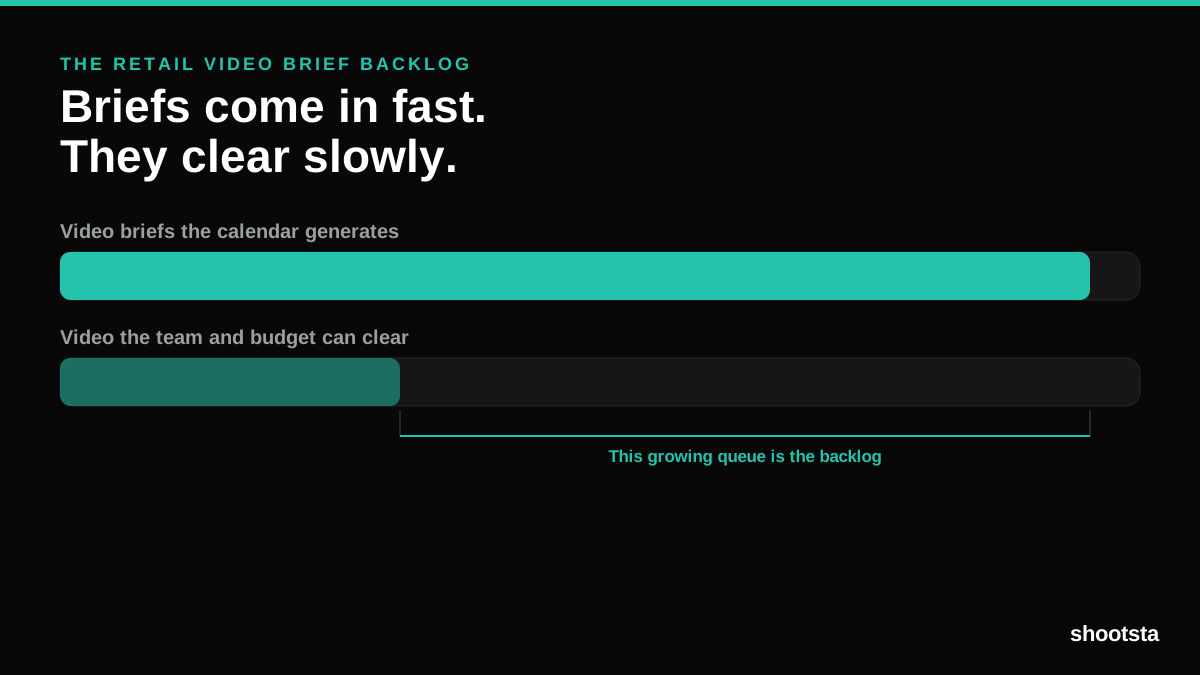
Enterprise retail generates enormous video demand: category and seasonal campaigns, product videos for every listing, store-format and regional variants, social cutdowns, loyalty and app content. The briefs pile up faster than a fixed team and budget can clear them, so the backlog grows and spend rises without output keeping pace. Here is why the gap forms and how to industrialize retail video.
Short answer. Enterprise retail teams drown in video briefs because the retail calendar generates far more video than a fixed team and budget can produce. Category and seasonal campaigns, product videos for every e-commerce listing, store-format and regional variants, social cutdowns, loyalty and app content all land at once. Demand rises every year while capacity stays flat, so the backlog grows and cost climbs without output keeping pace. The fix is to industrialize retail video: centralize intake, template the repeating formats, add capacity that flexes with the calendar, and localize at scale.
Walk into the marketing team at any large retailer and the whiteboard tells the same story. There is a wall of video briefs, and it never gets shorter. A category refresh here, a seasonal campaign there, product videos for hundreds of new listings, a stack of social cutdowns, something for the loyalty app, a regional variant for three markets. The team is not short on ideas or effort. They are short on a way to clear the queue as fast as it fills.
This is a sector problem, not a team problem. Big-box retailers, national specialty and department-store chains, and large e-commerce operators all run the same treadmill. The retail calendar is relentless, and every promotion, format, and channel wants its own video. The demand is real and it keeps climbing. What has not climbed is the capacity or the budget assigned to meet it.
Why do retail teams drown in video briefs?
Because retail generates more distinct video than almost any other sector, and it generates it on a fixed clock. The volume is not vanity. It is the cost of showing up across categories, markets, and channels the way modern retail demands. Four forces pile the briefs up.
The calendar never stops
Retail runs on windows: back-to-school, seasonal changeovers, major sale events, holiday, plus a constant drumbeat of promotions in between. Each window needs its own campaign videos, and the next one starts before the last one ships. There is no quiet quarter to catch up, so any backlog carries straight into the next peak.
Every asset multiplies into variants
One campaign is never one video. It becomes a hero cut, social-first vertical versions, product and PDP videos for e-commerce, store-format edits for in-store screens, and regional or language variants for each market. A single idea can fan out into dozens of finished assets. Multiply that across a full category range and the true brief count is far higher than the campaign count. We break the retail format mix down in our guide to video production for retail and e-commerce.
Capacity and budget stay flat while demand rises
Video is the format shoppers respond to, so every merchandising, e-commerce, and brand team now asks for more of it. Research from creative platforms like Wistia's State of Video shows businesses producing more video year over year. But the headcount and budget assigned to make it rarely rise at the same rate. When inflow climbs and throughput holds, the queue can only grow.
Spend rises without output keeping pace
To cope, teams add producers: an agency for the hero film, freelancers for the overflow, a separate vendor for product shoots. Every added source charges per project and interprets the brand slightly differently. The invoices climb while the backlog stays long, which is the worst of both. Finance sees the cost line rise without the output rising to match. We put numbers to this in the real cost of enterprise video production.
What is the retail video brief backlog?
The retail video brief backlog is the growing gap between the video the calendar demands and the video a fixed team can produce on brand and on time. It is not one broken step. It is the whole model straining: intake, production, review, and localization all sized for a lower volume than modern retail now needs. Leaders notice slipped launches first. The cause underneath is a capacity and workflow problem, not a talent problem.
How much video does a large retailer need now?
A large retailer needs far more video than most programs are resourced for. A single seasonal campaign might need a hero film, a dozen social cutdowns, product videos for every new SKU, in-store screen edits per store format, and localized versions for each region. Repeat that across six or more windows a year and hundreds of categories, and the annual demand runs into the thousands of finished assets.
The point is not a magic number. It is that retail video demand has moved from dozens of pieces a year to hundreds each season, while the production model underneath has barely changed. That mismatch is why well-funded retail teams feel permanently behind on their briefs.
Why does hiring more people not fix it?
Because retail video demand is spiky and fixed headcount is not. The peaks around major sale events and holiday create bursts no realistic in-house team can staff for without sitting idle between windows. Hire for the peak and you carry expensive capacity you barely use in the quiet weeks. Hire for the average and you miss every peak, which is exactly when the revenue is on the line.
Agencies have the opposite limit. They can absorb a spike, but at a per-project price and on a timeline that does not fit a calendar that ships something every week. Both traditional options are good at part of the job. Neither is built for always-on retail volume at a predictable cost. Keeping the brand steady across all of it is a separate challenge, covered in how to hold brand consistency when video scales.
What does industrializing retail video look like?
It looks like treating video as a repeatable operation rather than a series of one-off projects. The retail teams that clear their backlogs tend to do four things. They centralize intake so every brief runs one route with the same information. They template the formats that repeat every season so a product video is a fill-in-the-blank job, not a fresh brief.
They add capacity that flexes with the retail calendar instead of paying for peak headcount year-round. They also adapt at scale, producing the master once and versioning it for every market and store format from a single source. The result is more output per dollar, a queue that gets shorter each month, and one brand standard across thousands of assets. Retail and quick-service brands face nearly identical pressure, which we cover in the QSR video content race.
Frequently asked questions
Why does retail need so much more video than other sectors?
Because retail runs on a fixed calendar of campaign windows and every asset multiplies into variants. A single seasonal campaign spawns hero films, social cutdowns, product and PDP videos, in-store screen edits, and regional versions. Multiply that across hundreds of SKUs and several markets and the volume dwarfs a typical B2B program. The demand is a direct function of how many categories, channels, and markets a retailer serves.
Is the backlog a creative problem or a capacity problem?
The backlog is almost always a capacity and workflow problem rather than a creative one. Retail marketing teams rarely run short on ideas or talent. They run short on the throughput to produce what the calendar already demands and on a way to keep every variant on brand. Treating it as a creative problem leads teams to add another creative when the constraint is the production model around them.
Can product and PDP videos be produced at scale without losing quality?
Yes, by templating the formats that repeat and producing masters that version cleanly. Product videos, size guides, and unboxing clips follow predictable structures, so a template plus a consistent capture process turns them into a repeatable line rather than a fresh brief each time. Quality holds because the brand rules live in the template, not in each editor's memory.
How fast can a retail team clear its video backlog?
Faster than most expect, because the backlog is usually a workflow problem, not a talent shortage. Once intake is centralized, formats are templated, and capacity flexes with the calendar, first cuts can land in days and the queue starts to shrink instead of grow. The change is not a bigger budget. It is a production model that scales with demand.
Sources and further reading
The patterns above line up with how retail researchers and creative platforms describe rising video demand and production friction. For wider context:
- Wistia State of Video report on businesses producing more video year over year.
- National Retail Federation research on the retail calendar and seasonal demand cycles.
- eMarketer coverage on retail video and commerce content trends.
Where to go next
This is the retail spoke of a series aimed at marketing leaders. For the format mix and workflow specifics, read our guide to video production for retail and e-commerce. For the numbers behind an internal case, read the real cost of enterprise video production. For keeping the brand steady across thousands of assets, read how to hold brand consistency when video scales.
To see where your own retail video program is losing time and budget, book a free consultation.
Take this article with you
Read the latest at shootsta.com/blog/why-retail-teams-drown-in-video-briefs
You might also like

How to Plan Video Team Capacity Around Leave
Your only editor just booked two weeks off, and you already know which projects will slip. Chad Lakin explains how to plan video team capacity so the work keeps moving when someone is away.
Corporate Video Editing Standards: Full Guide
A two-page editing standard does more for consistency than a forty-page brand book. Here is what it should cover, who owns each part, and how to enforce it with an in-house editor or an outside partner.
Quality Control in Outsourced Video Editing
When editing leaves the building, quality has to be checked by a system rather than by whoever happens to look. Here is the system: acceptance criteria, two QA gates, counted revision rounds and a quarterly audit.
Video Production Cost on the Gold Coast 2026
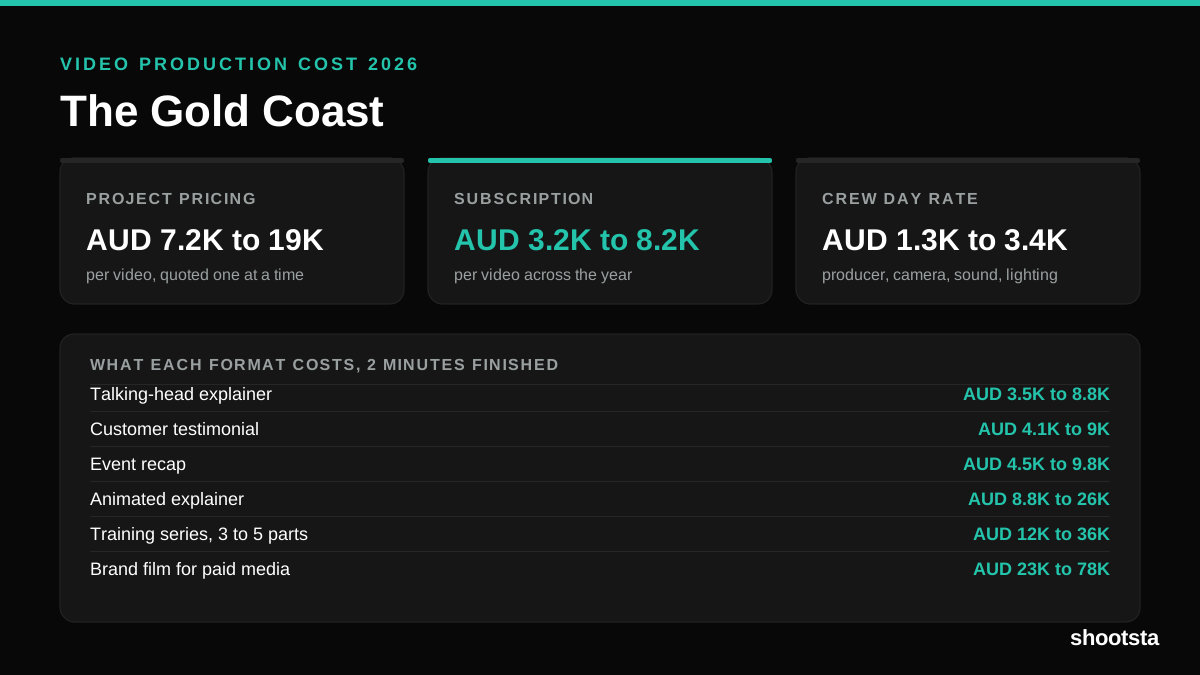
Video production in the Gold Coast costs AUD 3,200 to AUD 8,200 per finished video on a subscription model, and AUD 7,200 to AUD 18,500 for one-off project work. Here is what you are paying for, and how the three pricing models compare.
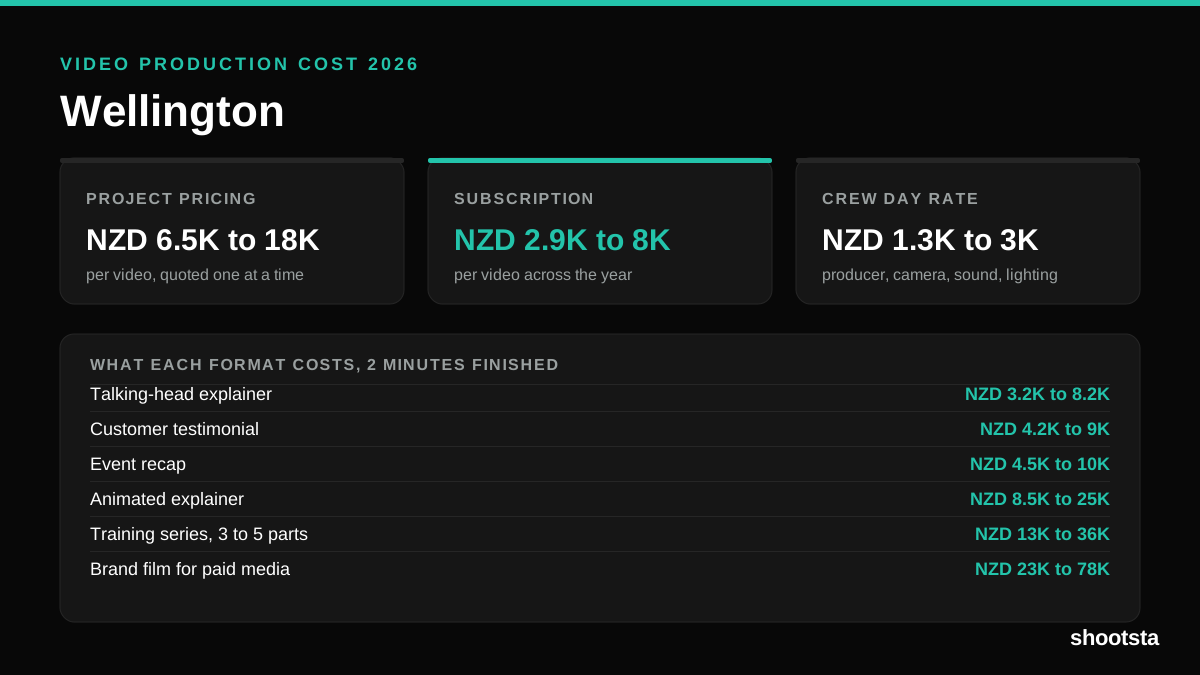
Video Production Cost in Wellington (2026)
Video production in Wellington costs NZD 2,900 to NZD 8,000 per finished video on a subscription model, and NZD 6,500 to NZD 18,000 for one-off project work. Here is what you are paying for, and how the three pricing models compare.
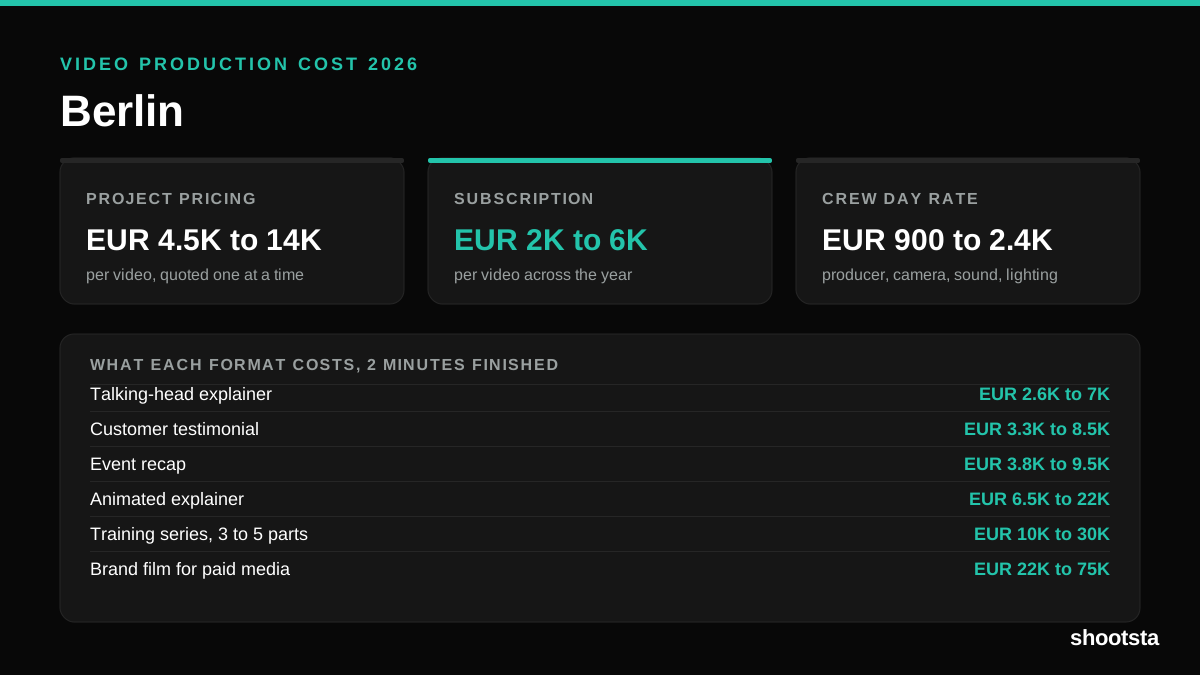
Video Production Cost in Berlin (2026)
Video production in Berlin costs EUR 2,000 to EUR 6,000 per finished video on a subscription model, and EUR 4,500 to EUR 13,500 for one-off project work. Here is what you are paying for, and how the three pricing models compare.